We have a brand new updated website! Click here to check it out!

History complicates efforts to preserve health care in 1 Kan. county

By BRYAN THOMPSON

People who live in small towns across Kansas are struggling to save institutions that in their minds define their communities.

Photo by Bryan Thompson Recent changes in the health care system are making it increasingly difficult for rural hospitals like Harper Hospital to make ends meet.

Schools are often at the heart of these efforts.

But recent changes in the health care system are making it increasingly difficult for rural hospitals to make ends meet.

That’s true of both hospitals in Harper County, located along the Oklahoma border southwest of Wichita, where a long-standing rivalry is complicating efforts to find a solution.

The rivalry between Anthony and Harper dates back more than a century. Harper Hospital’s chief financial officer, Sandra Owen, has lived in the county for 20 years — which means she’s still a newcomer. But she knows the story.

“I can recall when I first moved to Harper County and being told really what it boiled down to was back in the 1800s, Anthony stole the courthouse from Harper,” Owen said.

That bit of history refers to an election in 1879 to decide whether Anthony or Harper — then the county’s largest town — would be the county seat. Although there were only 800 registered voters in the county, 2,960 votes were cast. William G. Cutler’s History of the State of Kansas, first published in 1883 by A.T. Andreas, described the balloting as “slightly suspicious.”

It notes: “This view the County Commissioners took of the matter, and instead of canvassing the vote, left the ballots in the poll boxes and sought legal light on the subject. Returning to count the ballots, they found that all had been purloined and the boxes were empty.”

Photo by Bryan Thompson Sandra Owen is Harper Hospital’s chief financial officer.

The account goes on to say that citizens of both towns demanded a canvass of the vote. Anthony residents alleged fraudulent and illegal voting. Harper residents demanded that those charges be removed.

“This motion was overruled by Justice Brewer of the Supreme Court on the ground that 2,960 votes were too many for 800 men to cast. Somewhat later, R.P. Shepard, Deputy County Attorney, secured an order for a count from the old tally sheets, and the result was found to be in favor of Anthony. There has never been a second county seat election.”

Anthony won the courthouse, but the rivalry still lingers. And it’s complicating efforts to solve a big problem facing both towns: the potential loss of their hospitals. Located just 10 miles apart, the Anthony and Harper hospitals both are losing money.

Martha Hadsall, who chairs the Anthony Medical Center board, told a recent joint meeting of the two hospital boards that they can’t continue to rely on local tax revenues to fill the gap. She said the trend for federal and state support is unmistakable.

“Ten percent, 2 percent, 13 percent, 25 percent, 4 percent, 35 percent — cut, cut, cut, cut,” Hadsall said.

So the two boards are looking for a possible common solution. That could mean a partnership between the two facilities or one new hospital to serve the entire county. But Hadsall said a consensus on what to do is still miles away.

“We know we have got to build community buy-in,” she said. “We have to develop a clear, combined vision, and we don’t have that yet.”

An analysis by a private consulting group says the best option is to build a new, combined hospital at a cost of about $15 million. That won’t be an easy sell.

Bonnie June Day agreed to share her opinion while sitting under a hair dryer at Connie’s Beauty Shop in Harper.

“Leave Harper alone! Our hospital is doing fine without being consolidated with them,” she said. “We’ve got good doctors here. We pay taxes on our hospital here. We just got done redoing our hospital, and it’s great the way it is.”

That opinion, or some form of it, is shared by a number of people — especially older residents — in Harper. Day said she thinks taxpayers in Harper are willing to pay more, if that’s what it takes to keep their hospital open. Meanwhile, at Irwin-Potter

Pharmacy in Anthony, eight women who call themselves “the ladies of the round table” sat next to the soda fountain, engaged in a lively discussion. They hope the two hospitals can work together to avoid duplication of services. But they want both hospitals to remain open. One woman who didn’t want to give her name called on federal policymakers to help small towns keep their hospitals.

“Even though all these little hospitals are spread all over here and there, the federal government needs to realize that we’re in a rural area. We’re not in Kansas City, or someplace like that. … Let one of them come out here and have a heart attack, and see how well he likes it.”

Photo by Bryan Thompson Harper Hospital CEO Bill Widener said a merger with Anthony Medical Center may be the most realistic option.

These ladies agree they want an emergency room in their town, not five or 10 miles away. Keeping both hospitals open but consolidating their administration is among the options.

However, Harper Hospital CEO Bill Widener said a merger may be the most realistic option. “Nobody wants to lose their

hospital — the convenience of the clinics right in town, the ERs — we all understand that,” he said. “But the key phrase there is we don’t want to lose our hospital.

And this merger will give this county the best opportunity to maintain a good hospital and good health care right in the county.” Those pushing for a joint solution have their work cut out for them. A merger would require the patrons of one of the hospital districts to voluntarily dissolve their district. Given the history these two communities share, that’s asking a lot, no matter how much is at stake.


Bryan Thompson is a reporter for Heartland Health Monitor, a news collaboration focusing on health issues and their impact in Missouri and Kansas.


Kan. court funding challenge planned, despite plea for restraint

WICHITA, Kan. (AP) — Four judges challenging the Legislature’s move to defund the state judiciary’s budget are undeterred by a plea from the Kansas attorney general urging restraint.

Attorney General Derek Schmidt said Friday he was grateful the judges voluntarily dismissed on Thursday their case in federal court, an urged them not to file a new lawsuit. A court has already blocked the law until the Legislature reconvenes.

But the attorney representing the judges responded his clients don’t trust the Legislature and still plan to sue in state court over state constitutional issues. He urged Schmidt to file a court brief agreeing the law is unconstitutional.

Legislation passed this year nullifies the judicial branch’s budget if a 2014 law stripping the Kansas Supreme Court of its ability to appoint chief judges is struck down.

Feds charge Kansas woman with sex trafficking 17-year-old

Screen Shot 2015-10-09 at 5.13.55 PMWICHITA, Kan. (AP) — A 32-year-old Wichita woman has been charged in federal court with sex trafficking a 17-year-old girl.

U.S. Attorney Barry Grissom’s office says Natasha Harper was charged Friday with one count of providing the girl for commercial sex. Court documents say Harper was arrested in a sting operation conducted by the Wichita Police Department.

Officers arranged for the teenager to meet them Thursday at a local hotel and arrested Harper when she brought the girl there.

Prosecutors say investigators learned that Harper had been advertising on the Internet that the victim would perform sexual services for $150 to $200 a session.

It was not immediately clear Friday if Harper had obtained an attorney. If convicted she could face at least 10 years in federal prison.

New Kansas memorial for deceased homeless, indigent completed

photo Harvey County Sheriff's office
photo Harvey County Sheriff’s office

HARVEY COUNTY – After many years of planning, the Harvey County memorial for deceased homeless and indigent individuals was completed this week, as described on social media by the sheriff’s office.

This memorial’s setting is located on the Osage Trail in a very peaceful and serene area.

The location will be the final resting place to those whose ashes were left unclaimed and simply stored in the Sheriff’s record room.

The sheriff’s office indicate they shall respectfully scatter those ashes in the area of this memorial.

The sheriff’s office thanked the Community Chaplain Response Team, Harvey County Parks Department, Harvey County Commissioners, All Natural Stone, Enduring Love Memorials and the Showalter Foundation. This project was accomplished without using tax payer dollars and with the dedication to do what was right, according to Sheriff Townsend Walton.

Sen. Roberts Applauds Appeals Court Ruling on Waters of the US

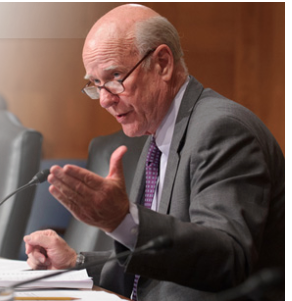
RobertsOVERLAND PARK, KS – U.S. Senator Pat Roberts, Chairman of the Senate Committee on Agriculture, Nutrition and Forestry Friday applauded an Appeals Court Ruling that halted implementation of the Environmental Protection Agency’s (EPA) overreaching rule regarding the definition of “Waters of the U.S.” (WOTUS) pending further judicial review.

“I applaud the court for halting the rule in all states to allow justice, and some might say commonsense, to play out,” Roberts said. “Due to the widespread confusion and frustration with the new regulations and pending litigation, this ruling should send a clear signal to the EPA that the rule should be scrapped altogether.

“Farmers, Ranchers and other stakeholders were ignored in the comment period during consideration of the proposed rule. The EPA stacked the deck against them. The process was flawed from the beginning and I commend the court for this finding in particular: ‘Moreover, the rulemaking process by which the distance limitations were adopted is facially suspect.’”

The Kansas Department of Agriculture estimates the finalized WOTUS rule expands EPA’s jurisdiction of Kansas water bodies considered to be new “waters of the United States,” encompassing 182,000 stream miles – a 500 percent increase.

Chairman Roberts has been an outspoken opponent of overregulation and of the WOTUS rule. In March, the Agriculture Committee held a hearing on the WOTUS rule, which included legal interpretations, agency officials and state partners responsible for the administration and enforcement, and key stakeholders who will be forced to navigate the Clean Water Act permitting process and bear the unforeseen costs associated with this overregulation.

In In April, he joined Senate Environment and Public Works Committee Chairman Jim Inhofe R-Okla., John Barrasso, R-Wyo., and Joe Donnelly, D-Ind., Dan Sullivan R-Ala. and Heidi Heitkamp D-ND introducing the bipartisan Federal Water Quality Protection Act. The legislation was reported out of the EPW Committee in June and awaits floor consideration.

The Federal Water Quality Protection Act requires EPA and the Army Corps of Engineers to withdraw the finalized rule, which has received considerable criticism from a variety of industries – including agriculture – and restart the full rulemaking process to develop a new rule in consultation with stakeholders, state partners and regulated entities.

Production forecast mostly upbeat for fall crops in Kansas

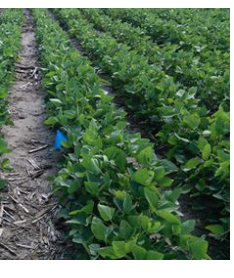
SoybeansWICHITA, Kan. (AP) — The latest government forecast for fall crops in Kansas is mostly upbeat in its production estimates.

The National Agricultural Statistics Service reported Friday that it anticipates the state will harvest 566 million bushels of corn this year. That is down just slightly from a year ago.

The agency anticipates 3.85 million acres of corn will be cut in the state this year, with average yields forecast at 147 bushels per acre.

Sorghum production is forecast at 258 million bushels, up 29 percent from last year. Kansas farmers are cutting 3.15 million acres of sorghum with forecast average yields of 82 bushels per acre.

Soybean production is expected to be up 3 percent to 144 million bushels.

Updated estimates are based on crop conditions as of Oct. 1.

NTSB: 2013 train derailment in Hays caused by human error

By James Bell

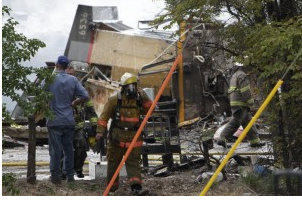
Screen Shot 2015-10-09 at 5.09.16 PMHAYS -The National Transportation Safety Board has closed the investigation into a train derailment in Hays on July 16, 2013, that caused an estimated $1.4 million in damages. The investigation found the accident was caused by human error, but could have been avoided if recommendations from the NTSB had been adopted.

After securing cars on a side track, a switch had been incorrectly set, causing the next train to move to the side track, derailing the train and causing a massive fire in the area. Screen Shot 2015-10-09 at 3.33.52 PM

“The National Transportation Safety Board determines that the probable cause of the accident was the failure of the brakeman of train LDG89 15 (the train that was parked on the side track) to return a main track switch to the normal position after the crew had secured the train on a siding track. Contributing to the accident was the inability of the crew of train MSIDV 16 (the train that was in movement) to determine the position of the main track switch in nonsignaled territory,” the report said.

Similar incidents in the past, evaluated by the NTSB, have resulted in recommendations that automated systems be installed to help mitigate the risk of a singe point of failure.

“All of these accidents resemble the accident at Hays, Kansas. In each instance, a crewmember failed to return a main track switch to the normal position. More significantly, these accidents occurred in nonsignaled territory where there is only local indication of switch alignment. The brakeman of LDG89 15 erred when he failed to return the main track switch to the normal position before he and the rest of the crew departed the accident area,” the report said.

While the NTSB has made recommendations that would have stopped the accident from occurring, those recommendations have been rebuffed by the Federal Railroad Administration as being to expensive.

“A single errant act on the part of an individual that can lead to an accident is a single point failure in system safety analysis. If the single point failure is significant and the potential consequences are severe, the risk should be mitigated by additional layers of protection,” the report said.

Three incidents prior to the Hays derailment were cited in the report to be caused by similar situations.

The full NTSB report can be read here.

Kan. teen arrested with stolen guns

Screen Shot 2013-01-26 at 3.35.49 PMMANHATTAN – Law enforcement authorities in Riley County are investigating a gun theft.

Police reported officers served a search warrant at a residence in the 1300 block of Flint Hills Place in Manhattan on Thursday evening, according to a media release from the Riley County Police Department.

They recovered two firearms that were listed as stolen (total amount recovered was valued at approximately $1,650.00).

Officers arrested Javon Gray, 18, Manhattan possession of stolen property and contributing to a child’s misconduct.

A 16-year-old child was listed as the victim of the contributing to a child’s misconduct after police learned that these stolen firearms were also in his possession.

Highchairs recalled on reports kids fell off, chipped teeth

photo CPSC
photo CPSC

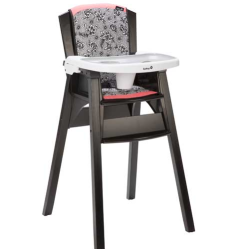
NEW YORK (AP) — About 35,000 Safety 1st highchairs are being recalled following reports that children were able to remove the tray and fall off causing chipped teeth, cuts and bruises.

Safety 1st says it received 11 reports of injuries and 68 reports of children removing the trays. The recall is for three types of Safety 1st highchairs with model numbers HC144BZF, HC229CZF and HC229CYG.

The highchairs were sold at Toys R Us and Babies R Us stores and its websites between May 2013 and May 2015. They were also sold online at Amazon.com and Walmart.com. The highchairs cost about $120.

The U.S. Consumer Product Safety Commission says customers should stop using the recalled highchairs and call Safety 1st at 877-717-7823 to receive a free repair kit.

District says school financial losses are ‘crippling’

school fundingOLATHE, Kan. (AP) — The Shawnee Mission School District, which is blocked from joining a school finance lawsuit, has filed a brief in the case calling the state’s funding policy “crippling.”

The Kansas City Star reports the Kansas Supreme Court last month affirmed a lower court ruling that Shawnee Mission could not intervene in the school finance lawsuit against the state brought by the Kansas City, Kansas, Wichita, Dodge City and Hutchinson districts.

The district was told it could file a friend-of-the-court brief in the case, Gannon v. Kansas. The district’s brief released Thursday says underfunding of the state’s school finance system “has led to a crippling loss of teachers,” foreign language program, neighborhood schools and property values.

The Supreme Court hears oral arguments in November on whether Kansas schools are equitably funded.

Kansas hospital closure sparks war of words on Medicaid expansion

By JIM MCLEAN

The Medicaid expansion debate in Kansas is heating up. Big time.

Photo by Mercy Hospital Independence A message sent to Brownback supporters criticizes “Democrats” and “liberals” for using the pending closure of Mercy Hospital in Independence to make their case for expanding KanCare, the state’s privatized Medicaid program.

The pending closure of Mercy Hospital in the southeast Kansas community of Independence appears to be the catalyst. Soon after hospital officials announced plans to close the facility, expansion advocates went on the offensive, charging that the state’s rejection of Medicaid expansion helped seal its fate.

Now, expansion opponents, including Gov. Sam Brownback and Lt. Gov. Jeff Colyer, are firing back.

A message sent to Brownback supporters Tuesday by Melika Willoughby, the governor’s deputy communications director, criticizes “Democrats” and “liberals” for using the hospital’s closure to make their case for expanding KanCare, the state’s privatized Medicaid program. “Medicaid expansion will not fix the Obamacare-induced problems facing local hospitals,” Willoughby says in a message forwarded by Colyer.

Colyer, a plastic surgeon who is thought by many to be the administration’s staunchest opponent of expansion, made similar arguments in responding to a recent Salina Journal editorial in favor of Medicaid expansion.

In the message sent Tuesday, Willoughby says that reductions in Medicare reimbursements triggered by the Affordable Care Act and exacerbated by automatic budget cuts initiated in 2013 to avert a shutdown of the federal government are the main problem faced by struggling rural hospitals.

“Let’s be clear: Medicaid expansion would primarily benefit a small number of big city hospitals, not smaller rural hospitals like Mercy,” Willoughby writes.

“Those who say Medicaid expansion would save the Independence hospital are lying. It wouldn’t. Instead, this Obamacare ruse funnels money to big city hospitals, creates a new entitlement class and fails to rightly prioritize service for disabled citizens.”

Talking points memo 

The arguments in the message to Brownback supporters mirror those contained in a memo written for Republican legislative leaders and obtained by the KHI News Service.

The GOP talking-points memo says that costs have far exceeded estimates in many states that have expanded their Medicaid programs. It also asserts that the low-income adults who would gain coverage under expansion are capable of taking care of themselves.

“The population Medicaid expansion would cover mostly consists of healthy adults without children, who could receive private coverage if they work 33 hours a week at the minimum wage,” the Republican memo says, referring to the earnings threshold at which low-income Americans become eligible for federal tax credits to help them purchase private coverage through the online marketplaces established by health reform law.

Willoughby sharpens the point in her message, writing that Brownback’s primary objection to expansion is a moral one. She says: “Medicaid expansion creates new entitlements for able-bodied adults without dependents, prioritizing those who choose not to work before intellectually, developmentally and physically disabled, the frail and elderly, and those struggling with mental health issues.”

The claim that expansion would put those newly eligible for Medicaid ahead of the disabled evokes strong reactions from expansion advocates. “I think it’s deliberately misrepresenting what sort of services people are getting and what they’re eligible for,” says Sheldon Weisgrau, director of the Health Reform Resource Project, a pro-ACA initiative funded by several health foundations in the state.

“We still seem unable to have an honest discussion about this based on facts. We’re still just mired in politics and misinformation, and it’s disappointing.”

For instance, Weisgrau says, most of the low-income adults who would gain coverage work at least part time. In addition, he says, Kansans with physical and developmental disabilities aren’t on waiting lists for health care services and wouldn’t be displaced by expansion. “The disabled folks are in KanCare and getting medical services,” Weisgrau says. “They’re waiting for the state to make home and community-based services available to them.”

Hospitals respond 

A point-by-point response to the GOP memo prepared by the Kansas Hospital Association says that only 18.2 percent of the Kansans who would be covered by expansion are unemployed. It says that 54.4 percent of them have jobs.

“These Kansans work as dishwashers, housekeepers, health care support workers, janitors, nursing assistant, landscapers, bus drivers, child care workers, medical assistants, retail sales people and fast food workers in Kansas communities,” the KHA memo says.

The remainder of those who would gain coverage are either disabled or women with children under 18. KanCare now covers about 425,000 low-income children and families, plus disabled and low-income elderly adults.

Adults with dependent children are eligible for KanCare coverage only if they have incomes below 33 percent of the federal poverty level, annually $7,870 for a family of four. Non-disabled adults without children aren’t eligible regardless of income. Expansion would extend KanCare coverage to non-disabled, childless adults with incomes up to 138 percent of poverty: annually $16,105 for an individual and $32,913 for a family of four.

In response to other arguments mounted by opponents, the KHA memo says that the billions of federal dollars that would flow into the state under expansion would more than offset the Medicare reimbursement reductions for many Kansas hospitals. “Medicaid expansion is the solution to recouping these lost federal funds,” the memo says, noting that the state’s smallest critical access hospitals would see an average net gain of about $370,000 a year.

Expansion would generate an average of approximately $1.3 million a year for medium-size hospitals and $9.2 million for large providers in Wichita, Topeka, Lawrence and Kansas City, Kan., according to the KHA memo.

A previous KHA analysis says that expansion would provide Kansas hospitals overall with nearly $100 million more per year than they will lose in Medicare reimbursement reductions. In the memo, KHA officials acknowledge that Medicaid expansion costs have exceeded estimates in some states but notes that “not one has decided to repeal” its expansion plan.

“While Medicaid expansion has not always been implemented smoothly, the information provided (by opponents) does not tell the whole story,” they say in the memo.

Jim McLean is executive editor of KHI News Service in Topeka, a partner in the Heartland Health Monitor team.

No charges in shooting of Kan. suspect who fired at police

police shooting smallWICHITA, Kan. (AP) — Sedgwick County District Attorney Marc Bennett has decided to file no criminal charges in the shooting death of a suspect who fired multiple shots at police and others.

Bennett told reporters at a news conference Friday that Wichita police officers “reasonably believed” 18-year-old Jeffrey Holden presented an imminent lethal threat to their lives. He said the three officers acted in an “objectively reasonable manner” in defending themselves.

Bennett used photos and surveillance video clips to publicly detail the events surrounding into the Oct. 26, 2014 shooting.

His office then released a 26-page report on the investigation which established Holden fired two different handguns multiple times while walking down a Wichita street. The investigation found Holden then repeatedly fired at officers who responded to citizen calls to 911.

Police: Kan. suspect may have accidentally shot himself

Salina Police 3SALINA- Law enforcement authorities in Saline County are investigating an accidental shooting.

Police reported they conducted a traffic stop in 6000 Block of South 5th Street just after 5:30p.m. on Thursday.

Police believed Shane D. McMillin, 24, was possibly wanted on a warrant.

When McMillin got out of the car, officers noticed he had a gunshot wound above his left knee.

A resident near the traffic stop thought they had heard a gunshot about the time the traffic stop occurred, according to police.

McMillin was taken to Salina Regional Health Center for treatment and then booked into the Saline County Jail on drug charges and criminal discharge of a firearm.

Officers recovered a handgun and personal use amounts of methamphetamine, marijuana, and mushrooms.

Copyright Eagle Radio | FCC Public Files | EEO Public File