WYANDOTTE COUNTY- A Kansas teen was injured in an accident just after 10:30p.m. on Sunday in Wyandotte County.
The Kansas Highway Patrol reported a 2002 Dodge Stratus driven by Alyssa Nichole Prescott, 17, Leavenworth, was northbound on U.S. 73 just north of Leavenworth Road.
The driver swerved to the left to avoid an oncoming vehicle that was going the wrong way.
The vehicle then crossed the median and traveled into the ditch.
Prescott was transported to Overland Park Regional Medical Center.
She was properly restrained at the time of the accident, according to the KHP.
TOPEKA, Kan. (AP) — Kansas is getting nearly $5.6 million from the federal government to help people who are having trouble finding jobs get into work or training.
The Topeka Capital-Journal (https://bit.ly/1PdoakO ) reports the grant from the Workforce Innovation Fund will pay for on-the-job training, job preparation and placement services. It also will go toward developing an online portal for people looking for help with employment and training staff on better customer service.
Kansas Department of Commerce spokesman Matt Keith says the training will emphasize jobs that are in high demand and pay enough for the job seeker to reach self-sufficiency.
He says the programs are meant to help people who have at least one barrier to employment, such as having a low income, prison record, disability or being 55 or older.
WICHITA, Kan. (AP) — Authorities say a 26-year-old woman was shot in the back when she went outside to check on a disturbance during a house party in Wichita.
Wichita police Sgt. Brian Sigman said the woman was shot in the back twice shortly before 1 a.m. Sunday. According to police, witnesses said the shooter was in a red Dodge Charger with tinted windows and chrome wheels that drove off after the shooting.
The woman was taken to Wesley Medical Center for treatment and released. Sigman said the woman did not appear to be involved in the disturbance and just happened to step outside when the shooting took place.
FAYETTEVILLE, Ark. (AP) – Three finalists have been named for the chancellor’s job at the University of Arkansas at Fayetteville. Two of them are currently based at Kansas universities.
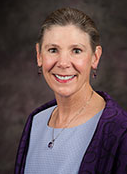
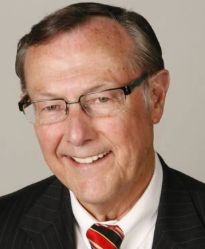
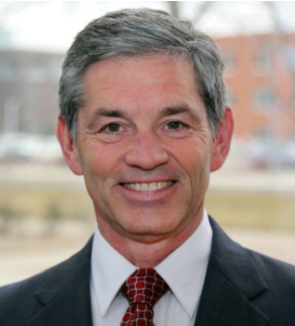
The Arkansas Democrat-Gazette reports the finalists for the top job at UA were announced Friday. They are: April Mason, provost and senior vice president at Kansas State University; Jeffrey S. Vitter, provost and executive vice chancellor at the University of Kansas; and Joseph E. Steinmetz, executive vice president and provost at Ohio State University.
UA System President Donald Bobbitt selected the finalists from seven candidates interviewed on September 25th in Dallas by a search committee. The finalists are seeking to replace G. David Gearhart, who stepped down at the end of July.
Each finalist will visit Fayetteville for two days of activities, including a public talk on the morning of the second day.
SALINA, Kan. (AP) — A Wichita attorney is the new Kansas Democratic Party chairman after delegates from across the state elected him on a unanimous vote.
Lee Kinch is a longtime party activist who will replace Larry Meeker, who resigned as party chairman in August after he was quoted saying the Kansas party needed to emphasize it is more conservative than many nationally known Democrats.
The Salina Journal (https://bit.ly/1KZAoID ) reports Kinch on Saturday pledged to bring the party together and work to gain seats next year in the Legislature with the help of moderate Republicans.
Jim Sherow, who ran against Republican incumbent 1st District Congressman Tim Huelskamp last year, says he was first nominated but turned it down so he could support Kinch.
NETAWAKA, Kan. (AP) — A 58-year-old northeast Kansas man is dead after the dump truck he was driving ran off the road and into a cornfield.
The Topeka Capital-Journal reports Edward Howard Hollingdale of Holton was pulling a corn hauler trailer on Saturday when the truck left K-9 highway near Netawaka.
Jackson County Sheriff Tim Morse says the truck was found “deep inside the cornfield” and the driver was unresponsive.
Hollingdale was declared dead at the scene.
The sheriff says the driver and his truck had been missing for a short period of time after he failed to arrive at his destination in Whiting.
TOPEKA, Kan. (AP) — Secretary of State Kris Kobach’s successful push to require new Kansas voters to document their U.S. citizenship has spawned three lawsuits, including one from him.
Kansas is one of only four states with a proof-of-citizenship law. Its statute took effect in 2013.
Kobach has directed county election officials to cancel more than 31,000 incomplete registrations. Most are from people who’ve failed to document their citizenship.
Democratic attorneys filed a federal lawsuit last week against the conservative Republican secretary of state. The American Civil Liberties Union has pursued its own lawsuit in a state court for nearly two years.
Kobach and Arizona Secretary of State Ken Bennett also filed their own federal lawsuit in 2013 in a failed effort to force the federal government to help their states enforce proof-of-citizenship requirements.
KANSAS CITY – Preparing false income tax returns in the names of prison inmates was one of the schemes a Kansas City tax preparer used to defraud the Internal Revenue Service of more than $400,000, according to U.S. Attorney Barry Grissom.
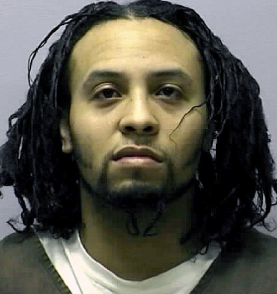
Prayshana Washington, 28, Kansas City, Kan., pleaded guilty to one count of preparing false income tax returns and one count of aggravated identity theft. In her plea, she admitted that from 2012 to 2015 she was in the business of preparing individual income tax returns for clients, who generally paid between $500 and $1,000 for her services. She admitted:
Preparing a 2012 return for a client that included false claims about dependents, false household help income, and false American Opportunity Credits.
Directing the IRS to deposit fraudulent returns onto prepaid debit cards and mail them to addresses she controlled.
Obtaining names, dates of birth and Social Security numbers for prison inmates and preparing fraudulent income tax returns in their names.
Sentencing will be set for a later date. The parties have agreed to recommend a sentence of 37 months in federal prison. Grissom commended the Internal Revenue Service, Assistant U.S. Attorney Scott Rask and Matthew Kluge, Trial Attorney with the U.S. Department of Justice, Tax Division, for their work on the case.
Gov. Brownback proclaims Oct. 4-10 as Fire Prevention Week.
Office of the Governor
TOPEKA–The Office of the State Fire Marshal, Safe Kids Kansas, and Governor Brownback are joining with the National Fire Prevention Association and fire service agencies throughout the State and U.S. to dedicate the week of October 4-10, 2015, as Fire Prevention Week.
The theme for this year’s Fire Prevention Week is “Hear the Beep Where you Sleep. Every Bedroom Needs a Working Smoke Alarm!”, reminding residents about the importance of having working smoke alarms in every bedroom, outside each sleeping area, and on every level of the home, including the basement.
“In a fire, seconds count,” said Doug Jorgensen, State Fire Marshal. “In Kansas, nearly two-thirds of home fire deaths result from fires reported at night between 11 p.m. and 7 a.m. when most people are asleep. Home smoke alarms can alert people to a fire before it spreads, giving everyone enough time to get out.”
According to statistics gathered through the National Fire Incident Reporting System, 64% of Kansas home fire deaths during 2014 resulted from fires reported at night between 11 p.m. and 7 a.m. Meanwhile, nationally three out of five fire deaths resulted from fires in homes with no smoke alarms or no working smoke alarms.
“Children need to know how to respond to the sound of a smoke alarm,” said Cherie Sage, Safe Kids Kansas. “Teach them to get low and get out when they hear it. A child who is coached properly ahead of time will have a better chance to get out of danger safely, so practice your escape plan regularly as a family. “
This year’s Fire Prevention Week campaign includes the following messages about smoke alarms:
· Install smoke alarms in every bedroom, outside each separate sleeping area and on every level of the home, including the basement.
· Interconnect all smoke alarms throughout the home. This way, when one sounds, they all do.
· Test alarms at least monthly by pushing the test button.
· Replace all smoke alarms when they are 10 years old or sooner if they don’t respond properly.
· Make sure everyone in the home knows the sound of the smoke alarm and understands what to do when they hear it.
· If the smoke alarm sounds, get outside and stay outside. Go to your outside meeting place.
· Call the fire department from outside the home.
Fire departments throughout Kansas will be hosting activities during Fire Prevention Week to promote “Hear the Beep Where You Sleep. Every Bedroom Needs a Working Smoke Alarm!” Through these educational, family-oriented activities, residents can learn more about the importance of having a working smoke alarm in every bedroom.
In 2014, Kansas fire departments responded to 2,933 residential fires, and these fires resulted in 109 civilian injuries and 25 civilian deaths, 66 firefighter injuries and $58 million in direct damage.
Roughly 1,000 Kansas doctors soon will be participating in a massive nationwide initiative aimed at improving the quality and efficiency of the health care system.
Dr. Tom Evans is CEO of the Iowa Healthcare Collaborative, which will manage a six-state transformation project that includes Kansas. CREDIT IOWA HEALTHCARE COLLABORATIVE
The Kansas doctors will be part of a six-state transformation project managed by the Iowa Healthcare Collaborative, a nonprofit organization formed in 2004 by doctors and hospitals in the state.
Dr. Tom Evans, the CEO of the Iowa collaborative, said each of the participating states will be free to focus on its own improvement strategy.
“We’ll be the main contractor, but we believe state strategies need to be freestanding,” Evans said. “Kansas’ strategies need to be about Kansas, Nebraska’s need to be about Nebraska and so on.”
Georgia, Oklahoma and South Dakota are the other states participating in what has been named the Compass Practice Transformation Network. It’s one of 39 collaborative groups selected to be part of a $685 million campaign announced Tuesday by the Obama administration to transform the fee-for-service system into a performance-based system that rewards quality over volume.
The Compass Practice Transformation Network will be funded by a four-year innovation grant of $32.5 million from the Centers for Medicare and Medicaid Services.
“This is the first step in what’s going to be a long transition, going from a strictly fee for service-based payment methodology to one that’s more performance-based,” said Jerry Slaughter, executive director of the Kansas Medical Society. “It’s unprecedented. It’s going to change how everybody in the health care system is going to be paid in the future.”
Groups of participating Kansas doctors will be assigned coaches to help them develop better ways of managing patients with chronic diseases, such as diabetes. The coaches will use data from electronic health records to identify high-need and high-cost patients and then work with doctors to develop more effective and efficient treatment protocols.
“Historically, the thesis statement has always been, ‘If we can get (patients) to a doctor or to the hospital, they’ll be better,” Evans said. “But that’s not the case. There are tons of studies that show that access to health care improves a patient’s health, but it doesn’t necessarily fix it. And there are a whole bunch of people who just fall through the cracks.”
Those studies, said Kendra Tinsley, executive director of the Kansas Healthcare Collaborative, demonstrate that “more care is not necessarily better care.”
Tinsley’s organization, which was formed in 2008 by the medical society and the Kansas Hospital Association based on the Iowa model, will lead Kansas’ participation in what federal officials are calling the Transforming Clinical Practice Initiative.
Tom Bell, president and CEO of the hospital association, said the Affordable Care Act may still be controversial but it’s not practical to turn back the clock on the changes it has and continues to make in the health care system.
“It makes no difference who’s in the White House or who’s in control in Topeka or who controls Congress or the state Legislature,” Bell said. “This stuff is going to happen. As they say, the train has left the station.”
Dave Ranney is a reporter for KHI News Service in Topeka, a partner in the Heartland Health Monitor team.
Jim McLean is executive editor of KHI News Service in Topeka, a partner in the Heartland Health Monitor team.
TOPEKA – When the U.S. Supreme Court begins its annual term this week, it will hear oral arguments in three Kansas capital murder cases.
On October 7, the high court will hear the State’s appeals in Kansas v. Reginald Carr, Kansas v. Jonathan Carr, and Kansas v. Sidney Gleason. The Carr cases arise from murders in Sedgwick County in December 2000 and the Gleason case from murders in Barton County in February 2004.
In each of the three cases, the Kansas Supreme Court upheld the defendant’s guilt but overturned the death sentences that had been recommended by the jury and imposed by the trial court. Kansas appealed, and in March the U.S. Supreme Court agreed to review the Kansas Supreme Court’s decisions.
Reginald and Jonathan Carr
The U.S. Supreme Court has ordered oral argument on two separate constitutional questions. At 10 a.m., Attorney General Derek Schmidt will argue that the instructions given to the juries did not violate the Eighth Amendment to the U.S. Constitution, an issue present in all three cases. At 11 a.m., Solicitor General Steve McAllister will argue that conducting a joint sentencing proceeding for the two Carr defendants did not violate the Eighth Amendment.
Kansas last participated in oral argument at the U.S. Supreme Court in January, when it successfully argued that state antitrust laws were not preempted by federal law and could be applied to alleged price-fixing in the natural gas marketplace.
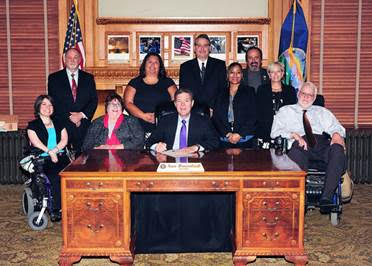
(L to R: Carrie Greenwood, Program Coordinator for the Kansas Youth Empowerment Academy; Ray Roberts, KDOC Secretary; Phyllis Gilmore, DCF Secretary; Keirsten Hale, Vocational Rehabilitation Counselor for Prairie Band Pottawatomie Nation; Governor Sam Brownback; Robert Cooper, Director of the Kansas Commission for the Deaf and Hard of Hearing; Jaime Rogers, DCF Deputy Secretary; Steve Gieber, Director of the Kansas Council on Developmental Disabilities; Stephanie Parkinson, DCF Family Services Special Assistant; Michael Donnelly, DCF Director of Rehabilitation Services)
Kansas Department for Children and Families
TOPEKA–Of the 178,000 working-age Kansans with disabilities, approximately 30 percent are considered engaged in the labor market, and 10 percent of those are currently unemployed.
To raise awareness of disability employment issues, the Kansas Department for Children and Families (DCF) and the Kansas Department of Corrections (KDOC) joined Governor Sam Brownback as he signed a proclamation on Sept. 30, in Topeka, to designate October as Disability Employment Awareness Month.
DCF’s Vocational Rehabilitation (VR) program helped 1,440 Kansans join the workforce in fiscal year 2014. Over the past decade, the program has assisted more than 16,000 Kansans with disabilities become successfully employed, working an average of 30 hours per week.
DCF’s Director of Rehabilitation Services Michael Donnelly says employment opportunities and the employment rate of people with disabilities has improved over the years, but additional progress is needed.
“We face a continual challenge to overcome barriers for employment, which include attitudinal barriers both on the part of the employer and the employee, as well as accessibility issues and preparedness of potential employees,” Donnelly said. “I’m excited to see the tremendous changes that have come about, but I also am aware of the work still to be done.”
Representing other interested organizations in the proclamation signing were Robert Cooper, Director of the Kansas Commission for the Deaf and Hard of Hearing; Steve Gieber, Director of the Kansas Council on Developmental Disabilities; Keirsten Hale, Vocational Rehabilitation Manager for the Prairie Band Potawatomi Nation; and Carrie Greenwood, Program Coordinator for the Kansas Youth Empowerment Academy, which equips young Kansans with disabilities for the future.
“Disability Employment Awareness Month is an especially important opportunity for youth to see successful adults with disabilities out in the community working and contributing to society,” Greenwood said.
KDOC Secretary Ray Roberts said preparing offenders with disabilities to reintegrate into the State’s general population with employment is a high priority for his agency.
“Those with disabilities who leave our correctional facilities can go directly into our workforce development programs that teach them how to get a job and keep a job, and it connects them with the resources they need to be successful,” Secretary Roberts said.
Roughly 75 percent of those who have achieved employment through the VR program report their wages as the primary source of income, an indicator of the decrease of reliance on public assistance and/or Social Security dependency.
In February 2015, the Governor issued Executive Order 15-02, reaffirming the State’s commitment to hiring people with disabilities. The Order directed that State agencies have employment practices which include outreach recruitment and hiring of military veterans and “individuals with physical, cognitive and mental disabilities.”
TOPEKA, Kan. (AP) — Attorneys for Kansas school districts suing the state over its school funding formula have asked the Kansas Supreme Court to lift a stay on a lower court ruling, but the state responded that the lower court failed to properly evaluate the case.
The Topeka Capital-Journal reports a three-judge panel found the state’s newly enacted strategy for financing 285 school districts and cuts to low-income districts were unconstitutional. Kansas Attorney General Derek Schmidt responded by asking the Supreme Court for a stay while he pursued an appeal, which the court granted.
Attorney Alan Rupe argued the state is refusing to comply with its constitutional obligations, but Schmidt noted that performance of Kansas students in reading and math is solid, despite “doomsday hyperbole” by the plaintiffs.
 WYANDOTTE COUNTY- A Kansas teen was injured in an accident just after 10:30p.m. on Sunday in Wyandotte County.