WASHINGTON (AP) — Religion, birth control and President Barack Obama’s health care overhaul are about to collide at the Supreme Court — yet again.
Faith-affiliated charities, colleges and hospitals that oppose some or all contraception as immoral are battling the administration.
At issue are rules that allow them to opt out of covering the contraceptives for women that are among a range of preventive services required to be in health plans at no extra cost.
The administration has provided a work-around for the religious-oriented nonprofit groups. But those groups say it doesn’t go far enough.
A recent federal appeals court ruling is the first to agree with the nonprofits, after seven other appellate panels sided with the administration.
Such disagreements among lower courts often are a trigger for consideration by the Supreme Court.
HUTCHINSON – A Kansas man, found guilty of two counts of abuse of a child, was granted community corrections on Friday.
District Judge Tim Chambers sentenced Brent Burton, 29, Hutchinson, to three years in prison, but then granted three years community corrections.
He then sanctioned Burton with 60-days in the Reno County Correctional Facility as part of the corrections. That will be worked out with his corrections officer as to when he will actually have to serve that time.
This coming after the judge denied a request for a new trial by the defense because of statement made at trial by a witness that the children involved were placed in foster care.
Defense Attorney Bonnie Corrado noted to the court that in fact the kids were taken from the mother and Burton was allowed to care for them. Judge Chambers having already ruled on this issue denied the request.
In May of 2014, Burton was left in charge of the two children, ages 5 and 2, while the mother was away.
He apparently fell asleep, the children left the home and were across the street in a park near a busy city street.
Burton woke up and could not find the kids. He then went looking for them and after finding them in the park apparently punished them to the point that the state said it was abuse.
In closing arguments, the defense contended that he was doing his job as a parent.
Photo by Andy Marso Chris Tuck, a school nurse and health director of Topeka’s Seaman USD 345, said the district of about 4,000 students had 31,762 health room visits last year. Seaman has a nurse in every building, but Tuck said that’s a luxury many school districts can’t afford.
The Kansas Legislature’s in-house auditors released an efficiency study of Topeka’s Auburn-Washburn USD 437 in July, part of a series of school district audits commissioned by lawmakers looking to cut public education costs for kindergarten through 12th grade.
One of the auditors’ findings was that the district could save about $68,000 in salary and benefits and the state could save an additional $9,000 in pension contributions if Auburn-Washburn replaced four of its 10 school nurses with “health aides.”
Brenda Dietrich, who was in the process of retiring as Auburn-Washburn’s longtime superintendent, floated the idea to the district’s parents.
It was not well-received. “A lot of our families in the school district have medical backgrounds,” Dietrich said. “They’ve just come to expect to have a nurse in every building.” But that’s not a reality in many districts, and with state budgets tight and legislators increasingly focused on making sure more K-12 funding goes to the “classroom,” nurses are among the non-classroom staff that could be in the crosshairs.
Dietrich said the medical professionals who live in her district understand that the job of a school nurse is not what it was 50 or even 20 years ago.
Chronic conditions like asthma and diabetes are on the rise among children, as are serious allergies. The movement to mainstream kids with disabilities means there are now far more students in public schools who rely on things like well-functioning feeding tubes, tracheostomy tubes and catheters to not only keep them learning but keep them alive.
“When I was in school I don’t remember a child with a disability in any of our classes, and now it’s very common,” Dietrich said. “It’s a good thing, but you’ve got to have professionals who can take care of those kids in your buildings.”
Nurses also help form individualized education programs (IEPs) for students with disabilities in special education and screen children for vision, hearing and obesity-related problems.
Most districts are not flush with nursing staff.
The total number of school nurses in Kansas did not recover to pre-recession levels until last school year and, because of increases in enrollment, the ratio of students to nurses is still not back to where it was in 2008.
Even so, Dietrich said cutting the number of nurses is “absolutely” a discussion going on in other districts across the state, and it may be one Auburn-Washburn has to revisit soon because of the ongoing budget crunch at the state level.
“I think it will be something the district will have to consider going forward as revenues continue to decline,” Dietrich said. “But I think it’s going to be one of those things where there is nothing left (to cut).”
Student-to-nurse ratios
According to data from the Kansas State Department of Education, there were 701 registered nurses and licensed practical nurses in the state’s public schools during the 2008-2009 school year. The following year that number dipped to 680 and stayed below 700 until last year, when it rose to 715.
The ratio of students per nurse last year was about 690:1. That’s less than the previous five years but still does not match the 674:1 ratio of the 2008-09 school year.
Kansas’ student-to-nurse ratio remains far lower than some other states, and it’s within the general recommendation from the National Association of School Nurses of one nurse for every 750 students.
But Chris Tuck, a school nurse and health director of Topeka’s Seaman USD 345, noted that the one-per-750 recommendation assumes the 750 students in question have no disabilities or chronic illnesses.
“Those are regular ed kids,” Tuck said. “I don’t know of a single school that doesn’t have kids with an IEP.”
The national association recommends ratios of one nurse for every 225 students for populations that require daily professional nursing services.
Tuck, who until recently was on the national association’s board of directors, said the Seaman district of about 4,000 students had 31,762 health room visits last year.
Like Auburn-Washburn, Seaman has a nurse in every building. But Tuck said that’s a luxury many school districts can’t afford.
A survey the national association conducted in 2013 found that 62 of the state’s 286 school districts had no full-time nurse in the entire district.
No state standard for health aides
The staff who audited Auburn-Washburn for the Legislature suggested that district officials substitute “health aides” for some of their nurses, noting that some “peer districts” had more health aides and fewer nurses.
Health aides must work under the supervision of district nurses, but those nurses are not required to be in the same building. And while school nurses are licensed and regulated by the Kansas State Board of Nursing and subject to the board’s training and education requirements, there are no minimum training requirements for health aides under state law. Each district sets its own.
Tuck said in her district health aides must be trained in first aid and CPR. They’re especially valuable to nursing staff when it comes to managing immunization and health screening records, she said.
But in a different setting, like a hospital or nursing home, they would not be allowed to do things like dispense medications or perform tube feedings.
“They can’t do the job of the registered nurse,” Tuck said. “Not legally or safely.”
In a school setting, the health aide can do those things if a licensed nurse delegates those duties. In some Kansas schools, nurses who feel stretched thin are deputizing teachers to dispense medications.
Tuck said she’s aware of the current Legislature’s emphasis on prioritizing classroom spending over other K-12 costs, but she hopes it does not come at the expense of nursing staff. “If a child is not healthy and they do not feel safe, it isn’t going to matter if they’re sitting in that seat at school,” Tuck said. “What we do as school nurses is we support teachers to educate the kids.”
Kansas school nurse numbers
2008-09
Total registered nurses and licensed practical nurses: 701
Students per nurse: 674
2009-10
Total RNs and LPNs: 680
Students per nurse: 704
2010-11
Total RNs and LPNs: 692
Students per nurse: 695
2011-12
Total RNs and LPNs: 678
Students per nurse: 712
2012-13
Total RNs and LPNs: 696
Students per nurse: 697
2013-14
Total RNs and LPNs: 697
Students per nurse: 706
2014-15
Total RNs and LPNs: 715
Students per nurse: 690
(All figures rounded to nearest whole number)
Source: Kansas State Department of Education
Andy Marso is a reporter for Heartland Health Monitor, a news collaboration focusing on health issues and their impact in Missouri and Kansas.
TOPEKA, Kan. (AP) — The Kansas Supreme Court has ruled that being drunk was no excuse for a Topeka man to fire a weapon at law enforcement officers.
The Topeka Capital-Journal reports the court on Friday upheld four convictions against David Allen Kershaw for aggravated assault on a law officer with a deadly weapon.
Kershaw was convicted in Shawnee County District Court and sentenced to 38 months for firing a shot in February 2012 at Shawnee County deputies who responded to a domestic dispute call.
Testimony at trial showed Kershaw had consumed a large amount of whisky and was taking prescription medications, otherwise he wouldn’t have shot at the deputies.
The Court of Appeals reversed his conviction because of an instruction the judge gave to jurors, but the Supreme Court overturned that decision.
WICHITA, Kan. (AP) — Wichita officials are considering a plan to end penalties for people who ride bicycles at night without headlights. And the city will give away hundreds of free lights to riders who need them.
The Bicycle and Pedestrian Advisory Board is recommending that riding without a light be treated as an equipment violation instead of a moving violation. If the City Council approves, violators would receive a “fix-it” ticket and could avoid a fine by putting a light on their bike and getting a police officer to sign off.
The Wichita Eagle reports that riding without a light at night is listed in the city code as a $20 fine, but the fine comes with $67 in add-on costs.
About 140 bikers were cited for headlight violations last year.
SOUTH BEND, Ind. (AP) — The top U.S. environmental regulator says she wants to make sure Volkswagen’s use of software in its vehicles to evade U.S. auto emissions limits was a “one-off,” and other models will be tested aggressively to determine if other carmakers are trying to defeat pollution tests.
Gina McCarthy, Environmental Protection Agency administrator, responded to a question Friday during a news conference on global climate change at Notre Dame university.
“We’re going to continue to aggressively pursue this issue with VW,” she said.
And EPA would not stop there, she said. The agency would “look at all of the other models aggressively and do the testing we need” to foil any efforts to defeat the emissions system.
Earlier Friday, EPA announced plans for more robust emissions testing following the VW revelations.
WICHITA, Kan. (AP) — Wichita police say they’re on pace to fulfill their goal of having all officers equipped with body cameras by the end of the year.
The Wichita Eagle reports the first 106 cameras for the north patrol unit have been ordered and officers will start training on them next month. Interim Police Chief Nelson Mosley says a policy governing use of the cameras is still being developed.
The police department promised the cameras last year during a public hearing in the aftermath of unrest in Ferguson, Missouri, over the shooting of a black 18-year-old by a white police officer.
Cost of equipping all of the officers is estimated at more than $2 million. The U.S. Justice Department awarded the department a $250,000 grant last week to buy the cameras.
WICHITA, Kan. (AP) — A former Kansas jail deputy convicted of sex crimes involving inmates has been ordered to spend more than two years in jail for violating probation.
The Wichita Eagle reports Sedgwick County District Judge Joe Kisner found David Kendall guilty of violating probation when he drove drunk and refused to take a breath test on Jan. 3 in Sumner County.
Kendall was granted probation on those two charges Friday before Kisner ordered him to serve 26 months for violating probation in the sex case.
The former Sedgwick County Jail detention deputy pleaded no contest in June 2014 to six counts of unlawful sexual relations with inmates and one count of making a false information.
Kendall was accused of becoming involved with six different men incarcerated at the jail.
TOPEKA, Kan. (AP) — The University of Kansas Medical Center Research Institute is one of four entities that will get part of a $3.9 million grant over three years for providing telemedicine to underserved rural areas.
The grants will focus on rural children living in poverty and their families. The Topeka Capital-Journal reports the money is coming from the U.S. Department of Health and Human Services’ Office of Rural Health Policy.
HHS estimates that 1.5 million children and 4.5 million adults who live in rural areas have income below the poverty line. It says the poverty rate is 20 percent or higher in more than 300 rural counties.
Telemedicine refers to consulting with a doctor or other health care providers through electronic means such as a web chat.
Mountain lion photographed last year on a trail cam in southeast Kansas – courtesy KDWPT
WELLINGTON, Kan. (AP) — A southern Kansas man says a photo taken on a trail camera last week proves his suspicion that a mountain lion lives on his property.
Danny Holden was cutting up sand near a creek bottom on his Sumner County property on Wednesday when he noticed the image of a large mountain lion on the camera.
The 51-year-old told The Wichita Eagle he had waited a long time for the photo after thinking for several years a mountain lion was living there.
But wildlife biologist Matt Peek with the state wildlife department says it’s more likely that the mountain lion was just passing through from somewhere else on his search for other mountain lions.
He says no evidence has been found of lions are reproducing in the state.
WICHITA, Kan. (AP) — A pilot killed when his twin-engine Cessna 310 plummeted into a Wichita neighborhood has been identified as a former Cessna engineer who owned an aviation company in Colorado.
KSNW-TV reports Wichita Fire Chief Ron Blackwell on Saturday identified the pilot as 47-year-old Aaron Waters of Parker, Colorado.
Family members say he was the owner and president of Aircraft Certification and Systems Engineering, based in Parker.
Waters’ twin-engine airplane crashed soon after takeoff on Friday afternoon, just moments after he radioed that he needed to return to the airport and then quickly issued an emergency call.
Blackwell says Waters likely died a hero because he was able to steer the aircraft away from homes in the area and crashed into some woods near Cowskin Creek.
—————
WICHITA, Kan. (AP) — A twin-engine Cessna 310 crashed near a west Wichita neighborhood Friday killing the pilot Aaron Waters, Parker, CO.
Wichita Fire Chief Ron Blackwell says the plane crashed about 4 p.m. in a wooded area behind some homes.
Blackwell says the pilot was the only person on board the plane. He says there was no fire at the crash site and no homes in the area were seriously damaged.
The pilot had taken off from a Wichita airport and then radioed that the plane was experiencing problems. Blackwell says the pilot was told to return to the airport and that is when the plane went down.
The fire chief says the investigation is continuing. The pilot’s identity has not been released. According to tracking site Flightaware.com, it was headed to Centennial Airport in Denver.
————
WICHITA, Kan. (AP) — A twin-engine Cessna 310 crashed near a west Wichita neighborhood Friday, killing the pilot.
Wichita Fire Chief Ron Blackwell says the plane crashed about 4 p.m. in a wooded area behind some homes.
Blackwell says the pilot was the only person on board the plane. He says there was no fire at the crash site and no homes in the area were seriously damaged.
The pilot had taken off from a Wichita airport and then radioed that the plane was experiencing problems. Blackwell says the pilot was told to return to the airport and that is when the plane went down.
The fire chief says the investigation is continuing. The pilot’s identity and the flight plan of the plane were not immediately available.
MCPHERSON-Law enforcement authorities in McPherson County are investigating a report of criminal damage to buildings in McPherson.
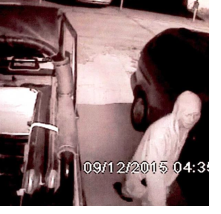
Police reported in a media release that between 10p.m. on Saturday, September 12th and 6:45 AM on Sunday, September 13, someone criminally damaged several buildings, signs, and vehicles in the 800-1600 blocks of East Euclid Street.
The damage, in excess of $1,000 was caused by black spray paint, according to police.
Surveillance video captured images of a suspect. If you or someone you know has information about this crime or can identify the individual pictured, please, phone McPherson KS Police Department at (620) 245-1200 and leave your contact information or call McPherson County Crime Stoppers at (620) 241-1122.
NORTONVILLE- Two people died in an accident just after 5a.m. on Saturday in Jefferson County.
The Kansas Highway Patrol reported a 1999 Cadillac Deville driven by Donte Gardner, 25, Oklahoma City, OK., was northbound on U.S. 59 just beyond the city limits of Nortonville.
The driver failed to stop at the intersection of Kansas 4 Highway. The Cadillac went into the ditch and rolled multiple times.
Gardner was pronounced dead at the scene and transported to Frontier Forensics.
A passenger Tevin Gillum, 22, Atchison, was transported to KU Medical Center where he died.
Another passenger Kenton Russell II, 25, Council Bluffs, IA, was not injured. He was the only occupant wearing a seat belt, according to the KHP.