We have a brand new updated website! Click here to check it out!

Mental health advocates question 72-hour involuntary hold proposal

By Dave Ranney

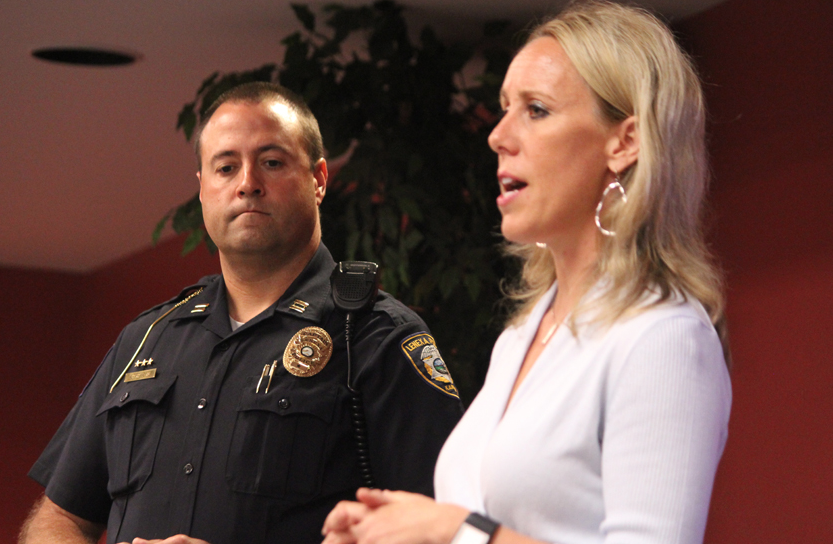
Photo by Dave Ranney Wade Borchers, left, a captain with the Lenexa Police Department, and Julie Solomon, chief strategic management officer at Wyandot Mental Health Center, discuss a proposal that would allow treatment facilities to hold people in crisis situations for up to 72 hours as involuntary patients. They spoke Wednesday at a meeting of the Kansas Mental Health Coalition

Several advocates for people with mental illness on Wednesday panned a proposal that would allow treatment facilities to hold people in crisis situations for up to 72 hours as involuntary patients.

“This is a deprivation of liberty,” Mike Burgess, a spokesperson with the Disability Rights Center of Kansas, said during a meeting of the Kansas Mental Health Coalition. It would be better, he said, to expand access to voluntary treatment.

“Instead of creating something new, we should be tweaking the existing processes to make them more community-minded,” Burgess said. “We are supportive of more voluntary opportunities for folks.”

Glen Yancey, a former executive director with Breakthrough House, a Topeka-based day program for people with severe and persistent mental illness, said the measure would mean that an already-underfunded mental health system will be expected to do more with less.

“We are in a fiscal climate of scarcity rather than adequacy,” said Yancey, who’s also a past president of the mental health coalition. “We’re talking about this because our budgets have been decimated. I’m concerned about taking away civil rights in that environment.”

The proposal, which is still in draft form, is the product of an informal coalition of law enforcement, district court and mental health officials from Wyandotte, Johnson, Douglas and Shawnee counties. The group has been collaborating for about 18 months. Julie Solomon, chief strategic management officer at Wyandot Mental Health Center, said the proposal is meant to give law enforcement officers a safe place to take someone who appears to be mentally ill and in crisis.

Many of these people often end up in jail or in a state hospital because they pose a danger to themselves or others, are uncooperative and have nowhere else to go.

“With the system the way it is now, we’re criminalizing an illness, we’re increasing stigma and we’re increasing the likelihood of their being charged with a felony,” Solomon said. “Because once they’re in jail if they assault a corrections officer, it’s an automatic felony.”

Wyandot Mental Health Center data, she said, show that an average of 65 of the center’s patients are known to be in the county jail in any given month.

“Collectively, these 65 people are spending 346 days in jail per month at $92 per person per day,” Solomon said. “And the unfortunate reality is that the vast majority of them — more than 80 percent — are in for very minor crimes … city misdemeanors.” Wade Borchers is a captain with the Lenexa Police Department who also is active in crisis intervention training efforts throughout the state.

He said his officers would much rather take someone who is in a mental health crisis and who hasn’t committed a serious crime to a treatment center than to jail or an emergency room.

“If we take them to an emergency room, we’ll routinely have an officer there for eight to nine hours, waiting,” he said. “But that’s in Johnson County. We’re fortunate. In other parts of the state, you’ll have officers spending two and three days in the emergency room.”

From a law enforcement perspective, Borchers said, it makes more sense to take someone in crisis to jail than to an emergency room because an officer standing next to a hospital bed is “no different” from a corrections officer watching them in jail. “There may be more dignity in a hospital setting, but the end result is the same,” he said.

“They’re not getting treatment, and you’ve got law enforcement people making decisions that ought to be made by mental health professionals.” Borchers said he shared the civil liberty concerns that Yancey and Burgess raised. But a lack of options —such as the proposed involuntary crisis-stabilization facilities — leads to people being taken to jail because of illness rather than crime, he said.

“What we don’t have today is right-away treatment,” he said. The proposal, Solomon said, is not a requirement of treatment centers. Instead, it would create an option for treatment facilities to hold someone for up to 72 hours. Most people in mental health crises, Solomon said, can be stabilized within 72 hours. Coalition members are expected to discuss the proposal again next month. “Part of what we do is develop consensus statements and polices,” said Susan Crain Lewis, the coalition’s president.

“And this may or may not be an issue that we can come to a consensus on. That remains to be determined.” Many coalition members, Lewis said, are wary of “building a new system that would further divert funding from the one that’s in place.”

Eric Harkness, a past president of the National Alliance on Mental Illness group in Topeka, said he won’t support the proposal. “I’m very uncomfortable with this,” he said, citing recent cuts in mental health services, the moratorium on admissions to Osawatomie State Hospital and proposed restrictions on access to Medicaid-funded prescription drugs.

“And now they want to take away my civil liberties for 72 hours?” Harkess said. “I feel like I’m under attack.” Solomon said the bill’s proponents have asked to meet with groups that represent the state’s police chiefs, sheriff’s departments, hospital administrators, county attorneys and district court judges. “We’re asking for feedback,” she said.

“We want to hear their concerns.”

Dave Ranney is a reporter for Heartland Health Monitor, a news collaboration focusing on health issues and their impact in Missouri and Kansas.

2 accused of growing marijuana make Kan. court appearance

HUTCHINSON – A man and woman accused of growing100 or more marijuana plants made an appearance in Reno County Court on Thursday morning for the reading of charges.

John Galestine and Darla Conners are charged with the cultivation of marijuana and possession of drug paraphernalia with intent to distribute a controlled substance for sale.

The alleged crimes occurred in Buhler between Jan. 30, and Feb. 3, 2014.

The first count against the two is a level one-drug felony with a sentencing range of between 11-years and 8-months to 17-years in prison.

In court, Judge Joe McCarville set bond for both at $5,000, even though Conners had to be brought back to Reno County from Pennsylvania.

The two are expected back in court on October 14.

Judge: Prison sentences upheld in Kansas overdose case UPDATE

Dr. Stephen Schneider and his wife, Linda

WICHITA, Kan. (AP) — The latest developments in the re-sentencing of Kansas doctor and his wife who were convicted of running a moneymaking conspiracy at a clinic that prosecutors have linked to 68 drug-overdose deaths (all times local):

3:40 p.m.

A federal judge has upheld the decades-long prison sentences for a Kansas doctor and his wife who were convicted in a moneymaking conspiracy linked to 68 drug overdose deaths.

U.S. District Judge Monti Belot on Thursday re-sentenced Dr. Stephen Schneider to 30 years in prison. Schneider’s wife, Linda, was re-sentenced to 33 years in prison.

The Haysville couple was convicted in 2010 of conspiracy to commit health care fraud resulting in deaths, unlawfully prescribing drugs, health care fraud and money laundering.

The judge ordered a new sentencing after the U.S. Supreme Court ruled last year that a victim’s drug use must be the actual cause of death, not just a contributing factor. But on Thursday, the judge upheld the original prison sentences.


3:20 p.m.

A federal judge has decided not to order restitution in the case of a Kansas doctor and his wife who were convicted in a moneymaking conspiracy linked to 68 drug overdose deaths.

U.S. District Judge Monti Belot said Thursday that it would be nearly impossible to assess in the criminal case how much money the couple owed former patients. Belot also noted that numerous lawsuits have been filed in the case.

The judge made the decision while deciding how to resentence the couple.

Dr. Stephen Schneider told the court he was truly sorry if he and his wife hurt the community and said he hoped for mercy. His wife, Linda, also asked the judge for compassion.

Assistant U.S. Attorney Tanya Treadway argued this wasn’t a case for mercy. She says the deaths of at least 68 people have been linked to the clinic, and many other people became addicted.

2 p.m.

A federal judge says he anticipates an appeal of whatever happens at the new sentencing hearing for a Kansas doctor and his wife, who were convicted of a moneymaking conspiracy linked to 68 drug-overdose deaths.

U.S. District Judge Monti Belot says he plans to issue his ruling from the bench Thursday after taking up the separate cases of Stephen Schneider and his wife, Linda.

The Haysville couple was convicted in 2010 of conspiracy to commit health care fraud resulting in deaths, unlawfully prescribing drugs, health care fraud and money laundering. The now 62-year-old doctor was initially sentenced to 30 years in prison; his 57-year-old wife was sentenced to 33 years.

But the judge ordered a new sentencing after the U.S. Supreme Court ruled last year that a victim’s drug use must be the actual cause of death, not just a contributing factor.

22-year-old man fatally shot in Kansas City, Kansas

KANSAS CITY, Kan. (AP) — Authorities are investigating after a man was fatally shot in Kansas City, Kansas.

Police say a sport utility vehicle circled a block several times early Thursday before shots were fired at three people who were standing outside a residence. A 22-year-old man who exchanged gunfire with the SUV shooter was hit. The wounded man died about 2 ½ hours later at a hospital.

The name of the victim wasn’t immediately release. Authorities are urging anyone with information to come forward.

Petition hopes to influence proposed name change at KSU-Salina

KSUSalina740SALINA -Kansas State University President Kirk Shultz announced last week that the name of the Salina campus would change to Kansas State University Polytechnic Campus.

Some area residents, alumni and others are not happy with the proposed name change. They have started a petition drive in an effort to influence the decision.  The petition drive can be found here.

The Kansas Board of Regents and the state legislature may have to approve the new name.   The university responded to concerns about the proposed change, “We understand that the recent name change proposal has created several valid questions, and we appreciate the feedback. The largest inquiry has probably been whether or not the campus will still be a part of the K-State system. The answer is yes. We are not separating off from K-State and will continue to be Wildcats and bleed purple. EMAW! Many students are wondering about their degrees – the diplomas will still say “Kansas State University.” This campus has been following a polytechnic model for years and the proposed name change will reflect who we are and how our students learn. For more information, we’ve set up a page of Frequently Asked Questions that you can visit.

Kan. woman hospitalized after 2 vehicles hit a deer

JEFFERSON COUNTY – A Kansas woman was injured in an accident just before 7a.m. on Thursday in Jefferson County.

The Kansas Highway Patrol reported a 2011 Toyota Sienna driven by Garrett Spreer, 14, Grantville, was eastbound on U.S. 24 just west of Kiowa Road.

The Sienna struck a deer. The deer went into path of and was also hit by a 2009 Toyota Yaris driven by Samantha Lee Koenegstein, 27, Leavenworth, that was traveling westbound.

Koenegstein was transported to St. Francis Medical Center. Spreer and a passenger in the Sienna were not injured.

All were properly restrained at the time of the accident, according to the KHP.

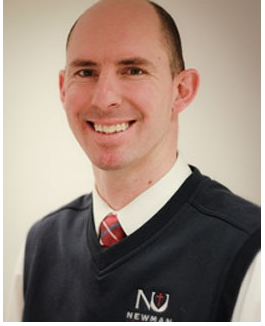
Newman University dean performs Heimlich on choking provost

WICHITA, Kan. (AP) — A Newman University dean is the talk of campus after saving the provost of the Wichita school from choking.

The Wichita Eagle reports that Provost Michael Austin says a Starburst candy was sucked into his windpipe Tuesday when he coughed. Newman’s dean of students Levi Esses was visiting with a student worker when he noticed Austin having what he thought was a coughing fit.

Esses says Austin initially waved his hand like he was OK. But as Austin continued walking down the hallway, he began to wheeze loudly.

Esses asked him if he was choking, and Austin nodded his head and spread his arms. Esses performed the Heimlich maneuver on him until the candy became dislodged.

Esses later received applause from students. He says that was “kind of cool.”

Kan. teen arrested after alleged bomb threat at high school

WINFIELD- Law enforcement authorities in Cowley County are investigating a reported bomb threat at Winfield High School.

Police reported in a media release the school resource officer of the Winfield Police Department was contacted just after 6:45 pm on Wednesday after alleged bomb threat at the Winfield High School.

Witnesses to this threat were interviewed and an alleged suspect was named.

The Winfield Police Department assisted by school administration of School district 465 did a search of the school and found nothing suspicious.

The alleged suspect, Reuben L. Graber, 18, was interviewed and booked into the Cowley County jail on one count of criminal threat.

At this time there is no reason to believe that anyone else is involved and there is no safety issues at the school, according to police.

Nearly $100K in bonds for suspect in Barton Co. combine chase

Lamb- photo Barton Co. Sheriff

GREAT BEND – Law enforcement authorities in Barton County set the bond for the man who stole a combine Tuesday night and led law enforcement on a chase throughout Ellinwood.

Kenneth Lamb, 37, Ellinwood was booked at the Barton County Jail for felony theft with a bond set for $50,000, two counts of aggravated assault on law enforcement, DUI, felony criminal damage to property, and reckless driving with a bond set at $40,000, and a charge of felony criminal damage to property with a bond set at $5,000.

Lamb stole the combine Tuesday evening and took law enforcement on a chase around Ellinwood causing damage to several power poles, a pickup, and law enforcement vehicles.\

Combine chase on Tuesday night- photo Barton Co. Sheriff

After firing approximately 18 rounds at the implement, the Ellinwood Police Department and the Barton County Sheriff’s Office were able to disable the combine and arrest Lamb.

Huelskamp statement on Pope Francis’ historic address

Office of Rep. Tim Huelskamp

WASHINGTON – Following Pope Francis’ address the joint session of Congress, Congressman Tim Huelskamp, R-Kan., released the following statement:

“My family and I were blessed to hear from Pope Francis yesterday and today. He’s inspired us to continue fighting for our beliefs rooted in the clear teachings of our Catholic faith, especially the sanctity of life, marriage, family, and religious liberty. George Washington reminded us in his farewell address that national morality cannot prevail in exclusion of religious principle. I am praying Francis’ visit inspires Catholics and non-Catholics alike to return to our nation’s founding principles and reliance on our Heavenly Father.”

As one of the only two members of Congress to attend Catholic seminary, Huelskamp has been inspired by his Catholic to defend the unborn, restore traditional marriage, and protect religious liberty. He also has first-hand experience navigating the U.S. immigration system after having gone through the process for two of his adopted children.

Driver charged with sexual assault of disabled Kan. woman

OLATHE, Kan. (AP) — A suburban Kansas City transport van driver has been ordered to stand trial in the sexual molestation of a young woman who is developmentally disabled.

The Kansas City Star reports that 74-year-old Terry Mize Curry was bound over for trial Wednesday on the felony charge of aggravated sexual battery after waiving his preliminary hearing.

Johnson County court documents say that surveillance video captured Curry sexually assaulting a 20-year-old woman last September. The woman was a participant in a program for young adults with special needs operated by the Olathe school district. Curry was a driver for the company that contracted with the school district to provide transportation.

The charge says the woman was unable to give consent to sexual contact because of “mental deficiency or disease.”

Hays-based company’s drone demo leaves local farmers impressed

By COOPER SLOUGH
Hays Post

A small crowd gathered just west of Antonino on Saturday as Apis Remote Sensing Systems, a drone distributor based in Hays, took the opportunity to show the public what their products can do.

Co-owners Beau Dealy and Curt Moore say drones are an invaluable resource for today’s farmers.

At the moment, Apis carries two types of drones. The first is a carbon fiber wing called the AgEagle, which is launched via catapult and cruises at 400 feet at 40 mph. The AgEagle follows a preset flight path before landing softly at a predetermined location.

The second drone Apis carries is called the DJI Phantom, which is a quadcopter drone that carries a camera beneath the air frame.

The drones use sensors that capture NIR (Near Infrared) images, which are then stitched together by a computer to show a color-coded map measuring topography and temperature. That information then can be used to gauge crop health.

For more information, contact Beau Dealy at [email protected] or call (785) 261-9591.

To view photos from Saturday’s flights click here: Normal View Infrared View Topographical View

For video of the drones in action, check out the video above.

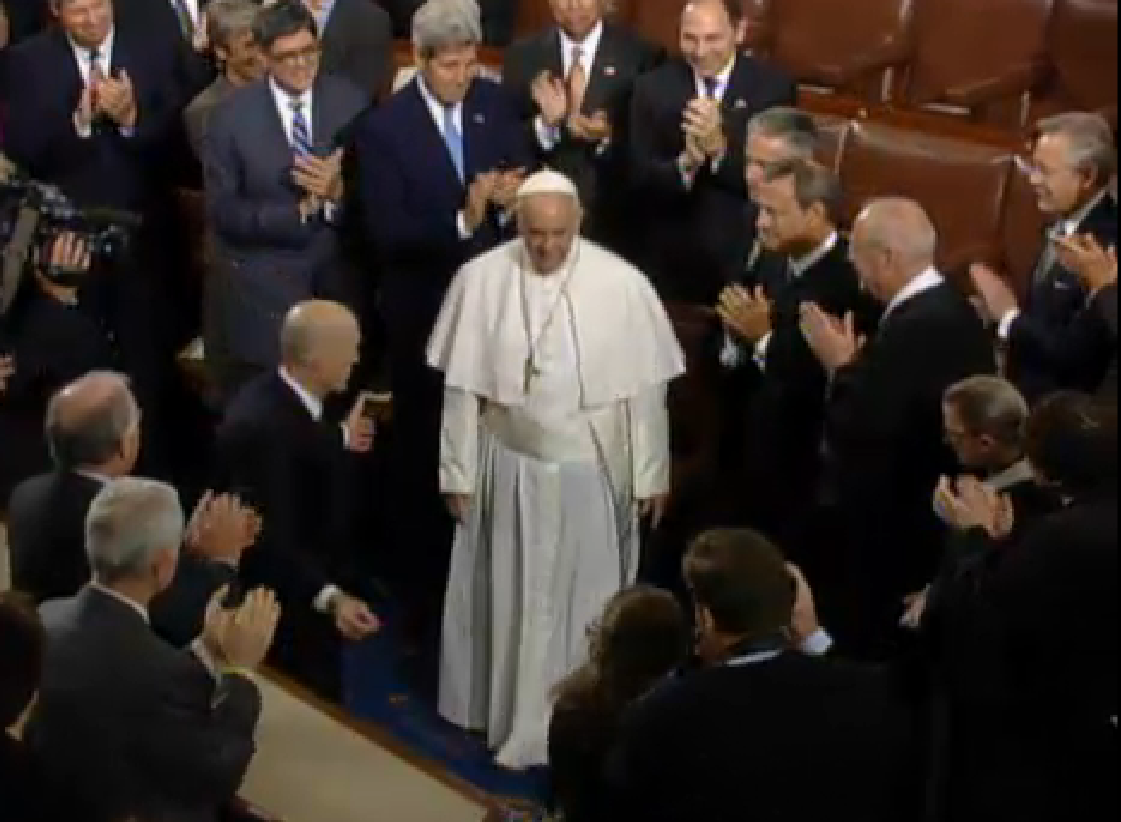
Pope lectures Congress in historic speech

Screen Shot 2015-09-24 at 9.10.04 AMWASHINGTON (AP) — Pope Francis on Thursday warned Congress that fight against religious extremism must not trample on freedom.

He urged Congress members — and the United States as a whole — not to be afraid of immigrants but to welcome them as fellow human beings.

In his historic speech to lawmakers, the pontiff said people are not things that can be discarded just because they are troublesome. Francis also issued a call for an end to the death penalty in the U.S. and across the world. Francis says that every life is sacred and society can only benefit from rehabilitating those convicted of crimes.

The pontiff did not specifically mention abortion. But he urged lawmakers and all Americans to “protect and defend human life at every stage of its development.”

In addition, Francis used his speech to Congress to express sympathy for American Indians for their “turbulent and violent” early contacts with arriving Europeans. But he says it is hard to judge past actions by today’s standards.

Watch the Pope’s speech to congress here

9:20 a.m.

Pope Francis met briefly with House Speaker John Boehner in an opening act of his historic visit to Congress.

Awaiting the pope’s arrival, Boehner repeatedly straightened his tie and shifted from foot to foot, and joked and chatted with reporters about the history of the House furnishings.

When the pontiff arrived, their visit lasted only a few minutes. Tens of thousands wait outside, with lawmakers and guests seated in the House chamber for the first speech by a pope to Congress.

___

8:50 a.m.

The pope greeted well-wishers outside the Vatican’s diplomatic mission on his way to his historic visit to Congress.

As he did Wednesday, Francis lingered with the excited crowd outside the mission, on another sunny day. Tens of thousands await him on Capitol Hill.

The pope shook hands and touched the faces of schoolchildren, dressed up in ties or Sunday dresses. As the pope moved past, one young boy shouted, “Oh yeah! I got a selfie.”

After his speech to Congress, Francis is expected to go to the Hall of Statues, where there is a statue of America’s newest saint, Junipero Serra, whom Francis canonized on Wednesday.

Joined by House Speaker John Boehner, he’ll then offer to the Library of Congress a special edition of the Bible. Then he’s to go to a balcony to greet and offer a benediction to the throngs below.

___

8:30 a.m.

The Federal Aviation Administration is reminding people that Washington, New York and Philadelphia are no-drone zones during the pope’s visit to the U.S.

The FAA has put in flight restrictions through Sunday. That means flying a drone or unmanned aircraft anywhere in those cities is against the law and may result in criminal or civil charges.

Pope Francis leaves Washington on Thursday for New York and goes to Philadelphia on Saturday.

___

8:20 a.m.

House Democratic Leader Nancy Pelosi is bringing Tom Steyer, who’s a California-based environmentalist and top Democratic donor, and Marc Benioff, a business software CEO, to the House gallery for the pope’s speech.

Among other guests, she’s also invited Mary Kay Henry, international president of the Service Employees International Union, and Matilda Cuomo, mother of New York Gov. Andrew Cuomo and widow of former Gov. Mario Cuomo.

___

8:15 a.m.

Security is tight at the Capitol as crowds gather for Pope Francis’ arrival.

Streets are closed within a three-block radius of the Capitol and police advise visitors to avoid driving to the scene. The city’s subway was packed with riders hours before his speech to Congress but few delays were reported.

Police are visible throughout the Capitol complex and visitors are encountering a series of security checkpoints.

___

8:10 a.m.

“Mr. Speaker, the pope of the Holy See!”

Those booming words will announce Pope Francis as he arrives for his historic speech as the first pontiff to address a joint session of Congress.

The man who will perform the ceremonial call is more accustomed to protecting famous people than introducing them.

Paul Irving spent his career in the Secret Service. He was a special agent for 25 years and the service’s assistant director from 2001 to 2008.

Speaker John Boehner chose him as House sergeant-at-arms in 2012.

When he’s not introducing dignitaries before Congress, his main duty is to oversee security in the House side of the Capitol.

___

8:05 a.m.

Tens of thousands already are gathering on the front lawn of the Capitol to watch the pope’s speech on Jumbotron screens and maybe catch a glimpse of Francis. He is expected to wave from a balcony a few hundred yards away.

Libby Miller of Frederick, Maryland, says her friends all told her she was crazy for schlepping to Capitol Hill with her 4-year-old son, Camden, and 2-year-old daughter, Avery.

She left the house before 5 a.m. and settled into a spot on the lawn by 7:30 a.m., about two hours before the pope’s scheduled arrival. And she was prepared to keep her kids occupied — iPad loaded with games, toy trucks, snacks and a sippy cup.

Miller says she wants her kids to be there for an important moment in history. They won’t understand it now, but she says “they’ll get it eventually.”

___

7:45 a.m.

Senate Majority Leader Mitch McConnell is marking Pope Francis’ visit to the Capitol in the modern way: on YouTube.

The Kentucky Republican says in a video Thursday morning that Francis’ elevation to pope “heralded a new beginning for Catholics in Kentucky, across America and from every corner of the world.”

McConnell praises the pope’s “unique and engaging style” and says Americans have watched the pope reach new and different audiences, “both from within his flock and far beyond it.”

___

7:30 a.m.

Joint gatherings of Congress for dignitaries’ speeches are usually a recipe for competing partisan ovations and chummy backslaps and handshakes.

This time, House and Senate leaders have asked lawmakers: Please, not when the pope is here.

The leaders sent an appeal to lawmakers in advance of Pope Francis’ speech Thursday morning, asking them to act with decorum in his presence. Among the no-no’s — reaching out for handshakes or conversation with the pope and those accompanying him as they walk down the center aisle of the grand House chamber.

To drum the lesson in, the leaders’ letter reminded legislators that the historic event will be seen on television “around the whole world and by many of our constituents.”

Leaders have made similar appeals for State of the Union addresses, with little luck.

___

7 a.m.

With his speech Thursday morning, Francis will become the first pope to address Congress. But the list of foreign leaders and dignitaries who’ve done so is long.

The House historian’s office says it’s happened 117 previous times.

Francis won’t be the first religious leader to address the House and Senate. Technically that was Britain’s Queen Elizabeth II in 1991, since the British monarch heads the Anglican Church.

The most addresses to Congress? Three, by both British Prime Minister Winston Churchill and Israeli Prime Minister Benjamin Netanyahu.

The historian’s office lists the first such speech in 1874. That’s when Congress heard King Kalakaua of Hawaii, still an independent kingdom then.

The first speech by a foreign leader to lawmakers was in 1824 by the Marquis de Lafayette, the French general who helped the colonies win independence. But he addressed only the House.

___

6:45 a.m.

Francis’ speech to Congress is a personal and political coup for House Speaker John Boehner, an Ohio Republican and Catholic.

Boehner unsuccessfully invited the two previous popes, John Paul II and Benedict XVI, to speak. He began trying in 1994 during his second House term, organizing a petition by lawmakers saying John Paul II was a “world leader, ambassador of peace and an important catalyst in the fall of the Iron Curtain.”

Francis is the fourth pope to meet with a president in the U.S., including presidential visits on six separate trips by John Paul II.

The first was Paul VI’s 1965 New York meeting with President Lyndon Johnson. Benedict XVI met President George W. Bush in 2008.

Francis’ coming speech at the United Nations will be the fifth by a pope.

Copyright Eagle Radio | FCC Public Files | EEO Public File