TOPEKA–The Kansas Department for Children and Families (DCF) is offering a reprieve for Kansans who face prosecution for failure to pay child support, as an opportunity to help them get back on track with their payments.
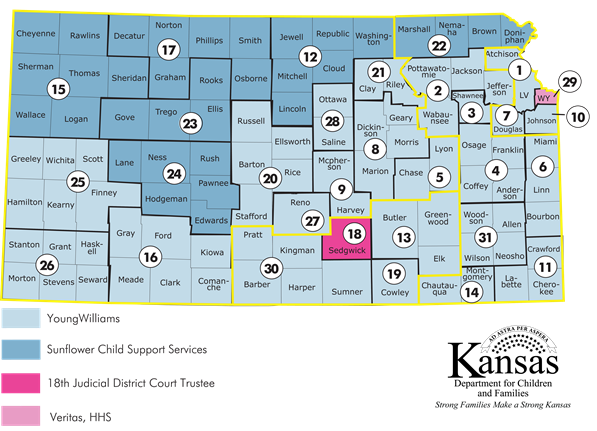
DCF’s Child Support Services (CCS) has slated Sept. 25 as Child Support Bench Warrant Amnesty Day statewide to offer parents the chance to begin making payments without facing prosecution. Parents who have bench warrants on their child support cases involving DCF are invited to report to various locations around the state to have their warrants lifted.
By reporting to one of the designated locations and making a payment either of $500 or two months’ worth of support, whichever is the lesser amount, non-custodial parents will have their warrant lifted.
“By lifting these warrants, it’s our goal to get the money the children deserve and help parents get in the routine of making payments,” DCF CSS Director Trisha Thomas said.
DCF offered amnesty in Wichita last year and more than 50 bench warrants were cleared.
Thomas said warrants are used as an enforcement tool when non-custodial parents fail to appear at contempt hearings. Typically, these are issued after numerous other collections attempts have been made or in cases where self-employed, non-custodial parents are believed to be avoiding payments and attempting to hide assets.
Thomas said approximately 40,000 Kansans’ have failed to make their child support payment within the last 45 days. The effects of missed child support are felt by children and families. But DCF Secretary Phyllis Gilmore also emphasized the positive result of parental involvement when payments are made.
“We know that when non-custodial parents pay their child support, they are more invested in the lives of their children financially and emotionally,” Secretary Gilmore said. “It is our goal to promote healthy families by encouraging that investment.”
In addition to Child Support Bench Warrant Amnesty Day, other efforts to collect child support for Kansas families include:
· The State routinely sends postcards to parents after they fail to make a payment for 45 days, as a reminder with information on how to make a payment.
· DCF recently launched an educational campaign to encourage employers to report new hires to the Kansas Department of Labor. After a new hire is reported, an income withholding order can ensure the court-ordered support goes directly to the custodial parent for the child.
Thomas said the agency is trying to make it easier for those without checking accounts to make payments. Ideas under consideration include kiosks that would accept cash or other forms of payment, and arranging for payments to be made at various stores.
WASHINGTON, D.C. – U.S. Senator Pat Roberts, R-Kan., Chairman of the Senate Committee on Agriculture, Nutrition and Forestry, today is pleased to announce Senate passage of H.R. 2051, the Agriculture Reauthorizations Act of 2015.
The bipartisan legislation, which reauthorizes Mandatory Price Reporting (MPR), the National Forest Foundation Act and the U.S. Grain Standards Act (USGSA), was favorably reported out of the Agriculture Committee Thursday, Sept. 17. For more on the bill, click here.
“I’m proud to lead a Committee that gets things done in a timely manner,” said Chairman Roberts. “We reauthorized three bills in one day – that’s practically unheard of in Congress.”
“This is not the last you’ll hear from the Agriculture Committee this year. We have a number of legislative items to consider, and I believe we can also approve those in a bipartisan manner.”
H.R. 2051 reauthorizes MPR for livestock through 2020. MPR requires meat packers to report to USDA the prices they pay for cattle, hogs, and sheep purchased from farmers and ranchers for slaughter, as well as the prices they receive for the sale of wholesale beef, pork, and lamb. MPR requires USDA to issue daily, weekly, and monthly reports that detail the various transactions occurring in livestock and meat markets. This information provides producers and entities in the livestock industry a more transparent view of market conditions, allowing them to make informed decisions when negotiating the sale of their livestock.
The National Forest Foundation, originally chartered by Congress in 1992, serves as a non-profit partner of the U.S. Forest Service to leverage public and private funding to restore and enhance the nation’s National Forests and Grasslands. H.R. 2051 extends the National Forest Foundation authority through fiscal year 2018 with discretionary funding at $3 million per year, which is consistent with recent annual appropriations funding levels.
H.R. 2051 also reauthorizes USGSA through 2020. USDA’s Federal Grain Inspection Service is responsible for establishing official marketing standards for U.S. grains and oilseeds and managing inspection. Included in this reauthorization is language that improves predictability and transparency for U.S. commodity producers, exporters and trading partners through increased reporting and certification requirements.
H.R. 2051 now heads back to the House for consideration.
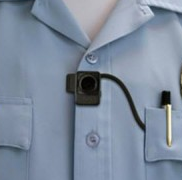
KANSAS CITY, Kan. (AP) — The federal government has awarded grants for law enforcement body cameras to Wichita, Dodge City and Wyandotte County and Kansas City, Kansas.
U.S. Attorney Barry Grissom said Monday the U.S. Justice Department grants are among $23.2 million awarded to 73 law enforcement agencies in 32 states to increase the use of body cameras. President Barack Obama has proposed buying 50,000 body cameras for law enforcement agencies in three years.
Wyandotte County and Kansas City, Kansas, will receive $352,500; Wichita will get $250,000 and Dodge City will receive $45,205.
The money can be used to establish a plan to use the cameras and provide training before the cameras are purchased.
The grants require a 50/50 local match. And the local governments must pay for long-term storage of information from the cameras.
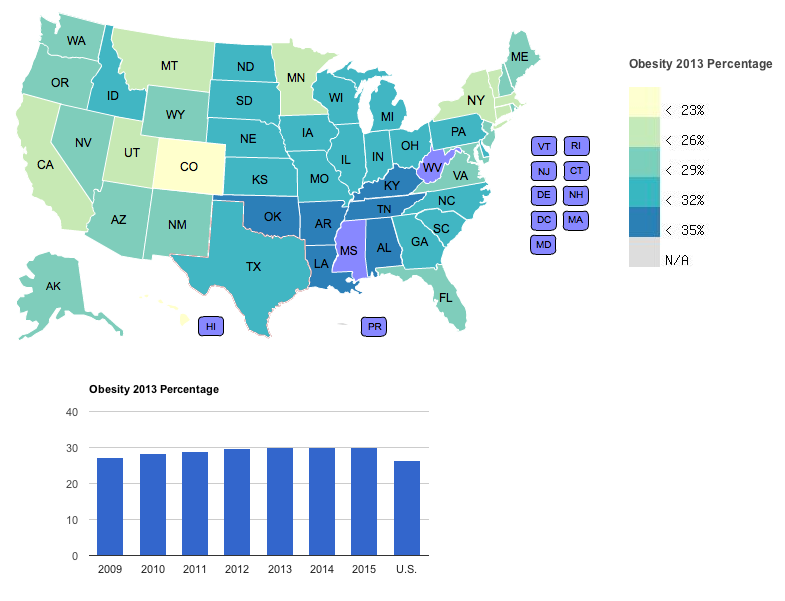
NEW YORK (AP) — New government data shows that in most states, the rate of adult obesity is not moving.
Results from a telephone survey show obesity rates stayed about the same in 45 states last year. There were small increases in Kansas, Minnesota, New Mexico, Ohio and Utah.
Some experts said they are glad, overall, that obesity rates aren’t getting worse.
The 2014 survey found that in 22 states, 30 percent or more of the population was obese. They were mostly in the South and Midwest. Three states — Arkansas, Mississippi and West Virginia — had obesity rates over 35 percent.
The government Monday released the rates, which were analyzed in a separate report by the advocacy group, Trust for America’s Health.
HUTCHINSON – A 25-year-old Kansas man arrested over a week ago in a home invasion case appeared via-video from the Reno County Correctional Facility where he was read the formal charges Monday.
Wayne A. Sprague, Beloit, has been charged by the state for aggravated burglary, two counts of aggravated battery, criminal threat and possession of methamphetamine.
On September 13, a Hutchinson woman reported to police that she found a man inside her home just before 7 a.m.
She ran to her bedroom where her husband was still asleep.
Police say Sprague followed her, allegedly forced her onto the bed and began choking her.
The victim’s husband work up and then began struggling with Sprague.
When police arrived, they first took Sprague to Hutchinson Regional Medical Center to be checked out, and then to the Reno County Correctional Facility.
He remains jailed on a $60,000 bond and Judge Joe McCarville scheduled the case for a waiver-status docket on October 14.
WICHITA, Kan. (AP) — A Wichita man pleaded guilty in a credit union robbery that ended when he wrecked his car.
U.S. Attorney Barry Grissom said in a news release that 41-year-old Harold Carl Deloach Jr., pleaded guilty Monday to robbing the Credit Union of America in January. Prosecutors say he gave the teller a note saying “Put the money in the bag.”
He was arrested after rolling his car in a residential yard about three miles from the bank.
Sentencing is set for Dec. 14. Deloach faces up to 20 years in federal prison and a fine up to $250,000.
MANHATTAN – Law enforcement authorities in Riley County are investigating after a woman was arrested with an explosive device.
The Riley County Police Department reported Heather Spiller, 35, Manhattan, was arrested just after 9:30p.m. on Friday in the 500 block of Vattier Street in Manhattan for the criminal use of an explosive (possession, manufacture, or transport commercial explosives) which was listed on a warrant originating in Riley County.
In August, police found that Spiller was in possession of a military explosive fuse assembly.
She is being held in the Riley County jail on a bond of $5,000.00.
An informal coalition of Kansas mental health advocates is close to proposing legislation that could prevent hundreds of people with serious mental illnesses from ending up in jails, emergency rooms or a state-run hospital.
Bill Rein, commissioner of behavioral health services at the Kansas Department for Aging and Disability Services, is part of a group proposing to create ‘receiving centers’ in Kansas to treat patients with serious mental illnesses for up to 72 hours. CREDIT DAVE RANNEY / HEARTLAND HEALTH MONITOR
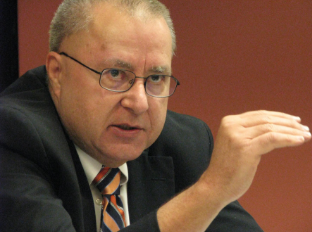
“This has the potential to be one of those win-win-win situations that, frankly, in my 38-year career I can honestly say doesn’t come along very often,” said Bill Rein, commissioner of behavioral health services at the Kansas Department for Aging and Disability Services.
“If this is done right, it would be better for the person who’s in crisis, better for law enforcement, better for the courts,” he said. “Better for everyone.”
The proposal would let Kansas communities open secure “receiving centers” that would be allowed to hold people who appear to be seriously mentally ill and in crisis for up to 72 hours. These admissions would be involuntary, and patients would not be allowed to leave early unless they are assessed as unlikely to harm themselves or others.
Under current law, involuntary patients cannot be held for more than 24 hours — 48 hours on a weekend — without first being taken to court and having a judge decide whether they pose a danger to themselves or others.
Oftentimes, the patients remain in jail or are taken to the state hospitals in Larned or Osawatomie because they are in crisis, uncooperative and have nowhere else to go.
“What happens to these people now is absolutely ridiculous,” said Wyandotte County District Court Judge Kathleen Lynch, who has taken an active role in drafting the proposal.
Most people in mental health crises, she said, can be stabilized within 72 hours. Depending on their condition, they then would be released, allowed to remain at the receiving center or sent to one of the state hospitals.
“The only time they would come to court would be if they were so acute, they didn’t stabilize within 72 hours,” Lynch said.
‘Out the back door’
In Kansas, three community mental health centers — Valeo Behavioral Health Care in Topeka, COMCARE in Wichita and Wyandot Mental Health Center in Kansas City, Kan. — have overnight crisis intervention programs for patients who agree to be voluntarily admitted. But there’s nothing to stop them from leaving.
Julie Solomon, chief strategic management officer at Wyandot Mental Health Center in Kansas City, Kan., is active in the coalition behind the proposal. CREDIT FILE PHOTO
“After 15 minutes, they can walk right out the back door,” Lynch said. “But they’re still in crisis, so they get arrested again, they get taken to jail where — if they haven’t already assaulted a law enforcement officer — they assault a corrections officer at the jail, because at this point they’re psychotic and everybody they’re in contact with is setting off all their triggers.”
The next day, a judge is required by law to rule on whether the patient should be released, remain in jail or be sent to a state hospital.
“So here’s a guy who, if he could have been held for 72 hours in a receiving center, would have been stabilized, set up with a treatment plan with his community mental health center and sent home,” Lynch said. “Only now he’s racked up one, maybe two felonies before he’s hit the courthouse door.”
This scenario became more challenging earlier this year when KDADS capped admissions to Osawatomie State Hospital after federal officials cited the facility for having too many patients, not having enough staff and not doing enough to prevent suicidal patients from hanging themselves.
According to KDADS officials, the mandated renovations should be completed in late October or early November, and the current 146-bed limit on admissions will return to 206 beds.
“It’s been really hard for everyone,” said Julie Solomon, chief strategic management officer at Wyandot Mental Health Center. “The state hospital is supposed to be there for the worst-case involuntary commitment cases. But when you’re in an emergency room with someone who’s combative and you call the hospital and you’re told, ‘Sorry, we’re full. There’s no room in the inn. Please, please, please don’t send them here,’ that means the system is broken.”
“People are not being treated the way in which their disease needs to be treated,” she said.
Though Solomon, Lynch and Rein are active in the coalition creating the proposal, each said the group does not have a formal leader.
“There are a lot of people behind this,” Rein said. “A lot of different groups.”
The proposal will not be soft on crime, said Bill Cochran, a captain with the Topeka Police Department who also is part of the coalition creating the proposal.
“If you commit a serious crime, you’re going to jail,” Cochran said. “That wouldn’t change.”
But someone who is suspected of “nuisance crimes” could be taken to an involuntary crisis-stabilization facility if one is available, he said.
“What’s being proposed will probably have the most impact in the bigger metropolitan areas because that’s where the facilities are,” Cochran said. “There’s nothing in the bill that makes anybody do this. It just gives them the option.”
Some concerns
Groups that advocate for civil liberties and for the mentally ill are divided on the proposal.
“We’ve not yet taken a formal position on what’s being proposed, but we have been in on the discussion,” said Rick Cagan, executive director at the National Alliance on Mental Illness-Kansas. “This will be addressed by the NAMI (Kansas) board, I’m sure. Some key members are in support of it.”
Micah Kubic, executive director of the American Civil Liberties Union of Kansas, welcomed the bill’s potential for “reducing the concentration of folks with mental illness who are incarcerated” but said the organization has some questions about the proposal.
“Anytime there’s an act of detention, we’re concerned,” Kubic said. “We’d want to make sure that having this in place would not give someone the ability to claim they were holding an individual for a mental health evaluation when, in reality, they’re being held for something else.”
Rocky Nichols, head of the Disability Rights Center of Kansas, said he’s likely to testify against the bill.
“We don’t know how the final language is going to read, but at this point it’s our position that it’s already too easy to involuntarily civilly commit someone with a mental illness,” Nichols said. “What’s being proposed would make it even easier.”
A more sensible approach, he said, would be for the state to create a robust network of crisis intervention services that would reach people with serious and persistent mental illnesses before their encounters with police.
Bill Cochran, a captain with the Topeka Police Department, says the proposal will not be soft on crime. CREDIT DAVE RANNEY / HEARTLAND HEALTH MONITOR
“The way the law is now, you can involuntarily civilly commit someone who poses substantial harm to themselves or others in the ‘reasonably foreseeable future,’” Nichols said. “That’s a very low bar. In most other states you have to have ‘imminent risk.’”
Rep. John Rubin, a Republican from Shawnee, is chairman of the Legislature’s Joint Committee on Corrections and Juvenile Justice Oversight, which is scheduled to meet Nov. 2-3.
“I’m very much aware of the issues that are behind this, and I’m very supportive of what’s being proposed,” Rubin said. “We’re going to talk about this at our next meeting.”
Laws in Arizona, Texas
The Kansas proposal likely will be similar to laws enacted in Arizona and Texas.
“My advice to Kansas? Do it, absolutely,” said Liza Jensen, executive director with the National Alliance on Mental Illness office in San Antonio.
“We’ve seen more people who should be in treatment being sent to treatment,” she said. “We’ve seen jail diversions increase to where people are going to jail for the right reasons, not because they’re mentally ill. And law enforcement has saved a ton of money.”
The Texas law, Jensen said, includes several provisions meant to prevent undue detention.
“It promotes patients’ rights and it protects the families who care for them,” she said. “But the most important thing in all this is jail diversion — getting them to a place where they can be evaluated and get treatment instead of being taken to jail.”
Similar provisions will be in the Kansas bill, Lynch said, noting that police will be required to file affidavits outlining the events before an individual is brought to the facility.
Within an hour, the officer’s assessment must be upheld by a “mental health professional” at the facility. This assessment will be subject to a second, independent assessment within 24 hours.
Within the initial 72 hours, patients would be released as soon as their assessments indicate they are no longer likely to harm themselves or others. After 72 hours, those thought to still be at-risk would be subject to a court hearing.
“This would go a long way toward decriminalizing mental illness,” said Solomon, of Wyandot Mental Health Center. “The way it is now, we have far too many people winding up in jail for very minor crimes.”
Dave Ranney is a reporter for KHI News Service in Topeka, a partner in the Heartland Health Monitor team.
LAWRENCE, Kan. (AP) — A University of Kansas graduate is winning accolades after his adaptation of the 2001 true-crime book made it to the big screen in a movie starring Johnny Depp.
Mark Mallouk attended the Toronto International Film Festival premiere of “Black Mass” last Monday. The film is based on his adaption of the book “Black Mass: The True Story of an Unholy Alliance Between the FBI and the Irish Mob.”
The Lawrence Journal-World reports that Mallouk grew up in Prairie Village and graduated from the University of Kansas in 1995. He later moved to Los Angeles to pursue a career in screenwriting.
“Black Mass” opened Friday at more than 3,500 movie theaters nationwide.
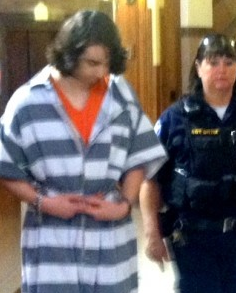
HUTCHINSON -The defense for a Hutchinson teen accused of killing his mother and sister is requesting more time for the disclosure of a report from an expert they hired.
The court has allowed the defense for Samuel Vonachen to file a notice of mental disease or defect as a defense in the case.
The teen’s attorney, John Henderson says that they have hired an expert to testify, but given her schedule and prior obligations, she won’t be able to meet with Vonachen until early next month so the he asked for it to be extended to Oct. 26.
Vonachen is charged with two counts of first-degree murder, attempted first-degree murder and aggravated arson. Authorities allege Vonachen, who was 14 years old at the time, spread gas through the downstairs of his family’s home on September 26 of 2013, then set it on fire. His 11-year-old sister and 47-year-old mother died in the fire. His father, however, was able to escape.
LIBERAL, Kan. (AP) — The sale of a 1962 autographed World Series baseball has raised $30,000 for a memorial statue honoring the 9-year-old Kansas batboy who died when he was accidentally hit by a bat.
Kaiser Carlile, batboy for the Liberal Bee Jays, died Aug. 2, a day after he was hit in the head by a player’s swing near the on-deck circle during a National Baseball Congress World Series game in Wichita.
The Wichita Eagle reports that Randy Watson, whose 13-year-old brother Rudy died in 1966 after a foul ball struck his head at a baseball game, donated the ball to a silent auction because of the similarities between Kaiser and Rudy.
The autographed baseball from the 1962 New York Yankees will be displayed at the Seward Community College in Liberal.
WICHITA -City Manager Robert Layton on Monday morning announced he is reopening the search for the Wichita Police Department (WPD) Chief of Police.
Layton, who made the announcement during the daily Public Safety Briefing at City Hall, said he decided to extend the search after finalist Joel Fitzgerald declined to accept the job. Fitzgerald, who had publicly said he would take the Wichita job if offered, is the Chief of Police in Allentown, PA. He is a finalist for the Fort Worth Police Chief opening.
“During our recent conversations, Fitzgerald expressed a stronger commitment to the Fort Worth police chief search than to the Wichita position.” Layton said, adding that he was “disappointed.”
The second finalist for the WPD Chief of Police opening was Terri Moses, the current Executive Director of Safety Services for Wichita Public Schools and a former WPD Deputy Chief with more than 32 years in the department.
Layton praised Moses’ service to the community but said stakeholders in the community and the department expressed a strong desire for an “a new and different perspective.”
“I firmly believe that we need new eyes and a fresh outlook for the department, its policies and its processes,” Layton added.
The search for a new Chief of Police has included an extensive community engagement process following an organizational assessment conducted by Wichita State University’s Hugo Wall School of Public Affairs.
Layton said he will provide more details about the new process and timeline for hiring the next Chief of Police after meeting with search consultants. He expects to fill the position before the end of the year. The Interim Chief of Police is Nelson Mosley. The next WPD Chief will lead the state’s largest police department, which includes a nearly $82 million budget and 836 employees. Former WPD Chief Norman Williams retired in September 2014.
BEIJING (AP) — Apple Inc. says it has removed some applications from its App Store after they were found to contain malicious software in an unusual security breach. Angry Birds 2 and WeChat are among those affected.
The company on Monday blamed the breach on the use by some developers of a fake version of a software tool that was posted on Chinese websites and included the malicious software.
Tencent Ltd., operator of the popular WeChat social media service, said its software was affected and the company released a new version after its security researchers found the malicious code.
 Kansas Department for Children and Families