We have a brand new updated website! Click here to check it out!

Kansas man convicted in 1973 murder up for parole

TOPEKA, Kan. (AP) — A 60-year-old man convicted of killing a Topeka woman in 1973 is up for parole.

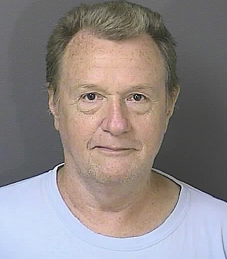
The Kansas Prisoner Review Board is considering parole for James Elder, who was convicted of second-degree murder in the July 1973 slaying in Topeka of 23-year-old Barbara Butler. She was stabbed 23 times.

Elder was sentenced in Shawnee County to 15 years to life in prison.

The Topeka Capital-Journal reports Kansas has considered parole for Elder 19 times before. The state paroled Elder in 2005 but returned him to prison for violating parole in 2007. Elder then was considered for parole but denied in 2007 and 2012.

The board will accept public comments about the possible parole of any of 40 eligible inmates, including Elder on Sept. 18 in the Topeka Municipal Court chambers.

Caution urged for purchases at state fairs

State FairHUTCHINSON, Kan. (AP) — The Better Business Bureau wants consumers to be cautious when making purchases at state fairs.

The Topeka Capital Journal reports the Better Business Bureau says it’s calling on the public to “exercise smart consumerism.”

The Kansas State Fair, along with the exhibits and contests, starts Friday and lasts for 10 days at the Kansas State Fairgrounds in Hutchinson.

The Better Business Bureau says the Federal Trade Commission’s “cooling-off rule,” which lets consumers change their mind about purchases within three days, doesn’t apply to the state fair if the value of the item is less than $25, the goods and services aren’t primarily for personal, family or household purposes and if the purchase is of insurance, securities or real estate, motor vehicles or arts and crafts.

Wichita State center says economic misery up in Kansas

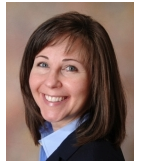
Pattie Bradley- CEDBR photo

TOPEKA, Kan. (AP) — Data from a research center at Wichita State University shows economic misery was up slightly for Kansas in the second quarter of this year.

Data compiled by the Center for Economic Development and Business Research at Wichita State University shows the misery index for the state went from 4.44 in the first quarter to 4.46 in the second quarter because of a small increase in the unemployment rate.

The Topeka Capital-Journal reports a lower number indicates greater economic comfort. The index measures changes in housing prices, inflation and unemployment.

Pattie Bradley, a senior research economist at CEDBR, says the theory is that people’s economic contentment is generally determined by whether they have jobs, if inflation is hurting their paychecks and how the value if their home is being affected.

Former Kansas Governor to speak at K-State Salina

Carlin- photo KSU
Carlin- photo KSU

SALINA, Kan. (AP) — Former Kansas Gov. John Carlin is among the speakers at a Kansas State lecture series.

The Manhattan Mercury reports Carlin is scheduled to speak Thursday at Kansas State Salina’s College Center on education in Kansas.

The presentation is part of the campus’s 50th anniversary celebration, which began last spring and wraps up with events Sept. 9-11. The Civic Lecture Series is free and open to the public.

Carlin was elected Kansas governor in 1979 and served until 1987. He’s a visiting professor and executive- in- residence with the university’s political science department and Staley School of Leadership Studies.

Remediation continues at zinc-contaminated site

epa logoEnvironmental Protection Agency

LENEXA–EPA Region 7 expects to begin its next round of residential yard soil remediation work during the week of September 21 at the Former United Zinc and Associated Smelters Superfund Site in Iola.

EPA began testing residential soil for lead contamination at the site in 2006. Approximately 1,500 properties were tested by the time sampling concluded in 2007. Cleanups of properties with lead in soil at levels of 800 parts per million (ppm) or more were performed during the testing effort. In 2013, EPA returned to Iola to test residential properties that were not tested in 2006-2007.

A total of approximately 2,500 residential properties at the site have now been tested. About 1,050 of these properties have lead in soil above 400 ppm, and approximately 350 of the 1,050 properties have lead above 800 ppm. Levels above 400 ppm are considered unsafe for children six years of age or younger. Lead is a toxic metal that has been known to cause a variety of health problems, including permanent damage to the brain, kidneys and other vital organs, as well as the nervous system.

EPA sent individual letters this week to owners of properties sampled in 2013, informing them of specific soil sampling results for their properties, and providing further information about the upcoming start of cleanup activity. This next round of cleanup work in Iola will focus initially on the priority group of 350 properties above 800 ppm. Cleanups of the other 700 properties with lead between 400 and 800 ppm will begin sometime next year.

As with previous soil remediation that EPA performed at the Iola site during the 2006-2007 effort, all future remediation work will be completed at no cost to property owners. Property owners will be notified individually so that EPA and its contractors can make specific arrangements to remove contaminated soil and replace it with new soil.

In May 2013, the Former United Zinc and Associated Smelters Superfund Site was placed on EPA’s National Priority List, making it eligible for significant long-term response funding authorized by Congress under the Superfund program.

The history of environmental contamination at the site goes back to the early 1900s. Located on the east side of Iola, the main Former United Zinc property was first operated by William Lanyon in 1901 and 1902, then was sold to the United Zinc company and continued under operations until approximately 1912. It was one of several zinc and lead smelting operations in the area between 1902 and 1925. Those operations resulted in residential and commercial properties throughout Iola being contaminated with elevated levels of lead.

Kan. man sentenced to federal prison after using a machete, gun

WICHITA- A Pittsburg, Kan., man was sentenced Thursday to 136 months in federal prison on federal firearms and drug charges, according to U.S. Attorney Barry Grissom.

James D. Russian, 57, Pittsburg, Kan., was convicted June 17 on one count of unlawful possession of a firearm after a felony conviction, one count of unlawful possession of ammunition after a felony conviction, one count of unlawful possession of a firearm in furtherance of drug trafficking, and one count of possession with intent to distribute marijuana.

During trial, prosecutors presented evidence that on March 27, 2013, Russian led police on a car chase from Barton County, Mo., to Crawford County, Kan., when they tried to stop him to investigate a report he threatened two people with a machete and a gun.

Russian abandoned his car and hid in a wooded area before he was arrested. Investigators found marijuana, firearms and ammunition in his possession. Because of a prior felony conviction, Russian was prohibited by federal law from possessing firearms or ammunition.

1 hospitalized after Subaru goes airborne on I-70

MANHATTAN – One person was injured in an accident just before 8a.m. on Labor Day in Riley County.

The Kansas Highway Patrol reported a 2014 Subaru passenger vehicle driven by Jonna Kaye Lafoy, 31, Denver, CO., was westbound on I-70 just west of Tallgrass Road.

The vehicle drove off the road into the median, across the westbound lanes and into the north ditch.

The vehicle struck a rock ledge, went airborne, traveled through a KDOT fence and into a pasture.

A passenger Jennifer Erica Kukoy, 36, Denver, CO., was transported to Via Christi in Manhattan.

Lafoy was not injured. Both were properly restrained at the time of the accident, according to the KHP.

Sisters Of Charity Sues Blue Cross And Blue Shield In Logo Dispute

By DAN MARGOLIES

It doesn’t pay to mess with nuns.

Blue Cross and Blue Shield Association seems to think Sisters of Charity of Leavenworth Health System (SCL Health) is infringing its trademark.

The faith-based health provider has used the cross symbol to denote its Christian heritage for decades.

Since 1976, its trademark has consisted of a heart superimposed on a cross. In 2014, it updated the logo to include a splash of blue and duly filed an application with the Patent and Trademark Office.

Blue Cross and Blue Shield, a national federation of 36 independent and locally operated Blue Cross and Blue Shield companies, says the updated logo is confusingly similar to its own logo and has demanded that SCL Health cease using it “in combination with any blue color elements.”

At least that’s what SCL Health alleges in a preemptive lawsuit it filed this week in federal court in Denver.

The lawsuit, which seeks a court determination that SCL Health is not infringing Blue Cross and Blue Shield’s trademark, says Blue Cross and Blue Shield has even threatened that it “would never again undertake a commercial relationship of any sort with SCL Health” if SCL Health doesn’t comply with its demand.

It’s not clear that Blue Cross and Blue Shield Association, as opposed to its member companies, is capable of doing that, since it’s the members that contract with health care providers, not the association. But the lawsuit makes it clear that SCL Health felt threatened.

If the association were to make good on its threat, the lawsuit alleges, it would result not only in “substantially decreased revenues to SCL Health but in patient hardship…”

Robert Elfinger, a spokesman for Blue Cross and Blue Shield, declined to comment on the lawsuit, saying the company does not comment on pending litigation. Brian Newsome, a spokesman for SCL Health, likewise declined to comment.

SCL Health operates eight hospitals, four safety net clinics, a children’s mental health center and more than 190 ambulatory service centers in Colorado, Kansas and Montana, according to its website.

It was founded by Sisters of Charity of Leavenworth, which is based in Leavenworth, Kansas and dates back to 1858.

Dan Margoiles is an editor for Heartland Health Monitor, a news collaboration focusing on health issues and their impact in Missouri and Kansas.

DId the U.S. Government go to far to read your email?

LARRY NEUMEISTER, Associated Press

NEW YORK (AP) — Microsoft wants a federal appeals court this week to agree that the United States reached too far when it sought a customer’s emails that are stored in Ireland.

The Redmond, Washington-based software company will argue Wednesday that the 2nd U.S. Circuit Court of Appeals in Manhattan should overturn a lower court ruling that grants U.S. narcotics investigators authority to review the customer’s email records. Microsoft stores those records in Dublin.

In court papers, Microsoft has called on Congress to better define when the United States can seek records overseas.

U.S. prosecutors say in court filings that two judges ruled correctly in allowing the records search. They say the records can be accessed by Microsoft employees based in the United States and laws permit such access for criminal probes.

Rail trail program in central Kansas follows long road

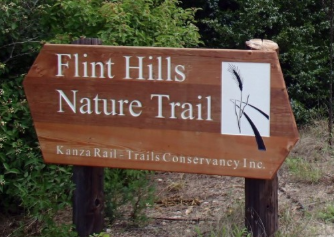
The Kanza Rail-Trails Conservancy photo

HUTCHINSON, Kan. (AP) — Efforts to convert abandoned rail lines into trails have followed a long and winding road in central Kansas.

The trails are the most abundant in the eastern part of the state. They include a 117-mile-long Flint Hills Nature Trail that stretches from Osawatomie to Herrington and the roughly 50-mile Prairie Spirit Trail connects Ottawa with Iola. The trials provide long paths for walking, running, bicycling and horseback riding.

The Hutchinson News reports that in some areas, finding the necessary support and funding has proven challenging.

So far, the rails-to-trials movement hasn’t caught on in Reno County. Public Works Director Dave McComb said such a project doesn’t currently exist in the county, nor is he aware of any interest in developing one.

Schools face incomplete data after Common Core test troubles

Test examSALLY HO, Associated Press

LAS VEGAS (AP) — Last school year, Common Core-aligned standardized tests marched forward, going from paper-and-pencil to the computer to allow for questions to adapt in difficulty based on a student’s answer. A new baseline of testing data was expected as a result. However, many states had technical issues with the electronic form that left them unable to complete the testing. Others saw an unprecedented spread of refusals. That means a new school year without complete testing data in many areas.

Below, we look at the impact of the incomplete data on teachers, students and districts:

WHAT IS COMMON CORE AND WHY IS IT SO CONTROVERSIAL?

Common Core is a set of standards that determine what kids should learn and when. It’s not a curriculum and doesn’t determine how kids learn.

Adopted in 42 states, it was developed by governors and state school superintendents with the input of teachers, experts and community members in hopes that it could align the basics of education across the country.

It’s been controversial because it’s backed by the Obama administration, which has tied No Child Left Behind waivers to the adoption of standards like Common Core. Opponents see this as the U.S. Department of Education strong-arming states into accepting Common Core, which has caused a political uproar among those who say it is tantamount to federal government overreach.

WHAT HAPPENED LAST SCHOOL YEAR?

In Nevada, Montana and North Dakota, widespread problems with the test makers stopped the exams, and schools were given leeway if they didn’t finish. Nevada was the most severely impacted because the Las Vegas-based Clark County School District – home to half of the state’s students and the fifth-largest school system in the country – was crippled. Only a third of all Nevada students completed the test.

Meanwhile, thousands of students refused to take the test in a rebellion against standardized testing and the Common Core initiative. New York is believed to have had the largest rate of students who skipped the test with about 20 percent. Opt-outs were also noted in Colorado, Maine, New Mexico, Oregon, Pennsylvania and Washington.

HAS ANYTHING LIKE THIS HAPPENED BEFORE?

There was incomplete testing data in Kansas in 2014 and Wyoming in 2010, although Wyoming’s test was not Common Core-aligned at that time. In those cases, students finished the test but the states felt the validity of the scores were too compromised or questionable due to Kansas’ cyber-attack and Wyoming’s technical issues. They were both given waivers from the U.S. Department of Education, so they weren’t penalized and the states say there wasn’t notable classroom impact.

HOW ARE TEST SCORES USUALLY USED?

States are required to test all students and use their scores to determine how the school systems are doing, which can affect funding. Some states use the data for a “ratings” system. A few are using it as a part of teacher evaluations. In the classroom, schools generally share the data with teachers who use it to guide curriculum decisions and measure individual students.

WITHOUT COMPLETE SCORES, WILL THAT AFFECT THE CLASSROOM IN THE NEW TERM?

Direct impacts on the classroom are likely to be minimal. Half of the country had suspended those school rating and accountability systems in anticipation of the new computerized test. Most states aren’t using it for teacher evaluations yet. New York is one state that will be forced to use incomplete testing data, with superintendents deciding on an alternative performance measure on teacher evaluations where there’s not enough data.

Academically, teachers, administrators and state officials said the student scores aren’t the final call on whether students are promoted or held back, making it ultimately just one piece of the puzzle for measuring students. In that sense, most officials see the data loss as an inconvenient delay.

IF THAT’S THE CASE, WHY EVEN TEST?

A school district trying to tackle chronic problems without standardize test scores can be like trying to diet without a scale. While that high-stakes number is an important baseline, there are also other measures that can be equally important factors. If you’re on a diet, that might be inches lost, muscle gained and cholesterol levels. If you are a district trying to maintain a good school system, that’s graduation rates, student grades and classroom or district results for other tests, like weekly math quizzes or entrance exams.

WHAT’S NEXT?

Federal compliance and funding questions are pending, and some states are also waiting on studies looking at the validity of what student scores they do have. If it’s determined that the known disruptions compromised the controlled testing experience, it could undermine even the incomplete testing data that exists.

For the next testing cycle, states say they don’t expect problems. Nevada chose a new test maker, while Montana said it doesn’t have a “Plan B” if technical glitches resurface. New York is appealing directly to parents to combat opt-outs.

2 hospitalized after crash during Kan. police chase

MCHPERSON COUNTY- Two people were injured in an accident during a pursuit by law enforcement just before 4 p.m. on Sunday in McPherson County.

The Kansas Highway Patrol reported a 2005 Toyota Avalon driven by Jesus Adolfo Valdez, 29, West Valley, UT., was involved in a pursuit westbound on U56 just west of 25th Avenue.

The Toyota moved onto the right shoulder to pass another vehicle. The Toyota came back onto the roadway, and went toward oncoming traffic. The driver over-corrected, lost control, and entered the north ditch.

Valdez and a passenger Alexandra Beth Medina, 26, West Valley UT., were transported to the hospital in McPherson.

They were not wearing seat belts, according to the KHP.

Adventure seekers rappel 13-story Topeka building

Photo from Kansas Children's Discovery Center via Discover The Edge Video
Photo from Kansas Children’s Discovery Center via Discover The Edge Video

TOPEKA, Kan. (AP) — Raising money for charity has turned into an adrenal producing adventure in Topeka.

The Topeka Capital-Journal reports that adventure seekers turned out Saturday morning to rappel down a 13-story Westar Energy building. The event was a fundraiser for the Kansas Children’s Discovery Center.

Each participant is responsible for raising $1,000 for the center. The Children’s Discovery Center and Over the Edge, a Canadian company that works with nonprofits, hosted the event.

The participants included newlyweds Madison and Jenni Ruelle, who exchanged a kiss after making their way down building. Another participant, 33-year-old Chris Rogers, of Lawrence, said he had pure adrenaline running through his veins when he stepped off the edge of the building.

The money raised will go toward educational programs, exhibits and camps that the center provides.

Copyright Eagle Radio | FCC Public Files | EEO Public File