We have a brand new updated website! Click here to check it out!

Kansas Democrats planning a ranked-choice presidential primary

By JOHN HANNA

TOPEKA, Kan. (AP) — Kansas Democrats plan to have voters rank candidates rather than pick only one in a presidential primary set for May 2020.

The party is moving away from its more traditional caucuses, trying ranked-choice voting and allowing mail ballots to boost participation, State Chairwoman Vicki Hiatt said Tuesday. The state party has submitted its plans for the May 2 balloting to the Democratic National Committee for its approval.

About 39,000 people participated in Kansas Democrats’ presidential caucuses in 2016, an unusually large turnout that resulted in a 2-to-1 victory for Vermont Sen. Bernie Sanders over eventual presidential nominee Hillary Clinton. Some meetings took several hours, discouraging participation, particularly if rural voters faced long drives to get to caucus sites, Hiatt said.

“People did not want to do that again,” Hiatt said. “It just ended up being a little chaotic.”

Kansas had state-financed presidential primaries in 1980 and 1992, with county and state election officials overseeing the voting. In both years, more than 160,000 Democrats and 210,000 Republicans cast ballots.

A Kansas law called for a state-run primary every four years after 1992, but the Legislature kept canceling it because of the potential cost. Legislators repealed the law in 2015, leaving it to the political parties to decide how handle the voting.

Hiatt said the 2020 primary could cost the state Democratic Party $200,000, depending on the turnout. But she said the party also could get financial support from groups that promote ranked-choice voting.

“We’re really going to be doing a lot of robust fundraising,” she said.

The state Republican Party hasn’t decided what it will do in 2020, state Chairman Mike Kuckelman said. With President Donald Trump expected to be nominated again easily, some Republicans talked earlier this year of forgoing caucuses and having a state convention pick delegates to the GOP National Convention.

The GOP had caucuses in 2016 but set them up so that voters could arrive after candidate rallies and speeches and simply cast their ballots and leave quickly. About 73,000 Republicans participated, with Texas Sen. Ted Cruz scoring a decisive victory over Trump.

Democrats stuck in 2016 to a more traditional caucus format. After listening to speeches, participants gathered in groups by the candidates they preferred and were counted. Candidates who didn’t receive 15% were eliminated, and the participants regrouped.

With the planned primary, voters would rank every candidate on the ballot. If a candidate does not receive 15% percent of the vote, his or her votes would be redistributed based on the voters’ second choices. That process would continue until all the remaining candidates had at least 15%, and delegates to the Democratic National Convention would be awarded proportionally.

___

Students avoid injury after semi sideswipes Kan. school bus

SALINE COUNTY — Students on a summer outing avoided injury after an accident just after 2p.m. Tuesday in Saline County.

The Kansas Highway Patrol reported a 2008 USD 418 McPherson School Activity bus driven by Ernest Clifton White, Jr., 75, Assaria, was south bound on Interstate 135.

A southbound 1996 Peterbilt semi driven by Thomas Edward Smith, 59, Dakota City, NE., sideswiped the bus as the bus attempted to pass just south of Mentor Road.

Smith, White, thirteen students and one other adult on the bus were not injured, according to the KHP. Both drivers were properly restrained at the time of the accident, according to the KHP.

Update: Searchers find body of suspect in Barton Co. chase

BARTON COUNTY — Law enforcement authorities are investigating the circumstances surrounding the chase of a wanted suspect who died on Monday.

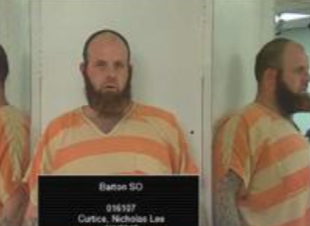
Curtice photo Barton County

Just after 11p.m., a Sheriff’s Deputy attempted to stop a 2002 Chevy Avalanche driven by 36-year-old Nicholas Curtice of rural Ellinwood, according to Sheriff Brian Bellendir.  He was wanted on Barton County District Court warrants and had been involved in numerous encounters with law enforcement.

Curtis fled from the intersection of 5th  and Odell in the City of Great Bend. The deputy pursued the suspect through the City of Great Bend and south toward the Arkansas River on Washington Street. The suspect vehicle struck the ravine near the north bank of the river, at which point it was disabled. Curtice exited the vehicle with a firearm and placed it to his head. The deputy ordered Curtis to drop the weapon repeatedly. He then waded into about 4 feet of water and fired a single round. 

Barton County Sheriff’s Deputies, Great Bend Police Officers and members of the Great Bend Fire Department searched for Curtice for several hours after the incident. We were unable to locate him due to the swift current and darkness. The search resumed at about 8 AM this morning. Members of the Great Bend Fire Department “swift water rescue team” located the body. A boat from the Kansas Department of Wildlife and Parks assisted and were able to locate the body at about 10:45 a.m. approximately 1200 feet downstream from a location where he had been involved in a confrontation with law enforcement, according to Bellendir.

Curtice had previous convictions for criminal damage to property, flee or attempt to elude law enforcement, driving while suspended and for drugs, according to the Kansas Department of Corrections.

In April of 2018, Curtice had been jailed after a high-speed chase in Barton County. In April of 2017, Curtice was captured after a high-speed motorcycle chase following an alleged domestic disturbance in Hoisington.


BARTON COUNTY — Law enforcement authorities are investigating the circumstances surrounding the chase of a suspect who died on Monday .

Just after 11p.m.,  sheriff’s deputies attempted to stop a vehicle driven by a wanted person that fled south on Washington Street in Great Bend, according to Sheriff Brian Bellendir.

The vehicle crossed over the flood control dike, enter the riverbed, proceeded approximately ½ mile west when it became disabled.

The driver exited the vehicle with a firearm, entered the Arkansas River and shot himself. The suspect disappeared into deep, fast-moving water, according to Bellendir.

As of 9a.m. Tuesday, emergency personnel have not been able to locate the body. The Sheriff’s Office has contacted Kansas Department of Wildlife and Parks, Kansas Highway Patrol and the Great Bend Fire Department swift water rescue team for assistance. 

The sheriff did not release the suspect’s name. 


States sue to stop $26.5 billion Sprint-T-Mobile deal

NEW YORK (AP) — A group of state attorneys general led by New York and California filed a federal lawsuit Tuesday to block T-Mobile’s $26.5 billion bid for Sprint, citing consumer harm.

The state attorneys general said the promised benefits, such as better networks in rural areas and faster service overall, cannot be verified, while eliminating a major wireless company will immediately harm consumers by reducing competition and driving up prices for cellphone service.

New York Attorney General Letitia James said in a statement that combining the two companies would reduce access to affordable, reliable wireless service nationwide and would particularly affect lower-income and minority communities in New York and other urban areas.

Other attorneys general joining Tuesday’s lawsuit are from Colorado, Connecticut, the District of Columbia, Maryland, Michigan, Mississippi, Virginia and Wisconsin. All 10 attorneys general are Democrats. The lawsuit was filed in U.S. District Court in New York.

The lawsuit is an unusual step by state officials ahead of a decision by federal antitrust authorities. The Justice Department’s decision is pending. The Republican majority of the Federal Communications Commission supports the deal , though the agency has yet to vote.

Too many “mega mergers have sailed through the governmental approval process,” so it’s up to the states to “step up,” James said at a news conference.

“There’s no rule or regulation that we have to wait for the DOJ,” she said. She added the attorneys general will “continue to litigate whether the DOJ approves the merger or not.”

Diana Moss, the president of the American Antitrust Institute and an advocate for tougher antitrust enforcement, said the states’ lawsuit could signal to other potential merger partners that there would be tougher enforcement from states even if the federal government permitted deals to go through.

James said Tuesday that her office’s renewed focus on mergers and anti-competitiveness goes beyond the tech industry, though she did not elaborate.

T-Mobile and Sprint have argued that they need to bulk up to upgrade to a fast, powerful “5G” mobile network that competes with Verizon and AT&T. The companies are appealing to President Donald Trump’s desire for the U.S. to “win” a global 5G race.

Consumer advocates, labor unions and many Democratic lawmakers worry that the deal could mean job cuts, higher wireless prices and a hit to the rural cellphone market.

Amanda Wait, an antitrust lawyer and former Federal Trade Commission lawyer, said states are acting because they disagree with what they have seen the federal government doing.

“They see the FCC accepting certain remedies and concessions that don’t, in their minds, solve the problem,” she said.

T-Mobile declined comment. Sprint and the Justice Department did not immediately respond to requests for comment.

One famous example of when the states and federal government diverged on a big antitrust case was in the fight against Microsoft, although that was not a merger case. Several states dissented from the Justice Department’s settlement roughly 20 years ago, pushing for tougher sanctions to curtail Microsoft’s ability to use its dominance in the Windows operating system to thwart competition in other technologies.

More recently, in the Bayer-Monsanto agribusiness merger, five states last year criticized the federal government’s approval.

T-Mobile and Sprint previously tried to combine during the Obama administration but regulators rebuffed them. They resumed talks on combining once Trump took office, hoping for more industry-friendly regulators.

T-Mobile has a reputation for consumer-friendly changes to the cellphone industry. T-Mobile and Sprint led the return of unlimited-data cellphone plans, for example.

T-Mobile, trying to reassure critics, promised the FCC it would build out a 5G network and invest in rural broadband on a specific timeframe or pay penalties. It also promised to sell off Sprint’s prepaid Boost Mobile brand and keep price increases on hold for three years.

That was enough for FCC Chairman Ajit Pai to back thedeal. The other two Republican commissioners indicated they would join him.

But public-interest advocates said these conditions did not address concerns about higher prices and reduced competition— and would be difficult for regulators to enforce.

The Justice Department evaluates deals using stricter criteria than the FCC’s “public interest” standard — namely whether they harm competition and raise prices for consumers. Staff attorneys at DOJ have reportedly told the companies they won’t approve the deal as proposed, but the ultimate decision lies with Makan Delrahim, the top antitrust official who is a political appointee.

The state attorneys general said in Tuesday’s lawsuit that combining Sprint and T-Mobile would make the industry as a whole — Verizon and AT&T, too — less likely to offer plans and services that consumers like. And they say the companies have already been working to roll out 5G and don’t need to combine to do so.

Japanese tech conglomerate SoftBank owns Sprint, while Germany’s Deutsche Telekom owns T-Mobile.

Prosecutor: DNA connects Kansas man to sex assaults of 4 women

MANHATTAN, Kan. (AP) — Prosecutors say DNA from a Manhattan man who is standing trial this week has connected him to the sexual assaults of four women.

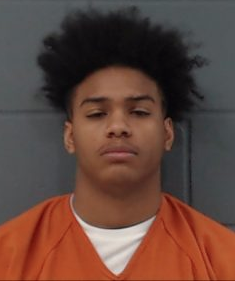
Baggett photo Geary Co.

18-year-old Tommie Baggett is charged with one count of rape, three counts of attempted rape, one count of criminal sodomy, one count of aggravated criminal sodomy, one count of aggravated robbery, three counts of aggravated burglary and three counts of aggravated battery.

One woman said she was assaulted in August 2016 after meeting Baggett in Manhattan through an escort service. Two other women were roommates who said they were assaulted in their home in February 2017. Prosecutors say Baggett then slipped through an open window a month later and choked a third roommate when she refused to have sex with him.

The defense says the victims aren’t reliable.

Many Kan. inmates wait for Hepatitis C treatment despite recent legal settlement


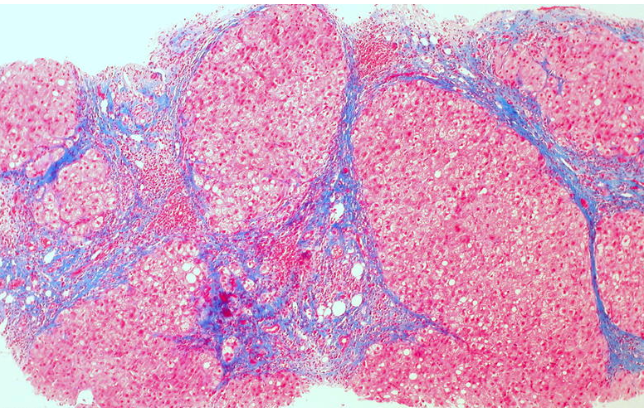
Cirrhosis of the liver as shown with staining.
ED UTHMAN, CREATIVE COMMONS (BIT.LY/31QRFNM)

Kansas can no longer put off care for Medicaid patients with hepatitis C because of a recent legal settlement. But hundreds of the state’s prison inmates not covered by that lawsuit will have to wait another year for the pricey treatment.

That raises concerns about whether the delay constitutes cruel and unusual punishment under the U.S. Constitution, civil rights lawyers say, because inmates have the right to medical care.

“This is a fairly clear Eighth Amendment violation,” said Lauren Bonds, legal director for the ACLU of Kansas, which brought the Medicaid lawsuit. “Delayed treatment is unconstitutional.”

Kansas prison officials say more than 700 inmates currently have hepatitis C, a virus that attacks the liver and that’s most commonly contracted by sharing needles to inject illegal drugs. The state Department of Corrections expects about half will receive treatment this year, starting with those who’ve developed liver cirrhosis from the virus.

That’s on top of about 100 inmates treated in recent months, agency spokeswoman Jeanny Sharp said.

“The treatment strategy,” she said, “aligns with what many other states that were sued were asked to do.”

Kansas, she said, is doing it voluntarily.

Legal challenges

States landed in legal hot water in recent years for limiting hepatitis C treatment for their Medicaid and prison populations in response to the sky-high cost of new drugs. The drugs offered highly effective treatment to clear infections up, but with price tags that could total nearly $100,000 per person.

Kansas settled the Medicaid lawsuit, agreeing to no longer limit coverage of hepatitis C medication to those with more advanced liver scarring, while forcing others to wait.

Read the state’s settlement with the ACLU over Hep C coverage.

The suit didn’t cover prisons, but last fall, Kansas began screening all inmates for hepatitis C.

The corrections department says costs vary, but tend to run between $15,000 and $17,000 to treat the typical inmate. That can involve several months of daily medication.

The state will spend $6 million in fiscal 2020 on treating about half of its inmates with hepatitis C, a corrections official last week told a meeting of state leaders charged with signing off on the expense. Gov. Laura Kelly and the legislative leaders agreed unanimously.

Waiting for treatment

As it stands, inmates with less advanced hepatitis C will need to wait until fiscal 2021.

The corrections department wanted more funding to treat them this year instead, but the governor’s office didn’t request the full amount from the Legislature.

A spokeswoman said Tuesday Kelly is committed to ensuring inmates get treatment.

The state “will move as quickly as possible to treat every prisoner affected,” Dena Sattler wrote, “and if additional funding is required to keep providing treatment before the next fiscal year, the Governor will make additional budget recommendations as necessary.”

More inmates are testing positive for hepatitis C than initially estimated — about 13 percent of people entering the prison system.

It can take years for the outward signs and symptoms of the virus to develop, such as jaundice and fatigue.

About one in four people who get hepatitis C fend it off naturally. For most, the disease takes its toll, causing chronic infections.

As many as one in five eventually develop cirrhosis and one in 20 get liver cancer. Some cases require liver transplants.

Studies suggest early hepatitis C treatment benefits patients, while delaying treatment can harm their long-term health.

The costs of hepatitis C treatment are just one of the woes the corrections department is juggling. It’s struggled, for example, to pay guards well enough to keep prisons adequately staffed.

Bonds, of the ACLU, wouldn’t rule out heading back to court to press for speedier hepatitis C treatment in prisons. At the same time, she said the ACLU understands the system is facing budgetary hurdles.

“We do want to recognize and at least acknowledge that there has been some progress made,” she said. “We do want to be reasonable and see if there is a non-litigation means to get prisoners treated more quickly.”

The ACLU is continuing to monitor hepatitis C treatment for Medicaid patients, too. Under the terms of the state’s settlement with the group, Kansas agreed to hand over quarterly updates on how many patients are prescribed treatment and whether their requests get approved.

Previously, the state’s privatized Medicaid program, KanCare, approved only patients with the most serious liver scarring. It made them pass extensive sobriety tests, too.

The settlement says Kansas can only impose a three-month drug-free period instead of six, and that it can’t reject patients for using alcohol or illegal drugs that aren’t taken by needle.

Celia Llopis-Jepsen is a reporter for the Kansas News Service. You can reach her on Twitter @Celia_LJ 

Police Chief: Search for Kan. felon wanted for shooting expanded

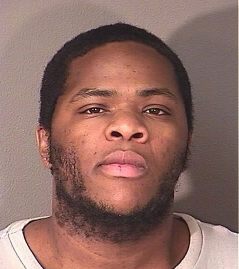
ATCHISON COUNTY —The search for a convicted felon suspected in a weekend shooting continues.  Kevin Maxey, Jr., 31, Atchison is wanted for the Sunday morning shooting of a 42-year-old Atchison man near a city park, according to Police Chief Mike Wilson.

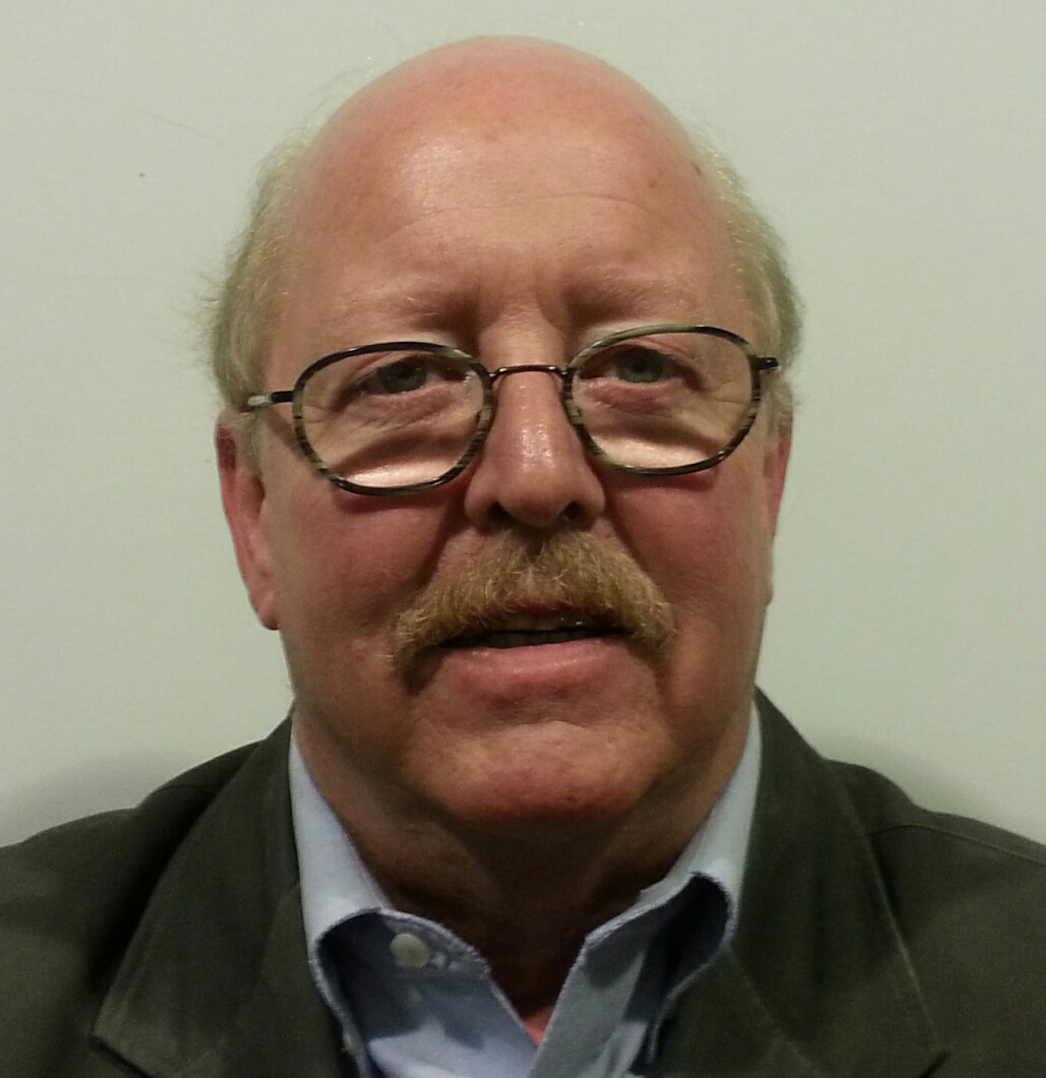
Kevin Maxey, Jr. photo KDOC

On Tuesday, Wilson said they had expanded the search beyond the city of Atchison and are doing a number of things in an attempt to locate him.

Officers raided Maxey’s home Sunday evening but he wasn’t there. The victim, whose name wasn’t released, suffered two gunshot wounds.

Wilson said about 20 people had gathered in the area when an argument broke out, primarily between two people. He says the victim apparently was not involved in the argument and was standing in the area when the shots were fired.

Maxey has been imprisoned for aggravated robbery, aggravated battery and Contraband: Non firearm, etc non employee, according to the Kansas Department of Corrections.


HAWVER: Saving rural Kansas becoming more of a legislative priority

Martin Hawver
There’s a change, or maybe just the appearance of a change, coming to the Kanas Legislature … maybe …

The change? Suddenly this year what appears to be interest in the future of rural Kansas, those small cities and towns that bigger-city folks might regard as living near the exit ramps of four-lane highways or maybe those towns where the paved streets are in their small downtowns, and most people live on gravel roads.

Those are the towns, in the majority of the land area of the state, where a school bus ride might take 40 minutes, and where even on a clear day, there isn’t a Kwik Shop or a liquor store in sight.

Those are the areas where there isn’t much representation in the Statehouse because the populations are so small that a House district can span a half-dozen counties, and a Senate district even more.

In recent years when rural populations have shrunk and the county courthouse is the center of government for many, their issues often have been overlooked. Oh, the urban-dominated Legislature might OK an exit ramp now and again to show interest or may name a bridge after a local leader, but it was mostly pandering.

And at every reapportionment—and there’s one coming up in 2022—the political power of those rural areas is diminished. More farm kids are growing up to go be computer experts, not farmers.

Well, there’s an indication, and we won’t know for sure for a session or two, that there is more interest in keeping rural areas economically strong, and that Kansans in those areas get the same level of service that the cities offer.

This interest started with the Kansas House, which created a Rural Revitalization Committee. Yes, a whole committee, chaired by Rep. Don Hineman, R-Dighton, out in Lane County, who lost his bid to be House Majority Leader, but showed enough strength that he could put forward a committee that will help people back home.

And Gov. Laura Kelly and her Lieutenant Governor Lynn Rogers, of Wichita, have created the Office of Rural Prosperity, and got $2 million to get it up and running and taking the pulse of rural areas of the state.

That initiative, run out of Rogers’ Statehouse office, is taking a tour of a dozen small cities this summer to see what rural areas need. While city folks have a choice of Internet providers, there aren’t many options in rural Kansas. That means that broadband internet service needs to be expanded in areas where it is going to take some state guidance and assistance and who knows what else to equalize access. It’s not just so rural Kansans can watch Netflix. It’s so they can watch what their government does, their kids can get access to programs that small rural school districts can’t staff, they can get health-care services from experts in areas where doctors are few and miles apart.

The Rural Prosperity office will be on the ground to see just what is needed in rural areas to provide housing, economic development, tourism, and the infrastructure that city folks and their representatives have access to.

It’s a change in atmosphere in the Statehouse, or at least the appearance of a chance in atmosphere, that holds promise. But just how that reach-out from the cities to rural Kansas works isn’t going to be easy. The cultures are different, the access to nearly everything is different.

Convincing city folk the importance to the state of those rural areas is going to be complicated.

Let’s hope that it works…

Syndicated by Hawver News Company LLC of Topeka; Martin Hawver is publisher of Hawver’s Capitol Report—to learn more about this nonpartisan statewide political news service, visit the website at www.hawvernews.com

Suspect crashes into tree while fleeing Kan. hit-and-run crash

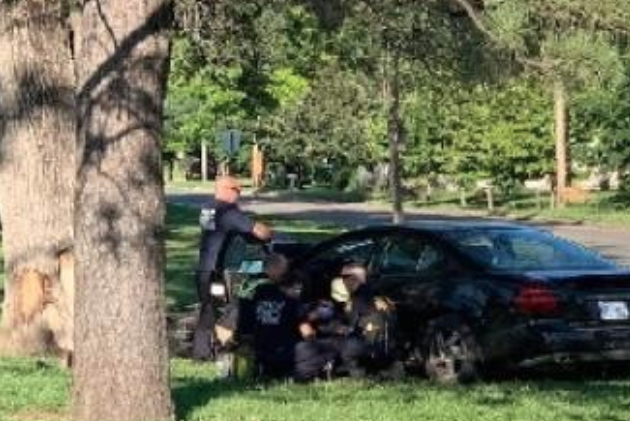
TOPEKA, Kan. (AP) — Authorities say a driver crashed into a tree while Topeka police chased him from the scene of an apparent hit-and-run crash.

Police on the scene of Monday evening’s investigation photo courtesy WIBW TV

Topeka police Lt. Steve Roth says the fleeing driver appeared conscious and alert Monday night after the crash.

The driver had apparently been involved in a crash a short time earlier in which a motorcyclist suffered injuries that weren’t considered life-threatening.

Roth says another driver followed the man from the scene and called police. Officers initially pulled the man over, but then he drove away. No one else was hurt when he crashed into a tree. His name wasn’t immediately released.

Sheriff: Baby dies after being left in hot car in Kansas

ROSE HILL, Kan. (AP) — Authorities say a 3-month-old girl has died after being left in a hot car in south-central Kansas.

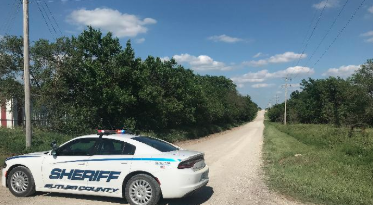
Sheriff’s vehicle near the scene of the investigation Saturday-photo courtesy KWCH

Butler County Sheriff Kelly Herzet says emergency crews responded around 4 p.m. Saturday to a home near Rose Hill and pronounced the baby dead at the scene. Investigators determined that the mother took the infant with her to a baby shower that morning. Herzet says that when she came home around noon, she went inside and decided to take a nap. Several older children were in the home.

Herzet says she realized after waking up that the baby was still in the car. He says she ran outside, found the infant unresponsive and called 911. An investigation is ongoing.

Rose Hill is about 15 miles southeast of Wichita.

Police: Kansas woman jailed for fatal stabbing

GEARY COUNTY — Law enforcement authorities are investigating a fatal stabbing and have a suspect in custody.

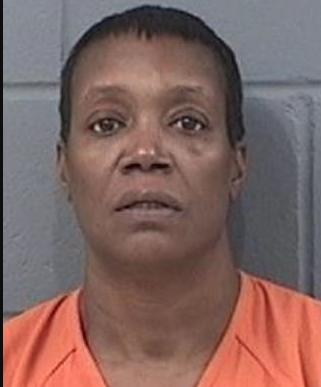
Vondra Brown -photo Geary County

Just before 9:30p.m. Monday, police responded to the 100 Block of East Vine Street in Junction City, according to a media release. At the scene, police found 55-year-old Eddie Starks of Junction City with a stab wound. EMS transported Starts to a Topeka hospital where he died.

Police arrested Vondra Brown, 49, Junction City, on requested charges of 2nd degree murder. Police released no additional details early Tuesday.

Kansas felon accused of violent attack on woman, children

HUTCHINSON — Law enforcement authorities are investigating a Kansas felon on new charges after an alleged violent attack.

Fierro photo KDOC

On June 6 when police responded to the report of an aggravated battery. When they arrived, they found the victim who told them she had been beaten by her boyfriend.

Armando Fierro, 37,  is accused of striking the woman with some type of cord, putting a towel around her neck and dragging her across the floor.

At some point, he then brought in a propane tank and threatened more violence against her and her three disabled children. The victim was able to escape and call police.

When officers entered the home, they could see pillows in the living room had been set on fire near where the propane tank was sitting. Fierro who served time for attempted murder, conspiracy to commit murder and aggravated burglary left the home before police arrived.

On June 7, officers located Fierro’s vehicle on the west side of Hutchinson. With the assistance of the Reno County Emergency Response Team they took him into custody.

Fierro is jailed on a $100,000 bond for aggravated battery-domestic violence, aggravated assault, aggravated arson and aggravated endangerment of a child.

Fierro will be back in court next Monday for the formal reading of charges.

Judge says Missouri’s only abortion clinic can remain open

ST. LOUIS (AP) — A judge issued another order Monday to keep Missouri’s only abortion clinic operating while a fight over the facility’s license plays out in court.

Circuit Judge Michael Stelzer granted Planned Parenthood’s request for a preliminary injunction, which extends his earlier order to temporarily block the state from allowing the St. Louis facility’s license to lapse. The courtroom win for abortion-rights advocates comes after a string of setbacks in legislatures around the U.S.

The state health department in May declined to renew the clinic’s license to perform abortion procedures, citing concerns about patient safety, “failed surgical abortions” and legal violations.

Stelzer’s ruling on Monday ordered the Missouri Department of Health and Senior Services to decide on Planned Parenthood’s application to renew its license by June 21.

Dr. Leana Wen, president and CEO of Planned Parenthood Federation of America, called the ruling “a clear victory for our patients – and for people across Missouri,” but said the threat against legal abortion remains.

“We’ve seen just how closely anti-health politicians came to ending abortion care for an entire state,” Wen said in a statement. “We are in a state of emergency for women’s health in America.”

Phone and email messages seeking comment from Republican Gov. Mike Parson’s office and the health department were not immediately returned.

Stelzer’s ruling said he wasn’t determining whether the license should be approved or denied. But the judge noted that one issue in dispute is whether the health department can simply allow the abortion clinic’s license to lapse without taking any action.

“The Court does not believe that an ‘official action’ can include non-action,” Stelzer wrote.

The state issued subpoenas to staff doctors and former medical residents who worked at Planned Parenthood’s St. Louis facility, seeking their testimony about what an assistant attorney general called “grave concerns” about patient safety. Clinic leaders said the move is part of an effort by an anti-abortion administration to eliminate the procedure in Missouri.

According to Planned Parenthood, no state has been without a functioning abortion clinic since 1974, the year after the U.S. Supreme Court’s Roe v. Wade ruling that legalized abortion nationwide.

The fight over the clinic’s license comes as lawmakers in many conservative states, including Missouri, are passing new restrictions that take aim at Roe. Abortion opponents, emboldened by new conservative justices on the Supreme Court, hope federal courts will uphold laws that prohibit abortions before a fetus is viable outside the womb, the dividing line the high court set in Roe.

Parson signed legislation on May 24 to ban abortions at or beyond eight weeks of pregnancy, with exceptions for medical emergencies but not for rape or incest.

The number of abortions performed in Missouri has declined every year for the past decade, reaching a low of 2,910 last year. Of those, an estimated 1,210 occurred at eight weeks or less of pregnancy, according to preliminary statistics from the state health department.

Missouri women also seek abortions in other states. In Kansas, about 3,300 of the 7,000 abortions performed in 2018 were for Missouri residents, according to the state’s health department. Illinois does not track the home states of women seeking abortions.

An abortion clinic is located just across the Mississippi River in Granite City, Illinois, less than 10 miles from the Planned Parenthood facility in St. Louis. Planned Parenthood’s abortion clinic in the Kansas City area is in Overland Park, Kansas, just 2 miles from the state line. State figures show a handful of Missouri hospitals also perform abortions, but those are relatively rare.

Copyright Eagle Radio | FCC Public Files | EEO Public File