We have a brand new updated website! Click here to check it out!

KDWPT commissioners to consider changes to antelope season

KDWPT

PRATT – The public is encouraged to attend the Kansas Wildlife, Parks and Tourism Commission meeting on Thu., June 13 at the Rolling Hills Zoo, 625 N. Hedville Road, in Salina. The meeting will begin 1:30 p.m., followed by a public hearing at 6:30 p.m. where proposed regulation changes will be voted on. Time will be set aside for public comment on non-agenda items at the beginning of both the afternoon and evening sessions.

During the afternoon session, attendees will hear a report on agency and state fiscal status, and a 2019 legislative session update. Staff will then present information on 2020-2021 turkey regulations for general discussion, followed by a series of workshop session items – items that will be voted on at a future commission meeting. Workshop items include U.S. Coast Guard navigation rules, electronic licensing, disabled veteran license fees, threatened and endangered species regulations, otter season and units, fishing regulations, electric bicycles, and state park regulations.

The Commission will recess by 5 p.m. and reconvene at 6:30 p.m. to conduct a public hearing and vote on two items:

  • Deer season; open season, bag limit and permits for Fort Riley
  • Antelope season; open season, bag limit and permits, statewide

If necessary, the Commission will reconvene at 9 a.m. at the same location, June 14, 2019, to complete any unfinished business. Should this occur, time will again be set aside for public comment on non-agenda items.

Information about the Commission, including the June 13, 2019 meeting agenda and briefing book, can be downloaded at ksoutdoors.com/KDWPT-Info/Commission/Upcoming-Commission-Meetings.

If notified in advance, the Commission will have an interpreter available for the hearing impaired. To request an interpreter, call the Kansas Commission for the Deaf and Hard of Hearing at 1-800-432-0698. Any individual with a disability may request other accommodations by contacting the Commission secretary at 620-672-5911.

The next KWPT Commission meeting is scheduled for Thursday, August 15 at the University of Kansas Edwards Campus, Best Conference Center, in Overland Park.

2 sentenced for drug trafficking that led to KC kidnapping, torture

KANSAS CITY – Two men were sentenced in federal court Friday for their roles in a drug-trafficking conspiracy that led to a man’s kidnapping and torture, according to the U.S. Attorney.

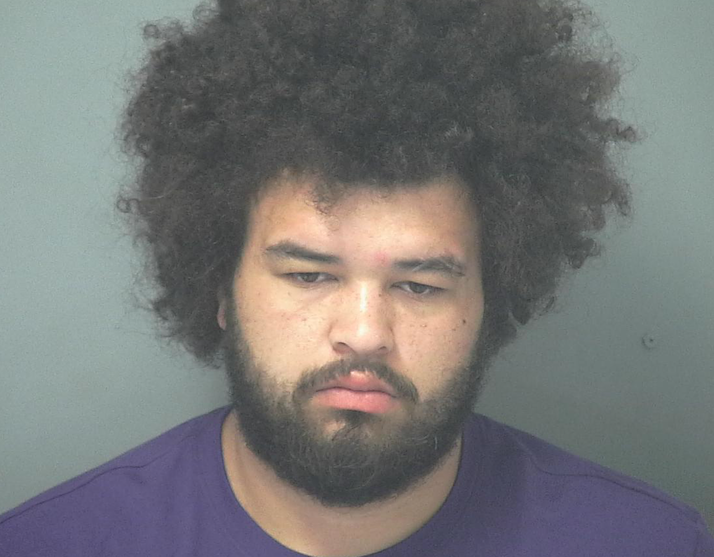
Holmes photo Jackson Co.

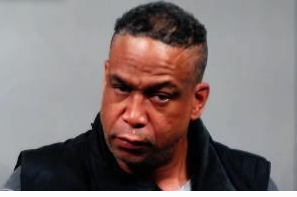
Gerald L. Holmes, also known as “Jerry” or “Joker,” 27, and Richard M. Phoenix, also known as “Snake,” 77, were sentenced in separate appearances before U.S. District Judge Greg Kays. Holmes was sentenced to 25 years in federal prison without parole. Phoenix was sentenced to five years in federal prison without parole.

On Aug. 17, 2018, Holmes pleaded guilty to one count of conspiracy to commit kidnapping, one count of kidnapping, one count of conspiracy to distribute 50 kilograms or more of marijuana, and one count of brandishing firearms in furtherance of a drug-trafficking crime.

During the conspiracy, which lasted from May 1 to Sept. 13, 2016, co-defendant Jeremy R. Bond, 40, of Independence, invested $10,000 into the marijuana operation. In return, he received $1,000 a week as interest and free marijuana until the entire principal investment was repaid in full. This investment allowed Holmes and a co-conspirator, identified in court documents as “C.H.” (who had made four trips to Colorado with Gerald Holmes), to purchase greater quantities of marijuana per trip. Once it reached the greater Kansas City metropolitan area, the marijuana was then resold by Gerald Holmes and C.H.

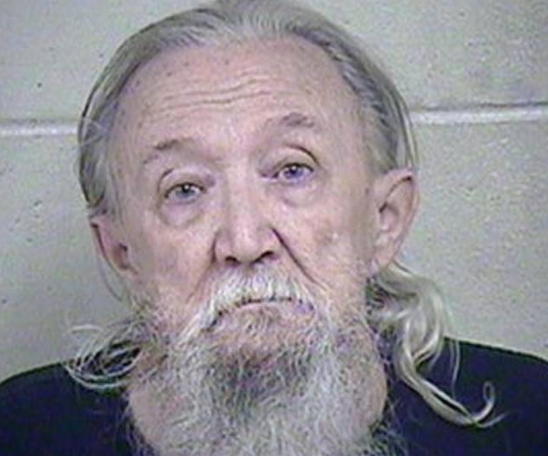
Phoenix photo Jackson Co.

Conspirators purchased at least 120 pounds of marijuana from co-defendant Michael C. Borrusch, also known as “Birdie,” 43, of Lakewood, Colo., for which they made more than a dozen trips between Colorado and Kansas City. Holmes paid Borrusch between $1,600 to $2,400 per pound, depending on the type and quality of marijuana available. Holmes’s father and co-defendant, Randal G. Holmes, also known as “Peckerwood” or “Wood,” 54, of Kansas City, Mo., received $100 for every pound of marijuana brought back to Kansas City because of his prior connection to Borrusch, who was previously his supplier.

On Sept. 12, 2016, Gerald and Randal Holmes agreed to kidnap C.H. because he stole $16,000 that was intended for the purchase of marijuana. C.H. spent the money in Las Vegas, Nev.

They arrived at the Independence, Mo., residence of the victim’s father, identified as “W.H.,” on Sept. 12, 2016. During their conversation, Gerald Holmes removed a firearm from his waistband and placed it on a table in front of W.H. They told W.H. to call C.H. and tell him he was being held at gunpoint and that C.H. needed to come to the residence right away. When C.H. arrived at the residence, Randal Holmes pointed a firearm at him and told him to get into his vehicle. While in the vehicle, Gerald Holmes struck, punched, and choked C.H. as Randal Holmes drove away.

They took C.H. to Randal Holmes’s residence, where they met Phoenix, who was living with Randal Holmes and his wife. C.H. was taken to the basement, where he was assaulted with fists, a hammer, and tin snips/clippers. Gerald Holmes attempted to remove the victim’s pinkie finger and a toe. During the assault, Randal Holmes repeatedly demanded that C.H. disclose where the duffle bag containing the money was located. Randal and Gerald Holmes left to retrieve the duffle bag while Phoenix held C.H. at gunpoint with instructions to shoot him if he got off the desk he had been sitting on.

Randal Holmes later drove C.H. to a rural residence near Edwards, Mo. As Randal Holmes drove them to the residence, Gerald Holmes continued to strike C.H. with fists and the butt of a firearm. When they arrived at the residence, C.H. was told to call his father and to tell him that he was okay, that he had taken a beating, that he would be home in a couple of days, and that he deserved what had happened.

Law enforcement officers were able to trace the telephone call and on Sept. 13, 2016, officers were able to locate C.H. and arrest the conspirators. Officers observed that C.H. had suffered multiple, visible injuries to his face, head, hands, and feet. Officers noted that C.H. had trouble walking, that his face was black and blue, as well as swollen with traces of dried blood. Upon receiving medical treatment, it was determined that C.H. had also suffered a fracture in his left hand.

Officers found a Jimenez Arms 9mm pistol in Randal Holmes’s vehicle and a Hi-Point 9mm pistol in the residence where C.H. had been held. Officers also found an FN Herstal .40-caliber pistol, a Remington .270-caliber rifle, an RG .22-caliber revolver, a Ruger .22-caliber rifle, a Mossberg .20-gauge shotgun, 36.4 grams of marijuana, and drug paraphernalia in another residence.

Gerald Holmes and Phoenix are the final defendants to plead guilty and be sentenced in this case. Randal Holmes was sentenced to 15 years in federal prison without parole. Borrusch was sentenced to 3 years and 10 months in federal prison without parole. Jeremy R. Bond, 40, of Independence, was sentenced to two years and six months in federal prison without parole.

Police find Kansas man with counterfeit cash during traffic stop

ARKANSAS CITY— A Kansas man found with counterfeit cash remains jailed in Cowley County, according to online booking records.

Just after 10a.m. June 1, police conducted a traffic stop in the 100 block of East Central Avenue in Arkansas City, according to a media release.

Loins photo Cowley Co.

A passenger in the car later identified as 22-year-old Lydell Loins of Arkansas City was found to have active warrants for his arrest and was taken into custody. During a search of his person police turned up suspected counterfeit U.S. currency, consisting of seven $20 bills and one $100 bill.

Loins was transported to and booked and remains jailed into the Cowley County for counterfeiting and possession of a controlled substance, both of which are felonies, plus a misdemeanor count of possession of drug paraphernalia.

He also was arrested on an Arkansas City Municipal Court warrant for misdemeanor failure to
appear, as well as a warrant for felony aggravated robbery and misdemeanor battery through Cowley
County District Court in Arkansas City.


KDHE: Entire state under moderate risk of West Nile infections

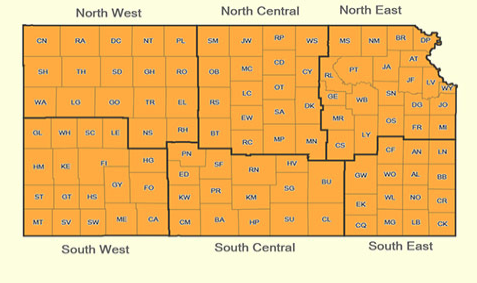
TOPEKA, Kan. (AP) — Kansas health officials say every county in the state is at moderate risk of West Nile virus infections.

KDHE image

The Kansas Department of Health and Environment said Friday no human cases have been reported as of May 25.

The virus can cause fever and other symptoms. About one out of 150 infected people develop swelling of the brain or brain tissue that in some cases can cause death. The virus cannot be transmitted from human to human.

The health department says people should remove standing water from their property. To avoid being bitten, people should wear insect repellant, long sleeves and pants, especially at dawn and dusk when mosquitoes are most active.

Pilot hospitalized after small plane crash near Kansas City

LEE’S SUMMIT, Mo. (AP) — Authorities say a pilot suffered only minor injuries when his small airplane crashed at the Lee’s Summit Airport.

Friday crash photo courtesy KCTV

The crash happened Friday evening. Emergency responders called to the airport just east of Kansas City found the single-engine plane just off the runway at the northeast edge of the airport. It was unclear whether the crash happened during landing or takeoff.

Lee’s Summit police Sgt. Chris Depue says damage to the plane was extensive, but that the pilot — the only person in the plane at the time of the crash — was treated at a hospital for minor injuries.

The pilot’s name has not been released.

The Federal Aviation Administration is investigating the cause of the crash.

Poll: Some younger workers view aging workforce negatively

CHICAGO (AP) — Some younger workers aren’t particularly thrilled to see a rising share of older Americans forgo retirement and continue working, according to a recent poll by The Associated Press-NORC Center for Public Affairs Research.

The poll found that workers under the age of 50 were significantly more likely to view America’s aging workforce as a negative development when compared with their older counterparts. About 4 in 10 respondents ages 18 to 49 and 44% of the youngest respondents ages 18 to 29 said they consider the trend to be a bad thing for American workers. Just 14% of those age 60 and over said the same.

“I don’t think in things like IT and medicine you’re as effective a worker (at 65 years old) as you are at 50,” says Katie Otting, a 29-year-old living near San Diego. “If some 65-year-old is in a position that he’s not ready to quit because he wants a better pension and there’s someone else ready to take that job, they’re not going to replace him.”

An aging population, elevated health care costs and lingering financial uncertainty following the Great Recession all are believed to be contributing to America’s steadily graying workforce. Nearly 20% of Americans over the age of 65 were employed or actively looking for work last year, up from less than 12% two decades prior, according to the Bureau of Labor Statistics.

But the increased prevalence of older workers has led some to believe seniors are holding back the country’s economic momentum by remaining in the workforce. Men were slightly more likely than women to cite the aging workforce as a problem for U.S. workers (32% to 27. And about a third (34%) of more affluent respondents earning more than $100,000 annually said the same, slightly more than the 24% of those earning less than $30,000 who said so.

By contrast, about 6 in 10 Americans age 60 and over say the trend has actually been a good thing for the economy, compared with 3 in 10 Americans under 30 who think that.

About a third of Americans under 50 who have noticed the trend in their own workplace believe the aging workforce has negative implications for their own careers.

“One of the myths that’s out there causing younger and older people to butt heads is the idea that ‘Oh, it’s because these older people are on the job preventing me from getting the job I want,'” says Steve Burghardt, a 74-year-old professor of social work at the City University of New York who thinks Americans are “looking for someone younger or someone older to blame” for inequality, job displacement and other economic problems.

Research is mixed on the aging workforce’s overall impact on the U.S. economy. Adam Ozimek, a senior economist at Moody’s Analytics, says his prior research efforts have suggested a growing population of older workers can slow productivity and ultimately hamper wage growth for the rest of the labor market.

But he says there’s little evidence to suggest that the presence of older workers is “crowding younger workers out of promotions,” noting that many of the workers who would naturally move up and replace positions currently held by baby boomers are not millennials but rather middle-aged members of Generation X.

“In anxious times, we look for scapegoats. And old people are a ready scapegoat, especially if you are forced out of having a public presence or are forced (out of a job),” says Ashton Applewhite, a New York-based writer and ageism activist.

The idea that older workers are keeping jobs away from younger Americans, preventing them from moving up the corporate ladder into higher ranking, higher paying positions, is not a new one. But economists say it doesn’t have much basis in economic reality.

“The more of those seniors continue to work, that means they’re also spending. And that spending helps build a rich economy that gives you jobs and lots of opportunities,” says Andrew Chamberlain, chief economist at employment hub Glassdoor.

But Chamberlain and Ozimek say it might be easier to believe older workers are holding back their younger counterparts when looking at the economy on a smaller scale. One particular company, for example, may only employ one chief of marketing. Should that person choose to remain in the workforce until he or she is 80 years old, lower ranking employees may perceive a lack of upward mobility.

A comparable job may be ripe for the taking elsewhere, Chamberlain says, but it may be at another company or in another city that would require a move that many employees may be unwilling to make.

“They feel like their opportunities are only within that firm,” Chamberlain says. “I think it’s just simple confusion. I think people are mixing up (opportunities) just inside one company versus the overall job market.”

Meanwhile, many older workers are coming to terms with the fact that they’ll need to remain in the workforce to keep their heads above water or maintain their current lifestyles.

Mitch Rothschild, 61, lives and works in New York City and says he expects he is “probably going to have to work until I die.” He says the aging workforce is less of an economic problem and more of a financial reality to which workers of all ages need to adapt.

“Hey, look, I wished I’d been skiing in the Alps since I was 40,” he says. “But you think I’m going to stop working a year from now and rely on Social Security for the next 20 years? No.”

___

EDITOR’S NOTE — Andrew Soergel is studying aging and workforce issues as part of a 10-month fellowship at The Associated Press-NORC Center for Public Affairs Research, which joins NORC’s independent research and AP journalism. The fellowship is funded by the Alfred P. Sloan Foundation.

___

The AP-NORC Center survey of 1,423 adults was conducted by The Associated Press-NORC Center for Public Affairs Research with funding from the Alfred P. Sloan Foundation. It was conducted Feb. 14 to 18 using a sample drawn from NORC’s probability-based AmeriSpeak Panel, which is designed to be representative of the U.S. population. The margin of sampling error for all respondents is plus or minus 3.7 percentage points.

Respondents were first selected randomly using address-based sampling methods and later were interviewed online or by phone.

Wild About Kansas photo contest going on now

KDWPT

PRATT – Are you an award-winning photographer? You could be! Entries are being accepted for the 2019 “Wild About Kansas” photo contest hosted byKansas Wildlife and Parks Magazine. If you’ve taken a photo highlighting Kansas wildlife, outdoor recreation, hunting, fishing, or local landscapes, consider participating in the 7th annual contest by 11:59 p.m. on Oct. 11, 2019. Here’s how to enter.

1. Visit ksoutdoors.com, click “Publications,” then “2019 Wild About Kansas Photo Contest.”

2. Carefully read each category description, and contest rules.

3. Complete the “2019 ‘Wild About Kansas’ Entry Form” found at the bottom of the webpage. (You will receive a conformation code upon completion).

4. Copy your confirmation code into the subject line of a new e-mail.

5. Attach your photos, and detail which category each photo should be entered into (one category per image). E-mail your photos to [email protected].

Participants whose images have been selected for a 1st, 2nd, 3rd place or honorable mention award will have their winning imagery featured in the 2020 Jan/Feb photo issue of Kansas Wildlife and Parks Magazine.

Photos must be:

  • 1 megabyte (MB) or larger
  • Taken in Kansas
  • Appropriate for the category entered

For more information, visit ksoutdoors.com/Services/Publications/Magazine/2019-Wild-About-Kansas-Photo-Contest.

Kansas Poised To Use Private Prisons: ‘We’re Out Of Options’

The Kansas Department of Corrections will be spending millions on housing state inmates in private prisons and county jails.
CREATIVE COMMONS-CC0

The state spending review panel is freeing up some of the money the Kansas Department of Corrections asked for to place inmates in county jails and private facilities. Prison officials say it’s a last resort.

Desperate to relieve the strain on state prisons that are already over capacity, officials appealed to the State Finance Council to spend about $10 million on contracts with outside facilities to house as many as 400 inmates.

All that money is in the state budget, but the Finance Council, which includes top legislative leaders and the governor, only agreed to unleash $4.4 million at a meeting Wednesday. They expressed concerns about the quality and safety private prisons out of state.

“Conditions could be worse there,” said Senate President Susan Wagle, “than what we have in Kansas.”

Roger Werholtz, who retired from his second stint as corrections secretary less than a week ago, returned to the Statehouse to make the case for the spending.

He told the panel that the money will cover the housing, food, and basic medical costs for 160 inmates. But, speaking with reporters later, he said it won’t be enough to alleviate the effects of overcrowding.

“The major issues for which we need beds did not get resolved,” Werholtz said. “I don’t know what they think is going to happen with these folks.”

Corrections officials say there’s been a spike in violent incidents and that access to healthcare, counseling, and job training for inmates is inadequate. Inmates are being swapped in and out of solitary confinement because there’s not enough space. Maximum security inmates are being double-bunked, with two inmates in one cell. Staff are overworked.

The department still wants another $5.47 million for contracts to cover an additional 200 prison beds at outside facilities. The Finance Council decided to schedule a meeting at a later date to consider that spending.

The Department of Corrections began taking bids for prison bed contracts from out-of-state prisons and Kansas county jails in May.

Werholtz told the council that department staff had visited a private prison in Arizona that had submitted a bid. The department declined to specify to reporters the location or the company that owns that prison.

A spokesman for private prison company CoreCivic would not confirm the officials had visited one of its prisons in Arizona, but did confirm that the company had bid for contracts in Kansas.

But the legislative leaders on the Finance Council want the corrections department to put inmates in county jails first.

“At least let’s do that,” Denning said, “before we go the private route.”

Werholtz said the corrections department was already prioritizing housing inmates in Kansas’s county jails because they’re closer and easier to manage, but the jails don’t have the space to alleviate much of the crowding at state prisons.

“We’re then passing our overcrowding problem back to the county jail,” he said. “That’s going to be the consequence.”

Interim Corrections Secretary Chuck Simmons said the department received bids from four county jails located in Kansas, and had developed contracts with three: Cherokee, Wilson and Kiowa Counties. The department already has contracts with jails in Cloud and Jackson Counties.

Gov. Laura Kelly said contacting with private prisons isn’t the ideal solution, but that Kansas is out of options.

“We don’t have much of a choice at this point.” she said. “I am really, truly, very concerned about staff safety and inmate safety.”

As a condition of releasing the funds, the Finance Council is requiring the Department of Corrections to keep open a cell block at the El Dorado Correctional Facility. The department wanted to close the block to reduce strain on corrections officers, many of whom work double shifts for days on end.

“We are absolutely burning those staff out and it’s not sustainable,” Werholtz said. “We’re having to lock people down right now because of their violent behavior, instead of working with them to change that violent behavior.”

Kelly declared a state of emergency at that prison in February. Werholtz said staff there had worked more than 2,000 double shifts since. But the panel still argued that every block at the prison should remain open.

“We need a commitment from the administration that they’re going to be open at this time,” said House Speaker Ron Ryckman.

The council also nixed the spending of $3 million to reduce crowding in the women’s prison by moving 120 inmates to the state’s juvenile facility.

It did, however, authorize spending $9 million to raise the salaries of the state’s overworked prison staff and $4.5 million to pay for Hepatitis C treatment for inmates.

Werholtz warned that the strain on the prison system could get worse as the prison population is projected to grow by hundreds of people over the next decade.

“We’re either looking at increasing costs or changing policy,” he said. “There’s going to have to be a substantial change in sentencing policy.”

Nomin Ujiyediin reports from Topeka for the Kansas News Service. You can send her an email at nomin at kcur dot org, or reach her on @NominUJ

Record number of deer hunters apply for limited draw permits

KDWPT

PRATT – Kansas’ coveted nonresident deer permits are offered only through a limited draw lottery process, and this year’s drawing saw a record number of applicants: 24,024. Despite no changes to the total number of nonresident deer permits allocated by the Kansas Department of Wildlife, Parks and Tourism (KDWPT), there was an increase of 1,588 applicants over last year. Of the 24,024 hunters who applied, 88 percent were successful. No leftover permits will available this year.

The application period for the 2019 draw took place April 1-26. A total of 21,816 permits were then awarded through a random computer drawing, and applicants were notified of the results ¬¬– regardless of the outcome – beginning Friday, May 24.

To view 2019 permit allocations by unit, as well as draw statistics from last year, visit https://ksoutdoors.com/Hunting/Applications-and-Fees/Deer/Quotas-and-Draw-Stats. Or visit ksoutdoors.com, click “Licenses and Permits,” then “Non-Resident Deer Draw Quotas and Stats.”

The 2019 deer season will open Sept. 7-15 for youth and hunters with disabilities; Sept. 16-29 for muzzleloader season; Sept. 16-Dec. 31 for archery season; Oct. 12-14 for the pre-rut whitetail antlerless-only firearm season; and Dec. 4-15 for regular firearm seasons.
Extended firearm seasons will be open Jan.1-3 in Units 6, 8, 9, 10, and 17; Jan. 1-5 in Units 1, 2, 3, 4, 5, 7, 11, 14, and 16; and Jan. 1-12 in Units 10A, 12, 13, 15, and 19.

For more information on deer hunting in Kansas, visit ksoutdoors.com and click “Hunting,” “Big Game Information,” then “Deer.”

Kan. man with 2-dozen convictions sentenced for knife attack on officer

Hutcherson -photo Sedgwick Co.

WICHITA, KAN. – A Kansas has been sentenced after attacking a Wichita Police
Officer, according to the Sedgwick County District Attorney.

On March 29, Darren Hutcherson, 54 of Wichita, pled guilty to aggravated
assault of a law enforcement officer, aggravated assault, and interference with law
enforcement. On Friday, Judge Seth Rundle sentenced Hutcherson to 51 months in
prison.

On October 10, 2018, Wichita Police were dispatched to the Union Rescue Mission on N. Hillside to apprehend Hutcherson who was wanted by the Dept. of Corrections.

In the Rescue Mission dining hall, officers told Hutcherson to put down a knife and put his hands behind his back. Hutcherson lunged at the officer, striking him in the upper chest. The knife fell to the floor after it struck the officer’s ballistic vest. The officer was not injured.

Hutcherson has two dozen convictions for burglary, theft, robbery, DUI and Flee or Attempt to Elude officers, according to the Kansas Dept. of Corrections.

Authorities identify man who died in explosion at Kan. motorsports park

TOPEKA — Authorities have identified the man who died in an accident Friday in Topeka.

Google image

Just after 6:00p.m. on Friday, fire crews responded to Heartland Motorsports near a maintenance building, according to Fire Chief Michael Martin.

Upon arrival fire and AMR crews located one adult male patient suffering from critical injuries sustained in an explosion. Despite efforts by EMS crews, 41-year-old Joshua Darryl Aubert  succumbed to his injuries and was pronounced deceased on scene.

A preliminary investigation revealed the fire cause was accidental. Evidence indicates the victim was using a torch to cut open what was believed to be an empty metal drum labeled as methanol when the explosion occurred.

June 14 deadline for resident big game permit applications

KDWPT

PRATT – The application deadline is June 14, 2019 for resident hunters wanting to apply for an elk, either-species/either-sex deer, or antelope permit. Earlier this year, the Kansas Wildlife, Parks and Tourism Commission voted in favor of moving the resident limited draw deer and elk permit application deadlines to the second Friday in June. This is the first year application deadlines for either-species/either-sex deer and elk permits will coincide with the firearm antelope application deadline.

Resident hunters can apply online at kshuntfishcamp.com. Fees are as follows:

ANTELOPE

  • General Resident: $62.50
  • Landowner/Tenant: $37.50
  • Youth (15 or younger): $22.50
  • Nonresident Tenant: $97.50
  • Preference point only: $11.50

DEER

Firearm (Either-species/Either-sex)

  • General Resident: $52.50
  • Landowner/Tenant: $32.50
  • Youth (15 or younger): $22.50
  • Preference point only: $11.50

ELK*

Firearm (Any Elk)

  • General Resident: $302.50
  • Landowner/Tenant: $152.50
  • Youth (15 or younger): $127.50
  • Nonresident Tenant: $152.50
  • Preference point only: $11.50

Antlerless

  • General Resident: $152.50
  • Landowner/Tenant: $77.50
  • Youth (15 or younger): $52.50
  • Nonresident Tenant: $77.50
  • Preference point only: $11.50

*Fee to apply for an elk permit, or purchase a bonus point, is $11.50. Permit fees are collected from successful applicants only.

For more information, visit ksoutdoors.com/Hunting/Applications-and-Fees.

Kroger recalls frozen berries that might have hepatitis A

NEW YORK (AP) — Grocery stores owned by Kroger across the country are recalling store-label frozen berries because they might be contaminated with hepatitis A.

There have been no reported illnesses.

The stores include Kroger, Ralphs, Fry’s, Fred Meyer and other chains . The recalled fruit are branded “Private Selection” and include “Frozen Triple Berry Medley” in the 16-oz. and 48-oz. sizes and “Frozen Blackberries” in a 16-oz package.

Kroger announced Friday that it has removed the berries from store shelves, and that customers who have them at home should not eat them.

Hepatitis A, a contagious liver disease, may cause fatigue, stomach pain and jaundice. It can last a few weeks or several months and can cause liver failure in rare cases.

The Food and Drug Administration discovered the contamination.

Copyright Eagle Radio | FCC Public Files | EEO Public File