KANSAS CITY, KAN. – A Kansas man was sentenced Monday to four years in federal prison for helping to move 168 pounds of marijuana from one house to another to keep police from finding it, according to U.S. Attorney Stephen McAllister.
Felipe Cano-Porras, 32, Kansas City, Kan., pleaded guilty to one count of conspiracy to distribute marijuana. Law enforcement had a house in the 900 block of Riverview in Kansas City, Kan., under surveillance when Cano-Porras and another man came out.
In the house, investigators found 186 pounds of marijuana in suitcases, 704 grams of methamphetamine, three firearms and more than $25,000 in cash.
In his plea, Cano-Porras admitted he and another moved the marijuana, the methamphetamine, the guns and the cash into the house from another residence.
SEDGWICK COUNTY — A Kansas sheriff’s deputy who was killed in the line of duty will receive a national award from the National Sheriffs’ Association this summer, according to a media release from the Sedgwick County Sheriff’s Department.
Deputy Robert Kunze
Deputy Robert Kunze III will be honored with the Charles “Bud” Meeks Award Deputy Sheriff of the year for Valor. His family will receive the award for him on June 17 in Louisville, Kentucky, at the association’s annual conference.
The award, given annually by the National Sheriffs’ Association, recognizes a deputy sheriff who has made outstanding contributions to law enforcement and his/her agency or who has demonstrated conspicuous bravery in the performance of his/her duties. The award is given in memory and in honor of Sheriff Bud Meeks from Allen County, Indiana, who was a previous Executive Director of the National Sheriffs’ Association.
Kunze was fatally shot on Sept. 16, 2018, while trying to handcuff a man on suspicion of vehicle theft about 20 miles west of downtown Wichita.
Before he died, Kunze shot and killed his attacker, 29-year-old Robert Greeson, likely saving the lives of two witnesses hiding nearby.
TOPEKA – May tax receipts came in $77.1 million above the $486.0 million estimate for all tax categories, according to a media release from the Kansas Department of Revenue.
Individual income tax receipts are $67.9 million, or 32.3%, above the estimate of $210.0 million. Corporate income tax receipts are $9.0 million, or 44.8%, below the estimate of $20.0 million.
Retail sales tax receipts are $201.1 million, an increase of $8.1 million, or 4.2% above the May estimate.
“Increases in May receipts are largely due to the continued growth in individual income receipts,” Kansas Revenue Secretary Mark Burghart said. “Retail sales and use taxes also contributed almost $10.6 million to the growth in receipts.”
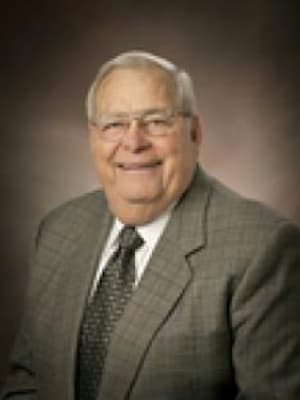
Dick Edwards, the owner of Dick Edwards Auto Plaza in Junction City, has died. Yorgenson-Meloan-Londeen Funeral Home in Manhattan confirmed he passed away Sunday.
Edwards began his career selling vehicles in Augusta in 1963 and later moved to Manhattan to start Dick Edwards Ford, which he owned for many years. In 2013, he opened Dick Edwards Auto Plaza in Junction City at the corner of Interstate 70 and U.S. 77.
Yorgenson-Meloan-Londeen Funeral Home is handling arrangements.
ALBUQUERQUE, N.M. — Environmentalists say U.S. land managers violated environmental laws and their own regulations when issuing dozens of leases to drill in one of the nation’s busiest oilfields.
WildEarth Guardians filed a lawsuit Monday in U.S. District Court, claiming the oil boom in southeastern New Mexico is a threat to Carlsbad Caverns National Park and the surrounding area’s cave systems and desert slopes.
The group also is concerned about deteriorating air quality, arguing that the Bureau of Land Management failed to consider the cumulative effects of oil and gas development in the Permian Basin.
The agency is updating the area’s development plan, but environmentalists contend more than 200 leases awarded in 2017 and 2018 compromise that effort.
The leases cover more than 106 square miles in New Mexico.
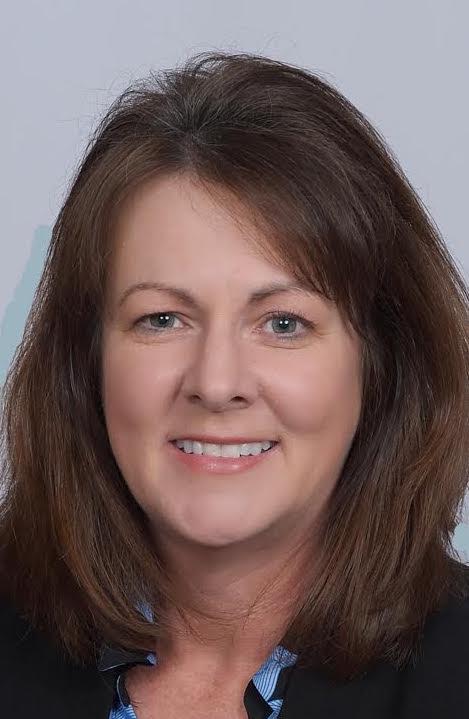
Gov. Laura Kelly on Monday announced Dena Sattler as the new director of communications for the Office of the Governor.
Sattler has been director of marketing and communications for the Kansas Department of Commerce since mid-February. Prior to joining Commerce, Sattler was publisher of The Garden City Telegram from 2004 to 2018. In 2018, she also served as a group publisher, adding the Dodge City Daily Globe, Pratt Tribune, Kiowa County Signal and St. John News. She started her newspaper career in 1985.
Sattler is a past president of the Kansas Press Association board of directors. She has a bachelor’s degree from the University of Iowa, and also served in public affairs in the U.S. Army Reserve.
“I’m pleased to have Dena join our team and take the lead in communications for our office,” the governor said. “She brings decades of media and team management experience, which will be instrumental as we move forward.”
“It’s an honor to be part of Gov. Kelly’s team,” Sattler said. “Throughout my career, I’ve worked to help raise awareness of news and issues, and most recently in southwest Kansas. I look forward to doing the same for the state as a whole, and helping Kansans better understand the important work of their government.”
Kelly also thanked outgoing communications director Ashley All for her hard work in the past 18 months. All was director of communications for Kelly’s campaign and then director of communications for the Office of the Governor. All had planned to work through the first legislative session and help Kelly get off to a strong start.
“Ashley has quite literally been by my side since Day 1 of my campaign for governor,” Kelly said. “She dedicated herself to helping share my vision for the state of Kansas. Ashley has been a trusted, loyal member of our staff, and I thank her for her service to the State of Kansas.”
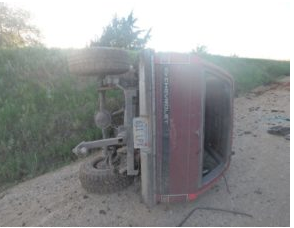
SALINE COUNTY — One person died in an accident just after 7:30p.m. Saturday in rural Saline County.
Fatal accident scene in Rural Saline County-photo Saline County Sheriff
A 1994 Chevy Blazer driven by Shawn Hynes, 41, Salina, was southbund in the 3600 Block of North Woodward Road, according to Saline County Sheriff Roger Soldan.
The driver lost control of the vehicle. It traveled off the road, struck and embankment rolled.
Hynes was trapped in the vehicle and died at the scene. He was not wearing a seat belt, according to Soldan.
SEDGWICK COUNTY — Law enforcement authorities are investigating a fatal weekend shooting and have a suspect in custody.
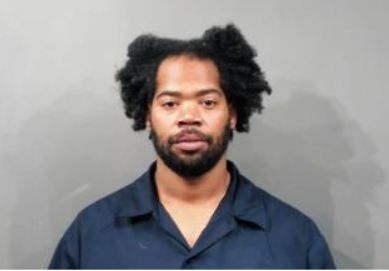
Phillips photo Sedgwick Co.
Just after 11:45 p.m. Saturday, police responded to report of a shooting in the 400 Block of North New CT. in Wichita, according to officer Charley Davidson.
At the scene officers found a 29-year-old man identified as Ivell Ray of Wichita in the street with multiple gunshot wounds. He was pronounced dead at the scene.
An investigation revealed Ray and a suspect identified as 34-year Isaac Phillips of Wichita were involved in a disturbance. Phillips fired a handgun multiple times striking Ray. On Monday, Davidson reported police arrested Phillips on a requested charge of first-degree murder.
———–
SEDGWICK COUNTY — Law enforcement authorities are investigating a fatal weekend shooting.
Just after 11:45p.m. Saturday, police responded to report of a shooting in the 400 Block of North New York CT. in Wichita, according to officer Charley Davidson. At the scene officers found a 29-year-old man with multiple gunshot wounds. He died at the scene.
Davidson did not release the victim’s name and police have not reported an arrest.
WASHINGTON (AP) — The Food and Drug Administration’s first broad testing of food for a worrisome class of nonstick, stain-resistant industrial compounds found substantial levels in some grocery store meats and seafood and in off-the-shelf chocolate cake, according to unreleased findings FDA researchers presented at a scientific conference in Europe.
FDA lab in Silver Springs Maryland -photo courtesy FDA
The FDA’s disclosure is likely to add to concerns raised by states and public health groups that President Donald Trump’s administration is not acting fast enough or firmly enough to start regulating the manmade compounds, called “forever chemicals.” A federal toxicology report last year cited consistent associations between very high levels of the industrial compounds in peoples’ blood and health risks but said there was not enough evidence to prove the compounds as the cause.
The levels in nearly half of the meat and fish tested were double or more the only currently existing federal advisory level for any kind of the widely used manmade compounds, which are called per- and polyfluoroalykyl substances, or PFAS.
The level in the chocolate cake was higher: more than 250 times the only federal guidelines, which are for some PFAS in drinking water.
Food and Drug Administration spokeswoman Tara Rabin said Monday that the agency thought the contamination was “not likely to be a human health concern,” even though the tests exceeded the sole existing federal PFAS recommendations, for drinking water.
As a handful of PFAS contaminations of food emerge around the country, authorities have deemed some a health concern but not others. The agency considers each discovery of the compound in food case by case, including the kind of food, levels of contamination, frequency of consumption and latest scientific information, Rabin said.
“Measuring PFAS concentrations in food, estimating dietary exposure and determining the associated health effects is an emerging area of science,” the FDA said.
PFAS, created by DuPont in 1938 and put into use for tough nonstick cookware, now exists in an estimated 5,000 varieties. Industries use the product to keep grease, water and stains off countless consumer items, including in food packaging, carpets and couches, dental floss and outdoor gear.
The chemicals also are found in firefighting foam, which the Department of Defense calls irreplaceable in suppressing jet-fuel fires. Especially around military bases and PFAS facilities, decades of use have built up levels in water, soil and some treated sewage sludge used to fertilize non-organic food crops and feed for livestock.
They’ve been a topic of congressional hearings, state legislation and intense federal and state scrutiny over the past two years.
The federal toxicology review last year concluded the compounds are more dangerous than previously thought, saying consistent studies of exposed people “suggest associations” with some kinds of cancers, liver problems, low birth weight and other issues.
Because the tough compounds are predicted to take thousands of years to degrade, and because older versions have been found to accumulate in peoples’ bodies, PFAS has acquired the name “forever chemicals.”
The Environmental Protection Agency earlier established a nonbinding health advisory threshold of 70 parts per trillion for two-phased out forms of the contaminant in drinking water.
Trump’s EPA said it would consider setting mandatory limits instead in the wake of the federal toxicology report and after federally mandated water sampling found high levels in many drinking water systems around the country. The administration has called dealing with PFAS contamination a “potential public relations nightmare” and a “national priority.”
Impatient for federal action, several states have moved to regulate the chemicals on their own, including setting standards for groundwater or drinking water.
In the FDA study, conducted in October 2017, researchers oversaw market basket testing for more than a dozen PFAS, drawing on samples of food on sale in three undisclosed mid-Atlantic cities.
FDA researchers discussed the results at the annual conference by the Society of Environmental Toxicology and Chemistry in Helsinki, Finland, last week.
Two environmental groups, the Environmental Defense Fund and the Environmental Working Group, obtained written results and charts from the FDA presentation and provided them to The Associated Press.
PFOS, an older form of PFAS no longer made in the U.S., turned up at levels ranging from 134 parts per trillion to 865 parts per trillion in tilapia, chicken, turkey, beef, cod, salmon, shrimp, lamb, catfish and hot dogs. Prepared chocolate cake tested at 17,640 parts per trillion of a kind of PFAS called PFPeA.
The FDA presentation also included what appeared to be previously unreported findings of PFAS levels — one spiking over 1,000 parts per trillion — in leafy green vegetables grown within 10 miles (16 kilometers) of an unspecified eastern U.S. PFAS plant and sold at a farmer’s market.
It also previewed test levels for a previously reported instance of PFAS contamination of the food supply, in the feed and milk at a dairy near an Air Force base in New Mexico.
The FDA said the contamination in that milk was a health concern. It said it would release detailed data on that soon.
The FDA in 2015 and 2016 revoked approval for some older versions of PFAS in food packaging, although it was one of those versions that was found in high levels in its testing of meat and seafood.
In its statement, the FDA noted studies suggesting newer forms may also pose a health risk. It said it was working with other federal agencies to determine appropriate next steps.
“What this calls for is additional research to determine how widespread this contamination is and how high the levels are,” Linda Birnbaum, director of the National Institute of Environmental Health Sciences, said separately in an interview. “We have to look at total human exposure — not just what’s in the water or what’s in the food … or not just dust. We need to look at the sum totals of what the exposures are.”
Birnbaum added, “Nobody is exposed to just one form of PFAS in isolation. You’re exposed to a whole mixture.”
It’s unclear what human health risks are posed by the presence of PFAS chemicals in foods, said Jamie DeWitt, a toxicologist at East Carolina University in Greenville, North Carolina, who studies PFAS compounds.
The discovery of PFAS contamination in wells and land around a Chemours Co. manufacturing plant near Fayetteville has made North Carolina one of the focuses of study for exposures.
“Drinking one glass of contaminated water is unlikely to be associated with health risks, as is eating one slice of contaminated chocolate cake,” DeWitt said. “Individually, each item is unlikely to be a huge problem, but collectively and over a lifetime, that may be a different story.”
Sally Brown, a University of Washington researcher who supports the use of treated sewage sludge by agriculture, said the FDA’s findings were “not a major concern.”
“If you are worried about this type of compound it makes sense to ban the cookware and the dental floss” treated with PFAS, Brown said.
Near Fayetteville, neighbors of the Chemours PFAS facility are making plans for a Fourth of July parade float dedicated to warning others just how widely PFAS was turning up in the area.
The float will feature men fishing in a contaminated pond and vegetables growing in a contaminated garden, said Michael Watters, who lives a mile (1.6 kilometers) from the plant. Watters said he has stopped consuming well water and vegetables from his own land.
WASHINGTON (AP) — Top officials from the U.S. and Mexico will begin talks Monday in a scramble to fend off President Donald Trump’s threat of devastating tariffs on imports from the southern ally and meet his demand for fewer migrants at the border.
Border Patrol continues to apprehend large groups of 100 or more migrants arriving at the U.S. Mexican border. This photos show USBP and BORSTAR agents processing individuals in March at El Paso, TX – image courtesy Department of Homeland Security, U.S. Border Patrol
Trump is in London for a long-planned overseas trip, leaving others to stem a potential trade crisis. It’s unclear what more Mexico can do — and what will be enough — to satisfy the president. Trump’s Republican allies warn that tariffs on Mexican imports will hit U.S. consumers and harm the economy.
The president all but taunted negotiators for a quick resolution. “Mexico is sending a big delegation to talk about the Border,” the president tweeted Sunday. “Problem is, they’ve been ‘talking’ for 25 years. We want action, not talk.”
On Monday, Mexican Economy Minister Graciela Marquez plans talks with Commerce Secretary Wilbur Ross. Two days later, delegations led by Secretary of State Mike Pompeo and Foreign Relations Secretary Marcelo Ebrard will also meet in Washington.
Trump has been here before, issuing high-stakes threats, only to back off come crunch time. But a top White House official warned that the president was “deadly serious.” Trump is threatening 5% tariffs on Mexican imports starting June 10.
Trump claims Mexico has taken advantage of the United States for decades but that the abuse will end when he slaps tariffs on Mexican imports. His frustration with the flow of migrants is nothing new, but it’s a subject he often returns to, as he did last week after special counsel Robert Mueller’s rare public statement on the Trump-Russia report.
The president said last week that he will impose the tariffs to pressure the government of Andres Manuel Lopez Obrador to block Central American migrants from crossing the border into the U.S. Trump said the import tax will increase by 5% every month through October, topping out at 25%. It swiftly refocused attention on the border issues.
Mick Mulvaney, the acting White House chief of staff, said on “Fox News Sunday” that the president is “deadly serious.”
Still, Mulvaney acknowledged there are no concrete benchmarks being set to assess whether the U.S. ally is stemming the migrant flow enough to satisfy the administration. “We intentionally left the declaration sort of ad hoc,” he said.
“So, there’s no specific target, there’s no specific percentage, but things have to get better,” Mulvaney said. “They have to get dramatically better and they have to get better quickly.”
The tariff threat comes just as the administration has been pushing for passage of the United States-Mexico-Canada Agreement, which would update the North American Free Trade Agreement and top Republicans warned it could derail that effort.
GOP Sen. John Kennedy of Louisiana, called the tariffs a “mistake” and said it was unlikely Trump would impose them.
Republicans on Capitol Hill and GOP allies in the business community have expressed serious unease with the tariffs. Some see this latest threat as a play for leverage and doubt Trump will follow through. Earlier this year Trump threated to seal the border with Mexico only to change course.
The president “has been known to play with fire, but not live hand grenades,” Kennedy said on CBS’s “Face the Nation.”
“It’s going to tank the American economy,” he said. “I don’t think the president’s going to impose these tariffs.”
Republicans have repeatedly tried to nudge Trump away from trade wars and have specifically questioned the White House’s ability to rely on executive authorities to impose some of them as national security issues.
At the same time, Trump’s efforts to revamp immigration laws have drawn little support in the Congress.
“I think what the president said, what the White House has made clear, is we need a vast reduction in the numbers crossing,” Kevin McAleenan, acting secretary of the Department of Homeland Security, said on CNN’s “State of the Union.”
Mulvaney, who also appeared on NBC’s “Meet the Press,” said Mexico could take various steps to decrease the record numbers of migrants at the border.
He suggested the Mexican government could seal its southern border with Guatemala, crack down on domestic terrorist organizations and make Mexico a safe place for migrants seeking to apply for asylum.
“There are specific things that the Mexicans can do,” he said.
Economists and business groups are sounding alarms over the tariffs, warning that they will impair trade and increase the costs of many Mexican goods that Americans have come to rely on.
But Mulvaney played down those fears, saying he doubts business will pass on the costs to shoppers. “American consumers will not pay for the burden of these tariffs,” he said.
He also suggested the tariffs were an immigration issue, separate from the trade deal the United States is trying to negotiate with Mexico and Canada.
Several top GOP lawmakers have expressed concerns that Trump’s tariff threat could upend that deal. The chairman of the Finance Committee, Republican Sen. Chuck Grassley of Iowa, said last week the tariffs would “seriously jeopardize” passage of that agreement, which needs approval in Congress.
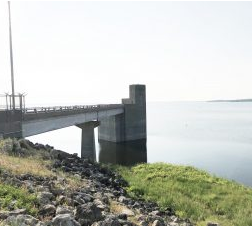
GEARY COUNTY—The Army Corps of Engineers will begin releasing 4,000 cubic feet of water per second on Monday, according to Geary County Emergency Management.
The Corps has been required to hold water at the 25 cfs low-flow level since March 12, due to the need to retain water to prevent downstream flooding. As of Sunday the lake level had exceeded 1172 feet.
KANSAS CITY – A Kansas City woman pleaded guilty in federal court Thursday to her role in conspiracy to illegally transfer ownership of firearms, according to the United State’s Attorney.
Iesha T. Boles, 43, waived her right to a grand jury and pleaded guilty before U.S. District Judge Greg Kays to a federal information that charges her with conspiracy to make false statements during the purchase of firearms.
By pleading guilty, Boles admitted that she made false statements regarding the purchase or transfer of six firearms between Nov. 22, 2013, and June 11, 2017. Boles admitted that she was not the actual transferee/buyer for each of the firearms, but was acquiring the firearms on behalf of another person.
According to the plea agreement, a co-conspirator purchased a Jimenez 9mm pistol on Nov. 22, 2013; a Jimenez .380-caliber pistol on Nov. 13, 2013; a Jimenez .380-caliber pistol on Nov. 22, 2013; and a Jimenez .380-caliber pistol on Dec. 10, 2013. Those four firearms were all shipped to Conceal & Carry, a federal firearms licensee in Kansas City, Mo. Ownership was transferred to Boles, who later reported the firearms were stolen. In one instance, she reported a firearm was stolen within two days after purchase.
On Nov. 14, 2013, a Jimenez 9mm pistol was transferred to the same co-conspirator, who then transferred ownership to Boles. On Oct. 27, 2016, that co-conspirator purchased a Jimenez .380-caliber pistol and transferred the firearm to Boles, who reported the firearm stolen 41 days later.
Boles admitted that, on each of those six occasions, she made a false representation to the federally licensed firearms dealer in order to complete the firearm transfer.
Under federal statutes, Boles is subject to a sentence of up to five years in federal prison without parole. The maximum statutory sentence is prescribed by Congress and is provided here for informational purposes, as the sentencing of the defendant will be determined by the court based on the advisory sentencing guidelines and other statutory factors. A sentencing hearing will be scheduled after the completion of a presentence investigation by the United States Probation Office.
This case is being prosecuted by Assistant U.S. Attorney Brad K. Kavanaugh. It was investigated by the Bureau of Alcohol, Tobacco, Firearms and Explosives and the Kansas City, Mo., Police Department.
TOPEKA, Kan. (AP) — A former state commerce secretary whose conduct is being reviewed by the Kansas Bureau of Investigation participated in transferring state data to a private company with ties to him while in office, according to a newspaper report.
Former Commerce Secretary Antonio Soave answers questions in July 2016 at the Kansas Statehouse. CREDIT STEPHEN KORANDA
The Topeka Capital-Journal reports that it used state documents and interviews to link ex-Secretary Antonio Soave to the transfer of state files containing contact, personnel and financial data on more than 10,000 businesses. Soave served as the Department of Commerce’s top administrator from December 2015 until June 2017 under Republican Gov. Sam Brownback.
The data went to Capistrano Global Advisory Services, an Overland Park firm that advises businesses about international commerce, the newspaper said. Soave was its CEO before and after serving as commerce secretary.
Brownback fired Soave over questions about agency contracts for consulting and marketing services, with The Kansas City Star later reporting that at least nine Soave friends or business associates received such contracts. The KBI opened an investigation of Soave’s activities at the department in 2018, and KBI spokeswoman Melissa Underwood told The Associated Press last week that it is ongoing.
Soave did not respond to a Facebook message seeking comment; two home telephone listings for him were disconnected, and there was no answer at the number for Capistrano Global Advisory Services. Soave said previously that he was “very careful to comply with all existing policies” at the department.
The Capital-Journal said that emails and other documents showed that Soave asked Department of Commerce employees to extract information about businesses from agency computers. The newspaper said it obtained the documents recently through an open records request — after being told by the department in 2017 that they didn’t exist or couldn’t be found.
Spreadsheets, reports and lists were forwarded to Soave’s special assistant in the department, who then emailed files to the business development director at Capistrano Global, who later became a state contractor, the newspaper said. The Capital-Journal said it would have been difficult and expensive for outsiders to replicate the same data.
Soave’s Linked-in profile listed him as the company’s CEO from January 1989 until January 2016 and again since July 2017.
Jessica Farrell, a former Department of Commerce information technology administrator, said she pushed back against Soave’s requests about the agency’s data on businesses. Farrell said state employees are trained not to release state data to vendors or contractors without specific instructions in a contract or formal agreement.
“It appears Soave and his associates gained an unfair advantage through information released to private parties,” said state Rep. John Carmichael, a Wichita Democrat and an attorney. “That property was intellectual property of the state of Kansas.”
In a May 2016 email to Soave, Michael Miravalle, his special assistant at the department, said there was consternation within the agency with Soave having access to data about businesses.

 Felipe Cano-Porras, 32, Kansas City, Kan., pleaded guilty to one count of conspiracy to distribute marijuana. Law enforcement had a house in the 900 block of Riverview in Kansas City, Kan., under surveillance when Cano-Porras and another man came out.