We have a brand new updated website! Click here to check it out!

Census citizenship question could transform state elections

AUSTIN, Texas (AP) — Computer files discovered in the home of a Republican operative who died last year contain a blueprint for how the GOP could extend its domination of legislatures in states where growing Latino populations favor Democrats and offer compelling context about a related case currently before the U.S. Supreme Court.

The files from North Carolina redistricting expert Tom Hofeller include detailed calculations that lay out gains Republicans would see in Texas by basing legislative districts on the number of voting-age citizens rather than the total population. But he said that would be possible only if the Census asked every household about its members’ immigration status for the first time since 1950.

The U.S. Supreme Court is expected to rule on that question as early as next month. But Republicans who support adding the citizenship question have rarely acknowledged any partisan political motive. The emergence of the documents now could figure heavily in the case the court is considering.

To civil liberties lawyers suing to block the question, it’s now clear that partisan politics were at work all along. They assert in court filings that Hofeller not only laid out the political benefit for the GOP but also ghost-wrote a U.S. Department of Justice letter calling on the Census Bureau to add an immigration question to next year’s survey.

The Justice Department denied the allegations in a statement on Thursday, saying Hofeller’s Texas analysis “played no role in the Department’s December 2017 request to reinstate a citizenship question to the 2020 decennial census.” In that 2017 letter, Justice said it needed citizenship information to protect the voting rights of minorities.

The U.S. Supreme Court heard arguments on the citizenship question in April and is expected to rule by July whether it will be allowed.

“What it would result in is outrageously overpopulated and underpopulated districts,” said Matt Angle, a Democratic redistricting strategist, adding that the resulting maps would harm Texas’ booming Hispanic population with the aim of benefiting Republicans.

Many of the state’s top Republicans, including Texas Attorney General Ken Paxton , have publicly expressed support for a citizenship question on the Census. On Friday, Texas Gov. Greg Abbott’s office did not respond to questions about whether he would endorse using citizenship data to draw new maps, although a spokeswoman said last year that the Census question would provide greater transparency and was dismissive of fears of under-reporting.

Opponents contend that many noncitizens and their relatives will shy away from being counted, fearing that law enforcement will be told of individuals’ citizenship status. That could cause undercounts in places with large Latino populations, including parts of Texas, California, Florida and Arizona, and could cost them seats in Congress as well as federal funding.

But the political impact of the citizenship question could go beyond an undercount if states use citizenship information to draw the maps for state legislative districts. The concept was introduced in legislation over the last few years in Missouri and Nebraska, where the state constitution already calls for excluding “aliens” from its apportionment. And Alabama has sued the federal government saying it should supply citizenship information.

In Texas, Hofeller calculated in his report that about a half-dozen Latino-dominated districts would disappear, including a portion of one in the Dallas area, up to two in Houston’s Harris County and two or three in the border counties of South Texas. “A switch to the use of citizen voting age population as the redistricting population base for redistricting would be advantageous to Republicans and Non-Hispanic Whites,” he wrote.

There’s a question of whether the switch would be legal.

The U.S. Constitution specifies that congressional districts should be based on how many people — not citizens — live there. But it’s murkier for many state legislative districts.

The case at the heart of Hofeller’s 2015 report was brought by Texas voters who contended it was unfair that noncitizens and minors were counted in making legislative districts because it gave a bigger voice to a smaller number of eligible voters in places with a lot of noncitizens and children. In response, the U.S. Supreme Court ruled in 2016 that states could not be forced to use voting-age citizens as the basis for districting.

Justice Clarence Thomas agreed with that decision but wrote a separate opinion that seems to invite states to do it on their own. “It instead leaves states significant leeway in apportioning their own districts to equalize total population, to equalize eligible voters, or to promote any other principle consistent with a republican form of government,” Thomas wrote.

If a state tried to use a limited population count for redistricting, a lawsuit would be likely.

“They’re always trying to argue that only citizens should be counted for drawing the lines. They think it’s to their advantage,” said Luis Vera, a San Antonio-based lawyer for the League of United Latin American Citizens who has spent decades in court with the state over redistricting battles and said he’d sue if Texas switched to citizen-based districts.

Justin Levitt, a constitutional law professor at Loyola Law School in Los Angeles, said lawmakers may be reluctant to change which count is used for redistricting knowing they’d face legal challenges.

He said that even if a switch could be approved under a state constitution, it could run afoul of the federal Voting Rights Act, which bars state and local governments from restricting equal voting access based on race.

But Rogelio Sáenz, a sociologist at the University of Texas-San Antonio, said he expects it will be considered in Texas, where Democrats picked up 12 seats in the House last year, now giving them 67 of the 150.

“The Republican Party is really anxious to gain back those few seats they lost in the last election,” Sáenz said.
Kan. woman, 2-year-old injured in shooting at birthday party

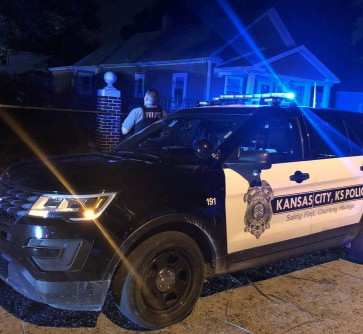
KANSAS CITY, Kan. (AP) — A young pregnant woman and her 2-year-old son were hospitalized after being wounded when gunfire erupted at a family birthday party in Kansas City, Kansas.

Investigators on the scene photo courtesy KCK Police Chief

Police say the shooting was reported late Saturday in the city’s Armourdale community. The injured woman and child were in an upstairs bedroom when they were shot from outside the home. The woman lived at the house.

Family members said more than 20 relatives, including several children, were in the back yard of a house when an altercation started in a nearby alley. They say when shots rang out, everybody ran inside the house.

Family members said they don’t know if anyone from the party was involved in the altercation.

They said the wounded victims’ conditions were improving Sunday.

Update: Kan. man dies after being pinned under ATV on flooded road

RENO COUNTY —Law enforcement authorities are investigating a fatal accident in Rural Reno County.

Just after 4:30 p.m. Saturday, deputies were dispatched to a portion of roadway that is closed due to recent floods in the 800 Block of E 108th Road in rural Reno County for a fatality accident, according to the sheriff’s department.

Passerbys driving on the road saw an unoccupied ATV facing west in the middle of the washed out road and found a person pinned underneath the ATV, face down in the water.

They pulled the subject out of the water and attempted chest compressions. The driver was identified as Brian Sollers of rural Hutchinson.

At the time of this accident the road was marked as closed at Plum but there were no signs on the east side of the washout, according to the sheriff’s department.

———–

RENO COUNTY — One person died in an accident Saturday afternoon when the vehicle drove through and area where the road is closed due to flooding, according to a social media report from the Reno County Sheriff.

The sheriff’s office said they would release details of the accident Sunday to pending notifications of family.

Police evacuate apartments, arrest Kan. man for alleged attempted-murder

SHAWNEE COUNTY — Law enforcement authorities are investigating a stabbing and have a suspect in custody.

Dean Gustin photo Shawnee Co.

Just before 5:30 p.m., Friday police responded to a report of an aggravated battery in the 100 block of NW Redbud Circle in Topeka, according to Lt. John Trimble. Once on scene, a victim was found with what appeared to be stab wounds. The victim was taken to a local hospital with non-life
threatening injuries.

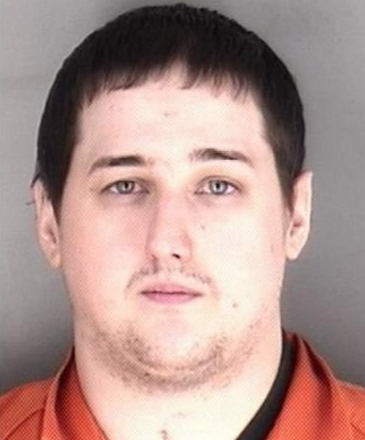
The suspect, later identified as 28-year-old Dean Gustin of Topeka, was found in an apartment and initially, refused to come out.

Officers evacuated several surrounding apartments as a precaution. Contact was made with Gustin and he eventually exited the apartment and was taken into custody without further incident. After an investigation, police arrested Gustin on requested charges of Attempted Murder, Aggravated Kidnapping and Aggravated Endangerment of a Child, according to Lt. Manual Munoz.

Can Kansas Schools Teach Computer Coding Without Eating Up Time For Math And Science?

A teenager wakes up, gets ready for school. Slips a smartphone into her pocket on the way out the door.

Taylor Howell works on a Java coding assignment in Lisa Whallon’s class at Olathe Northwest High School.
CELIA LLOPIS-JEPSEN / KANSAS NEWS SERVICE

Her day may well include some biology or chemistry, history, algebra, English and Spanish. It likely won’t include lessons on how that smartphone — more powerful than the computers aboard the Apollo moon missions — and its myriad colorful apps actually work.

That worries some Kansas businesses, lawmakers and educators who see a disconnect between what students learn and the technologies that have transformed everything from tractors in wheatfields to checkout lines at grocery stores.

But barriers to change abound. Computer wizzes earn more money programming in C++ than teaching it to teens. And cramming computer science into more students’ schedules could cut into time spent learning about evolution, trigonometry or the laws of physics.

“We’re no longer at a time where we can just continue what we’re doing,” said Rep. Steve Huebert, an engineer who chairs the education committee in the Kansas House.

Think about the needs that that creates for large employers, small employers … And everybody’s ability to continue to grow and thrive. – Anna Hennes, Cerner

Huebert recalls learning chemistry, physics and biology in school. But in the working world, computers proved a critical tool for his job — one that he had to learn on the go and that only grew in importance.

If some students think computer science may better fit their career goals, he wonders, why not let them swap a traditional science class for a chance to learn skills such as programming?

“If we can do that,” he says, “it’ll be a win-win for everyone going forward.”

Talent-hungry companies

Code.org, a tech-company-fueled advocacy group, says most American high schools not only don’t make students take computer science — many don’t even offer it.

The group’s attempts at tracking computer science education nationwide suggest such classes remain particularly rare in Kansas.

Meanwhile, businesses hunger for tech talent. Computer science, they argue, lifts students and economies alike in a world where even the smallest of startups need websites, apps, databases and analytics.

“Think about the needs that that creates for large employers, small employers,” says Anna Hennes, a program manager at one of the region’s highest-profile tech firms, medical record software giant Cerner. “And everybody’s ability to continue to grow and thrive.”

Teacher Lisa Whallon and student Christian Crabtree workout the kinks in some Java code at Olathe Northwest High School.
CREDIT CELIA LLOPIS-JEPSEN / KANSAS NEWS SERVICE

Kansas City alone has added thousands of tech jobs in the past decade, and jobs in that line of work generally pay much better than the average gig.

Right now, though, where students live affects their chances of picking up HTML or other coding knowhow at school.

  • Most states let students who take computer science count it as a credit toward graduation.
  • That doesn’t help students at high schools without computer science, though. So, a third of states also make sure their schools actually offer it.
  • A few states go beyond that, requiring computer science education for all students in high school or even before then.

Kansas doesn’t do any of those things.

In February, the issue landed in the House Education Committee, where Cerner lobbied for a bill to let computer science count as a graduation credit. (The original bill called for mandatory computer science education, but Cerner says that version was a mistake.)

Expect the topic to surface again next year. In the meantime, education officials, lawmakers and businesses are meeting, talking, puzzling through the matter.

Related: Kansas City’s Tech Market May Need Coding Skills Enough To Drop The B.S. Degree

But it’s tricky. Right now, high school computer science counts as an elective. Requiring all students to take the subject would put districts in a bind. They’d need the right curriculum, technology and software.

Maybe the bigger question is: Where would all those teachers come from? Schools already struggle to find and keep other specialized teachers, such as those for science and math.

Yet letting students instead count computer science toward core graduation requirements means excusing them from something else. Different states take different approaches. Usually, they let students ditch some math or science. More rarely, students can take programming as a foreign language or other credit.

Either way, professor Perla Weaver says, you’ll upset someone.

“There’s things that we have for decades — if not centuries — assumed are part of basic education,” said Weaver, who heads the computer science department at Johnson County Community College and who used to teach high school.

Maybe you could you make a case that computer science would come in handier for a lot of students than knowing the details of DNA, she said, but “boy, don’t say that in front of science teachers. … It’s an insult.”

Many educators and scientists worry students already don’t get enough math and science, and that the nation’s supply of young scientists and its public understanding of critical concepts such as climate change suffer as a result.

A survey by Yale University, for example, found only about half of Kansans believe humans are driving climate change.

Kansas high schools currently require at least 3 years of math and science each for graduation.

New state guidelines

Kansas has long had standards for math, English and other subjects: guidelines that tell teachers when their students should learn about fractions and persuasive essays.

But when should they understand what a space bar is? How passwords work? The risks of social media and the implications of documenting their daily lives online?

In April, Kansas adopted standards for incorporating computer and internet concepts into student learning at all ages. The Kansas State Board of Education gave the go-ahead after months of educators and computer scientists hammering out details, asking for public input. Tweaking, writing, tweaking again.

Even digital natives need explicit instruction about computers, says Lisa Whallon, a computer programmer turned educator at Olathe Northwest High School.

CREDIT CHRIS NEAL / FOR THE KANSAS NEWS SERVICE

Students whose thumbs and index fingers fly across the screens of iPhones and iPads to text friends and do homework land in her coding classes hunting and pecking their way across traditional desktop keyboards.

Whallon makes them build the muscle memory needed to type with ease.

“I have adults say to me, ‘Really? Don’t kids know how to type?’” she says. “I feel like we’re doing our children a disservice by thinking that they just learn stuff.”

The new state standards remain effectively voluntary for schools, but educators still consider them a big deal. The guidelines open the door to creating a specialized license for computer science teachers, preparing students at the state’s colleges of education, and training teachers already working in schools.

And they emphasize “computational thinking” — breaking down problems and then seeing and designing solutions as a series of smaller steps.

“People look at computer science and they think it’s just coding,” said Stephen King, who helped develop the standards at the Kansas State Department of Education. “The reality is, it’s far more widespread, far broader than that.”

Whallon’s coding students at Olathe Northwest make flow charts, bounce ideas off each other and brace themselves for bugs in their code.

Coding an algorithm for a virtual card game took Eric Zhuo five class periods to write in Java.

“That’s the code that I struggled with the most,” the aspiring computer engineer says. “But when I figured out how to complete it, it was a very good feeling.”

None of this conflicts with science education, says Paul Adams, the dean of education and a professor of physics at Fort Hays State University. Kansas standards for science already ask schools to teach computational thinking through that subject.

Students work on Java code at Olathe Northwest High School
CREDIT CELIA LLOPIS-JEPSEN / KANSAS NEWS SERVICE

But if the goal is for more students to try their hand specifically at coding, Adams would prefer integrating programming concepts into other subjects as a tool, much as scientists use it for their work.

“If you present your research in physics, you present your Python code,” he said, referring to a popular coding language used both to calculate results and share methodology. “It’s what we learn to do our science.”

“To say, well, ‘Don’t worry, we’re going to remove, for example, earth and space science, or we’ll take out a biology’” in school and allow coding instead, “then you’ve lost that whole suite of knowledge.”

Equity in education and careers

Just 10 percent of graduating computer science majors at Kansas colleges in 2017 were women. That ratio seems to hold true in Kansas AP Computer Science classes.

It’s a nationwide problem. Students of color are underrepresented, too. That restricts access to good jobs, says Code.org, and hinders diversity among the people who develop the technologies that serve and shape our world.

“We can’t just have white males creating these things and being involved in these things and knowledgeable about these things,” says Pat Yongpradit, the group’s chief academic officer. “We really need everyone to be knowledgeable and involved in creating the future.”

Rowan Hedges, another of Whallon’s Java students aiming for a tech career, is used to being either the only girl or one of just a few in her programming classes.

“I feel like I have to be better than I am at all times,” she said, “or else I’ll be failing the female population.”

“Even though it’s not a hostile environment,” she said, “it just is intimidating to see a ton of guys who … might have people who encouraged them to do the field throughout their life, just because they’re guys.”

If schools pick up on Kansas’ new computer science guidelines and expose more students to computing earlier, teachers hope it could make more girls and students of color feel at home in the world of code.

If the Kansas State Board of Education takes another step by letting computer science count toward graduation (or if the Legislature forces its hand), that could effect change, too. Code.org says computer programming enrollment seems to become more diverse when states count it toward high school graduation.

Yet this would stop short of making sure all Kansas schools offer coding. Nor would it address the fact that wealthy, suburban schools can find teachers and offer specialized classes more easily than those in poorer, more rural or predominantly black or Hispanic parts of the state.

That’s a serious conundrum, says Rep. Rui Xu, another member of the House education committee. And it has no easy solution.

“If we want everybody to have the same opportunity,” says Xu, “then I don’t know that a voluntary program like this solves that.”

Celia Llopis-Jepsen is a reporter for the Kansas News Service. You can reach her on Twitter @Celia_LJ or email celia (at) kcur (dot) org.

Ex-Kan. high school band teacher admits asking student for nude photos

WELLINGTON, Kan. (AP) — A former south-central Kansas band instructor has pleaded guilty to sexual exploitation of a child.

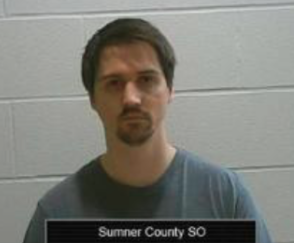
Olson -photo Sumner County

30-year-old Benjamin Olson entered the plea Thursday in Sumner County District Court. As part of the plea, Olson admitted to having a nude photo of a 17-year-old girl. In exchange, prosecutors dropped four other felony counts in the case.

Prosecutors will recommend Olson serve 16 months in prison when he’s sentenced July 25.

Olson was arrested in March. Police say he asked for nude photos and video from a student, of sending the student sexually explicit texts and fondling the girl.

Olson had been the band teacher for the middle school and high school at Wellington since 2015.

Trump digs in on Mexican import tariffs despite uproar

WASHINGTON (AP) — Despite pushback from U.S. business, Mexico and Capitol Hill, President Donald Trump is doubling down on his threat to slap a 5% tariff on Mexican imports unless America’s southern neighbor cracks down on Central American migrants trying to cross the U.S. border.


President Trump delivered the commencement address at the U.S. Air Force Academy Friday -photo courtesy White House

U.S. manufacturers said the tariff, set to take effect June 10, would have devastating consequences on them and American consumers. U.S. stocks tumbled on Wall Street in response to Trump’s planned action.

“Imposing tariffs on goods from Mexico is exactly the wrong move,” said Neil Bradley, executive vice president of the U.S. Chamber of Commerce, which is exploring legal action in response to the tariffs. “These tariffs will be paid by American families and businesses without doing a thing to solve the very real problems at the border. Instead, Congress and the president need to work together to address the serious problems at the border.”

Mexican President Andrés Manuel López Obradordispatched his foreign secretary to Washington to try to negotiate a solution. He said social problems are not solved with coercive measures, but also seemed convinced that Trump just needed to be informed about all the steps Mexico has taken to slow illegal migration.

Mexico has stepped up raids on migrant caravans traveling through the southern states of Chiapas and Oaxaca this year. It has deported thousands of migrants and frustrated thousands more who wait endlessly for permits that would allow them to travel legally through Mexico.

U.S. Secretary of State Mike Pompeo spoke with his Mexican counterpart via telephone Friday, said State Department spokeswoman Morgan Ortagus, who’s traveling with Pompeo in Bern, Switzerland. Ortagus said the department doesn’t comment on details of diplomatic conversations.

“We maintain an ongoing dialogue and close cooperation with Mexico on a wide range of issues, including border security efforts,” she said. “The United States and Mexico recognize that managing our shared border is a challenge common to both countries.”

Administration officials told reporters in a briefing call Thursday evening that Mexico could prevent the tariffs from kicking in by securing its southern border with Guatemala, cracking down on criminal smuggling organizations, and entering into a “safe third country agreement” that would make it difficult for those who enter Mexico from other countries to claim asylum in the U.S.

“We fully believe they have the ability to stop people coming in from their southern border and if they’re able to do that, these tariffs will either not go into place or will be removed after they go into place,” said acting White House chief of staff Mick Mulvaney.

Trump said the percentage will gradually increase — up to 25% — until the migration problem is remedied.

“Mexico has taken advantage of the United States for decades,” Trump said in a tweet Friday. “Because of the Dems, our Immigration Laws are BAD. Mexico makes a FORTUNE from the U.S., have for decades, they can easily fix this problem. Time for them to finally do what must be done!”

Trump’s decision showed the administration going to new lengths, and looking for new levers, to pressure Mexico to take action — even if those risk upending other policy priorities, like the United States-Mexico-Canada Agreement, a trade deal that is the cornerstone of Trump’s legislative agenda and seen as beneficial to his reelection effort.

Keeping the economy rolling also is critical to Trump’s reelection, and business was not happy with the president’s planned tariff on Mexican imports.

“These proposed tariffs would have devastating consequences on manufacturers in America and on American consumers,” said Jay Timmons, chief executive officer of the National Association of Manufacturers. “We have taken our concerns to the highest levels of the administration and strongly urge them to consider carefully the impact of this action on working families across this country.”

The stock market’s tumble on Friday all but guarantees that May will be the first monthly loss for the market in 2019. The news hit automakers particularly hard. Many of them import vehicles into the U.S. from Mexico.

“The auto sector — and the 10 million jobs it supports — relies upon the North American supply chain and cross border commerce to remain globally competitive,” said the Auto Alliance, which represents automakers that built 70% of all cars and light trucks sold in U.S. “Any barrier to the flow of commerce across the U.S.-Mexico border will have a cascading effect — harming U.S. consumers, threatening American jobs and investment and curtailing economic progress.”

Some of Trump’s fellow Republicans in Congress opposed the tariff. Republican senators have made almost weekly treks to the White House to nudge the president off his trade wars, and this latest move sent them scrambling again to signal their displeasure in hopes of reversing Trump’s actions.

Texas Republican Sen. John Cornyn supports the president’s commitment to securing the border, an aide said, but he opposes the across-the-board tariff, “which will disproportionately hurt Texas.”

Key trade senators also spoke up. Pennsylvania GOP Sen. Pat Toomey, who has questioned the administration’s ability to invoke national security threats for some other imports, called the tariffs a “blanket tax increase” on items Americans purchases from Mexico and “the wrong remedy.”

The tariff threat comes at a peculiar time, given how hard the administration has been pushing for passage of the USMCA, which would update the North American Free Trade Agreement.

Sen. Chuck Grassley, R-Iowa, a usual Trump ally and the chairman of the Senate Finance Committee, slammed the president’s action, saying it was a “misuse of presidential tariff authority” that would burden American consumers and “seriously jeopardize passage of USMCA.”

Sen. Joni Ernst, R-Iowa, said the livelihoods of farmers and producers from her state are at risk and so is the USMCA.

“If the president goes through with this, I’m afraid progress to get this trade agreement across the finish line will be stifled,” she said.

___

1 dead in Kansas after semi struck concrete girder pulled by another semi

WYANDOTTE COUNTY — One person died in an accident just after midnight Saturday in Wyandotte County.

Fatal crash scene photo courtesy KCTV

The Kansas Highway Patrol reported a 2014 Volvo semi driven by Christopher Engle, 33, Burlington, IA., was eastbound on Kansas 32 Highway at 59th Street in the right lane.

The semi struck a concrete bridge girder that was being pulled by a 2015 Freightliner semi driven by Errol Stevens, 59, Independence, Mo., that was making a left turn from 59th Street onto westbound Kansas 32.

Stevens was pronounced dead at the scene. Engle and a passenger were not injured. All three were properly restrained at the time of the accident, according to the KHP.

Phone Provider Guilty for Role in $7M International Telemarketing Scheme

MEKLENBURG COUNTY —An Ohio man was found guilty this week for his role in a $7 million telemarketing scheme that defrauded primarily elderly victims in the United States from call centers in Costa Rica, according to the U.S. Justice Department.

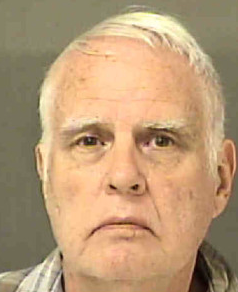
Donald Dodt photo Mecklenburg County

Following a five-day jury trial, Donald Dodt, 76, originally of Cleveland, Ohio, was convicted of one count of conspiracy to commit wire fraud and mail fraud, two counts of mail fraud, eight counts of wire fraud, one count of conspiracy to commit international money laundering and 10 counts of international money laundering.

According to evidence presented at trial, Dodt worked in a call center in Costa Rica in which co-conspirators, who posed as representatives of the District of Columbia Department of Consumer and Regulatory Affairs and federal agencies, including the U.S. Federal Trade Commission, and who also posed as federal judges, contacted victims in the United States — primarily senior citizens – to tell them that that they had supposedly won a substantial “sweepstakes” prize.  After convincing victims that they stood to receive a significant financial reward, the co-conspirators told victims that they needed to make a series of up-front cash payments before collecting, purportedly for items like insurance fees, taxes and import fees.  Co-conspirators used a variety of means to conceal their true identity, such as Voice over Internet Protocol (VoIP) services provided by Dodt that made it appear that they were calling from Washington, D.C., and other places in the United States.

As the evidence presented at trial illustrated, Dodt was an integral part of this scheme in that he knowingly provided services that were necessary for the scheme to operate and that facilitated the concealment and, ultimately, success of the scheme for many years.  Specifically, Dodt provided and maintained VoIP phone technology and assigned phone numbers associated with locations in the United States through which members of the conspiracy were able to make the fraudulent calls to victims in the United States and conceal their identities and location.  Dodt specifically assigned virtual phone numbers with area codes associated with Washington, D.C., to make it appear that the calls originated from within the United States and that also bolstered conspirators’ misrepresentations that they were representatives of government agencies located in Washington.  Dodt also warned the co-conspirators if certain numbers were “hot” – i.e., there were customer complaints or law enforcement inquiries – and replaced those phone numbers with new phone numbers that the co-conspirators then used in furtherance of the scheme, the evidence showed.

Dodt and his conspirators stole more than $7 million from victims, the evidence showed.

Sheriff: Water rescues, community evacuated after levee breach

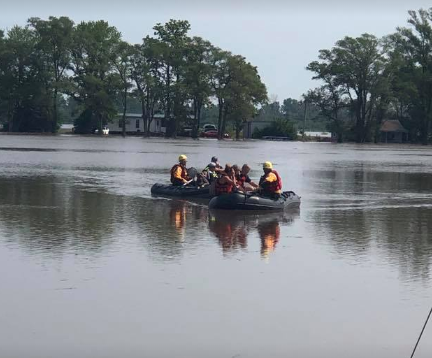
Water rescues Saturday photos courtesy Jackson Co. Sheriff

JACKSON COUNTY, MO—A levee in eastern Jackson County, Missouri breeched Saturday morning causing parts of the City of Levasy to flood., according to a media release from the sheriff’s office.

Central Jackson County Fire and Protection and Fort Osage Fire conducted water rescues. The Missouri State Highway Patrol is assisting.

No injuries have been injuries reported, according to the sheriff’s department.

Access to the City of Levasy is restricted to residents only who must show proof of residency to enter.

As of 3:30p.m., most of the residents had been evacuated as water levels continue to rise.

The water levels of Levisay,  have never been this high based on statements from residents and other emergency personnel on scene.

The Sheriff’s Office is committed to ensuring the residents of Levasy are safe during this incident. We have allocated resources to monitor this incident over the next 24 hours, according to Sheriff Darryl Forté. Levasyi is 36-miles east of Overland Park, Kansas.


Kansas’ next prison chief rebuked by judge in Idaho lawsuit

WICHITA, Kan. (AP) — Kansas Gov. Laura Kelly’s choice to be the next head of the state prison system was criticized by an Idaho judge earlier this year for giving “disingenuous” testimony as a top corrections official there in a lawsuit over access to execution records.

Jefferey Zmuda courtesy Idaho Dept. of Corrections

Kelly’s office has said Jefferey Zmuda has a “long record of success” during a 30-year career in the Idaho prison system, where he is now the deputy director. The Democratic governor announced his appointment as Kansas corrections secretary last week, and Zmuda is scheduled to take over July 1.

But over the past year, Zmuda has been entangled in a lawsuit in Idaho state court aimed at forcing the release of records relating to the execution of an inmate in 2011 and another in 2012. Idaho officials have kept finding more documents over the past year, despite previous assurances by Zmuda that all known records were collected.

While Zmuda can begin running the Kansas prison system this summer, his appointment must be confirmed by the Republican-controlled state Senate for him to stay on the job. The Legislature is out of session until January.

“These claims are deeply troublesome and if true, this administration has either learned nothing from their mistakes in thoroughly vetting nominees or are completely naïve,” said Senate President Susan Wagle, a Wichita Republican.

Earlier this month, the Senate rejected a Kelly nominee for the Kansas Court of Appeals, the state’s second-highest court, over his political tweets in 2017.

Zmuda is replacing Interim Secretary Roger Werholtz, who agreed to run the department temporarily when Kelly took office in January. He will take over a prison system that saw multiple riots in 2017 and 2018 and is plagued by short staffing.

Kelly spokeswoman Ashley All defended Zmuda, saying that he recognizes that Idaho’s prison system “could have done some things better” in the course of the lawsuit.

“However, he has worked with staff to conduct multiple searches for records to meet the court’s order,” All said.

In Idaho, corrections Director Josh Tewalt called Zmuda “a person of high integrity and a great leader.”

“He’ll wear the blame when it’s undeserved but will be the first one to share credit,” Tewalt said.

A University of Idaho professor sought the state’s execution records in 2017, and her request was mostly denied. She sued, accusing prison officials of withholding documents that included records showing how the state had obtained execution drugs.

Zmuda said in an affidavit taken in July 2018 that state officials had collected “all known documents” related to the executions.

District Judge Lynn Norton, based in the Idaho’s state capital of Boise, ruled in March that the prison system acted frivolously and in bad faith in mostly denying the professor’s request for records.

The judge also concluded that officials had not conducted a diligent search for records before Zmuda filed his affidavit. Court records show that Zmuda emailed corrections employees the day after, directing them to search for documents.

“The emphasis on the word ‘known’ in a sworn affidavit filed with this Court is disingenuous,” Norton wrote.

In his affidavit, Zmuda acknowledged record-keeping problems, saying “we have previously failed to organize documents properly.”

___

TSA now allows flyers to travel with drug derived from marijuana

WASHINGTON (AP) — The Transportation Security Administration has changed its cannabis policy to allow passengers to travel with some forms of CBD oil and a drug derived from marijuana that has been approved by the Food and Drug Administration.

All forms of marijuana were previously prohibited in carry-on bags and checked luggage. This week, the TSA updated its “What Can I bring?” guidance under medical marijuana. The FDA in June legalized a drug called Epidiolex, which is used to treat epilepsy in children. The TSA said in a statement that it was recently made aware of the drug and updated the regulations to avoid confusion on whether families can bring it when traveling.

The new policy also includes some CBD oil, “as long as it is produced within the regulations defined by the law” under the 2018 Farm Bill, which legalized hemp and hemp derivatives. Hemp-derived CBD is low in or has no THC, the chemical that produces a high found in marijuana.

The TSA’s new rules still ban other forms of marijuana, including CBD oils that have THC, and cannabis-infused products that are still illegal under federal law.

It’s not clear how agents will determine the difference. But while agents screen for potential threats to planes and passengers, they do not search for marijuana or other illegal drugs. If they come across anything suspect, they refer it to law enforcement.

The change in TSA’s cannabis policy was first reported by Marijuana Moment.

10 Years After Dr. Tiller’s Murder, Kansas’ Abortion Rules Could Take Another Turn

Exactly 10 years ago, on May 31, 2009, an anti-abortion zealot gunned down ob/gyn and reproductive rights advocate George Tiller as he was distributing literature in the foyer of his Wichita church.

His murder marked the culmination of 18 years of militant anti-abortion protests that began with massive demonstrations in Wichita in June 1991. Protestors blockaded abortion clinics for weeks during the “Summer of Mercy,” police made more than 2,600 arrests and a judge ordered U.S. marshals to keep the gates of Tiller’s clinic open.

“That horrible event,” Woody added, referring to Tiller’s assassination, “there had definitely been a lot of violent talk leading up to it.”

Dr. George Tiller was killed by an anti-abortion activist on May 31, 2009.
CREDIT COURTESY OF TRUST WOMEN FOUNDATION

Because Tiller was one of the few doctors in the nation who performed third-trimester abortions, he drew patients from all over the country and even from abroad. That put him in the crosshairs of abortion opponents, who called him “Killer Tiller” and bombed his Wichita clinic. In 1993, an anti-abortion activist shot him in both arms, although Tiller went back to work the next day.

Because Kansas is now one of the most restrictive states in the country when it comes to abortion access, it’s often forgotten that it used to be one of the most liberal.

“We certainly saw an uptick in anti-choice legislation after the Summer of Mercy,” said Julie Burkhart, a protégé of Tiller and founder and CEO of Trust Women in Wichita, an abortion clinic and reproductive rights organization. “Before, Kansas virtually had no restrictions on the books. You started to see a more punitive state government afterward.”

In fact, in 1973 — the year the U.S. Supreme Court decided Roe v. Wade — more abortions were performed in Kansas than in Missouri, Arkansas Iowa, Nebraska and Oklahoma combined.

“Kansas, historically, had been liberal on personal rights,” Woody said. “Didn’t want the government interfering in people’s personal business. I think Kansas has been that way for a long time and this (abortion) became an exception.”

But the pendulum may be swinging back. A landmark decision by the Kansas Supreme Court last month could spell the undoing of many of Kansas’ abortion requirements.

Current restrictions

The tide began to turn with the Summer of Mercy, which set the stage for the state’s political realignment.

Kansas has since banned abortions after 20 weeks of pregnancy, unless the life of the mother is endangered or her health is severely compromised. Public funding can only be used for abortion in cases of rape, incest, or where the woman’s life is at risk. 

The enactment of a host of further restrictions on doctors and clinics have left all but Johnson and Sedgwick counties without an abortion provider:

  • Abortion providers must have admitting privileges at a nearby hospital and their facilities must meet some of the same physical standards as ambulatory surgery centers.
  • Doctors are prohibited from administering drug-induced abortions remotely through telemedicine.

Abortion providers also must make specific disclosures to their patients, including:

  • Informing patients that an abortion will “terminate the life of a whole, separate and unique human being” and that fetuses feel pain.
  • Informing patients of their credentials, any disciplinary actions meted out against them and whether they have malpractice insurance. Those disclosures must be provided at least 24 hours before an abortion and printed on white paper in black 12-point, Times New Roman font.

Gov. Laura Kelly, a Democrat elected in November, vetoed another disclosure requirement Kansas lawmakers passed this year. That would have forced abortion providers to tell women that a drug-induced abortion can be reversed.  

Women, too, face requirements to get an abortion in Kansas:

  • State-directed counseling
  • A 24-hour waiting period
  • Fetal ultrasound
  • Dual parental consent for minors

The linchpin?

Notably, there’s one other restriction on Kansas’ books that may, in time, prove to be the undoing of the state’s stringent abortion regimen.

In 2015, Kansas became the first state to pass a law prohibiting the common second-trimester abortion procedure known as “dilation and evacuation” — or what abortion opponents describe as “dismemberment abortions.” Then-Gov. Sam Brownback, a Republican and vehement abortion opponent, signed the bill, which was viewed as a triumph by abortion rights opponents.

The law was immediately challenged by two Overland Park physicians, Herbert Hodes and his daughter, Traci Nauser, who operate one of four abortion clinics in the state. A lower court blocked the law from taking effect and in January 2016, the Kansas Court of Appeals upheld that decision. The state then took the case up to the Kansas Supreme Court.

Kansas argued that federal case law allowed it “to voice its profound respect for life and human dignity” by regulating or even limiting some abortion methods “that society finds inhumane and objectionable when safe alternatives exist.”

Hodes and Nauser countered that the law intruded on the doctor-patient relationship and that alternatives to the dilation and evacuation (D&E) procedure were invasive and medically unnecessary.

That set the stage for the Kansas Supreme Court to hand down one of the most momentous decisions in its 150-plus-year history.

On April 26, the high court struck down the D&E restriction, ruling that a woman’s right to abortion is rooted in the Kansas Constitution’s Bill of Rights.

For that reason, the court said, abortion restrictions must withstand “strict scrutiny.” The court sent the D&E law back to the lower court to determine if it meets that test.

“At the heart of [Section 1 of the Kansas Bill of Rights] is the principle that individuals should be free to make choices about how to conduct their own lives, or, in other words, to exercise personal autonomy,” the court pronounced in its sweeping decision. “Few decisions impact our lives more than those about issues that affect one’s physical health, family formation, and family life.”

The decision was hugely consequential for two reasons. First, it meant that even if Roe v. Wade is overturned by the U.S. Supreme Court, the right to abortion in Kansas will remain intact. And second, because laws limiting abortion access will now be subject to strict scrutiny — meaning the state must show they’re “narrowly tailored to promote” a “compelling interest” — the state’s abortion laws are almost certain to face new court challenges.

In fact, a pending court challenge to the state’s ban on telemedicine abortions was bolstered by the Supreme Court’s ruling; the attorney general’s office last week had no choice but to withdraw its argument that women have no right to an abortion under the state constitution.  

“The court now has the opportunity to rule taking the Supreme Court opinion into consideration,” Burkhart, whose Trust Women clinic challenged the law. “So I think what we’re looking at is seeing how this case unfolds and developing our strategy in terms of the other punitive laws that are on the books.”

But Burkhart said she’s not resting easy.

Abortion rights opponents have vowed to push to amend the state constitution to undo the Kansas Supreme Court holding.

Dan Margolies is a senior reporter and editor in conjunction with the Kansas News Service. You can reach him on Twitter @DanMargolies.

Copyright Eagle Radio | FCC Public Files | EEO Public File