KANSAS CITY (AP) — Prosecutors say a man will spend the rest of his life in prison for a 2014 rampage that killed five people in a quiet Kansas City neighborhood.
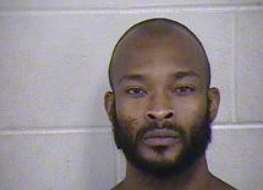
Brandon Howell -photo Jackson Co.
Brandon Howell was convicted in April of five counts of first-degree murder for beating two people to death and shooting and killing three others. His sentences are consecutive, and he’ll never be eligible for parole.
Howell beat 80-year-old George Taylor and his wife, 86-year-old Anna Taylor, while trying to steal their vehicle. They died a week later.
Their neighbor, 69-year-old Susan Choucroun, was shot in her driveway. Eighty-eight-year-old Lorene Hurst and her son, 63-year-old Darrel Hurst were killed as they returned from a store.
Jackson County Prosecutor Jean Peters Baker says the case struck terror in a whole community.
JEFFERSON CITY, Mo. (AP) — An outbreak of nasty storms spawned tornadoes that razed homes, flattened trees and tossed cars across a dealership lot, injuring about two dozen people in Missouri’s capital city and killing at least three others elsewhere in the state.
National Weather Service image shows the track of the deadly storm- click to expand
The National Weather Service confirmed that a large and destructive twister moved over Jefferson City shortly before midnight Wednesday.
The tornado cut a path about 3 miles long and a mile wide from the south end of Jefferson City north toward the Missouri River, said police Lt. David Williams. Emergency workers reported about two dozen injuries, Williams said, and around 100 of people went to shelters. Hospitals reported treating injuries such as cuts and bruises.
There were no immediate reports of any deaths or missing people in the capital city of about 40,000, and it appeared everyone was accounted for after door-to-door checks that were nearly complete Thursday evening, police Lt. David Williams said.
Many in Jefferson City considered themselves fortunate to survive.
David Surprenant watched the storm approach then rushed to join his family in the basement. By then, the windows had started shattering and the pressure dropped.
“It was just the eeriest sound ever, and it felt like it was taking your breath right out of you,” Surprenant, 34, said. He and his family were unharmed.
Kevin Riley operates a car dealership next to Surprenant’s home, where he sells Chevys and Toyotas. He figured that 98 percent of the approximately 750 vehicles on the lot were damaged.
Lincoln University President Jerald Woolfolk rode out the tornado in the basement of her official residence, and it may have saved her life. University spokeswoman Misty Young told the Jefferson City News-Tribune that the home, built 103 years ago, was so badly damaged it appeared to be uninhabitable.
Weather forecasters had been tracking the storm before it arrived, and sirens first sounded in Jefferson City at 11:10 p.m. — about 30 minutes before the first property damage. Gov. Mike Parson credited the warning system for saving lives.
Kenneth Harris, 86, and his 83-year-old wife, Opal, were found dead about 200 yards (180 meters) from their home, and Betty Berg, 56, was killed and her husband, Mark, seriously injured when their mobile home was destroyed, authorities said.
The National Weather Service said preliminary information indicates the tornado at Jefferson City was an EF-3, which typically carry winds up to 160 mph.
The severe weather moved in from Oklahoma, where rescuers struggled to pull people from high water. This week has seen several days of twisters and torrential rains in the Southern Plains and Midwest.
Kerry Ann Demetrius locked herself in the bathroom of her Jefferson City apartment as the storm approached.
“It sounded like stuff was being thrown around, everything was just banging together, and then it just went dead silent,” she said. She emerged to find the roof had been blown off her apartment building.
Another natural disaster could be imminent in Jefferson City. Most of the city, including the tornado-ravaged section, sits on a bluff overlooking the south side of the Missouri River. But the swollen river is projected to top a levee on the north side of the river by Friday, potentially flooding the city’s airport, which already has been evacuated.
The Missouri Office of Administration said several state office buildings sustained damage, mostly roof damage.
A tornado also skipped through the town of Eldon, population 4,900, about 30 miles (50 kilometers) outside Jefferson City, where it damaged the business district and “tore up several neighborhoods,” Miller County Emergency Management Director Mike Rayhart said.
But Mayor Larry Henderson said people in Eldon were counting their blessings: Despite all the damage, just one man was hurt, when the wind flipped his truck. Henderson did not have any details about the man’s injuries.
A twister also caused damage and several injuries in the town of Carl Junction, not far from Joplin, on the eighth anniversary of the catastrophic tornado that killed 161 people in that city. Police Chief Delmar Haase said nearly three dozen homes had significant damage and several people sustained minor injuries. He estimated total damage in Carl Junction was “in the millions.”
A few photos of the damage in Jefferson City. The Patrol is assisting @JeffCityPolice and the Cole County Sheriff’s Department with efforts after last night’s tornado. #mowxpic.twitter.com/z7fZhIsysm
The National Weather Service says the EF-3 tornado that hit Carl Junction was among four tornadoes that hit that area of the state Wednesday night over a path of roughly 50 miles. Meteorologist Mark Burchfield in Springfield, Missouri, said Thursday that the tornado that hit Carl Junction was on the ground for about nine miles. He said the deadly EF-3 tornado outside Golden City was on the ground for 12 miles.
The severe weather was expected to push eastward Thursday, with forecasters saying parts of the Ohio Valley and the mid-Atlantic — including Baltimore and Pittsburgh — could see tornadoes, large hail and strong winds.
Storms and torrential rains have ravaged the Midwest, from Texas through Oklahoma, Kansas, Nebraska, Iowa, Missouri and Illinois, in the past few days.
Two barges carrying a total of about 3,800 pounds (1,700 kilograms) of fertilizer broke loose Thursday and floated down the swollen Arkansas River in Oklahoma, spreading alarm downstream as they hit a dam and sank. On Facebook, Webbers Falls, Oklahoma, warned the town’s 600 residents: “If the dam breaks, it will be catastrophic!! Leave now!!”
The barges had been floating out of control, on and off again, since Wednesday night near the town of 600, which was under a mandatory evacuation order due to flooding concerns. Aerial footage from the Oklahoma City television station KFOR showed the moment of impact shortly before noon Thursday. The Army Corps of Engineers was checking the dam for damage.
The Army Corps of Engineers immediately inspected the dam and said only “minimal” damage was found. However, the wrecked barges sank and are blocking three of the dam’s 12 flood gates.
Near Tulsa, about a dozen homes were evacuated as the Arkansas River continued to swell. The potential for further flooding also prompted the HolleyFrontier Tulsa Refinery to temporarily shut down.
Officials in Tulsa said additional residents may be asked to evacuate as the Army Corps of Engineers increases the flow rate at a dam northwest of the city to help drain a watershed flooded by severe storms.
Missouri’s three tornado fatalities bring to seven the number of deaths from storms this week.
TOPEKA – Kansas has resolved the second lawsuit filed under the state’s mistaken-conviction statute enacted by the legislature last year, according Attorney General Derek Schmidt.
Floyd Bledsoe was exonerated after spending 16 years in prison. He told lawmakers that financial compensation from the state would help him establish a footing in life that prison denied him. CREDIT STEPHEN KORANDA / KANSAS NEWS SERVICE
The attorney general reached an agreed resolution of a mistaken-conviction lawsuit filed under the new statute by Floyd Scott Bledsoe in July 2018. In 2000, Bledsoe was convicted in Jefferson County and imprisoned for murder, kidnapping, and indecent liberties. His conviction was vacated and charges against him dismissed in 2015. The agreed resolution was approved Wednesday in Shawnee County District Court by Judge Richard D. Anderson.
“We are committed to faithfully administering the state’s mistaken-conviction law as the legislature wrote it,” Schmidt said. “In this case, it was possible based on review and evaluation of the existing record and discovery from Mr. Bledsoe to resolve all issues, satisfy all of the statute’s requirements, and agree to this outcome so Mr. Bledsoe can receive the benefits to which he is entitled by law because of his mistaken conviction.”
In the agreed order, the court determined that Bledsoe did not commit the crime or crimes for which he was convicted, nor was he an accessory or accomplice to that crime or crimes, nor did he suborn perjury, fabricate evidence or cause or bring about the conviction. Between November 1999 and December 2015, Bledsoe served 5,592 days in prison or jail and 277 days confined by bond and court supervision.
Accordingly, the court ordered the following relief for Bledsoe, as provided by the mistaken-conviction statute:
Bledsoe was granted a Certificate of Innocence.
Records of his conviction, arrest, and DNA profile record information were ordered expunged.
He was granted total compensation of $1,038,526.95.
He was granted counseling.
He was granted permission to participate in the state health care benefits program for plan years 2019 and 2020.
A separate federal lawsuit filed by Bledsoe in May 2016 remains pending. Requirements of that federal case, including an order entered in that case by U.S. Magistrate Judge James P. O’Hara on May 17, 2019, affected the relief the State could provide in this case and were taken into account in the agreed resolution. That federal case is Floyd S. Bledsoe v. Jefferson County, Kansas, et al., Case No. 16-CV-2296, United States District Court for the District of Kansas.
By law, payment on the state judgment entered yesterday is subject to review by the State Finance Council. Schmidt plans to formally ask the Finance Council to review the matter at its June 5 meeting.
In total, five lawsuits have been filed under the new mistaken-conviction statute. Three remain pending in Sedgwick County, Clay County and Shawnee County. One previous lawsuit in Johnson County was resolved in December.
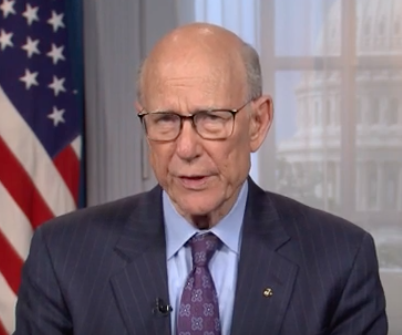
KANSAS CITY (AP) — Republican Sen. Pat Roberts of Kansas is partnering with two Midwestern Democrats to fight the spread of misinformation about vaccines in the face of measles outbreaks across the nation.
Roberts introduced legislation Thursday to instruct Centers for Disease Control and Prevention to award competitive grants for public information campaigns aimed at combating the anti-vaccine movement.
The bill does not specify a dollar figure, but would enable the CDC to steer money toward them.
The Kansas senator called a lack of confidence in vaccines as one of the top public health threats in a video released by his office Thursday.
Co-sponsors on the legislation are Sen. Gary Peters of Michigan and Sen. Tammy Duckworth of Illinois, both Democrats.
KANSAS CITY, Kan. (AP) — A lawsuit alleges a Kansas police cadet was fired after pressing sexual battery charges against her supervisor.
The lawsuit filed Wednesday in U.S. District Court in Kansas contends the Kansas City, Kansas, cadet delayed reporting the abuse for fear of retaliation and found that fear justified when Police Chief Terry Zeigler fired her for “exaggerated cause” following the criminal prosecution of her attacker.
Police officer Steven Rios was sentenced in December to a year’s probation for misdemeanor battery of a young cadet whom he supervised.
The Kansas City, Kansas, police department and the Unified Government of Wyandotte County did not immediately respond to a request for comment. It is unclear whether Rios is still employed by the police department.
TOPEKA – Governor Laura Kelly today announced her selection of Jefferey Zmuda as the next Kansas Secretary of Corrections. Zmuda is currently the deputy director of the Idaho Department of Correction.
“This is a critical time of change and recovery for the Kansas Department of Corrections,” Kelly said. “I’m pleased Jeff Zmuda has agreed to take on the important challenge of restoring our corrections system and improving morale across all facilities. He will continue our work to rebuild the agency while bringing new ideas and leadership to Kansas.”
Zmuda has a long record of success managing the Idaho Department of Correction and coordinating with stakeholders, including legislators, the judiciary, and other county and state partners. Previously, he served as the chief of prisons in Idaho. In this role, he oversaw all aspects of prison operations for nine state run facilities, including public safety initiatives, security protocols and practices, mental health care and treatment, education services, and reentry programs. Zmuda also has extensive experience addressing personnel and operations challenges across a correctional system.
“I’m honored to be selected by Governor Laura Kelly to lead the Kansas Department of Corrections,” Zmuda said. “I look forward to being on the ground and working with the dedicated men and women of the agency to address the needs and challenges facing Kansas facilities.”
The Governor also commended current Acting Secretary of Corrections Roger Werholtz for his commitment to the State of Kansas and his longtime public service. Werholtz has been instrumental during the transition and early months of the Kelly Administration, shining a light on the challenges the Department of Corrections faced during the last eight years and the desperate need for reforms. He has also been a critical advocate for a much-needed pay increase for corrections staff, specifically corrections officers in all facilities.
“I cannot say enough about the important role Secretary Werholtz has had in the transition and assessment of the department of corrections during the last six months” Kelly said. “He dug deep and shared the problems that had been concealed for eight years. Not only that, he presented a plan to address the many challenges we face. I thank Roger Werholtz for his impeccable service to the State of Kansas.”
Werholtz’s last day will be Friday, May 31. Chuck Simmons, the current deputy secretary for facilities management, will serve as the interim secretary beginning June 1 until Zmuda becomes the acting secretary on July 1.
“When Keven Pellant, Chuck Simmons and I returned to KDOC, we did so because of how much we cared about this agency and the people here with whom we had spent most of our careers,” said Werholtz. “We hope that we are leaving KDOC better than we found it and believe that under Jeff Zmuda’s leadership it can achieve the expectations we all have.”
The governor will chair her first Finance Council meeting on June 5, 2019. The Corrections budget will be discussed.
“This is a difficult time for many in the department of corrections, but I am committed to address the problems, provide strong leadership, and support for the officers who are working hard hours to keep all Kansans safe,” Kelly said. “I’m hopeful that the Finance Council will approve fair pay increases for the all corrections officers in all facilities who put their lives on the line every day.”
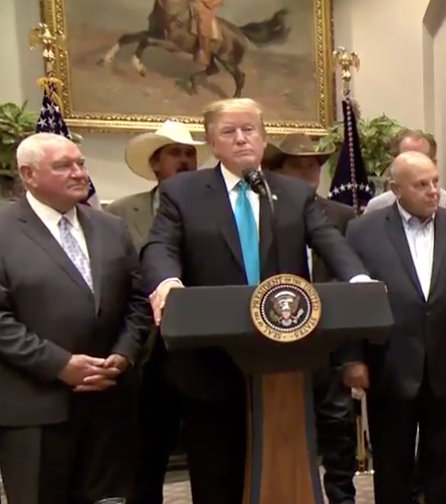
WASHINGTON (AP) — President Donald Trump is delivering another $16 billion in aid to farmers hurt by his trade policies, an effort to relieve economic pain among his supporters in rural America and another sign that the U.S.-China trade war likely won’t end anytime soon.
Watch LIVE: President Trump Delivers Remarks on Supporting America’s Farmers and Ranchers https://t.co/CVtQkZ9TwK
U.S. Agriculture Secretary Sonny Perdue said the first of three payments is likely to be made in July or August. He suggested it was unlikely a trade deal would be done by then, a sign that U.S. negotiators could be months away from settling a bitter trade dispute with China.
“The package we’re announcing today ensures that farmers do not bear the brunt of unfair retaliatory tariffs imposed by China and other trading partners,” Perdue said.
The latest bailout comes atop $11 billion in aid Trump provided farmers last year.
Trump, seeking to reduce America’s trade deficit with the rest of the world and with China in particular, has imposed import taxes on foreign steel, aluminum, solar panels and dishwashers and on thousands of Chinese products.
U.S trading partners have lashed back with retaliatory tariffs of their own, focusing on U.S. agricultural products in a direct shot at the American heartland, where support for Trump runs high.
Farm country is hurting, I’m glad to see @realdonaldtrump & @SecretarySonny respond to Cheating China’s shady tactics that consistently undermine direct negotiations. Our farmers need a deal, but this $16B package will hopefully give some relief during the ongoing trade war.
— Dr. Roger Marshall (@RogerMarshallMD) May 23, 2019
William Reinsch, a trade analyst at the Center for Strategic and International Studies and a former U.S. trade official, called the administration’s aid package for farmers “a fairly overt political ploy.”
“It’s not economics,” Reinsch said. Trump wants win the farm states again in the 2020 election, “and he’s got members of Congress beating up on him” to resolve the trade conflicts.
Financial markets buckled Thursday on heightened tensions between the U.S. and China. The Dow Jones industrial average was down more than 400 points in afternoon-day trading.
U.S. crude plunged 6% on fears that the trade standoff could knock the global economy out of kilter and kill demand for energy.
Talks between the world’s two biggest economies broke off earlier this month with no resolution to a dispute over Beijing’s aggressive efforts to challenge American technological dominance. The U.S. charges that China is stealing technology, unfairly subsidizing its own companies and forcing U.S. companies to hand over trade secrets if they want access to the Chinese market.
Trump and Chinese President Xi Jinping are expected to discuss the standoff at a meeting of the Group of 20 major economies in Osaka, Japan, next month. There are no current plans for talks to occur before then.
Briefing reporters on the farm aid package, Perdue said he doubted that “a trade deal could be consummated before” the first payments to farmers in July or August.
The second payment will be made around November and the third likely in early 2020, USDA officials said, unless a trade deal has been reached by then.
The direct payments will make up $14.5 billion of the $16 billion package and will be handed out on a county-by-county basis. The amounts will be determined by how much each county has suffered from the retaliatory duties imposed by China, as well as previous tariffs put in place by the European Union and Turkey.
The rest of the package includes $1.4 billion to purchase surplus food commodities from farmers and distribute them to U.S. schools and food banks, and $100 million to help develop new export markets overseas.
The payments will go to farmers producing roughly two dozen crops, including soybeans, corn, canola, peanuts, cotton and wheat. Dairy and hog farmers are also eligible.
U.S. soybean exports to China have been hit particularly hard, falling from $12.3 billion in 2017 to just $3.2 billion last year.
The aid offsets some of the losses. But farmers are worried about the future and whether they can win back lost sales in China, a market they’ve spent years breaking into. “I don’t think any kind of bailout package, even if it was permanent, would substitute for the loss markets,” said Rufus Yerxa, president of the National Foreign Trade Council and a former U.S. trade official.
Trump has said that China is footing the bill for the farm bailout by paying the tariffs. But tariffs are taxes paid by U.S. importers, and studies have shown that American consumers and businesses usually end up absorbing the higher costs.
Perdue acknowledged that the tariffs, regardless of who pays them, are sent to the Treasury Department and not earmarked for the relief program. But he said that China is “indirectly” paying for the aid.
“The president feels that China is paying for this program through the tariffs,” Perdue said.
Trump has imposed 25% tariffs on $250 billion in Chinese imports and is planning to hit another $300 billion worth, a move that would extend import taxes to just about everything China ships to the United States.
Among those bracing for higher costs if the new tariffs kick in is Jay Foreman, CEO of Basic Fun!, a Boca Raton, Florida, toy company that imports from China.
“The thought of the government taking my money and giving it to farmers as subsidies to support their loses doesn’t sit well,” Foreman said by email. “It’s not fair to take money from a Florida company to support an Iowa farmer! Farmers don’t want welfare. I’m sure they, like us, just want open free markets to trade in!”
————
NEW YORK (AP) — President Donald Trump is providing another $16 billion in aid to U.S. farmers hurt by his trade policies.
Agriculture Secretary Sonny Perdue told Fox Business Network’s “Mornings with Maria” that Trump has “authorized the $16 billion facilitation program.” Last year, the Trump administration delivered farmers an $11 billion bailout to offset the costs of his trade conflicts with China and other U.S. trading partners.
Trump has imposed tariffs on foreign steel and aluminum and thousands of Chinese products. Foreign countries have lashed back with retaliatory tariffs. They have focused on U.S. agricultural exports in a direct shot at Trump’s supporters in rural America.
RILEY COUNTY —A Kansas inmate who walked away from work release in April is back in custody, according to the Riley County Police Department booking report.
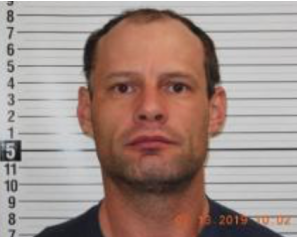
Swafford- Photo from an earlier arrest in Mitchell County
Just after 7:30 p.m. Wednesday, Austin Swafford, 34, was arrested in the 1000 Block of South Seth Child in Manhattan. He had originally been held in Riley County on a probation violation, according to the RCPD arrest report.
On April 26, police in Beloit reported Swafford’s disappearance, that he had “ties to Beloit, the Mitchell County area and that the public should not approach him.
Riley County records indicate Swafford may have turned himself in. The arrest occurred at the police department in Manhattan. He is being held on a $1500 bond. Police had no additional information on Swafford.
The U.S. Senate has passed a bill that aims to combat the illegal robocalls torturing Americans.
Though the measure wouldn’t eliminate all unwanted calls, it would give regulators more tools to go after scammers. It would also push phone companies to adopt new technology to combat fake phone numbers popping up on caller ID.
The Senate passed the bill 97-1 on Thursday. It’s not clear what will happen in the House, where Democrats in charge have their own anti-robocall proposals.
The bill has support from the telecom industry and consumer groups, a rare combination.
As scam call volume rises, the Federal Communications Commission is trying to nudge phone companies. The nation’s communications regulator will vote in June to allow carriers to block scam calls by default for customers.
Each year Kansas Farm Bureau (KFB) Foundation for Agriculture awards scholarships to college students studying in fields that benefit agriculture and rural Kansas. Forty-two recipients received $25,000 in scholarships for the 2019-20 school year.
Over the past decade, the foundation has awarded more than $300,000 in scholarships.
“We’re investing in students today to ensure they become tomorrow’s leaders,” says KFB President and Foundation Chair Rich Felts.
Dixie Miller, Reno County, is the winner of the $500 Godfrey and Emma Bahr Miller Agriculture Scholarship, a permanent, privately endowed scholarship fund for students attending a college in Kansas and majoring in a subject related to agronomy and conservation.
Cade Hibdon, Franklin County, was awarded $1,000 for the Frank & Helen Bernasek Memorial Scholarship.
Sara Schlickau, Reno County, received $1,000 for the K-State Agricultural Communications and Journalism Scholarship.
Jacqueline Clawson, Meade County, was awarded $500 for the DeWitt Ahlerich Memorial Scholarship.
Seven students received scholarships to Kansas technical colleges. They are Gage Harding, Neosho County; Dylan Helwig, Cherokee County; Wyatt Hilt, Cheyenne County; Talen Quenzer, Thomas County; Wyatt Schuster, Jewell County; Brody Stamm, Washington County; and Lane Wells, Wichita County.
Four $1,000 KFB scholarships were awarded to juniors and seniors enrolled in Kansas State University’s college of agriculture and majoring in a subject related to agriculture. They are Sara Gammon, Bates County, Missouri; Ciara Hodgkinson, Pratt County; Leah Metzger, Butler County; and Katelyn Pinkston, Clay County.
Two $1,000 KFB scholarships were awarded to juniors and seniors enrolled at Fort Hays State University. Recipients are Dani Mangus, Sherman County; and Brianna Stefan, Clark County.
Twenty-five recipients received $500 scholarships. These students are attending a Kansas college with a Kansas Farm Bureau Collegiate chapter. Students must be a Farm Bureau Collegiate member.
TOPEKA, Kan. (AP) — A Kansas clinic stopped providing telemedicine abortions months ago and returned to court Wednesday after concluding that the legal climate remains uncertain despite a judge’s order late last year saying the state couldn’t stop the procedures.
The clinic in Wichita operated by the Trust Women Foundation also faces a complaint over its past telemedicine abortions filed with the state’s medical board by officials from the anti-abortion group Kansans for Life. The state has enacted three laws in eight years to require physicians to be physically present when giving women pregnancy-ending medications.
The clinic has two doctors who live outside Kansas and can be at the clinic two days a week. In October, it started having them confer by webcam with women seeking medication abortions to increase the hours the physicians were available to patients. The clinic stopped Dec. 31.
“I was just fearful that our clinic and our doctors could be penalized,” Julie Burkhart, the foundation’s CEO and founder testified during a daylong state district court hearing Wednesday. “I wanted to be in a position where we absolutely knew we were able to wade into those waters.”
The clinic stopped telemedicine abortions on the same day Shawnee County District Judge Franklin Theis ruled that the state couldn’t stop the procedures. But Trust Women attorneys said Wednesday that they could not get written assurances from the local district attorney and the State Board of Healing Arts that no ban would be enforced.
The Trust Women Foundation filed a new lawsuit in late January, seeking an order to block enforcement of any ban. Another judge, District Judge Teresa Watson, had the hearing Wednesday and said she hopes to rule “in short order.”
The hearing was the first lower-court action since the Kansas Supreme Court ruled last month that access to abortion is a “fundamental” right under the state constitution. The high court said the state constitution grants a right to “personal autonomy” and to “control one’s own body.”
Mary Kay Culp, Kansans for Life’s executive director, said she worries that the legal dispute over telemedicine abortions “could turn out badly” — and be only the first of many.
Abortion opponents fear that that the Kansas Supreme Court decision endangers even longstanding restrictions. Many were enacted under Republican Govs. Sam Brownback and Jeff Colyer before Democratic Gov. Laura Kelly took office in January.
Their frustration is rising as other states, including Alabama and neighboring Missouri, move to ban most abortions and abortion foes hope the U.S. Supreme Court will reverse its historic Roe v. Wade ruling in 1973 legalizing abortion across the nation.
“They could back and turn over virtually all our abortion laws,” Culp said.
Kansas enacted its first telemedicine-abortion ban in 2011, only to see it swept up in a broader lawsuit against multiple restrictions that prompted Theis to block them all together. In his December ruling, Theis said that earlier order blocked a 2015 version of the ban, and he declared that a 2018 version was an “air ball” without enforcement provisions. The state has appealed.
Kansans for Life launched its complaint over the Wichita clinic’s telemedicine abortions before Theis’ last ruling and received a notice last month that the complaint had been assigned to an investigator. The medical board regulates the clinic’s physicians, while the clinic itself is regulated by the state health department.
The medical board’s 15 members all were named by Brownback and Colyer, both strong abortion opponents. Kelly, an abortion rights supporter, cannot fill any spots until four members’ terms expire June 30.
During Wednesday’s hearing, Burkhart testified that webcam conferences made the clinic’s two physicians available to patients and additional eight to 12 hours a week. She also said telemedicine allowed the clinic to reduce waiting times, so patients could spend less than two hours there, instead of from six to eight hours.
She said that Trust Women hoped eventually to open a clinic in rural Kansas offering telemedicine abortions.
But Shon Qualseth, a lawyer representing the Kansas attorney general’s office, said the clinic still cannot show that its patients face imminent harm without another court order.
MONTGOMERY COUNTY — An 88-year-old Kansas man is recovering after a dramatic water rescue.
Wednesday water rescue photo courtesy KDWP&T Game Wardens
On Wednesday, Montgomery County Sheriff’s deputies were dispatched to the intersection of County Road 6600 and 4500 Road where a family reported 88-year-old Robert Harriman was last seen at that location at approximately 10a.m., according to Sheriff Robert Dierks.
Heavy rainfall over the past week left the area flooded by the Verdigris River.
Deputies and the family began a search and located Harriman’s vehicle one half mile from the road. Deputies contacted Neodesha Fire crews and a warden from the Kansas Department of Wildlife and Parks to do a water rescue.
They used a drone to help see the vehicle and determined Harriman was trapped in the vehicle.
Neodesha Fire crews, Game Warden Uhrmacher and an off-duty trooper used a patrol boat to reach the vehicle that had been swept 2000 feet off the flooded road and remove Harriman.
Independence EMS treated him at the scene and transported him to a local hospital. The sheriff had no update on his condition Thursday.
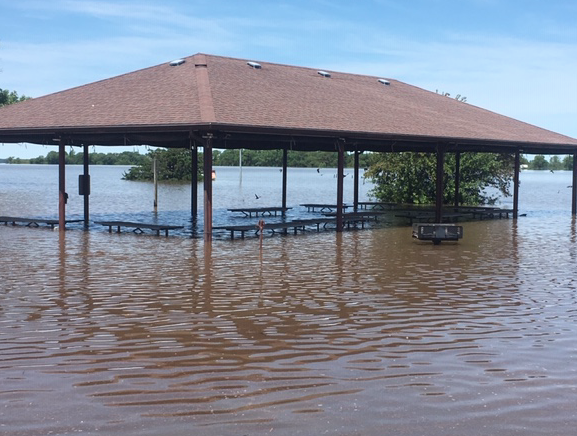
Historic flooding at the park has forced all but two campsites to be closed.
Visitors are still able to visit the lake, but park rangers advise the public to not get in the water.
Hutchinson resident Danielle Hunt says her family and friends usually spend Memorial Day weekend at Cheney Lake. She’s changing her plans this year due to road closures and flooding.