If a new Mississippi law survives a court challenge, it will be nearly impossible for most pregnant women to get an abortion there.
Or, potentially, in neighboring Louisiana. Or Alabama. Or Georgia.
The Louisiana legislature is halfway toward passing a law — like the ones enacted in Mississippiand Georgia— that will ban abortions after a fetal heartbeat is detected, about six weeks into a pregnancy and before many women know they’re pregnant. Alabamais on the cusp of approving an even more restrictive bill.
State governments are on a course to virtually eliminate abortion access in large chunks of the Deep South and Midwest. Ohio and Kentucky also have passed heartbeat laws; Missouri’s Republican-controlled legislature is considering one.
Their hope is that a more conservative U.S. Supreme Court will approve, spelling the end of the constitutional right to abortion.
“For pro-life folks, these are huge victories,” said Sue Liebel, state director for the Susan B. Anthony List, an anti-abortion advocacy group. “And I think they’re indicative of the momentum and excitement and the hope that’s happening with changes in the Supreme Court and having such a pro-life president.”
For abortion rights supporters, meanwhile, the trend is ominous. Said Diane Derzis, owner of Mississippi’s sole abortion clinic, the Jackson Women’s Health Organization: “I think it’s certainly more dire than it ever has been. They smell blood and that’s why they’re doing this.”
Already, Mississippi mandates a 24-hour wait between an in-person consultation. That means women must make at least two trips to her clinic, often traveling long distances.
Other states have passed similar, incremental laws restricting abortion in recent years, and aside from Mississippi, five states have just one clinic — Kentucky, Missouri, North and South Dakota, and West Virginia. But the latest efforts to bar the procedure represent the largest assault on abortion rights in decades.
Lawmakers sponsoring the bans have made it clear their goal is to spark court challenges in hopes of ultimately overturning the 1973 Roe v. Wade decision legalizing abortion.
Those challenges have begun. Derzis’ attorneys are scheduled to go before a judge on May 21, seeking to prevent Mississippi’s heartbeat law from taking effect July 1.
A judge in Kentucky blocked enforcement of that state’s heartbeat ban after the American Civil Liberties Union filed suit on behalf of the clinic in Louisville.
Similar legal action is expected before bans can take effect in Ohio and Georgia, where Republican Gov. Brian Kemp signed the latest heartbeat bill into law Tuesday. Kemp said he welcomed the fight, vowing: “We will not back down.”
Georgia’s ban doesn’t take effect until Jan. 1. But the impact was immediate.
An abortion clinic operated by The Women’s Centers in Atlanta began receiving anxious calls from patients soon after Kemp signed the law. Many callers had plans to travel from outside the state for abortions. Georgia’s heartbeat ban would have a wider impact because the state has 17 abortion clinics — more than the combined total in the other four Southern states that have passed or are considering bans.
“On a typical day we will see people from North Carolina, Tennessee, Alabama, South Carolina — all over the region,” said Dr. Lisa Haddad, the Atlanta clinic’s medical director. “And my thought is we’re not going to see those people coming here because they assume it’s already illegal in Georgia.”
Dr. Ernest Marshall, co-founder of Kentucky’s last remaining abortion clinic in Louisville, said in an email that banning abortions before most women know they’re pregnant would “have a disproportionate impact on poor women and communities of color throughout the South.”
Advocates for abortion rights expect judges to halt enforcement of any new bans while lawsuits work their way through the courts. That could take years.
“These laws are blatantly unconstitutional,” said Elisabeth Smith, chief counsel for state policy and advocacy for the Center for Reproductive Rights, which also has filed suit over Mississippi’s ban. “But if they were allowed to go into force, they would have devastating consequences for the residents of all of these states.”
If heartbeat bans are upheld, many women who are poor and have limited means to travel would have few options other than to try to terminate their own pregnancies, Haddad said, possibly using abortion drugs purchased online.
Others would have to drive or fly across multiple states, said Elizabeth Nash, a state policy analyst for the Guttmacher Institute, a research group that supports abortion rights.
“People would go to Florida, people would continue to go to Memphis,” Nash said. “How many states do you have to cross before you can access abortion services? It exacerbates all the issues we’ve already seen around taking time off from work and having the money to travel.”
Proposed heartbeat bans failed to pass this year in several Republican-led states, including Texas. There, GOP lawmakers lost ground to Democrats in the 2018 elections, and some abortion foes were wary after courts struck down prior abortion restrictions in the state. Such efforts also fell short in Florida, South Carolina, Tennessee and West Virginia.
Alabama lawmakers postponed until next week a vote on a proposal that would make performing nearly all abortions a felony. The measure has passed the state House, and the Senate suspended debate Thursday amid a heated dispute over whether exemptions for rape and incest should be stripped from the bill.
“You can’t put a price on unborn life,” Eric Johnston, president of the Alabama Pro-Life Coalition, said Wednesday, as a legislative committee heard testimony on the state’s proposed ban. “What you have to do is protect the people that live in this state and that includes unborn children.”
But Jenna King-Shepherd told Alabama lawmakers she believed the abortion she had at age 17 allowed her to finish college. She said her father, a part-time Baptist preacher furious about her pregnancy, drove her to the abortion clinic because he trusted her to make the right choice.
“I’m not asking you to support access to abortion,” King-Shepherd said. “I’m only asking you to let women, their families, their physicians and their God make this decision on how they want to start their families in private and trust them to do that.”
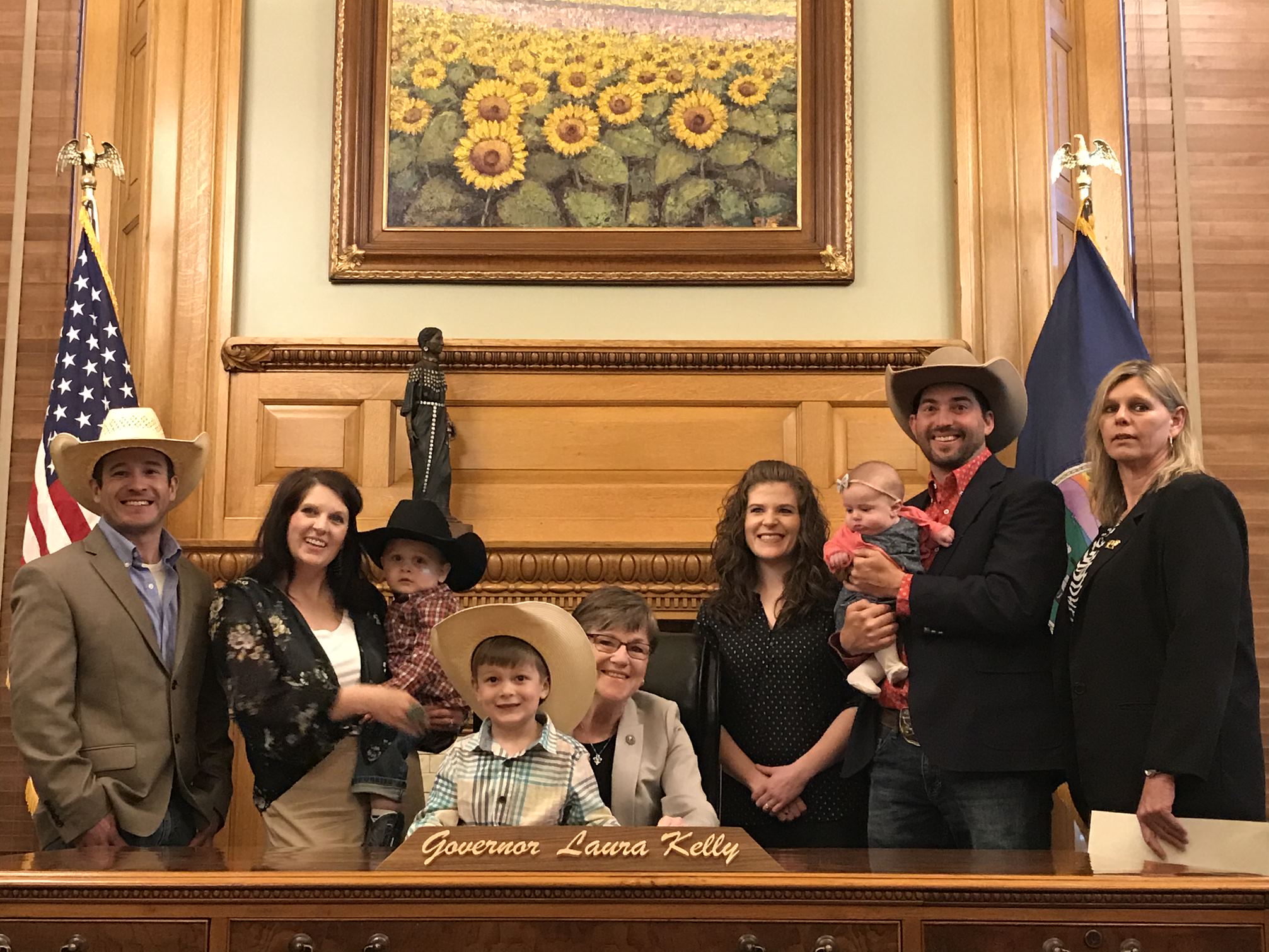
TOPEKA – Many products get publicity and special recognition during the year. But in Kansas, if any product deserves its own month, it’s beef. That is why Kansas Governor Laura Kelly has declared May as Beef Month in the state. This declaration makes the 35th consecutive year beef has received this honor.
According to Kevin Thielen, executive director of the Kansas Beef Council, the value of beef to the economy and social fabric of the state is remarkable.
“With more than 6.35 million cattle on ranches and in feedyards in the state, Kansas ranks third in the country,” says Thielen. “That’s more than twice the state’s human population. Kansas cattle producers are proud of the nutritious, delicious beef they help bring to tables in this state, across the country and around the world.”
Kansas has about 46 million acres of farm ground. Not all of this land can be used to grow crops, however. Grazing cattle is an ideal technique for efficiently utilizing grasses and plants growing on nearly 15 million acres of Kansas pasture and rangeland. These acres would be wasted if not for ruminants like cattle that can turn these resources into essential protein and nutrients for humans.
Kansas ranked second in fed cattle marketed, with 4.9 million in 2017. Beef cattle and calves represented 52.8% of the 2017 Kansas agricultural cash receipts.
The effect of the beef industry on employment is significant as well. According to the American Meat Institute, Kansas companies that produce, process, distribute and sell meat and poultry products employ as many as 19,502 people, while generating an additional 48,070 jobs in supplier and associated industries. These include jobs in companies supplying goods and services to manufacturers, distributors and retailers, as well as those depending on sales to workers in the meat industry.
The product they help bring to market is one that contributes substantially to the human diet. Lean beef provides 10 essential nutrients, including zinc, iron, protein and B vitamins. It does all this for only 170 calories per 3-ounce serving. In fact, a serving of beef provides the same amount of protein as two servings (1 ½ cups) of cooked black beans – which have 341 calories.
Kansas ranchers and feeders are committed to producing beef responsibly and sustainably, Thielen says. But beef production refined over many generations is only part of the story. Producers also keep consumer needs and wants top of mind.
“While all aspects of beef raising and processing are important, producing beef that is delicious, safe, wholesome and nutritious is ‘job one’ for our industry,” Thielen says. “After all, producers of beef are also consumers of the beef they produce. They’re proud of their role in supplying this terrific food that so many people enjoy.”
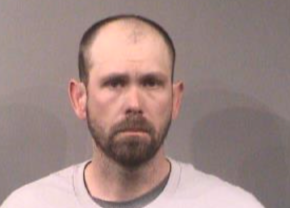
WICHITA, Kan. (AP) — A man charged in a crash that killed an off-duty Wichita police officer and his young son is set to stand trial.
Dalrymple -photo Sedgwick Co.
James Dalrymple was in Sedwick County Court on Friday for a preliminary hearing on charges of two counts of involuntary manslaughter and failing to yield the right of way. A judge found there was enough evidence for Dalrymple to stand trial. Dalrymple’s arraignment is set for June 25.
The April 2018 crash killed 37-year-old Stacey Woodson and his 9-year-old son, Braedon. Woodson was a 16-year Wichita police veteran who worked in the motorcycle unit.
Authorities say Dalrymple pulled out in front of the Woodsons’ motorcycle. Stacey Woodson died at the scene. His son died later at the hospital.
The nurse practitioner landed in the state’s rural southwest — where she saw patients in Garden City, Dodge City and Liberal — through a federal program aimed at stubborn health care shortages in urban and rural America.
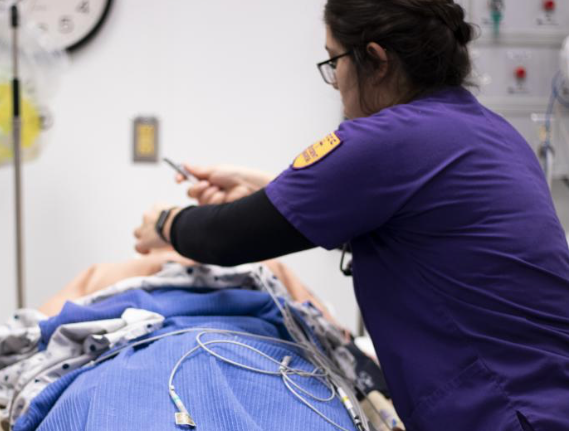
Nursing school. Many nurses eventually work on master’s or doctorate degrees to become nurse practitioners. BETHANY WOOD / FOR THE KANSAS NEWS SERVICE
But why stay? Adams has her eyes on Nevada, a state that lets its most educated nurses roll up their sleeves and work without permanently needing, as they do in Kansas, permission from a physician.
“I want to practice in a state that recognizes our qualities and our academic experience,” she said.
Kansas makes advanced practice nurses ink deals with doctors that physicians say protect patients by ensuring those nurses will collaborate with their more educated colleagues.
Nurses disagree. They insist the contracts do little more than limit patient options, allow doctors to fend off unwanted competition, and, in some cases, give them a cut of nurses’ earnings for little to no work.
Nationally, one state after another has come around to that way of thinking — dropping contract requirements like those in Kansas. Physicians trying to stop the trend fight back with less and less success.
That’s like the days back in the 1950s, when a physician would go to medical school and then do a rotating internship. – Dr. John Eplee, state lawmaker
“This has kind of been painted like it’s a turf war,” said Rep. John Eplee, an Atchison family physician and state lawmaker opposed to lifting Kansas’ restrictions on nurse practitioners. “What this boils down to is, we just want patients to have access to safe care.”
If Kansas scraps the contracts, he argues, why would physicians stick around in a state where nurse practitioners can take a shortcut through less schooling?
“That’s like the days back in the 1950s,” he said, “when a physician would go to medical school and then do a rotating internship and then go out and practice. No one does that anymore because society requires more training and higher standards.”
That’s not how the National Academy of Medicine, the Federal Trade Commission, and many public health and health workforce researchers see it. To them, physicians in holdout states don’t have the goods to back their alarmism.
“No studies suggest that (advanced practice nurses) are less able than physicians to deliver care that is safe, effective, and efficient,” the National Academy of Medicine says, “or that care is better in states with more restrictive scope of practice regulations. …
“In fact, evidence shows that nurses provide quality care to patients, including preventing medication errors, reducing or eliminating infections, and easing the transition patients make from hospital to home.”
Welcome to the NP ‘revolution’
Walk into your local medical clinic and you’re increasingly likely to be seen by a nurse practitioner instead of a physician. In the span of about a decade, the number graduating from nursing schools has more than tripled.
Ed Salsberg calls that “phenomenal.”
The founder of the National Center for Health Workforce Analysis at the U.S. Department of Health and Human Services and of the Center for Workforce Studies at the Association of American Medical Colleges suspects nurse practitioner graduates will rocket past the nation’s supply of new physicians within a few years.
“It really has been sort of a revolution,” says Salsberg, now a faculty researcher at the George Washington University School of Nursing.
He originally raised red flags, worried the nation was charging toward a surplus of NPs unable to put all that graduate education to use.
But so far, he says, the U.S. has “soaked them up.”
More than two-thirds work in primary care, something that nurses, physicians and policymakers alike see as a blessing. Studies show those NPs can offer much of the routine health care that doctors provide, then refer cases beyond their training to the physicians.
But many doctors want to retain oversight or other control of that burgeoning cadre, including by requiring NPs to enter contracts that Kansas calls “collaborative practice agreements.”
About half of states have dropped such contracts for all NPs or all those with more than a couple years of experience, a trend that began decades ago.
In states that haven’t, the same legislative wrestling match between advanced practice nurses and physicians plays out one year after the next. Emboldened by research validating their safety and by health care shortages affecting millions of Americans, nurses refuse to back down.
The U.S. doesn’t have enough doctors — or at least, parts of it don’t. Its population is growing and, since the 2010 Affordable Care Act, more of those people are insured.
Exacerbating that: The giant Baby Boomer generation is reaching an age that requires more health care. The generation’s doctors are retiring. One in threeKansas physicians is over 60 years old, at a time when 1 million Kansans already live in areas with primary care shortages.
Researchers say states that roll back restrictions on NPs have more of them, with notable benefits for underserved communities. Skeptics argue that government could plot a different course instead, with targeted dollars for medical residencies and other incentives to reinforce physician ranks in the right places.
“The reality is, it’s probably a little of all of it,” says Candice Chen, former director of the medical and dentistry division at the federal Bureau of Health Workforce and an expert on graduate medical education at GWU’s School of Public Health.
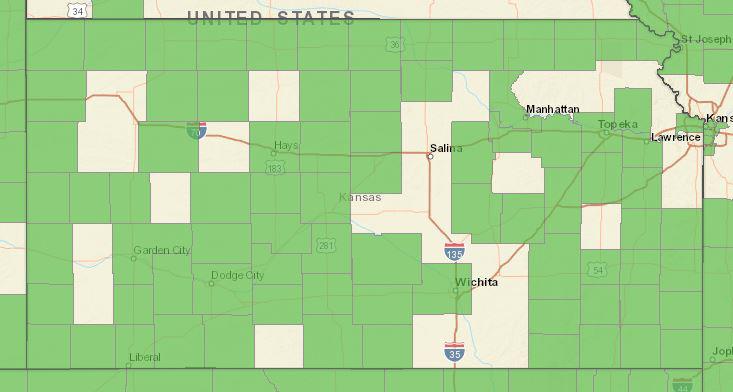
A map showing Kansas counties, in green, with shortages of primary care providers, generated by data.hrsa.gov.
The National Center for Health Workforce Analysis, she notes, predicts a shortage of more than 20,000 primary care doctors by 2025. NPs can help fill the gap.
Where doctors tend not to go
Sofia Navarro was a pediatric nurse at Children’s Mercy Hospital when she headed back to school to become a nurse practitioner.
She envisioned going into private practice, in a shiny new office with all the nicest gadgets and equipment that a health care pro could want.
That changed when a professor suggested Navarro wrap up her gynecological studies working public health in one of the state’s poorest places, Wyandotte County.
“I ended up falling in love with public health,” she said.
More than a decade later, she’s still there, screening women for cervical and breast cancer and explaining puberty to teens. About half her patients, she estimates, have no insurance or policies that don’t pay for much.
Peter Buerhaus is chairman of the National Healthcare Workforce Commission, a body created by the Affordable Care Act to puzzle out health care access.
He and others have plowed ahead with research for the commission on their own, mining Medicare and other data. Their findings?
NPs are more likely than doctors to serve people on Medicaid or without insurance, and people of color. The same goes for another of Kansas’ sore points — rural areas.
“There’s a strong body of evidence now,” said Buerhaus, a professor at Montana State’s School of Nursing. “Nurse practitioners are more likely to work in rural areas than physicians.”
Medicare data also suggests their care costs less, Buerhaus says, and not just because Medicare pays them less. NPs appear to order fewer tests and procedures and pick cheaper options when they do.
Goal No. 1: Protecting patients
LaDona Schmidt knows what it’s like to be a nurse practitioner. And a physician. The Lawrence doctor has been both.
What she learned from that transition opened her eyes. She went from knowing the basics of prescription drugs, she says, to understanding their workings at the cellular level.
Medical school, she testified to Kansas lawmakers, helped her save the life of a 4-year-old whom an NP had diagnosed with stomach flu.
“She recommended Tylenol, fluid, and ‘time,’” wrote Schmidt, the Kansas Medical Society’s president-elect. The mother sought care again the next day. Schmidt noticed the child’s enlarged liver, ordered tests and put him in the hospital.
“He continued to progress to liver failure,” she said, “and fortunately was able to receive a liver transplant two weeks later.”
Schmidt declined an interview. She and other Kansas physicians opposed to ditching collaborative practice agreements point to training. Family doctors slog through four years of medical school and three years of residency. Many specialty residencies last even longer.
NPs typically attend a two-year master’s program, though universities in Kansas and elsewhere are shifting to doctorates.
Stories like Schmidt’s frustrate Monica Scheibmeir, dean of Washburn University’s School of Nursing in Topeka.
“Whenever my well-respected physician colleagues make comments about errors, they should remember they live in a glass house,” she said. “And that never gets brought up.”
Other researchers with medical and nursing backgrounds agreed. Absent data, physicians’ anecdotes remain just that — anecdotes.
“There are horror stories about physician providers like that too, right?” said Chen at GWU, a trained pediatrician. “We have to figure out how to prevent those horror stories.”
That means training providers of all stripes to know their boundaries, she said, and when to involve doctors or nurses with expertise different from their own to address a patient’s care.
The FTC is unconvinced that restricting NPs is needed to achieve that. Collaboration is “‘the norm” even in states that don’t make NPs secure physician contracts, it says. NPs still refer their patients to physicians and hospitals.
The FTC warns of a one-way street that positions doctors as market gatekeepers. That can stifle competition and stick consumers with higher bills.
There are horror stories about physician providers like that too, right? We have to figure out how to prevent those horror stories. – Dr. Candice Chen, George Washington University
Though some states, such as Kansas, call their contracts “collaborative agreements” and dodge words like “supervision,” the power dynamic is clear:
Doctors don’t need the deals, nurse practitioners do.
A V.A. treasure trove
In 2014, a research team at the Department of Veterans Affairs that included physicians dug into past studies in search of the impact of NPs on patient health, quality of life and hospitalizations.
They found no negative impacts, but noted that recent, rigorous research was thin — and weaker than advertised by some proponents of unfettered NPs. Still, they said the lack of fresh studies wasn’t surprising.
“Well-publicized, well-conducted randomized trials conducted in the 1970s proved the concept” that independent advanced practice nurses “can deliver care comparable to that provided by a primary physician.”
The team suggested the VA could dig further by mining its own extensive quality and error data.
In 2016, the VA dropped collaborative contract requirements for NPs — including those working in states such as Kansas. A spokeswoman said the VA expects to complete a fresh study next year on the effects of independent practice.
Kansas NPs point to the VA’s 2016 decision to try to win over state lawmakers. They’ll try again next year after this year’s bill died in a legislative maneuver to expand Medicaid. Their new version offers to make new NPs work a few years before dropping their contracts with doctors.
Kansas physicians say they’re open to compromise of a different sort. They remain skeptical of granting NPs independent practice and distrust the Board of Nursing’s ability to oversee NPs if they get it.
So keep the contracts, they suggest. Just improve them. Make sure doctors don’t abuse them for financial gain and slack off on giving NPs meaningful help.
“We work side by side with these folks every day,” says Jeremy Presley, a private practice doctor in Dodge City and president of the Kansas Academy of Family Physicians. “We value the care they provide.”
Presley teaches nurse practitioners, works with them daily and sits on the advisory board for one of Kansas’ doctoral nurse practitioner programs.
Kansas lets doctors ink deals with as many NPs as they want, and charge as they see fit. Some may work in the same building as the NPs. Others, across town. Still others, 100 miles away.
NPs offer anecdotes of physicians overseeing and charging half a dozen NPs in scattered locations without consulting regularly or at all.
“I feel bad for those folks,” Presley said. “Frustrated for them, that those agreements aren’t in a better — you know, aren’t set up in a better way.”
But it’s unclear how common such situations might be because neither the nurses nor the doctors report contract details to the state.
Nor is it clear how much income Kansas physicians collect this way.
A new national study found advanced practice nurses face contract fees more often if they work in rural areas or at nurse-operated clinics. In those cases, contract prices charged to the nurses or their clinics often topped $6,000 and ranged up to $50,000 annually.
In a small and not necessarily representative survey conducted by the Kansas Advanced Practice Nurses Association, half of 180 respondents said their collaborating physician got monetary compensation.
LAWRENCE — When one thinks of the military, images of elite, highly fit soldiers often come to mind. Conversely, talk of eating disorders generally steers toward undernourished individuals, often young women. However, data has shown that the prevalence of eating disorders in the military is roughly the same as in general society, and two University of Kansas researchers have secured a grant from the Department of Defense to develop a screening to detect eating disorders among the nation’s soldiers and identify organizational barriers to identifying and treating them.
Kelsie Forbush, associate professor of psychology, and Alesha Doan, associate professor of women, gender & sexuality studies and faculty member in the School of Public Affairs & Administration, have secured a three-year, $1.7 million grant to study eating disorders in the military, adapt a previously successful screening tool and determine organizational challenges to detecting and treating eating disorders in both active-duty soldiers and veterans. The grant is administered by KU’s Life Span Institute.
Active military face a wide range of dangers on the battlefield, and the risks of post-traumatic stress are well-documented. However, the constant pressure to meet fitness standards, physical requirements to enlist and expectation for leaders to maintain fitness levels as role models all can lead to eating disorders.
Kelsie Forbush
“Many people are not aware that the military has rigorous standards that require military personnel to meet specific body mass and other physical fitness standards,” Forbush said. “In addition to physical fitness and body mass standards, in deployment situations, soldiers can experience additional pressures that can lead to disordered eating. The availability of calorie-dense ‘meals, ready to eat’ and high-calorie cafeteria-style comfort food served in chow halls can cause weight gain. Active-duty service members are also exposed to stress and trauma, which may lead to unhealthy eating behaviors in an attempt to cope with traumatic experiences and temporarily ‘escape’ from negative emotions.”
Recent studies show that eating disorders occur in about 13 to 15 percent of young women and 3 percent of young men in the general population, and those statistics are approximately the same among members of the military. That number could actually underestimate the total in the military as there is not currently a servicewide screening to detect eating disorders, and those most often used in general populations rely on highly gendered questions most applicable to young women, Forbush said.
Failure to maintain body mass index and fitness standards can lead to referral to weight-loss programs and, potentially, discharge from service. Further, eating disorders have the highest mortality rate among all mental health disorders. Yet, despite the severity, no screening is in place for recruits and active-duty military or within the Veterans Health Administration system. Forbush’s research group has developed a screening known as the Eating Pathology Symptoms Inventory, shown to comprehensively measure disordered eating in both men and women.
The researchers will work to adapt the screening to identify veterans who may have eating, mood, anxiety or trauma disorder. A nationally representative sample of 1,000 men and women discharged from the military within one year will take the screening at four time points. The reliability and validity will be tested, and a shorter form will be developed and tested with a second sample of 400 veterans to determine if the screening can accurately identify cases of eating, mood, anxiety or trauma disorder.
The screening will be designed to detect disordered eating and other potentially dangerous behaviors such as muscle building, excessive exercise, purging and restricting.
Alesha Doan
Doan will lead research into organizational barriers by conducting interviews with a subset of 100 veterans on their perceptions of institutional and cultural issues that may prevent identification and treatment of eating disorders.
“We’ll be looking at organizational practices and policies that may factor into eating disorders and perhaps impede treatment,” Doan said. “We want to better understand how the environment may be creating formal barriers that contribute to the problem. For example, eating disorders are often viewed as a health issue that affects women. Understanding this issue as a gendered problem may heighten stigma for men seeking treatment in the organization.”
By developing effective screening, the researchers hope the military can implement measures to detect enlistees at risk of eating disorders when they enter, identify current soldiers also at risk or currently displaying disordered eating behaviors and to serve veterans who suffer from eating disorders. Potential recruits often feel pressure to lose weight rapidly in order to qualify, active-duty military face high levels of stress, and veterans often deal with post-traumatic stress, all of which can contribute to disordered eating. To complicate matters, obesity is a problem throughout society. Early detection and treatment could greatly enhance military readiness, the researchers said, as well as lead to improved health following treatment.
In addition to the Department of Defense funding, Forbush has received $330,000 in Research Excellence Initiative funding from KU’s College of Liberal Arts & Sciences. The funding will support two years of research via an Academic Accelerator Award in the College, which will allow Forbush to complete a longitudinal research project designed to improve the ability to predict who will recover or relapse from an eating disorder and to provide treatment to KU students experiencing eating disorders.
The military project is also among the first to examine eating disorders and related mental health conditions among veterans on a national level. Thus, Forbush and Doan said they hope the results will not only contribute to the understanding of the scope and effects of eating disorders in post-9/11 veterans but demonstrate the need for a national VA program to address them.
SEDGWICK COUNTY — Law enforcement authorities are investigating a burglary and have two teen suspects in custody.
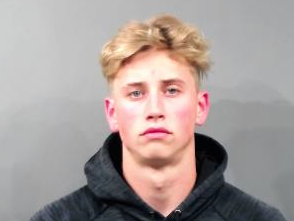
Dylan Dominick-photo Sedgwick Co.Nick Dominick-photo Sedgwick COunty
At approximately 12 a.m. Friday, officers responded to a burglary-in-progress call at the Central Plaza building, 111 W. Douglas in Wichita, according to office Charley Davidson. The reporting party stated unknown suspects were inside the building damaging property.
Upon arrival, officers observed Nick Dominick and Dylan Dominick exit the building and they were arrested without incident. Officers also located several windows damaged throughout the building
The teens are being held on requested charges of burglary and destruction to property, according to Davidson.
The investigators will present the case to the Sedgwick County District Attorney’s Office.
RENO COUNTY— Law enforcement authorities are investigating a robbery and have a suspect in custody.
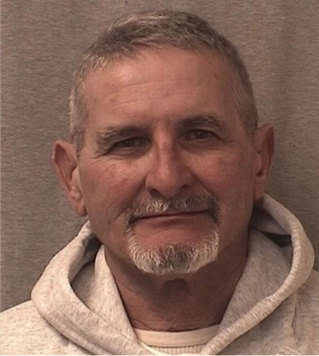
Crenshaw -photo KDOC
Just after 6:30p.m. Friday, police were dispatched to the Anima Bella Salon, 16 South Main in Hutchison reference a robbery where currency was taken, according to a media release.
With help from the Reno County Sheriff’s office the suspect was later identified.
Just after 10:30a.m. Saturday, police located and arrested Jackie D. Crenshaw, 66, Hutchinson, for the robbery. He is confined at the Reno County jail with a bond of $10,000, according to the release. The case will be presented to the Reno County District Attorney’s office.
Crenshaw has over two dozen convictions that include forgery, theft, burglary and for drugs, a according to the the Kansas Department of Corrections.
EMPORIA, Kan. (AP) — The Lyon County Sheriff’s Office says officials are searching for two missing people who left a car that was overcome by floodwaters in east-central Kansas.
Photos are from the Loyon County Deputy’s in-car camera show the Thursday’s water rescue -courtesy Lyon Co. Sheriff
Deputies responding to a call about 4:30 a.m. Saturday of a car in floodwater in Emporia found a car that had floated into a ditch that had people inside. Firefighters were able to get to the car by boat and rescued two men and a 17-year-old girl.
The three told their rescuers that two other people had left the car around 2 a.m. when it went into floodwaters. Despite a search, the sheriff’s office said the two people had not been found hours later.
Saturday’s rescue was the second in as many days. Deputies rescued a 19-year-old woman Thursday after her car was swept off a Lyon County roadway by floodwaters.
BRANSON, Mo. (AP) — An entertainment company that owned a duck boat that sank on a Missouri lake last summer is disputing that an independent inspector told it that its vehicles did not comply with a government standard.
Duck boat involved in the fatal accident- Photo courtesy NTSB
Steve Paul says Ripley Entertainment hired him in 2017 before it bought the boats from Missouri company Ride the Ducks International to determine whether they met the Department of Transportation’s regulations. Ripley says Paul passed the boats in his report.
Paul has said he inspected 24 of the 40 boats that Ride the Ducks was selling and that all of them were deficient under the department’s standard because of the location of their tailpipes.
Florida-based Ripley ultimately purchased 22 of the boats in December 2017. One sank in Branson last July, killing 17 people.
WICHITA, Kan. (AP) — A fleeing driver in a Wichita crash that killed two people and injured her passenger has been charged with two counts of first-degree murder.
24-year-old Mia Collins made her first court appearance Friday on nine counts, including aggravated battery, possession of methamphetamine and driving while license suspended.
She is accused of leading officers on a chase Sunday in a stolen BMW. After about 1 mile the car collided with a car and another SUV at an intersection.
First responders on the scene of the fatal Sunday accident -photo courtesy KAKE
The crash killed 70-year-old Maria Wood and 12-year-old Rosemary McElroy and critically injured Wood’s daughter, 36-year-old Jenny Wood, a popular Wichita musician known for performing with children.
The driver of the SUV that was hit also was hurt. Collins was on probation at the time.
During the month of May we celebrate National Small Business week. As the Kansas State Treasurer, I have had the privilege of working with small businesses in many capacities. One of my favorites is when I have the opportunity to reunite small businesses with money that has somehow gone unclaimed.
Currently the Treasurer’s office has over $50 million dollars that belongs to “non-human entities”, which means businesses, schools, cities, counties, and the like. Of that 50 million, the bulk belongs to small businesses like family farms, local gas stations, lawn care businesses, corner cafes.
Kansans are tremendously vigilant when it comes to searching our website for themselves and/or their loved ones but it’s important to know that roughly 15% of the missing money that the state owes your community is owed to the businesses within your community. Local businesses often invest locally and it is gratifying to watch unclaimed money go from just sitting in Topeka to being returned and reinvested within communities throughout the state.
One such opportunity came about last year when our office was touring all 105 Kansas counties conducting local searches to connect Kansans with their unclaimed cash.
In the city of Sedan, a local resident noticed a substantial sum of money that belonged to the Sedan City hospital. She reached out to the hospital administrator and they were able to claim $24,000, just the amount they needed to finish the hospital’s aging roof.
Both the hospital and the residents of Sedan were delighted at the windfall. The new roof meant they could finish the much-needed renovations for the hospital without adding extra financing. In a town the size of Sedan, keeping their hospital open means hundreds of citizens won’t have to drive hundreds of miles for their medical care, people who work for the hospital can continue to keep their jobs, and family members of those who need hospital care can remain close by while their loved ones are being looked after. Win, win, win.
I want to encourage anyone with a small business to check our website regularly as part of their business practices. It is very simple to search online at kansascash.com to see if there is any unclaimed property there waiting to be found. We work very hard at the Treasurer’s Office to reunite both individuals and businesses with this unclaimed cash because it belongs to them and we want them to be able to use it where it can do the most good.
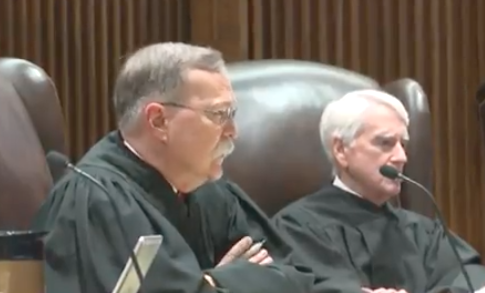
A fresh push by school districts to get Kansas to pony up more money for public education met with skepticism Thursday from the Kansas Supreme Court.
Justices had pointed questions for both sides in the lawsuit that began in 2010 and has already gone through multiple rounds of oral arguments and rulings.
The justices, who so far have consistently ruled in favor of the districts, may be ready for it to be over.
Justice Eric Rosen called it frustrating that the funding goal that school districts argue for seems to be a moving target.
“Is there ever ‘crossing the finish line’ in these types of cases?” Rosen asked the districts’ attorney, Alan Rupe. “Or are you going to be back here three or four years down the road, making the same argument you just made?”
Rupe responded that all the court has to do is tell lawmakers to redo the inflation adjustment and districts would be satisfied.
“I think we’re getting real close,” Rupe said.
The question at hand in Gannon v. Kansas is whether the state has done enough to finally end a nearly decade-long lawsuit over school spending.
Last June, the justices ordered the state to increase funding to account for inflation. Lawmakers did so this spring.
So the attorney representing the state, Toby Crouse, argued it should be “case dismissed.”
But the question is whether lawmakers added enough.
Rupe, who’s been fighting the state for more education funding for three decades, questioned the state’s inflation calculations and asked the justices to make lawmakers recalculate when they return for the 2020 legislative session.
How much is enough?
Lawmakers took a major step last year, by promising to phase in a half billion dollars for schools.
That got close to ending the lawsuit, except for the inflation problem that justices identified.
Crouse said the plan to add $90 million per year for four years should end the litigation.
He argued that approval this year from a bipartisan group of lawmakers and Democratic Gov. Laura Kelly give credence to the state’s solution.
“Everyone agrees that this is what satisfies not only the constitution,” Crouse said, “but also the best interests of the children.”
Rupe said the state continues to fall short because its new solution only calculated inflation for part of the funding increase to schools, not overall spending.
“You don’t figure the inflation on a loaf of bread by taking one slice and figuring the inflation on that slice,” Rupe said. “It’s on the whole loaf of bread.”
School districts contend spending ultimately has to reach levels consistent with a court ruling from the mid-2000s that dramatically increased school funding and ended a previous lawsuit, Montoy v. Kansas.
Hitting that target based on the Montoy agreement would take $3.7 billion in total annual funding by 2023, the districts argue. And it would shield the Legislature from litigation. But hitting that target would take another $270 million in annual funding by 2023 over what the state has promised.
Rupe says that’s an important difference, because $270 million could pay for 5,400 teachers.
Justice Dan Biles was skeptical the state needs to spend that much to meet constitutional requirements.
“That safe harbor number,” Biles said, “doesn’t necessarily mean that’s the minimum level necessary to comply with the constitution.”
Should the court trust the Legislature to keep its promises?
Even if they sign off on lawmakers’ latest fix, justices questioned the state’s request to dismiss the lawsuit.
Biles said the state would not be in full compliance with the court until it had paid out all the money in the school spending deal, which will take several years.
“I’ve got to tell you, I don’t have a lot of sympathy for the idea of dismissing this lawsuit,” Biles said.
There’s fear the governor and the Legislature might go back on their promises for more robust funding. They’ve done it before.
School districts filed the current suit, Gannon v. Kansas, in 2010, after governors Kathleen Sebelius and Mark Parkinson slashed school funding amid the global financial crisis and recession. The districts argued those cuts violated commitments the state made to end the Montoy lawsuit.
The district court and Kansas Supreme Court agreed. In ruling after ruling, they’ve pushed the state to restore hundreds of millions of dollars to its school funding formula. That included restoring targeted money meant to put poorer areas of the state on more equal footing with wealthier ones in terms of resources for education.
What if, Biles wondered, the court drops the case and the Legislature goes back to block grants or other funding schemes that have been found unconstitutional? Plaintiffs would have to start over at district court.
“When what the Legislature did is something we’ve already said they can’t do,” he said. “So that’s my problem.”
Stephen Koranda and Celia Llopis-Jepsen are reporters for the Kansas News Service. Follow Stephen on Twitter @kprkorandaand Celia @Celia_LJ.
RENO COUNTY. – Law enforcement authorities are investigating an attempted robbery and have four suspects in custody.
Just after 4:30 p.m. Friday Hutchinson Police Officers were dispatched to the Kansas State Fairgrounds reference to a shooting at the RV park, according to a media release.
Armando Castillo Jr, of Mineral Wells, Texas reported being confronted by four individuals while inside his 5th wheel camper. He was battered but was able to grab a firearm he had hidden in the camper. Castillo fired several shots to try and get the neighbors to call 911.
Everyone involved was still on scene when officers arrived. No injuries were reported due to gunfire. During the investigation, it was discovered that the suspects came to Castillo’s camper to get cash.
Police arrested four suspects identified as 22-year-old Kaleb Schyler Beard, 23-year-old Kerrah Schulze, 20-year-old Richard Fenters and 22-year-old Blaine White all of Wichita. They are being being held on requested charges of attempted aggravated robbery