TOPEKA – April tax receipts came in $81.2 million above estimates at $1.2 billion; $256.4 million more than the same month last year.
Individual income tax receipts are $69.8 million more than the estimate at $808.1 million. Corporate income taxes receipts are $8.5 million above estimates at $104.8 million; $6.0 million more than April 2018.
“Increases in the receipts can be attributed to one-time tax payments on capital gains income and economic growth coupled with changes in federal and state income tax law,” Secretary Mark Burghart said. “While we are seeing our state begin to stabilize following years of turmoil, it’s important that we continue to be cautious.”
Retail sales tax receipts show $200.5 million in collections, a decrease of approximately $2.4 million, or 1.2% below April 2018.
TOPEKA, Kan. (AP) — The Latest on efforts to override Democratic Gov. Laura Kelly’s veto of an abortion bill (all times local):
3p.m.
Republicans in the Kansas Legislature have narrowly failed to override Democratic Gov. Laura Kelly’s veto of a bill to require doctors to tell patients that medication abortions can be stopped after the first of two pills.
The Senate voted 27-13 Wednesday with no votes to spare to override the veto. But the vote in the House was 82-43, two short of the two-thirds majority needed for an override.
Kelly said the bill is an unwarranted intrusion between patients and their doctors.
Abortion opponents say such measures ensure that women harboring doubts about ending their pregnancies will learn that they can stop a medication abortion after the first of two pills. Abortion-rights supporters say such mandates force doctors to present patients with dubious information.
____
TOPEKA, Kan. (AP) — The Kansas Senate has overridden Democratic Gov. Laura Kelly’s veto of a bill requiring abortion providers to tell patients about a disputed treatment to stop a medication abortion after it’s been started.
The vote Wednesday was 27-13, just the two-thirds majority needed.
The House would vote next, possibly Wednesday, and appears to have the two-thirds majority needed to override the veto.
Kelly said the bill is an unwarranted intrusion between patients and their doctors.
Abortion opponents say such measures ensure that women harboring doubts about ending their pregnancies will learn that they can stop a medication abortion after the first of two pills. Abortion-rights supporters say such mandates force doctors to present patients with dubious information.
Arkansas, Arizona, Idaho, Utah, South Dakota, North Dakota and Kentucky all have similar laws.
Eric Charron -photo courtesy Tygart Valley Regional Jail
KINGWOOD, W.Va. (AP) — An armed Missouri man accused of threatening President Donald Trump during a traffic stop in West Virginia has been sentenced to 90 days in jail.
Eric Leonardo Charron of Kansas City pleaded guilty Wednesday in Preston County Magistrate Court to reckless driving and being a prohibited person in possession of a firearm. He was given credit for 36 days served.
State police say Charron was going 130 mph (209 kph) on Interstate 68 when he was pulled over March 27.
A trooper said in a criminal complaint that the 42-year-old Charron claimed to be running late to a dinner with Trump and also wanted “to meet with the leader of the Army to return a phone.”
TOPEKA, Kan. (AP) — The Latest on legislative efforts to expand Medicaid in Kansas (all times local):
Republicans have blocked a move in the Kansas Senate to expedite a debate on Medicaid expansion.
The vote Wednesday was 23-13 to pull an expansion bill from committee, one vote short of the 24 needed.
The House passed the bill in March but the Republican-controlled Senate has not acted on it.
Medicaid expansion is one of new Democratic Gov. Laura Kelly’s priorities. Her plan for expanding Medicaid health coverage to up to 150,000 additional Kansas residents is based on a bill that passed in 2017 with bipartisan support, only to be vetoed by then-Gov. Sam Brownback, a Republican.
GOP leaders say they want to wait until next year to vote on an expansion plan and that Kelly is trying to rush the debate.
______
By JOHN HANNA
TOPEKA, Kan. (AP) — Supporters of expanding Medicaid in Kansas are looking to block passage of the state’s next annual budget to force an expansion plan through the Republican-controlled Legislature over conservative leaders’ objections.
Legislators were set to reconvene Wednesday after an annual spring break, and the state Senate expected to vote quickly on expediting an expansion debate. The Senate has yet to act on a measure approved by the House in March, and top Republicans want to delay action until next year.
The next Senate vote would be on pulling an expansion billout of the committee where it’s been stuck for weeks, and supporters are not sure of success. Their doubts have them focusing on the alternative of tying up the $18 billion-plus budget that lawmakers must pass to keep state government operating after June.
“It’s the best leverage we have right now,” said House Minority Leader Tom Sawyer, a Wichita Democrat. “There’s been a lot of discussion.”
Medicaid expansion is one of new Democratic Gov. Laura Kelly’s priorities and its approval would be her biggest victory so far in her first months in office. Expansion has enjoyed bipartisan support for at least several years, but Kelly’s conservative Republican predecessors were vocal critics of the 2010 federal Affordable Care Act that encouraged it.
During an Associated Press interview, Kelly brushed aside top Republicans’ concerns about needing more time to consider the details of an expansion as “just a stall tactic.”
“I don’t really believe that they can come up with a better product, given a year,” she said. “I think they are really not that interested in expanding Medicaid. They never have been, but I think they’re starting to recognize the inevitability of it.”
Top Republicans argue that Kelly is trying to rush the debate and that they want to avoid pitfalls that could drive up the state’s costs.
“It needs a lot of due diligence and structure to protect the patients as well as the taxpayers,” said Senate Majority Leader Jim Denning, a conservative Kansas City-area Republican.
Kelly’s plan for expanding Medicaid health coverage to up to 150,000 additional Kansas residents is based on a bill that passed in 2017 with bipartisan support, only to be vetoed by then-Gov. Sam Brownback, a Republican.
Denning called the House-passed expansion bill “regurgitated” and said the state needs policies in place to curb health costs and encourage Medicaid participants to seek preventative care. GOP lawmakers also have mentioned imposing work requirements and even drug testing.
Denning said he agrees with Kelly that expansion “is inevitable” but added, “She’s going to have to wait, I hope, until the second year so we can do the massive and complicated plan correctly, rather than in a rush.”
The Affordable Care Act was Democratic former President Barack Obama’s signature domestic policy and it encouraged states to expand Medicaid by promising that the federal government would cover most of the cost. Thirty-six states have expanded Medicaid or seen voters approve ballot initiatives.
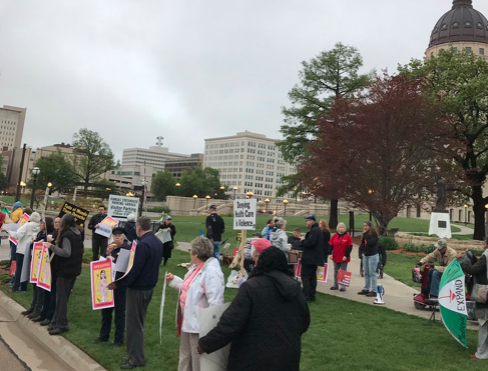
If you are in Topeka, please join us in fighting for Medicaid Expansion in Kansas! The vote is today, and 150k people will get coverage if it passes……✊🏼✊🏼✊🏼✊🏼🗣🗣🗣🗣 pic.twitter.com/3n7R0UuUMQ
Kelly’s administration has projected that the first full year of Kansas’ expansion would come with a net cost of $34 million to the state. Some supporters believe the influx of federal dollars will spur economic activity, generate new state tax revenues and offset those costs. Many Republicans are skeptical and believe the state’s next costs could be much higher.
Kansas Senate Minority Leader Anthony Hensley -photo Kansas News Service
The Senate’s top Democrat, Minority Leader Anthony Hensley, of Topeka, notified colleagues the he would try to pull the expansion bill from committee. Under Senate rules, he needed 24 of 40 votes to do so. Supporters then needed 27 of 40 votes to put the bill at the top of the debate calendar against GOP leaders’ wishes.
Democrats hold only 11 seats in the Senate and must rely on Republicans to bypass the normal committee process. It could be a tough sell to some moderate GOP senators who lead committees themselves and don’t want to face a similar tactic in the future.
Blocking the budget is “all we have left,” said Rep. Susan Concannon, a moderate Republican and expansion supporter from western Kansas.
“If we support Medicaid expansion, that’s our leverage,” she said.
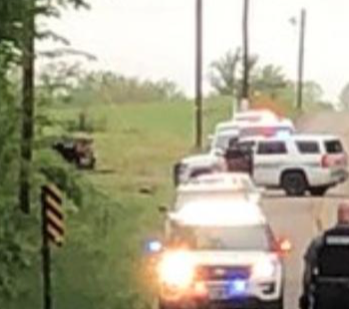
According to Shawnee County Sheriff’s Captain Danny Lotridge, a Subaru Legacy driven by an adult female was westbound in the 4700 Block of SE 69thStreet in rural Shawnee County.
The driver lost control of the vehicle. It slid sideways into the ditch and struck a tree.
The driver was pronounced dead at the scene. AMR transported a juvenile male passenger who had been in the front seat to a Topeka hospital with serious injuries, according to Lotridge.
The names of the driver and passenger are being withheld at this time pending family notifications.
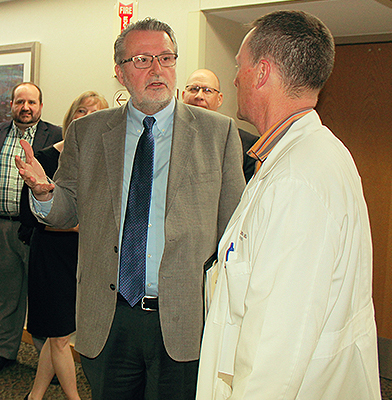
Lt. Gov. Lynn Rogers with Hays Med’s Dr. Jeff Curtis April 9 in Hays.
The following remarks are from Lt. Governor Lynn Rogers regarding the results of his Rural Healthcare Tour:
Hello, thank you all for coming today.
Since launching the Office of Rural Prosperity’s Rural Healthcare tour in February, Governor Kelly, KDHE Secretary Lee Norman and I have collectively toured more than 25 healthcare facilities. We’ve met with chambers of commerce, healthcare providers, business owners, faith leaders, families and community members across the state – from Liberal to Marysville and Pittsburg to Atwood.
During this tour, there was a consistent and resounding message no matter where we traveled — Medicaid expansion would absolutely help each of their communities.
It would create new jobs, invest new money into the local economy, and would reimburse healthcare facilities for care they already provide that would otherwise be uncompensated.
Expansion would give healthcare facilities the necessary resources to upgrade diagnostic equipment to provide better local healthcare. And it would allow them to more competitively recruit and retain quality healthcare staff.
In Council Grove, hospital administrators at Morris County told me they had just lost a doctor, and that they’re afraid that if the state doesn’t expand Medicaid they could lose more.
The fear of providers leaving for higher paying jobs in nearby expansion states like Nebraska or Colorado is very real to communities on the state’s border. Goodland Regional Medical Center is just a short 30-minute drive from the hospital in Burlington, Colorado.
And healthcare facilities in southwest Kansas – like Garden City and Dodge City – told me about wanting to invest in educational facilities to address their provider shortfall but said it was a challenge while being burdened with millions in unreimbursed care.
The Governor shared a story from her tour of Horizon’s Mental Health Center in Hutchinson. The services they are providing– in their local schools, correctional facilities, and across their communities – could all be enhanced if the legislature expanded Medicaid. And you’ll get a chance to hear that first-hand from their CEO Mike Garrett here shortly.
I don’t have to remind you that four rural hospitals have closed in the past three years – each citing the state’s failure to expand Medicaid as being partially responsible for their closing. And while we cannot guarantee that Medicaid expansion will save every rural hospital, we are certain that it has the most positive and immediate benefit of anything the state can do.
The economic impact of a hospital closure is greater than a cursory glance would expect. In a rural community, healthcare accounts for 20% of a local economy, and just one physician generates 26 jobs.
Given the economic impact of healthcare, the fact that 30% of our state’s rural hospitals are considered financially vulnerable is cause for concern. Across the state over 85% of our hospitals currently have a negative operating margin.
And in the five years that Kansas has gone without expansion we have lost over $3 billion dollars in tax revenue – money Kansans have paid to the federal government, that should have been used here but has gone to other states.
We not only have an economic imperative to expand Medicaid, we have a moral imperative as well.
Nearly 150,000 Kansans fall in the coverage gap. They are hardworking – often underemployed – Kansans who don’t make enough money to afford quality health insurance but have incomes that are too high to qualify for Medicaid. And many of them live in rural Kansas.
Unfortunately, two members of Senate Leadership – both in majority urban districts I should add – are blocking a vote on expansion despite it being supported by 77% of Kansans. They are suggesting that now is the time to study the issue, and that discussion can begin next year. But after five years of discussion in Kansas and more than 300 national studies showing its effectiveness, the time for discussion is over. It is time for Kansas to join the 36 other states who have already expanded their Medicaid Programs.
This should not be a partisan fight or a means to keep a political score. It is about people’s lives.
The Senate will be back Wednesday for the annual wrap-up session.
The Governor and I are calling on the Senate to hold a vote on Medicaid expansion.
Since rolling out our plan to expand Medicaid nearly 100 days ago, we talked to Kansans — Republicans, Democrats, and Independents alike – and they’ve told us that Medicaid expansion can’t wait until next year. It simply costs Kansas too much money and too many lives.
They’ve contacted their legislators, they’ve gotten engaged in the process, and they’ve said they are done waiting. It is time for the Legislature to listen to the people.
On behalf of rural Kansans, I’m asking Senate leaders to show compassion for their constituents.
Lynn Rogers (D) is the Kansas Lieutenant Governor.
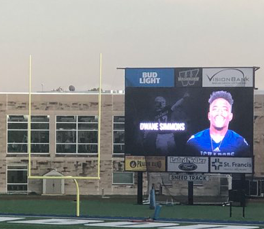
TOPEKA, Kan. (AP) — Hundreds gathered in Kansas to remember a Washburn University football player who was killed in a shooting that also wounded a friend who had been drafted hours earlier by the New York Giants.
Coach Craig Schurig said at Tuesday’s vigil for 23-year-old Dwane Simmons that the football field was his “piece of heaven.” The coach compared Simmons, a junior from Lee’s Summit, Missouri, to the candles carried by mourners, saying he “shined the light on everybody.” The university plans to create a scholarship named for Simmons.
A GoFundMe T-shirt fundraiser will provide 100 percent of the proceeds for the Simmons family, according to Washburn Athletics.
The shooting early Sunday outside an off-campus party also injured cornerback Corey Ballentine, whom the Giants drafted Saturday in the sixth round. The university says Ballentine is expected to make a full recovery. No one has been arrested.
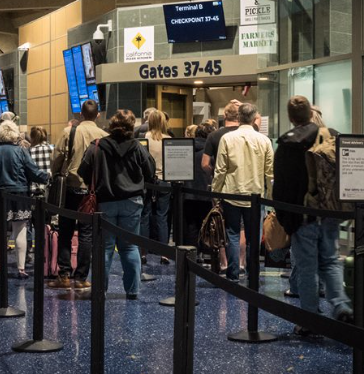
WASHINGTON (AP) — U.S. government searches of travelers’ cellphones and laptops at airports and border crossings nearly quadrupled since 2015 and are being conducted for reasons beyond customs and immigration enforcement, according to papers filed Tuesday in a federal lawsuit that claims going through electronic devices without a warrant is unconstitutional.
Photo courtesy Kansas City International Airport
The government has vigorously defended the searches, which rose to 33,295 in fiscal 2018, as a critical tool to protect America. But the newly filed documents claim the scope of the warrantless searches has expanded to enforce tax, bankruptcy, environmental and consumer protection laws, gather intelligence and advance ongoing law enforcement investigations.
Agents with U.S. Customs and Border Protection and U.S. Immigration and Customs Enforcement consider requests from other government agencies in determining whether to search travelers’ electronic devices, the court papers said. They added that agents are searching the electronic devices of not only targeted individuals but their associates, friends and relatives.
The new information about the searches was included in a motion the Electronic Frontier Foundation and the American Civil Liberties Union filed Tuesday in U.S. District Court in Massachusetts.
“The evidence we have presented the court shows that the scope of ICE and CBP border searches is unconstitutionally broad,” said Adam Schwartz, senior staff attorney for the EFF, based in San Francisco.
“ICE and CBP policies and practices allow unfettered, warrantless searches of travelers’ digital devices and empower officers to dodge the Fourth Amendment when rifling through highly personal information contained on laptops and phones,” he said.
The Department of Homeland Security did not respond to a request for comment. Both ICE and CBP said they did not comment on pending litigation.
When the suit was filed against the government in 2017, DHS officials said U.S. citizens and everyone else are subject to examination and search by customs officials, unless exempted by diplomatic status. The department has contended that no court has concluded that border searches of electronic devices require a warrant. Searches, some random, have uncovered evidence of human trafficking, terrorism, child pornography, visa fraud, export control breaches and intellectual property rights violations, according to the department.
The original case was filed on behalf of 10 American citizens and a lawful permanent resident from seven states who alleged the searches violated their constitutional rights. They asked the court to rule that the government must have a warrant based on probable cause before searching electronic devices at airports and other U.S. ports of entry.
A year ago, U.S. District Judge Denise Casper in Boston rejected the government’s request to dismiss the lawsuit, allowing the case to move forward. The ACLU and the foundation began gathering documents and deposition testimony. Based on the new information, they filed a motion Tuesday asking the judge to rule in their favor without a trial.
“This new evidence reveals that the government agencies are using the pretext of the border to make an end run around the First and Fourth Amendments,” said ACLU attorney Esha Bhandari. “The border is not a lawless place. ICE and CBP are not exempt from the Constitution and the information on our electronic devices is not devoid of Fourth Amendment protections. We are asking the court to stop these unlawful searches and require the government to get a warrant.”
The court documents claim that the agencies also assert the authority to search electronic devices when the subject of interest is someone other than the traveler, such as the business partner of someone under investigation. Both agencies also allow officers to retain information from travelers’ electronic devices and share it with other government entities, including state, local and foreign law enforcement agencies, the court papers claim.
RILEY COUNTY— Authorities in Riley County located a 16-year-old who escaped from a private Security Company while in transport for court proceeding Tuesday.
Just after 10:30 a.m. the teen identified as John Lewis Falley Wallace, according to the Riley County arrest report, escaped near the intersection of 5th and Fort Riley Blvd in Manhattan, according to a release from the Riley County Police Department.
At the time of the escape, schools in the area were placed on secure campus mode, according to the RCPD. That was lifted at approximately noon.
The Riley County Police Department never indicated the escape presented a threat to the public. Police have not released details on how or where they located the teen.
Wallace is now being held for Interference with law enforcement officer; obstruct/resist/oppose misdemeanor warrant service or execution, according to the RCPD arrest report.
NOTE: Kansas state law allows law enforcement to release the names of juveniles age 14 and older involved in criminal cases
————-
RILEY COUNTY— Authorities in Riley County are searching for a 16-year-old who escaped from a private Security Transport while on the way for court proceedings near the intersection of 5th and Fort Riley Blvd in Manhattan just after 10:30 a.m. Tuesday, according to a release from the Riley County Police Department.
RCPD Officers have cleared the scene and all schools have come out of secure campus mode.
The Riley County Police Department does not believe there is a threat to the public and will continue to attempt to locate the juvenile.
TOPEKA – In an effort to address the prison crisis, Governor Laura Kelly added over $30 million to improve the safety, compensation and conditions in the Department of Corrections through her Governor’s Budget Amendment released Tuesday.
“When I took office in January, we found that numerous agencies were facing challenges far worse than we thought, especially the Department of Corrections,” Kelly said. “Our prisons were overcrowded, understaffed and in crisis. I’ve added significantly more funding to start addressing these issues immediately.”
On February 12, 2019, Kelly declared an emergency in the El Dorado Correctional Facility due to serious staffing shortages. The Kelly Administration has been working since then to put together a comprehensive plan to address these issues. Additional funding will provide a pay increase of correction officers, funds to ease prison capacity, buy new stab vests for officers, and increase funding to treat Hepatitis C.
“Corrections officers and staff have stood strong on the front lines in this crisis, but we must give them the support and compensation they deserve,” said Kelly. “I want to thank the employees for their hard work and commitment to public safety through this challenging time. Help is on the way.”
The Governor also adjusted the human service caseloads based on the consensus caseload estimates for FY 2019 and 2020 in the Department for Children and Families, Department for Aging and Disability Services, and the Department of Health and Environment.
Also included in the Governor Budget Amendments were enhancements to the Office of Information Technology Services for modernization, additional funding for the Board of Indigents’ Defense Services, a transfer of funds to settle litigation with the Insurance Department, funds to cover a revenue shortfall at the Osawatomie State Hospital, repayment for the Children’s Health Insurance Program (CHIP) Bonus, correction to the KPERS-School Employer Contribution, additional funding for disasters and other funding adjustments.
SHAWNEE COUNTY — Law enforcement authorities are investigating a Kansas man for an alleged aggravated battery.
Campa-Vazquez -photo Shawnee Co.
Just after 11:00p.m. Monday, a citizen contacted the Shawnee County Emergency Communications Center about a disturbance involving neighbors in the 7200 block of SW Glencrest Drive, according to Sgt. Todd Stallbaumer.
Deputies responded and made contact with Alfredo Campa-Vazquez, 25, of Topeka, who had a gunshot wound to the leg resulting from an altercation when he attempted to enter a neighbor’s residence.
AMR transported Campa-Vazquez to a local hospital where he was treated and discharged to the custody of the Sheriff’s Office. He was then transported to the Shawnee County Department of Corrections and booked with a charge of Aggravated Battery.
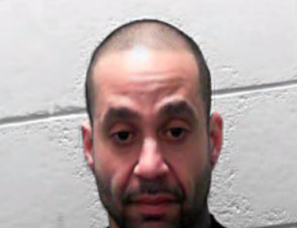
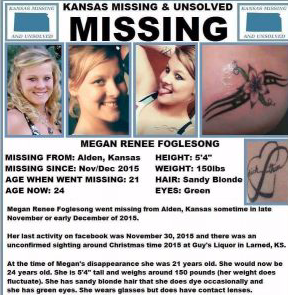
STERLING, Kan. — In taking his own life Monday following the shooting of the Rice County Sheriff and Undersheriff, David Madden may leave many questions unanswered. Authorities are still questioning witnesses about the shooting of two law enforcement officers in Rice County. Additionally, there are many unknowns about Madden’s connection to the disappearance of an Oneida, Illinois, woman more than three years ago.
Madden was a person of interest and even a suspect in the disappearance of Megan Foglesong, who was last seen in December of 2015 in Alden, Kansas.
On Tuesday, the KBI stated that the active warrant against Madden that triggered Monday’s shooting was not connected to the young woman’s case.
A Facebook page called “Bring Megan Home” that was started by friends and family of Foglesong had postings about the shooting and press conferences connected to the case.
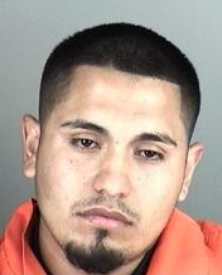
David Madden photo KBI
Many on the page have long believed Madden was connected to the woman’s disappearance, but no arrests were ever made. However, the KBI did execute a search warrant at Madden’s home in 2017.
Calls made to the KBI for an update on the investigation into Foglesong’s case were not returned as of Tuesday evening.
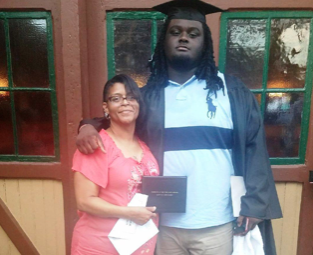
NEPTUNE, N.J. (AP) — New Jersey’s U.S. House delegation called Tuesday for an independent investigation into the heatstroke death of a Kansas community college football player from their state.
Bradforth and his mother after his graduation from Neptune High School -courtesy Joanne Atkins-Ingram
The state’s 12 representatives wrote to Garden City Community College President Ryan Ruda requesting the probe of 19-year-old Braeden Bradforth’s death.
Bradforth, who was a defensive lineman from Neptune High School, died in August about an hour and a half after practice. An autopsy report from December blamed his death on exertional heatstroke.
School administrators said last year they were conducting an internal review of the circumstances of his death.
Messages seeking comment have been left with the college.
New Jersey’s representatives — 11 Democrats and one Republican — say the probe should at least review health and safety practices at the school.
“Most regrettably, the Bradforth family’s tragedy is not the first of its kind. Exertional heat stroke is one of the top three causes of sudden death in athletes, yet it is preventable,” the lawmakers wrote.
Bradforth was found unconscious by an athletic trainer outside his dorm room Aug. 1. He died that night at a hospital.
Bradforth is the second Garden City football player to die in two years. Sean Callahan, 19, a sophomore offensive lineman, died at a home in Kismet, Kansas, in May 2017 of what a sheriff’s office called natural causes.








 STERLING, Kan. — In taking his own life Monday following the shooting of the Rice County Sheriff and Undersheriff,