TOPEKA —An investigation by the Kansas Department of Corrections (KDOC) has led to criminal charges in Shawnee County against a former Topeka Correctional Facility dental instructor for inappropriate conduct involving female inmates.
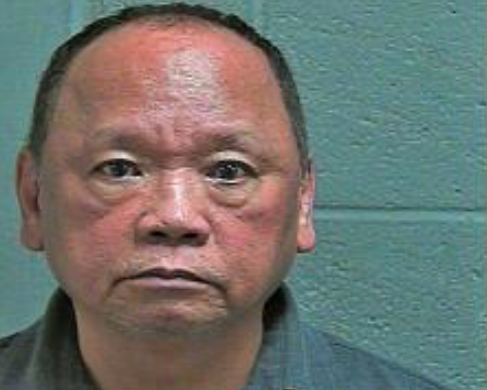
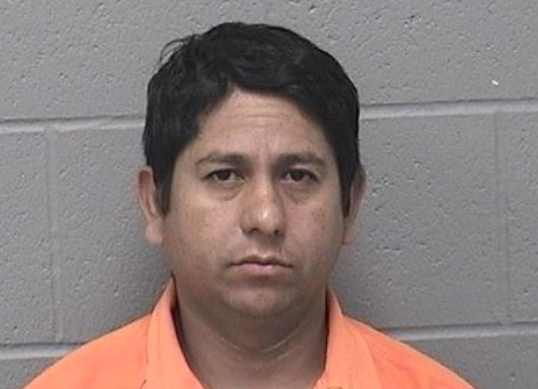
Tomas Co -photo Oklahoma Co. Sheriff
Tomas Co, 73, was returned from Oklahoma to Kansas Friday and charged by the Shawnee County District Attorney’s Office with seven counts of unlawful sexual relations, according to a media release from the KDOC.
He has bonded out of the Shawnee County Jail, according to online jail records.
A KDOC employee since 2013, Co was responsible for the inmate training and employment program designed to teach inmates to produce dental prosthetics. He had supervised up to 16 inmates assigned to the program. He was released from employment at the Topeka Correctional Facility in December 2018.
Following the department’s investigation by its Enforcement, Apprehension and Investigation Unit, the investigation report was forwarded to the Shawnee County District Attorney’s Office.
“We will cooperate fully with the prosecution of this case,” said Corrections Secretary Roger Werholtz.
Topeka Correctional Facility, the state’s only correctional facility for women, has a population of 955.
LINCOLN, Neb. (AP) — The University of Nebraska-Lincoln has received a nearly $12 million federal grant to research challenges connected with rural drug abuse in the Midwest.
Kirk Dombrowski, professor of sociology at Nebraska, will lead the university’s new Rural Drug Addiction Research Center.
The five-year grant from the National Institutes of Health will fund a research initiative called the Rural Drug Addiction Center. Researchers will track 600 rural drug users in Nebraska, Iowa, Kansas and Missouri.
Nebraska has seen a drastic jump in its drug overdose rate in recent years. The issue is complicated by a trend among the state’s drug users who are often addicted to a combination of substances. It’s an understudied phenomenon that’s been seen in other Midwestern states.
The program’s leader, Kirk Dombrowski, says current drug addiction treatment focuses on brain chemistry, but understanding social patterns of abuse can lead to new treatments.
COWLEY COUNTY — Law enforcement authorities are investigating a series of thefts and burglaries and have a suspect in custody.
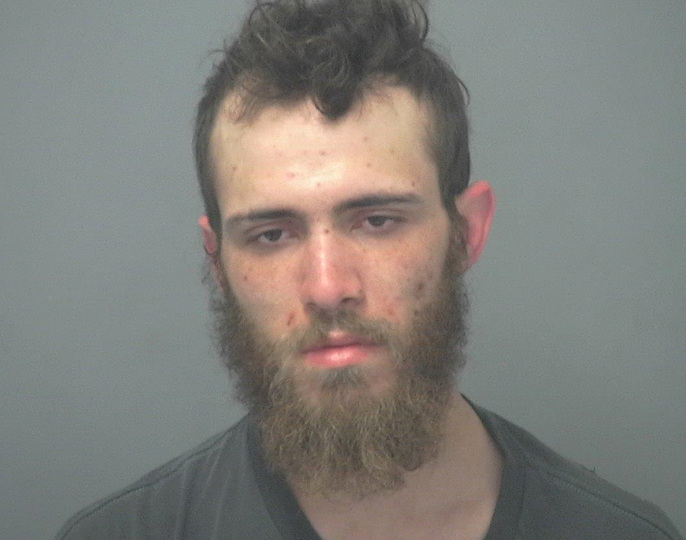
Trevor Scott Brown-photo Cowley County
Police began taking burglary and theft reports on April 11 mainly in an area extending eastward from the East Chestnut Avenue bridge over the Walnut River. The reports ranged from the theft of golf carts and all-terrain vehicles to vehicle burglaries, according to a media release.
ACPD immediately identified the spike in crime in this area due, in part, to crime tracking software.
Patrol shifts began tackling the problem with increased physical presence and door-to-door crime prevention education. Bicycle officers also were deployed to the area as part of this increased presence.
ACPD’s investigations division began looking at the area and quickly identified a person of interest.
Trevor Scott Brown, 23, of Arkansas City, was arrested for a revoked bond. He was transported to and booked into the Cowley County Jail in Winfield with no bond through Cowley County District Court in Arkansas City.
Brown, had been arrested in January for similar crimes that occurred between October 2018 to January 2019 in the west part of Arkansas City. Brown was arrested Monday on an unrelated charge. At the time of his arrest, information was gathered that helped with this ongoing investigation.
Investigators later interviewed Brown at the county jail. At that time, detectives were able to gather direct information about all of the crimes in that area and locations to check for property that was stolen.
A majority of the stolen property since has been recovered.
During the course of the ACPD investigation, information surfaced connecting Brown to other crimes in Cowley County. Investigators worked closely with the Cowley County Sheriff’s Office to assist it in the investigation of those crimes.
The cases, which involved 12 residential victims and one business owner was forwarded to the Cowley County Attorney’s Office for consideration of additional burglary and theft charges.
Almost half the people locked up in Kansas prisons admit they have a history of domestic violence — getting the cops called after an argument with a partner, having a restraining order against them or serving time for beating or threatening a family member or partner.
Almost half of the people attending batterer intervention programs in 2018 didn’t finish. Program coordinators say cost, transportation and waiting lists are among the barriers to completion. B. JAMIE / PUBLIC DOMAIN
Some of those people end up in batterer intervention programs — sometimes while they’re behind bars, other times during probation or parole. The weekly workshops stretch over months, aiming to pinpoint what drives someone to violence, and searching for ways to break those cycles.
But waiting lists, program costs and other barriers mean that roughly half of people in those programs never finish. The state attorney general’s office reports that last year 1,134 people completed state-certified batterer intervention programs in Kansas, out of a total 2,404 participants. That includes programs run by nonprofit organizations and by the Kansas Department of Corrections.
The completion rate for the state’s program is lower than the overall rate. Out of 487 participants in 2018, 20 people completed the program while incarcerated at the Lansing Correctional Facility and 47 finished it while on parole.
Those statistics reflect the difficulty of leaving prison, the stringent requirements of parole or probation and the emotional stress of confronting one’s own history of violence, say the people who run the programs.
“People come here afraid. They don’t want to be here,” said Steve Halley, the director of Family Peace Initiative, an organization that provides batterer intervention services in the Shawnee County area and helped develop a curriculum used statewide. “They don’t want to be vulnerable. And changing and ending cruelty is a very vulnerable process.”
Halley’s program requires at least 25 weekly sessions of learning about trauma, gender roles and personal responsibility in groups of about eight to 12. Men and women are placed in separate groups. About half of the people drop out in the first five to eight weeks.
Of those who complete the program, about 22% committed domestic violence again. Of those who left early, 44% committed another act of domestic violence, according to the Shawnee County District Attorney’s Office.
Each session costs $35, with additional costs for assessment and orientation sessions. The program offers a sliding scale for people who are unemployed, but even that cost can be a burden for participants, about 80 percent of whom have been mandated to attend by a court, Halley said.
“By far we’re serving, basically, the poor,” he said. “Their life is so chaotic that to be able to make it, to attend a class once a week for six months, is a huge request.”
Rural batterer intervention programs face similar challenges.
But a program based in Hays, in northwestern Kansas, sees completion rates of about 90%, well above the statewide average. Its attendees come from a range of socioeconomic backgrounds and nearly 20 counties in a sparsely populated part of the state, said Dian Organ and Nance Munderloh, who run the program.
They said court orders mandating the program contribute to the high completion rate.
“Our people,” Organ said, “want to get off of supervision.”
Many of their attendees have to carpool because they don’t have driver’s licenses or access to public transportation. Some have to drive for almost two hours. That commute can complicate the typical barriers to attending several months of classes: the cost, low-paying jobs, struggles with addiction and unstable housing.
“It’s quite the stress,” Organ said, “on some of them.”
Those challenges can be magnified on parole, said Danielle Thompson, who supervises the batterer intervention program at the Kansas Department of Corrections.
The state runs a program specifically for people on parole because they find it particularly difficult to attend every session while looking for housing, finding work, staying away from drugs and meeting other conditions of parole, Thompson said. Unlike community programs, the state’s batterer intervention program doesn’t have any fees.
“Parole offenders really struggled with paying those fees because of the jobs they were able to get and all the other fees they had to pay for,” she said. “Being able to offer it at the parole office was an attempt to make it a little bit more attainable.”
The state-run program also serves people held at the Lansing Correctional Facility in northeastern Kansas. Forty-two percent of respondents to a Department of Corrections survey said they have a history of domestic violence, but Thompson estimates that a more accurate proportion might be closer to 50% or 60%.
“We know the immense trauma that offenders in our custody and who we are supervising have experienced,” she said. “We know that unresolved trauma can result in perpetrating violence onto others.”
One reason for the state program’s low completion rates, Thompson said, is the waiting list. People might not make it into the program until a few months into their parole term. Often, a parole term can end before the batterer intervention program is complete.
Thompson said the state program doesn’t accept people with less than five months left on parole who can’t commit to at least four months of batterer intervention. It can take eight to 10 weeks for attendees to build rapport, learn empathy and start applying new skills to their relationships. Before that point, they’re often hostile, defensive and emotionally vulnerable, which puts them at risk of committing further violence.
“If they don’t have that minimum amount of time, we don’t put them in the group because it would be counterproductive to safety,” she said. “It can actually increase the risk and make them more dangerous.”
More staff, Thompson said, would increase the program’s capacity. It’s easy for the batterer intervention program to keep on dedicated employees, but it’s harder to hire enough people with both the skills and the willingness to work on an emotionally difficult subject. Kansas also requires people to obtain a special license in order to conduct assessments for people nominated for batterer intervention.
“We serve the highest-risk people,” she said. “It takes a certain set of skills to be able to do this work.”
In 2016 and 2017, 19% of people who completed the Department of Corrections batterer intervention program were convicted of another domestic violence crime. Seven percent had a restraining order issued against them due to abuse of a partner or household member.
Progress is often slow, Thompson said, but she finds the work rewarding.
“Sometimes success is, instead of calling her ‘my baby Mama,’ it’s ‘her name is Rachel.’ It’s moving from objectifying them to identifying them as a human,” she said. “Instead of strangling her, it’s pushing her. There’s still violence, but the violence has decreased.”
Nomin Ujiyediin is a reporter for the Kansas News Service. You can send her an email at nomin at kcur dot org, or reach her on Twitter @NominUJ.
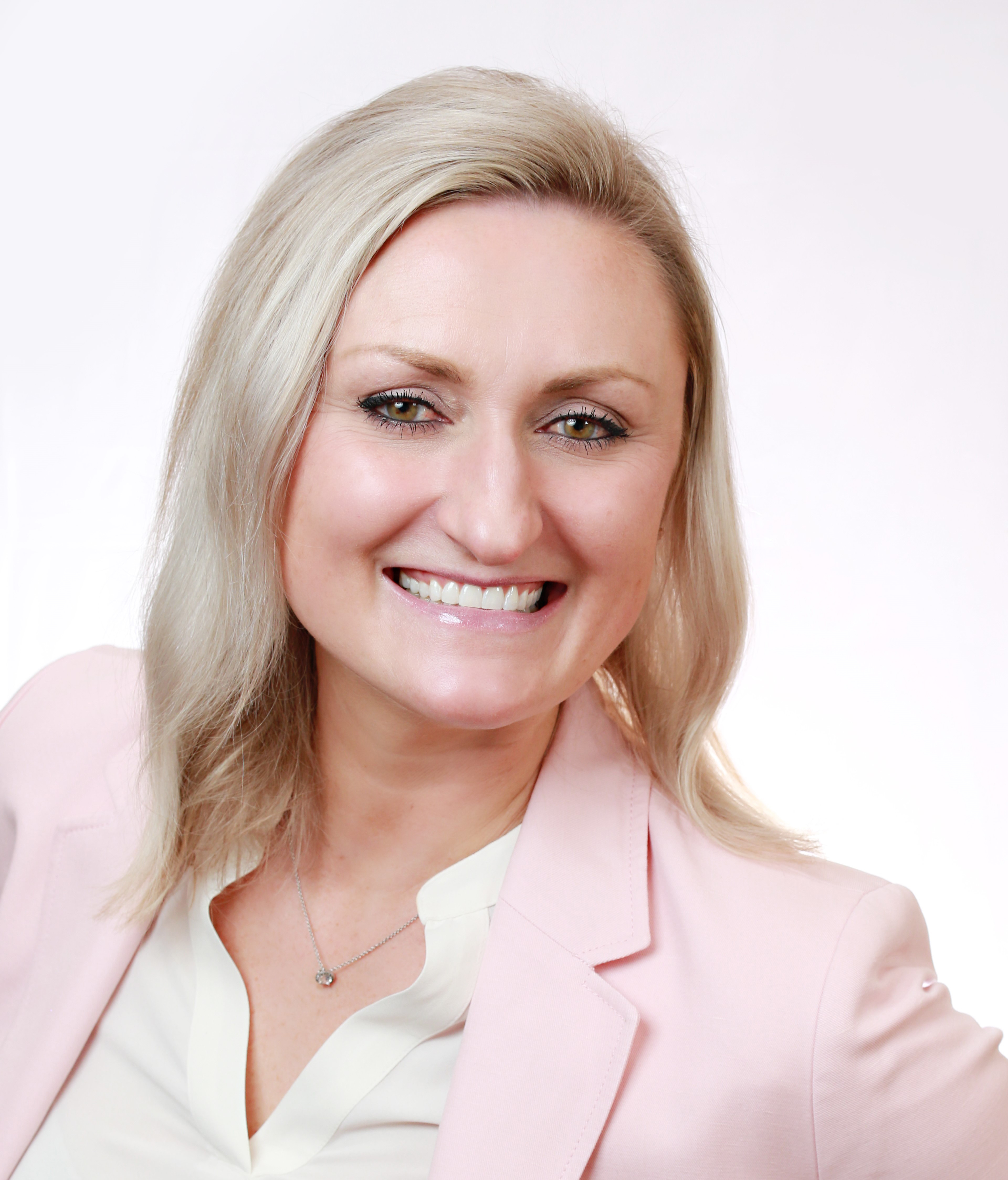
LEAWOOD – Susan G. Komen Kansas & Western Missouri Board of Directors announced that they have selected proven development executive and cancer advocate Erica Terry as CEO and Executive Director. Terry begins her role on April 29, 2019.
Terry joins Komen from The Nelson-Atkins Museum of Art where she served as Director, Membership & Corporate Partnerships. Prior to that, she built her career at cancer-related organizations including Saint Luke’s Foundation, LIVESTRONG, and The University of Kansas Cancer Center.
The search for a new permanent CEO began in November of 2018 when Susan G. Komen Greater Kansas City and Susan G. Komen Kansas affiliates merged to become Susan G. Komen Kansas & Western Missouri. Komen affiliates have invested more than $27.5 million in breast health programs in the 112-county Kansas and Missouri service area to date.
Terry will be the newly merged affiliate’s first permanent leader, focusing on the effort to continue increasing impact in existing service areas and to begin implementing expansion of efforts to underserved areas throughout the state.
Kristin Cargin, Board President, led the search with the executive committee, recruitment firm Fenaroli and Associates and the support of the full board.
“We conducted a comprehensive regional search and it led us to a native Kansan who brings experience working in the Greater Kansas City area and throughout the State of Kansas,” said Cargin. “Her Midwestern roots, combined with the work she has done with mission-driven organizations, her proven success in development and her passion for the fight against cancer perfectly positions her to help us save more lives and ultimately end breast cancer forever.”
As part of her personal mission to end cancer, Terry founded and served as president of Tour de BBQ, an annual fundraising bike ride to support young adults with cancer. Other board positions have included Gilda’s Club Kansas City, Leukemia & Lymphoma Society – Kansas City Chapter and Kansas City Cancer Partnership.
“I couldn’t be more humbled, honored and thankful for the opportunity to lead this important organization as we expand our impact, save lives, and achieve Komen’s Bold Goal to reduce breast cancer deaths by 50% in 2026. Achieving this will not happen if we wait for someone else to do it. We can meet this goal with thoughtful planning, strategic partnerships across the region, and collaborative work to ensure nobody has to suffer from this devastating disease,” said Erica Terry.
Dr. Roy A. Jensen, director of The University of Kansas Cancer Center, said that he is absolutely delighted that Terry has been selected for this position. “Erica combines extensive experience in the non-profit world with a longstanding and deeply felt passion for cancer advocacy. I can’t think of anyone who would be better suited to lead this great organization,” commented Dr. Jensen.
Terry holds a Bachelor of Arts and Master of Arts in Political Science from the University of Kansas. She has served as a political activist, partnering with former Kansas State Senator Barbara Allen on the breast cancer license plate and Fred Logan on the Johnson County Education Research Triangle.
About Susan G. Komen®
Susan G. Komen is the world’s largest breast cancer organization, funding more breast cancer research than any other nonprofit outside of the federal government while providing real-time help to those facing the disease. Komen has set a Bold Goal to reduce the current number of breast cancer deaths by 50% in the U.S. by 2026. Since its founding in 1982, Komen has funded more than $988 million in research and provided more than $2.2 billion in funding to screening, education, treatment and psychosocial support programs serving millions of people in more than 60 countries worldwide. Komen was founded by Nancy G. Brinker, who promised her sister, Susan G. Komen, that she would end the disease that claimed Suzy’s life. That promise has become Komen’s promise to all people facing breast cancer. Visit komen.org or call 1-877 GO KOMEN. Connect with us on social at ww5.komen.org/social.
About Susan G. Komen® Kansas & Western Missouri
Komen Kansas & Western Missouri is working to better the lives of those facing breast cancer in their local communities. Through signature events like the More Than Pink Walk and BigWigs, Komen Kansas & Western Missouri has invested more than $27.5 million in breast health programs in their 112-county Kansas and Missouri service area and has helped contribute to the more than $988 million invested globally in research. For more information, call 816.842.0410, visit komenkswmo.org or behindtheribbon.org. Connect with us on social media: Facebook, Twitter or Instagram.
Crawford County Attorney Michael Gayoso says 38-year-old Francsico Eduardo Noches-Padilla was found guilty Thursday of 13 counts of rape of a child, four counts of aggravated indecent liberties with a child and one count of aggravated criminal sodomy.
On 15 of the 18 charges, he faces life without the possibility of parole for 25 years.
Prosecutors say the crimes involve several acts committed on one child between 2012 and 2017.
SHAWNEE COUNTY — Law enforcement authorities are investigating a Kansas woman arrested after a Friday evening standoff.
Kristie Price photo Shawnee Co.
Just before 5p.m.. police attempted to stop blue Dodge Durango in the 700 Block of SW Lincoln in Topeka, according to Lt. Aaron Jones. Police had suspicions the SUV was reported stolen.
The driver later identified as Kristie Price, 30, Topeka, pulled into a driveway in the 900 Block of Lincoln, stopped the SUV and then produced a firearm.
She held the gun to her head. Officers immediately took cover began negotiations with Price but, she refused to put her gun down.
The TPD Crisis Negotiation Team, Response Team and other patrol officers responded.
The area was secured and negotiators began speaking with Price. After several hours of dialog with her, Negotiators and the Response team were able to get her to exit the SUV without harming herself or anyone else.
At 9:45 pm, officers took Price into custody. She was examined by AMR and then booked into the Shawnee County Department of Corrections on an outstanding felony warrant, according to Lt. Jones.
Price has previous convictions for theft, aggravated burglary, criminal use of a financial card, aggravated escape from custody and drug use, according to the Kansas Department of Corrections.
WICHITA, Kan. (AP) — Law enforcement authorities are investigating the shooting of two people less than a block from a police station.
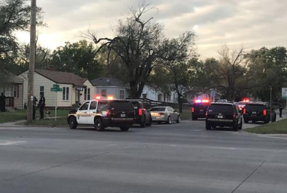
Police on the scene of the shooting investigation photo courtesy KWCH
Just after 7 p.m. Friday police responded to a report of shots fired in the area of Pawnee and Market in Wichita.
Arriving officers found two injured men in a house just down the street from the police station. Both were rushed to a hospital, one in critical condition and the other in serious condition. The victims’ names have not been released.
Police say the injured men, ages 29 and 31, were the only two involved in the shooting. Police say they “the two people in the residence know what happened,” and want to speak to them to determine what led to the shooting.
SHAWNEE, Kan. (AP) — The Shawnee Mission School District says it fired an elementary school teacher after a video showed her kicking a 5-year-old girl in the back.
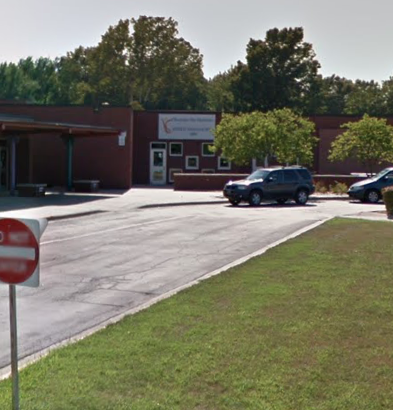
The incident occurred Feb. 21 at Bluejacket-Flint Elementary School in Shawnee. The girl’s mother said her daughter had a large red mark on her arm after school that day and said the teacher hit her.
A video obtained by the station shows the child refusing to leave the library with the other students and hiding in a bookshelf. The teacher is seen dragging the girl out of the bookshelf and kicking her in the back.
Shawnee Mission district spokesman David Smith says the district feels terrible about the situation.
The Johnson County District Attorney’s Office is reviewing the case.
COUNCIL BLUFFS, Iowa (AP) — The leaders of several Midwest states hit recently by flooding along the Missouri River said Friday they’ve received assurances from the U.S. Army Corps of Engineers that the states will “have a seat at the table” when it comes to river management decisions.
— Lt. Governor Lynn Rogers (@LtGovRogers) April 27, 2019
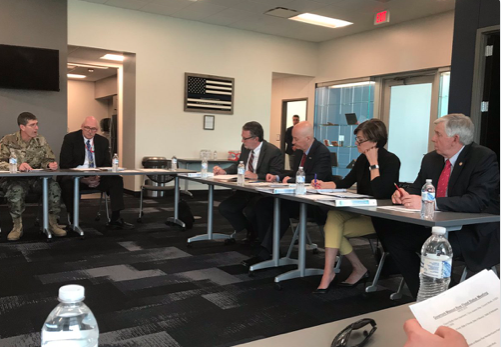
“That was crystal clear when we left that table, that the states were going to have some say in how the river is managed,” said Republican Missouri Gov. Mike Parson immediately after leaving a meeting with Corps officials in the western Iowa city of Council Bluffs. Parson was joined by Iowa Gov. Kim Reynolds and Nebraska Gov. Pete Ricketts, both Republicans, and Kansas Democratic Lt. Gov. Lynn Rogers. It was the second such meeting since last month’s flooding that devastated farms and communities and ripped apart roads and bridges, causing more than an estimated $3 billion in damage.
Ricketts said the four states are considering pushing for formation of a Missouri River management group — similar to the Mississippi River Commission — that would include representatives from the states.
“We’re going to work together and pull together as four states … to be able to change the way the river is controlled,” he said.
The Mississippi River Commission was formed 140 years ago to recommend policy regarding flood control, navigation and environmental projects on the Mississippi River. Its membership consists of three Corps officers, a member of the National Oceanic and Atmospheric Administration and three civilians, two of whom must be civil engineers. The U.S. president appoints the commission’s members.
“We along the Missouri River don’t have that,” Ricketts said. “I think it’s something we should look at.”
The state leaders also received an update Friday from the Corps on the progress of repairing the largest levee breaches along the river, most of which occurred in southwestern Iowa. Reynolds said repair contracts for three of the four largest breaches have already been awarded and that some of the repairs could be finished as early as July.
The Corps announced Friday that it awarded a $6 million contract to repair a 1,200-foot breach on the levee south of Highway 34 in Mills County, Iowa. The initial repair will provide flood protection to areas behind the levee, including work to repair Highway 34 and Interstate 29, both of which were heavily damaged by the flooding and remain closed.
The Corps expects that repair to be finished within 45 days of the work beginning.
NEW YORK (AP) — The United Methodist Church’s judicial council on Friday upheld major portions of a new plan that strengthens bans on same-sex marriage and ordination of LGBT pastors.
Conservatives welcomed the decision and said key elements of the policy, called the Traditional Plan, could begin taking effect in January. Among liberal and centrist opponents of the plan, there was dismay; one group, Reconciling Ministries Network, called for an upsurge of resistance.
Adam Hamilton, senior pastor Church of the Resurrection United Methodist Church in Leawood Kansas addressed the General Conference on the controversial issue -image courtesy UM Church
The Traditional Plan was adopted in February on 438-384 vote by delegates at a special UMC conference in St. Louis. Most U.S.-based delegates opposed that plan and preferred LGBT-inclusive options, but they were outvoted by U.S. conservatives who teamed with most of the delegates from Methodist strongholds in Africa and the Philippines.
The nine-member judicial council, at the close of a four-day meeting in Evanston, Illinois, ruled that some aspects of the Traditional Plan — mostly related to enforcement of its rules — were unconstitutional under church law. But the council upheld the bulk of the plan, clearing the way for its implementation in January.
The Rev. Tom Lambrecht, general manager of the conservative Methodist magazine Good News, hailed the council’s ruling as a “strong affirmation” of the Traditional Plan’s core elements.
He suggested that Methodists opposed to the plan should start negotiating to leave the UMC and form a new denomination that would allow them to adopt LGBT-inclusive policies.
Opponents of the Traditional Plan will have a chance to overturn it at the UMC’s next general conference in May 2020. But Lambrecht said he agreed with other analysts who predict the UMC’s conservative bloc will be even stronger then.
An alliance of Traditional Plan opponents, calling themselves UMC-Next, has been holding meetings to discuss the best path forward for those who share their views.
Its leaders say one option would be for centrists and liberals to leave en masse to form a new denomination. Under another option, opponents of the Traditional Plan would stay in the UMC and resist from within, eventually convincing conservatives that they should be the faction that departs.
Lambrecht dismissed that possibility.
“We’re not leaving,” he said.
Formed in a merger in 1968, the United Methodist Church claims about 12.6 million members worldwide, including nearly 7 million in the United States. It is the largest mainline Protestant denomination in the U.S.
While other mainline denominations have embraced gay-friendly practices, the UMC still bans them, though acts of defiance by pro-LGBT clergy members have multiplied. Many have officiated same-sex weddings; others have come out from the pulpit.
Enforcement of the bans has been inconsistent; the Traditional Plan aspires to beef up discipline against those engaged in defiance.
Under rules upheld by the judicial council, bishops are prohibited from ordaining “self-avowed homosexuals,” while clerics who perform same-sex weddings could be suspended without pay for a first offense and ousted from the ministry for a second offense.
Under the ruling, individual churches could disaffiliate with the UMC if two-thirds of the church community agrees, and if the church meets certain financial requirements.
The Reconciling Ministries Network, which supports LGBT inclusion, called its supporters “to repeatedly state your dissent, to support the work of resistance by United Methodist seminaries, to continue to write open letters and visibly be in solidarity with those on the margins.”
“We call upon the Church to repent of the sin of homophobia,” it said. “Now is the time to rise and resist.”
Many Traditional Plan opponents already are expressing their dissatisfaction. Some churches have raised rainbow flags in a show of LGBT solidarity; some are withholding dues payments to the UNC administration in protest.
The Human Rights Campaign, a national LGBTQ-rights group, said the judicial council’s ruling “is deeply disappointing for countless LGBTQ Methodists, including young people and their families, who are yearning for a welcoming church family.”
CRAWFORD COUNTY — One person died in an accident just before 9:30p.m. Friday in Crawford County.
The Kansas Highway Patrol reported a 2018 Dodge Challenger driven by Tim F. Signlin, 68, Arma, was northbound on U.S. 69 just north of Kansas 47. The Dodge rear-ended a 2006 Chevy Silverado driven by Irma A. Hughes, 83, Fort Scott.
The impact, pushed the Silverado into the southbound lane. A southbound 2015 GMC Sierra driven by William C. Askren, 26, Lenexa, struck the Silverado and pushed it into the west ditch. A southbound Chevy truck driven by Brian T. Stedman, 51, struck the Silverado in the ditch and then struck a tree.
Hughes was pronounced dead at the scene. Askren, Stedman and a passenger in the Dodge Challenger Alex Szweedo, 30, Girard, were transported to Via Christi.
Signlin and three additional occupants of the Dodge Challenger were not injured.
Stedman and 2 passengers in the 1996 Chevy pickup were not wearing seat belts, according to the KHP.
TOPEKA – The Minority and Women Business Development Office of the Kansas Department of Commerce will host a Workshop for Minority, Woman and/or Disadvantaged Business Enterprise Certification Programs on May 15.
Those interested in DBE/MBE/WBE Certification will be able to hear more about the application process and potential benefits of certification at the workshop.
DBE/MBE/WBE Certification Workshop
Wednesday, May 15, 2019
10:00 a.m. to 12 p.m.
Kansas Department of Commerce
1000 SW Jackson, Ste. 100
Topeka, KS 66605
(Curtis State Office Building)
Attendance is FREE, but registration is REQUIRED. Space is limited so sign up early!