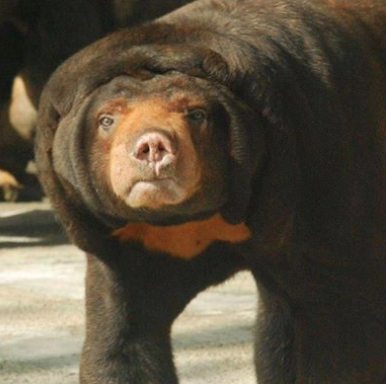
TOPEKA —Veterinary staff at the Topeka Zoo and Conservation Center made the difficult decision to euthanize a thirty year old Malayan Sun Bear, Cupcake, Monday morning. “We knew this day would come,” said Zoo Director Brendan Wiley. “She was already beyond her normal life span when she arrived here two years ago but that doesn’t make it emotionally easier.”
Cupcake Photo by: Kathleen Otto courtesy Topeka Zoo
Cupcake and Ho Ho came to the Topeka Zoo in November of 2017 when their former zoo had to close their previous exhibit for construction reasons. “We talked about it for a long time,” said Wiley. “They were really old but it seemed like the right and fitting thing to do.”
Cupcake and Ho Ho moved into the exhibit formerly occupied by Tiffany the gorilla. “The keepers in the area had become specialized in working with geriatric animals. We simply thought that if the two bears needed our home and our care to live out their remaining years, we were well equipped to care for them,” said Wiley.
Caring for geriatric animals isn’t unlike caring for geriatric people. “You need a comprehensive view of the animal’s health status,” said staff veterinarian Dr. Shirley Llizo. “In Cupcake’s case, we dealt with advanced arthritis, severe dental issues and anemia.”
With an established medication regimen paired with a training program, Cupcake thrived. “One of her favorite things to do was to watch her keepers and train with them,” said Animal Care Supervisor Shanna Simpson.
This past Saturday, Cupcake was noticed to be limping. By Sunday, a neurological condition had rendered her hind legs useless. Throughout the weekend, additional medications were tried but did not produce noticeable results. Because of the positive relationship between the bear and her keepers, medications were able to be administered by injection and in Strawberry Newtons. Early Monday mornings as the condition progressed with head tremors, the decision was made to humanely euthanize her.
Ho Ho, Cupcake’s mate (although the two never produced offspring), was allowed to be with her just before she passed. The two bears were very tightly bonded. Ho Ho’s keepers will be keeping a close eye on him and giving him a lot of extra love and attention.
SEDGWICK COUNTY —Law enforcement authorities are investigating a group of teens on multiple charges after a chase and crash.
Just after 3p.m. Monday, a police officer observed a Honda Accord traveling southbound on Interstate 135 near Kellogg, according to officer Charley Davidson. The vehicle had been reported stolen from a home burglary on Sunday.
The officer attempted to stop the car and the16-year-old driver refused to stop, accelerated and fled from police. The short chase ended after the vehicle struck a utility pole on the transition onto eastbound Pawnee, according to Davidson. The driver and six juvenile passengers ran from the vehicle. Officers were able to locate the teens in the surrounding neighborhood. They were not injured.
Police arrested the 16-year-old female driver for auto theft, flee and attempt to elude
Police also arrested two 13-year-old boys for auto theft, burglary, theft and aggravated residential burglary.
The boys were runaways and had also been involved in a reported theft at a Subway restaurant on Sunday, according to Davidson.
Three other teenage girls and a boy in the Honda ages 13-16 were released to their parents.
SHAWNEE COUNTY —Law enforcement authorities are attempting to locate a suspect wanted for aggravated escape from custody.
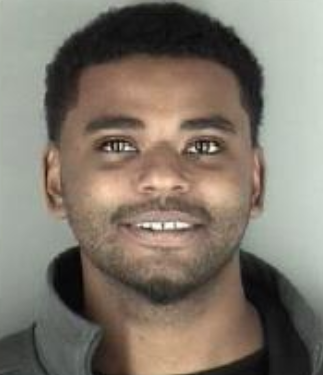
Jordan R. Russell, 20, is approximately 5-foot-10, and weighs 210 pounds, according to Lt. Andrew Beightel.
Russell was last seen at the Topeka Law Enforcement Center at 2:10 p.m. He is believed to have taken off his green Department of Corrections jumpsuit and his current clothing is unknown.
According to police, if you know his location, please do not attempt to apprehend him yourself please call 911 immediately to report his whereabouts.
KANSAS CITY, Mo. (AP) — Weather is disrupting county singer Luke Bryan’s Farm Tour concert again.
A concert scheduled for Oct. 3 at a farm in Louisburg was postponed after heavy rains flooded the field and made it too wet for equipment to be unloaded.
The concert was rescheduled for Wednesday. But with rain and snow forecast for northeast Kansas and northwest Missouri, organizers announced Tuesday that the concert will be moved inside to the Sprint Center in downtown Kansas City, Missouri.
Organizers say all tickets for the Oct. 3 and Oct. 30 event will be honored.
Weather forecasters say a wintry mix of snow and rain is expected throughout the region by Wednesday. A winter weather advisory has been issued for 10 p.m. Tuesday through 4 a.m. Thursday
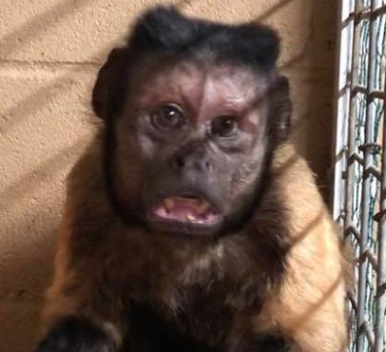
DODGE CITY — Wright Park Zoo staff and the City of Dodge City are deeply saddened to announce the sudden passing Tuesday of Vern, the Capuchin Monkey.
Vern the Capuchin monkey photo Wright Park Zoo
According to a media release, Vern was found unresponsive by staff early in the morning, and while the Zoo’s contracted veterinarian did everything they could to revive him, he passed away at the vet clinic. The cause of his sudden decline is unknown at this time; however, a necropsy will be done to try and determine the cause.
The money was injured during a suspected break in at the on September 3. Authorities determined his injuries were a result of blunt force trauma in an effort to protect another monkey found outside the city limits. Police conducting the investigation suspect that someone gained access to the enclosure and injured the older monkey as he tried to protect his offspring from being taken, according to a media release from the zoo.
Vern came to the Wright Park Zoo in 1988 with a female, Charro, both 1-year-old at the time of their arrival. The pair had at least four offspring, and their two youngest sons, Jack and Pickett, are part of the current capuchin troop at the Zoo. Capuchin monkeys are native to South America and live mostly in trees, only coming to the ground occasionally for food and water. Their populations are declining in the wild as they face threats of deforestation, habitat loss, and capture for the pet trade.
—————————————-
DODGE CITY, Kan. (AP) — A capuchin monkey at a western Kansas zoo is recovering after it was injured while apparently trying to stop an intruder from taking a younger monkey.
Capuchin monkey photo courtesy Wright Park Zoo
Officials at the Wright Park Zoo in Dodge City say the older monkey, named Vern, was hurt and his son, Pickett, was found on the outskirts of Dodge City Sept. 3. The younger monkey was not injured.
Officials initially thought Vern’s injuries were minor but a veterinarian found injuries apparently caused by blunt force trauma. The monkey underwent surgery at Kansas State University Sept. 10 to repair broken bones.
Zoo spokeswoman Abbey Martin said Monday Pickett is doing well and is back on display. Vern remains in quarantine while he recovers.
Dodge City police are investigating the incident. Martin says there are no developments in the investigation.
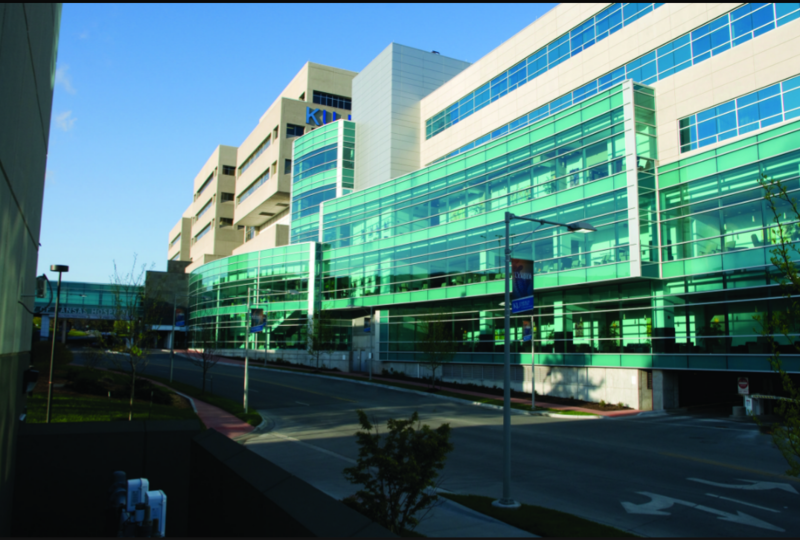
KU Hospital had claimed that many of the allegations would have constituted defamation had they not been part of a lawsuit. University of Kansas Hospital
A patient who sued the University of Kansas Hospital for fraud and negligence, alleging she was misdiagnosed with pancreatic cancer and the hospital covered it up, quietly settled her case last year on confidential terms.
Although the settlement was sealed, KCUR has learned that the Kansas agency that provides excess insurance coverage for medical providers — insurance over and above the providers’ primary coverage — agreed to pay out $1.8 million on behalf of the hospital and the doctor who made the misdiagnosis.
It’s not known how much the hospital’s and doctor’s primary insurers paid, but the excess insurance payments suggest the overall settlement totaled at least several million dollars.
A spokeswoman for KU Hospital said it would have no comment on the settlement.
In response to a request made by KCUR under the Kansas Open Records Act, the agency said that as part of the settlement with the patient, Wendy Ann Noon Berner, it had incurred $1 million on behalf of the doctor, Meenakshi Singh, and $800,000 on behalf of KU Hospital.
The money is being paid out in installments: last December, the agency said it paid $500,000 on behalf of Singh and $300,000 on behalf of the hospital. The remaining payments will be made on behalf of Singh and the hospital this December and in December 2020.
Singh was chair of KU Hospital’s pathology department at the time she made the misdiagnosis in 2015, not long after she had been appointed. She is no longer with the hospital and could not be reached for comment.
The case has been an extremely sensitive matter for KU Hospital, which vehemently contested the allegations and hired a high-priced battalion of lawyers and public relations experts to fight them.
The matter first came to light when Singh’s predecessor as the hospital’s pathology chair, Lowell Tilzer, filed a whistleblower complaint in mid-2016 alleging she had misdiagnosed a patient with cancer and then covered up the mistake after parts of an unspecified organ were removed.
Tilzer alleged that the patient had not been informed of the misdiagnosis and that the hospital sought to retaliate against him after he called the misdiagnosis to the attention of the Joint Commission, which accredits and certifies hospitals.
After the patient’s surgery, other members of KU Hospital’s pathology department examined tissue samples and determined that the organ was not cancerous, according to Tilzer’s lawsuit. But Singh allegedly covered up the misdiagnosis by appending an addendum to her original report saying the original cancer diagnosis matched the removed organ.
A subsequent review by the Centers for Medicare and Medicaid Services found that Singh, who was not certified in cytopathology (the study and diagnosis of disease at the cellular level), was not qualified by KU’s own standards to make Berner’s diagnosis.
Tilzer said that after he reported what happened to the Joint Commission, he was taken to task by KU Hospital President and CEO Bob Page, whom he said berated him, accused him of lying and described his report to the commission as “pitiful” and “despicable” behavior.
Tilzer withdrew his lawsuit a month after he filed it. But in an unusual twist, he appended a statement from the then still-anonymous patient stating KU had asked her to sign an affidavit absolving the hospital of responsibility for the actions described in his lawsuit. The patient said she refused to sign it.
The patient, Berner, eventually stepped forward and filed her own lawsuit. In her complaint, she accused the hospital and Singh of misdiagnosing her with pancreatic cancer and then covering up the misdiagnosis after a portion of her pancreas and other body parts were surgically removed.
Berner said she only learned of the misdiagnosis after reading news accounts of Tilzer’s whistleblower case.
In its response to Berner’s complaint, KU Hospital disputed Berner’s characterization of what happened and said that many of her allegations “reference undisputable hearsay and speculation, and many would arguably constitute defamation” if they were not part of the lawsuit.
Berner did not return calls seeking comment on her settlement with the hospital and Singh. Her attorney, Chad Beaver, said, “We appreciate your interest in the story, but the parties have reached a confidential settlement agreement and we are not permitted to comment any further.”
Tilzer, who is now semi-retired, declined to comment about the litigation or the settlement.
Although confidential settlement agreements are common, at some point during the litigation the entire case file in Wyandotte County District Court was sealed. It’s not clear why that was done or at whose behest. The file was publicly accessible in the early stages of the litigation.
Wyandotte County District Judge Timothy Dupree, to whom the case was assigned, said he would get back to KCUR by this week on why the file was sealed. On Monday, his assistant said the file had been unsealed, although she declined to say if the judge had issued an order to unseal it.
The lawyers who represented KU Hospital and Singh did not return phone calls.
KU Hospital is not the only hospital where pathology lab errors have led to a misdiagnosis.
And earlier this year, a yearlong review of nearly 34,000 pathology lab results at the VA Hospital in Fayetteville, Arkansas, found 30 mistaken diagnoses. The doctor blamed for the misdiagnoses, Robert Morris Levy, was indicted by a federal grand jury in August on three counts of involuntary manslaughter as well as multiple counts of wire fraud, mail fraud and making false statements.
The Joplin Globe reported that the Veterans Administration said 12 veterans may have died as a result of misdiagnoses by Levy, who was allegedly impaired when working as a pathologist at the hospital.
Dan Margolies is a senior reporter and editor at KCUR. You can reach him on Twitter @DanMargolies.
ATLANTA (AP) — The Latest on the NCAA task force’s report on the feasibility of allowing athletes to profit from their names and images (all times local):
1:30 p.m.
The NCAA Board of Governors has taken the first step toward allowing athletes to cash in on their fame. The board voted unanimously on Tuesday to clear the way for the amateur athletes to “benefit from the use of their name, image and likeness.”
The vote came during a meeting at Emory University in Atlanta.
In a news release, board chair Michael V. Drake said the board realized that it “must embrace change to provide the best possible experience for college athletes.”
___
2:30 a.m.
A key NCAA task force is expected to provide an update on whether it would be feasible to allow athletes to profit from their names, images and likenesses while still preserving amateurism rules for the nation’s largest governing body for college athletics.
Ohio State athletic director Gene Smith and Big East Conference Commissioner Val Ackerman are leading the working group, which will present a progress report to the NCAA Board of Governors at Emory University in Atlanta this week.
It is an important early step in a process that could take months or even years to work its way through the NCAA various layers.
NCAA rules have long barred players from hiring agents and the association has steadfastly refused to allow players to be paid by their schools, with some exceptions. A California law set to take effect in 2023 would prevent athletes from losing their scholarships or being kicked off their teams for signing endorsement deals. Other states could put laws in place earlier than that.
The NCAA says it represents some 450,000 athletes nationwide.
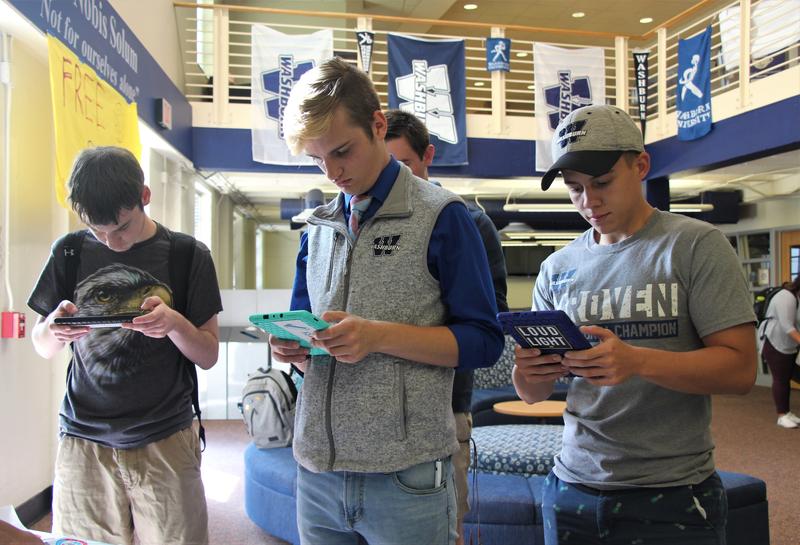
Students use electronic tablets to register to vote or update their addresses during a September registration drive at Washburn University. Celia Llopis-Jepsen / Kansas News Service
By CELIA LLOPIS-JEPSEN Kansas News Service
TOPEKA — The road to democracy is paved in donuts.
At least that’s the case if you dropped by Washburn University’s Memorial Union for lunch on a recent afternoon, followed the “free donuts” sign and blaring rock music down to the lower level, where there were not just boxes of glazed temptation, but smiling faces holding out electronic tablets.
Are you registered to vote, they wondered. If not, it takes just a few minutes.
For most of the curious students dropping by on National Voter Registration Day, the answer was “yes.” As of the 2018 midterm elections, three in four students at Washburn were registered voters. Significantly fewer joined the voter rolls in time for the 2014 midterms.
Credit Celia Llopis-Jepsen / Kansas News Service
But the most dramatic difference came at the ballot box: 46% of Washburn students voted in 2018, up 17 percentage points from four years earlier.
Nationwide and in Kansas, new research from the Institute for Democracy and Higher Education and the Center for Information and Research on Civic Learning and Engagement (CIRCLE) reveals just how much the 2018 midterms energized young people.
Overall, voter turnout doubled at the 1,000 colleges tracked. The University of Kansas, Kansas State University, Emporia State University and Johnson County Community College saw jumps in turnout of more than 20 percentage points.
That could affect turnout in 2020 and beyond, because campaigns will be eager for the new voters’ support.
“The biggest predictor of whether people vote or not is whether somebody reaches out to you,” said CIRCLE director Kei Kawashima-Ginsberg, whose organization and the institute are both housed at Tufts University in Medford, Massachusetts. “The biggest predictor of whether somebody reaches out to you is whether you voted before.”
That feedback loop means young people often get ignored until they’ve cast their first ballot.
Students take donuts after registering to vote at Washburn University. Credit Celia Llopis-Jepsen / Kansas News Service
The college surge
Anita Austin has returned repeatedly to her former college since last year, coaxing Washburn students to talk voter registration over pizza or sweets. Her message? Government responds to people who vote.
“We always complain about government meeting the needs of a select few,” said Austin, program director at Loud Light, a small (full-time staff of two) but active Topeka nonprofit group created in 2015 that coordinates registration drives ac
ross the state. “But those are also the folks who are very engaged in the government process.”
Washburn nursing student Jacqueline Solis got similar messages from her grandparents, who encouraged her to register. She voted last year and plans to again next year.
“Even if it’s just one vote,” Solis said, “I think it can make a big change.”
All 17 Kansas colleges that let Tufts researchers calculate voter turnout on their campuses saw higher numbers in 2018 than the 2014 midterms.
Austin thinks old-fashioned shoe leather and modern-day electronics combined to help boost numbers on Election Day in 2018. Volunteers, often students and armed with tablets, put in long hours chatting up passersby in bustling student unions.
At the same time, ksvotes.org had come online. The nongovernmental site spearheaded by Loud Light and former Google vice president and former Democratic secretary of state candidate Brian McClendon made it easier for people to register online.
Loud Light program director Anita Austin talks to a Washburn student about voter registration. Credit Celia Llopis-Jepsen / Kansas News Service
In a couple months’ span, we registered almost 3,000 students,” Austin recalled.
That summer, then-Kansas Secretary of State Kris Kobach also lost a landmark federal trial, ensuring the state couldn’t demand to see passports, birth certificates or similar paperwork from registrants. The judge said what was then the strictest voter registration rule in the country was unconstitutional and illegal. (Kansas is appealing the case.)
Nationally, a Tufts survey found concerns about a range of issues fueled young voter turnout: the environment, gun violence, opinions about President Donald Trump and more. Plus, as the 2018 election approached, tightly contested and sometimes polarized races for Kansas governor and the state’s congressional seats may have driven up interest among young voters.
But even with the 2018 surge, college student turnout was around 40%, compared to 50% of the general population.
‘Interest begets interest’
Half of Emporia State’s students cast ballots — the highest among Kansas public universities that work with Tufts.
The university worked hard to get to that level of participation, economics professor Rob Catlett said.
Fifteen years ago, he said, the political parties in Kansas estimated fewer than 1 in 10 Emporia students had registered to vote. (Back then, Tufts didn’t calculate such figures for schools, so Catlett didn’t have hard numbers.) He challenged his students to change that, and by the time the 2004 election approached, they were delivering boxes upon boxes of registration forms to the county clerk.
“A dramatic change,” he recalled, but one that faculty and students had to work to maintain as each college class graduated and new students arrived.
As of last year, 80 percent of Emporia State students had signed up to vote, but no one’s declaring victory.
“We’ve got challenges,” Catlett said. “We need to convert more of those registered voters into actual voters.”
Credit Celia Llopis-Jepsen / Kansas News Service
His students are optimistic, and say voting has become part of the campus culture.
“Interest begets interest,” said Jonathan Norris, a senior who registered on campus last year. “When you have students taking more and more of a role … there’s kind of an implicit social pressure for other people to become involved.”
That spirit caught up Miranda Veesart, a sophomore and libertarian who said she felt unmotivated to vote before arriving at college.
“I didn’t really see the point … just because, you know, probably never going to see a libertarian representing me,” she said. Now she’s encouraging her friends to vote in the Nov. 5 elections. “We all hold a stake in who is representing us.”
What to expect in 2020
Washburn student Jessica Galvin has voted before and plans to again. She suspects some young people struggle to see how elections affect them, since many issues on the minds of older voters don’t apply to them yet.
“A lot of us don’t get jobs till we’re older,” Galvin said. “A lot of us don’t have to worry about taxes and stuff like that — Medicare, social security. It’s just something we think of as an adult thing.”
With Trump up for re-election, that could drive young voters back to the polls in 2020.
“I need to vote for someone I think is going to beat Donald Trump,” said Caleb Soliday, a Washburn political science major who is gay. Soliday worries about Trump’s stances on everything from LGBTQ issues to higher education. “I’m so frankly scared that within one tweet (by Trump), I can have my rights taken away.”
Credit Celia Llopis-Jepsen / Kansas News Service
Washburn political science professor Bob Beatty said the concern that new voters will check out again is fueling the tug-of-war among Democrats over whether to nominate former Vice President Joe Biden or someone more likely to fire up younger generations with progressive messages or better representation for women and people of color.
Voters sent a record number of women and people of color to Congress in 2018, though both groups remain significantly underrepresented there. Kansans elected their third female governor and first Native American congresswoman.
Young voters aren’t a monolith, but they’re more likely to vote Democrat. That means Democratic candidates will hope to draw them back to the polls in droves in 2020, but Beatty argued strong turnout is far from a given.
“Campaigns will rue the day that they take (young voters) for granted,” he said. “To be honest, you can sort of take older voters for granted. Those over-50 voters, boy, I mean, they show up.”
And for those concerned too many young people still don’t vote, Kawashima-Ginsberg sees high school as “the most neglected opportunity” to teach the importance. About 1 in 5 18- and 19-year-olds voted in 2018, her research shows, and those still in high school or not in school at all are less likely to vote than those at college.
“A lot of efforts are going into college,” she said. “Not all young people go to college.”
Most people under the age of 30 in the U.S. right now don’t have college degrees.
Some Kansas schools help students register to vote. In Johnson County, for example, the local election office takes its voting machines to schools for student body elections, teaches students to run them, and registers voters all at once.
“We have one last shot with our high school kids,” Republican-appointed Johnson County Election Commissioner Ronnie Metsker said, to “teach them the importance of civic engagement and voting.”
Celia Llopis-Jepsen reports on consumer health and education for the Kansas News Service. You can follow her on Twitter @Celia_LJ or email her at [email protected]. The Kansas News Service is a collaboration of KCUR, Kansas Public Radio, KMUW and High Plains Public Radio focused on the health and well-being of Kansans, their communities and civic life.
SALINA — When Salina Public Library security contacted police about a man believed to have stolen a DVD from the library, they had no idea they were about to recover nearly $2,400 worth of property.
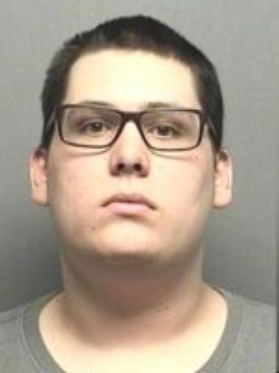
Wilson photo Saline Co.
Just before 9:30a.m. Monday, police were sent to the library, 301 West Elm Street after security personnel observed a man they had on surveillance video taking a DVD on Sept. 18, according to Salina Police Captain Paul Forrester.
The officers made contact with Isaiah Wilson, 19, of Salina, who agreed to go to his residence and retrieve the DVD. Additionally, Wilson voluntarily told police that he also had numerous other library items including 35 graphic novels, 12 hardback books, 13 paperback books, 64 DVD sets with one or two discs each and 12 DVD sets with two or three discs each
Total value of the items taken was just under $2,400, according to Forrester.
Wilson was able to take the items without setting off alarms by peeling the security strips off the items before putting the items in his backpack and walking out of the library, Forrester said.
Police arrested Wilson on suspicion of felony theft, according to Forrester.
MANHATTAN, Kan. (AP) — An Oklahoma football fan died after suffering an apparent heart attack at Saturday’s game against Kansas State.
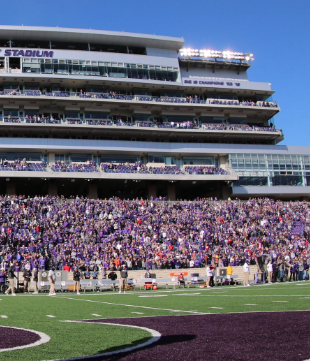
Bill Snyder Family Stadium during Saturday’s football game -photo courtesy KSU Athletics
David Adams, director of Riley County emergency services, said paramedics were called to the stadium for a patient experiencing chest pain, and the fan collapsed after they arrived. He was treated at the scene and taken to a Manhattan hospital across the street from the stadium, where he was pronounced dead.
The man was seated with friends and family at Bill Snyder Family Stadium when he collapsed.
MIAMI COUNTY— Law enforcement authorities are investigating a case of alleged animal cruelty involving two dogs.
Location of the storage unit in Miami County Kansas google image
Just after 4 p.m. Saturday, police responded to storage business in the 23,000 block of West 255th Street in Hillside, according to Miami County Sheriff’s Captain Mat Kelly.
At the scene, the woman who called the sheriff’s department told deputies she heard barking coming from the storage unit. Deputies heard it too, eventually were able to enter the unit and located two dogs in two separate kennels.
With assistance from Paola police, the animals were transported to a local veterinarian clinic in critical condition, according to Kelly. They believe the dogs had been in the unit for up to a month with minimal care.
The sheriff’s department has contacted the individual who rented the storage unit and they are cooperating with the investigation, according to Kelly. The sheriff’s department is working with the Miami County attorney about possible criminal charges in the case.
One dog is doing well and fully recovered. The other dog is progressing, according to Kelly and they hope it continues to get better over the next few days.
OVERLAND PARK, Kan. (AP) — Authorities say a horticulturalist was slain outside his Kansas office, and a man in a vehicle that was linked to the original homicide scene killed himself hours later in Missouri as deputies attempted to stop him.
Overland Park, Kansas, police says 59-year-old David Flick was shot Monday morning outside an office center, where his consulting firm was located.
The Clay County, Missouri, Sheriff’s Department says that deputies later heard a single gunshot while attempting to stop a sport utility vehicle in Kearney. The SUV in which 60-year-old Scott MacDonald died by suicide matched a vehicle description released by Overland Park police in Flick’s death.
Investigators say MacDonald may have been connected to Flick’s death, but did not say how. No motive was released.
———-
OVERLAND PARK, Kan. (AP) — Police say they are investigating a fatal shooting near an office center in Overland Park.
Overland Park Police Department spokesman John Lacy says police responded to the shooting at Deer Creek Office Center at about 8:45 a.m. Monday.
The victim was in his 60s and worked in one of the businesses in the office park. He has not been identified publicly.
McPherson College President Michael SchneiderBy MICHAEL SCHNEIDER McPherson College president
Katie Grose is a second-generation band teacher from Jefferson West High School in northeast Kansas. I heard her story last spring when she was at McPherson College supporting our band program. Her dad was a band teacher and so is her brother. A few years ago, Katie had reservations when her daughter wanted to carry on the family tradition and go into teaching.
The sad fact is nobody wants to be a teacher anymore. It’s especially true for young people trying to figure out what they want to be when they grow up. Becoming a teacher isn’t even on their list. It’s not on their parents’ list, either. When polled in 2018, 54 percent of parents nationwide said they did not want their child to become a teacher. Even educators themselves have been advising young people not to enter the profession.
As students headed back to school this fall, Kansas school districts continued to face a teacher shortage of epic proportions. Multiple school districts started classes without the full complement of teachers they needed, and some districts had literally no applicants for open positions this year—particularly in elementary and special education.
From Hutchinson to Meade to the suburbs of Topeka and Kansas City, district superintendents contend that teacher recruitment is more challenging today than at any time in the last two decades. And the recent report on teacher openings by the Kansas State Board of Education confirmed that teaching vacancies are up 27 percent over last year. The Kansas school year started with 815 open teaching positions. Considering the last 20 years of political hostility toward teachers, it’s not hard to figure out why.
It doesn’t get much clearer—kids in Kansas don’t want to be teachers. We have to change that.
Two years ago, with the teacher shortage making headlines and the number of teacher education graduates remaining flat, McPherson College developed solutions to address the problem. We started with the launch of an accelerated teacher education program, which includes an innovative curriculum that gets teacher education graduates into school districts faster and at a higher rate of pay.
Under our program, students can earn a combined bachelor’s and master’s degree in just four years. In addition, our program has endorsements in special education and English to Speakers of Other Languages (ESOL), which are both important needs in Kansas schools. This program saves students thousands of dollars. And—because teacher salaries are generally based on the highest level of education obtained—first-year teachers from our accelerated program typically earn a higher starting salary than first-year teachers with only a bachelor’s degree.
We’ve also launched EdChat, an annual event for high school students interested in becoming teachers. In the last two years, over 100 students participated in workshops on the latest trends in elementary and secondary education, gaining insights from national and state experts.
The feedback from our EdChat events is encouraging. Participants tell us they’ve gone home fueled with new ideas and eager to earn their education degree. They look forward to having classrooms of their own one day and can’t wait to start their careers.
These steps by McPherson College are just the beginning. There’s a lot more we can do as a college (and collectively) to get kids excited about becoming teachers. Twenty years of political squabbling forced an entire generation of Kansas students to grow up thinking that becoming a teacher was a bad idea. Thankfully, the battles over school funding are civil these days, and now maybe we all can move forward with respect and appreciation for teachers so they can focus on learning in their classrooms rather than defending their life’s work.
At McPherson College, we’re changing the conversation about teachers and promoting the idea that teaching is a rewarding career path. We hope you’ll add your voice to this conversation.
Luckily, Katie Grose’s daughter decided to become a teacher and is the third generation of her family to direct bands in the state of Kansas. Let’s do more so that Katie’s grandkids will want to be teachers too — because when kids don’t want to become teachers, it’s the adults who have failed. We can’t afford to fail.