KANSAS CITY, KAN. – The former Linn County Attorney pleaded guilty Wednesday to federal charges of stealing 350 to 500 items including electronics and equipment that belonged to the county, U.S. Attorney Stephen McAllister said today. The estimated value of the items is $75,000.
John Sutherland, 68, Mound City, Kan., who served as county attorney for approximately 20 years before leaving the job in January 2017, is charged with one count of mail fraud and one count of lying to federal investigators. The crimes are alleged to have taken place from sometime prior to January 2009 and continuing until Sutherland left office.
In his plea, Sutherland admitted that on Feb. 6, 2019, FBI agents found 13 items stolen from Linn County when they searched Sutherland’s office at the Wyandotte County District Attorney’s Office. At the time, Sutherland was working as an Assistant District Attorney. One of the items was a stolen Apple laptop computer.
When FBI agents interviewed him, Sutherland denied any wrongdoing and made other false statements. For instance, he claimed that an Apple TV 64 GB video-streaming device the county purchased for about $220 had been destroyed. FBI agents found the device intact at Sutherland’s residence. They also found that Sutherland had given some of the stolen items to his adult children.
In his plea agreement, Sutherland agreed to pay full restitution and to surrender his license to practice law. The mail fraud count carries a penalty of up to 20 years in federal prison and a fine up to $250,000. The false statement count carries a penalty of up to five years and a fine up to $250,000.
GEARY COUNTY — One person was injured in a crash during police chase just after 10:30p.m. Wednesday in Geary County.
The Kansas Highway Patrol reported a 1993 Chevy Camaro driven by Allen P. Harroald, 39, Wichita, was northbound on U.S. 77 twelve miles north of Junction City, fleeing from Geary county Sheriff deputies.
The driver failed to negotiate a curve. The Camaro struck a guard rail, overturned several times and ejected the driver.
EMS transported Harrold to the hospital in Topeka. He was not wearing a seat belt, according to the KHP. Authorities have not released what prompted the chase.
TOPEKA, Kan. (AP) — Democratic Gov. Laura Kelly and top Republican legislators met Wednesday to try to break a stalemate on expanding Medicaid in Kansas, only to fail after she demanded that lawmakers approve a plan this year and the GOP leaders insisted on waiting until next year.
Kelly set aside four hours for talks in her Statehouse office with the majority leaders and heads of the health committees in the House and Senate, who oppose her expansion proposal. The meeting broke up after about 90 minutes when it became clear that neither Kelly nor the Republicans would give on whether a plan should pass this year, participants said.
The impasse sets up a high-stakes confrontation over one of the Democratic governor’s biggest campaign promises after the GOP-controlled Legislature ends an annual spring break May 1. The House approved a modified version of Kelly’s expansion plan last month, but the Senate has yet to take it up.
“She’s still willing to take (it) and try to cram it down everybody’s throats and then hope that the details come out in the wash,” said House health committee Chairwoman Brenda Landwehr, a conservative Wichita Republican. “That’s not the way to do this.”
Thirty-six states have either expanded Medicaid or seen voters approve ballot initiatives. Expansion enjoys bipartisan support in the Kansas Legislature but GOP leaders are still resisting, arguing that it is likely to prove costly to the state despite a promise that the federal government would cover 90 percent of the cost.
Patrick Willard, a senior director at Families USA, a national health care advocacy group that supports expansion, said Kelly’s meeting was a sign that GOP leaders understand the public’s deep concerns about health care and that expansion has popular support.
“In a state that has been holding out as long as Kansas has, people and the (health care) industry are hurting, and all of that is coming to a head,” Willard said.
Kelly and other expansion supporters have been trying to build pressure on Republican leaders to allow a Senate vote. The governor has held town hall meetings in GOP lawmakers’ districts and marked the 100th day of her administration Wednesday with a statement that Senate leaders should “stop playing games with taxpayers’ health care.”
Kelly spokeswoman Ashley All said the meeting gave Republican leaders a chance to negotiate a plan “in good faith.”
“She was disappointed that they didn’t provide any solutions or ideas — only excuses and stall tactics,” All said. “It became very clear that they were not interested in finding a solution to provide affordable health care for more Kansans this year.”
Kelly’s health secretary, Lee Norman, who participated in the meeting, said the administration agrees with the GOP leaders that more work needs to be done on the Medicaid expansion legislation.
“We’d like to continue to push ahead with it,” Norman said. “The cards are on the table, and I think the details are something that we can work out.”
Top Republicans have said in recent weeks they are willing to consider a more modest expansion than Kelly has advocated, as well as work requirements or drug testing for participants.
Families USA has released an analysis suggesting that the influx of federal dollars with expansion would spur economic activity and state tax revenues to offset the state’s costs. Kelly’s administration projected a net state cost of $34 million in expansion’s first year, but skeptical GOP leaders argue that it easily could be twice that.
Read my statement concerning today’s meeting with Governor Kelly, Senate Majority Leader Denning, Senate Health Chair Suellentrop, and House Health Chair Landwehr about Medicaid expansion. #kslegpic.twitter.com/lTdhGo2a4Q
House Majority Leader Dan Hawkins said after the meeting that he’s seen nothing that would “prevent expansion from busting the budget.”
“Medicaid expansion is like a lemon on a used car lot,” Hawkins said. “You can paint it up and give it that new car scent but it will never run right.”
I and other leadership members of the House and Senate met with Governor Laura Kelly today regarding a medicaid expansion plan. Details of the meeting are listed in the attached release. #kslegpic.twitter.com/kp0K3Qk5Wl
Senate Majority Leader Jim Denning, a conservative Kansas City-area Republican, said the legislation should also address problems with rising costs for Kansas consumers who get their health coverage through a federal marketplace. Denning committed Wednesday to a debate — but next year.
“She doesn’t want to wait until next year,” Denning said. “I always say if you want it bad, you get it bad. Gov. Kelly’s wanting it so bad, she’s willing to have it bad.”
KANSAS CITY, KAN. – A Kansas man pleaded guilty Monday to armed bank robbery, according to U.S. Attorney Stephen McAllister.
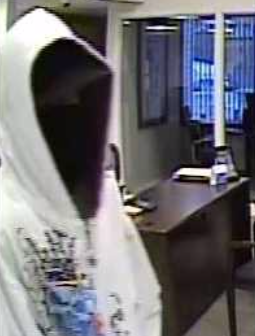
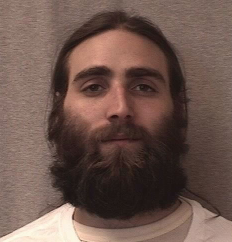
Hammeke -photo KDOCSecurity camera image from the bank robbery
Damon Hammeke, 26, Leavenworth, Kan., pleaded guilty to one count of armed bank robbery and one count of brandishing a firearm during a robbery. In his plea, he admitted that on Nov. 21, 2017, he robbed the Country Club Bank at 2310 South 4th Street in Leavenworth. He entered the bank wearing a white jacket and black mask and carrying a handgun. He left the bank with money.
Two days later, an officer in Tonganoxie attempted to stop him for a traffic offense. Hammeke fled, leading police on a high-speed chase through Tonganoxie, Basehor, Lansing, Leavenworth, Platte County, Mo., and Kansas City, Kan., before they were able to stop him.
Sentencing is set for July 22. He faces a penalty of up to 25 years in federal prison and a fine up to $250,000 on the robbery charge as well as not less than seven years and a fine up to $250,000 on the firearm charge.
MCPHERSON COUNTY —Law enforcement authorities are investigating an altercation and have a suspect in custody.
Huhn photo KDOC
Shortly before 2:00 pm, On Wednesday, officers were dispatched to the 900 block of West Kansas Avenue in McPherson for a report of a man walking around covered in blood, according to a media release.
Officers arrived on scene and contacted the 33-year-old man who was suffering from a head wound and told the officers he had been shot in the head. Officers determined the incident occurred in the 700 block of West Kansas Avenue and responded to the area.
Officers and Detectives spoke with numerous witnesses and the suspect. Detectives were able to determine the victim did not suffer from a gunshot wound, but instead, the injuries were a result of blunt force trauma.
The victim was transported to McPherson Hospital and then transferred to a Wichita area hospital for further treatment.
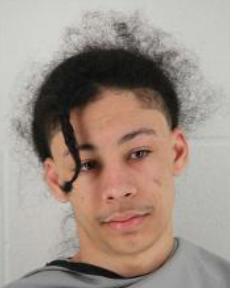
Police arrested 28-year-old Justin Huhn for Aggravated Battery. He is being held in the McPherson County Jail. He has a previous drug conviction, according to the Kansas Department of Corrections.
OLATHE, Kan. (AP) — Court documents say one of three teens charged in suburban Kansas City killing later told someone who resisted his car theft attempt that “the last person who said that lost his life.”
Bibee -photo Johnson Co.
The affidavit released Tuesday in the case against 18-year-old Matthew Lee Bibee Jr. says he tried to steal the car on March 31 in Olathe. The documents say the victim initially said he wouldn’t give Bibee has car. But when Bibee pulled out a gun, the man put up his hands and ran away.
A responding officer shot and wounded Bibee in an exchange of gunfire. The theft attempt happened two days after 17-year-old Rowan Padgett was killed.
Bibee is jailed on $1 million bond on charges that include first-degree murder.
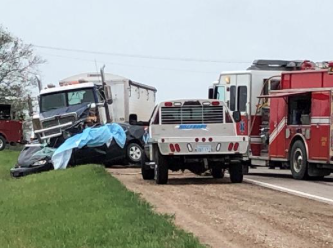
The Kansas Highway Patrol reported a 2008 Chevy Impala driven by Hannah L. Lager, 24 Atchison, was southbound on Kansas 4 Highway on the inside lane two miles north of Valley Falls.
The driver attempted to pass a semi traveling in far-right was attempting to merge into the inside lane.
The Chevy attempted to pass the semi in the opposing northbound lane. She overcorrected and lost control of the Chevy and began to skid counter clockwise into the northbound lane of traffic.
The semi then collided with the Chevy
Lager was pronounced dead at the scene and transported to Frontier Forensics. The semi driver Hollis, Warren E. Hollis, 75, Valley Falls, was transported to the hospital in Topeka.
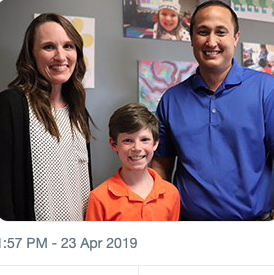
The Maize Board of Education recognized nurse Stephany McClellan and paraprofessional Glen Shafer at this month’s meeting. The district says they took turns administering the Heimlich maneuver on Keegan Dalton in January until he was able to breathe. The district tweeted a picture Tuesday of them standing next to the smiling boy.
His mother, Kristina Dalton, was among those who attended the meeting. She was working as a substitute teacher at Maize South Elementary School when her son started choking.
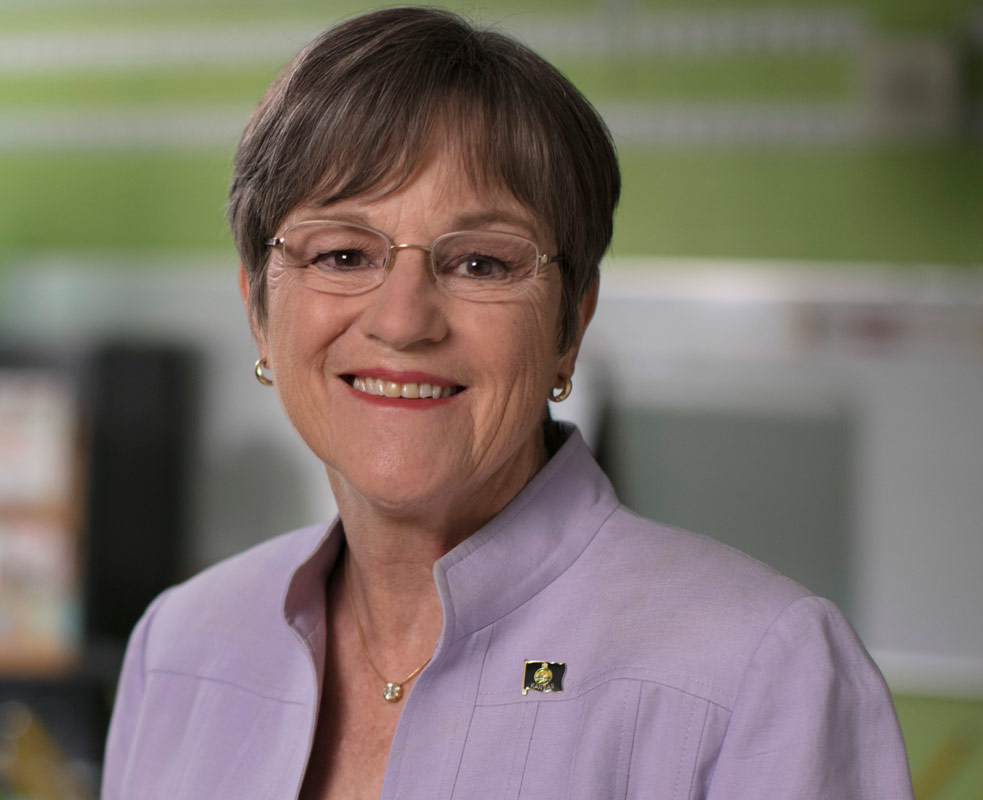
TOPEKA – One hundred days into her tenure as the 48th Governor of Kansas, Laura Kelly is reflecting on her accomplishments, highlighting successes and addressing the unfinished business of passing Medicaid expansion.
“When I gave my inaugural address on January 14, I stood in front of three banners with the words: equality, education and opportunity,” Kelly said. “These are the principles that have guided my first 100 days in office. And they are the principles that will guide us as we work to invest in our future and grow our economy. ”
In addition to the accomplishments outlined below, Kelly followed through on her promise to appoint a highly-qualified, bipartisan cabinet of Kansas leaders focused on rebuilding state agencies decimated by previous administrations.
“I was elected to rebuild Kansas and we’re already making progress,” Kelly said. “My team has increased transparency and accountability in our government and restored responsible, commonsense leadership that addresses the priorities of Kansas families.”
Kelly has taken significant steps towards stabilizing the state’s budget and investing in key priorities, like schools and roads. However, one critical issue is left unfinished: Medicaid expansion. In her fifteenth consecutive Kansan to Kansan weekly video, shared on Facebook earlier today, she called on Senate leadership to stop blocking progress on Medicaid expansion.
“We’re halfway there – but that’s not good enough. When the legislature returns on May 1st, they need to vote on Medicaid expansion,” Kelly said. “Over 77 percent of Kansans want expansion to happen. The Senate President and Majority Leader need to stop playing games with taxpayers’ health care and get it done. Two of my biggest town halls were in their districts and the response was overwhelming and undeniably in favor of expansion. Kansans are counting on us.”
100 days rebuilding Kansas
Day 1:
On her first full day in office, Governor Kelly signed Executive Order 19-02, reinstating protections to state employees who are gay, lesbian, bisexual or transgender.
Day 4:
Kelly submitted a balanced budget to the Kansas Legislature nearly three weeks ahead of schedule; a budget that paid down debt, invested in key priorities like schools, highways and Medicaid expansion, and provided the state with the largest ending balance in twenty years – all without a tax increase.
Day 15: Kelly introduced a bipartisan plan to expand Medicaid on Kansas Day.
Day 32: Kelly joined Secretary of Transportation Julie Lorenz in announcing plans to invest $160 million in Kansas’ transportation system, as part of the Governor’s FY 2020 budget. This included four new projects from the T-Works program.
Day 39:
Lt. Governor Lynn Rogers launched the Rural Healthcare Tour, as part of building the Office of Rural Prosperity. As of today, he has visited seventeen communities across Kansas: Emporia, Marysville, Garden City, Hutchinson, McPherson, Dodge City, Hays, Russell, Ottawa, El Dorado, Council Grove, Goodland, Abilene, Leavenworth, Junction City, Chanute and Pittsburg.
Day 42:
Kelly announced new transparency initiatives at the Department for Children and Families, designed to improve the agency’s efforts to locate children who are absent or have run away.
Day 53: Kelly signs Senate Bill 9 which repaid $115 million debt to our state retirement system.
Day 82:
Kelly squarely established herself as the ‘education governor’ by signing a bipartisan school funding plan into law. The education plan, if approved by the Kansas Supreme Court, could bring an end to decades of legislative debates and legal challenges surrounding education funding. This followed the signing of Executive Order 19-03 in January, establishing the Governor’s Council on Education and the restoration of the previous administration’s cuts to the Children’s Initiatives Fund.
Day 85:
Kelly completed four town hall discussions during the 2019 legislative session. In total, over 15,000 Kansans attended these town halls in-person or online via Facebook live.
Day 99: Kelly signed Executive Order 19-07, establishing the Kansas Complete Count Committee, in support of a statewide strategy that ensures every Kansan is counted in the upcoming census. The data collected in the census will inform how the federal government distributed much-needed funding for Kansas roads, schools, hospitals, emergency services and much more.
Day 100:
As of this day, Kelly has signed over 100 proclamations and her constituent services team has opened nearly 2,000 cases on behalf of hardworking Kansans. Of those opened cases, 1,800 have been closed.
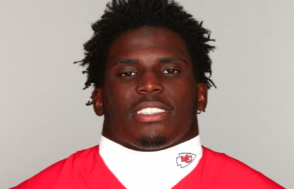
OLATHE, Kan. (AP) — A Kansas district attorney has declined to charge Chiefs wide receiver Tyreek Hill with a crime in a domestic incident that involved his fiance and their 3-year-old child.
Tyreek Hill -photo courtesy KC Chiefs
Johnson County District Attorney Steve Howe said Wednesday “we believe a crime has occurred, however, the evidence in this case does not conclusively establish who committed this crime.”
Police were called to the home of Hill and Crystal Espinal twice last month, and the investigators said their child had been injured. Howe said there will be “a continued involvement by state officials” but declined to discuss the health of the child.
He described the case as a difficult one because of the child’s involvement.
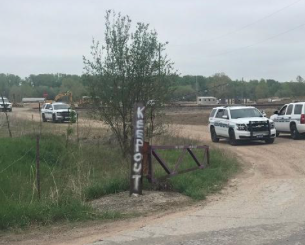
SHAWNEE COUNTY — Law enforcement authorities continue investigating after skeletal remains were found Monday in rural Shawnee County.
Authorities on the scene near where skeletal remains were found -photo courtesy WIBW TV
Late Monday, the Shawnee County Sheriff’s Office was called to a wooded area north of the Kansas Department of Wildlife, Parks and Tourism regional office at 300 SW Wanamaker Road, according to Undersheriff Phil Blume
A citizen found skeletal remains in the dense woods. The Shawnee County Sheriff’s Office, in conjunction with the Coroner’s Office, was able to confirm that the skeletal remains are human, according to Deputy Shayna Anderson.
The excavation process in conjunction with Washburn University Forensic Anthropology Recovery Unit is complete.
A majority of the human remains were able to be recovered. The remains are now in the custody of the Shawnee County Coroner’s Office. A preliminary investigation of the scene did not indicate signs of foul play.
————–
SHAWNEE COUNTY — Law enforcement authorities are investigating after skeletal remains were found.
On Monday, the Shawnee County Sheriff’s Office was called to a wooded area north of the Kansas Department of Wildlife, Parks and Tourism regional office at 300 SW Wanamaker Road, according to Undersheriff Phil Blume
A citizen claimed to have found skeletal remains in the dense woods. The Sheriff’s Office responded and with the assistance of the Shawnee County Coroner’s Office, located and removed the skeletal remains in question. Due to darkness and heavy vegetation the search was postponed until daylight.
The property and immediate area in question is private property and access is being denied, according to Louderback
It is important for a thorough search of the area to be completed. Authorities don’t known how long that will take.
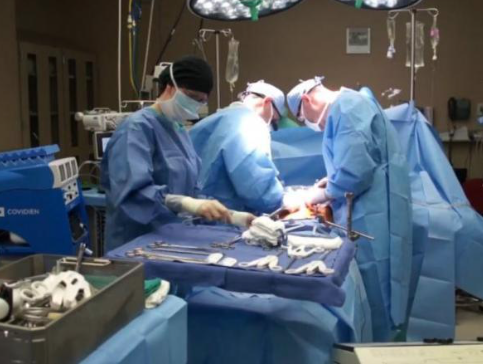
Physicians at the University of Kansas Hospital perform surgery. KU is one of 14 transplant centers challenging a new policy on liver allocation. THE UNIVERSITY OF KANSAS HEALTH SYSTEM
Two Kansas City area hospitals joined 12 other transplant centers this week in a lawsuit over a new liver allocation policy that they say will result in “hundreds of liver transplant candidates needlessly dying.”
The University of Kansas Hospital and Saint Luke’s Hospital of Kansas City are plaintiffs in a federal lawsuit filed in Atlanta against the U.S. Department of Health and Human Services and the United Network for Organ Sharing, or UNOS, the private organization that contracts with the government to manage the nation’s organ transplant system.
The new policy, set to take effect at the end of April, changes the regional system for allocating livers to one that gives priority to the sickest patients.
That has hospitals such as KU and Saint Luke’s upset because their region has a higher rate of donor registration than others.
Supporters of the policy change say that it’s meant to reduce geographic disparities in organ distribution. The notion is that where a patient lives or chooses to list for a transplant should not be a factor in organ allocation.
More than 13,000 people in the United States are awaiting liver transplants and only 7,000 livers are currently available, according to the lawsuit. Another 11,000 people are added to the liver waitlist every year.
The lawsuit filed Monday contends that the new policy “will result in at least 20% fewer liver transplants being performed in the most socioeconomically disadvantaged regions in the country, which are served in part by Transplant Center Plaintiffs’ liver transplant programs.”
“Based on the government’s own data, Transplant Center Plaintiffs will perform 256 fewer transplants per year — leaving 256 candidates at risk of imminent death absent the transplant they would have otherwise received,” the lawsuit states.
Calling the new policy “the product of an opaque, reckless process that failed to allow for full public comment and transparent discussion,” the plaintiffs say they’re not seeking preferential treatment. Rather, they say they’re asking HHS and UNOS “to develop a policy that complies with the law.”
The lawsuit alleges that HHS unlawfully abdicated its responsibility to determine the nation’s liver allocation policy by deferring decision-making to UNOS.
Ann Paschke, a spokeswoman for UNOS, said in a statement that the organization would review the complaint, but believes “that we have developed a sound policy that provides a fairer, more equitable system for all liver patients – no matter where they live – as they wait for a lifesaving transplant.”
“The reality is that, on average, three people die every day in the U.S. while waiting for a liver transplant, and because this new policy will save more lives by reducing the number of patients who die while waiting, we believe it is an improved policy and a step in the right direction,” Paschke said.
“This new policy is projected to reduce waitlist mortality by roughly 100 fewer deaths each year, will allow more children to receive life-saving transplants, and will correct an inequity that emerged over time within the old policy that led to unfair advantages and disadvantages based on where liver transplant recipients live.”
Besides KU and Saint Luke’s, the plaintiffs include Washington University and Barnes-Jewish Hospital, which jointly operate a transplant program in St. Louis that has performed more than 2,100 liver transplants since 1985. Other plaintiffs include hospitals in Atlanta, Detroit, Michigan, Indiana, Iowa, Kentucky, Oregon, Tennessee and Virginia.
Four individuals awaiting transplants are also plaintiffs.
The transplant centers collectively account for 11% of the people nationwide awaiting liver transplants.
KU Hospital, part of the University of Kansas Health System, runs the only liver transplant program in Kansas and has performed nearly 1,600 transplants since 1990, according to the lawsuit. Saint Luke’s has performed about 70 liver transplants in the last five years.
Liver transplant survival rates have improved markedly since Thomas Starzl performed the first liver transplant at the University of Colorado in the early 1960s. The first patients survived only weeks. Today, 86% are alive one year after surgery, 78% after three years, 72% after five years and 53% after 20 years, according to the National Institute of Diabetes and Digestive and Kidney Diseases.
Organ donation registration rates vary dramatically by state. They range from a high in Montana of 93% of adults registered as organ donors to a low in New York of 32%. Missouri ranks seventh in the nation, with 73 percent of adults registered as organ donors. Kansas ranks 12th, with 68 percent registered.
Other elected officials support the change. More than 80 House members sent a letter last month to Azar endorsing it, according to Modern Healthcare.
In an op-ed last week in the St. Louis Post-Dispatch, Blunt said that the new policy could result in a 32% drop in liver transplants in Missouri.
“No longer will locally donated livers be more likely to stay in Missouri or other Midwestern states that have high donation rates,” Blunt wrote. “Instead, the transplantation network rewards locations that don’t have the high number of organ donors that most Midwestern states do.”
The most common reasons for liver transplants are alcoholic liver disease, cancer, fatty liver disease and cirrhosis caused by chronic hepatitis C. The vast majority of donated livers come from people who have recently died.
A statement released by KU said the new policy will result in transporting organs and transplant teams up to 500 miles away from each donor hospital, creating more risks for patients, the organs and the teams as well as higher transportation costs.
“More people will die … that’s the bottom line,” Dr. Sean Kumer, a transplant surgeon, is quoted as saying in the release.
Dan Margolies is a senior reporter and editor in conjunction with the Kansas News Service. You can reach him on Twitter @DanMargolies.
The Kansas Horse Council has announced that the 23rd year of Equifest of Kansas — the premier all breed horse fair and exposition — will be March 6, 7, and 8, 2020, in Salina’s Tony’s Pizza Events Center and the Saline County Livestock and Expo Center.











 Equifest of Kansas is moving to Salina.