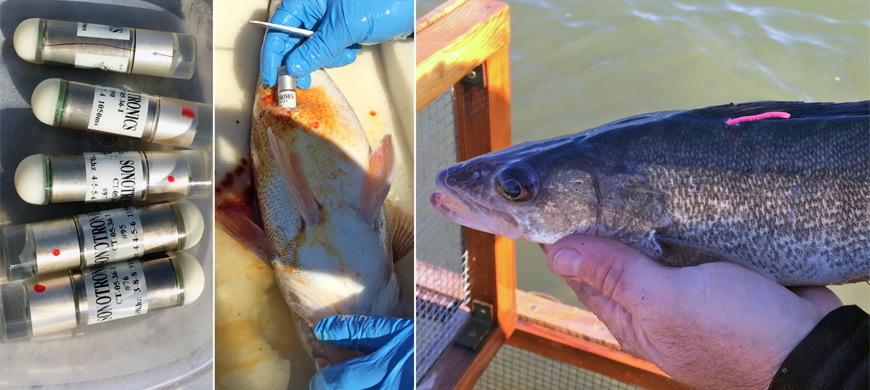
CAWKER CITY – The Kansas Department of Wildlife, Parks and Tourism (KDWPT) has embarked on a three-year walleye study at Glen Elder Reservoir, and biologists want anglers to be aware of the project.
Data collected during the study will give anglers and biologists a better understanding of what makes walleye tick in this lake. Throughout the study, KDWPT district fisheries biologist Scott Waters will follow the movements of adult walleye using telemetry to evaluate mortality patterns, movement, home range, and habitat selection.
Ultrasonic transmitters were implanted in 27 walleye last fall and another 33 will receive transmitters in April. An equal number of males and females will be targeted, and not all study fish will be longer than the 18-inch minimum length limit.
The fish are collected using trap nets and gill nets and brought to shore. Each fish is placed in an anesthetic bath for several minutes before surgery. A 1.5-inch incision is made in the abdominal wall, and after the sex is determined, a 22-gram ultrasonic transmitter is placed in the abdominal cavity. Three sutures and glue are used to close the incision and an antibiotic is given to prevent infection. Once the fish regains equilibrium and resumes normal behavior, it is released.
Each fish is also tagged with a pink, 3-inch Floy tag in the dorsal fin to alert anglers who catch them. The tag contains the fish’s identification number, the KDWPT contact number, and a message about the $100 reward given for the return of the transmitter if the fish is kept. Not all tagged fish are of legal size, and short fish should be returned to the water with the tag intact. Anglers are encouraged to carefully measure the fish and report the length and location of catch to the park office. Anglers who harvest legal fish are encouraged to call or stop by the office to return the internal transmitter for the $100 reward. The angler may keep the fish and Floy tag.
Manual tracking will be conducted at least two times each month with more frequent tracking conducted during certain periods of the year. Once a fish is located, water depth and temperature, GPS location, and the identification number will be recorded. Angling mortality will be determined by tag returns, natural mortality will be determined when the transmitter shows no movement over time, and fish emigration will be detected using a stationary receiver. Daily movement patterns will also be studied by following a subsample of fish over a 24-hour period.
KDWPT biologists need anglers’ help with this study, which is unique for the state of Kansas and will provide answers about walleye life history that will help biologists better manage this important sport fish. Updates will be provided throughout the study to help anglers learn more about daily and seasonal walleye movement patterns and habitat preferences.
TOPEKA – Governor Laura Kelly signed 16 bills into law this week, bringing the total number of bills signed during the 2019 Legislative Session to 35, with one being vetoed. By law, the Kansas governor has 10 calendar days to sign bills into law, veto bills or allow bills to become law without her signature.
Senate Bill 60
Amends the statutes related to licensing of real estate brokers and the Kansas Real Estate Commission. This legislation will become effective on July 1, 2019.
Senate Bill 68
Prohibits a city from requiring a wireless services provider or wireless infrastructure provider to enter into a franchise ordinance for the provision of wireless services. This legislation will become effective upon its publication in the Kansas Statute Book.
Senate Bill 69
Substitute for SB 69 directs the Legislative Coordinating Council to authorize a study of retail rates of Kansas electric public utilities. The purpose of the study is to provide information that may assist future legislative and regulatory efforts in developing electric policy that includes regionally competitive rates and reliable electric service. The bill requires the first and second parts of the study to be made available on the Kansas Corporation Commission’s website by January 8, 2020, and July 1, 2020, respectively. This legislation will become effective upon its publication in the Kansas Register.
Senate Bill 71
Reauthorizes the Postsecondary Technical Education Authority by eliminating the sunset date of June 30, 2019. The bill also requires the Authority to make an annual report to the Legislature on the performance of its functions and duties. This legislation will become effective on July 1, 2019.
Senate Bill 77
Requires the Department for Children and Families to offer services to children with sexual behavior problems, along with the child’s family. Such services will be voluntary, unless DCF determines there will be a high risk of future sexual behavior problems by the child if the child or family refuses services. This legislation will become effective upon its publication in the Kansas Statute Book.
Senate Bill 82
Amends provisions of the State Banking Code relating to certificate of existence, voting rights for conversion to a state charter, and the method of delivery for certain notices. This legislation will become effective on July 1, 2019.
Senate Bill 97
Authorizes registration of certain rental vehicles in fleets and issuance of permanent license plates to reflect that registration. The bill requires such registration to be submitted electronically. This legislation will become effective on January 1, 2020 and upon its publication in the Kansas Statute Book.
Senate Bill 105
Authorizes a city to determine the start date of a regular term of office for a city officer by resolution of the city. In law regarding city elections, the bill requires the start date be on or after December 1 following certification of the election and no later than the second Monday in January following certification of the election. If the city does not establish an alternative date, the bill specifies such term will begin on the second Monday in January.
This legislation was signed in an official bill signing ceremony on Monday, April 8, and will become effective upon its publication in the Kansas Statute Book.
Senate Bill 128
Amends laws related to the minimum number of safety drills required to be conducted in schools each school year. The bill requires the State Fire Marshal to adopt rules and regulations requiring administrators of public and private schools and educational institutions, except community colleges, colleges, and universities, to conduct at least four fire drills, two tornado drills, and three crisis drills each school year. This legislation will become effective on July 1, 2019.
Senate Bill 199
Establishes the AO-K to Work Program, allowing certain adults to earn high school equivalency credentials by participating in career pathway oriented post-secondary classes. The provisions of the Program apply to all adult education programs in Kansas. This legislation will become effective on July 1, 2019.
House Bill 2101
Makes several amendments and technical updates to the laws governing credit unions and related credit union procedures and designates Article 22 of Chapter 17, Kansas Statutes Annotated, as the State Credit Union Code. This legislation will become effective on July 1, 2019.
House Bill 2125
Requires the holder of a driver’s license who is operating a motor vehicle to promptly deliver, rather than display, the driver’s license upon demand of any officer of a court of competent jurisdiction, any peace officer, or any examiner or officer of the Division of Vehicles, Department of Revenue. The requirement applies when the driver’s license is in the licensee’s immediate possession at the time of the demand. This legislation will become effective on July 1, 2019.
House Bill 2178
Amends the law concerning the duty of an operator to mark the tolerance zone around an underground facility within the Kansas Underground Utility Damage Prevention Act. This legislation will become effective upon its publication in the Kansas Register.
House Bill 2188
Makes the City of Atchison responsible for the maintenance and repair of all watershed lakes, dams, and other projects of the White Clay Watershed District No. 26, on and after January 1, 2020. Additionally, the bill dissolves the District on January 1, 2020, and makes the City the District’s successor.
This legislation was signed in an official bill signing ceremony on Tuesday, April 9 and will become effective upon its publication in the Kansas Statute Book.
House Bill 2191
Amends the law concerning the execution of search warrants. Specifically, the bill states that warrants issued after July 1, 2019, for electronically stored information, electronic devices, or media capable of storing electronically stored information located in Kansas will authorize the transfer of such information, devices, or media for examination and review anywhere within the state or outside the state at any time after the seizure, unless otherwise specified by the warrant. This legislation will become effective on July 1, 2019.
House Bill 2215
Authorizes the Kansas State Fair Board to establish a 501(c)(3) nonprofit corporation. The purpose of the nonprofit corporation is to receive gifts, donations, grants, and other moneys and engage in fundraising projects that benefit the Kansas State Fair. The board of directors of the nonprofit corporation will consist of the members of the executive committee of the Fair Board, the General Manager of the Kansas State Fair, and other directors designated by the Fair Board. This legislation will become effective upon its publication in the Kansas Statute Book.
Ruslan Ivanov loved being a public defender. What he didn’t love was the way his work constantly followed him — at home, with friends and family, even on vacation.
On one trip to Colorado, he stood in front of a breathtaking mountain view. And started thinking about a case.
“I thought about, ‘I need to do something. Is there something that I forgot? Is there something that I’m missing?’” he said. “I still thought about the individuals that I encountered and their life situations … too much of that is maybe detrimental in one’s job as an attorney, but I still thought about it.”
From 2015 to 2018, Ivanov was an attorney for the Kansas State Board of Indigents’ Defense Services, the state agency that provides criminal defense to people who can’t afford their own lawyers. He worked in Wichita and Topeka, mostly handling drug cases, assaults, thefts and weapons possession.
The job was an invaluable legal education, Ivanov said, but not one he could keep doing forever. He typically juggled between 60 and 90 cases at once and sometimes worked seven days a week. Often, he had to track down and interview witnesses himself, a task typically performed by an investigator — but his office only had one investigator between two dozen attorneys.
“The caseload is large,” he said. “If you’re preparing for particular hearings, you may be thinking about several of them, all at the same time.”
Ivanov ended up quitting in early 2018, along with 22 of his colleagues who left the agency that fiscal year.
That’s a resignation rate of 24 percent, the highest the Board of Indigents’ Defense Services has seen since its creation in 1982, said the agency’s executive director, Pat Scalia. She declined multiple requests for an interview, but she told state lawmakers in February that several public defender offices had to stop taking new cases because they were so overwhelmed. To hire and retain staff, she argued, the agency desperately needs more money.
“The agency is in crisis,” she said. “I’m asking that the salaries of public defenders be adjusted to match the pay scale that is now in place by our sister state of Missouri.”
Low salaries
Scalia asked lawmakers for an additional $498,547 in next year’s budget to fund public defender salaries, saying the money would “get our current staff close” to Missouri salaries.
Currently, Kansas public defenders with 10 or fewer years of experience make a maximum of $59,850 a year. When they reach 20 years of experience, they make $68,665. Chief defenders make $78,750.
Salaries for defenders in Missouri start at $46,992 but increase to more than $70,000 after a few years of experience.
Private attorneys, meanwhile, can charge hundreds of dollars an hour.
Blair Loving, a former public defender now in private practice, said he didn’t feel underpaid while working at the Western Regional Public Defender Office in Garden City. But his new job allows him more control over how much money he makes and when. When he was a public defender at the state’s office in Garden City, he didn’t make any overtime, no matter how long he worked.
“Regardless of how quickly and how successfully I completed the cases, that’s what I was going to get,” he said. “There’s no incentive for public defenders other than their personal conscience and their affinity for their clients.”
Blair Loving quit his job as a public defender in Garden City in November 2017. His office still hasn’t found someone to replace him, instead relying on a contract with a private attorney. (Photo courtesy Blair Loving)
Yet Loving felt under-compensated in other ways, especially compared to prosecutors, who are employed by city and county governments. His state health insurance was so expensive and covered his family of six so poorly that they had to switch to the insurance his wife received working for Garden City.
“The biggest detriment to staying long term was knowing that the benefits were not going to really be improving at all,” he said. “It would be a no-brainer to want to switch to a county or to a city position.”
Large caseloads
At one point, Loving managed 68 cases at once. He remembers a colleague juggling more than 80.
“Continually performing at 100 percent with a 200 percent workload,” he said, “it’s eventually gonna catch up to you.”
There were no measures of performance, Loving said. In an email, the executive director of the agency said she doesn’t keep track of how many cases end in acquittals, plea deals, convictions, dismissals or other types of outcomes.
Nor are there safety checks, Loving said, for possibly missing important information due to distraction or sleep deprivation.
“There is no Department of Transportation that’s going to come down and go, ‘Well, wait a minute, you made this attorney work for 13 hours this day, and so that’s going to decrease his performance level and that’s not safe for his clients,” Loving said. “The court says, ‘tough.’”
To balance their workloads and long hours, public defenders sometimes ask judges for more time between court proceedings, said Rosalie Joy, a vice president of the National Legal Aid and Defender Association.
“The defendants themselves are very much impacted,” she said, “by the fact that there aren’t enough to attorneys to go around.”
It’s common for public defender agencies to rely on contracts with private attorneys to fill in the gaps and to take on cases that might pose conflicts of interest, Joy said. But those attorneys may not specialize in criminal defense, so they may not have the same skills or resources as a full-time public defender.
“There is a risk and a great concern,” she said, “that they might not either be equipped with the right competencies, or that the system doesn’t give them that opportunity.”
According to an annual report to lawmakers, the Kansas Board of Indigents’ Defense Services assigns cases to private counsel when public defenders have a conflict of interest, or when an area of the state is so sparsely populated “it is not cost effective to open a public defender office.” A map shows that only 25 of the state’s 105 counties had full-time public defenders available last year.
Out of more than 31,000 cases in fiscal year 2018, the agency handed almost 15,000 to private attorneys who were paid $70 an hour. The average cost per case was $865. For full-time, salaried public defenders, the cost per case was $609.
Scalia told lawmakers that so far this fiscal year, 400 cases that normally would have gone to public defenders were instead assigned to private counsel because of heavy workloads, costing the state an extra $130,000.
Open jobs
In an email, Scalia said the state is trying to recruit more defenders by posting the jobs on the state website and on free online job boards. She said her agency also recruits through the state’s law schools. Most vacancies are filled within a month.
Offices in Salina and Junction City, however, have still been unable to fill vacancies for many months. The public defender office in Olathe is also struggling, she said. So far this year, 16 out of 93 defenders have resigned.
There isn’t much reason for defenders to stay after the early stages of their career, said Loving, who quit his job at the Western Regional Public Defender office in November 2017.
“I knew that there was really no opportunity for advancement other than punching a clock for a certain number of years,” he said. “I wanted to be able to see the fruit of my labors. And with public defense, you just don’t.”
More than a year after he left, Loving’s old office still hasn’t hired someone new. Instead, it relies on a contract with a private attorney.
“That kind of money is perfect for a brand new attorney with no wife and no kids and no mortgage,” he said. “They’ve got to fix their budget so that it incentivizes people with experience, not just brand-new law students.”
Nomin Ujiyediin is a reporter for the Kansas News Service, a collaboration of KCUR, Kansas Public Radio, KMUW and High Plains Public Radio covering health, education and politics. You can send her an email at nomin at kcur dot org, or reach her on Twitter @NominUJ.
WICHITA, KAN. – A man found guilty of trying to kill another man on three different occasions will spend a long time in prison.
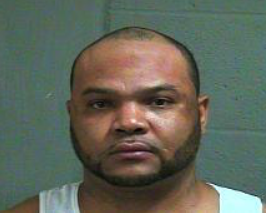
Shears-photo Oklahoma Co. Sheriff
On Friday, a Sedgwick County District Court Judge sentenced Tremain Shears, 31 of Wichita, to 71-years in prison, according to a media release is from District Attorney Marc Bennet.
During the summer of 2018, a jury found Shears guilty of nine felonies including attempted 1st degree murder and aggravated battery.
In 2016, Shears shot at Marcqual Hightower three times, in April, July and September. The victim was wounded three times in the legs. In July, Hightower was outside his grandmother’s home in Wichita when Shears drove by and fired over a dozen times at the house. No one was hit.
Shears went on trial for the shootings last July. At the end of his trial, Shears had his GPS monitoring bracelet removed and fled to Oklahoma.
The next day, a jury found Shears guilty of the nine charges against him. U.S. Marshalls arrested Shears a few days later in Oklahoma City.
A motive for Shears’ attacks on Hightower was never released in court.
—————————–
OKLAHOMA COUNTY, OK —A man wanted for removing his court-ordered ankle monitoring device during his Kansas trial for attempted murder is in an Oklahoma jail.
Shears-photo Oklahoma Co. Sheriff
On Monday, U.S. Marshals arrested 30-year-old Tremain Shears, according to the Sedgwick County District Attorney’s office.
On July 16, in Sedgwick County District Court, Shears was found guilty of two counts of attempted first degree murder, two counts of aggravated battery, two counts of criminal discharge of a weapon and three counts of possession of a weapon by a convicted felon. On the last day of his trial, Shears left the area. The trial continued despite his absence and a warrant was issued. The jury found Mr. Shears guilty of the nine charges against him.
Shears will be given the opportunity under the interstate extradition act to either contest or waive extradition back to Kansas, according to the District Attorney’s office.
If he waives extradition to Kansas, transportation will be arranged between law enforcement officials in Oklahoma City and the Sedgwick County Sheriff’s Department. If he contests the extradition, the DA’s office and state government officials have 90 days to complete the paperwork needed to obtain a Governor’s warrant to return him to Wichita for sentencing.
BARTON COUNTY—Two people were arrested on drug charges after an early Friday morning arrest at a Great Bend motel.
According to the Great Bend Police Department, officers were dispatched to the Super 8 Hotel just after 4 a.m. Friday morning in regards to suspicious subjects in the area. The caller told 911 that there were three subjects by a 2002 Ford F-150 pickup with Oklahoma license plates parked in the parking lot. While in route, officers were advised that the truck had been stolen in Oklahoma.
When police arrived, all three subjects fled on foot. Two subjects, one male and one female who were later identified as juveniles, were taken into custody while the third indivual, a male has not yet been apprehended.
During the arrest, a large amount of methamphetamine was located on the juvenile male suspect. The juvenile female suspect taken into custody has been reported as a runaway from Colorado. Both juveniles were transported to Juvenile Detention.
The investigation and search for the third individual continues. If you have any information regarding this case call Crime Stoppers at 620-792-1300 or the Great Bend Police Department at 620-793-4120.
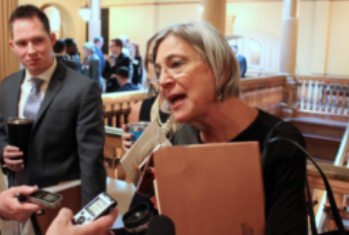
TOPEKA, Kan. (AP) — Kansas Senate President Susan Wagle is trying to bar Gov. Laura Kelly from nominating a new state Court of Appeals judge after Kelly was forced to withdraw her first choice.
Senate President Wagle
The Senate’s top Republican sent a letter Friday to Attorney General Derek Schmidt asking him to file a lawsuit to keep the Democratic governor from submitting another choice to the Senate for confirmation.
Kelly withdrew her first choice of Labette County District Judge Jeffry Jack last month because of political posts on Jack’s Twitter feed in 2017.
Wagle contends that Kelly can’t make another nomination under a 2013 law. Wagle says the power to make the nomination now goes to Kansas Supreme Court Chief Justice Lawton Nuss.
Kelly disagrees. Schmidt has urged legislative action to clarify the law.
SEDGWICK COUNTY — Law enforcement authorities are investigating the death of a toddler and have made an arrest.
Patrick Javonovich -photo Sedgwick Co.Marchant photo Sedgwick County
Just after 11:30p.m. Thursday police responded to a domestic disturbance call at a residence in the 4500 Block of South Hydraulic in Wichita, according to officer Charley Davidson.
Officers found 28-year-old Patrick Javonovich and 22-year-old Brandi Marchant walking back to the residence. Investigators learned that Javonovich and Merchant had been involved in a verbal disturbance with each other and left a 2-year-old boy and a 4-month boy home alone.
Police entered the home and found the 2-year-old unresponsive in a crib, according to Davidson. The child was pronounced dead at the scene. The 4-month-old was found in need of medical attention and taken to an area hospital for treatment and remains hospitalized.
Police arrested Javonovich and Marchant for felony murder in the boy’s death. In addition, both are being held on requested charges that include two counts of aggravated endangering of a child. Bond for both was set at $200,000 each, according to Sedgwick County online jail records.
An autopsy will be performed on the boy to determine the cause of death, according to Davidson.
Marchant is the biological mother of the 4-month-old. He will be placed into protective custody after released from the hospital.
Javonovich and Marchant are the biological parents of the 2-year-old, according to Davidson. Police will present the case to the district attorney.
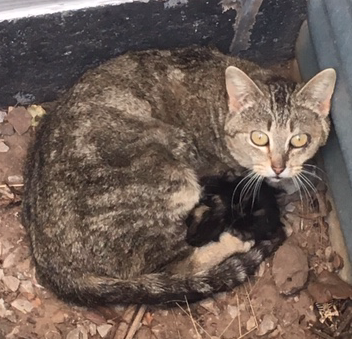
Cities in Kansas have been adopting a new approach for dealing with feral cats: neutering and vaccinating them, and then allowing the felines to roam free.
That has birdwatchers worried.
“Feral cats can be incredibly destructive to bird populations,” said Ron Klataske, executive director of Audubon of Kansas. “It does concern some of our local Audubon chapters throughout the state and elsewhere in the country.”
Wildlife conservationists accuse local governments that have adopted trap-neuter-return policies of valuing an invasive species over native birds and small mammals that the cats like to hunt.
Advocates say it’s more humane, and that neutering will reduce feral cat populations as the animals die of natural causes.
Wichita has been debating adding its own trap-neuter-return policy, or TNR, for months.
In communities, including Salina, North Newton, and Topeka, that have switched to neutering, the practice has drastically lowered the number of felines euthanized in city shelters. Lawrence is launching its program in May.
Friends of Felines, a group that’s been neutering and releasing feral cats in Wichita ad hoc for years, points to a reduction in euthanizations as proof the approach works.
Wichita euthanized more than 3,000 cats in 2013. Last year the number dropped to fewer than 1,000. Wichita police also credit freelance neutering for the reduction.
But with the animals having a lifespan of about 15 years, opponents of releasing the neutered felines back onto the streets say that’s still a lot of time for hunting.
“I see them sitting underneath my birdfeeder,” said Tom Ewert, president of the Wichita Audubon Society. “I haven’t agreed to having these feral cats running around outside.”
Ewert is wary of being labeled a cat hater — he has his own indoor cat. But he says outdoor cats devastate local wildlife.
A 2013 study estimated that domestic cats kill up to four billion birds a year in the United States, though that figure has been disputed. Cats have also been blamed for the extinction of dozens of species worldwide, including some mammals and reptiles.
While sharing the concerns for wildlife, PETA has also raised red flags about the brutal lives feral cats endure, struggling for adequate food and shelter. The animal rights group argues that care for the cats should include regular veterinary check-ups.
In Kansas cities, volunteers bring theferal cats to a veterinarian to be neutered and vaccinated, usually at the expense of the volunteer. The animals’ ears are clipped to identify that they’ve been neutered and to avoid unnecessary subsequent captures. Then they are let go.
The ordinance Wichita is considering would require the cats also be assigned to a caregiver. That volunteer would be allowed to care for up to eight cats, including their own domesticated felines. They would also have to provide some food and outdoor shelter for the animals.
Topeka’s program — adopted in 2010 — doesn’t designate caretakers but cat lovers usually step in to provide some assistance.
“Almost every colony that we come across or that are referred to us has a caregiver,” said Susan Schmitz, a founder of Topeka Community Cat Fix.
For friendly strays, adoption is one alternative that opponents of neuter-and-return suggest.
But a feral cats by definition aren’t socialized with people, making adoption impossible. For Ewert and other birders that leaves only euthanasia.
“That’s a terrible thing to say but we have a cat overpopulation right now and what are you going to do?” he said.
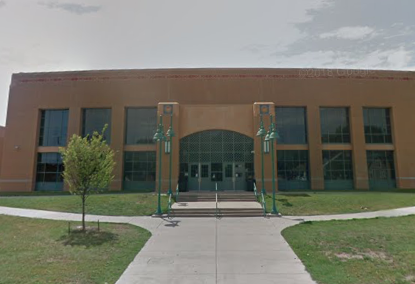
SEDGWICK COUNTY —Law enforcement and school district officials are investigating a student on a weapons charge.
Wichita North High google image
Just after 10:30a.m. Thursday, USD 259 Security staff received an anonymous tip that a student had a handgun on the Wichita North High campus, according to officer Charley Davidson.
Wichita police and a school resource officer followed up on the tip and arrested a 16-year-old student on requested charges of juvenile in possession of a firearm.
Police also recovered a handgun, according to Davidson.
There were no threats made to any students, no threat of violence or disruption to the school and no injuries. Investigators will present the case to the Sedgwick County District Attorney.
This grant will provide books for preschoolers and head start students in several western Kansas communities. The counties served through this funding include Finney, Grant, Gray, Haskell, Kearny, Scott, Seward, Stanton, Stevens, Wichita, Greeley, Hamilton, Lane, Meade and Morton.
“We are grateful for the continued support of the Western Kansas Community Foundation,” said Larry Calvery, Smoky Hills Public Television General Manager. “With these funds, the Foundation helps support the educational mission of Smoky Hills Public Television, and most importantly, providing educational books to many children throughout western Kansas.”
WKCF began in 1996 when a group of community leaders saw the potential of a local community foundation to enrich western Kansas life. Since that time, WKCF has expanded to cover 15 counties in southwest Kansas and experienced significant growth to now include assets of over $26 million and more than 200 funds.
Smoky Hills Public Television serves 71 counties in central and western Kansas and has been named the Kansas Association of Broadcasters Non-Metro Station of the Year.
On April 6, more than 100 people watched Governor Laura Kelly sign a K-12 school finance bill that will increase school funding approximately $90 million dollars in each of the next four years. Some Republicans joined Democrats to vote for the bill and Governor Kelly called the support an example of legislative compromise and her signing as a victory for schools.
Dr. Sharon Hartin Iorio is Professor & Dean Emerita at Wichita State University College of Education.
The legislation responds to a previous Kansas Supreme Court order requiring the legislature to include costs for inflation in the 2018 five-year $525 million increase in state education appropriation. Before implementation, the court must review and rule on the adequacy of the negotiated plan.
If the amount of funding appears to be a generous handout, let’s not forget what got the state to this point. The aftermath of the 2008 economic crash led to reduction in states’ education spending across the nation. That reduction, coupled with the effect of cuts in Kansas income tax, resulted in 10 years of decline in public education funding, placing adequate resources for Kansas students in jeopardy.
The compromise legislation signed last week should go a long way to replacing the lost school funding.
Nevertheless, as clear as the path to fully-funded schools looked at the signing on April 6, public education in Kansas is still a long way from being out of the woods. There are two issues:
First, most lawmakers as well as most Kansans hope that the compromise plan will end the nine-year lawsuit over K-12 education. However, as yet there appear to be only a few shifts in the ongoing funding battle.
Conservative lawmakers have not changed their belief that school funding should be restrained to encourage efficient spending and that schools should be held more accountable for their spending and for student achievement ratings. Lawmakers advanced those beliefs in the April 6 bill through required yearly school reports.
Moreover, Schools for Fair Funding representing more than 50 districts, four of which Wichita, Hutchinson, Kansas City, KS and Dodge City sued the state for inadequate funding, recently said the $90 million expansion in state aid was insufficient. Attorneys for the four districts plan to file Kansas Supreme Court briefs to increase the funding. In addition, funding for new needs in early childhood education are on the horizon.
It’s great that a more substantial school resource foundation will be coming, but political consensus needs to solidify and move forward before our students can get the education they deserve. Here’s the second problem: The negotiated plan allows schools to spend money basically the same way as in the past.
Districts have used the increase that started in 2018 to pay teachers more, hire additional staff and reduce class sizes. These are practical, sorely needed, useful expenditures approved widely by Kansans. However, if all that happens with increased funding is to return schools to their 2008 pre-economic crash/tax cut status, students will not benefit fully.
Kansas schools can free-fall toward the past or they invest in curriculum and technology to prepare students for the challenges of citizenship in the 21st Century and future careers.
Adequate funding is necessary but not sufficient to give, in the words of Governor Kelly, “all Kansas children-no matter who they are or where they live-the opportunity to succeed.”
More funding may soon be on its way. Now the hard work of building a strong, future-focused education system will begin.
Sharon Hartin Iorio is a Professor and Dean Emerita of Wichita State University College of Education.
JEFFERSON COUNTY — A Kansas school district superintendent arrested for an alleged DUI has been placed on leave.
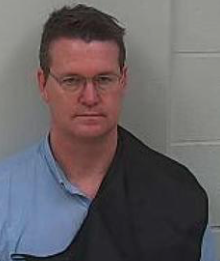
Martin Stessman-photo Jefferson Co..
On Saturday, The Kansas Highway Patrol arrested 55-year-old Dr. Martin Stessman, the superintendent at USD 450 Tecumseh after a 911 call reporting a reckless driver on Interstate 70, according to the Jefferson County Sheriff’s Department.
On Sunday, the school district held a special board meeting that went into executive session to discuss personnel matters, according to a statement from USD 450. Dr. Stessman was not relieved of his duties as superintendent; however, he was asked to take some personal time off.
On Thursday, the board met again and placed Stessman on administrative leave until June 1, 2019. He will forfeit twenty days of pay with those funds going toward an alcohol awareness program determined and approved by this board at a later date. During this time Matt Hirsch will act as interim Superintendent.
The board also placed Stessman on one year probation period in which he can be terminated by the board. He must complete a professional alcohol assessment, fully comply with assessment recommendations and speak to students and make this a teaching moment.
In addition, the board said, “This statement serves as a formal reprimand from the Board of Education for engaging in conduct unbecoming to Dr. Stessman’s position as Superintendent of Schools. Although the incident occurred during non-school hours and off school grounds, Dr. Stessman is reminded that as Superintendent, his conduct, during both school and non-school periods, directly reflects on the District, the Board of Education, the community, our students and their families. We expect that in the future, no similar incidents will occur, or Dr. Stessman’s employment can be terminated immediately.”
————–
JEFFERSON COUNTY — A Kansas school district superintendent was arrested for alleged DUI over the weekend.
Just before 8:30 p.m. Saturday, The Kansas Highway Patrol arrested 55-year-old Dr. Martin Stessman, the superintendent at USD 450 Tecumseh after a 911 call reporting a reckless driver on Interstate 70, according to the Jefferson County Sheriff’s Department.
Just after 10:30p.m., Stessman was booked into jail, posted the $1000 bond and was released just before midnight.
USD 450 released no statement on the incident Sunday.
NEW YORK (AP) — The U.S. communications regulator will hold a massive auction to bolster 5G service, the next generation of mobile networks, and will spend $20 billion for rural internet.
5G will mean faster wireless speeds and has implications for technologies like self-driving cars and augmented reality. The rollout started last week in the U.S. and South Korea but will take years.
The Federal Communications Commission said Friday that it would hold the largest auction in U.S. history, of 3,400 megahertz, to boost wireless companies’ networks.
The FCC also says it will repurpose funds from existing programs to provide $20.4 billion connecting up to 4 million rural homes and small businesses to high-speed internet. There are 24 million Americans without access to broadband, and the problem is worst in rural areas.