We have a brand new updated website! Click here to check it out!

Hearing begins on fate of Missouri’s lone abortion clinic

ST. LOUIS (AP) — The fate of Missouri’s only abortion clinic is at stake starting Monday, when a member of the state’s Administrative Hearing Commission will begin hearing arguments over whether the clinic can keep its abortion license.

The hearing at a downtown St. Louis state office building is expected to last five days. Missouri officials have asked St. Louis police for heightened security since the licensing issue has generated protests from those on both sides of the debate.

Commissioner Sreenivasa Rao Dandamudi will preside over the hearing. A commission official said that in his role, Dandamudi “acts as an independent trial judge.” A ruling isn’t expected until February at the earliest.

Missouri would become the first state since 1974, the year after the Supreme Court’s Roe v. Wade decision, without a functioning abortion clinic if the license revocation is allowed. The battle also comes as abortion rights supporters raise concerns that conservative-led states, including Missouri, are attempting to end abortion through tough new laws and tighter regulation.

Planned Parenthood has been battling the Missouri Department of Health and Senior Services for months to try to keep open its St. Louis clinic.

The state said concerns arose from inspections in March. Among the problems health department investigators cited were three “failed abortions” requiring additional surgeries and another that led to life-threatening complications for the mother.

The health department has sought to interview physicians involved in those abortions, including medical residents who no longer work there. Planned Parenthood has said it can’t force them to talk and that the state’s concerns were addressed long ago. Attorneys for the health department wrote in legal filings to the commission that physicians’ refusal to talk “presents the final, critical obstacle.”

Missouri is among several states to pass new restrictions on abortions in the hope that the increasingly conservative U.S. Supreme Court will eventually overturn Roe v. Wade. Republican Gov. Mike Parson signed legislation in May banning abortions at or beyond eight weeks of pregnancy, with exceptions for medical emergencies but not for rape or incest.

A federal judge in August temporarily blocked implementation of the law until the legal challenge plays out in court, which could take several months.

While the Missouri case unfolded, Planned Parenthood quietly built a new abortion clinic in Illinois, just across the Mississippi River from St. Louis. The 18,000-square-foot clinic in Fairview Heights, 12 miles (19 kilometers) east of St. Louis, opened Wednesday, in part to meet the demand for abortions from Missouri residents.

Missouri women have been increasingly getting abortions at the Hope Clinic for Women in Granite City, Illinois, another St. Louis suburb. Deputy Director Alison Dreith said 58% of the abortions performed at the Hope Clinic through August of this year involved Missouri women, compared with 37% involving Illinois women.

Another abortion clinic sits in Overland Park, Kansas, a Kansas City suburb. The clinic is 2 miles from the state line. Information from the state of Kansas shows about 3,300 of the 7,000 abortions performed there last year involved Missouri residents.
Interim dean at K-State Polytechnic earns job permanently

SALINA — The interim CEO and dean of Kansas State University Polytechnic Campus has earned the job permanently.

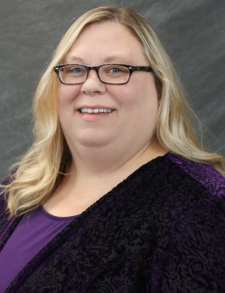
Dr. Alysia Starkey courtesy photo

Alysia Starkey, who has been serving as the interim leader of the campus in Salina since July 2018, has been appointed its new CEO and dean by Charles Taber, K-State provost and executive vice president, according to a media release from the school.

“In her service as interim CEO and dean, Dr. Starkey has proven to be a strong and effective leader of Kansas State Polytechnic,” Taber said. “Most notably, she has led the strategic planning on Polytechnic’s aviation program, building community and industry relationships that we will need to be successful.”

As the chief academic and administrative officer of Kansas State Polytechnic, Starkey is responsible for providing leadership, management and support for all academic programs and administrative units on the campus. She’s charged with ensuring high-quality undergraduate and graduate experiences, continued excellence and growth in Polytechnic’s research programs, and the recruitment and retention of high-caliber, diverse students. Effective fiscal stewardship and fundraising efforts on behalf of the campus are also key parts of her job responsibilities.

“Kansas State Polytechnic is a special place and I am grateful for the opportunity to serve as CEO and dean,” Starkey said. “I am excited to continue working with students, faculty, staff and alumni to advance our mission and enhance our capabilities to meet the educational and workforce needs of the future.”

Before her appointment as interim CEO and dean, Starkey served as associate dean of academics at Kansas State Polytechnic. She has in-depth experience in the leadership, management and support needs of all aspects of the school, including student success, academic programs, faculty and budgetary matters. She joined Polytechnic in June 2002 as a technical services/automation coordinator and assistant professor. She was promoted to library director and associate professor in 2007, and named assistant dean of academics and distance education and director of libraries in 2010. She served as assistant dean of continuous improvement from 2012-2014 before being named associate dean of academics/undergraduate studies and promoted to full professor in 2014. She gained the additional duties of acting director for the School of Integrated Studies in June 2016. In October 2017, Starkey was named associate dean of academics and acting director of professional education and outreach.

Starkey earned a doctorate in curriculum and instruction from Kansas State University; a master’s in library science from the University of North Texas; a bachelor’s in psychology from Fort Hays State University; and an associate degree in social work from Colby Community College.

Police evacuate homes after Kan. man takes wild ride on excavator

SHAWNEE COUNTY — Law enforcement authorities are investigating a theft and have a suspect in custody.

Funk photo Shawnee County

Shortly after midnight Saturday, officers responded to the area of NE River and NE Lime in Topeka after callers advised they saw construction equipment being driven in the area, according to Captain Colleen Stuart.

Officers encountered an occupied loader traveling in the 500 Block NE Lake, damaging property as it moved through yards and city streets.

The driver later identified as Shane D. Funk, 46, Topeka, refused to stop for officers. Numerous residences in the loaders path were evacuated for safety purposes. A perimeter was established in an attempt to contain the loader and damage.

Funk turned the vehicle toward officers, forcing a tactical intervention option by way of a kinetic energy impact munition to slow the loader down.

Once the loader stopped, officers were able to take him into custody. Medical response was called and Funk was transported to a local hospital to be treated for minor injuries and then booked into the Department of Corrections requested charges that include Felony theft, Felony Criminal Damage, Aggravated Assault to Law Enforcement Officers and outstanding warrants.

Kansas voters could end unusual census adjustment for redistricting

Voters statewide will decide Nov. 5 whether to approve a proposed amendment to the Kansas Constitution to eliminate a requirement for the state to adjust federal census figures when the Legislature redistricts itself. The adjustment counts college students and military personnel not where they’re living but in a “permanent” home elsewhere — outside Kansas for thousands of them.

Kansas is among only a few states that adjust federal census figures for redistricting, and before it started doing it in the 1990s, it did its own population counts for more than a century. Critics see the adjustment as archaic and expensive, and the proposed amendment had overwhelming bipartisan support as it slipped quietly through the Republican-controlled Legislature earlier this year.

The biggest winners from the change likely would be Lawrence and Manhattan, home to the main campuses of the University of Kansas and Kansas State University. When the state last adjusted census figures in 2011, their counties lost 13% of their combined populations, more than 23,000 people, enough for a Kansas House seat between them.

“It is a matter of fairness,” said Lawrence Mayor Lisa Larsen. “The students live here. They contribute to our economy. They’re contributing to our community in a great way.”

Secretary of State Scott Schwab urged legislators to put the amendment on the ballot. He is doing media interviews and has a website promoting it and says the next adjustment would cost the state $835,000. There is no organized opposition to the amendment ahead of an election otherwise set for filling city offices and local school board seats.

Kansas is the last state to adjust census figures for college students or military personnel after Alaska in the late 1990s dropped a policy of adjusting its military population downward. But Maryland and New York count prison inmates in their hometowns rather than where they’re incarcerated to avoid what critics call “prison gerrymandering.”

Kansas lawmakers expect to revise legislative districts again in 2022. Adjusting the college and military populations is a remnant of the state’s longtime practice, ended in the 1990s, of doing its own census for redistricting purposes.

Schwab said the next adjustment would be expensive because his office would have to hire a contractor to track down people to ask them where they want to be counted, and that’s more difficult now than in the past because cellphones have increasingly replaced landline telephones.

Supporters of the adjustment in the past have argued that people living temporarily in a college town or on a military base should be allowed to choose where they’re counted. They’ve also suggested that the policy helps rural communities.

But no rural county saw its population adjusted upward by 3% in 2011, and a few even lost a little population. Overall, when all the shifts were taken into account, the state’s total population declined by about 13,700 residents, or less than 0.5%.

“It’s a no-brainer to vote for that amendment,” said Senate Majority Leader Jim Denning, an Overland Park Republican.

___

Landfill fire in McPherson; officials monitoring toxic smoke

MCPHERSON COUNTY —Crews were on the scene of a fire at the city landfill north of McPherson Sunday, according to a social media report from the McPherson Fire Department.

Landfill fire Photos courtesy McPherson Fire Dept.

The fire had toxic substances in the smoke and a plume model from the National Weather Service has indicated the City of McPherson would be directly affected.

All residents are encouraged to go inside, close all windows and doors, stay tuned to Radio/TV/Social Media for further updates.

Late Sunday, the fire department reported fire suppression operations were halted at the landfill. Air quality monitoring has been deployed on the north side of McPherson city limits. As of 2 am they have not detected anything out of normal ranges. We will continue to monitor the air quality throughout the night and into Monday morning.

They also encouraged residents to utilize 911 for emergencies only.

2 Kan. men sentenced for terrorizing 3 women in violent crime spree

KANSAS CITY– Two Kansas men were sentenced in federal court Friday for a violent, hours-long crime spree in which they kidnapped, robbed, and terrorized three women, according to the United State’s Attorney.

Wortham photo Wyandotte Co.

Anthony B. Williams, 37, and Jamerl M. Wortham, 34, were sentenced in separate appearances before U.S. District Judge Brian Wimes. Williams was sentenced to four consecutive terms of life in federal prison without parole. Wortham was sentenced to 60 years in federal prison without parole.

Williams was sentenced as an armed career criminal and “three strikes” violent felon, due to his prior felony convictions.

On Feb. 14, 2019, Williams and Wortham were each found guilty at trial of all 17 counts contained in a federal indictment. Following the U.S. Supreme Court’s ruling in June 2019 that the statutory definition of a “crime of violence” is unconstitutionally vague, three of those counts (possession of a short-barreled shotgun in furtherance of kidnapping) have been dismissed.

Williams and Wortham were sentenced today on their convictions of one count of conspiracy to commit kidnapping, three counts of kidnapping, one count of carjacking, one count of conspiracy to commit armed robbery, one count of attempted armed robbery, one count of distribution of PCP, three counts of possession of a short-barreled shotgun in furtherance of a crime of violence or drug trafficking crime, one count of being felons in possession of a firearm, one count of possession of an unregistered short-barreled shotgun, and one count of possession of a firearm with an obliterated serial number.

During the early morning hours of April 9, 2016, Wortham and Williams, along with another man who is not identified in court records, stole a Jaguar in Kansas City, Kansas, then set off to Kansas City, Missouri, with a plan to rob people at ATM machines. While driving around the Westport entertainment district, at approximately 1:30 a.m., the men came across M.M., a woman who was waiting to be picked up by an Uber car. One of the men stepped out of the stolen Jaguar, put his arm around M.M., and corralled her into the vehicle.

They drove to a set of ATMs located in the River Market neighborhood of Kansas City, Missouri. They waited until a red Toyota Camry pulled up to use the ATM at approximately 2 a.m.

They drove up behind the Camry, where two women, T.J. and Y.C., were attempting to deposit money into the ATM. One of the defendants and the other man approached the Camry, pointed a loaded sawed-off shotgun at the driver and passenger, demanded money, then forced them into the backseat of the Camry. The two men then got in the driver and passenger seats of the vehicle and sped away towards Kansas City, Kansas, with the stolen Jaguar (with M.M. a passenger) following close behind.

Once in Kansas City, Kansas, Williams and Wortham forced all of the victims into the Camry. They took the victims to another ATM in Kansas City, Kansas, and told them to withdraw as much money as they could from their bank accounts.

After leaving the ATM, Williams and Wortham forced M.M. and Y.C. to smoke PCP while they drove for hours around the Kansas City metro area. During the entirety of this time, the victims were consistently threatened with death and bodily harm while the defendants pointed the sawed-off shotgun in the victims’ direction. Williams also indicated he was armed with a handgun. Williams and Wortham intended to find a discrete location in which they could sexually assault the victims.

At about 5 a.m., the men split the victims up into two separate cars – with Wortham in the stolen Jaguar with T.J., and Williams in the stolen Camry with M.M. and Y.C. While they caravanned through Kansas City, Kansas, police officers recognized the stolen Jaguar and engaged it in pursuit.

The Jaguar fled at a high rate of speed, lost control, then crashed with T.J. in the passenger seat of the vehicle. After the crash, Wortham fled from the vehicle on foot but was apprehended shortly after and placed under arrest. T.J. was unhurt in the crash.

Discovered inside of the vehicle was a loaded Coast to Coast 20-gauge shotgun that had approximately 12-inches of the barrel sawed off, along with the shotgun stock shortened.

In the stolen Camry, Williams and another man drove M.M. and Y.C. throughout the Kansas City metro area in search of drugs and a house to use. At approximately 8 a.m., the other man was dropped off at an unknown location. With only Williams in the vehicle, M.M. found an opportunity to jump out of the Camry at a stop sign, run into a convenience store, and call the police.

Soon after, Y.C. also attempted to escape the vehicle, but had to fight Williams to get out of his grasp. Once out of his grasp, Y.C. ran down a residential street, with Williams chasing behind. She used the panic button on her key fob to set off her car alarm, which stopped Williams from pursuing. Y.C. ran for at least three blocks until she found someone to help her, then called the police.

Mom charged with helping beat up boy over expensive shirt

O’FALLON, Mo. (AP) — A Missouri mom has been charged with helping beat up a 14-year-old boy who she says refused to return an expensive shirt to her son.

Tonya Carrillo-photo St. Charles County

43-year-old Tonya Carrillo was charged last week with endangering a minor in connection with the July assault.

Court documents say Carrillo told police she hopes the victim “learns from this incident” because his parents don’t seem to care about his behavior.

The victim was treated for a dislocated nose and cuts and scrapes after the assault, which was captured on surveillance video.

Carrillo is being held in lieu of $25,000 bond. Police are still looking for another man who was involved in the incident.

Kansas man sentenced to 3 life terms for child sex crimes

WICHITA, Kan. (AP) — A Kansas man has been sentenced to three life terms for 25 felony sex crimes with six children.

Hallacy -Sedgwick Co.

41-year-old Damian Isaac Hallacy is appealing the sentence ordered Wednesday.

The investigation started in 2017 after a man found sexual messages from Hallacy on his wife’s phone. The probable cause affidavit says the woman sexually abused her 8-year-old daughter at Hallacy’s request, and investigators found photos of the abuse on her phone.

The woman is expected to be sentenced next month. Her plea agreement called for her to testify against Hallacy and receive a life prison sentence without the possibility of parole for 25 years.

Authorities are not naming her to protect the identity of her daughter because the girl is a victim of a sex crime.

Police: Man shot in his car at McDonalds in Kansas

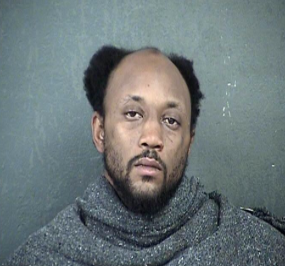
DOUGLAS COUNTY  — Law enforcement authorities are investigating a shooting and continue to search for a suspect.

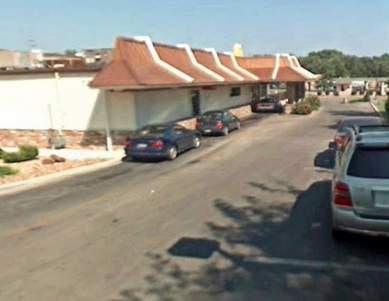
The McDonalds on West 6th in Lawrence google image

Just before 6:30 p.m. Saturday, police were called to the McDonalds at 1309 W. 6th Street in Lawrance in response to a shooting that had just occurred, according to office Patrick Compton. Upon arriving, officers discovered a 50-year-old man who had been shot in his car.

This individual was treated at the scene and transported to an area hospital with significant injuries.

Police are currently looking for a suspect described as a black male wearing a red hoodie, red sweat pants and carrying a black bag or backpack in connection to this shooting.

The Latest: Trump: Islamic State group leader killed in US operation

BEIRUT (AP) — The Latest on the alleged death of Islamic State group leader Abu Bakr al-Baghdadi in a U.S.-led operation in northern Syria (all times local):

12:15 p.m.

President Trump is joined by VP Mike Pence, National Security Advisor Robert O’Brien, left; Secretary of Defense Mark Esper and Chairman of the Joint Chiefs of Staff U.S. Army General Mark A. Milley, and Brig. Gen. Marcus Evans, Deputy Director for Special Operations, .on the Joint Staff, at right, Saturday, Oct. 26, 2019, in the Situation Room of the White House monitoring developments as U.S. Special Operations forces close in on notorious ISIS leader Abu Bakr al-Baghdadi’s compound in Syria with a mission to kill or capture the terrorist.

Vice President Mike Pence is disclosing more details about the U.S. military raid that killed Islamic State leader Abu Bakr al-Baghdadi in Syria.

Pence says that by Thursday afternoon, he and President Donald Trump learned that there was “a high probability” that al-Baghdadi would be at his compound in Syria’s Idlib province.

Pence tells CBS’ “Face the Nation” that Trump directed commanders to come up with military options and present them to him on Friday morning.

Pence says that by Saturday morning, “we received the actionable intelligence” that allowed the operation that Trump had approved to go ahead.

And it was on Sunday morning when Trump told the nation that the raid had resulted in al-Baghdadi’s death.

___

12:05 p.m.

The head of the foreign affairs committee in Russia’s upper house of parliament says the death of Islamic State leader Abu Bakr al-Baghdadi would be welcome news, but he’s playing down its possible impact in the fight against terrorism.

Konstantin Kosachev is pointing out that President Donald Trump’s announcement Sunday in Washington that al-Baghdadi was killed in a U.S. military raid in Syria isn’t the first time the leader’s death has been reported.

Kosachev says “countering terrorism is a much more difficult task than the physical destruction of its leaders, even the most implacable.”

___

10:30 a.m.

Some information is emerging about how the United States might have been able to track Islamic State leader Abu Bakr al-Baghdadi.

President Trump during Sunday’s statement at the White House-image courtesy the White House-photo courtesy White House

A senior Iraqi intelligence official says that a few months ago, an Iraqi aide to al-Baghdadi was killed in western Iraq by a U.S. airstrike. The official says the aide’s wife was arrested in the operation and handed over by the Americans to Iraqi authorities.

The official says the wife ended up being a key source of information on al-Baghdadi’s whereabouts and that through her, the Iraqis ultimately were able to pass along to the United States coordinates on al-Baghdadi.

A second Iraqi security official says al-Baghdadi’s brother-in-law was recently arrested by the Iraqis and also helped with information about Abu Bakr’s whereabouts

The officials weren’t authorized to publicly discuss intelligence operations and spoke on condition of anonymity.

10a.m.

House Speaker Nancy Pelosi is criticizing the White House for failing to notify congressional leaders before the U.S. raid in Syria that President Donald Trump says killed the leader of the Islamic State group.

She notes that the U.S. let Russia know the raid was in the works.

Trump said U.S. military helicopters flew over territory controlled by Russian and Syrian forces before landing at Abu Bakr al-Baghdadi’s compound. He also said he kept lawmakers out of the loop because he was fearful of leaks.

Pelosi says the Trump administration must brief Congress on the operation and on the administration’s overall strategy for the Mideast.

Before the 2011 raid in Pakistan that killed al-Qaida leader Osama bin Laden, the Obama administration did give advance word to the top two Democrats and Republicans in the House and Senate as well as the four leaders of the congressional intelligence committees.

___

9:25 a.m.

President Donald Trump says Abu Bakr al-Baghdadi is dead after a U.S. military operation in Syria targeted the Islamic State group leader.

Trump says in a statement to the nation from the White House’s Diplomatic Room that “al-Baghdadi is dead” — fulfilling the top national security priority of his administration.

He says no U.S. personnel were lost in the mission.

Al-Baghdadi presided over IS’s global jihad and became arguably the world’s most wanted man.

Trump say Al-Baghdadi detonated suicide vest during US raid, killing himself and three of his children.

The announcement comes as Trump has been on the receiving end of bipartisan criticism in Washington following the recent pullback of U.S. troops from northeastern Syria. Critics fear that move will allow the militant group to regain strength after it had lost vast stretches of territory it had once controlled

___

4p.m.

The commander of the Syrian Kurdish-led forces says five months of joint intelligence cooperation with the U.S.-led coalition led to the killing of the leader of the Islamic State group.

Mazloum Abdi said in a tweet Sunday that the reported killing of Abu Bakr al-Baghdadi took place in a joint operation following “cooperation on the ground and accurate monitoring” for five months. He called it a “successful and historic” joint intelligence work with the U.S.

The U.S. raid with helicopters took place in the Barisha area north of Idlib city a few kilometers from the Turkish border.

The Kurdish-led forces cooperated with the U.S.-coalition for at least four years to fight IS in Syria until they declared military victory against the group in March.

___

3:40 p.m.

A senior Turkish official says “to the best of my knowledge” Abu Bakr al-Baghdadi arrived at a location in Syria 48 hours prior to the U.S. military raid that is believed to have targeted the Islamic State group leader.

The Turkish official said in a written statement Sunday that there has been “close coordination” among relevant parties and the Turkish military had advanced knowledge of the raid.

In a tweet earlier, the Turkish army said it had “information exchanged and coordination” with U.S. military authorities prior to the operation but did not elaborate.

The official added: “I can neither confirm nor deny that any intelligence was shared to facilitate last night’s operation.”

The U.S. raid with helicopters took place in the Barisha area north of Idlib city a few kilometers from the Turkish border.

— By Zeynep Bilginsoy

___

7:45 a.m.

The leader of the Islamic State militant network is believed dead after being targeted by a U.S. military raid in Syria.

A U.S. official told The Associated Press late Saturday that Abu Bakr al-Baghdadi was targeted in Syria’s Idlib province. The official said confirmation that the IS chief was killed in an explosion is pending.

President Donald Trump teased a major announcement, tweeting Saturday night that “Something very big has just happened!”

A White House spokesman, Hogan Gidley, would say only that the president would be making a “major statement” at 9 a.m. EDT Sunday.

Census report: US population will get older, more diverse

As the U.S. median age increases, there will be a smaller ratio of workers in the labor force able to pay the payroll tax that funds Social Security payments to people of retirement age. In 15 years, the number of people over age 65 will be larger than the number of children for the first time in U.S. history, according to the presentation at a Southern Demographic Association meeting in New Orleans.

A “demographic tidal wave” is one big reason for the nation’s expected aging and the eventual drop in natural population increase from births outpacing deaths. That wave is the Baby Boomers, born between the end of World War Two and around the time of the American invasion of The Beatles.

“The youngest Baby Boomers are 55 and older now, said Allison Plyer, a demographer attending the meeting. “In 10 years, they will be 65 and older, and as those folks pass away over the decades, that’s a very larger section of our population reaching an age where they will likely experience mortality,” Plyer said.

As the U.S. grows older, it will also become more diverse, with children leading the way. By next year, no single race group alone will make up more than half of U.S. children, the projections show.

Although non-Hispanic whites currently are a majority in the U.S., their numbers will dip below 50% of the population in 40 years, declining from 199 million next year to 179 million in 2060, the projections show.

“Immigrants do continue to fill in the ranks of working-age population and workforce as the Baby Boomers age,” Plyer said. “The most likely people to replace them will be people of color, particularly Latinos who are already here and have children.”

People who identify as two or more races will be the fastest-growing group in the next 40 years, with their population expanding as births outpace deaths.

Other fast-growing groups include Asians, whose growth will be driven by migration, and Hispanics, whose growth in the U.S. will be driven by natural increases, according to the projections.

The U.S. is expected to cross the 400 million-person threshold by 2058, as it adds 79 million more people in 40 years, but annual growth will slow down. The U.S. has about 326 million people today.

Population growth, currently 2.3 million people per year, is expected to slow to 1.6 million people a year by 2060.

Growth comes from immigration and from births outpacing deaths, but that natural increase will decline as the nation ages. The nation’s median age is expected to go from 38 today to 43 by 2060.

Young adults are getting married and having children at older ages than their parents and grandparents, and they won’t be having children in the numbers to replace the Baby Boomers, said Andrew Beveridge, a demographer at the City University of New York.

As the number of people over age 65 grows, the share of working-age adults — who pay, along with their employers, for Social Security through a payroll tax — will also decline. Next year, there are expected to be 3.5 working-age adults for every person of retirement age, but that ratio declines to 2.5 by 2060, according to the projections.

That ratio will put the U.S. more in line with Europe, though it won’t be as severe as in Japan, which for years has had an aging population without the help of migration to add to the population, the demographers said.

“It’s definitely a shift, but we’re not going to be like Japan,” Beveridge said.

___

Study: Kansas schools rely on data at expense of teacher knowhow

Information’s great. But what about insight?

A fresh University of Kansas study contends state educators put too much emphasis on data and too little on the savvy and experience of teachers.

The researchers argue that test scores are the only thing all schools use, ignoring the instincts of teachers and unique situations of each student. Instead of being data-driven, they’re data-dependent.

CHRIS NEAL / FOR THE KANSAS NEWS SERVICE

The study suggests calls for a smarter balance between the first-hand insight of teachers and numbers drawn from test scores and other measures.

“We are losing teachers’ ability to use far more information about what they know makes for a good education for different types of kids because we’re just reducing the kids down to a number,” said Rebecca Jacobsen, an associate professor of education policy at Michigan State University.

Switch To Data

Using test scores to evaluate students has been a near constant in education. But what that testing looked like was often different from classroom to classroom. The 2001 federal No Child Left Behind Act began dramatically emphasized tests that are comparable across schools and the country.

That — combined with new technology — led to a rapid expansion of data on students.

“There’s a lot of power in that capacity,” said Jason Grissom, who studies education policy at Vanderbilt University.

In 2007, Kansas began piloting a data-heavy approach called Multi-Tiered System of Supports, or MTSS. It’s been used to devise improvement plans for struggling students.

Since that launch 12 years ago, it’s gradually expanded across the state. MTSS is more a framework than a program — educators continually test students and adjust plans accordingly.

In 2013, Garden City Public Schools was receiving state training on implementing MTSS. KU researchers documented the shift in a newly released study that found teachers’ knowhow was “continually marginalized.”

The Problem

Test scores were considered infallible while teacher observations were dismissed.

Some teachers disagreed with the interventions suggested by the test. State MTSS consultants told the teachers to stick to the recommendation. When teachers wanted to change the interventions, consultants said the only recourse was to retake the same test the teachers considered flawed.

Ideally, test scores would be used to inform decisions. State consultants told the teachers in Garden City that their input wasn’t needed. Only the test itself mattered.

“Good teachers are rightly saying those standardized tests are part of the story, but not all of the story,” said Don Stull, one of the study’s authors and a professor emeritus at KU. “And if we don’t try to bring all that we know … then we’re not doing the best we can for those children.”

Education experts says sidelining teacher observations could lead to interventions that are ultimately harmful. A student might score poorly on a math assessment because they’re not engaged with the work. An attentive teacher might decided the student needs more challenging assignments.

But the data alone would recommend giving the student more remedial work, boring them even more.

That takes the teacher out of teaching, the study said. It also hurts teacher morale, a danger in a profession struggling with recruitment and retainment.

“There’s really been a deprofessionalization of teaching,” said Jennifer Ng, the lead author of the study.

Experts say that schools across the country have too often dismissed teachers’ judgments in favor of test scores. And it’s a problem schools have begun recognizing.

“It’s absolutely something schools have been struggling with,” said Laura Hamilton, a senior behavioral scientist at the Rand Corporation. “We’re hearing a lot of growing awareness that this narrow focus is problematic.”

Finding Balance

Kansas’ MTSS team says those early attempts were about bringing Kansas teachers on board to a more uniform system. Instead of teachers having dozens of different approaches, MTSS would bring teachers around an effective, agreed-upon system.

But shortly after the rollout in Garden City, the state began to shift its approach. In 2015, the state’s board of education released a new set of goals for Kansas schools. Social and emotional growth for students received more emphasis. High school graduation rates were set as a new marker of success alongside test scores.

The 2015 federal Every Student Succeeds Act — the replacement to No Child Left Behind — also put less emphasis on test scores.

Now Kansas educators are trying to find a balance between test scores and teacher expertise.

“The assessment is just a tool to say do we need to look at a certain area,” said Linda Wilkerson, the co-director of MTSS for the Kansas Department of Education. “It isn’t the answer. It’s the question.”

Garden City Public Schools blames much of its initial problems outlined in the study on the growing pains that come with a new policy. The district says that since the MTSS rollout in 2013, the school district has included teachers’ voices.

But school districts are still doubling down on data-driven decision making. Education experts say schools should be doing that, so long as teachers are involved and trained in how to use all that information.

Wichita Public Schools says to do that it has added more “data dives” — days dedicated to teachers and staff working through the numbers. As the district has become more data-heavy, those long days are vital to avoiding information overload and defaulting to a program’s canned intervention.

Patricia Burch, an associate professor of education at the University of Southern California, said finding that balance between test scores teacher voices is still a challenge. But schools are realizing the need to get that balance right.

“We’re coming back to a kind of middle ground,” she said, “where we agree it’s important but it’s not as heavy handed.”

Stephan Bisaha reports on education and young adult life for the Kansas News Service. You can follow him on Twitter @SteveBisaha or email him at bisaha (at) kmuw (dot) org. 

Two dead after pickup, semi crash in southwest Kansas

GRANT COUNTY — Two people died in an accident just before 12:30p.m. Saturday in Grant County.

The Kansas Highway Patrol reported a 2007 Kenworth truck was westbound on Grant County Road 10 three miles north of U.S. 160. The driver failed to yield right of way to a southbound 2012 Chevy Silverado driven by Kevin Jay Coyle, 57, Turpin, Oklahoma, at the uncontrolled intersection. The Kenworth entered the intersection directly into the path of the Silverado.

Coyle and a passenger Gerald Lee Coyle, 81, Turpin, Oklahoma, were pronounced dead at the scene and transported to Garnands Funeral Home. They were not wearing seat belts, according to the KHP.   The KHP has not released the name of the Kenworth truck.

Copyright Eagle Radio | FCC Public Files | EEO Public File