We have a brand new updated website! Click here to check it out!

First Five: Free speech makes hypocrites of us all

Lata Nott

President Trump recently signed an executive order to withhold federal funding from public and private colleges and universities that do not protect free speech on their campuses. Despite the dramatic lead-up, the order itself doesn’t say all that much. It requires public colleges to comply with the First Amendment and private colleges to comply with their own speech policies — things they’re already required to do — and unsurprisingly, it’s been described as redundant (it’s also been referred to as a “nothingburger”).

Of course, there’s still potential for the order to be enforced in a way that threatens civil liberties and comprises federal overreach, but that’s for our future selves to worry about. Today, I’m thinking about the impetus behind the order and Trump’s words when he signed it. “Under the guise of speech codes and safe spaces and trigger warnings, these universities have tried to restrict free thought, impose total conformity and shut down the voices of great young Americans,” he said last Thursday. Is that true? Are colleges actually eroding free speech and undermining First Amendment values?

Sure. But no more so than anyone else.

The Knight Foundation’s 2018 survey on campus free expression showed that a majority of college students think that free speech rights are extremely important to democracy — but at the same time think that campuses should be able to restrict things like hate speech and stereotypical costumes. Yes, this means students believe in free speech in the abstract more than they support it in reality — but they’re certainly not alone. The First Amendment Center’s annual State of the First Amendment survey consistently demonstrates that while a majority of Americans of all ages are generally supportive of the First Amendment, they’re less enthusiastic about it when it comes to real life scenarios.

In 2017, its results showed that conservatives were more likely than liberals to believe that government officials who leak information should be prosecuted and that the government should be able to hold Muslims to a higher level of scrutiny. Liberals — even the non-student variety — were more likely than conservatives to think that colleges should be able to ban speakers with controversial views and that people should not be able to express racist views on social media. And I probably don’t need to point out that the president’s call for free speech from young Americans is at odds with many statements he’s made in the past, about, say, taking a knee during the national anthem.

While everybody loves the First Amendment in theory, nobody’s all that fond of it in practice. We love speakers who articulate thoughts we were already thinking and barely tolerate the ones who contradict our world view. Most of us, even those of us long since graduated from college, struggle with the desire to relentlessly censor one another. Free speech makes hypocrites of us all.

That said, it’s hard to ignore the high-profile controversies that specifically involve campus speakers being shouted down by angry audiences or disinvited due to pressure from students. Considering that we live in a nation with more than 4,700 colleges and only about 50 have been embroiled in such controversies, I wouldn’t call it an epidemic, but it’s indisputable that these sorts of incidents happen on college campuses. But then again — where else would they happen?

The college campus is a unique and paradoxical place in our society. It’s where young people are supposed to learn to be adults. It’s also where they can engage in the kind of debates, activism and inquiry that most of them will, frankly, never have time for as adults. It’s a venue that’s frequently open to the public and it’s also the place that many students call home. It’s a bastion of elitism and it also provides more exposure to racial, economic and intellectual diversity than some students will ever get again. Colleges are, all at the same time, molders of the next generation, institutes for high-level research, conveners for the exchange of thoughts and ideas and businesses catering to the needs of their customers.

Fostering an environment for free speech is a tricky business, one that involves balancing numerous interests. Students and faculty should be allowed to express themselves and speech codes that prohibit offensive speech are almost always too broad or too vague to be constitutional. But that doesn’t negate the legitimate concern that speech from some students can have a chilling effect on the speech of other students. Student groups have the right to invite campus speakers, even if they’re controversial. But to punish students from protesting these speakers deprives them of their own First Amendment right to peacefully assemble. Of course, there’s another concern that allowing students to shout down a speaker deprives the audience of — their First Amendment right to listen and receive information. My point is that ensuring free speech for all is complicated.

In contrast, the narrative of free speech on college campuses under attack is refreshingly simple and, ironically, has led to some unnerving anti-speech laws — not just last week’s executive order; there’s nothing nothingburger-ish about proposed laws in Illinois, Minnesota, Missouri and South Carolina that would require public college administrators to suspend or expel students found guilty of “infringing the expressive rights of others” by protesting a campus speaker, or the one in Arkansas that would create criminal sanctions for that. Yet another example of First Amendment hypocrisy — defending one First Amendment right by limiting another.

Lata Nott is executive director of the First Amendment Center of the Freedom Forum Institute. Contact her via email at [email protected], or follow her on Twitter at @LataNott.
Kansas lawmakers OK mandating notice on abortion ‘reversal’

TOPEKA, Kan. (AP) — Kansas legislators passed a measure Friday that would require abortion providers to tell patients who are taking medication to terminate their pregnancies that the process can be reversed after they take the first of two pills.

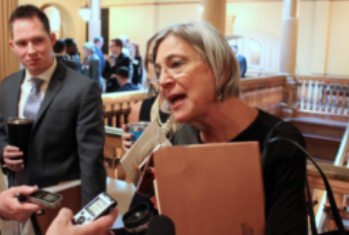
Senator Mary Pilcher-Cook

Abortion opponents contend the bill ensures that women who harbor doubts about ending their pregnancies will learn of a safe procedure for reversing a medication abortion. Abortion rights supporters contend that it’s based on junk science and the state would force doctors to provide dubious information to their patients.

The action in Kansas comes after other states, including Kentucky and Mississippi, have moved to ban abortions when a fetal heartbeat is detected , as early as the sixth week of pregnancy. Kansans for Life, the state’s most influential anti-abortion group, has long favored an incremental approach and restrictions that it believes will survive court challenges.

The Republican-controlled Kansas House approved the abortion “reversal” bill on an 85-35 vote, and the GOP-dominated Senate passed it on a 26-11 vote. The measure goes next to Democratic Gov. Laura Kelly, a strong abortion rights supporter.

Kelly staff would not say whether she will veto the bill, but she told reporters last month, “I’m not sure that’s based on science.” Supporters appear to have the two-thirds majorities necessary in both chambers to override a veto.

Medication abortions using Mifepristone, also known as RU-486, are the most common way of terminating a pregnancy in Kansas, accounting for nearly 60% of the total, according to statistics from the state health department.

Supporters of the bill argue that a medication abortion can be safely reversed if a doctor gives a woman a dose of progesterone, a hormone, before she takes the second abortion pill. They base their arguments on a 2018 studyled by an anti-abortion doctor and medical school professor in California and note that progesterone has been used for decades to prevent miscarriages.

“This simply gives a woman more information about what she can do to save her unborn child,” said state Sen. Mary Pilcher-Cook, a Kansas City-area Republican.

The bill’s opponents have said that while progesterone has been used to prevent miscarriages, its use for reversing a medical abortion hasn’t been adequately tested. The American College of Obstetricians and Gynecologists has disputed the usefulness of the procedure .

“It is not appropriate for the Legislature to practice medicine or mandate how a physician practices medicine,” said Sen. Barbara Bollier, a Kansas City-area Democrat and retired anesthesiologist.

Under the bill, an abortion clinic would have a display a sign with the abortion reversal notice, and the physician would have to tell a patient in writing that a medication abortion can be reversed. A clinic that failed to post a sign could be fined $10,000, and a doctor who failed to notify a patient could be charged with a misdemeanor for a first office and a felony for a second.

KDWPT commissioners approve hunting seasons, removal of duplicate license fee

KDWPT

PRATT – During the public hearing portion of its March 28 meeting, the Kansas Wildlife, Parks and Tourism (KDWPT) Commission voted on several items, to include greater flexibility in hunting equipment and approving 2019-2020 big game season dates. However, the first order of business during the public hearing session may have outdoor enthusiasts excited for an entirely different reason. Commissioners approved staff recommendations to eliminate a $10 fee previously associated with obtaining a duplicate license or permit. Beginning in early May, KDWPT customers who require a replacement license or permit will be able to reprint any license or permit purchased online for free or simply pay a $2.50 fee through a license vendor.

Other items voted on and approved by the Commission include:

  • Allowing hunters to use lures, decoys (except live decoys) and calls (to include electronic calls) when hunting rabbits, hares and squirrels
  • Designating tumble-upon-impact bullets as legal equipment for hunting big game
  • Moving the resident either-species deer and elk permit application deadlines to the second Friday in June, coinciding with the firearm antelope application deadline

Hunting season dates approved at the March 28 meeting are as follows:

ELK

Fort Riley

Muzzleloader – Sep. 1-30, 2019

Archery – Sept. 1-30, 2019

Firearm ­– Oct. 1-31, 2019, Nov. 1-30, 2019, and Dec. 1-31, 2019

Outside of Fort Riley

Muzzleloader – Sep. 1-30, 2019

Archery – Sept. 16-Dec. 31, 2019

Firearm – August 1-31, 2019, Dec. 4-15, 2019, and Jan. 1-March 15, 2020

DEER

Youth and Hunters with Disabilities – Sept. 7-15, 2019

Muzzleloader – Sept. 16-29, 2019

Archery – Sept. 16-Dec. 31, 2019

Pre-rut Whitetail Antlerless-only – Oct. 12-14, 2019

Firearm – Dec. 4-15, 2019

Extended Firearm

Units 6, 8, 9, 10, and 17 – Jan. 1-3, 2020

Units 1, 2, 3, 4, 5, 7, 11, 14, and 16 – Jan. 1-5, 2020

Units 10A, 12, 13, 15, and 19 – Jan. 1-12, 2020

Extended Archery

Units 10A and 19 – Jan. 13-31, 2020

For more information on the Commission, including future meeting details, visit www.ksoutdoors.com.

Police: Kansas teen hospitalized after hit and run crash

HARVEY COUNTY — Law  enforcement authorities are investigating a hit and run accident and looking for a vehicle.

Just after 4:10p.m. Friday, police responded to a hit-and-run accident in the 500 block of West Fifth Street in Newton, according to a social media report.

A teen on a skateboard was struck by a green passenger car. The car then left the scene. The teen was transported to the hospital by ambulance.

Police are looking for the driver of the green car. Anyone with information is asked to call 911 to report it.

Kansas lawmakers pass bill to allow Farm Bureau health plan

TOPEKA, Kan. (AP) — Republican lawmakers in Kansas pressed ahead Friday with allowing the state Farm Bureau to offer health coverage to members that doesn’t satisfy the Affordable Care Act, a state-level effort to circumvent an Obama-era law President Donald Trump wants to replace.

The Kansas House approved an insurance bill on an 84-39 vote that includes provisions to exempt health coverage offered by the Farm Bureau from state insurance regulation, anticipating that the nonprofit group could offer lower-cost products to thousands of individuals and families. The Senate approved the bill Thursday on a 28-12 vote, so it goes next to Democratic Gov. Laura Kelly.

The bill had overwhelming support from GOP legislators and faced strong opposition from Democrats, but Kelly hasn’t taken a public position on it. The Kansas proposal is patterned after a Tennessee law in place for decades, and an Iowa enacted a law last year.

The votes in Kansas demonstrated the Farm Bureau’s political clout, particularly in rural areas, where Republicans dominate politics. The bill also had the support of most urban and suburban GOP lawmakers who continue to oppose the 2010 federal health care overhaul and argue that its mandates have driven up health insurance premiums and hurt the economy.

“It’s just another option,” said House Majority Leader Dan Hawkins, a conservative Wichita Republican and insurance agent.

Passing the bill was among the last significant actions Kansas legislators took before starting an annual spring break set to last until May 1. They put off a vote on a proposed $18 billion-plus budget for the state fiscal year beginning in July until after the break.

Some Democratic critics of the Farm Bureau bill tried unsuccessfully to block its passage by appealing to rural Republicans who support expanding the state’s Medicaid health coverage for the needy in line with the Affordable Care Act. The House passed a modified version an expansion plan from Kelly last month, but the Senate has yet to take it up.

“There’s more than one piece that’s going to solve what we’re facing,” said Rep. Jason Probst, a Democrat from south-central Kansas. “We should hold this part of the puzzle up until they take

Farm Bureau officials said they expect about 42,000 people eventually to take its coverage if the law passes, promising lower rates than plans complying with federal mandates. They believe the takers would be individuals who either have no coverage or struggle to pay for individual coverage.

Kansas has seen the number of individual coverage plans offered through the federal ACA marketplace decline to 23 for 2019 from 42 in 2016, according to the Kansas Insurance Department. While average rate increases for 2019 were smaller than in past years, they’ve sometimes previously topped 25 percent, according to annual reports from the department.

Republicans repeatedly have cited premium increases as a reason to repeal the ACA since Trump’s election in 2016, but a drive in Congress to do it stalled when they couldn’t agree on a replacement. Trump this week deferred another push until after the 2020 election.

The Farm Bureau’s new coverage would avoid state regulation because the new Kansas law simply would declare that it’s not insurance.

Critics said companies offering traditional health insurance coverage would face unfair competition. They also focused on how Farm Bureau would be able to set higher rates or reject coverage for people who have pre-existing medical conditions, something the Iowa law allows.

To drive home their argument that legislators don’t know yet what a Farm Bureau plan might cover, critics said the lack of regulation would allow it to pay for elective abortions. A 2011 state law prohibits such coverage in group health plans, requiring people to buy separate abortion policies.

Supporters of the bill — many of whom strongly oppose abortion — brushed aside the criticism as desperate.

Farm Bureau officials have said they pushed for permission to offer health coverage because members are asking for more choices.

“They are clamoring for some kind of solution,” said Rep. Don Hineman, a moderate Republican from western Kansas who also supports Medicaid expansion. “The potential consumers for this product are begging us to do it.”

___

Police arrest 2 teens in SW Kansas for alleged attempted murder

FORD COUNTY —Law enforcement authorities are investigating a shooting and have two suspects in custody.

Just before 2:30p.m. Thursday, police received reports of gunfire in the area of the 1200 to 1100 block of Ave C in Dodge City, according to a media release.

Police arrived immediately in the area and identified a vehicle fleeing the scene.

Before officers got the vehicle stopped, the front passenger fled on foot from the vehicle.

Multiple witnesses reported to other responding officers that they had witnessed one car chasing the other and the passenger of the vehicle officers had stopped reached out of the window with a handgun and began shooting at the subjects in other vehicle.

The victims in the other vehicle also contacted officers and provided statements of what happened.  There were no injuries reported.

The driver of the alleged suspect vehicle was captured with the vehicle but the alleged shooter escaped, until Friday. When officers spotted him and took him into custody without further incident.

The DCPD has filed a case with the Ford County Attorney’s office on the 18-year-old alleged shooter for the charge of attempted 2nd degree murder and on the 19-year-old alleged driver for the charge of aid and abet attempted 2nd degree murder, according to the release.

3rd federal judge blocks citizenship question on 2020 census

GREENBELT, Md. (AP) — A third federal judge has blocked the Trump administration from adding a citizenship question to the 2020 census, ruling Friday that it poses a “substantial risk” of undercounting Hispanics and non-citizens.

Image courtesy U.S. Census Bureau

U.S. District Judge George Hazel in Maryland also concluded that a citizenship question is “arbitrary and capricious” and violates the Constitution and the federal Administrative Procedure Act.

Federal judges in New York and California previously barred the Trump administration from adding a citizenship question to the census for the first time since 1950. The U.S. Supreme Court has agreed to hear arguments on April 23 for the Justice Department’s appeal of the New York judge’s decision.

Hazel heard six days of trial testimony in January before ruling.

“Overwhelming evidence supports the Court’s finding that a citizenship question will cause a differential decline in Census participation among noncitizen and Hispanic households,” he wrote in his 119-page decision.

The Supreme Court justices are expected to rule by late June, which the Trump administration said is soon enough to allow printing and distribution of census forms next April.

Because of the tight timeframe for printing census forms, the high court granted unusually quick review of the first decision that went against the administration. That ruling, from a federal judge in New York, held that Commerce Secretary Wilbur Ross’ decision to have the census ask about citizenship was “arbitrary and capricious” under federal law. The second ruling, from a court in California, also found that asking about citizenship would violate the Constitution, which calls for a count of all people, not just citizens.

Former U.S. Census Bureau director John Thompson, the first plaintiffs’ witness for the bench trial in Maryland, testified Ross disregarded “long established” Census Bureau protocols in adding the citizenship question. Thompson, who oversaw the bureau from 2013 through June 2017, said he doesn’t think officials properly tested the question for the 2020 census.

“It’s very problematic for me,” Thompson said of Ross’ decision.

In a court filing, plaintiffs’ attorneys said Ross communicated with former White House Chief Strategist Steve Bannon, former Attorney General Jeff Sessions and other administration officials before issuing the March 2018 directive “to further the unconstitutional goal of diluting the political power of non-white immigrant communities.”

The Census Bureau began collecting citizenship data through the annual American Community Survey in 2005. Government lawyers said in a court filing that Ross decided to use the same wording from that “well-tested question” on the ACS for the citizenship question on the 2020 census.

The plaintiffs for the Maryland case include residents of Texas, Arizona, Nevada and Florida. Attorneys from the Mexican American Legal Defense and Educational Fund also sued on behalf of more than two dozen organizations and individuals. The court agreed to consolidate the claims in December.

Plaintiffs’ attorneys had urged Hazel to proceed with the Maryland trial as scheduled since the judge’s ruling in the New York case could be reversed on appeal.

Police: Frequently jailed Kan. man accused of criminal threat

SALINE COUNTY — Law enforcement authorities are investigating a frequently jailed Kansas man on new allegations after an encounter in Salina.

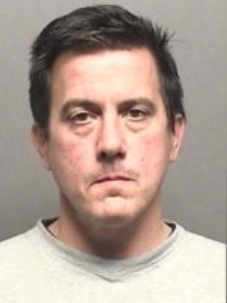
Sampson-photo Saline Co.

Just before 8:30a.m. Thursday, police were called to 1007 W. North Street in Salina at 8:25 a.m. after a man assigned to spray weeds at the CityGo bus stop there reported that his life was threatened, according to Police Captain Paul Forrester.

The 31-year-old victim told police that he as he was spraying weeds around the bus stop, 50-year-old Michael Sampson came out of the building and told him that he didn’t want him on the property.

The victim told police that he moved closer to the bus stop and continued with his work and then Sampson threatened to kill him and went back into the building.

Dickinson called police, fearing that Sampson was going inside the building to get a weapon, according to Forrester. When police arrived, Sampson refused to exit the building, so police pried the door open and to make contact Sampson.

While in the building, officers observed drug paraphernalia, so they obtained a search warrant to search the premises and found a variety of drug paraphernalia and some personal use marijuana, according to Forrester.

While police were working this case, they were notified by an employee of Acoustic Sounds, Inc., 921 W. North Street in Salina that when he arrived at the business at 7:30 a.m. Thursday, Sampson was in the front yard area of the business with blocks of wood next to him. As the employee entered the business, he noticed that a 40-inch by 30-inch window valued at $300 had been shattered, according to Forrester.

Another witness came forward and told police that Sampson had been seen on Monday using some sort of hand tool to cut lines on a utility pole in front of 1007 W. North Street.  Police verified that a Cox cable valued at $300 and an AT&T cable valued at $500 had been cut.

Police arrested Sampson on requested charges of criminal threat, obstruction, criminal damage to property, possession of marijuana, and possession of drug paraphernalia.

Sampson is well known to Salina Police. They have arrested him for telephone harassment probation violation, driving while suspended and drug allegations dating back to 2012, according to Salina arrest records.

Stakes high for Kansans needing coverage, politicians in Medicaid expansion debate

The stakes run high for 130,000-some low-income Kansans who stand to gain from expanding Medicaid coverage — and for the political players who will decide the contentious issue.

Democratic Gov. Laura Kelly made expansion a centerpiece of the election that put her in office. Two Republican leaders — Senate President Susan Wagle and Senate Majority Leader Jim Denning — could see their elevation to higher office also turn on the issue.

The political aspirations of leaders in the Kansas Senate have complicated the debate over whether the state should expand Medicaid coverage.
JIM MCLEAN / KANSAS NEWS SERVICE

Signing an expansion bill into law after six years contentious debate would be a big win for the Democratic governor. Getting there will test her skills at matching wits with the Republican-controlled Legislature.

“That’s a four-year victory,” said Washburn University political scientist Bob Beatty. “You can run for reelection on that.”

So it’s not surprising, he said, that Republican leaders work overtime to prevent that or at least delay it by a year.

“Republicans are clearly a little bit afraid of handing such a huge victory to her right off the bat,” Beatty said.

That’s particularly true for Wagle. She stands among several Republicans eyeing the U.S. Senate held by Pat Roberts, who has announced he won’t seek reelection in 2020.

Wagle has emerged as Kelly’s main antagonist, fighting her on issues ranging from taxes to Medicaid expansion and quickly jumping on her administration’s missteps, including its insufficient vetting of an appeals court nominee.

When the governor called a news conference Tuesday to chastise Senate leaders for blocking consideration of a Medicaid expansion bill that passed the House two weeks ago — like a similar measure two years earlier that fell to a Republican governor’s veto — Wagle responded within minutes.

“The governor just called for the Senate to pass a bill that (Vermont senator and liberal presidential candidate) Bernie Sanders, a socialist, endorsed,” Wagle said. “That’s not going to happen in the Kansas Senate.”

Republican Senate President Susan Wagle photo by
STEPHEN KORANDA / KANSAS NEWS SERVICE

Wagle’s all-out opposition to Kelly’s agenda may not be a productive legislative strategy, Beatty said, but it’s a smart political move.

“She doesn’t have to win,” he said. “But she has to be seen as fighting. That’s what Republican primary voters are going to want in the U.S. Senate.”

Denning faces different stakes. The Overland Park Republican represents a Senate district that’s transitioning politically. Kelly won it in her race against conservative Republican Kris Kobach and independent Greg Orman.

Kelly didn’t hesitate to point out that fact at a recent town hall meeting in the district that she said Denning “politely” declined to attend.

Conventional political wisdom suggests that Denning can’t oppose Kelly at every turn if he wants to survive the next election and succeed Wagle as Senate president.

Speaking on background, some Senate Republicans say Denning has acknowledged to them that the passage of Medicaid expansion is a question of when, not if.

That assessment could be the reason for a subtle but potentially meaningful change in GOP tactics.

Instead of simply refusing to consider expansion — as they’ve often done in recent years — Senate leaders are now calling for a summer study of the issue. That would mean a series of hearings that could result in a compromise bill, one more palatable to conservatives opposed to extending taxpayer-funded coverage to tens of thousands of non-disabled adults.

Any bill to emerge from those hearings, Wagle said, would look “very different than the one that (recently) passed the House.”

Among other things, it would likely set a lower eligibility threshold and require beneficiaries to work, submit to drug testing and pay premiums for their coverage, she said.

Kelly said she’s willing to compromise — on premiums for example – but has no interest in waiting until next session.

“When it comes to Medicaid expansion, study is a code word for stall,” she said.

“The time for blocking progress has long since passed,” she said. “Kansans want Medicaid expansion and they want it now.”

By now, Kelly means by the end of the week when lawmakers are scheduled to adjourn for roughly three weeks before returning May 1 for a brief wrap-up session.

While she’s not willing to endorse an interim study, Kelly said she would grudgingly go along if lawmakers wanted to spend their April break hammering out a deal for her to consider.

“I’d take that compromise,” she said.

The governor’s bill would extend Medicaid coverage to Kansans making about one-third more than the federal poverty level — $17,236 for an individual or $35,535 for a family of four.

Expansion would cover many Kansans who currently make too much to qualify for Medicaid but too little to be eligible for federal subsidies that largely cover the cost of private health insurance in the Affordable Care Act, or Obamacare, marketplace.

Kelly’s budget office estimates the state’s share of expansion costs in the first full year would be about $34 million.

Other estimates run higher. One compiled recently by the Kansas Health Institute, a non-profit health policy think tank, puts the cost at $41.7 million.

New research done by economists at Kansas State University suggests that a spike in state tax revenue triggered by the infusion of nearly $1 billion in additional federal funds would nearly cover the state’s share of expansion costs.

Jim McLean is the senior correspondent for the Kansas News Service. You can reach him on Twitter @jmcleanks

Hays truck driver uninjured in Barton Co. collision

HOISINGTON — A 19-year-old Hoisington woman sustained minor injuries after colliding with the back of a semi Thursday afternoon in Hoisington.

According to the Barton County Sheriff’s Office, officers responded to a call in the 500 block of North 281 in Hoisington just after 3 p.m. in regard to an injury accident.

Whey they arrived ,they discovered that a 2014 Buick Verano driven by Kenzie Wolf had struck the back of a 2018 International semi driven by 44-year-old Christopher Muench, Hays, while it was stopped in traffic waiting for another vehicle making a left-hand turn into a business.

Wolf was treated at the scene for minor injuries by Hoisington EMS and refused transport. Muench was not injured.

Both Wolf and Muench were wearing seat belts at the time of the accident.

Kansas felon convicted in 2015 shooting death in Hutchison

HUTCHINSON, Kan. (AP) — A 34-year-old Hutchinson man has been convicted in the shooting death of another man.

Trass

The Reno County attorney’s office says Brennan Trass was convicted Thursday of first-degree murder in the August 2015 death of 24-year-old Jose Morales in Hutchinson.

Trass also was convicted of criminal possession of a firearm by a felon. He’s expected to be sentenced next month to life in prison without the possibility of parole for 51 years.

Investigators say Morales was shot three times in the back as he removed drugs from a safe. Investigators testified Trass fired off other rounds as he ran from the house.

Kansas Department of Corrections records show Trass has prior convictions of aggravated burglary, obstruction and unlawful voluntary sexual relations.

🎥 Final day for NE flood relief fundraiser by Eagle Communications

HAYS POST

Eagle Communications is having a last chance to donate to the Eagle Cares Nebraska Flood Relief Fund. Eagle will be doing a radio remote from Eagle Technology Solutions, 1503 E. 27th, from 11a.m. to 2 p.m. Friday to collect the final donations.

A GoFundMe account is now available for online donations.

The Robert E. & Patricia A. Schmidt Family Foundation, Hays, will be matching Nebraska Flood Relief donations up to $25,000. Bob Schmidt was the founder and CEO of Eagle Communications.

The Hays contributions will be combined with those collected by Eagle Radio stations in Great Bend, Salina, Hutchinson, Manhattan and Junction City. The final amount will then be matched by the Schmidt Family Foundation  and distributed to the Nebraska Red Cross.

Disclosure: Eagle Communications is the parent company of Hays Post.

Owner of vape shops in Kansas arrested in murder-for-hire plot

OKLAHOMA CITY –  A man who is co-owner of vape shops in Kansas and two other states has been charged by complaint with hiring someone to commit murder, according to First Assistant U.S. Attorney Robert J. Troester.

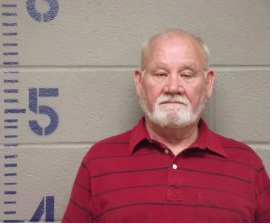
Brock-photo Pottawatomie County, OK

According to an affidavit in support of an arrest warrant filed in federal court Thursday, Vernon Wayne Brock, 69, of Alva, OK., hired a Kansas resident to commit a murder in Oklahoma City.  The individual from Kansas is alleged to have contacted the FBI and cooperated in the investigation.

The affidavit states that Brock and the individual from Kansas are partners in 17 vape shops in Kansas, Missouri and Oklahoma and that Brock was upset with a former vape shop employee who refused to continue a sexual relationship with him.  Brock allegedly wanted the individual from Kansas to arrange the murder of the former employee’s boyfriend in Oklahoma City in exchange for $5,000.

According to the affidavit, Brock identified the boyfriend by sending a picture to the individual from Kansas and confirming “that’s the guy we want dead.”  The affidavit includes several alleged quotes by Brock from recorded conversations between Brock and the individual from Kansas, including:

  • “Are they going to thump her around a little bit?  And do him?  Cause that’s what I wanted.”
  • “I’d rather do him, thump her and I mean thump her hard.  And tell her if she says one word to the cops about anything there will be someone come back to get her . . . .”
  • “The main thing is for them to throw the scent off of everything.  . . .  What they want to say to him is, . . . you didn’t pay us for our drugs or something like that, and you owe us a million dollars, then pop, before he has anything to say either way.”

FBI agents arrested Brock on the afternoon of April 3, with the assistance of the Woods County Sheriff’s Office, after Brock delivered a $5,000 check to the individual from Kansas at a café in Harper, Kansas.  Brock appeared Thursday afternoon for an initial appearance before United States Magistrate Judge Shon T. Erwin.

If found guilty of murder-for-hire, Brock faces a potential penalty of ten years in prison, a fine of $250,000, and three years of supervised release.

Copyright Eagle Radio | FCC Public Files | EEO Public File