We have a brand new updated website! Click here to check it out!

INSIGHT KANSAS: Rural voters hold the key to Medicaid expansion

The key to passing Medicaid expansion may not necessarily be our polarized legislature, but voters themselves, especially in small town and rural Kansas. But how much do average Kansans honestly care about expansion, and how much do they prioritize what their communities might gain from it? Maybe less than you think, which might help explain why Topeka is gridlocked on this issue.

Patrick R. Miller is an Assistant Professor of Political Science at the University of Kansas.

Most polling over time shows that Kansans support expansion. For example, the fall 2017 Kansas Speaks survey showed that Kansans supported “expanding Medicaid under the Affordable Care Act” 69 percent to 30 percent—typical numbers in Kansas polls. The exception is one recent poll from a conservative organization that produced 54 percent opposition after crafting their survey questions to make expansion look unattractive.

Unfortunately, no public poll of Kansans has asked how much they actually care about expansion or prioritize it versus other issues. The gut sentiment of most Kansans may be to support expansion, but we do not know the strength of those opinions, or how persuadable they are to opposing expansion. Big unknowns.

One key argument of expansion advocates is that Medicaid expansion would particularly benefit rural communities since the uninsured are often more rural and expansion dollars would benefit struggling rural hospitals. But one pattern in surveys is that rural residents typically support expansion less than suburban and urban residents, and are often pretty divided on the issue.

Elections reflect this.

In 2018, Nebraska, Utah and Idaho voters expanded Medicaid. These states in polls are typically more Republican and conservative than Kansas. If voters there passed expansion, Kansans probably would, too. In all three, though, rural communities mostly opposed expansion. It passed because of suburban and urban voters.

In Kansas, Independence and Fort Scott have experienced hospital closures. However, voters in both often prefer anti-expansion politicians. They backed anti-expansion Kris Kobach strongly in 2018 over pro-expansion Laura Kelly, supporting him as strongly as they supported anti-expansion Sam Brownback in 2014.

When the Kansas state House voted recently to expand Medicaid, anti-expansion votes skewed more toward rural legislators whose communities could benefit more from expansion. Why? Some legislators may feel safe opposing expansion if they believe that constituents will not punish them. That could also explain why conservative leadership blocks expansion votes if they feel that they have nothing to fear.

Barring some grand bargain in Topeka, how does Kansas eventually pass expansion? Advocates bear part of the burden. They should assess how effective their efforts have been. If many Kansans, especially in rural communities, are not voting based on this issue, then how effectively have advocates communicated the benefits and importance of expansion?

Politicians, especially pro-expansion moderate Republicans, also have some burden. Because of changing demographics between the parties, Democrats are increasingly a suburban to urban party, whereas Republicans are increasingly a rural to suburban party. All things equal, Democrats are more likely to defeat Republicans, moderate or conservative, in suburban than in rural districts.

For expansion advocates to replace rural anti-expansion politicians, that probably has to occur in Republican primaries where issues often matter more since party is not a factor. However, moderate Republicans leave many rural conservatives unchallenged in primaries, perhaps thinking that rural voters are too conservative to elect moderates when in fact many pro-expansion moderates represent rural districts.

If voters, especially in rural communities, are not invested in expansion or offered attractive candidates for their palates, then elections will not produce the right mix in Topeka to break its gridlock. Ultimately, most Kansans may support expansion, but they must truly invest in the issue for that preference to become policy.

Patrick R. Miller is an Assistant Professor of Political Science at the University of Kansas.
CROSS: America needs energy policy that values innovation over regulation

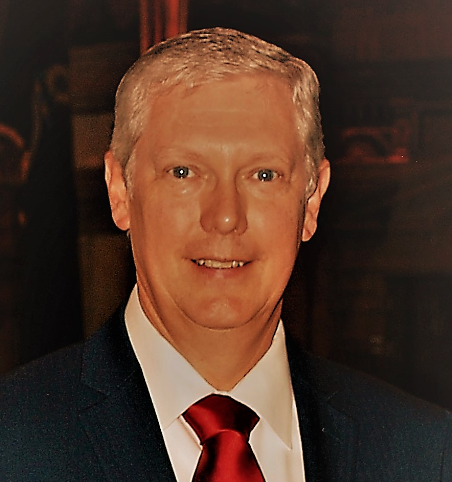
Edward Cross is president of the Kansas Independent Oil & Gas Association.

By EDWARD CROSS
Kansas Independent Oil & Gas Association

The next generation of Americans will be challenged to expand and maintain our nation’s energy abundance and global energy leadership. Currently, America’s oil and natural gas industry is meeting record consumer demand and leading the world in production, all while driving emissions to their lowest level in nearly seven decades.

Today, oil and natural gas supply nearly 65% of all U.S. energy. Oil supplies 97% of U.S. transport needs and natural gas supplies 34% of U.S. electricity. Oil and natural gas support over 10.3 million jobs in the U.S. including over 118,000 Kansas jobs. In addition, the latest EPA data shows total U.S. CO2 emissions decreased nearly 14%, while methane emissions were reduced by 4% since 2005. Meanwhile, U.S. oil and natural gas production increased more than 80% and 51% respectively. The oil and natural gas industry has proven that over the long-term, it is possible to lead in energy production and environmental stewardship.

We applaud President Trump’s commitment to America’s energy leadership, which has the power to unify Republicans and Democrats in a divided Congress to put up some major wins for the American people.

Debate continues across the country on our nation’s energy future. Few doubt that energy has improved lives and enabled human progress. Yet one of the biggest challenges facing the world is the polarized debate over the future of energy. Facts and economics are too often replaced with assertions and emotions. Discussion about fossil fuels and alternative energy sources often degenerate into a battle to delegitimize the other side. This is a recipe for inaction. And it keeps billions of people trapped in energy poverty. The world expects and deserves better.

A new energy poll released earlier this year indicates what Americans think about U.S. oil and natural gas. Key poll results include:

• 83% see oil and natural gas as important to the future
• 78% of voters support increased production of oil and natural gas resources
• 84% support increased development of the country’s energy infrastructure
• 77% support energy policies that the oil and natural gas industry advocates: a secure supply of abundant, affordable, available energy.
• 75% support the role that natural gas are playing in reducing greenhouse gas emissions
• 90% see personal value in oil and natural gas

Clearly, Americans support developing domestic energy resources and believe that can be done in a way protective of our environment. Policymakers at all levels should pursue energy policies that drives economic growth, lower costs for consumers, protects the environment, increases American competitiveness, and uses our considerable energy resources as a way to lift people up.

The U.S. currently has a better, more sensible approach to energy development than any other country in the world, both short-term and long-term. Where government policy has been absent, free markets have filled the void with great success.

The energy policy choices our nation makes today are among the most important and far-reaching policy decisions we will make in the 21st century. If we are to continue our nation’s positive energy trends, we must implement energy policies based on current reality and our potential as an energy leader. Too often, energy policy discussions are dominated by the ill-informed whose contributions to the discussions do little to educate and much to misinform.

As the oil and gas industry has shown, there is a better way. Just a few years ago, no one would have imagined the U.S. could increase production of oil and natural gas while cutting greenhouse emissions, which are now near 25-year lows. By focusing on more efficient use of energy, it is possible to lower emissions without imposing even more environmental restrictions.

An American energy policy that values innovation over regulation can turn energy policy challenges into great opportunities for economic growth and energy security. This approach is not just good business, it’s good stewardship and a much better strategy for improving the quality of life for all.

The key going forward is to avoid placing unnecessary political or legal obstacles in the way of innovation and expansion. That’s a prescription for economic prosperity and a cleaner environment.

We should set aside the acrimony and division that has marked too much of past national energy policy discussions and work together as one nation on a positive forward-looking energy future. American energy policy should focus on what’s important: American jobs, American energy security, and American global energy leadership. We need a national energy policy based on science, the free market, and entrepreneurial spirit. Those who act on our behalf at all levels of government should use those principles as the foundation for their energy policy decisions.

Kansas congresswoman earns leadership appointment

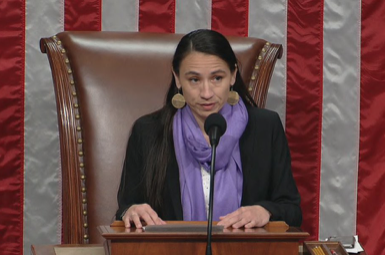
WASHINGTON —A Kansas congresswoman has been appointed to a leadership position on the House Transportation Committee.

On Thursday, Chair of the Committee on Transportation and Infrastructure Peter DeFazio (D-OR) announced Rep. Sharice Davids (D-KS) will serve as Vice Chair of the Subcommittee on Aviation in the 116th Congress, according to a media release.

The Subcommittee on Aviation has jurisdiction over all aspects of civil aviation, including safety, infrastructure, labor, and international issues.

“In just the first few months of the new Congress, Representative Davids has made outstanding contributions to our Committee, and I am honored she agreed to take on this new role,” said DeFazio. “As Vice Chair, Representative Davids will play a key role as the Committee not only continues its work to ensure the safety of our Nation’s airspace, but also as we work to improve our critical airport infrastructure, create good-paying aviation jobs across the country, and integrate new users and technologies that will shape the future of U.S. aviation.”

“I look forward to working with Rep. Davids in her role as Vice Chair of the Aviation Subcommittee. Rep. Davids represents the hardworking women and men at the FAA Kansas City Air Route Traffic Control Center, a critical component of the U.S. aviation system. Her input will be invaluable as the Committee works on a forward-looking aviation and aerospace agenda to ensure aviation safety, foster innovation in U.S. airspace, improve U.S. competitiveness in the global marketplace, and enhance the air travel experience for passengers,” said Larsen.

Davids also led action on the House floor Thursday.

“Aviation is a vital part of our transportation system and economy in Kansas and across the country. I’m honored to be named vice-chair of the Aviation Subcommittee at this critical time,” said Rep. Sharice Davids. “I look forward to working on ways we can maintain the highest safety standards in the world, capitalize on new and developing technology, and find strategies to mitigate climate change.”

Kansas to boost school funding but may not satisfy top court

By JOHN HANNA 

TOPEKA, Kan. (AP) — Kansas’ new Democratic governor promised on the campaign trail to end a protracted lawsuit over education funding by increasing state spending on public schools, and the Republican-led Legislature approved her proposal Thursday evening.

It may not be enough.

An attorney for the local school districts suing the state certainly doesn’t think so, and his clients have won before the Kansas Supreme Court repeatedly. Even some legislators who backed Gov. Laura Kelly’s plan for an increase of roughly $90 million a year think they’ll be discussing another Supreme Court order to boost funding again next year. Others are hopeful the court will sign off, but no one is dead certain.

“Worst-case scenario, all it does is buy us another year,” said Rep. Jim Ward, a Wichita Democrat who serves on a House education funding committee. “Best-case scenario is the court says, ‘That’s a good faith effort and we’ll monitor the case over the next few years.'”

The House voted 76-47 to approve a bill containing Kelly’s funding proposal, and the Senate approved it on a 31-8vote. The measure ties the new money to several education policy changes favored by GOP lawmakers, including a requirement for a new one-page online performance report on each public school.

Kelly said the bill’s passage is “an important step” toward addressing students’ needs, supporting teachers and “fully funding our schools.” It’s also her biggest legislative victory since taking office in January after campaigning last year as a bipartisan problem-solver.

“By investing in our local schools, we can ensure that all Kansas children — no matter who they are or where they live — have the opportunity to succeed,” Kelly said in a statement after the bill cleared the Legislature.

The four school districts sued Kansas in 2010, and the state Supreme Court has issued six rulings directing lawmakers to increase the state’s spending in a little more than five years, so that aid to public schools now tops $4 billion a year. The court said in an order last year that a 2018 law promising additional funding increases into the future wasn’t sufficient because it hadn’t accounted for inflation.

The court gave the state’s attorneys until April 15 to file a written report on lawmakers’ response. The key legal question is whether the state is spending enough money for lawmakers to meet an obligation under the Kansas Constitution to finance a suitable education for every child.

The school districts’ attorneys also must file their own assessment April 15. John Robb, one of their attorneys, said Thursday evening that the districts will argue that the state’s funding isn’t adequate after the 2019-2020 school year.

The districts argue that accounting for inflation is a straightforward math problem that requires increasingly larger amounts of money each year through the 2022-23 school year. Under their calculations, the increase for that year would be about $360 million instead of the roughly $90 million under Kelly’s proposal.

“I think the court will recognize that they didn’t reach the target,” Robb said. “We think the court is going to say, ‘The math doesn’t work.'”

Past Supreme Court rulings came with an implied threat that the justices could shut down schools if legislators did not comply. But Robb said that’s unlikely now, because the 2019-20 school year is adequately covered.

Some Republicans, particularly conservatives, question whether the state will be able to sustain even Kelly’s new spending without a future tax increase. GOP leaders also pushed a tax relief bill designed to prevent individuals and businesses from paying more in state income taxes because of changes in federal tax laws at the end of 2017, which the governor vetoed.

Most Senate Republicans lined up behind Kelly’s plan last month after the school districts suing the state initially supported it, then withdrew their endorsement and called for higher spending after the 2019-20 school year. House GOP leaders wanted to earmark much of the new money to programs for at-risk students but relented Wednesday when it became clear senators would not budge in negotiations.

Backers of the bill hope a show of bipartisan support will persuade the Supreme Court to find Kelly’s plan acceptable.

“For now, what we have before us is what I believe to be our best response for the courts,” said Sen. Molly Baumgardner, a Kansas City-area Republican and the chairwoman of a school funding committee.

___

Now That’s Rural: Jerry Rumbaugh & Dan O’Neal, Studio 57

Ron Wilson is director of the Huck Boyd National Institute for Rural Development at Kansas State University.
BY RON WILSON
Huck Boyd National Institute for Rural Development

Let’s take a flight on Air Force One. Look at the fine cabinetry and furniture. The craftsman who worked on those furnishings is now putting his skills to work with his partner in creating beautiful customized wood products in rural Kansas. These are master craftsmen working in wood.

Jerry Rumbaugh and Dan O’Neal are partners in this business called Studio 57, which produces customized wood products near Junction City.

Jerry Rumbaugh grew up in Junction City and attended Southern Nazarene University where he met his wife. Jerry was always skilled in working with wood. He did roofing, framing, and finish carpenter work in his parents’ construction company. For almost 20 years before retiring, he worked in the wood shop at New Horizons RV, building cabinets for recreational vehicles.

Dan O’Neal got a degree in music education at K-State but there were no teaching jobs open when he graduated. He went to work in L. W. Wilson’s cabinet shop near Manhattan and found he really enjoyed it. His career in carpentry and woodworking took him to Wichita where he worked on the furnishings on Air Force One.

Eventually he moved back to the Junction City area and worked at New Horizons RV where he met Jerry. He worked in the wood shop at New Horizons for 11 years before retiring. Dan and his wife live at Wakefield, so he crosses the Milford Lake bridge when he goes to work. “It’s a gorgeous drive,” Dan said.

The two friends worked on wood projects together at New Horizons. “Jerry was wood shop supervisor,” Dan said. “The exceptional quality of his work was instrumental in making the company No. 1 in the nation.”

When they retired, they decided to go into business together. They set up shop at Jerry’s place, which is in a rural setting along Highway 57 between Junction City and the rural community of Dwight, population 252 people. Now, that’s rural.
Because Highway 57 is where the shop is located, they called their business Studio 57. Their specialty is high quality, customized wood products. They have CNC equipment which enables them to do remarkable digitally-controlled designs.

The company makes signs, headboards, lithophanes, engraved photos, ash boxes, custom lettering, CNC carvings, and more. A lithophane, by the way, is a type of back-lit etching. When their former boss at New Horizons passed away, his family asked them to make an ash box as the final resting place for the cremains, which they did.

These two craftsmen created a sign for their business which is especially eye-catching. It’s an engraved acrylic sign with built-in lighting on a gorgeous cherry wood base. They can also cut out designs in Corian countertop material that can be inset in a wooden sheet.

Studio 57 produces carved photos which are like works of art. In fact, their picture of a boat was displayed at what is now the Strecker Nelson West Gallery in Manhattan.

Using a software program, the photos are superimposed onto a piece of wood which is grooved in a way that displays the design. Up close, one can feel the grooves. Step back, and it looks like a black and white photo. The grooves or lines can be cut at any width and any angle.

When asked what kind of wood they use, the answer is “Yes.” In other words, they can use any and all types of wood. Maple, cherry and oak would be the most common.

Jerry and Dan use the phrase “Woodwork Re-Imagined” to describe their work. The quality and diversity of products which they can produce is remarkable. The company’s market is growing through word of mouth.

For more information, visit Studio 57 Junction City on Facebook.

It’s time to leave Air Force One, where we’ve admired the handiwork of the craftsman who made these fine wood products. Now that craftsmanship can be found in rural Kansas. We commend Jerry Rumbaugh and Dan O’Neal for making a difference with their skills and creative abilities. If there is a wood product that can be designed, you can be sure that these guys would.

Kansas felon caught with meth in his backpack

HUTCHINSON — Law enforcement authorities are investigating a Kansas felon on new charges after chase and arrest.

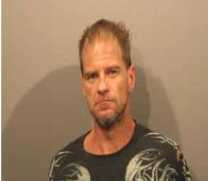
Robinson -photo Rice Co.

Just after 10p.m. Wednesday 48-year-old Dale Robinson was captured in the 300 block of East 7th Street in Hutchinson and was arrested on requested charges of felony interference and domestic battery, according to police.

Robinson had a backpack with him at the time of his arrest. A search of that bag led to the discovery of methamphetamine and drug paraphernalia.

Officers then discovered Robinson had a warrant for failing to appear in another case where he is charged with interference.

He also has other felony convictions for drugs and theft out of Pawnee and Edwards counties.

His bond was set at $7,500. Robinson will be back in court April 11.

Kan. man gets life in prison for shooting death during marijuana deal

WICHITA, Kan. (AP) — A 20-year-old Kansas man has been sentenced to life in prison for the shooting death of a man during a marijuana deal.

Holley -photo Sedgwick Co.

Mark Holley III was convicted in January of first-degree murder and six other charges in the April 2017 shooting death of 18-year-old D’Shaun Smith.

Holley will be eligible for parole after 25 years. District Judge Stephen Ternes added more than 10 years to be served after Holley completes the life sentence.

Investigators believe Smith and a woman met Holley to buy marijuana. Instead, Holley tried to rob them and shot Smith, who died in his car.

Kan. woman convicted of grisly murder files civil case against her attorney

LAWRENCE, Kan. (AP) — A Kansas woman convicted of killing a 52-year-old man has filed a civil case claiming her attorney was ineffective during her trial, including not arguing for a battered woman defense.

Gonzales-McLinn-photo KDOC

An attorney for 24-year-old Sarah Gonzales-McLinn says the post-conviction relief case is not about whether she is guilty but about her trial attorney’s effectiveness.

Gonzales-McLinn, a Topeka native, was convicted in January 2014 of drugging and nearly beheading Harold Sasko at a home they shared in Lawrence. She was sentenced to 50 years with no chance of parole.

The motion alleges Gonzales-McLinn killed Sasko after he kept her in sexual and financial slavery for more than a year.

The motion could result in a 25-year sentence, a new sentencing hearing, a new trial or dismissal.

The Latest: Kansas legislators approve governor’s $90M school aid plan

TOPEKA, Kan. (AP) — The Latest on the public school funding debate in Kansas (all times local):

6:20 p.m.

Kansas legislators have approved Democratic Gov. Laura Kelly’s plan for increasing public school funding in hopes of satisfying a court mandate.

The vote Thursday in the GOP-controlled House was 76-47. The Senate approved the measure on a 31-8 vote to send it to Kelly. She is expected to sign it.

The bill ties Kelly’s proposal to increase spending on public schools by roughly $90 million to several education policy changes favored by GOP lawmakers.

Kelly pushed her funding proposal as a way to end a protracted education funding lawsuit.

Four school districts sued the state over education funding in 2010. The Kansas Supreme Court said in an order last year that a 2018 law promising additional funding increases wasn’t sufficient because it hadn’t accounted for inflation.

___

4p.m.

The Kansas House has approved Democratic Gov. Laura Kelly’s plan for increasing public school funding in hopes of satisfying a court mandate.

The vote Thursday in the GOP-controlled chamber was 76-47. The Senate was expected to vote on the measure later Thursday, and its approval would send it to Kelly.

The bill ties Kelly’s proposal to increase spending on public schools by roughly $90 million to several education policy changes favored by GOP lawmakers.

Kelly pushed her funding proposal as a way to end a protracted education funding lawsuit.

Four school districts sued the state over education funding in 2010. The Kansas Supreme Court said in an order last year that a 2018 law promising additional funding increases wasn’t sufficient because it hadn’t accounted for inflation.

___

Congressman blasts KU’s course ‘Angry White Male Studies’

LAWRENCE, Kan. (AP) — A congressman is chastising the University of Kansas for offering a course titled “Angry White Male Studies.”

Kansas Republican Rep. Ron Estes was among those turning to social media, lamenting in a tweet that the university has “decided to offer a class that divides the student population.”

The school’s academic catalog says the course will chart “the rise of the ‘angry white male’ in America and Britain since the 1950s, exploring the deeper sources of this emotional state.”

Humanities professor Christopher Forth, himself a white man, will teach the course this fall. Forth and a university spokeswoman didn’t immediately return phone and email messages from The Associated Press.

Other colleges also have been exploring masculinity amid the #MeToo movement, including Duke University, which describes its “Men’s Project” as being “dedicated to interrogating male privilege.”

Kansas police detective charged with battery of co-worker

SEDGWICK COUNTY—Law enforcement authorities are investigating a Wichita Police Department  Detective.  According to a media release, the Sedgwick County District Attorney’s Office has charged detective Rick Craig with one count of misdemeanor battery.

The charges stem from a previous incident between Craig and a co-worker while on duty. No physical injuries occurred, according to the release

Craig was placed on unpaid administrative leave Wednesday pending the outcome of criminal proceedings and an internal review.

The WPD will review the incident to determine if department policies were violated after the completion of the criminal proceedings.

The WPD requested that the Sedgwick County Sheriff’s Office investigate the incident based on a mutual investigation agreement to ensure transparency and avoid conflicts of interest.

Police released no additional details Thursday afternoon.

KBI conducts criminal investigation at Kan. county clerk’s office

MARSHALL COUNTY — Law enforcement authorities temporarily closed the Marshall County Clerk’s office, 1201 Broadway Street in Marysville Thursday as they served several search warrants, according to the Kansas Bureau of Investigation.

Google image

The search warrants are related to an ongoing criminal investigation into alleged conduct by an employee of the Marshall County Clerk’s Office, according to the KBI.

Authorities had not reported an arrest or any possible charges early afternoon Thursday.

Check the Post for additional details as they become available.

Update: KHP identifies victim in fatal Riley County crash

First responders on the scene of Thursday’s fatal Riley County crash -photo by Rebecca Watts WIBW TV

RILEY COUNTY — One person died in an accident just before 8a.m. Thursday in Riley County.

The Kansas Highway Patrol reported a 2008 Toyota Yaris driven by Andrew GeorgeDrysdale, 49, Coffeyville, was was north bound on Kansas 113 and failed to stop at the intersection of U.S. 24.

The vehicle hit the guardrail, traveled down the embankment, struck a tree and came to rest on its top.

Drysdale was pronounced dead at the scene. He was not wearing a seat belt, according to the KHP.

———————–

RILEY COUNTY — First responders are working a fatal, single vehicle, rollover crash at Tuttle Creek Boulevard and Seth Child Road north of Manhattan, according to the Kansas Highway Patrol.

Authorities have released no additional information.

We will report additional details as they become available.

Copyright Eagle Radio | FCC Public Files | EEO Public File