TOPEKA, Kan. (AP) — Grocery and convenience stores in Kansas are stocking their shelves with stronger beer.
Beginning April 1, Kansas law allows grocery, convenience stores to sell beer with up to a 6 percent alcohol content.
Starting Monday, they can sell beer with up to 6 percent alcohol by volume. Previously, groceries and convenience stores could stock beer with only up to 3.2 percent alcohol content — considerably lower than even leading light beer brands. In exchange, liquor stores will be able to sell more non-alcoholic products, such as shot glasses, mixers, lottery tickets and tobacco products.
Lawmakers have debated the issue for years. Some said they were concerned large grocery chains would put independent liquor stores out of business.
Oklahoma and Colorado have made similar charges. The beer revolution leaves just two states — Utah and Minnesota — where only 3.2 percent beer may be sold in grocery and convenience stores.
JOHNSON COUNTY—Law enforcement authorities are investigating a shooting that left a 17-year-old boy dead
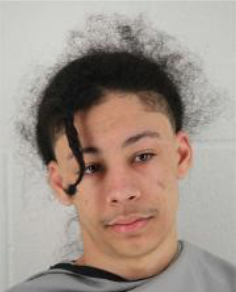
Bibee -photo Johnson Co.Police at the scene of the shooting investigation -photo courtesy KCTV
Just before 5 p.m. Friday, police found the teen unresponsive and suffering from a gunshot wound, according to a media release.. The officers performed CPR, but the teen identified as Rowan Padgett was pronounced dead at the scene, according to the release.
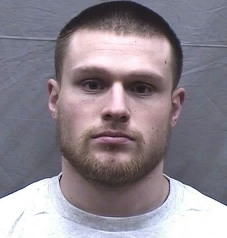
On Sunday, police reported they had located a person of interest 18-year-old Matthew Bibee, Jr. He is being held on requested charges of first-degree murder, according to online jail reports.
KANSAS CITY, KAN. – Two Kansas men were charged Thursday with a pair of bank robberies in which shots were fired and the robbers wore Black Panther and Venom masks, according to U.S. Attorney Stephen McAllister.
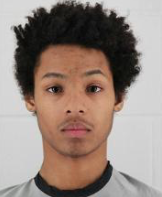
Shiferaw -photo Wyandotte Co.Breakfield -photo Johnson Co.
Michael Shiferaw, 20, Olathe, Kan., and Kenya Breakfield, 21, Olathe, Kan., were charged with two counts of bank robbery. They were charged with an Oct. 31, 2018, robbery at Wells Fargo Bank in Leawood, Kan., and a March 27, 2019, robbery at Commerce Bank in Roeland Park, Kan.
Wells Fargo robbery
According to documents filed in federal court in Kansas City, Kan., two robbers entered the Wells Fargo Bank at 2000 West 103rd in Leawood carrying guns and wearing masks that looked like the comic book and movie character Venom. Both robbers were carrying guns and threatened bank employees. Before leaving with cash, one of the robbers fired a round from his handgun into the ceiling.
Commerce Bank Robbery
At Commerce Bank, a single robber entered the building wearing a Black Panther mask. During the robbery, he fired a total of four shots while giving orders to bank employees. When he left the bank, he got into a small, black, four-door car.
Investigation
On March 27, agents set up surveillance at a house in the 1700 block of Lindenwood in Olathe where they spotted the defendants. Agents followed the defendants as they drove to Shiferaw’s residence in the 12000 block of Meadow Lane in Olathe. Later that day, Olathe Police responded to a report of a domestic disturbance at the house. The defendants were arrested with a black backpack full of currency and a handgun.
It is alleged that Breakfield took part in the first robbery and drove the getaway car in the second robbery. The defendants purchased the masks at a Spencers gift store.
If convicted, the defendants face up to 25 years in federal prison and a fine up to $250,000 on each count. Investigators included the FBI, Leawood Police Department, the Olathe Police Department, the Kansas City Police Department and the Johnson County Sheriff’s Office. Assistant U.S. Attorney Kim Flannigan is prosecuting.
LAWRENCE, Kan. (AP) — A woman who was raped 38 years ago as she jogged on the University of Kansas campus has returned to the state seven times to testify against her attacker’s release on parole, and she vows to continue her efforts as long as she can.
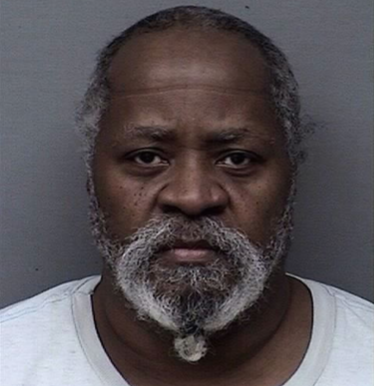
Sherman Galloway -photo KDOC
Jean Rhea was 25 when she was attacked in October 1981 by a man who held a knife to her throat and raped and repeatedly sodomized her on the Lawrence campus. She testified against her rapist, Sherman Galloway, who was sentenced to 30 years to life in prison with a possibility of parole after 15 years. Galloway was later convicted of a second rape and again sentenced to 30 years to life with a possibility of parole after 15 years. But the judge ruled that Galloway would still be eligible for parole after 15 years on the first conviction.
Galloway is considered for parole every few years, and Rhea, who has lived in California for more than 30 years, has shown up every time to testify that he should stay in prison.
“For me, personally, it’s important that I have a voice,” Rhea said this month, after speaking to the Kansas Prisoner Review Board for the seventh time. “If I didn’t participate, I feel like I’d feel more like collateral damage.”
Rhea said participating in Galloway’s parole reviews furthers her decision to participate in Galloway’s prosecution.
“But is this exactly what I signed on for in October 1981?” she said. “No.”
In Rhea’s case, Galloway was convicted of rape and aggravated sodomy. In the second rape of a Kansas graduate student he was convicted in 1984 of rape, aggravated sodomy, kidnapping and aggravated battery.
At the time sentences for those crimes were given ranges. Currently, for the same convictions, Kansas sentencing guidelines set a number of months in prison based on the severity level of the crime and the defendant’s criminal history. The Douglas County District Attorney’s Office said most modern sentences don’t include parole hearing dates, only release dates.
Rhea returned to Kansas in 1996, 1999, 2004, 2005, 2007, 2012 and this year, said Joe Phillips, administrator of the Kansas Department of Corrections’ Prisoner Review Board. Rhea said her relatives also wrote letters when Galloway asked for clemency in 2017.
Parole consideration happens automatically, Phillips said. Each time, the three-member parole board gathers oral and written public comments, holds a hearing with the inmate, then makes a decision.
Galloway’s parole hearing is scheduled for April. If he is paroled, he could be out of prison May 1.
Both of Galloway’s rape convictions are considered for his parole proceedings, though Rhea said the other victim has chosen not to participate in person.
Rhea said she has never seen any Galloway supporters at the sessions she has attended. Former and current prosecutors, and the two now-retired university police officers who worked on the case have testified against Galloway’s release.
Retired prosecutor Shelly Diehl worked on Galloway’s case in the early 2000s when he filed a motion for DNA testing, which failed to exonerate him. She has spoken several times against paroling Galloway.
“I believe in the prosecution, and I believe that this is a person who should never see the light of day — his crimes were that savage,” Diehl said.
Rhea, who suffered from post-traumatic stress disorder and alcoholism after the attack, says she made it through her dark times and is now a licensed clinical mental health professional. She said the repeated parole proceedings have become less re-traumatizing.
“No one should ever be considered for parole who is a sexual predator that does not have the ability to express regret or remorse, and has never taken accountability for his crimes,” she said.
SHAWNEE COUNTY–Law enforcement authorities are investigating a Kansas felon on new charges after a traffic stop.
Stanford-from a previous arrest in Sedgwick Co.
Just after 2 p.m. Saturday, Patrol Officers conducted a suspicious person stop in the 1500Block of SW Lincoln Street in Topeka, according to Lt. Robert Simmons.
The subject, later identified as Kanealies Lamont Stanford 41, lied to Officers about his identity. Stanford was found to be in possession of a firearm, heroin, drug paraphernalia and a homemade explosive device.
Once his true identity was determined, he was also found to have 2 city warrants for his arrest. Stanford is also a convicted felon and is prohibited from being in possession of a firearm.
Stanford was transported to the Shawnee County Department of Corrections and booked on charges of Criminal Possession of a Firearm by a Felon, Possession of Heroin, Possession of Drug Paraphernalia, Interference with a Law Enforcement Officer and Criminal Use of Explosives.
This is the 31st case in 2019 with a charge involving a felon in possession of a firearm reported by the Topeka Police Department.
Stanford has three previous drug convictions, according to the Kansas Department of Corrections.
WASHINGTON (AP) — Border officials are aiming to more than quadruple the number of asylum seekers sent back over the southern border each day, a major expansion of a top government effort to address the swelling number of Central Americans arriving in the country, a Trump administration official said Saturday.
U.S. Customs and Border Patrol continues to apprehend large groups of 100 or more migrants arriving at our borders. There have been 95 large groups of 100 or more individuals totaling 16,042 apprehensions in FY19TD. Comparatively, Border Patrol encountered 13 large groups in FY18 and only 2 in FY17. This photos show USBP and BORSTAR agents processing individuals last week in El Paso, TX – image courtesy Department of Homeland Security, U.S. Border Patrol
It was the latest attempt to ease a straining immigration system that officials say is at the breaking point. Hundreds of officers who usually screen cargo and vehicles at ports of entry were reassigned to help manage migrants. Homeland Security Secretary Kirstjen Nielsen asked for volunteers from non-immigration agencies within her department, sent a letter to Congress late this past week requesting resources and broader authority to deport families faster, and she met with Central American and Mexican officials.
The efforts are being made while President Donald Trump is doubling down on threats to shutter the U.S.-Mexico border entirely, a move that would have serious economic repercussions for both the U.S. and Mexico but wouldn’t stop migrants from crossing between ports. His administration also announced it was cutting aid to the Central American countries home to most of the migrants.
Right now, about 60 asylum seekers a day are returned to Mexico at the San Ysidro, Calexico and El Paso ports to wait out their cases, the official said. They are allowed to return to the U.S. for court dates. The plan was announced Jan. 29, partially to deter false claimants from coming across the border. With a backlog of more than 700,000 immigration cases, asylum seekers can wait years for their cases to progress, and officials say some people game the system in order to live in the U.S.
Officials hope to have as many as 300 people returned per day by the end of the week, focusing particularly on those who come in between ports of entry, said the official, who had knowledge of the plans but was unauthorized to speak publicly and spoke to The Associated Press on condition of anonymity.
But the process so far has been slow-going, and such a sizeable increase may be difficult to achieve. The plan has already been marred by confusion, scheduling glitches and an inability by some attorneys to reach their clients. In San Ysidro alone, Mexico had been prepared to accept up to 120 asylum seekers per week, but for the first six weeks only 40 people per week were returned.
Plus, U.S. officials must check if asylum seekers have any felony convictions and notify Mexico at least 12 hours before they are returned. Those who cross illegally must have come as single adults, though the administration is in talks with the Mexican government to include families. Children are not returned.
Homeland Security officials have been grappling with an ever-growing number of Central American children and families coming over the border. Arrests soared in February to a 12-year-high and more than half of those stopped arrived as families, many of them asylum seekers who generally turn themselves in instead of trying to elude capture. Guatemala and Honduras have replaced Mexico as the top countries, a remarkable shift from only a few years ago. Migrants from Central America cannot be easily deported, unlike people crossing from Mexico.
Mexico has been treading lightly on the subject. After Trump lashed out, saying Mexico and the Central American nations were “doing nothing” about illegal immigration, President Andres Manuel Lopez Obrador said his country would do everything it could to help to maintain a “very respectful relationship” with the U.S. government and Trump.
Meanwhile, Nielsen sent a letter to the heads of other agencies within her sprawling, 240,000-person department, asking for volunteers to help with border duties. And she wrote to Congress asking for more temporary facilities to process people, more detention space, and the ability to detain families indefinitely and to deport unaccompanied minors from Central America. While children from Mexico can be returned over the border, laws prohibit deportation to other countries.
Democratic congressional leaders expressed deep concern, saying the administration wanted to revive “horrific” and “immoral” plans, noting its failed hardline border policies have created “senseless heartbreak and horror.”
“Democrats reject any effort to let the administration deport little children, and we reject all anti-immigrant and anti-family attacks from this President,” House Speaker Nancy Pelosi said in a statement.
JACKSON COUNTY — Law enforcement authorities are investigating two suspects for alleged burglary.
Johnson -photo Jackson Co.Cowling-photo Jackson Co.
Just after 8p.m. Friday, the Jackson County Sheriff’s Office received a report of a suspicious vehicle parked behind a residence in the 13000 block of S. Road near Hoyt, according to Sheriff Tim Morse.
Jackson County Deputies and the Hoyt Police Department responded to the area and discovered that forced entry was made to the property.
Law enforcement stopped a white Saturn passenger car east of T. Road on 126th Road. The occupants of the vehicle, Rachel Leeann Johnson, 34, of Wellsville, Kansas and Bradley Steven Cowling, 36, of Carbondale, Kansas were arrested during the traffic stop. The duo were alleged to be in possession of property that came from the residence at the time of their arrest, according to Morse.
Cowling was booked into the Jackson County Jail for burglary, theft, felony interference with law enforcement, and criminal use of weapons. Cowling also had outstanding warrants for his arrest from other Kansas jurisdictions. Johnson was booked into the Jackson County Jail for burglary and theft.
The clock is ticking for Kansas lawmakers to figure out a school funding solution. Briefs making the case for a plan are due to the state Supreme Court April 15.
Photo by CHRIS NEAL FOR THE KANSAS NEWS SERVICE
With only one week of the regular legislative session to go, there’s still significant division over how to satisfy the court that funding is adequate and end the nearly decade-old Gannon lawsuit.
The Senate is backing Democratic Gov. Laura Kelly’s plan to add $360 million for schools over four years. Republican leaders in the House think the solution is in targeting more money at struggling students, but they don’t want to promise funding hikes far into the future.
The House has not in fact debated a school funding bill. Instead, the chamber approved — by only the narrowest of margins — legislation making a host of changes to school finance policy. House and Senate negotiators will discuss that policy bill next week.
The changes would require more reports on test scores and spending by individual districts. Superintendents would have to certify that sufficient resources are being directed to core curriculum and kids who are at risk of falling behind.
Republican Rep. Kristey Williams said the policy changes will ensure state dollars are spent wisely.
“Accountability is the cornerstone of all good policy,” Williams said when explaining her vote in favor of the policy bill she helped draft.
But some provisions of the bill are causing heartburn for school districts.
The legislation wouldn’t just require more reporting of school spending. It would also limit state funding for bilingual education for students learning English. The Kansas State Board of Education would be asked to determine each year how money for special education is distributed, tossing out an existing target.
The state hasn’t hit that target for special education funding in recent years, but members of the Kansas Association of School Boards don’t want to see it eliminated.
“Many districts are disappointed that we just sort of give up on that,” said KASB lobbyist Mark Tallman.
The bill includes a mix of policies the KASB opposes and supports, but Tallman said policy issues should not be the focus of lawmakers right now.
“None of the policy is as important as resolving funding,” Tallman said. “That’s a major concern.”
Plus, the policy bill isn’t likely to get a warm reception from senators eager to move on from years of litigation.
The Senate signed off on the governor’s plan more than two weeks ago — a plan that adjusts for inflation funding levels that the court said last year were nearly enough.
“The Senate’s already established its position,” Republican Sen. Molly Baumgardner said. “We established that pretty clearly.”
House Republicans do have a proposal to provide an initial infusion of cash for schools. But it doesn’t include long-term increases many believe the court will want to see.
Republican leaders called off debate on the proposal this week for lack of support, but they still believe their caucus can agree on something.
“It’s just part of the process,” House Majority Leader Dan Hawkins said. “We’ve got 84 members of our caucus and we probably have 10 or 15 different ideas out there.”
There are a few different paths legislators could take to reach a school funding solution next week.
If the House approves its own funding bill, that would spark bargaining with the Senate. Or the group of senators and House members slated to negotiate the education policy bill could decide to craft a funding agreement too.
Another option, one that House Democrats like, is to simply sign on to the governor’s proposal that passed the Senate with a bipartisan majority.
“The Senate did their job,” House Minority Leader Tom Sawyer said. “We ought to just pass what the Senate did. Get it done.”
Justin Cook and Gary Ryan took home top team honors at the King Kat Tournament Trail event at Milford Lake Saturday with a total catch of 98.64 pounds. Cook, from New Franklin, Missouri and Ryan from Columbia, Missouri combined to win a total of $4,200 for their first place finish. They also had the second biggest catfish caught in the tournament at 53.42 pounds.
The winning team of Justin Cook and Gary Ryan. Among the fish they turned in were two big fish including the second biggest in the tournament.
.There were 45 two-man teams who braced the winter weather including snow, rain and a cold win to fish in the tournament. With their first place finish Cook and Ryan have qualified for the national championship event November 1st and 2nd in Decatur, Alabama.
The biggest fish was hauled in by Blake McPherren of Wakefield and Jamie Jackson of Clay Center, at 55.56 pounds.
Blake McPherren and Jamie Jackson caught the biggest fish in the tournament.
Cabela’s will host another King Kat Tournament Trail regional qualifier at Milford Lake on March 28th, 2020 and they will bring their national championship event to the lake October 30th and 31st, 2020.
DOUGLAS COUNTY — One person died in an accident just after 7p.m. Saturday in Douglas County.
The Kansas Highway Patrol reported a 2003 Ford Explorer drive by Telisa Sheree Walker, 41, Topeka, was westbound on Interstate 70 just east of the east Lawrence exit.
The driver lost control of the vehicle. It left the road, traveled down the embankment impacting the ground four times before coming to rest on its top. Walker was pronounced dead at the scene and transported to Frontier Forensics. She was properly restrained at the time of the accdident, according to the KHP.
TOPEKA, Kan. (AP) — The Kansas Court of Appeals has ordered a new trial for a man whose conviction of two rape cases divided his small northeast Kansas town.
Ewing -photo KDOC
The court on Friday said mistakes by the prosecutor denied 24-year-old Jacob Ewing of Holton a fair trial. Ewing was convicted in June 2017 of two counts of rape and several other offenses.
The Topeka Capital-Journal reports Ewing argued in his appeal that special prosecutor Jacqie Spradling misstated evidence in her closing arguments that inflamed the “passions of the jury.” He also argued the court made other errors in allowing some evidence in his trial.
The appeals court ruled the cumulative effect of the errors required that Ewing get a new trial.
The allegations against Ewing, a member of a well-known family, divided Holton, a town of about 3,300 residents.
LAWRENCE, Kan. (AP) — No citations have been issued in a St. Patrick’s Day Parade accident in Lawrence in which a woman tripped and was run over by a float.
image courtesy The Lawrence St. Patrick’s Day Parade
A police report issued this week says officers don’t believe alcohol or drug use played a role.
The injured 41-year-old woman was taken to the University of Kansas Hospital. Neither she nor the driver of the float showed signs of impairment.
The report says the woman tripped while stepping off the curb to get beads that some people on the float were handing out. The driver told police he was looking forward and going slowly when he “felt a bump.” He said he stopped the truck and heard onlookers screaming.
The report provided no details on the woman’s injuries.