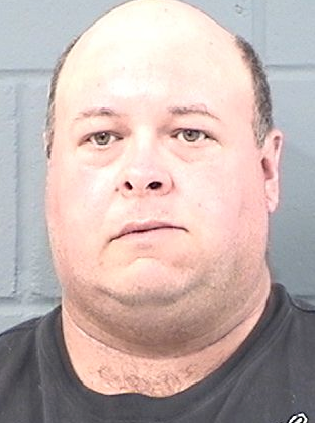
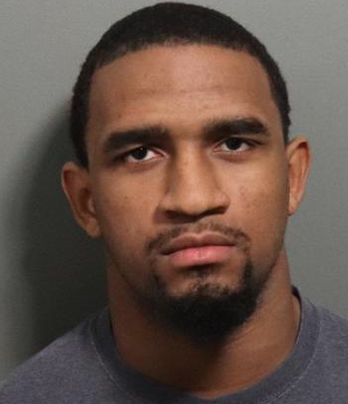
SEDGWICK COUNTY — Law enforcement authorities are investigating an aggravated assault and have three suspects in custody.
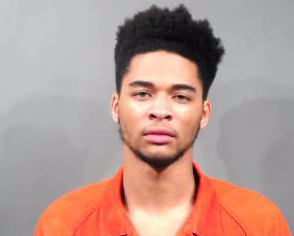
Horner -photo Sedgwick Co.
Just after 3:30p.m. Thursday, police responded to report of suspicious character with shots fired call near the 4200 Block of Regents in Wichita, according to officer Kevin Wheeler.
When officers arrived, they circulated the area and located 18-year-old Otis Horner and a teen girl in the area of 16th and Fairmount. They matched a description given during the original call, according to Wheeler. Horner and the girl fled from police and were eventually taken into custody in the 1900 Block of Holyoke. Officers recovered a handgun during the foot-pursuit.
At the time of the original call, police also responded to a walk-in shooting call at Wesley Medical Center. A 19-year-old male had arrived with a single gunshot wound to his leg. He was treated for non-life-threatening injuries, according to Wheeler. The victim remains hospitalized.
Investigators have learned that the victim was in a vehicle with an 18-year-old woman and a 20-month-old child near the intersection of Shocker and Regents. There was an argument between the occupants and Horner who was outside of the vehicle with another teen girl. Horner and the victim exchanged gunfire and the victim was wounded.
Horner is being held on requested charges of aggravated battery, aggravated assault, attempt to flee and elude, criminal discharge of a firearm and several drug charges, according to Wheeler. Police also arrested the two teen women on outstanding warrants.
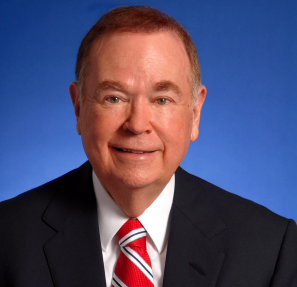
NORMAN, Okla. (AP) — David Boren’s appointment as president of the University of Oklahoma two decades ago was the capstone of a storied career. Born into a prominent Oklahoma political family, he became a Rhodes scholar, then governor at age 33 and later a U.S. senator respected for his expertise in intelligence.
David Boren is currently President Emertius at OU photo courtesy University of Oklahoma
His arrival on campus marked a heady time for the school, which set out to achieve his vision for a flagship institution.
But now, less than a year after retiring, Boren’s reputation is at risk. The 77-year-old Democrat finds himself ensnared in allegations that he sexually harassed male subordinates, and he’s on the defensive in a red state now solidly controlled by political adversaries.
The university has hired a law firm to investigate the accusations, and state authorities confirmed this week they have opened a similar probe.
Bob Burke, one of Boren’s attorneys, has characterized the inquiry as a “fishing expedition based on vicious rumors.” But at least one former student has come forward and said Boren touched him and kissed him on multiple occasions in 2010 and 2011 after he began working as Boren’s teaching aide.
The allegations by Jess Eddy, now 29, which he detailed in an interview Wednesday with The Associated Press, contradict previous statements Eddy gave to investigators denying inappropriate behavior by Boren. Eddy’s new allegations were first reported on Tuesday by the online news site NonDoc.
Another Boren attorney, Clark Brewster, has dismissed Eddy’s new account, saying Eddy “was carefully examined, asked about anything that he had ever witnessed or had seen or had experienced and not only said that didn’t occur, but he gave specific factual detail as to why it couldn’t have been true.”
Eddy said he was untruthful earlier to protect Boren, but then “started to realize the implications of what I was doing by concealing my truth.”
Boren has denied any inappropriate behavior but declined a request for an interview, citing poor health, Burke said. Boren, who underwent heart surgery two years ago, suffered a minor stroke last year before stepping down.
He has two children from his first marriage and has been married to his second wife, Molly Shi Boren, for more than 40 years.
The sex abuse investigation adds to a tumultuous transition from Boren’s time at the university, during which he won widespread regard as one of the 129-year-old institution’s greatest presidents. During his 24 years at the helm, the university added dozens of new buildings, raised more than $3 billion from private donors and added an honors college and additional degree programs.
But after a new administration took over, he was suddenly accused of making the university financially unstable. His successor, James Gallogly, a retired energy industry executive chosen by a conservative-dominated board of regents, declared that he found the university was $1 billion in debt, and he quickly fired six senior administrators, including the chief financial officer.
He later forced out more after it was revealed that OU tweaked alumni donations data to improve its U.S. News & World Report college ranking.
Gallogly also scaled back several signature Boren initiatives, including tuition waivers and stipends for National Merit scholars and the university’s international studies program named in Boren’s honor.
Since then, the open rancor between the two presidents has reverberated across the state and the university’s large alumni network.
“We don’t know what to think, really,” said Alan Livingston, an OU alum and retired energy industry executive from Houston. “It bothers me very much, because I don’t like to see people that probably have the same goals for the university be on different roads.”
Boren’s political clout declined over the years as Oklahoma’s politics shifted rightward and the GOP came to hold 116 of the Legislature’s 149 seats. In 2016, he infuriated lawmakers by spearheading an unsuccessful 1-cent sales tax initiative for education funding as the Legislature cut higher education appropriations by 16 percent.
“Behind closed doors, it was a total joke in a lot of ways how inefficient higher education had become, but they still had this huge pull on the Legislature,” said former state Rep. Jason Murphey, a Republican critical of how the university’s lobbyists worked to influence his colleagues.
Burke, Boren’s attorney and longtime friend, said he believes much of the ill will stems from an ideological clash.
Boren’s “theories of government and education are … certainly more liberal than that of conservative leaders,” he said.
Disclosure of the sexual abuse allegation provided a reminder of a bizarre episode from Boren’s earlier political career. During his campaign for Senate in 1978, an obscure fringe candidate named Anthony Points publicly accused Boren of being gay. Boren responded with a news conference at the state Capitol where he swore on a family Bible that he was not gay or bisexual.
“I further swear that I have never engaged in any homosexual or bisexual activities, nor do I approve of or condone them,” Boren said at the time.
Boren went on to win the Senate seat. His son, Dan Boren, also served three terms in the U.S. House and was the last Democratic congressman from Oklahoma until Kendra Horn’s upset win last year.
At the university, many now wonder about Boren’s legacy.
Boren “was very much loved by the community,” sophomore Taylor Putman said, “especially by the students,” who appreciated his ambition for the university and flocked to the political science classes he taught.
However, amid the waves of layoffs, “I’d say there’s kind of a demoralized, uncertain, nervous atmosphere on campus,” said Rick Tepker, a longtime professor at OU’s College of Law. “I think there’s a growing awareness that Boren left us in a financial mess, and that makes people nervous.”
DOUGLAS COUNTY — Law enforcement authorities are investigating a Friday shooting in Lawrence that sent two teenagers to the hospital.
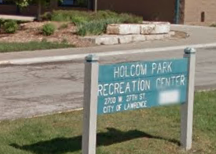
Just after 4p.m. police were dispatched to 2700 West 27th Street, Holcom Park Recreation Center in Lawrence in response to a reported shooting, according to a media release.
EMS transported two male victims, ages 16 and 18, from the scene to area hospitals. The 18-year-old victim was reported in critical condition with potentially life-threatening injuries, and the 16-year-old victim in serious condition.
Witnesses at the scene gave officers a description of a possible suspect vehicle. Police located a vehicle matching the witness description shortly afterward and two persons in the vehicle were detained for questioning and then police arrested 17-year-old Benson J. Edwards Jr. and 17 year-old Sahavione K. Caraway both of Topeka. Both were booked into the Juvenile Detention Center on aggravated robbery charges. Both victims remain hospitalized Saturday, according to police.
Grievances generated by policy and personality clashes in a southeast Kansas community have spilled onto the statewide stage in the battle over Democratic Gov. Laura Kelly’s nominee to head the state Department of Commerce.
David Toland at a Thrive Allen County event. He served as the economic development group’s CEO and critics have used that to attack his nomination to be the next Kansas secretary of commerce. FILE PHOTO / THE KANSAS NEWS SERVICE
David Toland often found himself at odds with Virginia Crossland-Macha when he was the CEO of Thrive Allen County, a community health-improvement and economic development organization based in Iola.
Crossland-Macha is the daughter of the late Ivan Crossland, founder of Crossland Construction, one of the nation’s largest general contractors. She is also the newly elected vice-chair of the Kansas Republican Party and she’s been working behind the scenes to scuttle Toland’s nomination.
The intensity of the battle has rattled many in the town of approximately 6,000, said John McCrae, a former mayor and current president of Iola Industries, a business development group.
“They’re kind of stunned that Virginia is leading the charge against the hometown boy who has done so much and so well,” McRae said.
They’re also stunned, McRae said, that abortion has now become an issue in the confirmation fight that was already complicated by Toland’s flippant jibes at prominent Republicans.
On Monday, Kansans for Life, the state’s most powerful anti-abortion organization, charged in a letter to senators that Toland was unfit for the commerce post because of his “ties” to the late Wichita abortion provider George Tiller.
“It is unconscionable that anyone wishing to sit in the governor’s Cabinet would be part of honoring the legacy of an individual who took so many innocent lives,” KFL said in the letter.
The connection consists of two small grants Thrive Allen County obtained from a memorial fund established after Tiller’s murder in 2009. Neither paid for abortion services.
The first, a $9,380 award received in 2015, went mainly to fund a campaign to reduce the smoking rate among pregnant women in Allen County. The grant application pegged that rate at the time at “an astounding 26.1 percent.”
The second was a $10,000 grant awarded in 2018 that Thrive immediately transferred to the SEK Multi-County Health Department based in Iola.
“It arrived one day and exited the next,” said Lisse Regehr, Thrive’s incoming CEO.
The money funded a health department program to curb the incidence of premature and low-birth-weight babies.
She said that using those grants to the organization to connect Toland to abortion politics shows that Crossland-Macha and Republican legislative leaders are “desperate” to “take him down.”
“It’s a personal vendetta,” she said. “It’s despicable.”
Crossland-Macha didn’t return multiple calls or texts seeking comment. But she said in a recent email to McRae, a longtime friend, that she opposes Toland’s politics and his attempts to punish her and other Iola business owners who spoke out against Thrive initiatives.
Thrive’s successful campaign to raise the legal age for purchasing tobacco products in the city from 18 to 21 was among the examples of recrimination cited by Crossland-Macha in the letter. She said the truck stop that she and her husband, Larry, own lost $100,000 in sales during the first month of the new policy.
The truck stop owned by Virginia Crossland-Macha, a Kansas Republican Party official, that lost business when Allen County raised the age for tobacco purchases.
CREDIT THRIVE ALLEN COUNTY
“This was my punishment from David,” Crossland-Macha wrote. “What a great way to silence … a critic.”
At one point, a harassment campaign directed at Toland prompted him to call the Iola police. They questioned a handful of people who Toland suspected were producing and distributing leaflets attacking him and his family. The investigation didn’t result in any charges but it did stop the harassment, according to the report.
McRae, a lifelong Republican who served 12 years as mayor, said he believes most Iola residents who know something about the battle are backing Toland because his of work to transform the community. Under his leadership, McRae said, Thrive facilitated public-private partnerships to develop a new apartment complex, recruit a new grocery store and build miles of hiking and biking trails.
“Mr. Toland’s version of economic development has displaced local small businesses and jobs in Iola,” she told The Topeka Capital-Journal.
Crossland-Macha and various companies under the Crossland Construction umbrella contributed $52,000 to the political action committee of the Kansas Chamber shortly after Kelly was elected governor. The Chamber mostly backs Republican candidates.
McRae said politics are at the root of the battle over Toland’s nomination.
“David is an incredibly talented young man,” he said. “And I think he’s probably seen as a future legislator, a future governor and part of the motivation is to cut him off at the ankles.”
In addition, McRae said he believes GOP leaders are “trying to slap Governor Kelly in the face.”
“As a Kansan who supports whoever our governor is, I’m sick of it,” he said.
Some of Toland’s problems with Republicans also come down to political missteps. In a 2018 social media post intended to draw attention to a sleep study, Toland joked that former Republican Gov. Sam Brownback and sitting GOP Sen. Caryn Tyson kept him up at night.
“He said I’m one of his biggest nightmares,” Tyson said in an interview, “so it was a personal attack.”
Even so, Tyson said, other factors will determine her vote on whether to confirm Toland to Kelly’s cabinet.
“It would be nice to have some representation from southeast Kansas,” she said, emphasizing that she hasn’t yet made a decision.
Sen. Dennis Pyle, a Republican from Hiawatha, said if the vote had occurred Monday, he would have voted for Toland’s confirmation. Then came objections from anti-abortion activists.
“Now,” Pyle said, “I don’t think I can.”
Meanwhile, Kelly’s office orchestrated letters of support for Toland from across the state.
In a joint letter, the directors of the chambers of commerce in Manhattan, Emporia, Topeka and Lawrence said Toland’s experience in both urban and rural settings “make him the ideal candidate to take Kansas’ business development to the next level.”
Before returning to his native Iola to take the helm at Thrive Allen County in 2008, Toland directed planning for the mayor of Washington, D.C., and later headed development and planning for a real estate firm that specialized in transforming blighted areas of the city.
By all accounts, the vote on his confirmation, expected next Monday, will be close.
DENVER — WildEarth Guardians (WEG) and the Prairie Dog Coalition of the Humane Society of the United States this week released a tool for communities interested in creating prairie dog management plans, preventing conflict, and conserving these keystone species.
The guide covers everything from prairie dog ecology, to the role of state and federal agencies in conserving prairie dogs, to the components of a conservation plan. It also covers barrier installation and best practices for relocation. The guide is intended for local governments and stakeholders.
“Prairie dogs are a key part of the prairie ecosystem,” said Taylor Jones, endangered species advocate for WildEarth Guardians. “This guide provides communities with the tools they need to protect wildlife and wild lands by protecting prairie dogs.”
“For years, concerned citizens and wildlife managers have asked for a next step to manage prairie dogs to reduce conflict and offer non-lethal options. This is that document,” said Lindsey Sterling Krank, director of the Prairie Dog Coalition of the Humane Society of the United States. “We were fortunate to have assistance from Pam Wanek, who is a fourth generation Coloradoan and prairie dog expert who contributed significantly to the work.”
Prairie dogs are one of the most controversial and widely misunderstood native wildlife species in North America.
Since early European migration onto the North American grasslands, prairie dogs have been celebrated as an essential keystone species for healthy grasslands ecosystems, but also vilified and in some locations managed as destructive rodent pests. Human-caused threats stemming from crop agriculture, livestock grazing, energy development, residential and commercial development, prairie dog shooting, poisoning campaigns and plague (an introduced disease) have caused the five species of prairie dogs to disappear from an estimated 87 to 99 percent of their historic range, depending on the species.
Prairie dogs are a key species to nine other species, such as hawks, owls, foxes and ferrets, and many others depend on prairie dogs for food, or their burrows for shelter. “If we want all these Great Plains species to survive, we need healthy prairie dog populations,” Jones said.
Since most species of prairie dog are not protected under federal or state law, local communities can play an important role in prairie dog conservation by including prairie dogs in their planning processes. The guide introduces many options for non-lethal management, including advanced planning, development agreements, barrier installation and relocation.
“Every acre of prairie dog towns conserved is a win for these social and intelligent animals,” concluded Jones.
SHAWNEE COUNTY — Law enforcement authorities are investigating an armed robbery and have released security camera images of the suspect.
Images courtesy Topeka Police
Just before 9:30a.m. Friday, police were dispatched to 1947 NW Topeka Blvd. in Topeka for report of an armed robbery that had just occurred, according to Lt. Andrew Beightel.
Employees of Advanced America told police a black male suspect, medium build, dressed in dark hoodie, wearing a mask and armed with a handgun entered the business. The suspect brandished his gun and demanded money.
After the robbery the suspect fled on foot in an unknown direction from the front door of the business. K9 units responded to attempt to track the suspect but, unfortunately the suspect was not located. There were no injuries reported. Anyone with information or who is able to identify the suspect should contact police.
BARBER COUNTY —The Kansas Highway Patrol is investigating a fatal accident that occurred just after 7p.m. Thursday in Barber County and have identified the victims.
The KHP reported a 2018 Ford Focus driven by James C. Ramey, 44, Mulvane, was eastbound on U.S. 160 one mile west of Medicine Lodge. The vehicle struck two bicyclists from behind.
Thomas M. Foust, 56, West Columbia, South Carolina, was pronounced dead at the scene. Robert W. Christensen, 64, Medicine Lodge, was transported the hospital in Medicine Lodge where he died.
Ramey was properly restrained at the time of the accident and not injured, according to the KHP.
————–
BARBER COUNTY — The Kansas Highway Patrol is investigating a fatal accident that occurred just after 7p.m. Thursday in Barber County.
The KHP reported a vehicle was eastbound on U.S. 160 one mile west of Medicine Lodge and struck two bicyclists from behind.
Authorities have not released names or additional details.
SEWARD COUNTY —Law enforcement authorities are investigating a suspect for alleged drug sales and have made an arrest.
Just after 8p.m., Thursday, police responded to a residence in the 1000 block of N. Holly in the city of Liberal for a welfare check of a child at that residence, according to police captain Robert Rogers.
While there, an officer observed signs of narcotics use. During the search of the residence, police found about 741 grams of suspected marijuana and marijuana oil, about 20 grams of psylocibin mushrooms, a small amount of methamphetamine, drug paraphernalia and a handgun.
Police also arrested a 42-year-old man for possession with the intent to sell marijuana, possession of methamphetamine, possession of drug paraphernalia, aggravated endangering a child, no drug tax stamp, and criminal possession of a firearm. An affidavit was forwarded to the Seward County Attorney’s Office seeking formal charges. Other family members are taking care of the child, according to Rogers.
WICHITA, Kan. (AP) — A California man was sentenced Friday to 20 years in prison for making bogus emergency calls to authorities across the U.S., including one that led police to fatally shoot a Kansas man following a dispute between two online players over $1.50 bet in the Call of Duty: WWII video game.
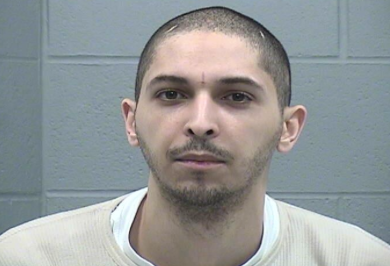
Barriss is now being held in Harvey County
U.S. District Judge Eric Melgren sentenced Tyler R. Barriss, 26, under a deal in which he pleaded guilty in November to a total of 51 federal charges related to fake calls and threats. The plea agreement called for a sentence of at least 20 years — well over the 10 years recommended under sentencing guidelines. Prosecutors believe it is the longest prison sentence ever imposed for the practice of “swatting,” a form of retaliation in which someone reports a false emergency to get authorities, particularly a SWAT team, to descend on an address.
Melgren said the case went into “uncharted legal territory,” that the law has not caught up with technology and the charges didn’t address the severity of what happened.
The 2017 death of 28-year-old Andrew Finch drew national attention to swatting. But Barriss had made dozens of such calls before that and was “known as the guy on Twitter that is good at this,” his attorney, Richard Federico, said.
Authorities say an Ohio gamer recruited Barriss to “swat” a Wichita gamer, but that the address they used was old, leading police to Finch, who was not involved in the video game or the dispute. Barriss called Wichita police from Los Angeles on Dec. 28, 2017, to falsely report a shooting and kidnapping at that Wichita address. Finch answered the door, and an officer shot the unarmed man.
Barriss apologized to Finch’s family on Friday, saying he takes full responsibility for what happened.
“If I could take it back, I would, but there is nothing I can do,” Barriss told the court. “I am so sorry for that.”
Federico described Barriss as a loner who “found solace in the gaming community” as he became a “serial swatter.” His best friend is someone he knows only online, Frederico said, his father died when he was young and his mother abandoned him.
Outside the courthouse, his sister, Dominica Finch, said Barriss got what he deserved, but that she also wants to see police held accountable. Finch’s family has sued the city of Wichita and the officers involved. Police have said the officer who shot Finch thought he was reaching for a gun because he moved a hand toward his waistband. Prosecutors declined to charge the officer.
Sedgwick County District Attorney Marc Bennett defended that decision.
“I am very much sympathetic to the Finch family, but at the end of the day my determination has to be in what the law allows,” Bennett said.
Barriss’ prosecution in Wichita consolidated other federal cases that had been filed against him in California and the District of Columbia involving similar calls and threats. Bennett also said Friday that he would dismiss state charges, including involuntary manslaughter, because Barriss would be getting more prison time from the federal charges than he could get in state court.
The Federal Bureau of Investigation recognized swatting as an emerging threat as early as 2008, noting it had become commonplace among gamers.
“We hope that this will send a strong message about swatting, which is a juvenile and senseless practice,” McAllister, the federal prosecutor, told reporters. “We’d like to put an end to it within the gaming community and in any other contact. Swatting, as I’ve said before, is not a prank.”
The intended target in Wichita, Shane Gaskill, 20, and the man who allegedly recruited Barriss, Casey Viner, 19, of North College Hill, Ohio, are charged as co-conspirators. Authorities say Viner provided Barriss with an address for Gaskill that Gaskill had previously given to Viner. Authorities also say that when Gaskill noticed Barriss was following him on Twitter, he gave Barriss that old address and taunted him to “try something.”
Viner and Gaskill pleaded not guilty to charges including conspiracy to obstruct justice, wire fraud and other counts. Viner has notified the court he intends to change that plea at a hearing scheduled for Wednesday. Gaskill’s trial has been delayed to April 23 amid plea talks with federal prosecutors.
——————
WICHITA, Kan. (AP) — A California man was sentenced Friday to 20 years in prison for making bogus emergency calls to authorities across the U.S., including one that led police to fatally shoot a Kansas man following a dispute between two online players over $1.50 bet in the “Call of Duty: WWII” video game.U.S. District Judge Eric Melgren sentenced Tyler R. Barriss, 26, under a deal in which he pleaded guilty in November to a total of 51 federal charges related to fake calls and threats.
The 2017 death of 28-year-old Andrew Finch drew national attention to the practice of “swatting,” a form of retaliation used to report false emergency call to get authorities, particularly a SWAT team, to descend on an address. Authorities say an Ohio gamer recruited Barriss to “swat” a Wichita gamer, but that the address they used was old, leading police to Finch, who was not involved in the video game or the dispute.
Barriss admitted he called Wichita police from Los Angeles on Dec. 28, 2017, to falsely report a shooting and kidnapping at that Wichita address. Finch answered the door, and an officer shot the unarmed man.
Barriss’ prosecution in Wichita consolidated other federal cases that had initially been filed against him in California and the District of Columbia involving similar calls and threats he made. Prosecutors had asked for a 25-year sentence , while the defense had sought a 20-year term.
The Federal Bureau of Investigation recognized swatting as an emerging threat as early as 2008, noting it had become commonplace among gamers.
The intended target in Wichita, Shane Gaskill, 20, and the man who allegedly recruited Barriss, Casey Viner, 19, of North College Hill, Ohio, are charged as co-conspirators. Authorities say Viner provided Barriss with an address for Gaskill that Gaskill had previously given to Viner. Authorities also say that when Gaskill noticed Barriss was following him on Twitter, he gave Barriss that old address and taunted him to “try something.”
Viner and Gaskill pleaded not guilty to charges including conspiracy to obstruct justice, wire fraud and other counts. Viner has notified the court he intends to change that plea at a hearing scheduled for Wednesday. Gaskill’s trial has been delayed to April 23 amid plea talks with federal prosecutors.
Finch’s family has sued the city of Wichita and the unidentified officers involved. Police have said the officer who shot Finch thought he was reaching for a gun because he moved a hand toward his waistband. Prosecutors declined to charge the officer.
—————-WICHITA, Kan. (AP) — A California man faces decades in prison when he’s sentenced for making hoax emergency calls, including one that led police to fatally shoot a Kansas man.Tyler R. Barriss will be sentenced Friday in federal court in Wichita, Kansas. The 26-year-old California man has pleaded guilty to 51 charges related to fake calls and threats under an agreement calling for at least 20 years in prison. His case drew national attention to the practice of “swatting,” a form of retaliation in which gamers get police to go to an online opponent’s address.One of Barriss’ calls led to the death of 28-year-old Andrew Finch, who not playing video games. Barriss’ call followed a dispute between two other people over a $1.50 bet in “Call of Duty: WWII.”
GEARY COUNTY –The Kansas Bureau of Investigation (KBI) arrested Anthony J. “Tony” Wolf, 44, the Geary County Sheriff, just after 2 p.m. Friday at the Geary County Sheriff’s Office, 826 N. Franklin St. in Junction City.
Geary County Sheriff Tony Wolf
According to a KBI media release, Wolf was arrested for two new counts of felony theft. The charge alleges Wolf used county funds to purchase items that were then sold for personal profit, or maintained for personal use.
On Friday he appeared at a pre-trial conference regarding the charges he was previously arrested for on Oct. 18 that accuse Wolf of giving a county-owned firearm as a gift to a third party, and for misuse of public funds. The misuse of public funds allegation asserts Wolf used public dollars in a manner not authorized by law.
Wolf was booked into the Geary County Jail. Dickinson County Attorney Andrea Purvis has been appointed as special prosecutor for this case.
LAWRENCE, Kan. (AP) — Kansas running back Pooka Williams has agreed to diversion terms for a misdemeanor domestic battery charge.
Williams -photo Douglas Co.
Court records filed Thursday show the agreement requires him to complete 40 hours of community service by Nov. 30. He also must submit to domestic violence offender assessment. If that assessment doesn’t result in any recommendations, Williams must take an anger management course.
If he successfully completes the diversion, the allegation would be dropped from his record.
Williams was charged in December after an 18-year-old Kansas student he was dating accused him of punching her in the stomach and grabbing her throat.
He was suspended by the football program Dec. 7.
Williams was the Big 12 offensive freshman of the year and a first-team all-Big 12 selection as running back and kick returner last season.
WASHINGTON (AP) — The number of migrant families and children entering the U.S. from Mexico is so high that Border Patrol is immediately releasing them instead of transferring them to the agency responsible for their release, forcing local governments to help coordinate their housing, meals and travel.
U.S. Customs and Border Patrol continues to apprehend large groups of 100 or more migrants arriving at our borders. There have been 95 large groups of 100 or more individuals totaling 16,042 apprehensions in FY19TD. Comparatively, Border Patrol encountered 13 large groups in FY18 and only 2 in FY17. This photos show USBP and BORSTAR agents processing individuals this week in El Paso, TX – image courtesy Department of Homeland Security, U.S. Border Patrol
“We need to work toward a clean sweep,” Border Patrol Deputy Chief of Operations Richard Hudson said in a letter obtained by The Associated Press sent to sector chiefs Thursday. “This should be our daily battle rhythm.”
Agents are still doing medical screenings and criminal checks, but the decision means thousands of families will be released without first going through U.S. Customs and Immigration Enforcement, which manages their deportation cases.
The Del Rio and Rio Grande Valley sectors in Texas and the Yuma, Arizona, sector earlier announced that agents would begin to release families on their own recognizance. A Border Patrol official not authorized to speak on the matter said Wednesday that El Paso and San Diego planned on doing the same. Some sectors were not part of the change, including Tucson, Arizona and El Centro, California.
Families are typically released with notices to appear in immigration court due to legal restrictions on detaining them and lack of holding space. Until now, Customs and Border Protection has detained them briefly before turning them over to Immigration and Customs Enforcement, generally within 72 hours, to be released pending the outcome of their immigration cases.
The move came as Homeland Security Secretary Kirstjen Nielsen wrote to Congress asking for emergency funding for humanitarian and operational needs, and the ability to detain families together as long as necessary to deport people faster.
“The volume of ‘vulnerable populations’ is unsustainable. Our system has been able to cope with high numbers in the past, but the composition of today’s flows makes them virtually unmanageable,” she wrote.
Arrests all along the southern border have skyrocketed in recent months. Border agents are on track to make 100,000 arrests and denials of entry at the southern border this month, over half of which are families with children. To manage the crush, U.S. Customs and Border Protection is reassigning 750 border inspectors from their usual duties at the ports of entry to help Border Patrol keep pace with arrivals in between ports of entry. The head of the agency held a press conference in El Paso on Wednesday to say the breaking point had arrived.
But federal lawmakers have fought over whether there is a “crisis” at the border, particularly amid President Donald Trump’s push for a border wall that he claimed will solve all the immigration problems. Wisconsin Republican Sen. Ron Johnson, Chairman of the Senate Homeland Security Committee, said Thursday the evidence shows the immigration system is cracking under the strain.
“The sad reality is that we now have a virtual open border for any migrant who crosses with a minor, and our border security enforcement has been reduced to a mere speed bump for migrants on their path to long-term occupancy in the United States,” he said, adding border officers are being asked to perform an impossible task with no help from Congress.
And along the border, officials were working to manage the families that had been suddenly released. Yuma Mayor Douglas Nicholls said was city is working with various non-governmental organizations to make sure families released by the Border Patrol have temporary housing, food, medical care and help with traveling to their intended destinations.
Most immigrant families coming to the U.S. don’t plan on staying in the border towns they cross through, but rather to meet up with family throughout the country.
“Focusing on the humanitarian effort is the most important focus for the city, Nicholls.
The Yuma Sector has over the last two years seen an extraordinary spike in the number of immigrant families who turn themselves in. Yuma Deputy Chief Patrol Agent Carl E. Landrum said Thursday that agents have arrested 30,000 people in the relatively small sector since October 1.
The facility in Yuma has the capacity to temporarily hold 410 people. Until Thursday, ICE had been picking all of these families up and taking them to Phoenix and Tucson to be processed. But the numbers have swelled so much now that ICE doesn’t have enough resources to pick everybody up, so Border Patrol agents themselves are releasing families in Yuma.
“It is overwhelming us locally, as well as overwhelming the system nationally,” Landrum said.
“The sheer volume of family units crossing the border has overwhelmed ICE’s limited transportation resources; combined with a requirement to detain these individuals for no more than 20 days, the agency has no option but to expeditiously arrange for their release,” ICE spokeswoman Sarah Rodriguez said in a statement.
The agency makes “every attempt to coordinate the release of these individuals with NGOs that provide assistance with basic needs, but the heavy influx in recent months has inundated these organizations as well,” Rodriguez said.
SEDGWICK COUNTY — One person died in an accident just after 9:30a.m. Thursday in Sedgwick County.
A 33-year-old Kansas man died in Thursday’s crash -photo courtesy KWCH
A 28-year-old woman was driving a GMC Denali merging from Interstate135 to eastbound Kellogg, according to officer Kevin Wheeler.
The vehicle stalled out partially in the merging lane. The driver called 911 to report that her vehicle was stalled. A Honda Accord driven by Quinton Bonham, 33, Wichita, rear-ended the SUV.
EMS transported him to a local hospital where he died, according to Wheeler.
The driver and two children in the SUV were not injured according to Wheeler.