We have a brand new updated website! Click here to check it out!

KU study: The dangers of saying Russia ‘hacked’ the 2016 election

(Photo credit: Saksham Choudhary, via Pexels)

KU NEWS SERVICE

LAWRENCE – Those on the political left who play fast and loose with the term “hacked,” as in “Russia hacked the 2016 presidential election,” are aiding the Kremlin in its mission of undermining Americans’ faith in the democratic process, two University of Kansas researchers write in a new scholarly paper.

This dispiriting discourse threatens to discourage voting in 2020, contend the co-authors, Brett Bricker, assistant specialist and assistant director of debate in the Department of Communication Studies, and Jacob Justice, doctoral student and fellow debate coach.

Their article titled “Hacked: Defining the 2016 Presidential Election in the Liberal Media” was published in the fall edition of Rhetoric & Public Affairs. In it, Bricker and Justice cite the intelligence community consensus that while Russia hacked into Democratic National Committee computers and used that information in its 2016 influence campaign against Hillary Clinton, no electronic ballots were changed by computer hacking.

Definitional arguments have great salience going forward, they wrote.

“Our country is having a debate about how to define what Russia did in the 2016 election,” Justice said. “On the one side, we’ve got conservatives, who would probably define it as not very much at all — that the 2016 election was not about Russia as much as it was about Trump winning because of a smart campaign. Then we’ve got an intelligence community that says Russia intervened in the election in these very specific ways … And then on the left end of the spectrum, there’s a vocal and influential group of people who define what Russia did as a hack — that they hacked our election or they hacked American democracy.”

Defining social-media disinformation campaigns as hacking “introduces further haziness into a debate that is already rife with misinformation,” Bricker and Justice wrote.

“If we adopt this broad definition,” Justice said, “not just that the Democratic Party was hacked, but that the entire nation or our democracy was threatened by Russia — that could do Putin’s work for him by convincing the public that our democracy has been irreparably harmed, or that their votes not going to be counted because the Russians can change voting results with the push of a button.”

The authors lay the blame for this problem at the feet of the liberal media, which they define as media that liberals consume, including the Washington Post, CNN and MSNBC.

They wrote, “We demonstrate that the insular nature of much of the liberal media … enabled the spread of this misleading definition. Through a rhetorical analysis of texts defining Russia’s influence campaign as ‘hacking,’ we demonstrate that Twitter and the publications produced by the liberal media were highly influential in creating the widespread notion that Russia ‘hacked’ the election.”

The authors cite Malcolm Nance’s book, “The Plot to Hack America,” published just days before the 2016 election, as “influential in shaping popular understandings of the Russian influence campaign” ever since.

Bricker and Justice assert four negative consequences of defining Russian behavior broadly as hacking.

“First, this definition contributes to the already endemic problem of misinformation about the issue,” they wrote. “Second, defining Russia’s interference as a ‘hack’ has the potential to unduly limit the range of policy remedies considered to address the problem of electoral interference. Third, broad definitions of Russia’s interference as an attack on the nation risks militarizing dialogue on the issue, with dangerous consequences for United States-Russia relations. Fourth, such wanton declarations that the election was ‘hacked’ may discourage electoral participation by leading voters to conclude that the system of democracy itself is illegitimate and broken.”

The authors cite polls showing that large minorities of Democratic voters believe that Russians actually changed voting-machine tallies to help elect Donald Trump. It is widely recognized that conservatives circulate conspiracy theories in the Trump era, but what is alarming, according to the authors, is that a similar dynamic is present among liberals.

“If progressive forces aim to be champions of reasoned decision making,” the authors wrote, “they must avoid engaging in the very behavior that they criticize by propagating the misleading notion that ‘Russia hacked the election.’ The willingness of trusted figures in the liberal media and elected officials to participate in the perfunctory spread of this definition is disturbing.”

They wrote, “Without rebuke, conspiratorial thinking may become increasingly mainstream” and that “(s)uch a development has deleterious effects on democracy in the United States, raising the prospect that politics could become a permanently ‘fact-free’ affair as both sides of the political spectrum prioritize short-term political benefits over the long-term health of the nation’s public discourse.”


3 teens arrested after social media video shows attack on Kan. girl

SEDGWICK COUNTY —Law enforcement authorities are investigating an aggravated battery and have made an arrest.

Just after 3p.m. Thursday, police were alerted to a video on social media that included a male punching a female, according to according to officer Charley Davidson. Several citizens also contacted police about the video. Investigators were able to identify the individuals involved and arrested a 16-year-old boy at his home on South Patty in Wichita.

On Friday, police also arrested a 15 and a 16-year-old girl in connection with the attack.

Police also contacted the 15-year-old victim. She sustained serious but non-life-threatening injuries, according to Davidson. He said the boy and the victim are acquainted and the battery stems from an ongoing dispute.

Police booked the youths into juvenile detention on requested charges of aggravated battery.

Conviction, sentence of retired Kansas trooper thrown out

WICHITA, Kan. (AP) — A federal judge has thrown out a retired Kansas Highway Patrol trooper’s conviction and probation sentence related to a charge that he lied to the FBI during an investigation into illegal gambling in Wichita.

U.S. District Judge Eric Melgren on Tuesday granted 54-year-old Michael Frederiksen’s request to vacate his conviction. Frederiksen had argued his attorney was ineffective.

The judge agreed, writing that Frederiksen’s trial attorney was inexperienced, unfamiliar with court rules regarding evidence and, while he was licensed to practice in New Mexico, he was not licensed in Kansas.

Frederiksen, of Derby, was convicted in May of lying to FBI investigators about participating in an illegal cash poker game while he was still a trooper. Prosecutors at his trial said video showed he had participated.

Girlfriend of Kan. man who wounded 2 lawmen enters plea

LYONS, Kan. (AP) — The girlfriend of a Kansas man who fatally shot his father and wounded two Kansas law enforcement officers before killing himself has pleaded no contest to aggravated child endangerment.

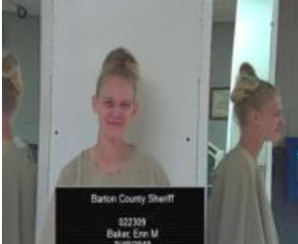
Erin Baker photo Barton Co.

27-year-old Erin Baker also pleaded no contest Friday to obstruction of law enforcement. A charge of interference with law enforcement was dropped. She’s expected to receive probation when she’s sentenced Dec. 18.

Investigators say Baker put her 7-year-old in danger by continuing a relationship with David Madden, despite knowing he was a convicted felon with a gun.

Police say the child was present in April when Madden wounded a Rice County undersheriff. Baker previously told KWCH-TV that she and her son got away after dropping Madden off at his father’s home, where the other shootings happened.

KC officer cleared in fatal shooting of suspect who broke into woman’s home

KANSAS CITY (AP) — A Kansas City police officer has been cleared in the May fatal shooting of a man suspected of having forced his way into a woman’s home.

The Jackson County Prosecutor’s Office has confirmed no charges will be filed against the officer in the May 26 shooting death of 30-year-old Terrance Bridges.

The shooting stemmed from a call to police about a domestic disturbance, in which a woman reported a man had broken into her home and stolen her car.

Police say three officers responded, with one staying at the home while the other two searched for the suspect. Minutes later, police say the suspect — later identified as Bridges — returned. A chase and struggle ensued, and the officer shot Bridges.

Kansas man sentenced for fatal drug-deal gunfight

HUTCHINSON, Kan. —One of two men convicted of reckless second-degree murder in the death a Hutchinson man during a drug sale was sentenced Friday to just under 11-years in prison.

Garcia -photo Reno County
Delaney-photo Reno County

Curtis Garcia, 26,  entered a plea in the case as part of an agreement with the state. He was originally charged with felony murder for the killing of 18-year-old Norman Cushinberry.

The crime involves 18-year-old defendant in the case Tristan Delaney and Cushinberry purchasing drugs. According to court testimony, Delaney and Garcia had been texting the day of the shooting about the purchase of around a quarter pound of marijuana.

There is also some indication over phony money being involved. Garcia, who had his children in his pickup during the transaction, claims he was there to sell an Xbox and not drugs. The victim tried to pay for the marijuana with counterfeit money, so Garcia left.

Delaney then texted Garcia to come back because they would have real money. Once Garcia arrived a second time, the victim allegedly got into Garcia’s pickup. He then asked him to turn the truck off. Once Garcia complied, Cushinberry pulled a 9 mm Ruger semi-automatic handgun.

Delaney came from the porch with a 12-gauge shotgun. Garcia grabbed a handgun he had in the pickup and fired at Delaney, striking him. An altercation then occurred in the pickup and Cushinberry was shot. Garcia then went to the passenger side of the truck, pulled the victim out and left him in the street where he died.

Delaney, who also entered a plea to the same charge in this case, will be sentenced Nov. 1.

Welding torch triggered Kan. meatpacking plant fire, price spike followed


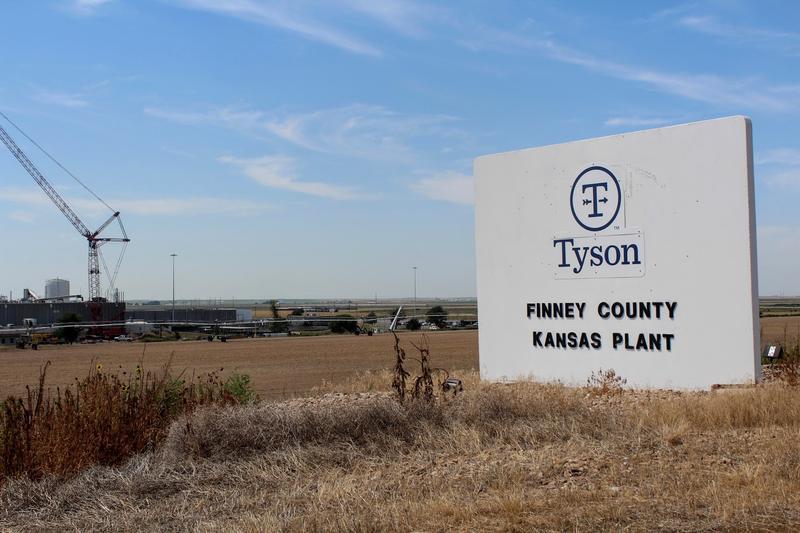
The Tyson plant in Holcomb, Kansas, is running at limited capacity after the Aug. 9 fire. Corinne Boyer / Kansas News Service file photo

By CORRINE BOYER
Kansas News Service

GARDEN CITY —

A welding torch caused August’s fire at a Tyson meatpacking plant in western Kansas.

The Garden City Fire Department investigated the fire at the Holcomb plant and completed a report on Oct. 13, saying the fire was unintentional and likely started because a welding torch produced a “spark, ember or flame.”

Tyson spokeswoman Liz Croston said the company “will not be releasing an update on the cause of the fire.”

The Garden City Fire Department investigated the cause of the fire. Garden City Communications Manager Jamie Stewart said the city won’t release any further updates about the fire.

The Kansas State Fire Marshal’s Office does not investigate fires unless requested by local fire departments, according to spokeswoman Jill Bronaugh. And because no injuries were reported, the federal Occupational Safety and Health Administration didn’t investigate.

The plant stopped production after the fire, though it returned to limited production a few weeks later. The Tyson plant processed around 5% of beef in the U.S., and beef prices spiked after the fire. It prompted the U.S. Department of Agriculture to investigate pricing margins. The USDA did not immediately respond to a request for an update on that investigation.

Holcomb Fire Chief Bill Knight remembers seeing black smoke inside the Tyson building on the night of the fire, which he said kept firefighters at the plant from 8:30 p.m. Aug. 9 to about 10 p.m. the next day.

Knight said he could smell burning cattle carcasses, which had been slaughtered prior to the fire.

“Now, you’ve got a hundred and some head of livestock hanging there upside down, and when they catch fire they melt and all that fat, grease … turns to a flammable liquid,” Knight said.

Knight said Tyson’s safety crew helped the firefighters find the electrical switches and valves on the scene. He also noted that some tanks of anhydrous ammonia had minor leaks during the fire, but said it was “nothing big.”

“And, like I say, the Tyson people were on top of that,” Knight said.

Corinne Boyer covers western Kansas for High Plains Public Radio and the Kansas News Service. You can follow her on Twitter @corinne_boyer or or email [email protected]. The Kansas News Service is a collaboration of KCUR, Kansas Public Radio, KMUW and High Plains Public Radio focused on the health and well-being of Kansans, their communities and civic life.

KHP identifies 21-year-old Kansas man who died in crash

LEAVENWORTH COUNTY — The Kansas Highway Patrol has identified the victim in an accident that occurred just after 3p.m. Thursday in Leavenworth County.

According to the KHP,  a 2001 Ford F250 driven by Hunter Ford, 22, Tonganoxie, was eastbound at 25687 U.S. 24 Highway in Tonganoxie.

The pickup crossed the center line and struck a 2018 Kia Soul driven by Jawuan Smoot, 21, Lawrence, and rolled. The Kia overturned and left the road to the right. 

Smoot was pronounced dead at the scene. Despite not wearing a seat belt, Ford had minor injuries and was not transported for treatment, according to the KHP.

—————

LEAVENWORTH COUNTY —The Kansas Highway Patrol is investigating a fatal Thursday afternoon crash in Leavenworth County.

Just after 3p.m. Thursday, a vehicle eastbound on U.S. 24 Highway in Tonganoxie crossed the center line, struck a westbound vehicle rolled and exited the roadway to the left.

Authorities had not released details or names of the victims early Friday.

KS Livestock Association celebrates 125 years

KLA

TOPEKA – The Kansas Livestock Association (KLA), founded in 1894, is celebrating its 125th birthday in 2019. Association members will celebrate this milestone in conjunction with its 107th annual KLA Convention and 48th Trade Show, December 4-6 in Wichita.

A group of more than 100 Flint Hills ranchers who met in Emporia to discuss cattle theft and unreasonable railroad freight rates started the organization. Today, KLA has 5,600 members in all 105 Kansas counties and 40 states. Cattle theft continues to be a challenge, and today’s issues in the transportation arena are electronic logging and limited hours of service for truckers, which put livestock being hauled at risk.

“KLA has been advocating for its members at the Kansas Statehouse and on Capitol Hill since its earliest days,” said KLA Chief Executive Officer Matt Teagarden.

Key issues addressed include a state indemnity for ranchers who lost animals due to foot-and-mouth disease in 1915, alleged market manipulation by packers in 1916, the Texas Fever lawsuit against the federal government in 1926 and a beef boycott by Boston restaurant owners in 1928. KLA officers traveled to Washington, D.C., to obtain an exemption for farm labor from the military draft in 1917.

KLA has worked hard to secure a better business atmosphere for ranchers, feeders and other agricultural producers. In 1975, KLA pushed a bill through the Kansas Legislature calling for prompt payment on fed cattle by packers. The organization led the charge for similar federal legislation the following year despite opposition from the packing industry. KLA fought regulation of the trucking industry in 1978 because the changes would have been unrealistic for hauling livestock. In 1986, Kansas voters approved a constitutional amendment crafted by KLA and other farm groups calling for use-value appraisal on ag land and exempting farm machinery and livestock from the property tax rolls.

“This helped keep the state’s business climate on a level playing field with other states and is considered to be the biggest tax victory in KLA’s history,” said Teagarden.

Since celebrating its centennial in 1994, KLA has continued to seek ways to serve its members and keep the livestock industry vibrant, both in Kansas and across the nation. The past 25 years have seen an expansion of services available to KLA members, including Ranchland Trust of Kansas, KLA Environmental Services and rapid growth of KLA Risk Management Services (the association’s self-funded workers’ compensation pool), which was started in 1993.

Perhaps one of KLA’s brightest moments came in the wake of “the cow that stole Christmas.” Following discovery of BSE December 23, 2003, all the contingency planning by the National Cattlemen’s Beef Association, KLA and the entire U.S. beef industry paid off, as a successful public relations campaign helped maintain consumer confidence in beef and prevent a catastrophe for the beef and cattle industry.

In the springs of 2016 and 2017, wildfires burned hundreds of thousands of acres of grassland and tens of thousands of miles of fence in Kansas. In the wake of these disasters, the Kansas Livestock Foundation, the charitable arm of KLA, collected and paid out more than $3 million to fire victims. In addition, KLA helped coordinate delivery of hay, feed, fencing materials and other supplies to those affected by the fires.

KLA’s founding fathers were predominately cow-calf producers and also grazed many yearling cattle in the Flint Hills. When the cattle feeding industry sprang up in western Kansas in the mid-20th century, KLA’s membership embraced this new segment and welcomed feeders into the fold. In 2008, after large dairy operations began to locate in Kansas, the association once again expanded its tent to make room for another major segment of Kansas agriculture. Representing all segments of the diverse agricultural industry in Kansas has made KLA a strong, well-rounded organization that is well-respected in the legislative and regulatory arenas.

Over the years, the association continually has striven to fulfill its mission to advance its members’ common business interests and enhance their ability to meet consumer demand.

KLA is a 5,600-member trade organization representing the state’s livestock business on legislative, regulatory and industry issues at both the state and federal levels. The association’s work is funded through voluntary dues dollars paid by its members.

Former SW Kan. police officer enters plea to child sex crimes

GARDEN CITY –  A former police officer in Garden City has been convicted of two child sex crime-related charges, according to Kansas Attorney General Derek Schmidt.

Doug Heit photo Finney Co.

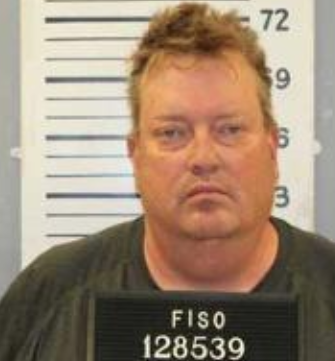
Douglas Heit, 50, Garden City, pleaded no contest in Finney County District Court Thursday to two counts of aggravated indecent liberties with a child.

Judge Michael Quint accepted the plea and scheduled sentencing for December 19 at 1 p.m. The charges fall under Jessica’s Law because the victim was under 14 years of age.

The crimes were committed in August 2018. The charges stemmed from an investigation by the Kansas Bureau of Investigation with assistance from the Garden City Police Department.

Heit began work as a police officer in Garden City in 2003 and left the department in 2018.

Moran: Quivira-area irrigators won’t see water usage drastically restricted for a year

By LESLIE EIKLEBERRY
Salina Post

Junior water rights holders in the area of the Quivira National Wildlife Refuge will not have their water usage drastically restricted in Fiscal Year 2020.

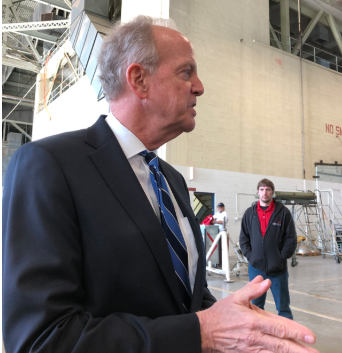
U.S. Senator Jerry Moran speaks with the media during a stop in Salina Friday afternoon.

That’s the word from U.S. Senator Jerry Moran, who spoke about the agreement during a stop in Salina Friday afternoon.

According to Moran, Quivira National Wildlife Refuge, managed by the U.S. Fish and Wildlife Service, has senior water rights to many irrigators in central Kansas.

“The demands for that water are significant, and there’s always more demand than there is water. It’s been a circumstance on and off throughout Kansas’ history,” Moran said.

“We’ve had conversations within the last week with the U.S. Fish and Wildlife leadership. We have gotten an agreement from the U.S. Fish and Wildlife Service. They will make no demands for water for Quivira for the next year. And in the meantime they will work with irrigators — farmers and ranchers in central Kansas — to come up with a solution to the needs for water in the future,” he said.

The wetter than normal weather in the area over the past year played a favorable role in getting the agreement in place, Moran said.

While the agreement is a direct benefit to the irrigators, it also benefits the area economy, he added.

“In the absence of this agreement, in the absence of the pause for a year, the junior rights water holders would have generally had their allocation reduced dramatically, so that would mean a lot less farming, a lot less economic activity, and certainly damage to the economy of the communities Great Bend, Pratt, St. John, Stafford, Kinsley, that part of Kansas,” Moran explained.

The one-year pause gives irrigators time to negotiate an agreement for future water use, he said.

“From my perspective, this really is a state issue. It is the Division of Water Resources within the Kansas Department of Agriculture that manages those water rights, but they have said that as long as the U.S. Fish and Wildlife Service doesn’t make the demand for water, they will not then force those farmers to reduce their use of water and give those farmers a time to negotiate a deal,” he said.

According to Moran, central Kansas irrigators will need to work hard to develop a plan for the future, as there is more demand for water than there is water.

“And so this doesn’t mean that the problems are solved, it means that there is an opportunity to try to solve them,” Moran said.

GM workers ratify contract, 40-day strike to end

ROMULUS, Mich. (AP) — Striking General Motors factory workers will put down their picket signs after approving a new contract that will end a 40-day strike that paralyzed the company’s U.S. production.

Workers on the picket line in Kansas photo courtesy UAW local 131

The United Auto Workers union said in a statement Friday that workers had approved the new four-year deal. But no vote totals were given. The union says it will announce shortly whether it will bargain next with Ford or Fiat Chrysler.

Picket lines were to come down immediately, and skilled trades workers will begin restarting factories that were shuttered when 49,000 workers walked out on Sept. 16. Some production workers could return as early as Friday night.

The deal includes a mix of wage increases and lump-sum payments and an $11,000 signing bonus. But GM will close three U.S. factories that make slow-selling cars and transmissions. Analysts estimate the strike cost GM more than $2 billion.

The five-week walkout was big enough to help push down September U.S. durable goods orders by 1.1%, the largest drop in four months.

Trades workers such as machinists and electricians likely will enter the plants quickly, restarting boilers and preparing paint shops, robots and other equipment to restart production.

On the picket line at a transmission plant in Romulus, Michigan, worker Tricia Pruitt said the wage gains were worth staying off the job for more than five weeks, but she’s ready to return to work.

Pruitt, a 15-year GM employee, was happy that the contract brings workers hired after 2007 up to the same wage as older workers in four years.

She’ll be glad not to be on the picket line if the strike ends. “Look at us now. We’re in coats,” she said on a gray, chilly Friday afternoon near Detroit. “We’d have been out here in the rain.”

Although GM dealers had stocked up on vehicles before the strike and many still have decent supplies, analysts say GM won’t be able to make up for the lost production. Had the strike been shorter, GM could have increased assembly line speeds and worked the plants on overtime to catch up and refill its stock. But many of the plants that make popular SUVs and pickup trucks already were working around the clock to keep up with demand before the strike began.

Also, companies that supply parts to the factories and halted production during the strike will need time to restart, although GM has some parts in stock.

Jeff Schuster, senior vice president of the consulting firm LMC Automotive, estimates that GM has lost production of 300,000 vehicles, and he said maybe only a quarter of it can be made up.

“You can’t add days to the week and you can’t add hours to the day,” he said.

Some production losses will help thin inventory, especially of cars, Schuster said. But in late October and early November, GM will likely run short of colors and models of trucks and SUVs that are in high demand until stocks are replenished, he said. Although truck and SUV buyers generally are loyal to a brand, customers in a hurry for a new vehicle could go elsewhere, Schuster said.

“There are definitely going to be some limitations on choice, and that is a risk,” Schuster said. “Consumers can opt to wait, or they can go down the street to their competitor.”

Now the union will move on to bargain with either Ford or Fiat Chrysler, using the GM deal as a template. A decision on which company is next could come Friday. It’s not clear yet if there will be another strike, but neither Ford nor FCA will be happy about being stuck with the GM terms.

GM traded the ability to close the three factories in Lordstown, Ohio; Warren, Michigan; and near Baltimore for higher labor costs, David Kudla, chief investment strategist for Mainstay Capital Management of Grand Blanc, Michigan, wrote in a note to investors. The contract maintains worker health benefits with low premiums, something that both Ford and FCA wanted to change when negotiations began.

“Ford and FCA didn’t have three factories that they wanted to close, but will have to work around this new framework for higher wages and unchanged health care that the UAW and GM have set,” wrote Kudla, whose firm manages investments for many auto industry workers.

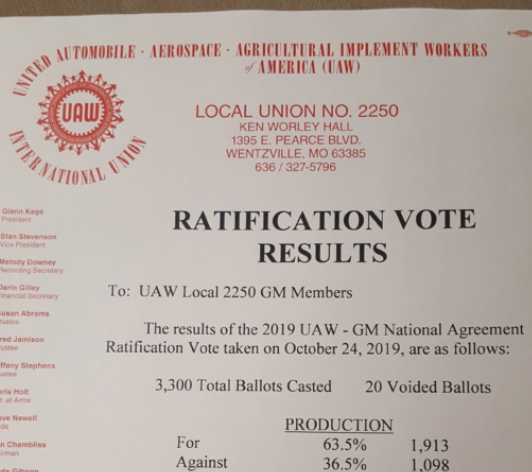
Workers at factories that GM will close have been transferred to plants across the nation, and they campaigned against the deal, which was reached Oct. 16. Workers in Lordstown, for instance, voted 412-61 against it, with 88% of production workers voting “no.”

In the end, economic gains and a $7.7 billion GM investment pledge for U.S. factories were too much to turn down.

University of Missouri apologizes after tweet on diversity

COLUMBIA, Mo. (AP) — The University of Missouri athletic department has apologized and taken down a tweet intended to promote the NCAA’s “diversity and inclusion week” after receiving complaints that it was racially insensitive.

The original social media statement from the University of Missouri

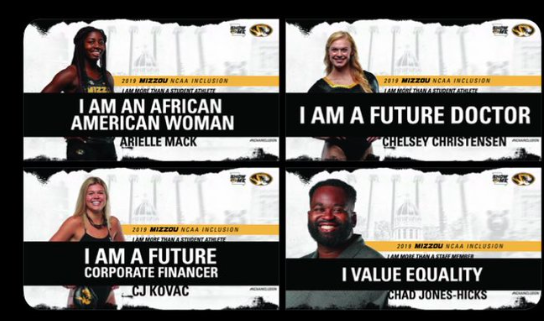
The original post, which prompted a quick reaction on social media, showed a graphic with four photos under the words “I am.” At issue is that the white athletes described career aspirations in the graphic, while the black athlete and staff member made statements about race.

Arielle Mack, a black freshman track athlete, was pictured with the statement “I am an African American woman.” Chad Jones-Hicks, a black ticket office assistant, according to MU Athletics’ website, was accompanied by the statement “I value equality.” Meanwhile, the caption for Chelsey Christensen, a white gymnast and junior at MU, read, “I am a future doctor.” Another caption attributed to freshman swimmer CJ Kovac, also white, said, “I am a future corporate financer,” with the word financier spelled wrong in the graphic.

In a separate post, a black male student athlete is pictured with the caption: “I Am a Brother.”

African American writer Angie Thomas, author of the New York Times’ bestselling books “The Hate U Give” and “On the Come Up,” tweeted: “Uhhh” in response to the graphic.

The athletic department said in a statement that the “intent was to provide personal information about our students, but we failed.” The statement said a video it posted better represented the school’s “intent to celebrate our diversity.”

That video contained an extended quote from Mack, who said, “I am an African American woman, a sister, a daughter, a volunteer and a future physical therapist.” She told the Columbia Missourian that she didn’t think too much of the tweet, as MU Athletics used her own language. She also said the department did the right thing by deleting the tweet in light of the controversy.

Former Missouri standout quarterback Corby Jones, a Kansas City attorney who is black, told The Kansas City Star’s editorial board that his first reaction was outrage. He said he was left asking, “Why did we choose those words for those (African American) individuals?

After calls to athletic department administrators, Jones came away with a better understanding of the university’s intent. The post was part of a broader NCAA-led inclusion initiative.

“It was just poorly constructed,” Jones said.

The controversy comes four years after hundreds of students protested the way university leadership handled complaints from black student groups about racial slurs and other slights on the overwhelmingly white flagship campus. More than 30 black football team members said they wouldn’t play until the university’s president was removed. University system President Tim Wolfe ultimately resigned and Columbia campus Chancellor R. Bowen Loftin stepped down to take another job with the university.

Copyright Eagle Radio | FCC Public Files | EEO Public File