We have a brand new updated website! Click here to check it out!

BILLINGER: Senate Update March 25

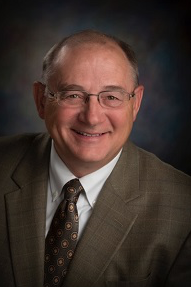
Sen. Rick Billinger (R-Goodland)

Last week was the final week for committees to meet.

The most important thing we did this week was passing the budget out of the Senate.

Some of the highlights are: Sub SB75 K-12, school funding, which includes over $4 billion. Part of the funding is an inflation factor of $92.7 million in court ordered funding for K-12 to settle the lawsuit. It also includes $197 million additional new money for K-12. This budget includes full funding of $7.37 million for this years KPERS payment. The Board of Regents will receive an additional $5.5 million in new money.

Additional funds were allocated for Corrections in order to address a shortage in staff and for the treatment of Hepatitis C for inmates.

KDADS, DCF, mental health and the IDD community will all receive a small increase in funding.

KDOT will receive $160 million through FY 2020. The Governor’s budget continues to transfer $200 million per year from KDOT to the state general fund.

A 1% increase was included in the budget for Community Home Base services. Senate Democrats did not vote for this bill even though it follows most of the recommendations made by the Governor, other than the re-amortization. Over 90% of the budget consists of education, Kan-care caseloads and corrections. The Senate Democrats wanted to postpone voting on the budget until next Tuesday in order to determine whether the Governor will raise taxes on middle class Kansans and Kansas businesses that do business in foreign countries. If the Governor vetoes SB 22 it will add $200 million to the ending balance. The Democrat Minority Senate leader, Senator Hensley, stated that he was hopeful that the Governor would veto SB 22.

SB 125 passed the Senate and will extend the Rural Opportunity Zone Program by 5 years.

SB 125 extends the deadline for a participant to begin in the student loan repayment portion of the program to July 1, 2026 and the individual income tax credit portion of the program would be extended through tax year 2026.

For the next 3 days we will be on the floor debating House and Senate bills.

I would like to thank everyone who stopped by the Capitol and my office last week.

I am honored and grateful to represent the 40th Senate District of Kansas.

Please do not hesitate to contact me by e-mail at [email protected] or call me with your questions and concerns. My office number is 785 296-7399 or my cell is 785-899-4700. If you are in Topeka stop by my office at 236-E.

Sen. Rick Billinger, R-Goodland, is the Kansas state senator for the 40th District, which includes Cheyenne, Decatur, Ellis, Gove, Graham, Logan, Norton, Rawlins, Sheridan, Sherman, Thomas, Trego and Wallace counties as well as portions of Phillips County.

Kan. man sentenced for using Playpen website to access child porn

TOPEKA, KAN. —A Kansas man was sentenced Monday to eight years in federal prison for downloading child pornography from the internet, according to U.S. Attorney Stephen McAllister. In addition, he was ordered to pay $29,000 in restitution to victims.

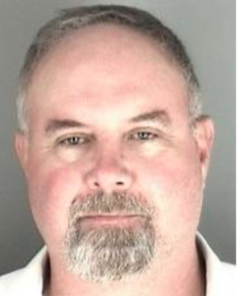
Wagner -photo Shawnee Co.

Wesley Wagner, 54, White City, Kan., was convicted in October 2018 on one count of receiving child pornography and one count of possessing child pornography.

During trial, the prosecutor presented evidence that the FBI seized a server belonging to a now-defunct website called Playpen that provided users access to child pornography. The FBI used computer forensics to identify hundreds of the site’s users, including Wagner. Based on that information, the FBI obtained a warrant to search the defendant’s home.

New Kansas nonprofit to aid government transparency efforts

Kansas Press Association

A new nonprofit institute to aid efforts at making government more transparent has received tax-exempt status from the Internal Revenue Service.

The Kansas Institute for Government Transparency, Inc., (KIGT) is the brainchild of Mike Kautsch, a University of Kansas law professor and longtime media law consultant for the Kansas Press Association.

Since it is dedicated exclusively to charitable and educational purposes, KIGT has been approved for tax-exempt status under section 501(c)(3) of the Internal Revenue Code.

Mike Kautsch / KU photo

Kautsch said KIGT is non-partisan, and its specific purposes are to educate the public about:

• Transparency laws, including Kansas statutes requiring that government records and meetings be open to the public;

• Rules and regulations that affect the balance between the public’s interest in access to information and competing interests in privacy and security; and

• Citizens’ First Amendment rights to express themselves freely.

“KIGT’s plans include researching and analyzing Kansas laws and public policies related to government transparency,” Kautsch said. “In addition, KIGT anticipates supporting or undertaking litigation in matters that bear significantly on advancement of open government or freedom of expression in Kansas. KIGT has developed criteria for determining when litigation may be warranted.

“I am grateful to the Kansas Press Association for being strongly supportive of KIGT. When I was with Doug Anstaett before he retired as the KPA’s full-time executive director, he referred to the free press as the ‘champion of the people.’ He and his successor, Emily Bradbury, are champions of government transparency, too.”

“During the formation of KIGT, I also appreciated encouragement and advice given by Kent Cornish and Ron Keefover, respectively, the leaders of the Kansas Association of Broadcasters and the Kansas Sunshine Coalition for Open Government.  KIGT aims to operate in harmony with the KAB, the Coalition and the KPA,” Kautsch said.

“I view KIGT as an experimental public-interest venture, and I appreciate the support of KIGT’s founding board members — Russell Hickey, Nate Lindsey, Ann Premer and Leita Walker. All are outstanding alumni of the KU School of Law and were superb students in my media law-related classes.  I hope to involve even more former students in KIGT and others who have an interest in open government and the First Amendment.”

To assist the nonprofit’s effort, the Kansas Newspaper Foundation Board of Trustees in the spring of 2018 authorized the $25,000 in seed money for the proposed project.

Kautsch expects KIGT to create opportunities for law students to participate in its public-interest endeavors. In this way, the students will be able to gain practical experience and advance the skills and knowledge they acquire in the classroom.

The benefits of the bill-tracking process include informing the public about: model language for transparency bills; the projected impact of proposed legislation on transparency, and the provisions of any particular current or prospective legislative proposal that would increase or decrease the flow of information to the public on matters of public concern.

The bill-tracking process was developed for KIGT by attorney Max Kautsch, who also serves as KPA’s legal hotline attorney, with support from Lex Lumina, an LLC devoted to the public interest, in Lawrence.

You can find the nonprofit’s website at www.kigt.org.

It contains weekly lists of the bills that have been reviewed by Max Kautsch and his interpretation of their importance to the ongoing transparency efforts in Kansas.

— Hays Post is a member of the Kansas Press Association

Hundreds celebrate groundbreaking for new terminal at Kansas City International Airport

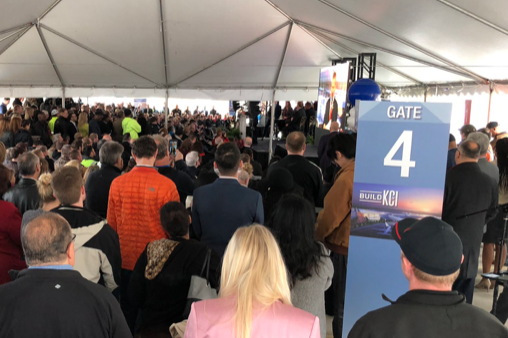
KANSAS CITY — Hundreds of Kansas Citians attended Monday’s long awaited launch of the construction phase of the a $1.5B modern single terminal at Kansas City International Airport. The event included the ceremonial first turning of the dirt and the start of demolition activities at Terminal A, according to a media release from FlyKCI.com

“On behalf of the entire airline community, we are excited to be part of this journey and celebrate such an incredible milestone for the city,” said Kyle O’Neal, Senior Regional Leader, Airport Affairs at Southwest Airlines. “The new terminal will support more efficient airline operations and allow airport users to enjoy the convenience of modern air travel in a facility with updated technology and amenities, close parking, spacious gate areas, and ample food and beverage options.”

At just over one million square feet, the Kansas City International Airport New Terminal is the largest single infrastructure project in the City’s history. It will have a profound and lasting economic impact on the region in the form of new jobs, opportunities for local and small businesses, and a first-class traveler experience for airport users. The facility will open with 39 gates and the ability to expand up to 50 gates in the future. The project will also include a 6,300 space parking structure, which will be constructed adjacent to the terminal building, a central utility plant, and landside and airside improvements.

“We’re excited to move forward on this landmark project for Kansas City and eager to put men and women to work,” said Geoff Stricker, Edgemoor Managing Director. “This has been a great partnership with the City and airline partners, and we look forward to building on that to delivering an exceptional new terminal for travelers and the airlines alike.”

Edgemoor has partnered with design-builder Clark | Weitz | Clarkson (CWC) to construct the New Terminal. The construction joint venture, which is comprised of Clark Construction Group, LLC, The Weitz Company, and Clarkson Construction Company, has collectively delivered more than 40 aviation projects nationwide; Skidmore Owings & Merrill is the project designer.

The New Terminal project is expected to generate up to 5,000 construction-related jobs. Sixty local partners are already at work on the project, including 41 minority- and women-owned businesses. Edgemoor has pledged to maximize opportunities for local minority and women-owned firms, setting ambitious participation goals for 20% minority-owned and 15% women-owned businesses for professional and construction services, respectively.

The new KCI is a once-in-a-generation opportunity to benefit working families and our broader community in a number of ways,” said Alise Martiny with the Greater Kansas City Building & Construction Trades Council. “Kansas City has one of the strongest and best qualified labor communities in the country. This will be an outstanding project with all the skilled trades and crafts from throughout our region, working together.”

The New Terminal project will be funded using 100 percent tax-exempt debt – the most cost efficient approach for the project. When complete, the new facility will replace the airport’s aging terminals, which opened in 1972.

“With the launch of the ‘Build KCI’ phase of the project, it will serve as the official source for up-to-the-minute construction news for passengers and members of the greater Kansas City community,” said Pat Klein Kansas City Aviation Director. “We will continue to champion the benefits of the new single terminal and how it will be a valued asset to Kansas City.”

The New Terminal will be built in the footprint of the airport’s existing Terminal A, which has been decommissioned. Interior demolition operations will begin this spring; structural demolition is expected to begin to mid to late-April. The new terminal is expected to open in early 2023.

Kan. congresswoman not committing to Green New Deal, Medicare-for-all

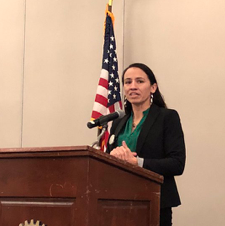
OLATHE, Kan. (AP) — U.S. Rep. Sharice Davids of Kansas says she is committed to expanding health care access and combatting climate change.

But during a town hall meeting Sunday in Olathe, Davids stopped short of endorsing “Medicare For All” or a “Green New Deal” pushed by many leading Democrats.

Davids says she is focusing on health care legislation that would get bipartisan support. She says she can’t say yet whether she supports a bill to give all Americans access to government-run health care.

She notes she is co-sponsoring legislation to give states incentives to expand Medicaid eligibility.

Davids said she isn’t currently backing the Green New Deal because it contains some specific policies she doesn’t support. But she agrees the country needs to find bold ways to address climate change.

Kan. man admits distributing meth from Satan’s Disciples gang

KANSAS CITY, KAN. – A Kansas man was sentenced Monday to nine years in federal prison for trafficking in methamphetamine, according to U.S. Attorney Stephen McAllister.

Crawford -photo Atchison Co.

Earnest Preston Crawford, III, 30, Atchison, Kan., pleaded guilty to possession with intent to distribute methamphetamine. In his plea, Crawford admitted that investigators arranged to make a series of controlled buys from Crawford at his residence in the 600 block of North 10th Street in Atchison.

Investigators learned Crawford was getting his methamphetamine from members of the Satan’s Disciples street gang. He was regularly purchasing pounds of methamphetamine for $6,000 to $10,000.

Video shows Kansas officer shooting, wounding man

LAWRENCE, Kan. (AP) — Dashcam video released Monday shows a Kansas police officer shooting and wounding a man in a case in which the rookie officer told investigators she mistakenly fired her firearm instead of her Taser.

Police on the scene of the officer-involved shooting investigation-photo courtesy WIBW TV

The video provided in response to an open records request is from the patrol vehicle of an officer who pulled over 35-year-old Akira Lewis for a suspected seatbelt violation in May 2018 near downtown Lawrence.

Lewis is heard in the video telling the white officer that he was pulled over because he is black and insists on seeing a supervisor. When he refuses to provide identification and continues arguing, backup officer Brindley Blood, who also is white, was summoned.

She is seen shooting Lewis when he punches and tackles the officer who initiated the traffic stop. Blood, who resigned from the police force in January after being placed on paid leave, is charged with aggravated battery. Lewis was treated at a hospital and is charged with several misdemeanors, including battery against a law enforcement officer.

The affidavit in the case against Blood said she didn’t realize she had shot Lewis until she looked for the Taser wires to see if they had hit their mark and realized there weren’t any. She said during her interview with investigators, “I shot, shot him, I pulled my firearm instead of my Taser,” the affidavit said.

The city initially denied the Journal-World’s request for the video, saying at that time the materials were “part of an ongoing investigation” and “criminal investigation records.” The newspaper again requested the video last week, after it was played in Douglas County District Court during a hearing for Blood.

Judge Peggy Kittel is weighing whether to bind Blood over for trial. Her attorneys argue that while Blood made a mistake she was not reckless, as the charge alleges, and that the case against her should be dropped. Kittel is scheduled to announce her ruling later this week.

Lewis’ attorney, Shaye Downing, said in a statement Monday that during the officers’ attempt to arrest Lewis for a “seatbelt violation” the officers “initiated physical contact and escalated a situation that could have been easily de-escalated by any number of interventions.”

“After this incident, there are serious concerns about the training officers receive and ongoing certification required to ensure that if an officer is faced with a situation where force is used, that they use only that level of force reasonably necessary for the given circumstances,” Downing said.

She also said Lewis has not received any help from the city of Lawrence for medical expenses for injuries he suffered during the confrontation.


Kansas man jailed for burglary, child endangerment after weekend standoff

SHAWNEE COUNTY — Law enforcement authorities are investigating a suspect after a weekend standoff.

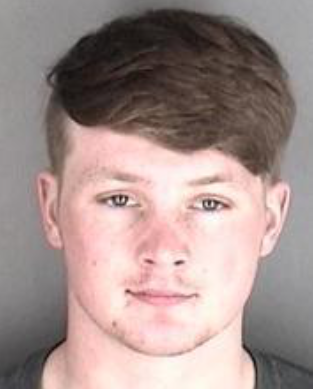
Kobel -photo Shawnee Co.

Just after 11:00 a.m. Saturday, police were dispatched to a residence in the 500 block of SW Saline Street in Topeka for a report of a domestic disturbance, according to Lt. Aaron Jones.

That call resulted in the issuance of a “BOLO” (Be On the Look Out) for 22-year-old Andrew Kobel of Topeka. The BOLO was for Kobel’s arrest based on suspicion of committing aggravated burglary, attempted kidnapping, battery (domestic) and child endangerment.

Just before 3p.m. Sunday, an officer checking the area saw Kobel near the house. When Kobel saw the officer he ran into the house and remained inside despite notifications via knocking on the door, emergency sirens, and hailing by a public announcement speaker to surrender to officers.

At approximately 4:15 pm, Kobel did surrender to officers and was booked into the Shawnee County Department of Corrections for aggravated burglary, attempted kidnapping, domestic battery, child endangerment and Interference for running into the house and refusing to exit, according to Lt. Jones.

Kansas House gives 1st round approval to abortion ‘reversal’ bill

TOPEKA, Kan. (AP) — The Kansas House gave first-round approval Monday to a bill that would require medical facilities and doctors to inform women that some medically induced abortions could be “reversed” if a doctor intervenes.

Rep. John Eplee, R-Atchison, a physician

Opponents of the bill say the “reversal” method is scientifically unproven and disputed in medical circles, while supporters contend women should be made aware of the option.

The bill passed by a voice vote after more than two hours of debate. After a final vote Tuesday, it’s expected to head to the Senate, The Kansas City Star reported .

Medical abortions involve women taking Mifepristone, generally called RU-486, followed by a medication called Misoprostol. The bill approved Monday would require women be told that an abortion can be stopped after the first medicine is taken if a doctor administers a dose of progesterone.

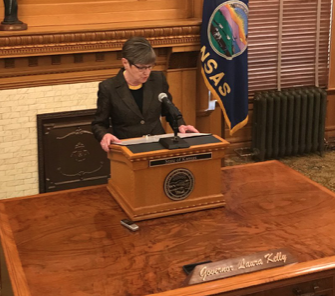
Democratic Gov. Laura Kelly, a strong supporter of abortion rights, was skeptical about the bill.

“I’m not sure that’s based on science,” she said during a news conference Monday.

The bill claims “it may be possible to reverse its intended effect if the second pill or tablet has not been taken or administered. If you change your mind and wish to try to continue the pregnancy, you can get immediate help by accessing available resources.”

“I want you to understand clearly this is a pro-women’s health bill, said Rep. John Eplee, R-Atchison, a physician who introduced the measure in committee. “We’re not putting a gun to their head, we’re not forcing them to have this procedure. We’re giving them an option.”

However, the American College of Obstetricians and Gynecologists in 2017 disputed the usefulness of the procedure.

“Claims regarding abortion ‘reversal’ treatment are not based on science and do not meet clinical standards,” the group said. “Unfounded legislative mandates represent dangerous political interference and compromise patient care and safety.”

Democratic opponents of the bill repeatedly referred to the medical group’s statement and questioned whether the process detailed in the bill is safe.

“I think this really inserts politics into a private discussion between physician and patients and complicates that and interferes with that relationship,” said Rep. Eileen Horn, D-Lawrence.

If passed, any private office, surgical outpatient clinic, hospital or other facility that fails to post a sign about the reversal process could be fined up to $10,000. If a medical abortion is provided without the notification, the woman, the father of the unborn child, or the grandparent of a minor undergoing the abortion could sue for damages.

___

Kan. teen in stolen car hospitalized, arrested for DUI crash

SEDGWICK COUNTY — Law enforcement authorities are investigating a Kansas teen following an injury crash in a reported stolen vehicle.
Just before 7:30 p.m. Sunday, a deputy advised that he was following a stolen vehicle south on Interstate 235 near Seneca in Wichita, according to Lt. Tim Myers.

Sunday night accident scene photo courtesy KAKE

The vehicle was a silver 2008 Ford Focus reported stolen by Andover police. The deputy advised that he would follow the vehicle until other deputies arrived. The Focus was following all traffic laws at that time.

The Focus exited the Interstate at MacArthur and turned east. The deputy continued following the vehicle until it pulled into the gas station on the southwest corner of MacArthur and Broadway. The deputy activated his emergency equipment as the suspect vehicle pulled up to the gas pumps and stopped. The suspect vehicle sat stationary for 4-5 seconds until the deputy exited his vehicle and told the driver to exit her car. The suspect vehicle then fled from the stop and went south on Broadway.

The deputy was not pursuing the vehicle but watching it as he travelled south on Broadway. A short time later he advised that the vehicle was involved in a crash at 47th Street South and Broadway where it had run the red light and struck a 2014 Lincoln MKZ.

The driver of the Focus attempted to flee and was taken into custody by another deputy. She was identified as 17-year-old white female. She was transported by a deputy to a local hospital and later booked into Juvenile Detention for Aggravated Battery-Reckless, Felony Flee & Elude, Possession of Stolen Property, DUI and No Driver’s License, according to Myers.

The driver of the Lincoln Beverly Joann Bair, 87, and a passenger Melissa J. Heinzman, 45, were transported by ambulance Via Christi, according to Myers.

Kelly’s statement on veto of Kansas GOP tax bill

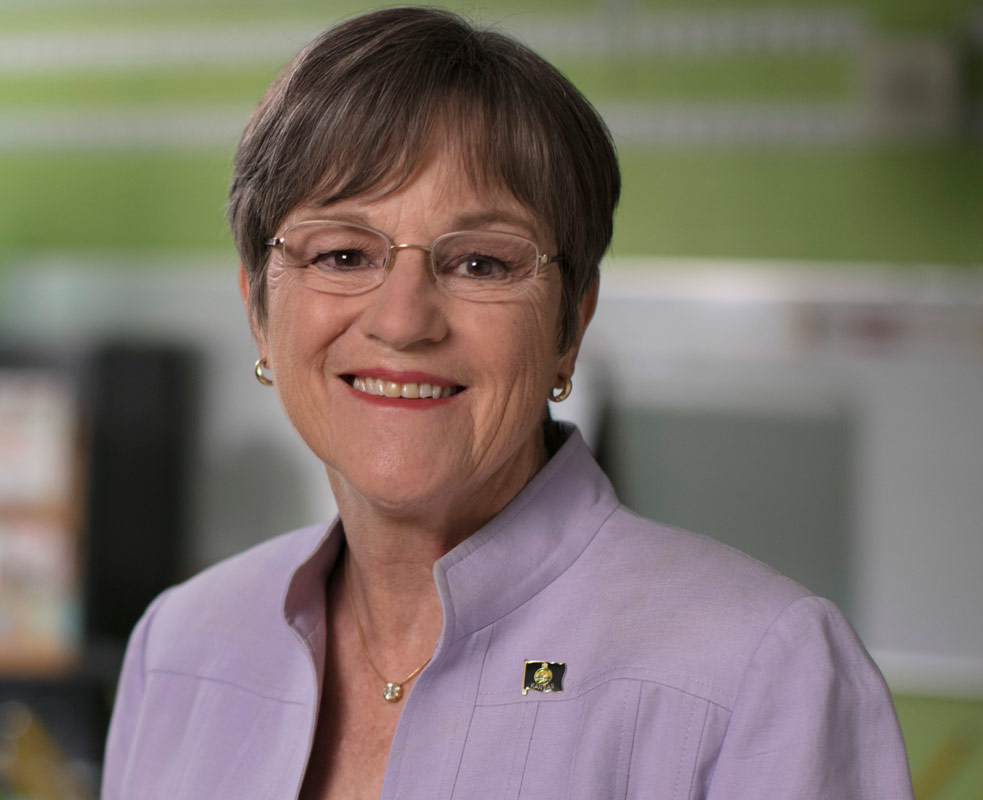
Kansas Governor Laura Kelly (D)
The following message is from Governor Laura Kelly regarding the veto of Senate Bill 22:

Just two short years ago, the State of Kansas found itself on the brink of financial disaster. Even after depleting state savings and enduring multiple rounds of devastating budget cuts, unsustainable tax policy continued to perpetuate fiscal crisis. We saw schools close and class sizes grow. We saw an overwhelmed child welfare system let children fall through the cracks. And despite promises of immediate prosperity, Kansas routinely ranked among the nation’s worst in multiple economic indicators.

As the budget hole continued to grow, the legislature passed two sales tax increases, swept more than $2 billion from the state highway fund, delayed numerous payments to the state pension system, accumulated historic levels of debt, and raided every critical investment from early childhood education to public safety. But in the end, none of these short-term band aids could stem the bleeding caused by reckless tax policy. In November of 2016, Kansans called for change.

The very next year, the state hit “reset” in a historic act of bipartisanship with the passage of comprehensive tax reform. Our credit score improved within a week. The number of Kansans participating in the labor force increased for the first time since 2014. And we’ve finally begun to heal from the unprecedented devastation found in state agencies and state programs.

However, we have only just started the rebuilding process. Our recovery is tenuous; our budget is fragile. The State of Kansas cannot afford to make a U-turn.

Unfortunately, Senate Bill 22 would absolutely dismantle all the progress we’ve made. It would throw our state once again into a self-inflicted budget crisis, diminishing all the investments we’ve worked so hard to rebuild and restore. It would put our future at risk once again in order to give significant tax breaks to entities who need them the least, while continuing to leave working families behind.

Additionally, as noted by the Senate President during the floor debate, Senate Bill 22 will put Kansas out of compliance with the Streamlined Sales and Use Tax Agreement. This would potentially cost Kansas up to $18 million in lost revenue — on top of the bill’s already unaffordable $200 million price tag in the next fiscal year.

I look forward to working with the Kansas Legislature in the future to achieve our common goal of a reduced food sales tax. However, as I explained repeatedly — both as a candidate for governor and after I took office – we cannot responsibly enact a food sales tax cut until our state’s fiscal health stabilizes. This is not the time.

I share Kansas lawmakers’ desire to keep the state tax burden as low as possible and that will continue to be my priority. In January, I presented a structurally balanced budget to the Kansas Legislature that funded our schools and roads, reduced state debt, left Kansas with the largest ending balance in 20 years, and did so all without a tax increase.

The people of Kansas elected me to rebuild our state. They elected me to bring fiscally conservative and responsible principles back to our government. We must be patient, thoughtful, and prudent as we evaluate tax policy. And, when we move forward with commonsense tax relief, we must ensure that it benefits the Kansans who need it the most.

Therefore, under Article 2, Section 14(a) of the Constitution, I hereby veto Senate Bill 22.

Kansas governor vetoes GOP tax relief bill

Gov. Laura Kelly signaled for weeks that she would reject Republican leaders’ top priority this year, a measure aimed at preventing individuals and businesses from paying more in state income taxes because of changes in federal tax laws at the end of 2017. Kelly’s top priorities are boosting funding for public schools and expanding the state’s Medicaid health coverage for the needy.

“We cannot fix our state if we repeat the mistakes of the past,” Kelly said Monday.

Read Kelly’s entire statement HERE.

A clash was inevitable. Allowing the tax relief to become law would have undermined the state’s ability to sustain Kelly’s proposals for education funding and Medicaid expansion. Republican leaders have yet to muster the two-thirds majorities necessary to override a veto and enact the tax bill, so Kelly is likely to prevail.

Republicans argued that failing to enact tax relief would allow an unlegislated tax increase. They said the issue was akin to deciding whether to return a lost wallet full of cashafter finding it on the sidewalk with the owner’s ID inside.

The governor and fellow Democrats noted the persistent budget woes that Kansas experienced after Republican legislators jumped into cutting income taxes in 2012 and 2013 at the urging of then-GOP Gov. Sam Brownback. Voters came to view the experiment as a failure, and bipartisan majorities reversed most of the tax cuts in 2017.

Kelly’s administration projected that under the bill, taxpayers would save $209 million during the state budget year beginning in July.

Like other states, Kansas faced the issue of revising its income tax code because it is tied to the federal tax code. While changes in federal tax laws championed by President Donald Trump lowered rates, they also included provisions that raised money for Kansas, in party by discouraging individual filers from claiming itemized deductions.

The bill vetoed by Kelly would have provided relief to taxpayers who have itemized on their state returns. It would have allowed them to keep itemizing even if they don’t on their federal returns, something previously prohibited.

Republican legislators also attached a provision to lower the state’s sales tax on groceries to 5.5 percent to 6.5 percent to make the bill harder for Kelly to veto. Kelly herself promised during her campaign last year to work to lower the tax.

But much of the relief in the bill would have gone to large businesses that faced paying state income taxes on income generated by operations outside the U.S. because of the federal changes.

___

Federal bump stock ban begins Tuesday. What will owners do?

BOISE, Idaho (AP) — David Lunsford is an avid gun owner with a firing range on his Texas spread. With bump stocks about to be banned by the U.S. government, he grudgingly decided to sell off his and let someone else figure out what to do with them.

“If I get caught with one, I’m a felon, and it seems like to me that’s entrapment in the biggest way. I bought that thing legally with my hard-earned money,” said the 60-year-old Lunsford, who has at one time owned six AR-15 rifles that he built from kits, as well as a World War II German submachine gun.

The bump stock — the attachment used by the killer during the 2017 Las Vegas massacre to make his weapons fire rapidly like machine guns — will become illegal on Tuesday in the only major gun restriction imposed by the federal government in the past few years, a period that has seen massacres in places like Las Vegas; Thousand Oaks, California; Sutherland Springs, Texas; and Orlando and Parkland, Florida.

Unlike with the decade-long assault weapons ban, the government isn’t allowing existing owners to keep their bump stocks. They must be destroyed or turned over to authorities. And the government isn’t offering any compensation for the devices, which can cost hundreds of dollars. Violators can face up to 10 years in prison and thousands of dollars in fines.

Lunsford bought three bump stocks over the years and wanted to recoup at least some of the money he shelled out, but it bothers him that he and others have been put in this position.

“I’ve never committed a crime with it, and just because of that one killer up in Las Vegas that used one that killed a bunch of people, they’re going to make people pay for it,” he said.

But Shannon Watts, the founder of Moms Demand Action, said: “It was because of bump stocks that the gunman in Las Vegas was able to kill 58 people from a hotel window. … It just goes to show the incredible lethality and dangers of these accessories.”

The prohibition goes into effect less than two weeks after the mosque shootings in New Zealand that left 50 people dead. New Zealand’s prime minister reacted swiftly to the bloodshed by announcing on Thursday a ban on military-style semi-automatic firearms and high-capacity magazines.

The U.S. Bureau of Alcohol, Tobacco, Firearms and Explosives first ruled that bump stocks were legal in 2010, and since then, the government estimates more than 500,000 have been sold.

They were originally created to make it easier for people with disabilities to fire a gun. The device essentially replaces the gun’s stock and pistol grip and causes the weapon to buck back and forth, repeatedly “bumping” the trigger against the shooter’s finger.

Technically, that means the finger is pulling the trigger with each round fired, a distinction that led the ATF to allow the devices.

They were considered by most gun owners to be a novelty and weren’t widely known until a gunman attached bump stocks to several of the AR-type rifles he used to rain bullets on concertgoers outside his high-rise Las Vegas hotel room.

The attachments were swiftly condemned by even ardent gun supporters, including President Donald Trump, who directed the Justice Department to rewrite the regulations to ban them. The impending ban was announced in mid-December.

Owners are being advised to either destroy them by crushing, melting or cutting them up or set up an appointment with the ATF to hand the devices over.

A week before the ban was set to take effect, bump stocks were being sold on websites and by at least one company that took over the inventory of Slide Fire, the Texas manufacturer that was the leading maker and has since shut down.

Ryan Liskey, of Virginia’s Shenandoah Valley, said he isn’t sure what to do with his bump stock. He said he got the device as a lark after trying it on the range with some friends.

“Do they have authority to do this? No. Is it a machine gun? No,” the 30-year-old Liskey said. “So do I follow an unconstitutional edict from the Department of Justice or do we stand our ground?”

ATF spokeswoman April Langwell said “a number of people” have already turned in their devices to ATF offices across the U.S., but she wouldn’t say how many. Starting next week, a person in possession of a bump stock can face federal charges of illegally possessing a machine gun.

“We’re going to enforce the law and those in possession will be subject to prosecution,” Langwell said.

The rule was met almost immediately with resistance from gun rights advocates. A federal judge in Utah refused to block it last week, and in February, a judge in Washington said the Trump administration can move forward with it, saying it was reasonable for the ATF to determine a bump stock performs the same function as a machine gun. An appeals court is set to hear augments in the case on Friday.

Gun Owners of America, a gun-rights group, is among those challenging the ban. GOA’s executive director, Erich Pratt, said the measure is an abuse of power and an end run around Congress.

“We think it’s really dangerous for a regulatory agency to be able to just turn on a dime. For 10 years they said that bump stocks fit within the law, they were perfectly legal. And then they reversed themselves and said, ‘Oh, this piece of plastic is a machine gun,'” Pratt said. “If they can do that and wave the magic wand, they can say anything is a machine gun. It’s like banning smoking by declaring cigarettes are sticks of dynamite.”

Gun-rights advocates and gun-safety activists agree on one thing: The ban would have been seen as more acceptable had Congress tackled the issue and enacted a law, rather than relying on a federal agency to do it administratively.
Copyright Eagle Radio | FCC Public Files | EEO Public File