We have a brand new updated website! Click here to check it out!

Update: Court hears Kan. case to resurrect proof-of-citizenship voting law

SALT LAKE CITY (AP) — Kansas’ solicitor general on Monday called on a federal appeals court to reinstate the state’s law requiring people to provide proof of citizenship before they can register to vote, saying problems with how it was enforced during the three years it was in place are fixable.During a hearing before a three-judge panel of the 10th Circuit Court of Appeals in Salt Lake City in a case with national implications for voting rights, Judge Jerome Holmes questioned attorneys for the state and for plaintiffs who succeeded in getting a lower court to overturn the law, which was in effect from 2013 until 2016. He pointed to evidence that it kept more than 30,000 people from registering to vote even though nearly all of them were citizens.

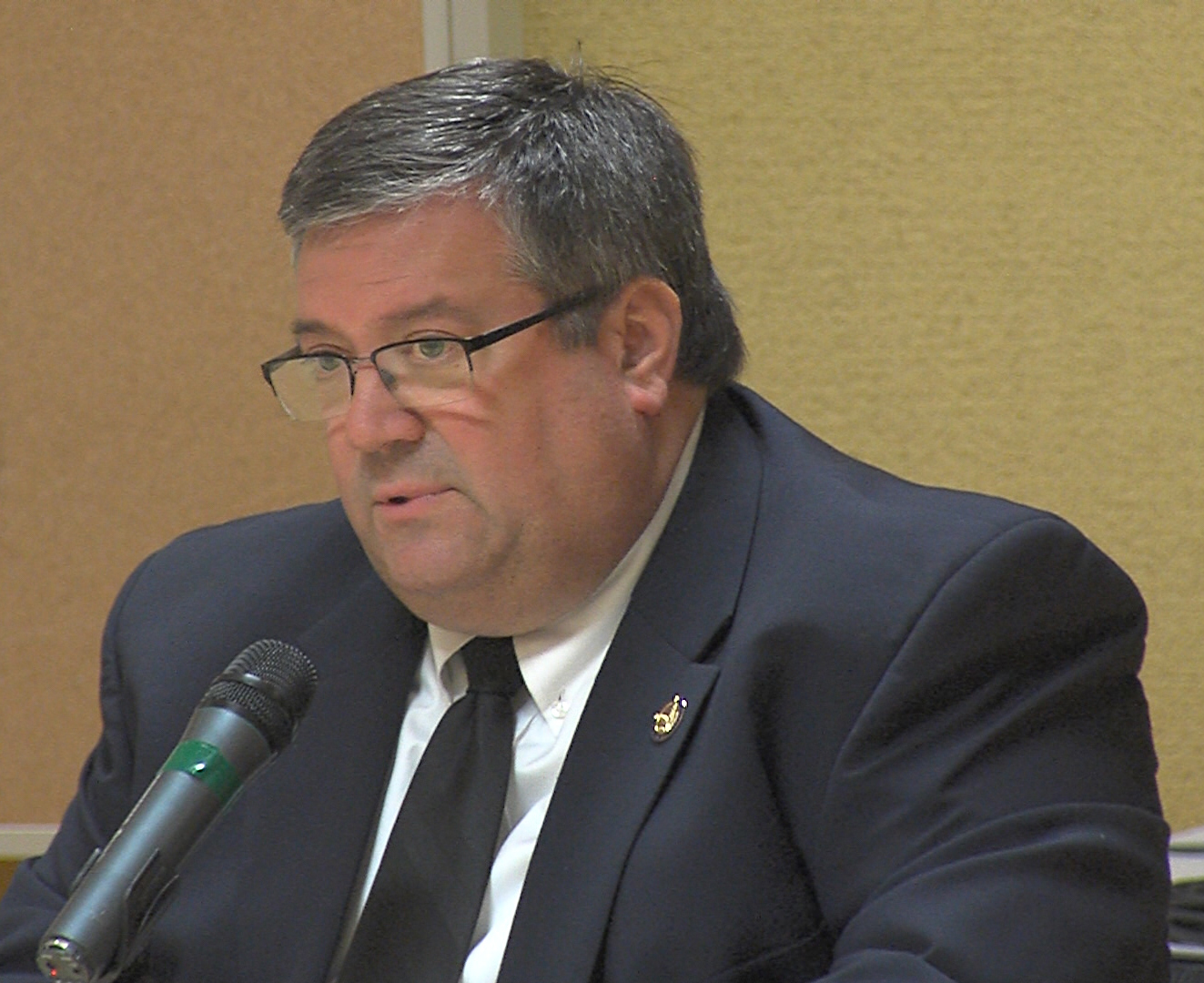
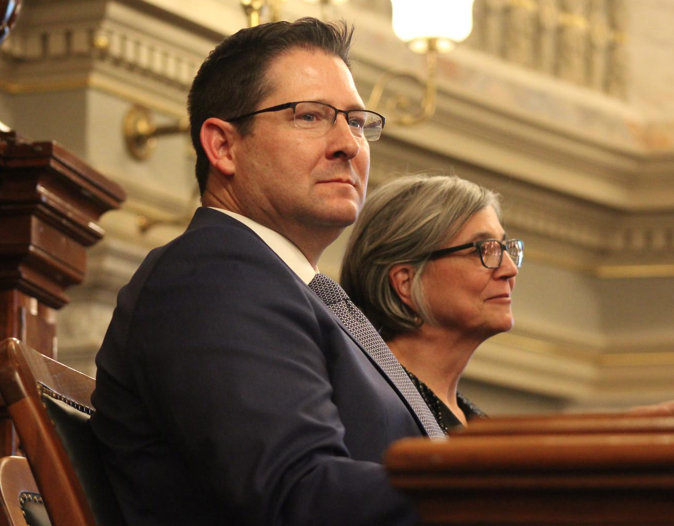
Solicitor General Toby Crouse said there were problems with the way the law was implemented, but he argued that the state should be able to ensure that ballots are cast legally and called on the court to resurrect the law.

“The rollout is problematic and concerning and should be improved, but that’s not a reason to undermine the law and strike it down as unconstitutional,” he said.

Dale Ho, director of the American Civil Liberties Union’s Voting Rights Project, disagreed. He said cases where people can’t find their birth certificate or afford a new one are inevitable, and the Kansas law contains few fail-safes to ensure citizens can cast a ballot.

“The difficulties of implementing a law like this, which is unique in the country, are baked into the statute,” he said.

The judges didn’t indicate when they might rule.

The legal fight has drawn national attention as Republicans pursue voter ID laws aimed at preventing in-person voter fraud, including by people who are in the country illegally. Many experts say such voter fraud is extremely rare, and critics contend that the Republican-led efforts are actually meant to suppress turnout from groups who tend to back Democrats, including racial minorities and college students.

The law was championed by former Kansas Secretary of State Kris Kobach, who led President Donald Trump’s now-defunct voter fraud commission and was a leading source for Trump’s unsubstantiated claim that millions of immigrants living in the U.S. illegally may have voted in the 2016 election.

Kansas Gov. Laura Kelly, a Democrat, supported the legislation when she was a state senator but opposes resurrecting it. Kobach, who is an attorney, personally defended the statute in the courts while he was secretary of state. Kansas’ Republican attorney general, Derek Schmidt, has taken up its defense during the appeal, saying in an emailed statement that the law was passed by large bipartisan majorities in the Legislature.

“The Legislature is free to repeal the statute if it is no longer favored, but as long as the law requiring documentary proof of citizenship to register to vote remains on the books, we think it, like other duly enacted state laws, deserves a full and vigorous legal defense,” Schmidt said.

Kansas argued in court filings that it has a compelling interest in preventing voter fraud. It contended its proof-of-citizenship requirement is not a significant burden and protects the integrity of elections and the accuracy of voter rolls.

Critics countered that the documentary proof-of-citizenship law was “a disastrous experiment” that damaged the state’s voter rolls, disenfranchised tens of thousands and eroded confidence in the state’s elections.

The National Conference of State Legislatures has counted 35 states that have laws requiring some form of identification at the polls, but the Kansas voter registration statute at issue goes further by requiring people to provide documents such as a birth certificate, U.S. passport or naturalization papers before they can even register to vote. Arizona is the only other state with a similar law in effect, but it is far more lenient and allows people to satisfy it by writing their driver’s license number on the voter registration form. Proof-of-citizenship laws in Alabama and Georgia are not currently being enforced.

Judge Robinson found that between 1999 and 2013 a total of 39 noncitizens living in Kansas successfully registered, mostly due to applicant confusion or administrative error. That is .002 percent of the more than 1.76 million registered voters in Kansas as of Jan. 1, 2013. Eleven of those 39 noncitizens voted.

The registration law took effect in January 2013. In the three years before the appellate court put it on hold, more than 30,732 Kansans were not allowed to register to vote because they did not submit proof of citizenship. That figure represented about 12 percent of voter registration applications.
————–

SALT LAKE CITY (AP) — A federal appeals court will hear arguments Monday over the constitutionality of a struck-down Kansas statute that had required people to provide documents proving their U.S. citizenship before they could register to vote.In a case with national implications for voting rights, Kansas faces an uphill battle to resurrect the law once championed by former Kansas Secretary of State Kris Kobach , who led President Donald Trump’s now-defunct voter fraud commission.A three-judge panel of the 10th Circuit Court of Appeals temporarily blocked Kobach in 2016 from fully enforcing the law, calling it “a mass denial of a fundamental constitutional right.” The issue is back before the appellate court after U.S. District Judge Julie Robinson struck it down last year and made permanent the earlier injunction.

“Kansas was the tip of the spear of an effort to make it harder for people to register under the guise of protecting elections from a nonexistent epidemic of noncitizen voting. Those efforts haven’t stopped as this case illustrates, and I think this case will be closely watched,” said Dale Ho, director of the American Civil Liberties Union’s Voting Rights Project.

The legal fight has drawn national attention as Republicans pursue voter ID laws they say are aimed at people who are unlawfully in the country. Critics contend such efforts amount to voter suppression that target Democratic-leaning minorities and college students who may not have such documentation.

Kobach, a conservative Republican, was a leading source for Trump’s unsubstantiated claim that millions of immigrants living in the U.S. illegally may have voted in the 2016 election.

Kansas Attorney General Derek Schmidt said in an emailed statement that the statute was enacted by large bipartisan majorities in the Legislature.

“The Legislature is free to repeal the statute if it is no longer favored, but as long as the law requiring documentary proof of citizenship to register to vote remains on the books, we think it, like other duly enacted state laws, deserves a full and vigorous legal defense,” Schmidt said.

Kansas argued in court filings that it has a compelling interest in preventing voter fraud. It contended its proof-of-citizenship requirement is not a significant burden and protects the integrity of elections and the accuracy of voter rolls.

Critics countered that the documentary proof-of-citizenship law was “a disastrous experiment” that damaged the state’s voter rolls, disenfranchised tens of thousands and eroded confidence in the state’s elections.

The National Conference of State Legislatures has counted 35 states that have laws requiring some form of identification at the polls, but the Kansas voter registration statute at issue goes further by requiring people to provide documents such as a birth certificate, U.S. passport or naturalization papers before they can even register to vote. Arizona is the only other state with a similar law in effect, but it is far more lenient and allows people to satisfy it by writing their driver’s license number on the voter registration form. Proof-of-citizenship laws in Alabama and Georgia are not currently being enforced.

Judge Robinson found that between 1999 and 2013 a total of 39 noncitizens living in Kansas successfully registered, mostly due to applicant confusion or administrative error. That is .002 percent of the more than 1.76 million registered voters in Kansas as of Jan. 1, 2013. Eleven of those 39 noncitizens voted.

The registration law took effect in January 2013. In the three years before the appellate court put it on hold, more than 30,732 Kansans were not allowed to register to vote because they did not submit proof of citizenship. That figure represented about 12 percent of voter registration applications.

Kan. governor, Senate ready to end school spending battle, House not so much

 
Kansas News Service

Republicans in the Kansas Senate seem ready to end a long-running lawsuit by complying with a court ruling that said the state sends too little money to local school districts.

The Kansas House? Not just yet. It’s advancing a plan that would continue adding school spending for another year, and only another year.

That sets up a potential fight between the two chambers and threatens Democratic Gov. Laura Kelly’s hopes for a plan to finally settle the court battle and carve out increased funding for public schools for several years to come.

House Speaker Ron Ryckman, left, and Senate President Susan Wagle are leading chambers that could be headed for conflict in the school funding debate.
CELIA LLOPIS-JEPSEN / KANSAS NEWS SERVICE

Leaders in the House want to mix conservative policies with a funding plan that only boosts spending for the coming fiscal year. They’d also strip away future funding increases already in state law.

Senators have approved a bill mirroring Kelly’s plan for a multi-year funding hike, which many lawmakers hope could end the lawsuit.

“It is our best attempt to provide a reasonable solution for the Supreme Court,” Republican Sen. Molly Baumgardner said last week when pitching the bill to her fellow senators.

In a way, the Senate vote marks a change of fortune for Kelly. Republican leaders have blasted and blocked many of her major proposals. But Kelly’s school funding plan, based on numbers from the Department of Education, has garnered bipartisan support.

The Senate sent the bill to the House on a 32-8 vote with support from Democrats, moderate Republicans and conservatives such as Senate Majority Leader Jim Denning.

But House Speaker Ron Ryckman said he has concerns the boost in school funding would leave lawmakers unable to fund other services like roads and mental health care.

“We have to balance everything out and not always do what is politically easy to do,” Ryckman said. “We need to protect other core functions of government.”

The House will continue to work first on a proposal introduced last week, Ryckman said.

That bill includes an initial injection of cash for local school districts, but it cancels future funding increases and mixes in some controversial policies. For instance, it would let bullied students transfer to private schools on the state’s dime. Letting students use public money for private schools already draw criticism from a teachers’ union and school districts.

The Kansas Supreme Court mostly signed off on a funding boost lawmakers approved last year. But the justices said that previous spending plan needs to be adjusted for inflation. Kelly’s bill offers that added money.

Rep. Tom Sawyer, the Democratic Party leader in the House, wants to simply approve the Senate plan and move on. He said the House Republicans’ bill reopens the entire school funding debate.

“That causes all kinds of problems with the court,” Sawyer said. “Do the Senate bill. Get it behind us. Fund our schools the way we should.”

A committee will continue work this week on the House plan.

If the House approves its bill, the two chambers will have to find a compromise between proposals that have a wide disparity in funding and policy ideas.

Kelly will stay out of the fight for now and won’t pitch her plan to House lawmakers.

“They would prefer just operating on their own,” Kelly told reporters.

The issue is further complicated by a group of dozens of school districts, including the four that sued the state in the latest lawsuit, that now say even the bill approved in the Senate falls hundreds of millions of dollars short.

Baumgardner said lawmakers can’t afford what the school districts want without crippling the state budget.

“A $900 million price tag over four years will be devastating to our state,” she said during the Senate debate.

Republican Sen. Kevin Braun said if the Senate bill doesn’t satisfy the high court, it’s time to change the state constitution so courts can’t weigh in on school spending. He’s not interested in another round of fighting over a funding increase.

“This is not an opening bid,” Braun said. “This is a final offer.”

Stephen Koranda is Statehouse reporter for the Kansas News Service Kansas. Follow him on Twitter @kprkoranda.

Police: Pit bull shot after charging at officers leaving Kansas home

SEDGWICK COUNTY —Law enforcement authorities are investigating after a officer was forced to shoot a dog.

Just before 6p.m. Sunday, police responded to report of domestic violence at a home in 2100 Block of North Erie in Wichita, according to officer Charley Davidson.

As officers left the home, they noticed a pit bull near the rear of their patrol vehicle.  The officers backed up slowly to create some distance when the dog charged aggressively at one of the officers.  The other officer did fire multiple shots from his handgun striking the dog, according to Davidson.

The dog’s owner did take the animal to a vet for emergency care, according to Davidson. Police released no additional details early Monday.

Ruling allows lawsuit over rapes at K-State fraternity houses

WICHITA, Kan. (AP) — A federal appeals court is refusing to toss out a lawsuit filed by two female students alleging Kansas State University refused to investigate their rapes and other sex assaults at off-campus fraternity houses.

photo KSU

The U.S. 10th Circuit Court of Appeals ruled Monday that the women had sufficiently alleged that Kansas State’s deliberate indifference made them vulnerable to sexual harassment by allowing the students who they say attacked them to continue attending the university. The university purportedly did not investigate the rape allegations.

The two women contend in their civil rights lawsuit that this caused them to withdraw from participating in educational opportunities at the university.

While the appellate panel affirmed a lower court’s refusal to dismiss the students’ claims, its narrow ruling does not address the merits of the case.

RAHJES REPORT: March 18

Rep. Ken Rahjes (R-Agra), 110th Dist.

Hello from Topeka!

It was great to be home over the weekend and see the sun. Our hearts go out to our livestock producers who have had one challenge after another during calving season. But you will not find a more resilient group of folks than those involved in agriculture. Things are ramping up in Topeka, but it looks like this first year of the biennium will be one with out many issues being acted on. One of the issues that is working towards a vote is K-12 school finance.

Last Wednesday, the K-12 Education Budget Committee received an informational briefing on HB 2395. The bill addresses school finance, as well as a number of education policies. The education policies reflect language from bills heard earlier in the session. The bill contains supplemental appropriations for the Department for FY 19, based on the Governor’s recommendations. Appropriations are also included for FY 20, including for the 6 primary funding sources for school districts: State foundation aid; supplemental state aid; special education services aid; capital outlay state aid; capital improvement state aid; and KPERS employer obligations.

Appropriations are also included for: the ACT/Workkeys assessments; professional development for elementary teachers in identification of dyslexia and effective reading interventions; Teach for America; ABC early childhood intervention pilot program; and continuation of the safe schools grants.

Targeting funding for at-risk students; students with behavioral health concerns; dyslexia: The bill also contains a new weighting for behavioral health intervention. This weighting expands the mental health intervention team pilot program from 2018 SB 423. All districts would be eligible to participate. To receive the weighting, a school district must hire a behavioral health liaison for each school included in the program. Approximately $20 million is appropriated for this weighting. The weighting is 0.5 for each student attending a qualified school. The bill also adds 0.026 to the at-risk weighting of each school district. The additional moneys are to be expended only for at-risk evidence-based programs, such as Job’s for America’s Graduates—Kansas (JAG-K). The bill also extends the Legislative Task Force on Dyslexia for an additional three years.

Cash Reserves, Accountability provisions: The bill requires school districts to spend down a portion of their unencumbered balances. If their average monthly unencumbered balance is greater than 15%, the district would be required to spend the difference between that balance and 15% of their operating budget. Capital outlay and capital improvement cash balances are excluded from the calculation. The bill also contains provision to create performance accountability for the state, each school district, and each school. The reports are to be 1-page annual reports on student performance on state assessment, college and career readiness metrics, and the Kansans Can standard. Additionally, the Department will prepare annual longitudinal reports on student achievement, along with annual financial accountability reports. The bill also establishes uniform internet publication requirements, requiring that the Department and each district provide a displayed link on their websites.

Bullying Prevention: The bill creates the Legislative Task Force on Bullying Prevention in Public Schools. The Task Force would meet up to 6 times during FY 20 and twice during FY 21, with reports made to the 2020 and 2021 Legislature. The bill also contains the Kansas Hope Scholarship Act (KHSA), which allows student victims of bullying to participate in a scholarship program to transition to a new school, including a private school. The scholarships would cover the costs of attending a new private school. To be eligible for the program, a student must report they are a victim of bullying. An investigation, made within 30 days of incident being reported, must contain a determination that bullying occurred and who the victim is. If it is decided to transfer the student to another school, school district, or private school, KHSA provides that a certain percentage of the current year BASE aid amount is transferred from the KHSA fund to the student’s account (based on student’s grade level). If the student transfers to another school district, then the State Board is directed to adjust the school district’s state foundation aid.

Additional considerations: The bill amends current law regarding transportation requirements. Under the bill, a school district would be required to provide transportation to students living less than 2.5 miles from their school if there is no safe pedestrian route and if there is no additional cost to the district to provide that transportation. Other provisions address the bonding authority, special education excess cost, requiring a study on computer science and personal financial literacy courses, and the abolishment of the Mineral Production Education Fund.

There are many moving parts to the House version of K-12 spending we will see what survives. The Senate has proposed the Governor’s recommendations on school funding without many of these enhancements.

On Thursday, March 14th, the Senate concurred with the changes the House made to SB 22 with a vote count of 24-16. The House added provisions to reduce the food sales tax and the fix the loophole concerning internet sales tax collections, which will protect our brick and mortar stores, and passed the bill on March 8th with a vote of 76-43.

SB 22 is currently on its way to Governor Kelly’s desk. She will have ten days after receiving the bill to act. She has the option of signing the bill, allowing the bill to become law without her signature, or veto the bill.

Early last week, the House adopted HR 6016, a resolution recognizing the Kansas Small Business Development Center’s 2019 Businesses of the Year. Eight Emerging Businesses of the Year and eight Existing Businesses of the Year award recipients were chosen by the Kansas SBDC’s regional directors and staff. It was great to be on hand when Lost Creek German Shepherds from Clayton was recognized as one of the 2019 Emerging Businesses of the Year. Taylor and John Meitl are doing a fantastic job…Lead On!

The other 2019 Emerging Businesses of the Year are: ArtForms Gallery in Pittsburg, owned by Sue Horner, Janet Lewis, Ruth Miller, and Sylvia Shirley; Ellen Plumb’s City Bookstore in Emporia, owned by Marcia Lawrence; Gravity Wellness Center in Garden City, owned by Kristi Schmitt; Leeway Franks in Lawrence, owned by Lee and K. Meisel; Norsemen Brewing Company in Topeka, owned by Jared and Emily Rudy and Adam and Melissa Rosdahl; Safely Delicious in Overland Park, owned by Lisa Ragan; and Triple Threat Ag Services in Conway Springs, owned by Aaron, Allen, Paul, and Phillip Lange.

The 2019 Existing Businesses of the Year are: Angela’s Wellness Center, LLC in Elkhart, owned by Angela Willey; Bolling’s Meat Market & Deli in Iola, owned by Cara Bolling Thomas; Dod Installations in Wichita, owned by Wilt and Tina Dod; Floyd’s Inc. in Emporia, owned by John and Ruth Wheeler; Good Energy Solutions in Lawrence, owned by Kevin Good; LaCrosse Furniture Co. in LaCrosse, employee-owned; The Winged Lion in Manhattan, owned by Ralph Diaz; and Wolcott Foods in Kansas City, owned by Ron Tilman.

If you come to Topeka during the session, my office is in Room: 149-S. My phone number is (785) 296- 7463 and email is: [email protected] and you can always try my cell number is (785) 302-8416.

It is my honor to serve you in the Kansas House of Representatives.

Rep. Ken Rahjes (R-Agra), is the 110th state representative and chairman of the Higher Education Budget Committee. House District 110 includes Norton and Phillips counties as well as portions of Ellis, Graham, and Rooks counties.

Weekend fire destroys rural Kansas home

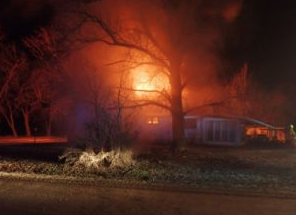
SALINE COUNTY — Authorities are working to determine the cause of a weekend fire that destroyed a rural Kansas home

Saturday fire destroyed a Saline County home

Just after 12a.m. Saturday, Saline County Rural fire crews and from Gypsum responded to a home in the 700 Block of King Street, according to a media release.

The occupants of the home 44-year-old Sean Corbett and 53-year-old Tina Tanner were able escape without injuries.
Corbett said he discovered the fire near the area of the water heater but the cause has not yet been determined. The house is considered a total loss is valued at $55,000.

Loss of contents has not been determined.

BOWERS: Senate Scene Week 9

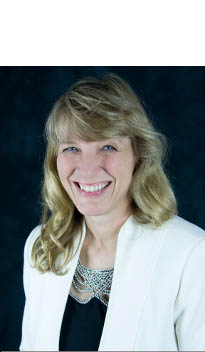
Sen. Elaine Bowers, R-Concordia, 36th Sen. District

SENATE HIGHLIGHTS
The Kansas Senate finished the ninth week of session with committee meetings and bills coming forward. The Senate held floor debate on Wednesday and Thursday passing out bills with the possibility of these bills having hearings next week in the House which will be the last week for committees to meet and pass out bills.

FLOOR ACTION
CEMETERY DISTRICT TERRITORY VALLEY CENTER – SB 155: Senate Bill 155 would de-annex all of Valley Center territory within the Hillside Cemetery District, located in Sedgwick and Harvey counties, from the cemetery district.

SALE OF PROPERTY IN DOUGLAS COUNTY – SB 173: Senate Bill 173 would authorize the State Board of Regents to sell the Oldfather Studios in Douglas County on behalf of the University of Kansas with proceeds from the sale deposited to the restricted use account of the University of Kansas to be used for deferred maintenance.

STATE USE LAW EXTENSION – HB 2174: House Bill 2174 extends the sunset date for the State Use Law Committee which is organized within the Department of Administration.

TEMPORARY PERMITS FOR THE SELLING AND SERVING OF ALCOHOLIC LIQUOR -SB 70: Senate Bill 70 modifies and consolidates laws concerning temporary permits to serve liquor for consumption on premises.

CONSTITUTIONAL AMENDMENT DELETING REQUIREMENT FOR ADJUSTMENT OF CENSUS DATA – SCR 1605: Senate Concurrent Resolution 1605 removes the census adjustment requirement in the Kansas Constitution for military personnel and students. Currently, the state is required to contact every college student and member of the military who resides in Kansas to determine official residence. The census adjustment will ask ‘what is your permanent residence’, then adjusts the official census numbers accordingly based on that answer. This adjustment is only used for reapportionment of Kansas Senate districts, Kansas House of Representatives districts, and State Board of Education districts. During the 2010 adjustment, approximately 13,000 individuals were subtracted from U.S. Census bureau numbers because they told the State of Kansas, they considered themselves to be a resident of another state. If SCR1605 does not pass, the Secretary of State’s office anticipates needing $834,000 in state general funds to cover the costs of the adjustment as part of the 2020 Census. In addition to state savings, SCR1605 has the benefit of allowing for expedited redistricting. On average, it takes three to six months after official U.S. Census data is provided to Kansas to complete the adjustment and provide redistricting data to the Kansas Legislature. Historically, Kansas has been among the last states to complete its reapportionment requirements and SCR 1605 provides the Legislature with additional time to complete redistricting. Kansas is the only state which has this requirement.

EMERGENCY MEDICAL SERVICES-RELATED STATUTES – SB 99: Senate Bill 99 creates the designation of inactive certificate, authorizing the Board to issue an inactive certificate to persons currently certified by the Board who make a written application on a Board form and pay the corresponding fee.

HOUSE PROTECTIONS FOR VICTIMS OF DOMESTIC VIOLENCE, SEXUAL ASSAULT, HUMAN TRAFFICKING OR STALKING – SB 150: Senate Bill 150 creates law prohibiting certain actions from being taken against a tenant, lessee, or applicant for a lease because such person has been or is in imminent danger of becoming a victim of domestic violence, sexual assault, human trafficking, or stalking. An applicant, tenant, or lessee would qualify for the protections of the bill if the applicant, tenant, or lessee provides a statement regarding the circumstances to the landlord or property owner, who could also request the applicant, tenant, or lessee provide additional documentation specified by the bill. A landlord or property owner could impose a reasonable termination fee, not to exceed one month’s rent.

AUTHORIZING A STUDY OF RETAIL RATES OF KANSAS ELECTRIC RATES – Sub SB 69: Substitute for Senate Bill 69 authorizes an independent $1 million study of retail rates charged by public utilities. The bill requires the Legislative Coordinating Council (LCC), a bipartisan group of House and Senate leaders, to select a firm or organization to perform the study which is scheduled to be completed in 2020. The Kansas Corporation Commission (KCC), the state’s utility regulator, would have to cooperate with the organization hired to conduct the study. Sub SB 69 requires the study to be paid for by utility companies.

$90 MILLION SCHOOL FUNDING INFLATION PLAN – SB 142: Senate Bill 142 appropriates funds to the K-12 base aid for FY 2020 and FY 2021. The legislation supplements the state’s $525 million, five-year investment that passed last year, with a series of additional $90 million bonuses during the next four years. SB 142 was crafted to comply with the Kansas Supreme Court’s instructions to add an inflation adjustment.

ALLOWING KANSANS TO BENEFIT FROM FEDERAL TAX REFORM – SB 22: Senate Bill 22 was originally introduced in response to the Tax Cuts & Jobs Act of 2017 and the revenue windfall Kansas is expected to receive because of federal tax reform. SB 22 addresses both individual and corporate taxes by decoupling state law from federal tax provisions. The bill will provide individuals with the ability to itemize when using the federal standard deduction on their tax return. SB 22 provides Kansans with the right to deduct interest on their mortgage, property taxes, and health care expenses. The bill also provides incentives for businesses to invest and create jobs in Kansas since it places Kansas on par with surrounding states that have already decoupled from federal law, increasing Kansas’ competitiveness. The House of Representatives added two amendments before it passed the House chamber. One amendment added by the House provided a one percentage point reduction in the state’s 6.5 percent sales tax on food. The food sales tax reduction is expected to provide a $43 million reduction in sales tax, beginning October 1st. The second amendment was an internet sales tax amendment that requires out-of-state vendors to pay sales tax. Online sales tax is expected to generate about $21 million annually.

GOVERNOR KELLY SIGNS SENATE BILL 9 INTO LAW
Last Friday morning, Governor Laura Kelly signed Senate Bill 9 into law. Senate Bill 9 allocates $115 million from the state general fund to the school group of the Kansas Public Retirement System (KPERS). The $115 million pays back a previously missed KPERS payment, bringing the funding ratio to the highest point it has been in 25 years. The school group of KPERS has had the lowest funding ratio, at 61.6 percent, well below the total KPERS funding ratio which is 68.4 percent. Senate Bill 9 passed both the Senate and House unanimously.

GOVERNOR KELLY CABINET APPOINTMENTS
On day 37 of a 90-day session, Governor Kelly submitted four of her acting Cabinet secretaries for Senate confirmation. The Senate read in the Cabinet secretaries on Wednesday to send to committees for screening and consideration. Once committees have held hearings on the appointment, they will then be forwarded to the full Senate for a vote.

Current Appointments submitted include:
Commerce Secretary – David Toland
Transportation Secretary – Julie Lorenz
Secretary of Health and Environment – Lee Norman
Secretary of Revenue – Mark Burghart

From the State Library
The Kansas Constitution, including the Ordinance, Preamble, and Bill of Rights, is available to print in a pocket sized version from the State Library’s website https://kslib.info/constitution. Just click on the link and follow the instructions. A helpful diagram shows how to fold and where to cut to assemble your booklet. Helpful tip: print double sided and flip on the long edge.

Visitors from Senate District #36
We had another busy week with visitors from home including Russell High School senior students and Northern Valley students from Phillips County. The Kansas Optometric Association and the Kansas Association of Insurance Agents held their annual meeting and receptions along with the Kansas Association of Community College Trustees and Phi Theta Kappa 2019 scholars. The Kansas Department of Transportation Division of Aviation their 5th annual Aviation Day with city officials from Concordia attending.

As always, I’ll keep you updated on the activities of the Senate while we continue through the second half of the session. I always encourage you to stay informed of the issues under consideration by the Kansas Legislature. Committee schedules, bills, and other helpful information can be easily accessed through the legislature’s website at www.kslegislature.org. You are also able to ‘listen in live’ at this website. The House meets at 11:00 AM and the Senate at 2:30 PM. Please do not hesitate to contact me with your thoughts, concerns, and suggestions. An email is the best at this point in the session.

Thank you for the honor of serving you!

Senator Elaine Bowers
Kansas State Capitol Building
Room 223-E
300 SW 10th St.
Topeka, KS 66612
[email protected]
785-296-7389
www.kslegislature.org

Elaine Bowers, R-Concordia, is the 36th Dist. state senator and serves as the Senate Majority Whip. The 36th Senate District includes Cloud, Jewell, Lincoln, Mitchell, Osborne, Ottawa, Republic, Rooks, Russell, Smith and Washington counties and portions of Marshall and Phillips counties.

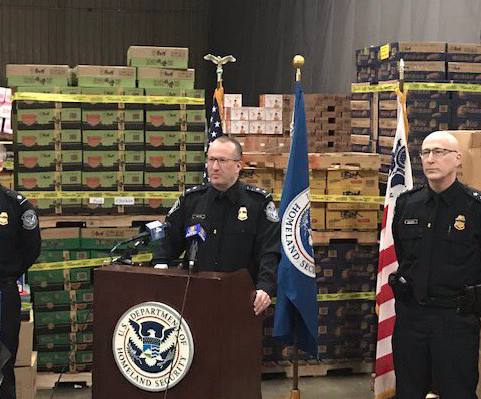
U.S. officials seize 1 million pounds of pork smuggled from China

NEWARK, N.J. (AP) — Federal authorities say 1 million pounds of pork products allegedly smuggled from China have been seized at a New Jersey port.

Troy Miller, field operations director for the Customs and Border Protection in New York and New Jersey, says it’s the largest agricultural seizure ever made in the United States.

Officials feared the meat could be contaminated with African swine fever virus, which has killed more than a million pigs in China. It’s not dangerous to humans, but officials say an outbreak in America could cause $10 billion in damage to the pork industry in just one year.

Officials say the pork was smuggled over several weeks in containers where it was hidden by packages of noodles and laundry detergent. They say the meat was “primarily cured,” and the cargo containers were not refrigerated.

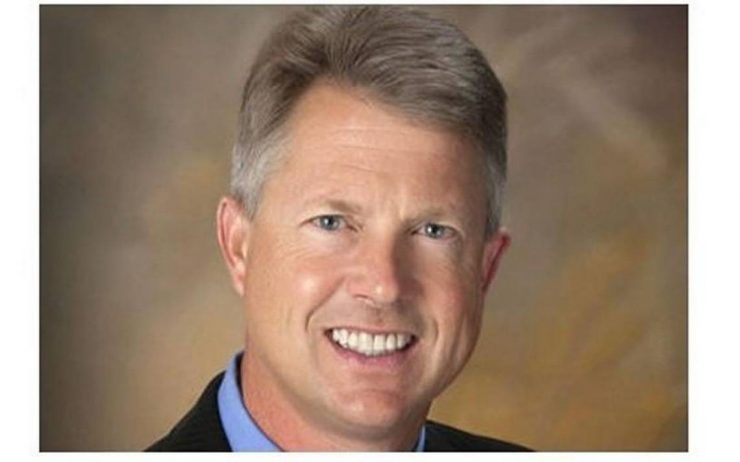
MARSHALL: Doctor’s Note March 18

Dr. Roger Marshall, R-Great Bend, is the First District Kansas Congressman.

Hello Friends,

I am beside myself that the Senate voted to block the President’s National emergency declaration last week. Time and time again this administration has outlined the clear threat that our broken immigration system poses. I want to FIX this problem; I long for a day where our borders are secure AND our nation’s applications backlog is manageable, so that people pursuing the American dream can come to our country the RIGHT way.

Washington has a habit of making the simple, complicated. Leaders make the complicated, simple. You’re either for securing our borders and keeping Americans safe, or you aren’t. I stand with the President.

I’ve been to the border and I’ve seen the circumstances, our border patrol and DHS agents who are fighting on the front lines need our help to stop the flow of illegal drugs, sex trafficking, and violent criminals from coming into our communities.

(Editor’s Note: President Trump vetoed the block Friday afternoon.)

Agriculture Day

Last week I had the honor and privilege to speak on the House floor to celebrate National Agriculture Day. The state of Kansas has always been a leader in agriculture – ranking first in the production of grain sorghum, second in the production of wheat, third for cattle, and fourth in the production of sunflowers. Our dairy sector is also rapidly expanding and other sectors of animal agriculture are growing exponentially as well. Kansas farmers work around the clock to ensure their animals are healthy and their crops are maintained.

The number of people in agriculture today, less than 2% of our population, is but a fraction of what it was 100 years ago, but the impact of today’s agriculture industry is extraordinary. Today’s farmer feeds about 165 people and agricultural goods are still our country’s number one export. In Kansas, agriculture accounts for nearly half of the state’s total economy. In fact, our state is second in the nation for the total number of acres farmed.

On the floor, I also spoke about the importance of the relationship between co-ops and farmers. Co-ops are responsible for more than 4,600 jobs and $1.1 billion in total economic impact statewide. Cooperatives are critical to the continued success and prosperity of the American farmer, and I will do everything in my power to continue to support them.

This #NationalAgDay we celebrated our hard-working Kansas producers, the men, and women who work tirelessly in the most important industry in our nation. The strength of our country is dependent on the work our farmers and ranchers put in every day, and I am proud to celebrate with them and fight on their behalf in Washington.

EPA Focuses On Ethanol

I am thrilled to see the EPA’s new rule embrace renewable bio fuels and allow for the year-round sales of ethanol blends. Last week Environmental Protection Agency (EPA) Administrator Wheeler signed a proposed rule that would pave the way for the sale and use of E15 ethanol blends year-round. This is excellent news for the ten ethanol plants across Kansas, along with the grain producers and American consumers who will benefit from the cleaner, higher octane, and lower cost fuel blend.

Here in Kansas we produce nearly half a billion gallons of ethanol a year and this production creates more than 700 jobs, and servicing these plants also creates another 4,000 jobs across the state.

The Importance of Nutrition!

This month is National Nutrition Month, in recognition of nutrition being in the spotlight (even though for me it is something I take seriously and advocate for throughout the year) I introduced two bipartisan bills that aim to end certain food insecurities. Last week I introduced The Campus Hunger Reduction Act of 2019 and The Healthy Food Access for All Americans (HFAAA) Act.

The Campus Hunger Reduction legislation makes sure college students have access to the help that they need to be able to focus on their studies and their futures without having to worry about where they will find or whether or not they will be able to afford their next meal. We must enable our colleges and universities to build out programs and partnerships to alleviate hunger among the students they serve.

I also introduced legislation to combat food deserts. The Healthy Food Access for All Americans (HFAAA) seeks to help alleviate the fact that more than 20 million Americans live in areas where it is difficult to buy affordable fresh food. Today more than 12 million children identify as food insecure, that’s unacceptable. We need these children enjoying our Kansas commodities like nutritious beef, grain, and milk, not suffering from preventable health conditions like diabetes or obesity.

STEM Opportunities in Biotechnology and Bioscience

On Tuesday, the Research and Technology Subcommittee held its first meeting, examining opportunities and challenges with biotechnology and bioscience. Many of the panelists echoed the importance of STEM education as an important component of workforce development and US leadership in bioscience and biotechnology, especially as it relates to research and development in agriculture, energy, and manufacturing. It was a great hearing, and I look forward to continuing these important conversations about U.S. leadership in engineering biology with my colleagues here in D.C. as well as with the many fine educational and research institutions back in the district!

Internet of Things Cybersecurity Act of 2019

On Monday, I joined a handful of colleagues in introducing H.R. 1668, the Internet of Things Cybersecurity Improvement Act of 2019. As we dive deeper into the digital age, we are increasingly using devices such as fitness trackers, smart watches and thermostats that connect to various networks, however many of these devices lack adequate cybersecurity protections. The number of cyber attacks are increasing, and with that comes the need to create more secure and resilient products and services, particularly when it comes to the use of “internet of things” devices by the federal government. This bill aims to address risks posed by these devices by establishing light-touch, minimum security requirements for procurement of internet connected devices by the government.

Remembering President Bardo

Submit Your Artwork !


Please send all entries to [email protected].

Homes near Kansas City flood as river overtops, breeches levees

KANSAS CITY (AP) — Hundreds of homes have flooded in northwest Missouri after the Missouri River overtopped and breached several farm levees.

Holt County emergency management director Tom Bullock says there is 6 to 7 feet of water in many homes. He says one couple was rescued in a helicopter, and some businesses also have flooded.

The Missouri Department of Transportation also reported about 100 flood-related road closures in the state, including a stretch of Interstate 29.

The Missouri River already has crested upstream of Omaha, Nebraska. The National Weather Service says it will crest Thursday in St. Joseph at 10.4 feet above flood stage, which would be the third highest on record. Military C-130 planes were evacuated last week from the Rosecrans Air National Guard base in preparation.

United Way accepting donations for flood-stricken Neb. communities

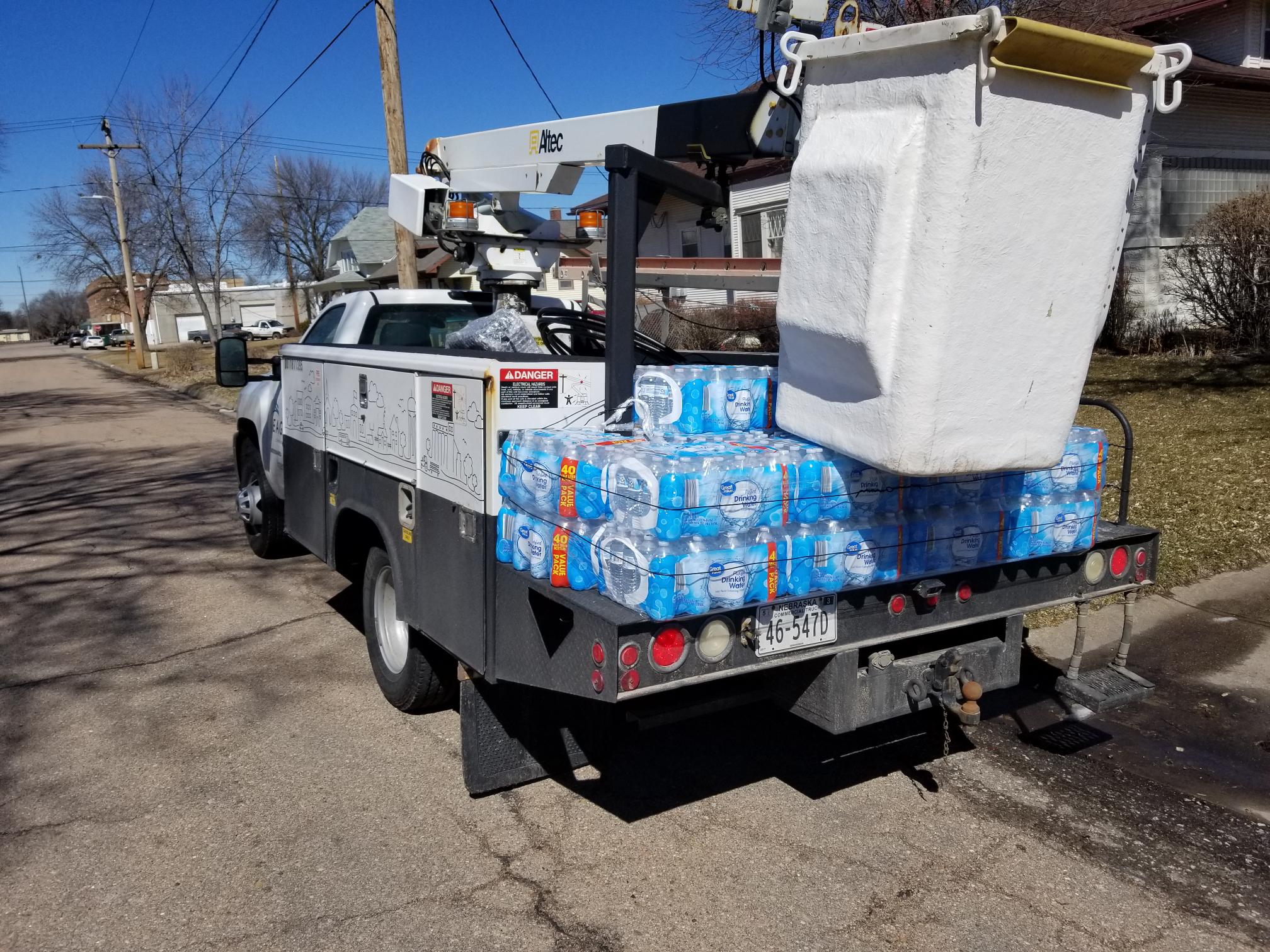
An Eagle Communications bucket truck loaded down with bottled water for stricken communities in Nebraska.

Communities in Nebraska are reeling after significant flooding through the weekend.

Donations are being sought for communities in Nebraska including Cedar Rapids, Saint Edward, Genoa, Silver Creek, Columbus, Schuyler, Platte Center, Humphrey and Newman Grove where the water us undrinkable.

Donations can be made HERE.

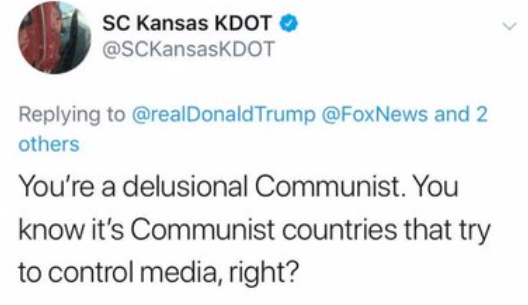
KDOT employee fired for using agency’s twitter account to criticize Trump

TOPEKA — An employee with the Kansas Department of Transportation is no longer employed with the agency after using KDOT’s twitter account to respond to a tweet from President Trump critical of two Fox News television anchors.

The KDOT Twitter account called the president a president a “delusional communist” and added “You know it’s communist countries that try to control media, right?”

Julie Lorenz, acting KDOT Secretary, also used twitter to confirm the employee was no longer working for KDOT.

Kansas felon arrested after seen with a gun on social media

WICHITA, KAN. – A Kansas street gang member with a prior felony conviction for robbery was sentenced to 17 months in federal prison for possessing a firearm, according to U.S. Attorney Stephen McAllister.

Freeeman is being held in Harvey County

Adonis W. Freeman, also known as Ad Koli, 32, Wichita, pleaded guilty to one count of unlawful possession of a firearm by a convicted felon.

Freeman, a documented member of the Bloods, admitted in his plea that he had a Glock Model 27 handgun on the floor next to him when agents served a search warrant at his residence.

Evidence in support of the search warrant included a video on social media in which Freeman was seen with a gun sticking out of his pocket.

Copyright Eagle Radio | FCC Public Files | EEO Public File