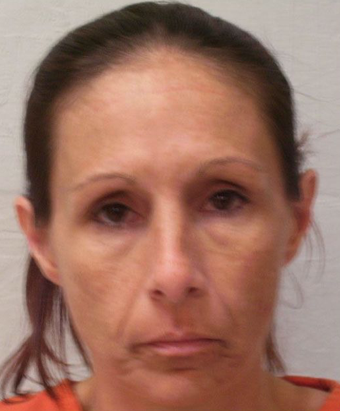
BECKHAM COUNTY (AP) — A woman was arrested after authorities say she used a T-shirt gun to launch drugs, cellphones and other contraband over a prison fence.
Hickman- photo Beckham Co. Sheriff
The Oklahoma Department of Corrections says the incident prompted a lockdown at the North Fork Correctional Unit in Sayre, about 120 miles west of Oklahoma City.
The agency says authorities arrested Kerri Jo Hickman after discovering the T-shirt gun and another package in her vehicle.
The container that was launched contained cellphones, ear buds, phone chargers, methamphetamine, digital scales, marijuana and tobacco.
Hickman remained jailed Friday in Beckham County on complaints of introducing contraband into a penal institution, conspiracy and drug trafficking. Jail records don’t list an attorney who could speak on her behalf.
SHAWNEE COUNTY — Law enforcement authorities are investigating a fatal shooting and have released details on a suspect vehicle.
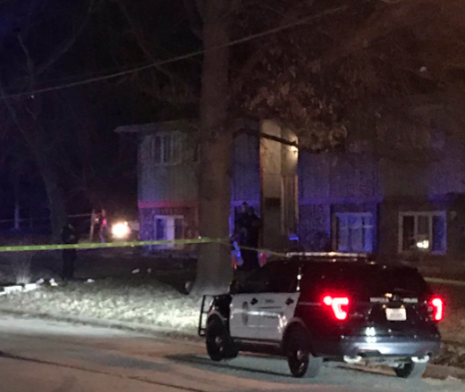
Police on the scene of the shooting investigation photo courtesy WIBW TV
Just before 9p.m. Saturday, police responded to the report of a shooting in the 1100 block of SW Hillsdale Street in Topeka, according to Lt. John Trimble.
Officers found a victim identified as 25-year-old Robert McKinsey James, unresponsive in the yard suffering what appeared to be several gunshot wounds.
Officers were able to secure the scene and first responders performed first aid on McKinsey. He was transported to an area hospital where he died, according to Trimble.
The suspect vehicle is described as an older, boxy, dark colored SUV that was seen fleeing from the area shortly after the shooting. The SUV had several occupants, according to Trimble.
Anyone with information regarding this crime is encouraged to contact the Topeka Police.
ATCHISON COUNTY, Kan.(AP) — Residents in parts of southwestern Iowa were forced out of their homes Sunday as a torrent of Missouri River water flowed over and through levees.
Heavy rainfall and snowmelt forced river levels across several Midwestern states to dangerous levels. At least two deaths were blamed on flooding, and two other men have been missing for days. While river levels on Sunday were starting to level off in Nebraska, other residents in Iowa, Kansas and Missouri were bracing for worse flooding to come.
The Missouri River reached 30.2 feet (9.2 meters) Sunday in Fremont County, Iowa, in the state’s far southwestern corner, 2 feet (0.6 meter) above the record set in 2011. People in the towns of Bartlett and Thurman were being evacuated as levees were breached and overtopped.
County Emergency Management Director Mike Crecelius said it wasn’t just the amount of the water, it was the swiftness of the current that created a danger.
“This wasn’t a gradual rise,” Crecelius said. “It’s flowing fast and it’s open country — there’s nothing there to slow it down.”
Thurman has about 200 residents. About 50 people live in Bartlett.
Lucinda Parker of Iowa Homeland Security & Emergency Management said nearly 2,000 people have been evacuated at eight Iowa locations since flooding began late last week. Most were staying with friends or family. Seven shelters set up for flood victims held just a couple dozen people Saturday night.
Hundreds of people remained out of their homes in Nebraska, but rivers there were starting to recede. The National Weather Service said the Elkhorn River remained at major flood stage but was dropping. It was expected to dip back below flood stage by Tuesday. U.S. 30 reopened near Arlington on Saturday.
The flooding is blamed on at least two deaths. Aleido Rojas Galan, 52, of Norfolk, Nebraska, was swept away in floodwaters Friday night in southwestern Iowa, when the vehicle he was in went around a barricade. Two others in the vehicle survived — one by clining to a tree. On Thursday, James Wilke, 50, of Columbus, Nebraska, died when a bridge collapsed as he used a tractor to try and reach stranded motorists.
Two men remain missing. A Norfolk man was seen on top of his flooded car late Thursday before being swept away. Water also swept away a man after a dam collapse.
In St. Joseph, Missouri, home to 76,000 people, volunteers were helping to fill sandbags to help secure a levee protecting an industrial area. Calls were out for even more volunteers in hopes of filling 150,000 sandbags by Tuesday, when the Missouri River is expected to climb to 27 feet — 10 feet above technical flood stage.
The rising Mississippi River also was creating concern. The Mississippi was already at major flood level along the Iowa-Illinois border, closing roads and highways and swamping thousands of acres of farmland. Moderate Mississippi River flooding was expected at several Missouri cities, including St. Louis.
Flooding has also been reported in Minnesota, South Dakota and Wisconsin.
KANSAS CITY – Three men have been sentenced in federal court this week for their roles in a drug-trafficking conspiracy that led to the kidnapping and torture of an Independence, Mo., man.
According to a media release from the United State’s Attorney, Randal G. Holmes, also known as “Peckerwood” or “Wood,” 54, of Kansas City and Michael C. Borrusch, also known as “Birdie,” 43, of Lakewood, Colo., were sentenced last week in separate appearances before U.S. District Judge Greg Kays. Holmes was sentenced to 15 years in federal prison without parole. Borrusch was sentenced to 3 years and 10 months in federal prison without parole.
Jeremy R. Bond, 40, of Independence, was sentenced on Wednesday, March 13, 2019, to two years and six months in federal prison without parole.
On July 10, 2018, Holmes pleaded guilty to one count of conspiracy to commit kidnapping, one count of kidnapping, one count of conspiracy to distribute 50 kilograms or more of marijuana and one count of brandishing firearms in furtherance of a drug-trafficking crime. Borrusch and Bond pleaded guilty to their roles in the drug-trafficking conspiracy.
Holmes’s son and co-defendant Gerald L. Holmes, also known as “Jerry” or “Joker,” 27, and co-defendant Richard M. Phoenix, also known as “Snake,” 77, both of Kansas City, Mo., have also pleaded guilty and await sentencing.
During the conspiracy, which lasted from May 1 to Sept. 13, 2016, Bond invested $10,000 into the marijuana operation. In return, he received $1,000 a week as interest and free marijuana until the entire principal investment was repaid in full. This investment allowed Gerald Holmes and a co-conspirator, identified in court documents as “C.H.” (who had made four trips to Colorado with Gerald Holmes), to purchase greater quantities of marijuana per trip. Once it reached the greater Kansas City metropolitan area, the marijuana was then resold by Gerald Holmes and C.H.
Conspirators purchased at least 120 pounds of marijuana from Borrusch, for which they made more than a dozen trips between Colorado and Kansas City. Gerald Holmes paid Borrusch between $1,600 to $2,400 per pound, depending on the type and quality of marijuana available. Randal Holmes received $100 for every pound of marijuana brought back to Kansas City because of his prior connection to Borrusch, who was previously his supplier.
On Sept. 12, 2016, Randal and Gerald Holmes agreed to kidnap C.H. because he stole money that was intended for the purchase of marijuana.
They arrived at the Independence, Mo., residence of the victim’s father, identified as “W.H.,” on Sept. 12, 2016. During their conversation, Gerald Holmes removed a firearm from his waistband and placed it on a table in front of W.H. They told W.H. to call C.H. and tell him he was being held at gunpoint and that C.H. needed to come to the residence right away. When C.H. arrived at the residence, Randal Holmes pointed a firearm at him and told him to get into his vehicle. While in the vehicle, Gerald Holmes struck, punched and choked C.H. as Randal Holmes drove away.
They took C.H. to Randal Holmes’s residence, where they were met by Phoenix. C.H. was taken to the basement, where he was assaulted with fists, a hammer and tin snips/clippers. During the assault, Holmes repeatedly demanded that C.H. disclose where the duffle bag containing the money was located. Randal and Gerald Holmes left to retrieve the duffle bag while Phoenix held C.H. at gunpoint.
Randal Holmes later drove C.H. to a rural residence near Edwards, Mo. As Randal Holmes drove them to the residence, Gerald Holmes continued to strike C.H. with fists and the butt of a firearm. When they arrived at the residence, C.H. was told to call his father and to tell him that he was okay, that he had taken a beating, that he would be home in a couple of days and that he deserved what had happened.
Law enforcement officers were able to trace the telephone call and on Sept. 13, 2016, officers were able to locate C.H. and arrest the conspirators. Officers observed that C.H. had suffered multiple, visible injuries to his face, head, hands and feet. Officers noted that C.H. had trouble walking, that his face was black and blue, as well as swollen with traces of dried blood. Upon receiving medical treatment, it was determined that C.H. had also suffered a fracture in his left hand.
Officers found a Jimenez Arms 9mm pistol in Randal Holmes’s vehicle and a Hi-Point 9mm pistol in the residence where C.H. had been held. Officers also found an FN Herstal .40-caliber pistol, a Remington .270-caliber rifle, an RG .22-caliber revolver, a Ruger .22-caliber rifle, a Mossberg .20-gauge shotgun, 36.4 grams of marijuana and drug paraphernalia in another residence.
BROWN COUNTY — The Kansas Bureau of Investigation has cancelled an endangered person for a missing Brown County girl. According to a media release, Gianna Hazelton, 11, Horton, was found safe and is on her way home. Authorities release no additional details.
—————
BROWN COUNTY – The Horton Police Department has requested that the Kansas Bureau of Investigation (KBI) issue an endangered person advisory for a missing Kansas girl.
photo courtesy KBI
The whereabouts of Gianna Hazelton, 11, Horton, are unknown, according to a KBI media release.
Hazelton is a white female, 4 ½ ft. tall and approximately 125-135 pounds.
She has black hair and brown eyes. Hazelton was last seen Saturday night between 7 p.m. and 9 p.m. at 1640 Euclid Ave in Horton, Kan. Hazelton is believed to be accompanied by the non-custodial parent, Casey Hazelton.
The Horton Police Department asks anyone who comes in contact with Hazelton, or has any other information known about this case, including past sightings, to immediately call 911 or Horton Police Department at 785-486-2694.
A new $12 million waterpark. A shiny new craft brewery — not far from the new whiskey distillery. And, yes, that trendy new downtown cafe.
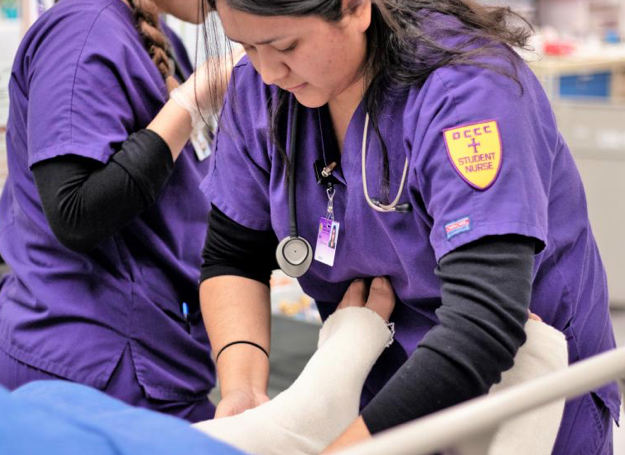
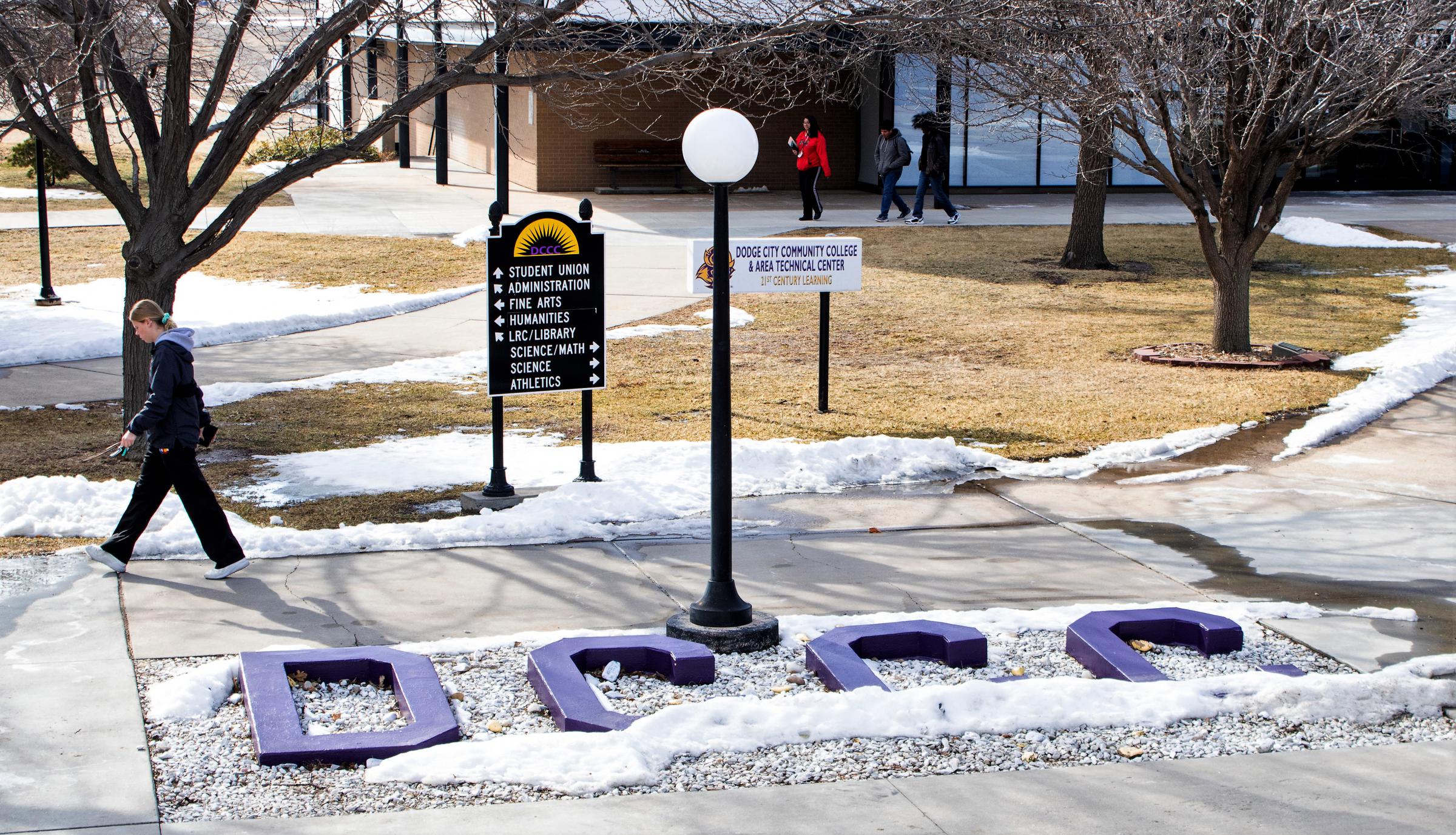
Dodge City officials want students at the local community college, such as these nursing students, to have more options for pursuing bachelor’s degrees without leaving town. BETHANY WOOD / FOR THE KANSAS NEWS SERVICE
A nearly $6 million addition to Boot Hill Museum just kicked off last fall. That’s about when Dodge City wrapped up $86 million in renovations and expansions to its schools.
Much of rural Kansas is withering. Not Dodge City. It offers a growing anchor in the state’s southwest, grounded in the meat industry and energized by the thousands of people who work at its slaughterhouses.
But the town’s success story risks hitting a 21st century ceiling. It lacks a four-year college.
That complicates upward mobility for blue-collar workers, costs the town services it sorely needs and hinders efforts to diversify the local economy.
Some residents leave the region to chase the schooling that leads to higher-paying jobs. Others can’t afford to. Meanwhile, plenty of middle-class jobs in the region go unfilled, such as teaching positions and better-paying health care work.
That’s why community leaders dream of bringing four-year college to this icon of the Old West.
“It’s the only way,” said Joann Knight, head of economic development, “to really address our health care issues and the lack of education out here.”
Dodge City has become west Kansas’ biggest city, at the heart of a 28-county region that lacks any state university.
Give southwest Kansas a satellite campus, they propose, where universities based elsewhere offer bachelor’s degrees that build on the region’s community college programs. Make four-year degrees a realistic option for more students. Keep down costs of the project by reviving classrooms at a local Catholic college that closed decades ago.
“If we drop the ball,” Knight said, “I’d hate to see what our health care access is going to be in 10 years.”
In many southwest counties, you can’t get a tooth filled or help for a child’s anxiety attacks. There’s no dentist or mental health provider in sight.
Even in bustling Dodge City, residents express frustration with difficulty making appointments and with turnover.
“I’ve gone to the doctor quite a few times,” Dodge City High senior Jacquelyn Martinez said, “And I swear, like every time I go, it’s always a different person.”
Martinez wants to be a physician’s assistant — just one of the many kinds of health workers that nurse practitioner Jacque Kemmerer says the region urgently needs.
Patients requiring more specialized care have it the worst, says the founder of a women’s health clinic in Dodge City that’s now part of Pratt Regional Medical Center. Thyroid problems? Seizures? Diabetes? All those can mean long car trips.
“If the diabetes becomes uncontrolled,” she said, “they have to go two-and-a-half hours to Wichita to see an endocrinologist.”
A Wichita State University report prepared for Dodge City scrutinized health outcomes in southwest Kansas and surveyed hundreds of health experts and community leaders.
People die younger in southwest Kansas than the rest of the state and nationwide, researchers found. They’re hospitalized more often with conditions like diabetes and asthma that regular primary care can help keep in check.
The survey’s respondents said population decline across west Kansas has worsened the care shortage — but so has the surging cost of college and the absence of a close-to-home campus.
In the region’s three biggest counties, where Dodge City, Liberal and Garden City lie, around 10 percent of adults work in health care. Elsewhere in Kansas 14 percent do.
An education desert, too
Dodge City High School senior Leslie Rodela doesn’t know yet whether she should aim to become a nurse practitioner or a family physician, but she knows either path will take her away from here for several years at least.
“I like this town,” she said. “I’m kind of sad that I would have to move away.”
Southwest Kansas parents with college-bound kids pack them off and hope some, at least, will bring those coveted bachelor’s and graduate degrees back — as Rodela hopes to do.
“Unfortunately,” said Bud Estes, a state senator from Dodge City, “much of the time they do not.”
Three of his four children didn’t return. Estes the parent doesn’t begrudge anyone that. Estes the senator needs a solution to fill his district’s demand for degrees.
Nationally, most freshmen enroll in college within 50 miles of home. People who live farther away are less likely to go. Dodge City sits 105 miles from Fort Hays State, the closest state university. Wichita State lies 160 miles away.
Kansas has seven public universities. None of them has a campus in the state’s 28 southwestern counties — Kansas’ only quadrant without that. Barclay College, a Christian school of about 250 students and the region’s only four-year campus, lies 60 miles east of Dodge City in tiny Haviland.
Neither that nor the community colleges in Dodge City, Liberal or Garden City provide the broad access to four-year degrees that University of Wisconsin-Madison professor Nick Hillman says open a critical level of economic opportunity.
“That’s where the big jumps are going to happen,” he said, “with that four-year credential.”
On average, Kansas adults add about $4,500 to their annual earnings if they study beyond high school and get a year or two of college under their belts. A four-year degree is a nearly $20,000 jump.
Many educators hope the age of online learning can fill the void. But Hillman says studies suggest distance learning isn’t producing widespread success. For viable, broader access, he thinks states need to find other ways to fit into the lives of the students they hope to serve.
That could mean testing a mix of in-person and web-based instruction, or rethinking the mission of community colleges to help students earn four-year degrees.
Otherwise, many people eyeing bachelor’s degrees will continue either to leave the area or simply miss out. Comparatively few will go wholly online.
Xiomara Garcia enrolled in Dodge City Community College to earn an associate’s degree in nursing. Ultimately, she wants bachelor’s and graduate degrees, and to become a nurse practitioner.
She has doubts about online options for those higher credentials.
Dodge City Community College and other community colleges in the region offer two-year degrees that city officials see as the starting point for rolling out bachelor’s programs.
CREDIT BETHANY WOOD / FOR THE KANSAS NEWS SERVICE
“When you’re together with your professor, they teach you more,” she said. “Their doors are open. You’re more than welcome to ask questions after class.”
So Garcia has thought about moving instead, but she says if state universities offered a satellite campus in her region, that option would suit her well.
“This is where I’m from,” she said. “I have my family here, all the resources I need are here. The only thing missing is the actual education.”
‘University centers’
Some states eager to expand access let community colleges offer bachelor’s programs. Others have created collaborative, multi-college satellite campuses — sometimes called “university centers.”
Educators and civic leaders in Dodge City, Liberal and Garden City want a university center — a partnership among local community colleges and state universities that could start with a focus on health care and expand from there.
Only in Garden City do students go on to college at rates akin to the rest of Kansas, tallies from the state education department indicate. Fewer than one-third of teens in Liberal and Dodge City graduate and continue to college within a few years.
“There’s the financial barrier,” said Annie Martinez, who teaches anatomy and other sciences at Dodge City High School. “But also, just — we have a lot of kids who are very connected with their families.”
A university center could let her students earn an associate’s degree in nursing at Dodge City Community College, for example, and top it off with a bachelor’s without leaving town.
Professor Mechele Hailey directs the community college’s nursing program and encourages all her graduates to keep studying.
Hospitals, clinics and nursing homes crave those higher degrees. Research shows links to healthier patients, and graduate-level nursing degrees can help doctor’s offices serve more people.
“The more education we can get,” Hailey said, “the better nursing is in general.”
‘The more education we can get, the better nursing is in general.’
Students say a university center could let them live at home during their studies, sparing them thousands of dollars in dorm fees on the way to earning a bachelor’s degree.
“I would have my family to help me throughout the entire process,” said Alexandra Garcia, a Dodge City high school senior who wants a bachelor’s and, eventually, a physician’s assistant master’s degree from Wichita State. “That would help a lot.”
Gauging demand
Over the past decade, the Kansas Regents set urgent annual targets to get thousands more students earning two or four-year degrees.
Without those degrees, they worry, businesses will struggle to hire and grow. Kansans will struggle to reach or stay in the middle class.
But the state hasn’t come close to hitting its goal. Doing so would require enrolling many more of the students who often face greater hurdles to higher education. Black and Hispanic students, and those from low-income families or families with no college history, remain less likely to study beyond high school.
Thousands of students from those groups live in Dodge City, Liberal and Garden City.
Their schools bring together a mix of stunningly diverse heritages — the product of the region’s many agricultural jobs. Dozens of languages from around the world are spoken in southwest Kansas homes, ranging from Spanish and Congolese French to Guatemalan K’iche’, Somali and Burmese.
Think of the social and economic implications of failing to open doors to college, says Terri Mujica-McLain. She’s a Kansas City consultant who hails from southwest Kansas and is helping with the push for a university center.
“If you’re not educating your minority population,” she said, “you’ve totally missed the bus.”
Think big, start small?
Posters hanging at the library of Dodge City High School. CREDIT CELIA LLOPIS-JEPSEN / KANSAS NEWS SERVICE
Yet Southwest Kansas faces a bit of a chicken-and-egg situation.
Calculating the costs of a satellite campus depends on how many students would enroll. Pinning down demand is difficult for programs that don’t yet exist.
But Dodge City leaders pursue the concept doggedly, with help from federal and foundation grants, and are gaining momentum. At least three universities have visited to gauge the prospects. Fort Hays State will soon finish a feasibility study on rolling out a few bachelor’s programs as early as next fall.
“It needs to be a win-win for the institution, for the local community and obviously for the student,” said Shane Bangerter, a Dodge Citian and vice chair of the Kansas Board of Regents. “What I would like to see happen is to get some of these programs started and then we can better judge.”
Wichita State economists think west Kansas will keep losing residents in the coming decades. But they predict two of the west’s four main population centers will continue to grow: Hays (which already has a university) and Dodge City.
At around 35,000 people today, Dodge and surrounding Ford County may reach nearly 50,000 by the mid-2060s.
Liberal and Seward County, researchers predict, will hold steady. Garden City and Finney County could shrink as much as a third.
Dodge City officials suggest a satellite campus there could serve Liberal and Garden City, too, with courses potentially offered at all three locations.
The project could keep costs down by teaming up with the community colleges in all three towns — and using the ample space at Hennessy Hall.
A hulking yet elegant structure built in the 1950s, Hennessy once housed St. Mary of the Plains College. Today, Dodge City puts it to a wide range of uses. A Catholic college in Wichita — Newman University — already offers a small program for aspiring teachers there. Dodge City officials see that as one piece already in place for its satellite campus vision.
St. Mary closed in 1992. A press release from that year pins blame for the Catholic college’s demise largely on a “disastrous” deal-gone-awry with an out-of-state trucking school that sunk it into deep trouble with the U.S. Department of Education.
Until then, 160 faculty and staff served more than 800 students a year, churning out young professionals.
Business, education and nursing ranked among the most popular majors, says Tim Wenzl, archivist for the Catholic Diocese of Dodge City. Many of the graduates stayed.
R.C. Trotter co-owns a five-physician family medical practice in Dodge City with mental health counseling and a nurse practitioner.
“Everyone in my office grew up out here,” he said.
“Come to the product,” he urged Kansas universities. “Come to where the kids are if you really want to make a difference in education down the road.”
Celia Llopis-Jepsen is a reporter for the Kansas News Service. You can reach her on Twitter @Celia_LJ.
MANHATTAN — The Kansas Department of Agriculture is accepting applications for the 2019 Specialty Crop Block Grant Program. Funds for the program are awarded to the agency by the U.S. Department of Agriculture’s Agricultural Marketing Service. The funds are in turn granted to projects and organizations that promote the competitiveness of specialty crops.
The purpose of the Specialty Crop Block Grant Program is to enhance the competitiveness of specialty crops. Specialty crops are defined by the USDA as “fruits, vegetables, tree nuts, dried fruits, horticulture, and nursery crops, including floriculture.”
Each state that submits an application that is reviewed and approved by the Agricultural Marketing Service is to receive an estimated base amount of $201,973.63 plus an amount based on the average of the most recent available value of specialty crop cash receipts and the acreage of specialty crop production in the state. In 2018, Kansas received $348,848.12 for the grant program. In 2019, it is expected that Kansas will receive approximately $373,500.
Applications will be evaluated by a team of external reviewers. The team will rate proposals on their ability to successfully promote specialty crops in Kansas and make a positive impact on the Kansas economy. Those recommendations will be submitted to the Kansas Secretary of Agriculture, who will make the final awards.
Applications are due to KDA no later than 5:00 p.m. on April 19, 2019. For more information about the Specialty Crop Block Grant program or to complete the 2019 application, go to the KDA website at agriculture.ks.gov/SpecialtyCrop or contact Peter Oppelt, KDA economist, at 785-564-6726 or [email protected].
WICHITA, KAN. – A man was sentenced this week to 9-years in federal prison for trafficking more than 20 pounds of methamphetamine, according to U.S. Attorney Stephen McAllister.
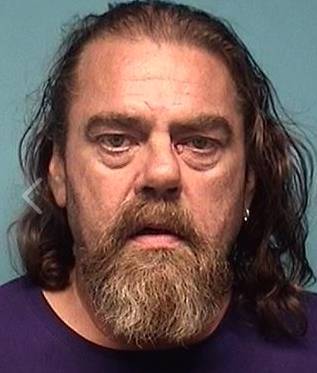
Andrade photo Scott Co.
Guillermo D. Andrade, 23, Oklahoma City, Okla., pleaded guilty to one count of possession with intent to distribute methamphetamine.
In his plea, he admitted he drove from California to Kansas accompanying another car that was carrying methamphetamine.
When the Kansas Highway Patrol stopped the other car and searched it, troopers found more than 20 pounds of methamphetamine. Andrade admitted he arranged to transport the methamphetamine from California to Oklahoma, where he planned to sell it.
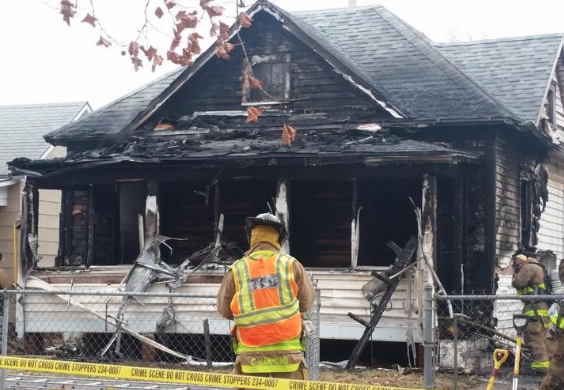
Just after 10a.m. on December 28, fire crews responded to a reported structure fire located at 412 SE Lime Street in Topeka. Upon arrival, fire crews found the single story wooden frame residential structure with heavy smoke and flames coming from a bedroom in the front of the structure, according to Fire Chief Michael Martin.
Firefighters performed a primary and secondary search of the structure. An adult female victim, Patty Lou Ceballos, 70, was rescued and transported to a local hospital with life threatening injuries, according to Martin. Her son 49-year-old Ryan John Ceballos was found deceased within the structure.
On Friday, Martin reported Patty Ceballos was still recovering at a local facility.
Preliminary investigation indicates the fire cause to be accidental, more likely than not associated with the improper disposal of smoking material.
The origin of the fire was in the front bedroom.
Estimated structural dollar loss – $30,000.00 and estimated content dollar loss is $5,000.00.
No working smoke detectors were located within the residence, according to Martin.
Just after 9:20 a.m., police executed a narcotics search warrant at 215 Fruit Street in Great Bend, according to a media release.
Police located methamphetamine, marijuana, and items of drug paraphernalia during the search of this residence. Three individuals were located on scene.
Martha A. Comfort, age 58; Peter Zamarripa, age 50; and Julian Huitron, age 58 were arrested and transported to the Barton County Detention Center on requested charges of possession of methamphetamine, possession of marijuana, and possession of drug paraphernalia.
Huitron-photo Barton Co.
Comfort has a previous drug conviction in Scott County.Zamarripa has previous convictions for drugs, driving while habitual offender and criminal possession of a weapon, according to the Kansas Department of Corrections.
OMAHA, Neb. (AP) — Authorities were using boats and large vehicles on Saturday to rescue and evacuate residents in parts of the Midwest where a recent deluge of rainwater and snowmelt was sent pouring over frozen ground, overwhelming creeks and rivers, and killing at least one person.
Authorities reported a levee break near Corning, Missori, just north of Kansas state line.
In addition, rescue efforts in eastern Nebraska were hampered by reports of levee breaches and washouts of bridges and roads, including part of Nebraska Highway 92, leading in and out of southwest Omaha. Authorities confirmed that a bridge on that highway that crosses the Elkhorn River had been washed out Saturday. And in Freemont, west of Omaha, the Dodge County Sheriff’s Office issued a mandatory evacuation for some residents after floodwaters broke through a levee along the Platte River.
The flooding followed days of snow and rain — record-setting, in some places — that swept through the West and Midwest. The deluge pushed some waterways to record levels in Nebraska, South Dakota, Iowa and Minnesota. The flooding was the worst in nearly a decade in places.
The family of farmer James Wilke, 50, of Columbus, Nebraska, said he was killed Thursday when a bridge collapsed as he was using his tractor to try to reach stranded motorists on Thursday. His body was found downstream, his cousin Paul Wilke told the Columbus Telegram. Gass Haney Funeral Home confirmed James Wilke’s death.
At least two other people were missing in floodwaters in Nebraska. Officials said a Norfolk man was seen on top of his flooded car late Thursday before being swept away in the water and another man was swept away by waters when a dam collapsed on the Niobrara River.
Officials in Sarpy County, south of Omaha, said Saturday that power may be shut off to communities along the Missouri, Platte and Elkhorn rivers for safety reasons. They warned those who choose to ignore calls to evacuate that rescues would be attempted only during daylight hours. Some cities and towns, such as North Bend on the banks of the Platte River, were submerged. Others, such as Waterloo and Freemont, were surrounded by floodwaters, stranding residents in virtual islands with no access in or out.
Farther east, the Mississippi River saw moderate flooding in Illinois from Rock Island south to Gladstone. Meteorologist Brian Pierce with the National Weather Service’s Quad Cities office in Davenport, Iowa, said flooding on the Mississippi could get worse a few weeks as more snow melts in Minnesota and Wisconsin.
“What we’re having now is the dress rehearsal for the main event that’s going to happen in early April,” he said of the flooding on the Mississippi.
Rising waters along the Pecatonica and Rock rivers flooded some homes in the northern Illinois cities of Freeport, Rockford and Machesney Park. The National Weather Service said record crests were possible along the rivers, with water levels forecast to continue to rise over the next several days and remain above flood stage through most of the weekend.
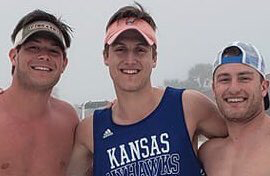
KANSAS CITY, Kan. (AP) — Three University of Kansas fraternity brothers on a spring break trip to Florida are credited with rescuing a young boy from a riptide.
Sigma Phi Epsilon brothers Jared Cox of Overland Park, Connor Churchhill of Olathe and Cole Firmature of Omaha went to a beach on March 11 in Destin, Florida. They were at a beach bar when they heard a woman cry out for a lifeguard and point to the water.
PROUD of KU SigEps Jared Cox, Connor Churchill, and Cole Firmature, springing into action today on Spring Break in Destin, Florida to save two young boys that had been swept out to sea — saving the young boys from drowning! #SigEpProud#SigEp#KUSIgEppic.twitter.com/nACz3nAVH3
There was no lifeguard patrolling the beach at the time and the three men sprinted to the water.
They spotted a young boy drifting on a boogie board 40 yards out into the ocean. Together, the three men swam out and brought the child to shore by pushing him on his board.
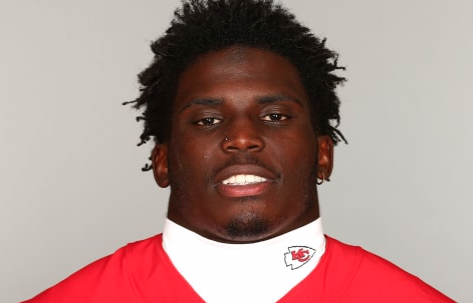
OVERLAND PARK, Kan. (AP) — The Chiefs are investigating an incident in which star receiver Tyreek Hill was involved in a domestic battery episode in suburban Kansas City earlier this week.
The team said in a statement to The Associated Press that it was aware of a police report filed Thursday by the Overland Park Police Department that lists Hill’s address and identifies a juvenile as the victim. Hill’s fiancee, Crystal Espinal, is identified among “others involved.”
The couple has a 3-year-old son, Zev.
Overland Park police Officer John Lacy said the case has been turned over to prosecutors for review. No charges have been filed against Hill, and Johnson County prosecutor’s spokeswoman Kristi Bergeron didn’t immediately return a phone message seeking comment.
Chiefs spokesman Ted Crews said Friday the team has been in contact with local authorities and the NFL as it gathers more information but declined further comment.
The 25-year-old Hill has a history of domestic violence.
While starring at Oklahoma State in 2014, Hill allegedly punched and choked Espinal when she was pregnant with their son. He was kicked off the team and pleaded guilty to domestic assault and battery by strangulation, and received three years of probation in the case.
The conviction was dismissed in August and expunged from his record after he finished probation.
Hill transferred to West Alabama and was chosen by the Chiefs in the fifth round of the 2016 draft, a selection widely criticized given his history. The Chiefs said at the time they had vetted Hill and were comfortable with their decision, and they put safeguards that included counseling and other checks they hoped would keep Hill on the right path.
“Tyreek has done a nice job staying on top of himself with that,” Chiefs coach Andy Reid said late last month. “Do we communicate with him? Yes. We have things set up for him if there are issues, but he’s been phenomenal. Every team has that, but it gives you confidence in human beings that they can make a change when they put their mind to it and do things the right way.”
It appeared to be working, too. Hill won over a skeptical fan base with his game-breaking ability and the way he interacted with them, often signing autographs for hours during training camp.
The two-time All-Pro had also positioned himself for a massive payday.
He had 87 catches for 1,479 yards and 12 touchdowns last season, helping quarterback Patrick Mahomes win league MVP honors and the Chiefs win a third consecutive AFC West title. They advanced to the conference title game before losing in overtime the Super Bowl-champion Patriots.
Hill is entering the final year of his rookie contract, and the Chiefs had been building their roster to create enough salary cap flexibility to sign him to a long-term deal. The largest contract given to a wide receiver is the $90 million, five-year deal that the Giants gave Odell Beckham Jr., who has since been traded to the Cleveland Browns.
___
OVERLAND PARK, Kan. (AP) — The Chiefs are investigating an incident in which star receiver Tyreek Hill was involved in a domestic battery episode in suburban Kansas City earlier this week.
The team said in a statement to The Associated Press that it was aware of a police report filed Thursday by the Overland Park Police Department that lists Hill’s address and identifies a juvenile as the victim. Hill’s fiance, Crystal Espinal, is identified among “others involved.”
The couple has a 3-year-old son, Zev.
No charges have been filed in the case, but Chiefs spokesman Ted Crews said the organization has been in contact with local authorities and the NFL as it gathers more information.