KANSAS CITY, Mo. (AP) — A groundbreaking celebration is planned for late March for the new single-terminal Kansas City International Airport.
images courtesy FlyKCI.com
The Kansas City Aviation Department and the project developer announced Thursday that the celebration will be March 25 at the airport.
The announcement is another step toward a new airport in the city, which was a source of controversy for years before voters in November overwhelmingly approved demolishing the current three-terminal airport and replacing it with a single terminal.
The City Council last week approved agreements between the city and developer Edgemoor over the design and construction of the airport.
The new terminal will have 39 gates and more than 1 million square feet.
The school in Baldwin City announced Friday that Baker would add eSports for the next school year.
Athletic Director Nate Houser announced that Toby Ebel was will the university’s first eSports coach. He has served many roles at Baker since 2001, many involving technical and website positions.
The Wildcats will compete in three different games in their inaugural season. The games will be announced at a later date.
Baker will join the National Association of Collegiate Esports. It also will be the sixth school in the Heart of America Conference to add eSports.
Baker will also be the sixth school within the Heart of America Athletic Conference to add eSports.
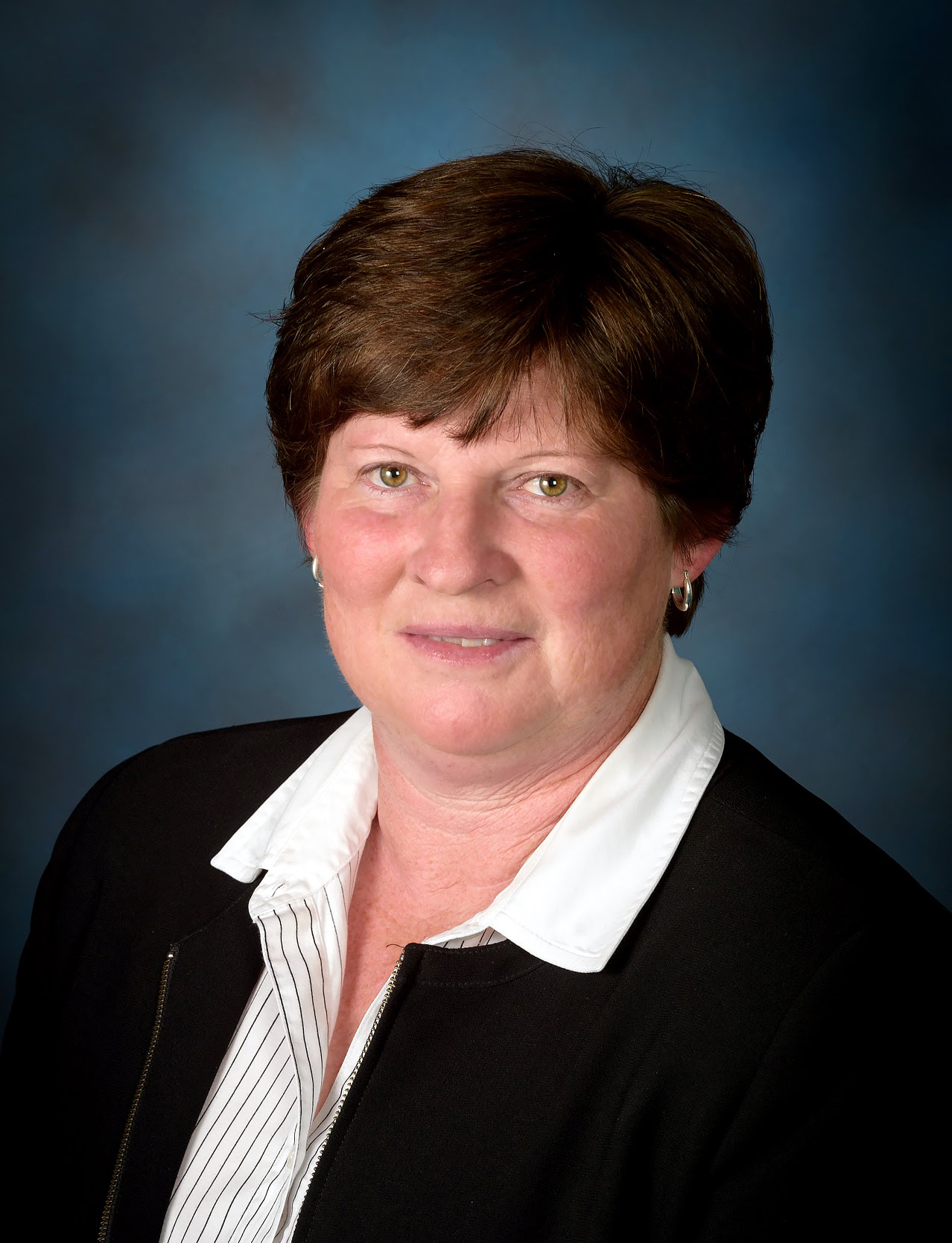
TOPEKA – Beverly Mortimer, vice president of programming for Jobs for America’s Graduates-Kansas, has been selected to participant in the 91st Joint Civilian Orientation Conference (JCOC 91) hosted by the U.S. Secretary of Defense.
Mortimer was nominated by State Senator Elaine Bowers (District 36, R-Concordia) who participated in the 2018 conference.
The JCOC program is the oldest and most prestigious public outreach and full immersion program in the Department of Defense.
As a JCOC participant, Beverly Mortimer will spend several days at the Pentagon and military installations, engaging with senior military officials and U.S. Service members. Mortimer will gain a better understanding of the roles and mission of the U.S. Armed Forces, their skills, capabilities and equipment employed in defense of our nation.
The JCOC program directly links to the Department’s Know Your Military (#KYM) initiative, which is designed to help close the growing civilian-military divide by educating the American public about their military. “We are so proud of Bev and excited that she has been selected to participate in this prestigious program. As head of programming for JAG-K, getting to know our military will help our organization learn more about the career opportunities within the United States military,” said Chuck Knapp, JAG-K president and chief executive officer.
The objective of the JCOC public liaison program is to:
Educate and inform participants about the strength and readiness of the U.S. Armed Forces through personal observation of Army, Marine Corps, Navy, Air Force, and Coast Guard operations.
Provide a better understanding of the rewards and challenges of military service.
Provide the American public opportunities to obtain a better understanding of national defense policies and programs through the eyes of those JCOC participants who have spent time with their military.
The 91st JCOC is scheduled for June 2019. More information about the conference can be found at https://jcoc.osd.mil/.
TOPEKA – The Kansas Department of Health and Environment (KDHE) has added a new data set to its online health data query tool, Kansas Information for Communities (KIC). Emergency department data from the state’s general hospitals is now available on the KIC page.
“Using KIC, individuals and policy makers will be able to see the diagnoses that bring almost 900,000 residents to emergency departments at Kansas hospitals,” said KDHE Acting Secretary and State Health Officer Lee A. Norman, M.D. “This information can provide an insight into the injuries and illnesses affecting Kansans, many of which are preventable.”
Using the KIC emergency department data, individuals will be able to produce statistics on the number of ED visits by county, race, ethnicity, sex and various diagnosis categories. The diagnosis codes are grouped using a clinical classification software developed by the Agency for Healthcare Research and Quality. The same categories are used in the hospital discharge or inpatient diagnoses that are reported in the KIC hospital discharge query tool.
KIC can produce counts, rates and age-adjusted hospital ED or inpatient rates. Other data sets contained in KIC include hospital discharge procedures, births, deaths, pregnancies, cancer and population. Data used in KIC is deidentified with some small counts or unreliable rates suppressed.
The KIC web site also hosts a variety of other statistics, data and resources. The URL is https://kic.kdheks.gov.
The Republican-controlled Kansas House approved wide-ranging tax legislation Thursday. The measure would reduce sales taxes on food, which could help Kansans across the income spectrum. It would also give some big corporations a break, and that will likely spark a showdown with Democratic Gov. Laura Kelly.
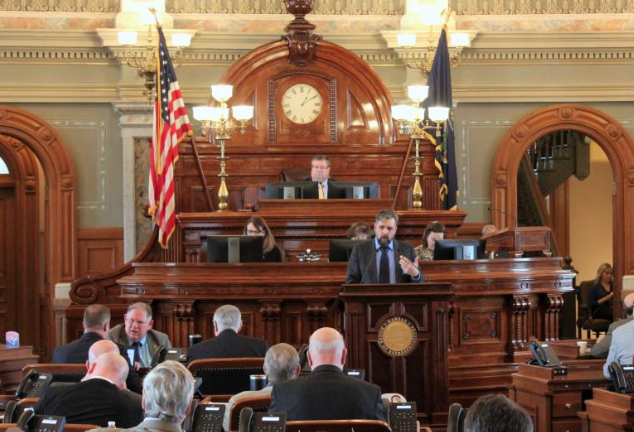
The Kansas House on Thursday debated who would benefit from a tax cut package and what it would cost the state. The measure is likely to be in Gov. Laura Kelly’s hands soon. STEPHEN KORANDA / KANSAS NEWS SERVICE
Senate leaders introduced the initial version of the bill earlier this session in response to the federal tax overhaul of 2017. They pushed for the legislation to allow Kansans to continue itemizing on their state taxes even if they no longer do so on their federal returns because of larger standard deductions. They also wanted to free Kansas businesses from owing state taxes on overseas income that Congress incentivized them to repatriate.
Supporters of the proposal in both the Senate and the House said without it the federal tax cuts would trigger a state tax increase on businesses and people who itemize.
Opponents argued it amounts to a tax break for big business and the wealthy and would prompt the state to forfeit an estimated $400 million in revenue over the next three years just as its finances are stabilizing.
“I understand the temptation to keep the money,” Republican state Rep. Les Mason said during the House debate Thursday. “Are we going to do the right thing? Are we going to get this money back to the rightful owners?”
To make the legislation more palatable, House lawmakers bundled in a provision to cut the sales tax by 1 percentage point, which alone would lower state tax collections by around $175 million over three years. Another added provision would offset that some by collecting more from online purchases, raising an estimated $88 million during that time.
If lawmakers advance it with another vote, the bill will head to negotiations between the chambers to reconcile the changes made by the House.
Gov. Kelly hasn’t explicitly threatened to veto the bill, but she has said that tax cuts should not be a priority right now. Instead, she said the Legislature should come up with the money to satisfy the Kansas Supreme Court that school funding is adequate.
“It is time to put the priorities of Kansas families first and fund our schools,” she said last month. “With a Supreme Court deadline fast approaching, the Legislature should be focusing on education, not another irresponsible tax plan.”
The state’s finances are on solid ground since lawmakers reversed many of the tax cuts passed in 2012. But, Kelly has said making major tax changes could cause a repeat of the fiscal troubles Kansas faced during former Gov. Sam Brownback’s tenure.
In a way, the internet tax collections and food sales taxes are a political dare legislators may drop in front of Kelly. The food sales tax cut and internet sales tax provisions appear quite popular and they could be used to pressure her to sign the bill into law or stoke criticism if she vetoes it.
“It’s all about the hate of our governor,” Democratic state Rep. Cindy Neighbor said on the House floor. “It’s time to quit playing party politics.”
Reducing the food sales tax has broad support as a way to benefit lower-income Kansans, but it never happens because of the huge financial cost to the state budget.
Some House members blasted the bill for only cutting the state food sales tax from 6.5 to 5.5 percent. Local sales taxes further raise the rate.
Uncertainty over the cost of the bill is also a sticking point, with supporters and opponents alike questioning the accuracy of the estimates.
“It’s a shot in the dark,” Republican Senate President Susan Wagle said earlier in the session. She wondered aloud how much Kansas could stand to lose if the legislation doesn’t pass and businesses leave the state for a more favorable tax climate.
The uncertainty is exactly why Democrat Jim Gartner opposed it Thursday in the House. Without knowing the true cost, he said the bill could put the state in dire financial straits if the country enters a recession.
“What are we doing?” he asked on the floor. “We have no data. No concrete data.”
TOPEKA – Registration is open for this year’s Kansas Rural Opportunities Conference in Dodge City.
The Kansas Department of Commerce hosts this conference annually to provide useful information about rural Kansas living, as well as to engage in a dialogue with rural Kansans to determine how the Department can bolster its efforts to improve the well-being of rural communities in the state.
The Conference will take place at the Boot Hill Casino & Conference Center in Dodge City on April 2-3.
New Commerce Secretary David Toland will be kicking off the conference and Lt. Governor Lynn Rogers will discuss the Office of Rural Prosperity. Lt. Governor Rogers and Secretary Toland will provide insight to community development efforts.
“The Kelly Administration is committed to ensuring that all Kansans have a high quality of life, regardless of their zip code,” said David Toland, Acting Secretary of the Kansas Department of Commerce.
“The Rural Opportunities Conference is a forum for learning about programs that can support and enhance rural communities, as well as an opportunity for residents to tell us their vision for the new Office of Rural Prosperity, which will be headed by Lieutenant Governor Rogers. Whether a business owner, local official, or just an everyday resident concerned about their community, the Rural Opportunities Conference is the place to be in April.”
RENO COUNTY — Authorities reported one of the children injured in Tuesday’s rural Reno County house fire has died.
Charolette Lynn Alley, 2, daughter of Hannah Perry and Dustin Alley died from her injuries, according to a social media report from the Reno County Sheriff. 70-year-old Judy Alley also died in the blaze.
First responders on the scene of Tuesday’s fatal house fire in Reno County -photo courtesy KAKE
Just after 2:30a.m., Tuesday, deputies were dispatched to the area of 9 E Horseshoe Lane, Pretty Prairie, in rural Reno County for the report of a structure fire with possible occupants still inside the residence.
Deputies arrived on scene within minutes of being dispatched and found a single story double-wide residence on fire, according to a media release.
The fire spread quickly to other parts of the structure It was reported that Hannah Lynn Perry, 21, was able to get out of the residence with her two children 2-year-old Charlotte and 1-year-old Wyatt and to the neighbor’s house across the street and call 911.
Hannah reported that her grandmother, 70-year-old Judy Kay Alley was still inside the residence.
The fire department was able to get the fire under control and found Judy Alley’s body.
Authorities have not reported the cause of the fire.
Four members of the 6888th (Photo courtesy U.S. Dept. of Defense)
OFFICE OF SEN. MORAN
WASHINGTON – U.S. Senator Jerry Moran (R-Kan.) today, on International Women’s Day, announced that the women of the 6888th Central Postal Directory Battalion were awarded a Meritorious Unit Commendation (MUC) by the Department of the Army on February 20, 2019 for the unit’s exceptionally meritorious performance during World War II. Sen. Moran sought the unit award on behalf of the women who served in the 6888th to recognize their service during their deployment to Europe.
The 6888th Central Postal Directory Battalion – the “Six-Triple-Eight” – was an all-black, all-female unit that served at home and in Europe during World War II, where they sorted and routed mail for millions of American service members and civilians.
“I am pleased to announce the awarding of the Meritorious Unit Citation to the 6888th Central Postal Directory Battalion for their service during World War II,” said Sen. Moran. “This unit arrived in theater and successfully sorted and routed millions of pieces of mail for servicemembers and civilians sent by their loved ones with the expectation that they would be delivered. As we celebrate Black History Month and the start of Women’s History Month, it is important we pause to recognize the contributions and service of this historic unit.”
“It is a privilege to celebrate the women of the 6888th Central Postal Directory Battalion, who served as the first and only Black -American unit in the Women’s Army Corps to deploy overseas during WWII,” said Commander of U.S. Army Human Resources Command Major General Jason Evans. “Their service was of notable distinction as they cleared over a million pieces of mail, ensuring the delivery and boosting the morale of troops fighting in the European Theater. It is a tremendous honor to recognize the accomplishments and sacrifices of these women by awarding them the Meritorious Unit Commendation. The legacy of the 6888th will continue to inspire Soldiers today and for many more years to come as they take their rightful place in history.”
“This is very exciting and most gratifying for the women of 6888th Central Postal Directory Battalion and their families,” said retired Navy Commander and Chairman and Project Director for the 6888th Memorial Committee Carlton Philpot. “These women had a direct impact on the lives of so many at home and in the European Theater of Operations. If a letter was sent to and from the European Theater of Operations between 1943-1946, these women probably sorted and redirected it. The efforts of these women greatly enhanced the morale of those in Europe and at home. After waiting nearly 74 years, I’m sure I speak on behalf of so many when I say that many are very thankful for all of Senator Moran’s support and effort in getting these women this long overdue recognition they earned and deserve.”
More information about a Meritorious Unit Commendation can be found here.
TOPEKA, Kan. (AP) — The Kansas Supreme Court has denied a 37-year-old Kansas woman’s appeal of her conviction for killing her son.
Blansett -photo KDOC
Lindsey Blansett was convicted of first-degree murder and aggravated assault in the December 2014 death of her son, Caleb, in Wellington. Prosecutors said she beat him with a rock and stabbed him to death. She was given a Hard 25 sentence.
Prosecutors argued during Blansett’s trial that she killed her son to spare him from suffering. Her defense argued she was mentally ill at the time and believed people were coming to her house to hurt Caleb.
Blansett’s appeal argued jury instructions not to consider her mental illness were erroneous.
The state Supreme Court said the instructions didn’t prevent the jury from considering how Blansett’s mental illness affected her ability to premeditate the crime.
SALINE COUNTY — Law enforcement authorities are investigating a suspect on burglary and other charges after a Thursday arrest with the assistance of a K-9 officer
Just after 2p.m, a police patrol officer observed Christopher Rohan, 32, of Salina, outside a residence in the 600 block of South Fifth Street in Salina, according to Police Captain Paul Forrester.
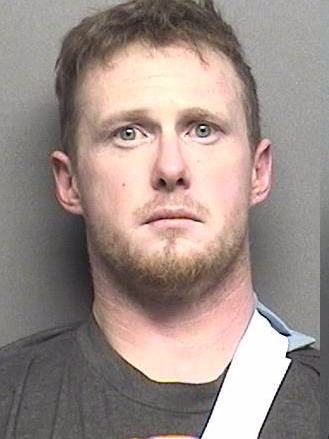
Rohan photo Saline Co.
Rohan was wanted for three felony warrants from Saline County District Court and three misdemeanor warrants from Salina Municipal Court.
After the officer called for assistance, one of the officers at the scene observed Rohan at the back of the residence. When Rohan spotted the officer, he ran south with police in pursuit.
A K-9 officer was deployed and tracked Rohan to the trunk of a car in a garage further south in the 600 block of South Fifth Street.
Police opened the trunk and the K-9 officer was deployed to get Rohan out. Rohan received a couple of bites that resulted in lacerations to his knees and right leg, according to Forrester.
Rohan was transported to Salina Regional Health Center, where he was treated, released and booked on requested charges of felony obstruction and burglary in addition to the warrants.
HARVEY COUNTY — Law enforcement authorities are investigating multiple suspects on drug and additional assault charges after a police officer was involved in a reported altercation
On Friday officers responded to the 100 block of South Main in Newton to serve an arrest warrant, according to a social media report from police. Once at the residence the officers smelled the odor of drugs.
Upon entering the house a fight ensued and an officer was thrown through a wall. The officer was not injured, according to police.
Three people were taken into custody on warrants and charges related to the fight. The department is applying for a search warrant to search the residence.
There were multiple people in the residence at the time including men, women and children. Police released no additional details Friday afternoon.
f=”https://www.apnews.com/447fec23322240d89089f9e2395de232″>her proposal to reduce Kansas’ annual contributions to its public pension system probably won’t pass the Republican-controlled Legislature this year.
Gov. Kelly signed a bill for an immediate, $115 million payment to KPERS.
But Kelly said Friday that the state “absolutely” must revise its schedule of payments to the Kansas Public Employees Retirement System.
She added, “I think the Legislature knows that.”
Republicans have said her plan is unwise. The House rejected it last month.
By law, the state must ramp up contributions to close a long-term KPERS funding gap by 2035. Kelly proposed giving the state an extra 15 years to create budget breathing room.
Kelly’s comments Friday came after she signed a bill for an immediate, $115 million payment to KPERS. It repays with interest a contribution skipped in 2016 because of budget problems.
—————
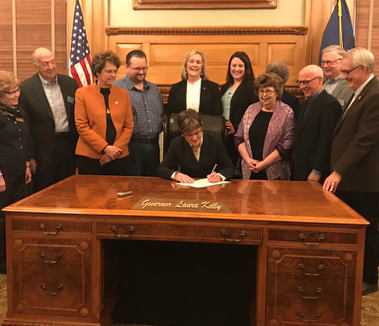
TOPEKA—Kansas Governor Laura Kelly held her first bill signing ceremony Friday morning.
The following remarks are from the Governor at he bill signing ceremony for Senate Bill 9. The legislation that fixes past mistakes by repaying part of the debt to the state
retirement system.
I’m delighted to be joined by friends and former colleagues, Senator Carolyn McGinn and Senator Tom Hawk, our Republican and Democratic leaders from the Senate Ways and Means Committee.
I’m pleased to sign SB 9 which pays $115 millIon for a previously skipped payment with interest. KS thrives in large part thanks to our public employees. This is a step in the right direction, but we must work together to put KPERS on a more sustainable path. #kslegpic.twitter.com/1RkDZ0Mwp7
— Governor Laura Kelly (@GovLauraKelly) March 8, 2019
We invited House Appropriations Chairman Troy Waymaster and ranking member Rep. Kathy Wolf Moore, who we know worked hard on this legislation. They were unable to attend due to a scheduling conflict.
I want to thank all four of these legislators for their leadership on this bill and for their work on the challenging process of shepherding a state budget through the Kansas Legislature.
I’d also like to welcome some very special people – retired state employees and KPERS beneficiaries.
Kansas is what it is in large part thanks to our public employees. Working as firefighters, teachers, engineers and so much more – our state retirees made their own special contribution to Kansas throughout the course of their professional lives.
In exchange for their dedicated service, the state committed to provide a stable retirement system. The retirees upheld their end of the deal, but the state did not. KPERS payments have been delayed, layered, or eliminated 15 times in the last 9 years.
Senate Bill 9 is an effort to right that wrong. It will pay $115 million for a previously skipped payment with interest.
While Senate Bill 9 was not my proposal, I very much support it. It is a step in the right direction. And I am encouraged that lawmakers are now committed to improving the long-term stability and sustainability of our KPERS pension system.
But this is just the first step in what will be a long road to recovery.
And as we look down that road – we see KPERS payments balloon. They will nearly double in the next 10 years – climbing to almost $1 billion per year. That is not sustainable. And we will have to find a solution together.
As a budget wonk, I’m thrilled that my first bill to sign as governor pays down debt. But we have much more to do to fix the damage of the last several years.
Republicans and Democrats must work together. We must put politics aside and make wise choices about how we can protect retirees and their benefits – while also putting our pension system on a sustainable path.
WICHITA, KAN. – Wichita physician Steven R. Henson was sentenced today to life in federal prison for unlawfully distributing prescription drugs, according to U.S. Attorney Stephen McAllister.
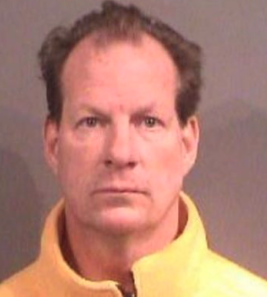
Henson-photo Sedgwick Co.
“I want this case to send a message to physicians and the health care community,” McAllister said. “Unlawfully distributing opioids and other controlled substances is a federal crime that could end a medical career and send an offender to prison.”
McAllister continued: “We are dealing with an epidemic. Nationwide, more than 70,000 Americans died in 2017 from drug overdoses. That is more than all the American casualties during the war in Vietnam.”
Henson, 57, operated the Kansas Men’s Clinic at 3636 N. Ridge Road in Wichita, stood trial in October and was convicted on the following counts:Conspiracy to distribute prescription drugs outside the course of medical practice (Counts 1 and 2). Unlawfully distributing oxycodone (Counts 3 through 14). Unlawfully distributing oxycodone, methadone and alprazolam (Count 16). Unlawfully distributing methadone and alprazolam, the use of which resulted in the death of a victim on July 24, 2015, identified in court records as N.M. (Count 17)
Presenting false patient records to investigators (Count 19). Obstruction of justice (Count 20) Money laundering (Counts 26 through 31).
Evidence at trial showed Henson was giving dangerous, maximum strength opioid prescriptions to people who did not need them.
Henson was registered with the Drug Enforcement Administration to dispense prescription controlled substances. His registered addresses included the Wichita Men’s Clinic and a location at 1861 N. Rock Road, Suite 201.
During trial, prosecutors presented evidence that Henson: Wrote prescriptions without a medical need. Wrote prescriptions in return for cash. Post-dated prescriptions.Wrote prescriptions without a legitimate medical exam and wrote prescriptions for people other than the ones who came to see him.
U.S. District Judge J. Thomas Marten wrote in an order denying the defendant’s motion for acquittal: “The defendant kept no medical records, performed no physical examinations or physical tests, gave massive amounts of opioids to patients with little demonstrated need, wrote unneeded, non-controlled prescriptions in order to defeat pharmacy limits on controlled substances, and knew that patients were traveling improbably long distances to receive opioids. There was ample evidence that Henson was prescribing opioid medications in amounts likely to lead to addiction, and in amounts so expensive that the patients would likely be forced by economic circumstances to support their addiction by selling some of the drugs to others.”
The judge criticized Henson for deliberately not confronting the fact his patients were addicts. He had a uniform, scripted colloquy with patients in which he asked them if they had pain, they said yes and then he gave them prescriptions. In that way, he avoided asking more questions or ordering more tests. Marten called it, “a pantomime of a genuine doctor-patient relationship (that) demonstrated a consistent policy of avoiding the truth.”
Evidence presented at trial showed Henson prescribed opioid medications in amounts likely to lead to addiction and ignored the risk that his patients would pay for their drugs by selling some of the drugs to other people.
McAllister said: “The prosecution of cases involving a health professional’s misuse of medical expertise and authority is extremely important to fight the opioid epidemic. The vast majority of health care providers are people of integrity who follow their oath to help others, abide by the law, and do all they can to protect patients from becoming addicted. The evidence showed that is not what Dr. Henson did in this case.”
“For any doctors, pharmacists or nurses who disregard their oath and distribute powerful drugs illegally to enrich themselves, the message today is that they will be prosecuted to the full extent allowed by federal law.”