We have a brand new updated website! Click here to check it out!

RAHJES REPORT: March 5

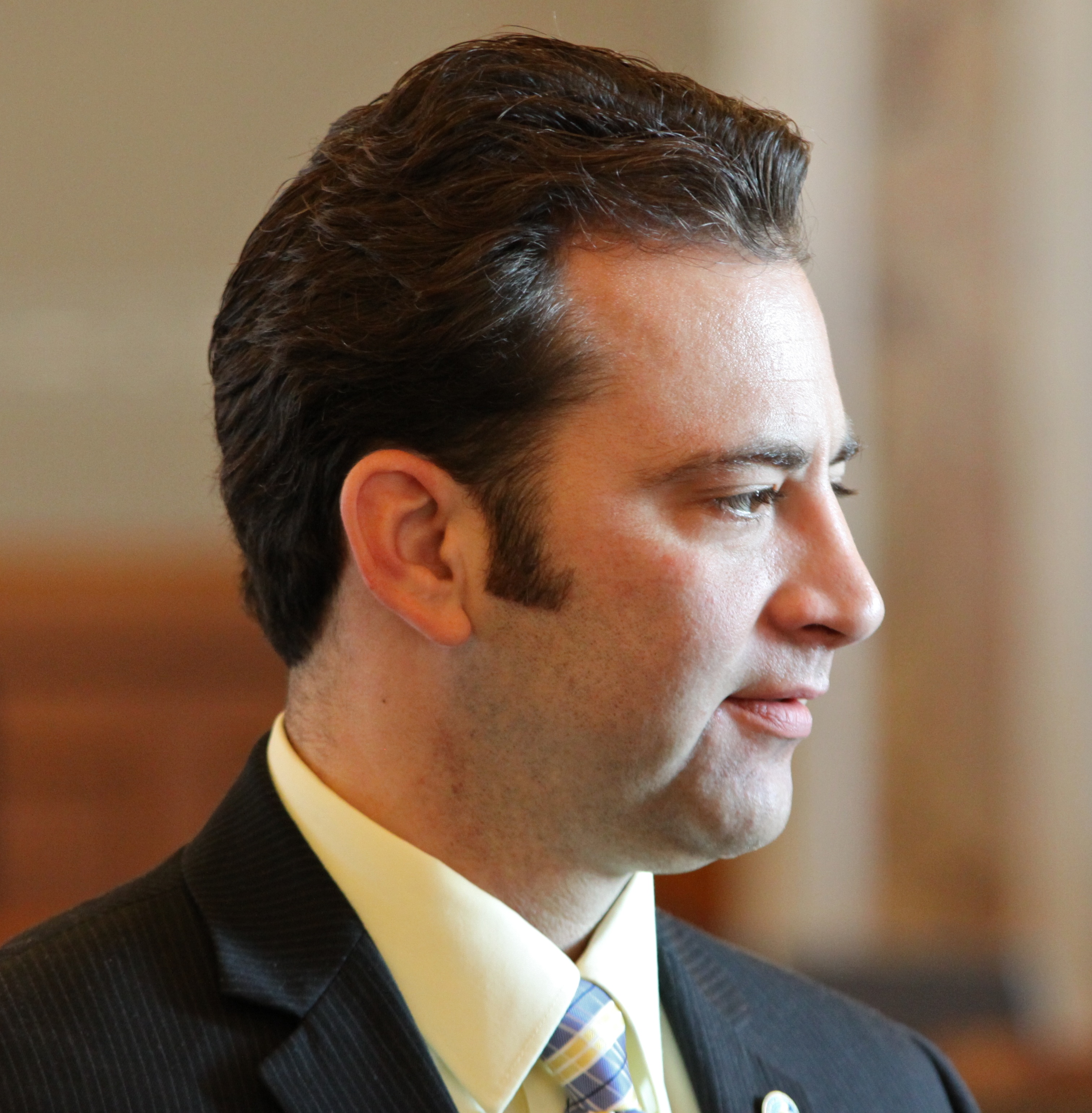
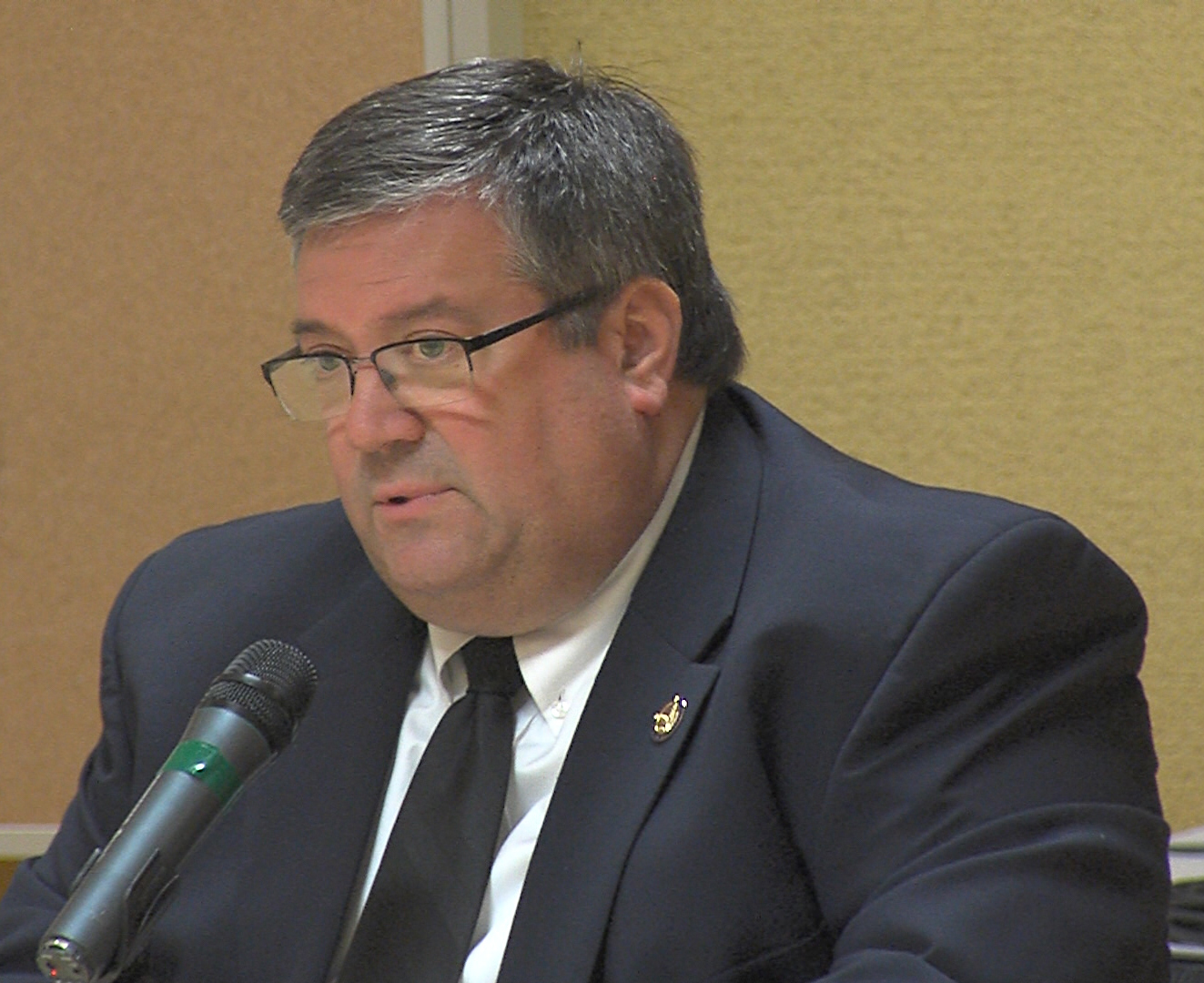
Rep. Ken Rahjes (R-Agra), 110th Dist.

Hello from Agra!

We are ready to begin the second half of the 2019 Kansas Legislative session. At the time I am writing this column, we are at home in the district after having the local county Farm Bureaus along with the Ellis stop co-sponsored by the city of Ellis and Ellis Chamber of Commerce on Friday. It was good to see many constituents brave the weather to discuss topics important to them. It was great to be at selected stops with Senators Billinger and Bowers also.

SB 9 hit the governor’s desk on last Tuesday. This is the KPERS stabilization bill that was passed unanimously by both the House and the Senate. The governor has 10 days to consider whether to sign, veto, or allow the bill to become law without her signature.

SB 9 helps keep our promise to KPERS – the retirement system for our teachers and other public employees – by paying off a $115 million debt that the state owes to the retirement plan. SB 9 is in contrast to the governor’s KPERS proposal, HB 2197, which would have generated $160 million in short-term cash for increased state spending but increased the state’s debt costs in KPERS by $7.4 million.

HB 2197 was met earlier this session with resounding disapproval in the House. The governor’s plan failed on vote of 36-87 with both Democrats and Republicans opposing the reamortization effort.

By passing SB 9 and rejecting HB 2197, we can protect funding for our retirees responsibly pay down the state’s debt and ensure that the next generation isn’t left to pick up the tab for today’s spending.

Before we broke for turnaround there were a few bills worked on the house floor: On Wednesday, February 27, the House passed HB 2006, a bill that makes significant changes to increase transparency in the state’s economic incentives. On a vote of 122-0, the House overwhelmingly approved of the requirement for the Department of Commerce to develop an online database for the purpose of disclosing data on economic development incentive programs. This would include any economic incentive program that is administered by the department, and also includes any tax credit program except for social and domestic credits.

This bill would make economic incentive data readily and easily available and would allow the public to know how their tax dollars are used, where they are used, and by whom they are used. The database must be posted on the department’s website, and it is required that these programs be searchable by name, business, and county. In addition, the history, goals, and purpose of each program would be disclosed, as well as the qualifications for such programs. The total amount of incentives claimed, received and distributed from/by each program, recipient (business), and county would also be public. The bill also maintains the necessary confidentiality parameters regarding private taxpayer information. Lastly, the Legislative Post Audit Committee would be charged with conducting a comprehensive analysis of each incentive to prove its efficacy every three years.

HB 2006 serves as a tool to hold government accountable. This bill would install the necessary safeguards on the executive branch to prevent potential fraud and abuse. Both policymakers and the public ought to know how many economic incentives are issued each year, and to what end have those incentives performed. It encourages scrutiny but also ensures a greater effective use of taxpayer dollars.

Also, on Wednesday, February 27, the House passed HB 2144, also known as the Community College Taxpayer Transparency Act, on a vote of 84-40. Essentially, the bill would require community colleges to post information online concerning fiscal matters. On each college’s website, the bill would require the posting of tuition rates, fees, cost per credit hour, percentage of students attending each campus, enrollment percentage of students residing inside and outside of the community college district, property tax revenues and mills levied over five fiscal years, and scholarship information. This must be posted under an easily identifiable link on their respective websites. The bill would also require imposed student fees, for specific purposes, by the community colleges to be spent specifically on those purposes. Such purposes must also be outlined in their billing statements as well.

Additionally, community colleges would be required to identify which of their offered courses are fully transferable to the Kansas Board of Regents (KBOR) four-year institutions. KBOR and each colleges’ website must specify which particular courses are fully transferable.

Property taxes are levied within a community college district to fund the local community college. Requiring that these colleges post property tax information along with scholarship information, general credit hour costs and other information digitally ensures that taxpayer dollars are spent appropriately. Disclosing the specific purposes of each student fee also guarantees this.

HB 2144 would also allow community college students and prospective students to verify which offered courses will afford them the opportunity to transfer to a Regents institution, should they decide to attend any of those institutions.

I still have some concerns about this issue and I am sure there will be some additions and subtractions when the Senate takes up the measure. Transparency is a good thing. We just need to make sure there is context to the numbers or it is anyone’s guess how the numbers could be used to make a positive or negative impact.

Last week we talked a little about SB 22. Right now, the state budget is set to raise taxes on certain Kansans. If we do nothing, the governor’s budget will trigger a tax increase on Kansans who itemize their mortgage interest, property taxes or medical expenses as well as on several of the state’s largest employers.

Governor Kelly’s plan would keep the federal dollars intended to be returned to Kansans under recent federal tax cuts and instead use those dollars to fund unsustainable state spending increases.

Senate Bill 22 would adjust the Kansas tax code to address the changes at the federal level so Kansans can continue to itemize and so that employers are not hit with a tax hike on income that has historically never been taxed at the state level.

While the governor campaigned on reducing the sales tax on food, her budget keeps the Kansas food sales tax among the highest in the nation and provides no relief for Kansans at the grocery store. SB 22 would reduce the food sales tax by 15% and give help to working Kansans every single time they go to the grocery store. Some say a penny isn’t that much, but to borrow a line: “a little bit goes a long way every week.”

SB 22 also closes a glaring loophole that punishes businesses on Kansas’ Main Streets. For too long, this loophole has put our local businesses at a disadvantage when they’re trying to compete with out-of-state businesses. That loophole is the one that makes Kansas businesses collect sales taxes when they sell online but leaves out-of-state businesses free to scoff at our laws. It also makes Kansans personally responsible for collecting their own sales tax on behalf of those out of state tax cheats.

This bill closes that loophole and stops penalizing Kansas businesses and Kansas customers. It places the burden to collect and pay taxes on the out of state businesses who have had an unfair leg up on our local mom and pop shops. The bill also removes the line for out of state sales tax from Kansas taxpayers’ forms so it’s crystal clear that Kansans are no longer tax collectors for other state’s businesses.

Winter sports season is wrapping up and congratulations to those students who competed in wrestling and basketball. We have a couple of teams playing in the state tournament and a couple that came very close. Overall, with the challenges we have dealt with because of the weather, I think all of us are looking for the warm weather that track and field season brings.

If you come to Topeka during the session, my office is in Room: 149-S. My phone number is 785-296-7463 and email is: [email protected] and you can always try my cell number is 785-302-8416.

It is my honor to by your representative.

Rep. Ken Rahjes (R-Agra), is the 110th state representative and chairman of the Higher Education Budget Committee. House District 110 includes Norton and Phillips counties as well as portions of Ellis, Graham, and Rooks counties.
Misguided effort to thaw frozen water pipes leads to Kan. house fire

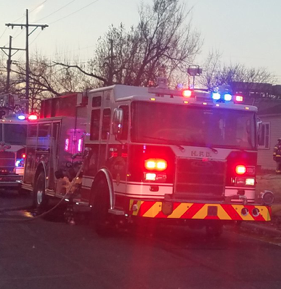
RENO COUNTY — An attempt to thaw frozen water pipes led to a Kansas house fire.

Just before 5p.m. Monday, fire crews were dispatched to a home in the 1500 Block of East 4th Street in Hutchinson for a structure fire, according to Battalion Chief Jeremy Unruh.

Initial arriving crews found heavy smoke showing from the attic of a single-story residential home. Crews made an aggressive interior attack and controlled the fire within minutes of arrival. The fire was located in a bathroom and had traveled to the attic. There was significant damage to both the bathroom and attic.

The home was occupied at the time of call. Maintenance personnel advised that they were thawing frozen pipes in the bathroom with a heat gun when items in their work area ignited. The occupants exited the building without injury, according to Unruh.

Parts of East 4th Street were blocked for approximately 2 hours.
Hutchinson Fire would like to remind residents to never use an open flame or high heat source (blowtorch, kerosene or propane heater, charcoal stove) to thaw frozen pipes.

If using an electric hair dryer or portable space heater to thaw pipes, keep away from flammable materials and never leave space heaters unattended. If you are unable to thaw the pipe, call a licensed plumber.

Kansas man remains jailed after charges dropped for woman’s killing

TOPEKA, Kan. (AP) — Prosecutors have dropped a first-degree murder charge against a second suspect in the deadly shooting of a Topeka woman.

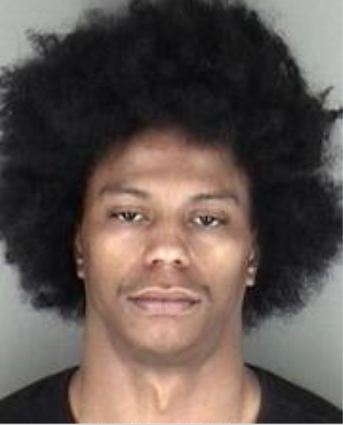
Rahnel Rayford photo Shawnee Co.

Monday’s decision to drop the charge against 28-year-old Rahnel Erik Rayford comes less than a week after a murder charge was dropped against 31-year-old Justin Lee McCoy. The dismissals were done in such a way that the men could be charged again in the death last May of 37-year-old Patricia Sanders.

McCoy has been freed, but Rayford remains jailed on an attempted first-degree murder charge. The defense also wants that charge dropped.

The recent dismissals mark the second time charges have been dropped in the case. The men were released previously after a judge found there wasn’t probable cause to hold them. A grand jury then indicted them.

Update: Jury acquits former Kan. lawmaker of fraud; U.S. Attorney reviewing options

WICHITA, Kan. (AP) — Sedgwick County Commissioner Michael O’Donnell was found not guilty Monday on nearly all charges of taking campaign funds for his personal use.

Michael O’Donnell-photo Sedgwick Co.

A federal jury acquitted O’Donnell on 21 counts of wire fraud, but deadlocked on two counts of wire fraud and three counts of money laundering related to his state and county campaigns. Prosecutors alleged he took $10,500 of campaign funds to put into his personal checking account or give to friends.

U.S. Attorney Stephen McAllister said in a news release that his office will evaluate the results of the trial to determine whether to take the case to trial again on the counts in which the jury did not reach a verdict.

“As always, our office takes very seriously the determinations made by a jury of our citizens, and we will consider the jury’s decision here carefully in deciding next steps for our office,” McAllister said.

O’Donnell and his family cried as the verdicts were read in the courtroom.

“I’m obviously very relieved. It feels good to be vindicated,” O’Donnell told reporters as he walked away from the courthouse.

One of his defense attorneys, Mark Schoenhofer, called the acquittals a win even though the jurors got stuck on a few counts.

“But overall, we consider this a victory,” Schoenhofer said. “We’re very happy with the jury and how hard they worked on this case.”

O’Donnell took the stand in his own defense to argue the payments were legitimate campaign expenses . In at times combative testimony, he criticized U.S. Justice Department and federal agents for not reaching out to him before the indictment so he could explain the payments.

He contended the many of those checks were retainers or bonuses given to staffers who worked on his campaign and helped him with his official government duties.

Prosecutors highlighted the testimony of people he had paid who said they either did no work for the campaign or were not actually working at events such as ball games as O’Donnell had claimed.

Several people, including then-Gov. Sam Brownback and other state officials, received notification letters in 2017 from the Justice Department telling them that the federal government intercepted phone calls between them and O’Donnell’s phone number. O’Donnell, a conservative known in part for championing tougher rules for welfare recipients, was a political ally of Brownback who won his legislative seat in a 2012 purge of Senate moderates.

“The Democrats were foaming at the mouth to get me,” O’Donnell told jurors. “I was very stressed knowing I was the most targeted senator in the state.”

The Wichita Republican was elected to the Kansas State Senate in 2012 for a term that ended in January 2017. He did not run for re-election and instead ran for and won a term on the Sedgwick County Commission that began in 2017 and is set to expire in 2020.

—————–

WICHITA, Kan. (AP) — Sedgwick County Commissioner Michael O’Donnell was found not guilty Monday on nearly all charges of taking campaign funds for his personal use.

A federal jury acquitted O’Donnell on 21 counts of wire fraud, but deadlocked on two counts of wire fraud and three counts of money laundering related to his state and county campaigns. Prosecutors alleged he took $10,500 of campaign funds to put into his personal checking account or give to friends.

O’Donnell took the stand in his own defense to argue the payments were legitimate campaign expenses . In at times combative testimony, he criticized U.S. Justice Department and federal agents for not reaching out to him before the indictment so he could explain the payments.

He contended the many of those checks were retainers or bonuses given to staffers who worked on his campaign and helped him with his official government duties.

Prosecutors highlighted the testimony of people he had paid who said they either did no work for the campaign or were not actually working at events such as ball games as O’Donnell had claimed.

Several people, including then-Gov. Sam Brownback and other state officials, received notification letters in 2017 from the Justice Department telling them that the federal government intercepted phone calls between them and O’Donnell’s phone number. O’Donnell, a conservative known in part for championing tougher rules for welfare recipients, was a political ally of Brownback who won his legislative seat in a 2012 purge of Senate moderates.

“The Democrats were foaming at the mouth to get me,” O’Donnell told jurors. “I was very stressed knowing I was the most targeted senator in the state.”

The Wichita Republican was elected to the Kansas State Senate in 2012 for a term that ended in January 2017. He did not run for re-election and instead ran for and won a term on the Sedgwick County Commission that began in 2017 and is set to expire in 2020.

—————-

WICHITA, Kan. (AP) — A Sedgwick County jury will be back in court to continue deliberations in the fraud case of County Commissioner Michael O’Donnell.

O’Donnell faces 23 counts of wire fraud and three counts of money laundering related to his state and county campaigns.

The case went to the jury late Friday.

Prosecutors allege O’Donnell used $10,500 in campaign funds for personal expenses and gave some money to friends.

O’Donnell testified last week that the payments were legitimate campaign expenses.

The Wichita Republican served in the Kansas Senate from 2012 to January 2017. He term on the Sedgwick County Commission began in 2017.

Filing: Ohio gamer in deadly Kan. hoax 911 case to change plea

WICHITA, Kan. (AP) — An Ohio man whose online video game dispute allegedly led to a deadly hoax call has told a federal court in Kansas that he plans to change his plea.

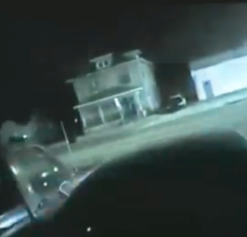
Police body camera images of The December 2018 fatal response to a hoax call -courtesy Wichita Police

A court notice posted on Monday sets an April 3 change-of-plea hearing for 19-year-old Casey Viner of North College Hill, Ohio. He is charged with conspiracy to obstruct justice, wire fraud and other counts.

Prosecutors allege Viner became upset while playing the Call of Duty WWII video game and asked 26-year-old Tyler Barriss of Los Angeles to “swat” 20-year-old Shane Gaskill in Wichita. Police shot the Kansas man who lived at the old address.

The case drew attention to the practice of making a false report to get emergency responders to descend on an address.

Barriss will be sentenced March 29.

Man charged with setting fire to Planned Parenthood clinic

JEFFERSON CITY, Mo. – A man was charged in federal court Monday with the arson at the Columbia Health Center, operated by Planned Parenthood Great Plains that also provides services in Wichita and Overland Park.

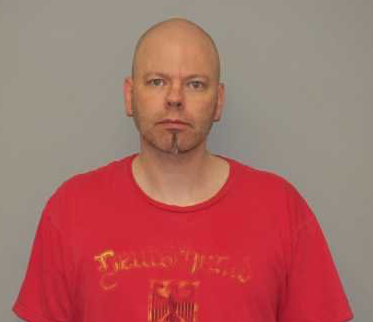
Kaster -photo Boone Co.

According to the United State’s Attorney, Wesley Brian Kaster, 42, was charged in a criminal complaint filed in the U.S. District Court in Jefferson City, Mo., with one count of maliciously damaging a building, owned by an organization the receives federal financial assistance, by means of fire or an explosive. Kaster, who was arrested on Saturday, March 2, 2019, remains in federal custody pending a detention hearing on Thursday, March 7, 2019.

According to an affidavit filed in support of the federal criminal complaint, surveillance video from Planned Parenthood and from neighboring businesses recorded Kaster in the early morning hours of Feb. 10, 2019. He parked his Toyota Sienna minivan (missing the right front passenger-side hubcap) nearby at about 2:30 a.m. and carried a seemingly heavy white bucket to the north exterior door of the Planned Parenthood building. Kaster broke the front door, the affidavit says, placed the bucket inside the building, and threw a Molotov cocktail-type device  inside the building. Kaster remained standing on the sidewalk outside the door, watching the inside of the building. Kaster then allegedly entered the building through the broken door. No explosion or fire was visible at this time.

At approximately 2:52 a.m., the affidavit says, two unidentified pedestrians approached and Kaster fled east across Providence Road. Kaster walked to where his vehicle was parked and drove away. At this time, there was no discernable smoke or active fire at the Planned Parenthood building.

Kaster returned at about 4 a.m., according to the affidavit. Surveillance video recorded Kaster walking to the Planned Parenthood door with what the affidavit describes as “an undiscernible item in his left hand.” At 4:03 a.m., smoke is visible billowing from the broken glass door of the Planned Parenthood building. Kaster fled north along the west side of Providence Road, and west along 4th Avenue, out of view.

The Columbia Fire Department received the fire alarm at the Planned Parenthood building at approximately 4:05 a.m. Firefighters observed that the north exterior door of the building, which was constructed of glass inside a frame, had been shattered and an accelerant fueled the fire that was set inside. The fire was fully extinguished by a fire sprinkler system before firefighters arrived, and only moderate fire damage was observed to the room and its contents. Among the evidence collected at the scene by investigators were two five-gallon buckets that had contained gasoline, one inside of the other, found lying on the floor just inside the broken doorway. Investigators also recovered the remains of a Molotov cocktail.

Investigators identified 55 Toyota Sienna minivans registered by Columbia residents, one of which was registered by Kaster. Investigators also received records from Lowe’s for a list of all recent purchases of five-gallon buckets from area stores in 2019, which included a purchase by Kaster. Surveillance videos related to that purchase, according to the affidavit, clearly captured Kaster’s face and physical features.

Investigators contacted Kaster’s employer, a light manufacturing business in Jefferson City, where he works as a floor supervisor in the welding shop. According to the affidavit, Kaster had acquired a pair of Ansell HyFlex gloves, which are cut and abrasion resistant, which were the same make, model, color and size gloves recovered from the Planned Parenthood building.

Investigators searched social media accounts connected to Kaster. On Oct. 25, 2015, a picture was posted to the Facebook page of Kaster’s wife depicting a handgun and the words, “Guns Don’t Kill People, Planned Parenthood Kills People.”

Multiple federal search warrants were executed on Saturday, March 2, 2019. Investigators searched Kaster’s minivan a few minutes after he left his workplace that morning and took Kaster to obtain hair specimens. Investigators searched Kaster’s residence, the affidavit says, where numerous items of evidence were collected that definitively tied Kaster to the crime scene at Planned Parenthood. Based on these facts, Kaster was arrested at 11:07 a.m.

Gov. outlines first 7 weeks in office; encourages focus on schools

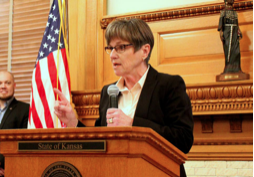
Kansas Gov. Laura Kelly (D)

The following statement is from Governor Laura Kelly:

In the seven weeks since the inauguration, my administration has been hard at work.

I presented a plan that balanced the budget, prioritized schools, paved the way for Medicaid expansion, invested in children and families, enhanced public safety, and left the largest ending balance in two decades.

My budget was structured to stabilize our fragile state finances and pay down the record amount of debt racked up during the last eight years. Not only that, my bipartisan Cabinet hit the ground running with the long, hard task of rebuilding our state agencies.

Together, we’ve increased transparency by sharing, honestly, the severity of the problems we uncovered at the Department of Corrections, Department for Children and Families, and Department of Revenue. We’ve shed light on the number of no-bid contracts hidden throughout state government.

Contracts worth tens of millions of dollars, that didn’t go through the proper channels, and may not be in the best interests of Kansans.

My team at the Department of Administration is currently in the process of developing new, stricter standards of ethics and accountability in the procurement process. We look forward to announcing that plan once it is finalized in the coming weeks. And we are just getting started. We understand the urgency of our work. Our work touches the lives of Kansans every day and we take that very seriously.

Unfortunately, I’m disappointed that the Legislature has yet to act with the same level of urgency, especially given the breadth of our challenges and the deadlines we face.

As a former legislator, I have deep respect for the legislative process. It is not unusual for many of the biggest issues of the session to be resolved later in the session. This is not a race. But the deadlines are real. And they are right around the corner. It’s frustrating that little progress has been made on the most critical issue of the session: school funding.

After seven weeks, I worry that some legislative leaders have allowed serious deliberations and the development of policy alternatives give way to partisan games and unnecessary name calling.

In 2011, the first year of the previous administration, the Legislature debated and acted on 99 more pieces of legislation by this point in the session than they have this year. At this moment, halfway into the session, just one piece of legislation has reached my desk.

I’ve met with leadership. I’ve met with lawmakers of both parties. And my door continues to be open. I’m eager to find bipartisan consensus when lawmakers return for the second half of the session. I’m looking forward to seeing their plans so we can begin negotiations.

On election night in November, I was hopeful that lawmakers could put our differences aside and work together on behalf of Kansas families. Today, I choose to remain hopeful. I am ready to find middle ground.

I was elected to rebuild our state following years of mismanagement and failed policy. I offered a plan to do just that. I hope lawmakers will join me in earnest when they return.

In the meantime, my team will continue to do our work – cleaning up messes and charting a more responsible path forward. We will continue to put the best interest of families first. We will prioritize schools, health care, roads, and job growth.

WAYMASTER: From the Dome to Home – March 4

Rep. Troy Waymaster, R-Bunker Hill, 109th Dist.

All Day In The House
Starting last Tuesday, the members of the Kansas House of Representatives spent all day in the House chambers debating and voting on a wide array of bills.

On Tuesday, February 26, 2019, the House debated twenty five bills and Wednesday, we debated eight additional bills.

Some of the bills that we discussed were:

House Bill 2084, which revises the Kansas 911 Act. The bill also repeals three outdated statutes in the existing act.

House Bill 2006 requires that the Kansas Department of Commerce create a database for information regarding economic development incentive programs.

A couple of bills that were debated affected the Board of Regents in the state of Kansas. House Bill 2209 authorizes the Board of Regents to purchase cybersecurity software. House Bill 2168 allows the University of Kansas to sell property located in Douglas County and Kansas State University to sell two properties, one located in Saline County while the other property is in Cherokee County. Wednesday morning I voted in support of all these bills.

The House completed final action on all of the bills debated last week.

Turnaround
The culmination of last week marks what is referred to as “Turnaround,” or simply the halfway point of the legislative session. The Senate and the House spent the majority of last week in our respective chambers debating bills from the bills’ chamber of origin. Most of the House bills introduced so far this session needed to be debated and voted on by Thursday, February 28, 2019, or they would run the risk of not advancing in this session. The same can be said for bills in the Senate.

When we return on Wednesday, March 6, 2019, our focus will be on bills that were debated and passed out of the Senate. The Senate will then evaluate the bills that we in the House have passed. That will be the major work for the committees until we adjourn for our April recess.

More Bills
House Bill 2225 requires that a driver stop the vehicle at least fifteen feet before crossing a railroad track if other track equipment, in addition to a train which is current law, is nearby. I did not support this bill because it is common sense to stop at a railroad crossing.

House Bill 2223 makes revisions to vineyard permits by now calling them producer permits. The bill also allows for wine producers to use a wider variety of agricultural products for wine production. I support this bill.

House Bill 2360 is a bill that came from the Children and Seniors committee, and it concerns background checks for employees and volunteers that have unsupervised access to children, the elderly, or individuals with disabilities. I voted “yes.”

We had planned to debate House Bill 2173, the commercial hemp bill, however it was pulled from discussion this week. Due to the passage of the federal farm bill of 2018, which allows for the production of commercial hemp, we need to have this bill debated to clear up existing statute language that we passed last year.

Anytime that one would like to participate and listen to the developments of committee hearings or discussion on the House floor, one can tune in by listening to the audio footage at www.kslegislature.org.

Contact Information
As always, if you have any concerns, feel free to contact me (785) 296-7672, follow on twitter at @waymaster4house, visit www.troywaymaster.com or email me at [email protected]. Also, if you happen to visit the statehouse, please let my office know.

It is a distinct honor to serve as your representative for the 109th Kansas House District and the state of Kansas. Please do not hesitate to contact me with your thoughts, concerns, and questions. I always appreciate hearing from the residents of the 109th House District and others from the state of Kansas, as well.

Troy Waymaster (R-Bunker Hill) is the 109th Dist. state representative and chairman of the House Appropriations committee. The 109th District includes Osborne, Russell, and Smith counties and portions of  Barton, Jewell, Lincoln and Rush counties.

US officially closes consulate in Jerusalem

JERUSALEM (AP) — The United States has officially shuttered its consulate in Jerusalem, downgrading the status of its main diplomatic mission to the Palestinians by folding it into the U.S. Embassy to Israel.

For decades, the consulate functioned as a de facto embassy to the Palestinians. Now, that outreach will be handled by a Palestinian affairs unit, under the command of the embassy.

The symbolic shift hands authority over U.S. diplomatic channels with the West Bank and Gaza to ambassador David Friedman, a longtime supporter and fundraiser for the West Bank settler movement and fierce critic of the Palestinian leadership.

The announcement from the State Department came early Monday in Jerusalem, the merger effective that day.

“This decision was driven by our global efforts to increase the efficiency and effectiveness of our diplomatic engagements and operations,” State Department spokesman Robert Palladino said in a statement. “It does not signal a change of U.S. policy on Jerusalem, the West Bank, or the Gaza Strip.”

In a farewell video addressed to the consulate’s Palestinian partners, Consul General Karen Sasahara, who is leaving her post as the unofficial U.S. ambassador to the Palestinians and will not be replaced, maintains that new Palestinian unit at the embassy will carry forward the mission of the consulate, “in support of the strengthening of American-Palestinian ties, to boost economic opportunities for the Palestinians and facilitate cultural and educational exchanges.”

When first announced by U.S. Secretary of State Mike Pompeo in October, the move infuriated Palestinians, fueling their suspicions that the U.S. was recognizing Israeli control over east Jerusalem and the West Bank, territories that Palestinians seek for a future state.

Palestinian official Saeb Erekat called the move “the final nail in the coffin” for the U.S. role in peacemaking.

President Trump signed the historic statement on Jerusalem in June of 2017-photo courtesy White House

The downgrade is just the latest in a string of divisive decisions by the Trump administration that have backed Israel and alienated the Palestinians, who say they have lost faith in the U.S. administration’s role as a neutral arbiter in peace process.

Last year the U.S. recognized Jerusalem as Israel’s capital and relocated its embassy there, upending U.S. policy toward one of the most explosive issues of the Israeli-Palestinian conflict. The Palestinians in turn cut off most ties with the administration.

The administration also has slashed hundreds of millions of dollars in humanitarian aid to the Palestinians, including assistance to hospitals and peace-building programs. It has cut funding to the U.N. agency that provides aid to Palestinians classified as refugees. Last fall, it shut down the Palestinian diplomatic mission in Washington.

The Trump administration has cited the reluctance of Palestinian leaders to enter peace negotiations with Israel as the reason for such punitive measures, although the U.S. has yet to present its much-anticipated but still mysterious “Deal of the Century” to resolve the Israeli-Palestinian conflict.

Trump’s son-in-law, Jared Kushner, announced last month that the U.S. would unveil the deal after Israeli elections in April. The Palestinian Authority has preemptively rejected the plan, accusing the U.S. of bias toward Israel.

___

‘90210’ star Luke Perry has died at 52 after suffering stroke

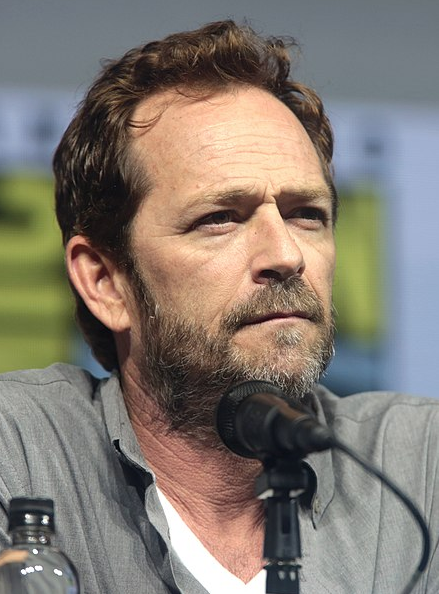
Luke Perry speaking at the 2018 San Diego Comic-Con International in San Diego, California. Photo by Gage Skidmore

By LYNN ELBER
AP Television Writer

LOS ANGELES — Luke Perry, who gained instant heartthrob status as wealthy rebel Dylan McKay on “Beverly Hills, 90210,” died Monday after suffering a massive stroke, his publicist said. He was 52.

Perry was surrounded by family and friends when he died, publicist Arnold Robinson said. The actor had been hospitalized since last Wednesday, after a 911 call summoned medical help to his home in the Sherman Oaks section of Los Angeles.

“The family appreciates the outpouring of support and prayers that have been extended to Luke from around the world, and respectfully request privacy in this time of great mourning,” Robinson said in a statement. At Perry’s bedside were his children, Jake and Sophie; fiancée Wendy Madison Bauer and his former wife, Minnie Sharp.

Perry had played construction construction-company owner Fred Andrews, father of main character Archie Andrews, for three seasons on “Riverdale,” the CW series that gives a dark take on “Archie” comics. A fourth season has been slated.

Born and raised in rural Fredericktown, Ohio, Perry gained fame on “Beverly Hills, 90210,” which ran from 1990 to 2000.

Perry has had roles in a handful of films, including “The Fifth Element,” ”8 Seconds” and “American Strays.” He appeared in HBO’s prison drama “Oz” and voiced cartoons like “The Incredible Hulk” and “Mortal Kombat.” In recent years he starred in the series “Ties That Bind” and “Body of Proof.”

The same day he was hospitalized, Fox TV announced that it would be running a six-episode return of “90210” that features most of the original cast, but Perry was not among those announced.

Update: Two 24-year-olds were victims in Manhattan shooting

RILEY COUNTY — Law enforcement authorities continue their investigation of a weekend shooting that sent two people to the hospital.
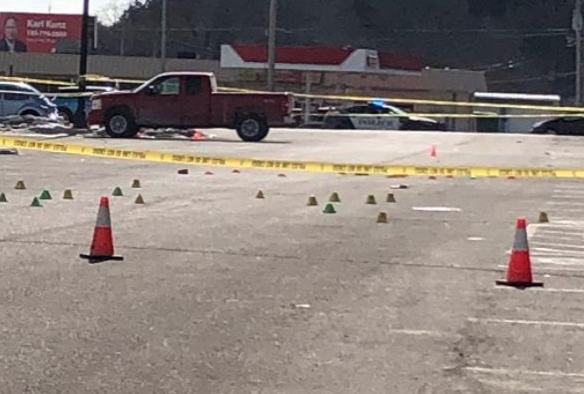
Crime scene tape in Manhattan early Saturday during the investigation –image courtesy WIBW TV

Just before 2:20 a.m. Saturday, the Riley County Police Department Dispatch Center received a report of shots fired in the 2300 block of Tuttle Creek Blvd in Manhattan.

According to a media release form RCPD, an aggravated battery report was filed listing two 24-year-old men from the Kansas City area as victims.
Both victims were life-flighted to Stormont-Vail in Topeka and were reported in stable condition on Monday.
The victims and suspects were not known to each other.  RCPD personnel have been in contact with one person of interest. Authorities have not released names of the victims or the person of interest.
Police ask that anyone with information contact the Riley County Police Department or the Manhattan Riley County Crime Stoppers. Using the Crime Stoppers service can allow you to remain anonymous and could qualify you for a cash reward of up to $1,000.00.

BILLINGER: Senate Update March 4

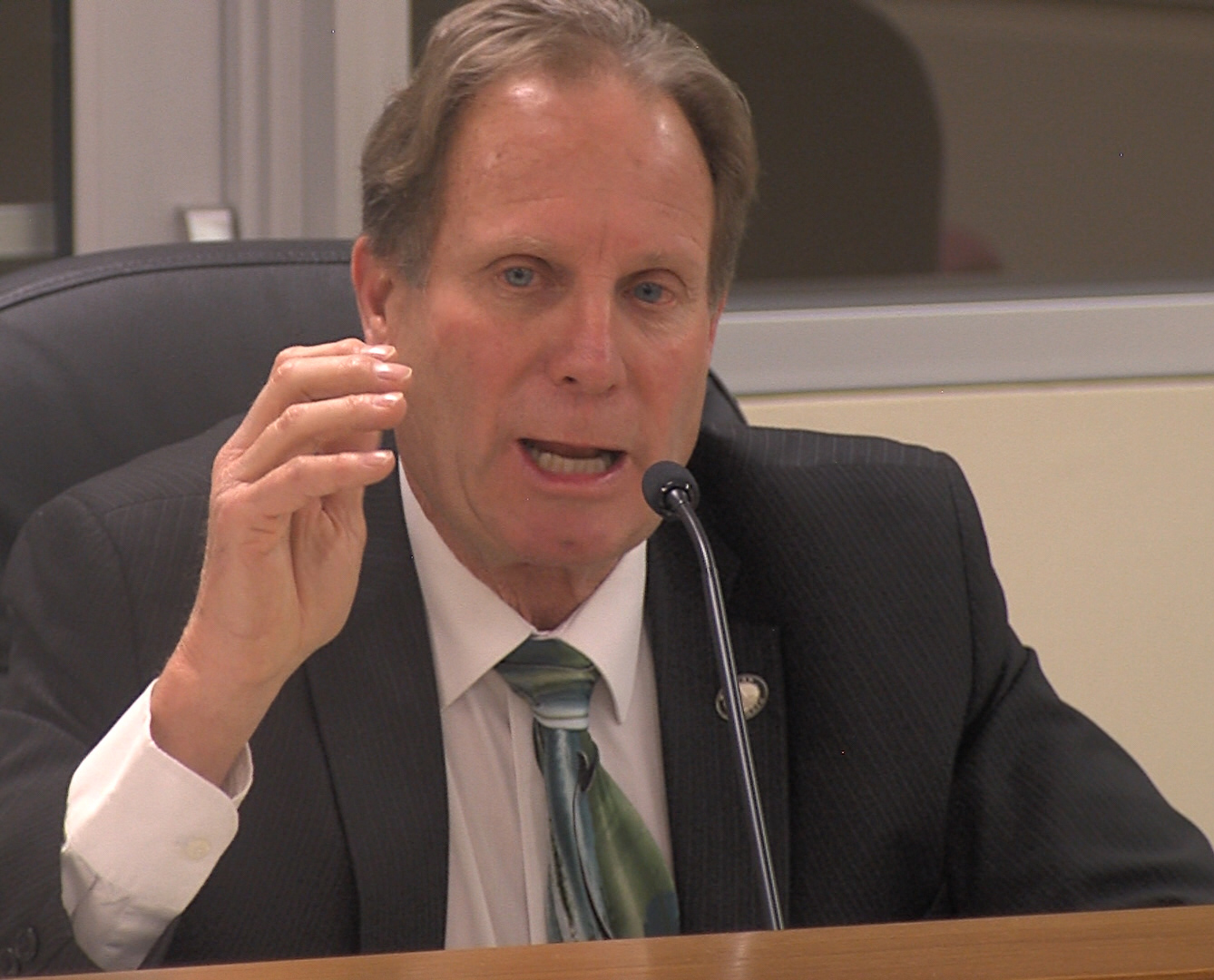
Sen. Rick Billinger (R-Goodland), 40th Dist.

Last week was turn around week at the State House. Turnaround is considered the halfway point of the legislative session. Bills that have passed across the Senate chamber will now go to the House to be considered and bills passed across the House floor will come to the Senate for consideration.

Some of the bills of interest to our Senate District that passed this week are:

SB 67 passed out of the Senate this week. SB67 establishes the Unclaimed Life Insurance Benefits Act. If an insurance company (insurer) shall preform a comparison of its insured’s and force policies, contracts, and retain asset accounts against a death master file, on at least a semi-annual basis, by using the full death master file once and thereafter using the death master file update files for future comparison to identify potential matches of its insured’s.

SB 15 revises the definition for “service-connected” as that term is used to determine death and disability benefits in the Kansas Police and Fireman’s Retirement System. Under current law, service-connected causes for death and disability benefits include heart disease, lung or respiratory disease, cancer and will add blood borne pathogens. This bill passed unanimously.

The Senate passed SB105 authorizing a city to determine the start date of a regular term of office for a city officer by resolution of the city. In law regarding city elections, the bill would require the start date be on or after December 1 following certification of the election and no later than the second Monday in January following certification of the election. If the city does not establish an alternative date, the bill would specify such term would begin on the second Monday in January.

SB 71 passed the Senate, which reauthorizes the Postsecondary Technical Education Authority by repealing the statute specifying sunset date of June 30, 2019. The bill would also require the TEA to make an annual report to the Legislature on the performance of its functions and duties.

School Board Elections: SB7 passed and would amend current law regarding the timing of appointing a replacement school board member, timing of elections of officers of a local board of education; the date local school district board officials take office, and the timing of an election to change the method of election or voting plan for school board members. SB7 also requires the first meeting of the Board of Education to be on or after the second Monday in January or at a later meeting if so determined by the Board at the first meeting, rather than in July.

Passing the Senate was Sub SB130 that amends law concerning advance ballots and associated signature requirements. The bill requires a county election officer to try to contact each voter who submitted an advance-voting ballot without a signature or with a signature that does not match the signature on file and allow the voter to correct the deficiency before the final county canvass.

I would like to thank Jay Smith and Jaelyn Daily for paging for me last week.

Thank you for allowing me to serve the 40th Senate District and please feel free to email or call me at [email protected] or 785 296-7399 or 785 899-4700.

Sen. Rick Billinger, R-Goodland, is the Kansas state senator for the 40th District, which includes Cheyenne, Decatur, Ellis, Gove, Graham, Logan, Norton, Rawlins, Sheridan, Sherman, Thomas, Trego and Wallace counties as well as portions of Phillips County.

Kansas priest denies allegations of abuse

OVERLAND PARK, Kan. (AP) — A Kansas priest announced at Mass this weekend that a woman who has twice accused him of abusing her has raised the allegation again.

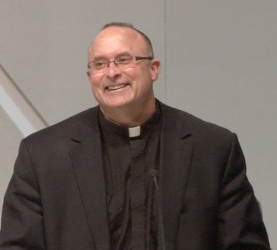
Rev. William Bruning-image courtesy Queen of the Holy Rosary Church

The Rev. William Bruning told the congregation at Queen of the Holy Rosary Church that a woman in her early 30s says Bruning abused her when she was a minor at the Most Pure Heart of Mary School in Topeka. Bruning insisted the allegation was false.

The Archdiocese of Kansas City in Kansas said in a statement Sunday that reviews begun after the woman made the accusations in 2015 and 2018 found they could not be substantiated.

The woman told the archdiocese last month she was not satisfied with that conclusion, prompting the archdiocese to share the information with church members during the weekend.

Copyright Eagle Radio | FCC Public Files | EEO Public File