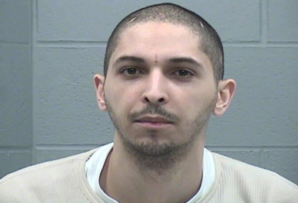
SHAWNEE COUNTY — Law enforcement authorities are investigating a Kansas felon on new charges.
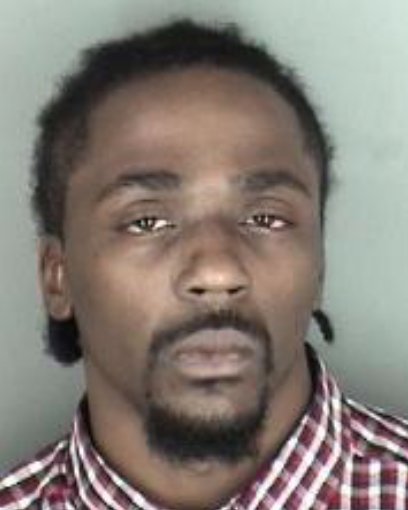
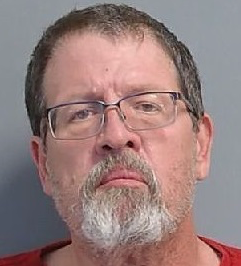
Adrian Nash -photo Shawnee Co.
Just before 4p.m. Monday, police responded to 2337 SE Adams in Topeka to assist on a call for service, according to Lt. Robbie Simmons.
While Officers were working this call they observed a semi-automatic rifle and marijuana in plain view inside the residence.
The homeowner 31-year-old Adrian Nash was found to be a convicted felon and prohibited from possessing firearms.
Police arrested Nash and booked him into the Shawnee County Department of Corrections on requested charges of Felon in Possession of a Firearm, Possession of Marijuana with Intent to Sell and Possession of Drug Paraphernalia for Sales
This is the 21st case in 2019 with a charge involving a felon in possession of a firearm reported by the Topeka Police Department.
TOPEKA — The House Committee on Education recently discussed a bill that aims to prevent and prohibit bullying in schools through policies and procedures in accordance with state law.
Rep. Adam Thomas
House Bill No. 2330 would create three new sections of law and amend the current bullying statute in place. The amendment redefines bullying, harassment and cyberbullying and includes the requirement of the adoption of a policy to prohibit these forms of bullying. It contains detailed provisions for how investigations of reports are to be handled and lists appropriate responses to bullying behavior. The bill also requires any student or staff member who witnesses or has reliable information regarding bullying, harassment or cyberbullying to make an initial report within 24 hours.
W. Thomas Gilman, a lawyer from Wichita, gave a testimony about his friend’s daughter who committed suicide after being continuously bullied and the lack of action from her school. From spitting on her to putting gum on her hair, Gilman described the substantial impact it had on the family, as well as the missed opportunities the school could have taken to prevent it all.
“I’m here after promising her parents that I will not give up,” Gilman said last Wednesday. “Please do not let this continue. This is a time to say ‘alright, let’s have our students protected.’”
Opposition to the bill was argued through the ambiguous definition of bullying and that it is a people problem, not a policy problem.
“We’re not going to solve all of the problems in the world, but this policy is a step forward,” Rep. Adam Thomas (R-Olathe), the sponsor of the bill, said in response.
Mark Dessetti, a lobbyist for the Kansas National Education Association, suggested legislature create a task force to take on the bullying epidemic, similar to the Alzheimer’s and dyslexia task force. Rep. Brenda Dietrich supported the suggestion as well.
“You’re not destined to succeed the way you want unless the whole community is involved,” Dessetti said.
Chairman Steve Huebert delayed any decisions, proposing to adjust the bill in future legislature meetings as well as consider forming a task force.
“I don’t want this to be just a conversation. Let’s get something done for our kids,” said Rep. Mark Samsel (R-Wellsville).
Paige Henderson is a University of Kansas senior from Lenexa majoring in journalism.
SALINE COUNTY — Law enforcement authorities are investigating after a man lost money in an online scam.
The 38-year-old man had used Twitter to communicate with someone he believed was a woman named “Kira,” according to Salina Police Detective Sergeant David Villanueva.
“Kira” used the social media app to tell the victim she wanted to visit him. She needed him to buy and send her agent a pair of $100 Amazon gift cards, $400 in ITunes gift cards and an additional $600 in iTunes gift cards to assist her with travel from New York to Salina.
On Monday, the victim told police he decided the incident was a scam when he discovered that a $2,050 deposit into his bank account was fraudulent, according to Villanueva.
WASHINGTON (AP) — Senate Democrats on Monday blocked a Republican bill that would have threatened prison for doctors who don’t try saving the life of infants born alive during abortions. The measure seemed doomed from the start but offered the GOP a chance to appeal to conservative voters.
The vote was the latest instance in which Republicans have tried to go on offense on the issue and put Democratic abortion-rights lawmakers in an uncomfortable position. Supporters said the measure presented lawmakers with a simple, moral choice.
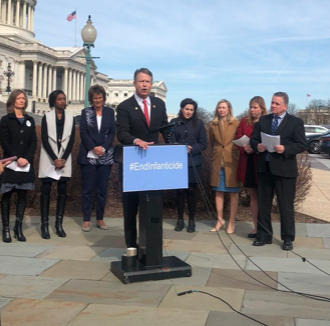
On Tuesday morning, Kansas First District congressman Roger Marshall spoke at the Born Alive Act press conference and is critical of the outcome of the vote by those in the U.S. Senate.
“I want to ask each and every one of my colleagues whether or not we’re OK with infanticide,” said the measure’s chief sponsor, Sen. Ben Sasse, R-Neb.
Opponents, noting the rarity of such births and citing laws already making it a crime to kill newborn babies, said the bill was unnecessary. They said it is part of a push by abortion opponents to curb access to the procedure and intimidate doctors who perform it, and said late-term abortions generally occur when the infant is considered incapable of surviving after birth.
Sen. Patty Murray, D-Wash., a leading Democrat on health issues, said the measure would force women to accept “care that may directly conflict with your wishes at a deeply personal, often incredibly painful moment in your life — because politicians in Washington decided their beliefs mattered more than yours.”
Senators voted 53-44 for Sasse’s bill — seven votes short of the 60 needed to end Democratic delaying tactics aimed at derailing the measure.
Democratic Sens. Bob Casey of Pennsylvania, Doug Jones of Alabama and Joe Manchin from West Virginia were the only lawmakers to cross party lines as Democrats demonstrated anew that even in the minority, they can derail abortion-related bills.
Several dozen House Republicans, led by Minority Leader Kevin McCarthy, R-Calif., stood on the Senate floor during the vote, just as a contingent of House Democrats did last month during a crucial vote on ending the government shutdown. Republicans control the Senate by 53-47.
President Donald Trump reacted to the vote while en route to his summit in Vietnam with North Korean leader Kim Jong Un, tweeting: “This will be remembered as one of the most shocking votes in the history of Congress. If there is one thing we should all agree on, it’s protecting the lives of innocent babies.”
Only 1 percent of all abortions occur after 21 weeks of pregnancy, according to the Guttmacher Institute, which supports abortion rights. Abortions during the final weeks are rarer still.
Doctors’ and abortion-rights groups say it is extremely unusual for live infants to be born during attempted late-term abortions, which they say usually occur when the baby is extremely deformed or deemed unable to survive after birth. In such cases, families sometimes decide they want to induce labor so they can spend time with the infant before it dies.
“It only happens in instances in which we know that the baby will not ultimately survive, and a choice has been pre-made to provide just comfort care” to the baby so the parents can be with it, said Dr. Colleen McNicholas, a fellow with the American College of Obstetricians and Gynecologists.
If an infant is born alive during an abortion, Sasse’s bill would require doctors to render “the same degree” of care used for any birth. The baby would have to be immediately sent to a hospital.
Doctors who violate those requirements and other medical staffers who don’t report violations could face fines and up to five years in prison. Doctors who intentionally kill a child born alive after an abortion would face prosecution under federal murder statutes — potentially a death penalty or life in prison.
Republicans in the Democratic-run House plan to try forcing a vote on a similar measure this spring. They will employ a seldom-used tactic, a petition requiring signatures from most House members to succeed. The GOP is expected to fall well short of the 20 Democratic supporters they’d need.
Republicans, eager to put congressional Democrats from swing states in an uneasy political spot, have been pouncing on the issue since it arose earlier this year in Virginia and New York.
Democratic Virginia Gov. Ralph Northam, a pediatric neurologist, spoke favorably in January about state legislation to ease restrictions on late-term abortions. He said “a discussion would ensue” between doctors and the family over what to do if an infant is born who is badly deformed or incapable of living. Northam has since faced pressure to resign over a racist photo that appeared in his 1984 medical school yearbook.
Trump has criticized a new abortion law in New York that permits abortions of a viable fetus after 24 weeks of pregnancy if the mother’s life is in danger — codifying conditions specified by U.S. Supreme Court rulings.
KANSAS CITY, KAN. – A Kansas man was sentenced Monday to 80 months in federal prison for acting as a courier to deliver more than three pounds of methamphetamine, according to U.S. Attorney Stephen McAllister.
Demetrius Summerson, 28, Kansas City, Kan., pleaded guilty to one count of distributing methamphetamine. In his plea, he admitted that FBI agents had him under surveillance when he delivered more than 3.6 pounds of methamphetamine to a buyer in Lenexa, Kan. The buyer paid Summerson $10,000.
Summerson was working as a distributor for a drug trafficking organization operating in Johnson and Wyandotte counties that was obtaining methamphetamine from a provider in Michoacan, Mexico.
TOPEKA, Kan. (AP) — Republican lawmakers in Kansas have wedded a popular proposal to cut taxes on groceries to a GOP income tax relief bill in hopes of winning over skeptical colleagues and making Democratic Gov. Laura Kelly think harder about vetoing it.
The House Taxation Committee endorsed its expanded tax relief bill Monday on a voice vote, sending the legislation to the full chamber for debate, possibly later this week. The Senate approved its version earlier this month, but as a measure aimed at keeping individuals and businesses from paying higher state income taxes because of federal income tax changes at the end of 2017.Top Republicans in the GOP-dominated Legislature see income tax relief — and returning what they call an unexpected revenue “windfall” — as a top priority . But their plan would thwart the new Democratic governor’s plans to boost spending on public schools and expand the state’s Medicaid health coverage for the needy.
Kelly has urged legislators to wait until at least next year to pursue changes in tax laws, but she also said repeatedly during her campaign for governor last year that she wanted to lower the state’s 6.5 percent sales tax on groceries to help poor and middle-class families. The idea also has strong bipartisan support.
“That had been a hot button across the state,” said House committee Chairman Steven Johnson, an Assaria Republican. “That is one that has broad appeal.”
Kelly and her staff have called the GOP income tax relief proposals irresponsible, and Democrats have criticized the package as a corporate give-away. She hasn’t said explicitly that she would veto them, but her comments and those of her aides have lawmakers in both parties expecting her to do so.
“While the governor strongly supports reducing the sales tax on food, she knows it is critical that we first stabilize the state’s budget before we make changes to the tax code,” Kelly spokeswoman Ashley All said after the committee’s vote.
Rep. Jim Gartner, of Topeka, the Taxation Committee’s top Democrat, said Republicans are trying to box Kelly in by adding the provision to cut the sales tax on groceries to 5.5 percent, starting in October. Kansas is among only a handful of states imposing its full sales tax on groceries.
“I don’t think it’s going to make it any more palatable because of the mix,” Gartner told reporters after the committee’s vote.
The federal tax overhaul in 2017, championed by President Donald Trump and Republicans in Congress, cut federal income taxes for individuals and businesses but included provisions expected to raise revenues in some states and lower it in others. Kansas’ tax code is tied to the federal tax code.
This year’s bill in Kansas would save its taxpayers $208 million during the state budget year that begins in July.
The cut in the sales tax on groceries would save consumers about $44 million during the state’s next budget year, but the committee also added a provision to help Kansas collect more sales taxes on internet sales.
A key part of the bill would prevent thousands of individuals from losing itemized deductions on their state forms. State law now prevents people from itemizing on their state returns if they do not on their federal returns, and the federal changes discouraged itemization. The change would save individuals about $50 million during the next budget year.
Even with the cut in the sales tax on groceries, most of the tax relief still would go to corporations during the next budget year — $137 million, or 66 percent of the total. The federal tax changes included provisions preventing corporations from sheltering income and assets outside the U.S. that would otherwise lead to Kansas and other states taxing foreign income.
WICHITA, Kan. (AP) — Opening remarks Monday in the trial of a former Kansas legislator offered jurors contrasting portrayals of his handling of campaign funds.
Michael O’Donnell-photo Sedgwick Co.
Sedgwick County Commissioner Michael O’Donnell is accused of fraudulently taking $10,500 from campaign fundsfor his personal use. He faces 23 federal counts of wire fraud and three counts of money laundering related to his state and county campaign funds.
Jury selection took up most of the first day of the proceedings. The trial before U.S. District Judge Eric Melgren is expected to last five days.
The prosecution’s opening statement outlined O’Donnell’s extraordinary access to resources through his elected position and his access to campaign donations through his state and county campaigns. Prosecutors say he was a great fundraiser.
The defense in its remarks focused on explaining the legitimacy of the campaign funds, saying nothing illegal occurred and the checks were for legitimate work done on behalf of his campaign.
The indictment alleges O’Donnell wrote a series of checks in 2015 and 2016 from his “Michael for Kansas” and “Michael for Sedgwick County” campaigns to various people who would cash the checks. Prosecutors alleged some of the money went into his personal checking account and some to friends.
O’Donnell, a Wichita Republican, was elected to the Kansas State Senate in 2012 for a term that ended in January 2017. He did not run for re-election and instead ran for and won a seat on the Sedgwick County Commission. His term began in 2017 and is set to expire in 2020.
He remains free on bond and continues to serve as county commissioner.
___
WICHITA, Kan. (AP) — A former Kansas legislator accused of fraudulently taking $10,500 from campaign funds for his personal use goes to trial Monday in federal court in Wichita.
Sedgwick County Commissioner Michael O’Donnell has pleaded not guilty to 23 counts of wire fraud and three counts of money laundering related to his state and county campaign funds.
Defense attorney Mark Shoenhofer said that his client was innocent of the allegations when the charges were initially unsealed in May. O’Donnell and his attorneys did not immediately return messages left this week seeking comment.
The trial before U.S. District Judge Eric Melgren is expected to last five days.
O’Donnell, a Wichita Republican, was elected to the Kansas State Senate in 2012 for a term that ended in January 2017. He did not run for re-election and instead ran for and won a term on the Sedgwick County Commission that began in 2017 and is set to expire in 2020.
The indictment outlines a scheme whereby O’Donnell allegedly wrote a series of checks in 2015 and 2016 from his “Michael for Kansas” and “Michael for Sedgwick County” campaigns to various people who would cash the checks. Prosecutors alleged some of the money went into his personal checking account and some to friends. The indictment identifies the people who cashed the checks only by their initials.
Defense attorneys tried unsuccessfully last year to get charges dismissed, saying “overzealous prosecution” sometimes occurs when prosecutors throw a wide net on criminal corruption. His attorneys argued O’Donnell came to law enforcement’s attention during an investigation of other people in Wichita suspected of illegal gambling. Prosecutors subsequently indicted several local residents, including law enforcement officials, stemming from that gambling probe.
Several people, including then-Gov. Sam Brownback and other state officials, received notification letters in 2017 from the U.S. Justice Department telling them that the federal government intercepted phone calls between them and O’Donnell’s phone number. O’Donnell, a conservative known in part for championing tougher rules for welfare recipients, was a political ally of Brownback who won his legislative seat in the 2012 purge of Senate moderates.
He remains free on bond and continues to serve as county commissioner.
Attorney Austin Parker held a news conference in November during which he claimed three commissioners tried to fire then-County Manager Michael Scholes after he cooperated in the FBI investigation of O’Donnell. Parker, who represents then-County Counselor Eric Yost, told reporters there is an FBI investigation into that effort and that Yost had been interviewed twice by FBI agents on that subject.
It is unclear whether that investigation is ongoing, but no charges related to Yost’s allegations have been filed. Kate Flavin, the county’s spokeswoman, said there have been no further developments.
Scholes and Yost left their county positions after reaching termination settlements with the commission.
Commission Chairman David Dennis said in a statement released through Flavin it was not appropriate to comment on O’Donnell’s case because the charges are not related to the county.
HUTCHINSON — A man who was extradited to Kansas from Florida and charged with three felonies entered a guilty plea Monday to one of the counts against him.
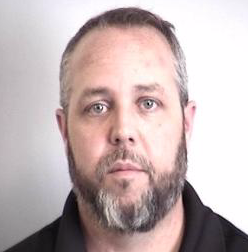
Richmond -photo Reno Co.
Charles E. Richmond, 57, was charged with rape, aggravated criminal sodomy and aggravated indecent liberties with a child. He entered a plea for the aggravated indecent liberties charge and the other two charges were dropped.
The alleged crimes occurred over a period from Jan. 1, 2013, to Dec. 31, 2017. The child told investigators she had been molested by Richmond more than 100 times.
The conviction falls under Jessica’s Law statutes, meaning he could face a life sentence. However, both sides will be able to argue disposition in the case.
ST. LOUIS (AP) — The United Methodist Church teetered on the brink of breakup Monday after more than half the delegates at an international conference voted to maintain bans on same-sex weddings and ordination of gay clergy.
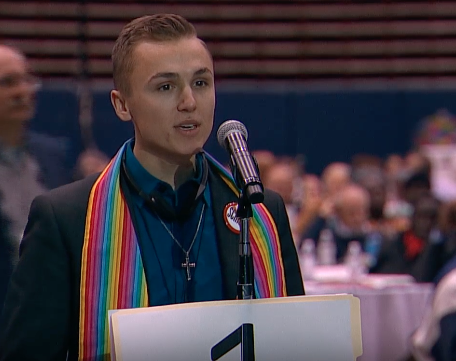
Jeffrey Warren addressed the conference on Monday -image courtesy United Methodist Church
Their favored plan, if formally approved, could drive supporters of LGBT inclusion to leave America’s second-largest Protestant denomination.
A final vote on rival plans for the church’s future won’t come until Tuesday’s closing session, and the outcome remains uncertain. But the preliminary vote Monday showed that the Traditional Plan, which calls for keeping the LGBT bans and enforcing them more strictly, had the support of 56 percent of the more than 800 delegates attending the three-day conference in St. Louis.
The primary alternative proposal, called the One Church Plan, was rebuffed in a separate preliminary vote, getting only 47 percent support. Backed by a majority of the church’s Council of Bishops in hopes of avoiding a schism, it would leave decisions about same-sex marriage and ordination of LGBT clergy up to regional bodies and would remove language from the church’s law book asserting that “the practice of homosexuality is incompatible with Christian teaching.”
Monday’s voting did not kill the One Church Plan but makes its prospects on Tuesday far more difficult.
As evidence of the deep divisions within the faith, delegates Monday approved plans that would allow disaffected churches to leave the denomination while keeping their property.
“This is really painful,” said David Watson, a dean and professor at United Theological Seminary in Dayton, Ohio, who was at the gathering. “Our disagreement has pitted friend against friend, which no one wanted.”
Formed in a merger in 1968, the United Methodist Church claims about 12.6 million members worldwide, including nearly 7 million in the U.S. While other mainline Protestant denominations, such as the Episcopal and Presbyterian (U.S.A.) churches, have embraced the two gay-friendly practices, the Methodist church still officially bans them, even though acts of defiance by pro-LGBT clergy have multiplied and talk of a possible breakup has intensified.
The strong showing for the Traditional Plan reflects the fact that the UMC, unlike other mainstream Protestant churches in the U.S., is a global denomination. About 43 percent of the delegates in St. Louis are from abroad, mostly from Africa, and overwhelmingly support the LGBT bans.
“We Africans are not children in need of Western enlightenment when it comes to the church’s sexual ethics,” the Rev. Jerry Kulah, dean at a Methodist theology school in Liberia, said in a speech over the weekend. “We stand with the global church, not a culturally liberal church elite in the U.S.”
The Africans have some strong allies among U.S. conservatives, including the Rev. John Miles II, senior pastor of First United Methodist Church in Jonesboro, Arkansas, who opposes same-sex marriage and gays in the pulpit.
“I have a very difficult time even though I have gays in my family and in my church,” he said. “I know it grieves them and it grieves me to grieve them. But it’s just what we believe is the truth.”
In recent years, the church’s enforcement of its LGBT bans has been inconsistent. Some clergy members have conducted same-sex marriages or come out as gay from the pulpit. In some cases, the church has filed charges against clergy who violated the bans, yet the denomination’s Judicial Council has ruled against the imposition of mandatory penalties, which typically called for an unpaid suspension of at least one year.
The Traditional Plan would require stricter and more consistent enforcement.
Among the outspoken supporters of the more permissive One Church Plan was the Rev. Adam Hamilton, a pastor in Leawood, Kansas, who said it offered a way for Methodists “to live together — conservatives, centrists and progressives — despite our differences.”
For LGBT Methodists, it is a time of anxiety.
“For me it’s about who’s in God’s love, and nobody’s left out of that,” said Lois McCullen Parr, 60, a church elder from Albion, Michigan, who identifies as bisexual and queer. “The Gospel I understand said Jesus is always widening the circle, expanding the circle, so that everyone’s included.”
KANSAS CITY– A Kansas City man with prior felony convictions for child pornography was sentenced in federal court Monday for receiving child pornography over the Internet, according to the United State’s Attorney.
Fleming -photo MSHP Sex Offender Registry
Travis E. Fleming, 44, was sentenced by U.S. District Judge Stephen R. Bough to 15 years in federal prison without parole. The court also sentenced Fleming to 20 years of supervised release following incarceration. The court ordered Fleming to pay $5,000 in restitution to each of three identified victims of sexual abuse portrayed in the images of child pornography that he possessed.
Fleming was convicted in federal court in 2010 of two counts of receiving child pornography and two counts of possessing child pornography, for which he was sentenced to six years and six months in federal prison without parole. He was on supervised release at the time of this offense.
On Sept. 20, 2018, Fleming pleaded guilty to receiving child pornography. Fleming admitted that he had 256 images of child sexual abuse (including bondage) on his cell phone. Some of the victim children ranged in age from four to 10 years old. A forensic examination determined that Fleming did the bulk of his viewing of child pornography in the dark web.
Fleming’s probation officer discovered the cell phone during a home visit on Nov. 16, 2017. Fleming admitted that he had been accessing the internet since at least February 2017. Among the conditions of Fleming’s supervised release was that he not possess any type of computer or electronic device with access to any on-line computer service.
WASHINGTON – The Federal grazing fee for 2019 will drop to $1.35 per animal unit month (AUM) for public lands administered by the Bureau of Land Management and $1.35 per head month (HM) for lands managed by the USDA Forest Service. This represents a decrease from the 2018 Federal grazing fee of $1.41 per AUM.
An AUM or HM—treated as equivalent measures for fee purposes—is the use of public lands by one cow and her calf, one horse, or five sheep or goats for a month. The newly calculated grazing fee was determined by a congressional formula and takes effect March 1, 2019. The fee will apply to nearly 18,000 grazing permits and leases administered by the BLM and nearly 6,500 permits administered by the Forest Service.
The formula used for calculating the grazing fee was established by Congress in the 1978 Public Rangelands Improvement Act and has remained in use under a 1986 presidential Executive Order. Under that order, the grazing fee cannot fall below $1.35 per AUM/HM, and any increase or decrease cannot exceed 25 percent of the previous year’s level.
The annually determined grazing fee is established using a 1966 base value of $1.23 per AUM/HM for livestock grazing on public lands in Western states. The figure is then calculated according to three factors—current private grazing land lease rates, beef cattle prices, and the cost of livestock production. In effect, the fee rises, falls, or stays the same based on market conditions.
“The BLM and Forest Service are committed to strong relationships with the ranching community and work closely with permittees to ensure public rangelands remain healthy, productive working landscapes,” said Brian Steed, BLM Deputy Director for Programs and Policy. “Fifty percent of the collected grazing fees deposited into the U.S. Treasury are returned to the Range Betterment Fund for on-the-ground range improvement projects. Portions of collected fees are also returned to the states for use in the counties where the fees were generated.”
The grazing fee applies in 16 Western states on public lands administered by the BLM and the Forest Service. The states are: Arizona, California, Colorado, Idaho, Kansas, Montana, Nebraska, Nevada, New Mexico, North Dakota, Oklahoma, Oregon, South Dakota, Utah, Washington, and Wyoming. Permit holders and lessees may contact their local BLM or Forest Service office for additional information.
The BLM manages more than 245 million acres of public land located primarily in 12 Western states, including Alaska. The BLM also administers 700 million acres of sub-surface mineral estate throughout the nation. The agency’s mission is to sustain the health, diversity, and productivity of America’s public lands for the use and enjoyment of present and future generations. Diverse activities authorized on these lands generated $96 billion in sales of goods and services throughout the American economy in fiscal year 2017. These activities supported more than 468,000 jobs.
SALINE COUNTY — Law enforcement authorities are investigating a series of alleged car thefts and have a suspect in custody
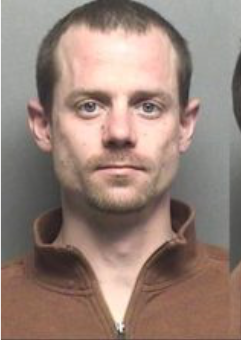
Buster photo Saline Co.
On Friday, police responded to Bennett Buick, 651 South Ohio, in Salina to investigate a report of a 2016 Dodge Charger SXT worth $20,000 missing from the dealership, according to police Sergeant David Villanueva. Surveillance video showed the car being driven off the dealer’s lot at 1:30a.m. February 21, and twice on February 18. The video also showed the car returning at 1:34p.m. and also 6:59p.m. February 18.
Police located a suspect identified as 34-year-old Jason Buster standing behind the Charger in the 1300 block of Cheyenne Street in Salina. They also found person property that belonged to Buster in the car. He also had the keys to the Charger in his pocket.
Buster was arrested on requested charges of vehicle deprivation and felony theft.
WICHITA, Kan. (AP) — A California man has asked for 20 years in prison as his punishment for making a hoax call that led police to fatally shoot a Kansas man following a dispute between two online gamers over $1.50 bet in a Call of Duty WWII video game.
Barriss is now being held in Harvey County
Tyler R. Barriss, 26, faces sentencing Friday in federal court in Wichita for making the false report resulting in a death. His attorney argued in a sentencing memorandum that Barriss never intended for anyone to get hurt and his conduct was an outgrowth of the culture within the gaming community.
As part of the plea agreement with federal prosecutors, Barriss pleaded guilty in November to a total of 51 federal charges that included some initially filed in California and the District of Columbia related to other fake calls and threats. He seeks the shortest term allowed in that plea deal which calls for 20 to 25 years in federal prison.
Defense attorney Rich Federico portrayed his client as sincerely remorseful for calling Wichita police from Los Angeles on Dec. 28, 2017, to falsely report a shooting and kidnapping at a Wichita address. A police officer responding to the call fatally shot Andrew Finch, 28, after he opened the door. Finch, who was not playing video games, lived at the gamer’s old address.
In a letter to the Finch family, Barriss wrote that he thinks every day about how his actions led to his death. He asked for forgiveness and expressed his “hope that my sentence may in some way help you feel better that justice is done,” according to the filing.
Swatting is a form of retaliation sometimes used by gamers, who call police and make a false report to send first responders to an online opponent’s address.
Barriss’ defense attorney argued that the notoriety of being a known swatter within the gaming community “became an intoxicant” to him and incrementally desensitized him to real world consequences. As a young man, he spent almost all of his time indoors playing video games. His only family was his grandmother. He was homeschooled until he quit school altogether. Barriss has never had a job. At the time of his arrest he was living in a homeless shelter in Los Angeles.
“With no guidance, no structure, school, or employment, Mr. Barriss had video games,” Federico wrote. “The game Halo became his salve to social acceptance in a virtual world.”
Also charged as co-conspirators in the federal case in Kansas in connection to the deadly swatting call are online gamers Casey Viner, 18, of North College Hill, Ohio, and Shane Gaskill, 20, of Wichita. They have pleaded not guilty to charges including conspiracy to obstruct justice, wire fraud and other counts. Their trial is scheduled for March 19 in U.S. District Court in Wichita.