WOODSON COUNTY — One person died in an accident just before 2:30p.m. Monday in Woodson County.
The Kansas Highway Patrol reported a 2012 Ford Escape driven by Kay Dodge Lowder, 71, Yates Center,was southbound on U.S. 75 at milepost 84. The vehicle left the roadway and struck a tree.
Lowder was pronounced dead at the scene and transported to Frontier Forensics. She was properly restrained at the time of the accident, according to the KHP.
WICHITA, Kan. (AP) — A government report shows Kansas winter wheat is doing well with an abundance of moisture this month.
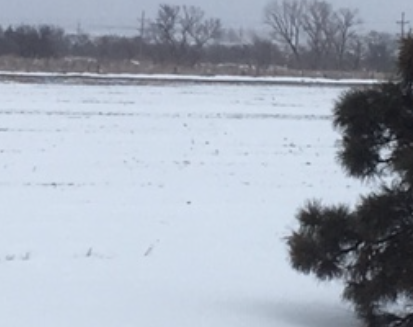
Snow covers a central-Kansas wheat field
The National Agricultural Statistics Service reported Monday that 97 percent of the state had adequate to surplus topsoil moisture conditions. About 98 percent of the state had adequate to surplus subsoil moisture.
The agency rated the Kansas winter wheat as 9 percent poor to very poor, 40 percent as fair, and 51 percent as good to excellent.
TOPEKA, Kan. (AP) — Kansas regulators have ordered Kansas Gas Service to return more than $17.9 million in tax savings to its customers.
The Kansas Corporation Commission said in a news release Monday that its order will mean a one-time bill credit of $22.78 for residential customers.
The agency says the savings are the result of a federal law that reduced the corporate tax rate from 35 percent to 21 percent in January of last year. The Commission had required utilities to track and keep separate savings from the tax cut pending its review.
Kansas Gas Service had asked to keep the savings to offset its service costs, but the Commission determined that was not in the public interest.
TOPEKA, Kan. (AP) — Kansas Gov. Laura Kelly pledged Monday to give legislators and the general public more information about children who run away or go missing from the state’s foster care system, starting with a daily count.
The new Democratic governor announced the launch of a website for the state Department for Children and Families that will provide statistics about missing foster children. Kelly also promised that multiple legislative committees will receive information about specific cases if they sign a confidentiality agreement.
The announcements came less than a week after a Republican-controlled Senate committee had a hearing on a bill aimed at ensuring that the governor and Legislature would be notified within 72 hours of a foster child going missing. The Public Health and Welfare Committee endorsed the measure Monday, sending it to the full Senate for debate.
Kelly was a state senator before her election as governor last year and had criticized DCF over what she saw as its lack of transparency under Republican governors. She said in October 2017 that she was “flabbergasted” when state foster care contractors disclosed that more than 70 children were missing, though DCF officials said it was in line with national averages.
“The additional transparency can only help to educate the public and legislators about the processes used by DCF to locate these vulnerable citizens,” Kelly said in a statement.
On its new website, DCF reported that 80 foster children were missing as of Friday, and almost all of them were runaways. Fifty-seven of them, or 71 percent, were 16 or older.
Kelly said information about specific cases would be made available to legislative committees that deal with the budget, the court system, juvenile justice and child welfare, as well as an audit committee. She also said DCF will release demographic information about missing children to local news organizations.
In recent years, the department has faced questions about several high-profile deaths of abused children after DCF was alerted to problems. Until September, some children in state custody slept overnight in foster care contractors’ offices, including a 13-year-old girl who in May was raped in an officeby an 18-year-old man also in state custody.
The bill before the Senate would require contractors to notify DCF within 24 hours when a foster child goes missing and DCF to notify the governor and the Legislature within another 48 hours. The department initially opposed it, expressing concern that the state could lose federal dollars if missing children’s names became public.
Sen. Molly Baumgardner, a Louisburg Republican, said Monday that putting a notification requirement in state law will prevent DCF officials or future governors from backing off Kelly’s promises of transparency. She saw Kelly’s announcement as positive.
“There isn’t enough information being shared,” she said. “It’s wonderful when people are listening.”
Other lawmakers in both parties also praised Kelly’s actions.
“We all are in agreement that we to do the best for our kids and keep them safe,” said House Speaker Ron Ryckman Jr., an Olathe Republican. “Transparency and accountability are things that we’re striving for, especially inside DCF.”
INDEPENDENCE, Kan. (AP) — Jason Brown, the junior college football coach whose program was chronicled in the Netflix series “Last Chance U,” has resigned after an inflammatory series of text messages in which he allegedly told a German player: “I’m your new Hitler.”
Coach Brown photo courtesy Independence CC athletics
Brown said in a statement posted on social media that a story on the texts in the Montgomery County Chronicle made it “nearly impossible to say” at Independence Community College.
The story reported a text exchange between Brown and freshman Alexandros Alexiou, who had posted the messages on social media. In one text message, Brown referred to disciplinary points that the German player had accrued, berated him and said, “I’m your new Hitler.”
School President Dan Barwick said in a statement it was investigating the text messages.
Brown’s team was profiled by “Last Chance U” during the 2017 season and again last season, when the Pirates finished 2-8. That season is scheduled to air later this year.
SEDGWICK COUNTY—Law enforcement authorities are investigating a shooting and asking the public for assistance with information.
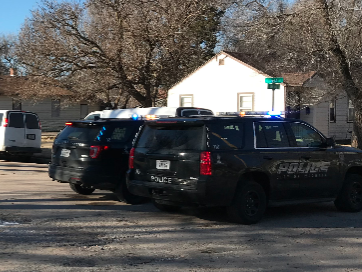
Police on the scene of Sunday’s shooting investigation -photo courtesy KWCH
Just after 5a.m. Sunday, police responded to report of a shooting in the 1100 Block of South Fern in Wichita, according to officer Paul Cruz. Offices found a 27-year-old victim with in a vehicle with a gunshot wound to the head. EMS transported to man to a local hospital for treatment of critical injuries.
Police are working to determine if the victim was shot someplace other than in the vehicle. They have not released whether or not the victim lives at the address.
Anyone with information on the incident is asked to contact police.
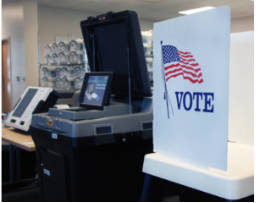
TOPEKA, Kan. (AP) — Kansas lawmakers are considering a proposal that would require election officials to notify voters before they throw out ballots because of problems with signatures.
The proposal comes after last year’s GOP primary for governor between Kris Kobach and then-Gov. Jim Colyer was decided by only a few hundred votes.
Currently, Kansas law allows election officials to throw out ballots with signature problems unless the voter fixes the signature by the end of Election Day.
The proposed law would require election officials to try to notify voters whose write-in ballots are missing signatures before the ballots are counted at county canvass meetings. The change would also apply to voters whose ballot signatures don’t match signatures on file with county offices.
A legislative committee on Friday sent the bill to the Senate floor.
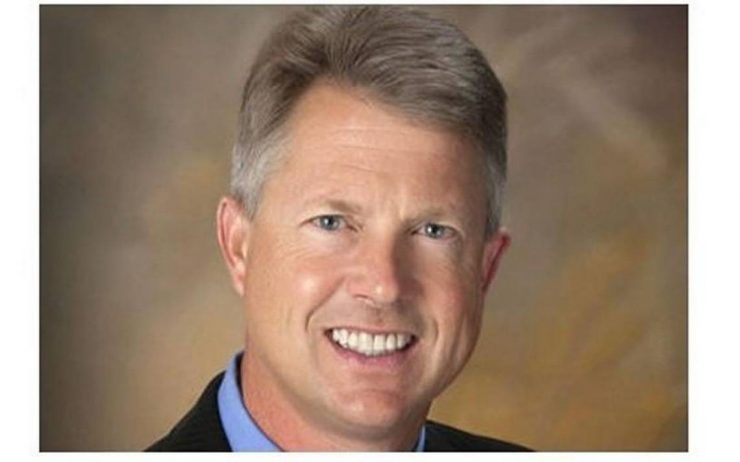
Dr. Roger Marshall, R-Great Bend, is the First District Kansas Congressman.
Friends,
Last week I had the chance to attend the groundbreaking ceremony of the new VA facility in Wichita named in honor of Sen. Bob Dole. The new facility will provide much-needed care for veterans across Kansas.
Laina and I also, visited our daughter, son-in-law and grandsons. I was thankful for some much needed family time.
VA Ribbon Cutting
I was honored to be part of the official groundbreaking ceremony for the new 12-bed, $4.4 million, substance abuse facility at the Robert J. Dole VA Medical Center.
Each month the Wichita hospital sends 15 to 20 veterans to Leavenworth or Kansas City for treatment, for addiction treatment. This new development will help address the much-needed support that our Veterans deserve. I did some work at the Wichita VA Hospital as a medical student, I know how impactful this center will be, and share Senator Dole’s goal of wanting our nation’s soldiers to have access to not only the best but also convenient, care.
Ribbon cutting for substance abuse facility at Robert J. Dole VA Medical Center
At the celebration, I was able to deliver a message from Senator Dole on the importance of this facility. He wrote, “More than just a groundbreaking, today marks a moment of real progress in the way we take care of our nation’s heroes. ‘Comprehensive care’ of our veterans now includes the entire spectrum of care — supporting these men and women in all aspects of their well-being.”
I believe the new in-patient facility will provide life-saving treatments for veterans across Kansas and is a huge step forward in the fight against addiction and veteran suicides.
Exploring the Sugar Land
Recently I had the privilege to visit my daughter and son-in-law and grandchildren. On my visit, we celebrated both my daughters and grandson ROW’s birthdays and got to take a look into Florida’s agriculture scene. We met with sugar farmers in Belle Glade, Florida.
I got a chance to talk to farmers about the state of agriculture in Florida and how their workflow relates to our producers back home in Kansas. While they grow a very different type of crop from what we’re used to in Kansas, share similar views on the ways that Congress can best serve American farmers.
Understanding the sugar industry is important to all of us on the House Agriculture Committee, and it’s helpful to understand the relationship between all agricultural products.
I was incredibly impressed with their attention to being ecologically friendly. For instance, during the sugar milling process (the process in which you take sugar cane and turn it into sugar), no water leaves the plant. It’s an entirely closed system that wastes no water.
They also take the by-products from the sugarcane processing and use it to generate all of the electricity consumed by the plant. Then they make that same by-product – the fiber in the cane stock where the sugars have been extruded – into biodegradable tableware, plates, and cups.
VA Appeals Modernization Act
The U.S. Department of Veterans Affairs recently announced the implementation of the Veterans Appeals Improvement and Modernization Act of 2017. I was proud to vote for the legislation and am hopeful it will bring meaningful changes to the VA system.
I want to give a shout out to our team, during my time on the Hill our office has helped nearly 100 veterans that expressed to us that they were experiencing issues with the VA or Department of Defense. The Modernization Act will allow the VA to process our inquiries faster and find timely resolutions for our veterans. One of the most important things I can do as an elected official is advocate for our veterans.
Congressman Marshall’s team
Welcome to the Team, Michael
We have officially welcomed Michael Brooks to the team as our new Legislative Director. Michael graduated from the University of Kansas and previously worked for U.S. Congressman Kevin Yoder. This week Michael hit the road across the Big First to meet with people and introduce himself. In Lyons, Kan., Michael toured Kansas Ethanol and hosted a round table with Central Kansas producers and industry leaders. In Garden City, he visited a cotton gin, dairy, and feedlot to discuss the farm bill, renewable fuel standards, and immigration policy. Please join me in welcoming Michael to the office.
Dr. Roger Marshall, R-Great Bend, is the Kansas First District Congressman.
Steve GillilandShow me one person who doesn’t have some sort of love-hate relationship with snow. It seems as though a person either love it or hates it, and for some of us it depends upon the day. It’s hard to explain how something that makes the landscape suddenly seem so sparkling clean and pure can turn on you in an instant and ruin your day. I was reminded this week how much I love to watch snow fall and how beautiful it makes everything it touches, but also how much I hate removing it from my driveway. I’m kind of a purist in that I believe God put it there and I don’t want to shovel it and take away any satisfaction He might get from taking it away himself! Yes, to the traveler, home owner, maintenance man and commuter, snow is often an unwelcome inconvenience. To the outdoorsman, however, snow opens up a whole new world of opportunities.
For the outdoors photographer or painter there is no other canvas that compares to an outdoor scene sporting a fresh snowfall. Suddenly, as if by magic, the mundane becomes majestic, the drab becomes dynamic and the everyday becomes extraordinary. Outdoor spots we pass daily with no recognition suddenly become scenes from a calendar. Like the lava lamps of days gone by, the look of the landscape slowly changes from hour to hour with the wind.
Obviously skiers and snowboarders live for fresh snow. After an overnight snowfall, hills too steep to climb become mere carnival rides beneath their feet. Cross country skiers can, in one day, see country it would take them several days to see on foot without the snow. And let’s not forget the farmers. As a rule of thumb, ten inches of snow equal one inch of rain and snow supposedly brings with it good nutrients too, so even though the last thing our fields need at this particular time is more moisture, our Kansas wheat and alfalfa can always benefit from the snow in the long run.
Hunters and trappers can benefit greatly from a fresh snowfall. Tracks of deer, coyotes, bobcats and other game animals are tough to spot in our often dry Kansas soil, so trying to learn their movement patterns can rely on being fortunate enough to see the animals themselves. Remember going to dances back-in-the-day when your hand was stamped with a mark that only showed up under a special “black light?” That mark was there the whole time but only became visible when put under the light. Just like the black light, snow suddenly shows tracks of wildlife that have been traveling those same paths for months, but leaving no visible signs.
After a significant snowfall a few years ago, I spent time scouting an area I still had yet to trap. It was a soybean stubble field along the river where my wife harvested her first deer several years before. Besides hordes of deer tracks, I followed 2 sets of bobcat tracks as they meandered back and forth across the field and between several freshly made brush piles. I tracked a coyote for several hundred yards and was able to observe exactly how it related to certain land features. I followed coyote tracks on a frozen drainage ditch and could see where it had stopped to nose around under logs and other attractions. Its tracks showed me cattle trails it had traveled along the steep banks and where it had entered and left the ditch. Closing my eyes, I could almost see these animals as they left the footprints that held my attention.
So, the next time it snows, after you’ve shoveled the driveway, cleaned the walks, swept the deck and cursed the weatherman, grab your camera or walking stick and head for the woods. It will definitely influence your relationship with the “white stuff” as you continue to Explore Kansas Outdoors
Steve Gilliland, Inman, can be contacted by email at [email protected].
RILEY COUNTY— Law enforcement authorities are investigating an alleged assault, robbery and kidnapping and have a suspect in custody.
Just after 2:15p.m. Saturday, police arrested 22-year-old Joshua Christopher Miller of Manhattan, in connection with a report of aggravated robbery, aggravated burglary, aggravated kidnapping, aggravated assault, kidnapping and criminal damage to property in the 500 block of Moro in Manhattan, according to the Riley County Police activity report.
Miller is being held on a total bond of $250,000.00 for Aggravated Robbery; Armed w/ dangerous 1 weaponAggravated burglary; Dwelling for felony, theft, sex 1 Aggravated kidnapping 1 Aggravated assault; With intent to commit any 1 felonyKidnapping; Inflict bodily harm or terrorize the 1 victimCriminal damage to property; Without consent 1 value $1000 to $25,000. Police released no additional details on Monday morning.
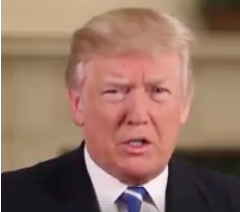
WASHINGTON (AP) — President Donald Trump said Sunday he will extend a deadline to escalate tariffs on Chinese imports, citing “substantial progress” in weekend talks between the two countries.
I am pleased to report that the U.S. has made substantial progress in our trade talks with China on important structural issues including intellectual property protection, technology transfer, agriculture, services, currency, and many other issues. As a result of these very……
Trump tweeted that there had been “productive talks” on some of the difficult issues dividing the U.S. and China, adding that “I will be delaying the U.S. increase in tariffs now scheduled for March 1.”
Trump said that if negotiations progress, he will meet with Chinese President Xi Jinping at his Florida resort to finalize an agreement.
U.S. and Chinese negotiators met through the weekend as they seek to resolve a trade war that’s rattled financial markets.
Trump had warned he would escalate the tariffs he has imposed on $200 billion in Chinese imports, from 10 to 25 percent, if the two sides failed to reach a deal. The increase was scheduled to take effect at 12:01 a.m. EST on March 2.
Speaking to governors gathered at the White House for an annual black-tie ball Sunday, Trump said he was doing “very well” with China.
“If all works well we’re going to have some very big news over the next week or two,” he said, though he took care to add that “we still have a little ways to go.”
Asian stock markets rose following Trump’s announcement, but gains were modest. Share prices already had risen in recent weeks in expectation Trump would postpone the tariff hike.
The Shanghai Composite Index rose 2.4 percent while Tokyo’s benchmark Nikkei 225 index gained 0.7 percent.
The world’s two biggest economies have been locked in a conflict over U.S. allegations that China steals technology and forces foreign companies to hand over trade secrets in an aggressive push to challenge American technological dominance.
The two countries have slapped import taxes on hundreds of billions of dollars of each other’s goods. The conflict has unnerved investors and clouded the outlook for the global economy, putting pressure on Trump and Xi to reach a deal.
Chinese negotiators said the talks made progress on technology transfer, protection of intellectual property rights and non-tariff barriers, according to the official Xinhua News Agency. It cautioned there are “still some differences that need more time to be ironed out.”
“Trump clearly wants a deal and so do the Chinese, which certainly raises the probability that the two sides will come to some sort of negotiated agreement, even if it is a partial one, in the coming weeks,” said Cornell University economist Eswar Prasad, former head of the International Monetary Fund’s China division.
On Twitter, Trump said the two sides had made headway on issues including protection of trade secrets, forced technology transfer and U.S. agricultural sales to China. But the administration did not immediately provide details.
Business groups and lawmakers in Congress want to see a comprehensive deal that forces the Chinese to change their behavior and that can be enforced. The U.S. has accused China of failing to meet past commitments to reform its economic policies.
“Encouraging news from @POTUS that progress is being made in a trade deal with China. Hopefully this leads to an agreement that stops China’s theft of US intellectual property and avoids a full blown trade war,” tweeted Republican Sen. Pat Toomey of Pennsylvania
But critics worry the president has given up leverage.
“They now have lost the advantage of a deadline,” said Philip Levy, a senior fellow at the Chicago Council on Global Affairs and a White House economist under President George W. Bush. “I see the odds tilting” in China’s favor, Levy said.
BARTON COUNTY —Chad Ehrlich operates Nobody Else’s Auto Recycling, a yard with more than 1,000 parts and project cars in stock. The lot is at 332 North U.S. Highway 281 in Great Bend.
Nobody Else’s was recently featured in magazine, and now the junkyard will be featured on a nationally broadcasted television show on the History channel.
Great Bend Community Coordinator Christina Hayes says Ehrlich and his daughter will feature Nobody Else’s on American Pickers.
American Pickers has been airing on the History channel since 2010 as two “pickers” travel the country searching for antiques to restore and resell. Hayes says Nobody Else’s show will be featured Monday, February 25 on the History channel (Eagle Cable TV channel 40 or 640 in HD) beginning at 8 p.m.
News permeates our lives. In the words of Supreme Court Justice Mahlon Pitney, it’s “the history of the day.” We consume it constantly and analyze it endlessly. We debate its value and its veracity. But here’s another aspect to discuss: Can we own it? And should we be able to?
Capitol Forum is a subscription news service that produces policy reports on mergers and acquisitions, corporate investigations and antitrust enforcement. Not exactly page-turners, but the kind of information investors rely on to make business decisions.
In a recent lawsuit filed in federal court in Washington, D.C., against media outlets Bloomberg and Bloomberg Finance, Capitol Forum alleges that, “Within minutes of the release of many of Capitol Forum’s reports, Bloomberg will surreptitiously obtain the report from one or more of Capitol Forum’s subscribers and then republish a summary of that report on its own ‘First Word’ copyrighted subscription service, usually including direct quotations from the Capitol Forum report.”
Most of the lawsuit’s allegations revolve around copyright infringement and contract interference — with one curve ball thrown in: Capitol Forum is also claiming that Bloomberg is violating its property rights under the “hot news” doctrine.
What does that mean? Well, generally speaking, no one owns news. Copyright law doesn’t protect facts and ideas — it protects the specific ways those facts and ideas are expressed. It might prevent Bloomberg from outright copying and pasting Capitol Forum’s policy reports, but it doesn’t prevent it from summarizing them or quoting from them. This is true regardless of how much effort Capitol Forum put into its reports.
Take it from copyright expert Rich Stim: “Facts are not protected even if the author spends considerable time and effort in discovering things that were previously unknown. For example, the author of the book on Neanderthals takes 10 years to gather all the necessary materials and information for her work. At great expense, she travels to hundreds of museums and excavations around the world. But after the book is published, any reader is free to use the results of this 10-year research project to write his or her own book on Neanderthals — without paying the original author.”
The hot news doctrine is a very narrow, very obscure and possibly obsolete exception to this state of affairs. In 1918, the Associated Press (AP) sued its rival, the International News Service (INS), for taking AP news stories, rewriting them and publishing them as its own. The Supreme Court sided with the Associated Press, finding that though no one can own the “history of the day,” news does have economic value as “stock in trade to be gathered at the cost of enterprise, organization, skill, labor and money, and to be distributed and sold to those who will pay money for it.” The court said the AP had a limited property right in the news it reported, one that prevented its competitors (but not the general public) from using it, though only for a short period of time — while the news was “hot.” The hot news doctrine doesn’t broadly apply anymore, but it’s also not quite dead. As the Columbia Journalism Review has pointed out, “The INS opinion itself is no longer good law; it was decided under federal common law, which was largely abandoned in 1938. But the doctrine lives on under state law.”
You can see why Capitol Forum decided to bring up the concept, even though it opened them to mockery for dredging up a legal argument that hasn’t really been successful since it was applied to telegraph dispatches about World War I. TechDirt described the hot news doctrine as a “mostly obsolete and, frankly, bizarre attempt to turn the idea of publishing a similar news story too quickly after the original reporters broke the story into a form of ‘misappropriation.'”
Bloomberg’s editor-in-chief made the following statement: “This case challenges routine newsgathering practices protected under the First Amendment, and Bloomberg will vigorously defend journalists’ right to gather and report the news.” The hot news doctrine has never gone up against the First Amendment; there are valid concerns that if revived it would have a chilling effect on speech and press freedoms. The internet is, in essence, a network where information is shared, analyzed, remixed and repackaged freely and constantly. What would it mean for any player in this system to “own” a set of facts, even for a limited amount of time?
Of course, this cuts both ways. That freewheeling exchange of information has made the profit margins of actually discovering information pretty slim. Gathering and verifying facts is costly and time-intensive; summarizing those facts with a few choice quotes and a little pithy commentary is not (that’s probably why there’s so much more opinion journalism than the investigative variety).
It seems fundamentally unfair we don’t provide more compensation and recognition for the harder labor, but at the same time, this reflects the strange and contradictory view we have of the news. Information about the world around us is a right, a public good — and also a product.
Lata Nott is executive director of the First Amendment Center of the Freedom Forum Institute. Contact her via email at [email protected], or follow her on Twitter at @LataNott.