We have a brand new updated website! Click here to check it out!

House bill would give fair foundation nonprofit status

HUTCHINSON — A bill going through a Kansas House committee is being pushed by Kansas State Fair GM Robin Jennison in hopes it will provide another avenue to raise funds for various projects.

House Bill 2215 would allow the State Fair Foundation Board to become a nonprofit 501(c)3 entity.

Jennison explains the reason for the legislation:


Jennison says the plan is simple in that it will give the fair a chance to be more sustaining:


Jennison added that it also allows the fair to go after private donations and funds to help with needed projects:


A hearing on the bill takes place Monday. The hope is to have it on the House floor later this week.

Man admits he flew to Kansas City to meet 7-year-old for sex

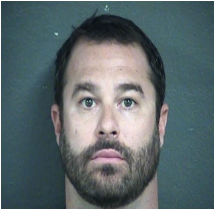
KANSAS CITY (AP) — A 42-year-old man has admitted that he traveled to Kansas City in an effort to have sex with a 7-year-old girl.

Mausner -photo Wyandotte Co.

Ryan Edward Mausner, of Basalt, Colorado, pleaded guilty Wednesday to enticement of a minor.

Prosecutors say Mausner thought he was communicating with the girl’s mother over several months in private chat sessions during which he said he wanted to have sex with the mother and daughter. Mausner was actually talking to an undercover agent.

Mausner was arrested after he flew to Kansas City in May 2018 intended to engage in criminal sexual activity with the child victim.

Suspect caught in Manhattan charged with attempted first-degree murder

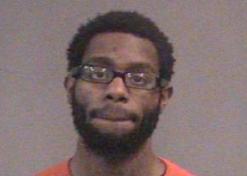
SEDGWICK COUNTY — A Kansas man arrested in Manhattan has been charged with one count of attempted first degree murder in connection with a shooting in Wichita.

Jeffrey Porter, 25, Wilsey, Kansas, made his first court appearance on Wednesday afternoon, according to the Sedgwick County District Attorney’s office.

At approximately 1 a.m. on January 6, police responded to an unknown call for EMS in the 2400 block of south Glendale in Wichita, according to officer Charley Davidson.

Upon arrival, officers located a 21-year-old man who had sustained gunshot wounds to the upper body.  EMS transported the victim to an area hospital in serious condition. He remains hospitalized.

The investigation revealed the victim and Porter were in the parking lot of the Wildwood Apartments, 5001 E. Pawnee in Wichita.  While at this location, Porter fired multiple shots from a handgun, striking the victim.  The victim was able to run to a nearby residence and ask for help.

On Monday, police located Porter in the 200 Block of Tuttle Creek Boulevard in Manhattan where he was arrested.

According to the Sedgwick County Attorney, Porter is being held on a $250,000 bond


Sheriff: Alleged stalker sent pizza anonymously to DMV for months

LINCOLN COUNTY — Law enforcement authorities are investigating a suspect for alleged stalking.

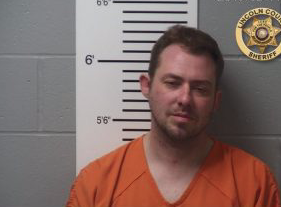
Howe photo Lincoln County

On February 6, detectives with the Lincoln County Missouri Sheriff’s Office began investigating a criminal complaint of stalking, according to a media release.

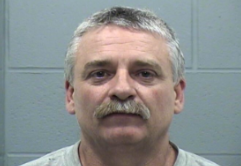
Employees with the Driver’s License and Vehicle Registration Office, in Troy, reported 34-year-old Timothy Howe, of Troy, frequents the office often asking for duplicate titles, abandoned vehicle forms and other vehicle registration related items.

Over a period of a few months, the victims said Howe would buy them pizzas anonymously and contacting them through social media under a false name. The victims said Howe’s vehicle is spotted driving through parking lot at all times of the day. One victim asked Howe not to buy her pizzas anymore so he bought them for everyone in the office, except for her.

In November 2018, Howe left a large amount of cash on the countertop saying, “Go get yourself a manicure or pedicure” and walkout at the behest of the victim.  The office manager reported the incident to the Compliance Investigation Bureau (CIB). The CIB informed Howe he could no longer use the Troy License Office.

Shortly after, Howe was able to obtain one of the victim’s cell number and he sent her a Merry Christmas text and other odd text messages. One victim stated Howe drove past her twice while she gassed her vehicle and felt unsafe around him.

Detectives observed Howe driving his vehicle near the Troy License Office and took him into custody.  Howe is currently charged with First Degree Stalking and three counts of First Degree Harassment.  Howe is currently housed in the Lincoln County Jail under a $20,000 cash only bond with no contact with the victims, GPS monitoring if released and no entry or staying on premises of 850 East Cherry St., Troy, MO.  Other conditions of bond may apply.

Two jailed after police seize drugs, guns and cash near Kansas school

COWLEY COUNTY — Law enforcement authorities are investigating two suspects on drug and weapons charges.

Just before 8:30 p.m. February 9, police executed a search warrant at a residence at 117 N. Fourth Street in Arkansas City, according to a media release.

They made contact with two men, one a convicted felon, who live at the home which is less than a block south of Frances Willard Elementary School.

A search of the residence turned up 40 grams of a substance thought to be marijuana, pills with Bitcoin emblems suspected to be Ecstasy and some other pills, thought to be oxycodone.

Police also found $1,200 in cash, digital scales, an AR-15 semiautomatic rifle and more than 80 live rounds of ammunition.

Police arrested Ziad Muhammad Altiti, 20, on suspicion of one felony count each of criminal possession of a firearm by a convicted felon, no drug tax stamp for a controlled substance, possession with intent to distribute marijuana within 1,000 feet of a school, possession with intent to distribute narcotics within 1,000 feet of a school and unlawful selling of a prescription drug, as well as a misdemeanor count of possession of drug paraphernalia. He was transported to and booked into the Cowley County Jail in Winfield in lieu of $29,000 bond through Cowley County District Court in Arkansas City.

They also arrested Kenneth Jerrod Nesbitt Jr., 21,  on suspicion of one felony count each of no drug tax stamp for a controlled substance and possession with intent to distribute marijuana within 1,000 feet of a school, as well as a misdemeanor count of possession of drug paraphernalia. He was transported to and booked into the county jail in lieu of $10,000 bond through Arkansas City district court.

Moran cosponsors legislation to hold VA healthcare providers accountable

OFFICE OF SEN. MORAN 

WASHINGTON – U.S. Senator Jerry Moran (R-Kan.) – member of the Senate Committee on Veterans’ Affairs – today cosponsored the VA Provider Accountability Act, bipartisan legislation that would bring much-needed accountability to the Department of Veterans Affairs (VA).

“It is critical that those on the front lines of caring for our veterans are held to the highest level of accountability,” said Sen. Moran. “I am introducing this legislation to make certain no adverse medical outcome impacting a former servicemember is swept under the rug. Our veterans deserve a VA that is worthy of their service and sacrifice, and holding providers accountable is an important step to restoring trust in the VA.”

A troubling 2017 GAO report revealed an unacceptable trend of VA facilities failing to report providers who made major medical errors to the National Practitioner Data Bank and the relevant state licensing boards responsible for tracking dangerous practitioners. As a result, these practitioners can go into private practice or move across state lines without disclosing prior mistakes to patients or state regulators. A 2017 USA Today story uncovered specific, horrific medical care failures and mistakes that the VA concealed and allowed to continue.

The VA Provider Accountability Act would require the VA to inform the National Practitioner Data Bank and state licensing boards of major adverse actions committed by medical providers at the VA. Additionally, it would prevent the VA from signing settlements with fired employees to hide major medical mistakes in their personnel files.

The VA Provider Accountability Act was authored by U.S. Senator Cory Gardner (R-Colo.) and is also cosponsored by U.S. Senators Joe Manchin (D-W.Va.), Bill Cassidy (R-La.) and Susan Collins (R-Maine).

Full text of the legislation can found here.

Indictment: ‘American Idol’ contestant was drug courier, has marijuana case in Kansas

NORFOLK, Va. (AP) — A recently unsealed court document says a former contestant on both “American Idol” and “Fear Factor” worked as a courier for a drug ring and was trying to deliver nearly 2 pounds of fentanyl when she was arrested last year.

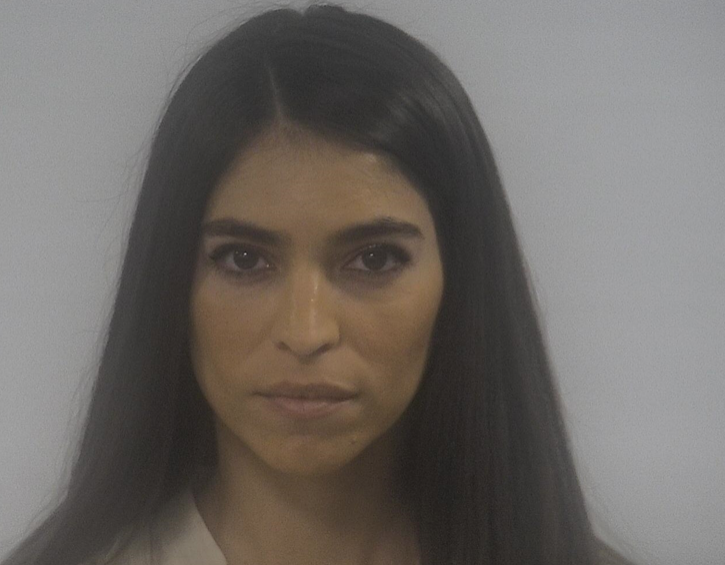
Barba -photo courtesy Western Tidewater Regional Jail

32-year-old Antonella Barba was back in custody Monday, following a federal indictment charging her with conspiracy to distribute cocaine, heroin and fentanyl. Barba was originally arrested last October in Norfolk Virginia.

She was previously charged with shoplifting in New York and has a felony marijuana case pending in Kansas.

Barba, of New Jersey, reached the top 16 on “American Idol” in 2007, the year Jordin Sparks won. She competed on “Fear Factor” in 2012.

Her public defender didn’t immediately respond to the newspaper’s request for comment.

Police K9 helps in southwest Kansas marijuana bust

SEWARD COUNTY — Law enforcement authorities are investigating a suspect after a drug bust in southwest Kansas.

Items collected during the investigation photo courtesy Liberal Police

Just after 4:30p.m.Tuesday, police checked a residence in the 200 block of S. Clay Street in Liberal after receiving reports that the narcotics were being sold there, according to Captain Robert Rogers.  The  25-year-old resident also had warrants for his arrest. Police found him at the home.

The police department’s K9 was deployed and indicated the presence of narcotics in the suspect’s vehicle.

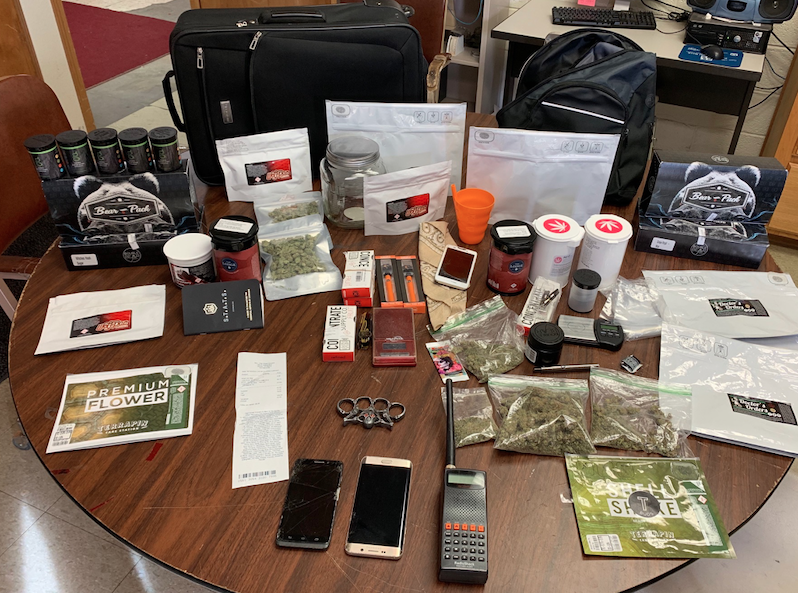
Officers searched the vehicle and his residence and located over 300 grams of suspected marijuana, marijuana wax, and marijuana oil were found.  Several other items indicating the sale of illegal narcotics were also found.

The suspect was arrested for possession of marijuana with the intent to sell, possession of marijuana wax with the intent to sell, possession of drug paraphernalia, no drug tax stamp, and criminal use of weapons.  He remains in jail.

An affidavit was forwarded to the Seward County Attorney’s Office seeking formal charges. Rogers did not release the suspect’s name.

Kansas didn’t use national voter database it runs last year

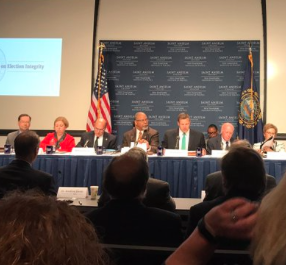
TOPEKA, Kan. (AP) — A much-criticized national database that checks if voters are registered in multiple states wasn’t used last year in Kansas, the state that administers it, the official overseeing the state’s elections told lawmakers.

In 2017 Kris Kobach the Kansas Sec. of State attending a meeting of President Trump’s commission on election fraud -photo courtesy Kris Kobach

Kansas Elections Director Bryan Caskey said his office under former Kansas Secretary of State Kris Kobach also chose not to make $20,000 in security upgrades to the Interstate Voter Registration Crosscheck Program. It didn’t use the program during last year’s election cycle and likely won’t again this year after a Homeland Security audit discovered vulnerabilities.

Twenty-eight states exchanged 98 million registration records when Crosscheck was last used in 2017.

Kobach, a longtime champion of strict voter registration laws, was vice chairman of President Donald Trump’s now-disbanded commission on election fraud. Kansas voters elected Scott Schwab, also a Republican, to replace him after Kobach ran for governor and lost to Democrat Laura Kelly.

Caskey told the House Elections Committee that Schwab has ordered a review of Crosscheck to determine whether to entirely abandon the program.

Crosscheck compares voter registration lists among participating states to look for duplicates. The program is aimed at cleaning voter records and preventing voter fraud, but it has drawn criticism for a high error rate and lax security.

Crosscheck compares registration lists and analyzes voters’ first and last names and date of birth to determine whether a person is registered in multiple states, but critics say most of the hits are false matches.

The program identified 141,250 possible duplicate voter registrations in Kansas in 2017, but it is unclear how many were purged because the system doesn’t track that data, Caskey said.

“I acknowledge that, yes, there are some false positives,” he said.

The American Civil Liberties Union of Kansas alleged in a lawsuit filed last year that “reckless maintenance” of the program has exposed sensitive voter information. Kobach has called that lawsuit “baseless,” citing the U.S. Supreme Court last year in an Ohio case dealing with maintenance of voter rolls.

A federal judge earlier this month rejected the state’s argument that the lawsuit should be dismissed because voters have no right to privacy for the information in their registration record.

U.S. District Judge Daniel Crabtree ruled he was rejecting that argument “because its basic premise is wrong.”

Caskey told lawmakers that Kansas could use some of the $2 million in federal funds untouched by Kobach to instead access the Electronic Registration Information Center, or ERIC as it is better known. The initial cost to use ERIC would be $25,000. It uses encrypted voter information along with Social Security Administration death records, driver license information and U.S. Postal Service change-of-address data.

Twenty-six states now use the ERIC system, according to its website. ERIC, based in Washington, D.C., is a non-profit corporation governed by a board of directors made up of member states.

Voting rights activist Davis Hammet said it should be a no-brainer to switch from Crosscheck to ERIC, which was developed by the Pew Charitable Trust with data scientists.

“If we are going to try to do this to clean our rolls, everyone seems to be in agreement that this is the way to do it,” Hammet said.

___

Update: KBI investigating death of NE Kansas law enforcement officer

BROWN COUNTY — Authorities have identified the officer found unresponsive in his patrol vehicle Wednesday morning as 43-year-old Kirby Robidoux of Falls City, Nebraska, according to Brown Sheriff John Merchant.

“The cause of death is unknown and an autopsy will be performed. There was no foul play suspected. Kirby was a very dedicated officer for the Sac and Fox Police department who always had a kind word for everyone he met.”

————-

BROWN COUNTYThe Kansas Bureau of Investigation (KBI) is investigating the death of a law enforcement officer who was discovered in northern Brown County, early Wednesday morning.

According to a KBI media release, just before 6 a.m., a member of the Iowa Tribal Police Department discovered a patrol officer from the Sac and Fox Police Department deceased in his patrol vehicle. At this time, foul play is not suspected, but a full investigation is being conducted.

The officer will be identified once all next of kin are notified. The investigation is ongoing. No further information will be released at this time.

Militia members facing decades in prison file appeals in Kan. bomb case

WICHITA, Kan. (AP) — Three militia members facing decades in prison for their roles in a foiled plot to massacre Somali Muslims in southwest Kansas have all now appealed their convictions and sentences.

Curtis Allen-photo Sedgwick Co.

Attorneys representing Gavin Wright and Curtis Allen on Wednesday filed separate notices of appeal to the 10th Circuit Court of Appeals. Patrick Stein filed his appeal on Monday.

Jurors convicted them of conspiracy to use a weapon of mass destruction and conspiracy against civil rights for a 2016 scheme to blow up a mosque and apartments housing Somalis in Garden City.

Gavin Wright-photo Harvey Co.
Patrick Stein-photo Butler Co.

A judge last month sentenced Stein, the alleged ringleader, to 30 years in prison. Allen, who drafted a manifesto for the group, got 25 years. Wright, who helped make and test explosives at his mobile home business, received 26 years.

How Kansas hopes to boost low vaccine rates to protect kids

Thousands of Kansas children and teens go without vaccines that could save their lives.

A series of policy changes, though, could protect more Kansans against everything from cervical cancer to swift-acting meningococcal disease.

The changes

(1) The meningococcal vaccine may soon join the list of immunizations required to attend school in Kansas. The Kansas Department of Health and Environment is going through regulatory steps for that potential change, which could take effect as early as the 2019-20 school year.

Outbreaks of meningococcal disease are rare but aggressive and scary where they occur. Nearly a third of patients suffer serious effects, such as brain damage, loss of limbs or even death.

Kansas would require the vaccine that protects against four types of the disease. A separate vaccine against another type seen in recent college campus outbreaks would not be required.

(2) Starting in July 2020, vaccination reports will all feed into a statewide database that clues physicians to patient needs. Today, not all providers use it. Eventually, if a parent takes her teen son to a new doctor within state lines, that doctor will have a reliable record. Maybe the teen got his first HPV shot, for example, but still needs one or two more.

The same change will help health officials better spot patterns and troubleshoot.

Take the question of access: It’s not even across the state. Not all doctors carry all recommended vaccines. Some may refer patients to county agencies many miles away. Others might vaccinate a privately insured patient but turn away one on Medicaid. Still others may do the exact opposite. Such scenarios hinge on nitty-gritty details like cost, batch size and vaccine stock.

“Like most things in public health, everything is local,” said Phil Griffin, who directs immunization efforts at the state health department. “There’s multiple layers of complications.”

(3) Kansas pharmacists can give children the flu shot as early as age six. As of 2017, however, they can also administer other recommended vaccines to kids as young as 12.

Since kids at that age generally don’t visit their doctors as often as when they are very young, public health experts hope families may at least drop by a local pharmacy to get vaccines and that that will gradually boost the state’s teen immunization rates.

Kansas vaccine rates

Federal data on the subject are far from perfect. But compared to other states, Kansas seems to have particularly low vaccine rates against meningococcal disease and against cancers caused by the nearly ubiquitous Human Papilloma Virus.

As for seven vaccines recommended for toddlers, including measles, Kansas hovers around the national average.

“Average” still means 30 percent of Kansas toddlers don’t complete those seven.

“It is dismal,” said Barbara Pahud, a Children’s Mercy pediatrician. “And it is sad.”

Low vaccination rates erode the herd immunity that protects people who can’t be inoculated because they are too young or have weakened immune systems.

Opposition to vaccines — either philosophical or based on debunked claims that the shots cause autism — have fueled the ongoing measles outbreak in the Pacific northwest.

In Kansas, hundreds of children catch vaccine-preventable diseases each year. (Or thousands, if you count the flu.)

Pahud, a professor affiliated with with the University of Missouri-Kansas City and the University of Kansas, says a small percentage of parents oppose all vaccines for religious or other reasons.

But that means many families not getting the vaccines don’t share that opposition — all the more incentive for researchers to home in on the obstacles.

Those obstacles likely vary by vaccine. Take these three recommended pre-teen/teen vaccines: For every 10 Kansas teens, nine get the Tdap shot against tetanus, diphtheria and whooping cough. Yet only seven get the meningococcal shot. Five start the HPV vaccine series. Fewer complete it.

“Really, if the kids are able to get the Tdap,” says Gretchen Homan, chair of the Immunize Kansas Coalition, “they should be able to get the other two.”

But so far, only Tdap has been required for school. Because it’s required for attendance, it’s easier to find at your doctor’s office.

What of the other two? Experts say some physicians don’t talk to families about vaccines that are recommended though not required at school. That sends parents the wrong message, says Homan, a pediatric professor at the KU School of Medicine-Wichita.

“To them,” she said, “if I don’t bring it up, it’s not important.”

The HPV vaccine, meanwhile, meets with resistance from parents who fear it leads to promiscuity. Studies have not found a link.

Nervousness about those parental concerns appears to deter some pediatricians from even recommending the vaccine, said Roy Jensen, head of KU’s Cancer Center. They fear offending parents and losing patients.

Yet, he said, researchers have found that a strong recommendation from a family’s doctor often overcomes parental concerns.

“If that recommendation is made,” he said, “then pretty much the HPV vaccine rates go up, and are more or less congruent with Tdap and the other early adolescent vaccines.”

The CDC says “almost every person who is sexually active will get HPV at some time in their life” without the vaccine. Most of the time, the infection simply clears up without problems. Other times it causes cancer, particularly of the cervix, vulva, vagina, penis, anus, or throat.

Kansas health officials want to prevent those cancers, but haven’t added HPV vaccine to the list of school requirements.

Doing so works better when vaccines already have a statewide reach of nearly 70 or 80 percent, state health officials say. Otherwise, it can cause a public backlash.

“Our ultimate goal,” said Griffin, from the state health department, “is that we have full herd immunity with every vaccine-preventable disease.”

Celia Llopis-Jepsen is a reporter for the Kansas News Service. You can reach her on Twitter @Celia_LJ.

Kansas girl dies, days after ending 457-day hospital stay

WICHITA, Kan. (AP) — A Kanas girl has died just days after going home following a 457-day hospital stay.

Zei -(center) on the day she left the hospital photo courtesy Children’s Mercy

Zei Uwadia’s mother says her daughter died Tuesday, less than two weeks after returning to Wichita . She left Children’s Mercy Hospital in Kansas City on Jan. 31 — a day before her 17th birthday.

Uwadia was hospitalized after her lungs failed without explanation. During the hospital stay, she became the first patient to walk on an invasive form of life support at the hospital. Hundreds of thousands of people watched her walking on videos posted online. Hospital staff lined her path, applauding and wiping away tears.

The hospital said in a statement that everyone there was heartbroken by Uwadia’s death but inspired by her “fighting spirit.”

___

Copyright Eagle Radio | FCC Public Files | EEO Public File