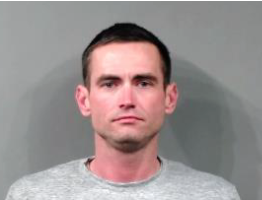
MCPHERSON COUNTY —Four people were injured in an accident just before 8a.m. Saturday in McPherson County.
The Kansas Highway Patrol reported a 2016 Chevy Suburban driven by Mark E. Womacks, 54, Atlanta, Kansas, was northbound on Interstate 135 just north of Smoky Valley Road.
The vehicle left the road through the median into the southbound lanes.
The suburban struck a northbound 2008 Dodge pickup driven byAustin Lee Davis, Benkleman, Nebraska, left the road again, traveled up a hill through a KDOT fence, down a hill, hit a large bump, vaulted into the air and came to rest right side up facing west.
Womack and passengers on the suburban Michael Harrison, 15; Tatum Lovsee, 13 and Christopher Riley, 14, were transported to the hospital in Salina. Davis was not injured. Harrison was not wearing a seat belt, according to the KHP.
The KHP did not report any additional information Saturday afternoon.
LAWRENCE, Kan. (AP) — A Silicon Valley company has donated $2 million to the University of Kansas to support research related to cryptocurrency and digital payments, such as Bitcoin.
photo courtesy University of Kansas
The university says in a news release that the donation from Ripple will provide $400,000 each year for five years. It will go to the Information and Telecommunication Technology Center at the Kansas School of Engineering.
The university will determine its own research topics and Ripple, which provides digital commerce services, will collaborate with students and faculty and provide technical resources and expertise.
The gift also will support the KU Blockchain Institute, a student-led organization that promotes the use of blockchain technology. Blockchain is a digital record that is often used to track the use of cryptocurrency, or digital money.
RILEY COUNTY — Law enforcement authorities are investigating a Kansas felon on a host of new charges.
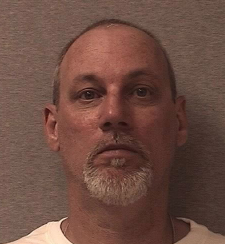
Anthony Moss -photo KDOC
Just after 3:30p.m. Thursday, police arrested 51-year-old Anthony Moss of Manhattan in the 400 Block of South Manhattan Avenue, according to the Riley County Police Activity report.
Moss is accused of giving a worthless check, theft by deception, mistreatment of dependent adult, two counts of forgery, two counts of making false information and a Riley County District Court Warrant for four counts of giving a worthless check.
Moss is being held total bond of $24,000.00.
Moss has previous convictions for theft, drugs, burglary and violations of the offender registration, according to the Kansas Dept. of Corrections
MANHATTAN — Applications to obtain a license to participate in the new Kansas Industrial Hemp Research Program are now available on the Kansas Department of Agriculture website. Applications are now posted as the regulations for the program became effective Fri., Feb. 8.
The Kansas Legislature passed K.S.A. 2-3901 et seq. in April 2018, enacting the Alternative Crop Research Act and charging KDA with implementing the new Industrial Hemp Research Program. The program allows for the licensing of growers, distributors and processors of industrial hemp as part of a research program. To be considered for a research license for the 2019 growing season, applicants must submit a research license application, including a research proposal, along with all required attachments, applicable fees, and fingerprint cards and waiver forms to submit to a state and national criminal history check.
All application materials must be submitted in complete form to KDA by Friday, March 1, 2019, to be considered for a license. The applications will be reviewed and background check information will be submitted to the Kansas Bureau of Investigation, and applications that meet all requirements will be approved for licensure. Upon conditional approval, applicants will be required to pay the license fee and then will be issued a license.
KDA is committed to serving Kansas farmers, ranchers and agribusinesses and providing an environment that enhances and encourages economic growth of the agriculture industry and the Kansas economy. The opportunity to grow a new crop in Kansas offers potential for diversification for Kansas farmers looking for an alternative crop, or for new farming enterprises interested in cultivating industrial hemp.
The application forms and additional instruction — along with much more information about the new Industrial Hemp Research Program in Kansas — can be found at the KDA industrial hemp website: agriculture.ks.gov/IndustrialHemp.
Please address questions about the applications or the Industrial Hemp Research Program to [email protected] or call KDA at 785-564-6700.
TOPEKA — Less than a year after it was established, the State of Kansas Alzheimer’s Disease Working Group has presented the Kansas Alzheimer’s Disease Plan to the Legislature.
Kansas, prior to this plan, was the only state in the nation to not have a formal plan to address what Ann Elifrits, commissioner of the working group, called a “looming health crisis.”
“We are very behind other states,” said Elifrits, noting that Washington, D.C., and United States territory Puerto Rico already have implemented plans.
The plan is a call to action for state and local government, healthcare providers, educators, first responders, civic and faith communities and many other Kansas stakeholders.
Currently, there are 53,000 Kansans age 65 and older living with Alzheimer’s, according to the Kansas Department for Aging and Disability Services. This number is expected to increase to 62,000 by the year 2025. Alzheimer’s is the sixth leading cause of death of Kansans age 60 and older.
Not only is it a health crisis, but a financial crisis as well. Kansas spent $424 million Medicaid dollars on individuals with Alzheimer’s in 2018. These costs are expected to increase almost 26 percent from 2018 to 2025.
The financial burden affects the state and the estimated 151,000 caregivers and family members who provide care and support for someone with Alzheimer’s. According to the Alzheimer’s Association, the average cost of long-term care for a semi-private room in a nursing home is nearly $86,000 per year.
Former Gov. Jeff Colyer, by Executive Order 18-14, established the State of Kansas Alzheimer’s Working Group in June 2018. The executive order states the duties of the working group are to assess the current and future impact of the disease on Kansas residents and to develop a strategy to mobilize a state response to this public health crisis. The working group is run by the Kansas Department for Aging and Disability Services.
The working group endorses creating a state Alzheimer’s Disease Advisory Council. The council would monitor and report progress, as well as recognize the barriers to the implementation of the state plan.
Along with creating an advisory council, the plan offers multiple recommendations that can be made within the existing systems of care and services in Kansas. The key recommendations include requiring specific Alzheimer’s disease training for long-term care providers, the use of dementia screening tools to primary care physicians, a comprehensive statewide training program for all first responders and law enforcement agencies and the expansion of innovative adult day programs for individuals with Alzheimer’s in all Kansas counties.
The recommendations offered in the plan are only the first steps in addressing the public health crisis. A systematic change is necessary, which makes the need for action urgent.
“I really think there are things we can do in Kansas to make people more aware, and we’re missing those opportunities,” said Elifrits. “Our understanding of it is evolving, and we are hopeful there are effective treatments.”
Paige Henderson is a University of Kansas senior from Lenexa majoring in journalism.
PHOENIX (AP) — Arizona is trying to catch up to with a state law in Kansas and 9 other states allowing electronic monitoring and other technology aimed at deterring abuse of vulnerable people at long-term care facilities, following the rape of an incapacitated Phoenix woman who later gave birth.
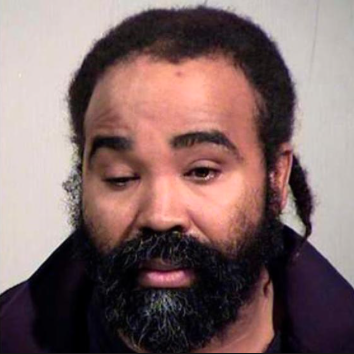
Nathan Sutherland photo Maricopa County Sheriff
Cameras are most commonly used, but they pose privacy issues, and advocates and experts disagree about their effectiveness.
Some say video surveillance can help in criminal cases but may not stop attacks, while others have seen improvements and urge any effort to safeguard those who are aging, sick, disabled or otherwise unable to protect themselves.
The Arizona House is considering a measure that would let certain facilities install video surveillance in common areas. The providers would have to detail how to avoid privacy violations.
“We’re looking into how to make it so parents have more reliable ways to ensure their loved ones are safe,” Republican Rep. Nancy Barto, the measure’s sponsor. “I’m learning a lot of group homes already do this. Some of those policies are actually working.”
Arizona would join Illinois, Kansas, Louisiana, Maryland, New Mexico, Oklahoma, Texas, Utah, Virginia and Washington with laws or regulations allowing surveillance equipment inside nursing homes, assisted living centers and other group residential settings.
Most of those laws place the option and cost of electronic monitoring on residents and their guardians. A majority of the laws say residents or their surrogates can put a camera or monitoring device in their rooms but must notify the facility, among other conditions.
Carole Herman, founder of the advocacy group Foundation Aiding the Elderly, is not sure cameras would have helped her aunt, who died of bedsores in a nursing home but said that they might be useful in other cases.
Cameras in hallways can show who is at a patient’s bedside and how often the patient is getting care, she said. She questions why any facility would oppose them.
“The industry doesn’t want it obviously,” Herman said. “But if they care about these people, what’s the resistance to these cameras?”
Nicole Jorwic, director of rights policy at The Arc, a national advocacy group serving people with intellectual and developmental disabilities, cautioned that cameras are not a “magic pill.”
“Even if the law’s written perfectly well, it’s not going to capture every form of abuse and neglect,” Jorwic said.
While cameras could help catch abusers, it’s not clear they’re effective at preventing violence, said Brian Lee, a former Florida long-term care public advocate who heads the advocacy group Families for Better Care.
“As far as prevention, I don’t know,” Lee said, “but I’ve seen it used for prosecution.”
But one expert says a properly designed closed-circuit TV system with multiple monitoring points can be a good deterrent. A common mistake is to have one monitoring area that nobody is watching, which makes cameras reactive instead of proactive tools, said Steve Wilder, president of Sorensen, Wilder & Associates, an Illinois-based health care safety and security consulting group that works primarily with hospitals and senior living communities.
“A lot of facilities think cameras give the message of ‘We’re not a safe facility.’ Nothing could be further from the truth,” Wilder said.
Details were not known about the security system at the Phoenix facility, where a licensed nurse is accused of sexually assaulting a 29-year-old woman who had a baby boy Dec. 29.
Hacienda HealthCare said Thursday that it was closing the intermediate care facility that serves young people with intellectual or developmental disabilities and would work with the state to move patients elsewhere.
After the birth, the Arizona Department of Health Services implemented new safety measures at Hacienda, including more monitoring of patient care areas but not video cameras.
The department declined to comment on the surveillance legislation Thursday.
In Texas, a 2013 law allowing facilities to install and operate video surveillance equipment in common areas has made an impact, health officials said. Devices can only be placed in the state’s 13 intermediate care facilities, which serve nearly 3,000 patients with intellectual disabilities.
Cameras have both confirmed and cleared staff in allegations of abuse, neglect or exploitation.
“There was an initial rise as (the Department of Family Protective Services) was able to confirm cases more readily, but since then, the rates have fallen,” Carrie Williams, a Texas Health and Human Services Commission spokeswoman, said in an email.
New Jersey has taken a different approach. Its “Safe Care Cam” program aims to catch abuse or neglect by allowing residents to borrow a hidden camera.
A loaner camera led to the January arrest of a caretaker at an assisted living facility. The attorney general’s office said footage showed her slapping a 90-year-old bedridden woman on the hand and roughly pushing her head back onto a pillow several times. The victim couldn’t communicate verbally because of a stroke.
In Arizona, the lawmaker behind the camera legislation said it has “a good chance” of passing. As chairwoman of the House Health & Human Services Committee, Barto can likely get the measure a hearing.
Gov. Doug Ducey, a Republican, is usually skeptical of regulations and has touted his record of rolling them back, but the Republican has ordered agencies to improve protections for people with disabilities.
Arizona also is considering legislation that would require facilities like Hacienda to get a state license and conduct background checks of employees that care for clients. So far, neither bill is scheduled for a vote.
SEDGWICK COUNTY — One person died in an accident just after 1:30a.m. Saturday in Sedgwick County.
The Kansas Highway Patrol reported a 2005 Ford pickup driven by Ernesto Flores, 26, Wichita, was southbound on Interstate 235 just north of West Street.
The pickup left the roadway into the median and the driver overcorrected.
The pickup then left the roadway to the right, rolled and the driver was ejected.
Flores was pronounced dead at the scene. He was not wearing a seat belt, according to the KHP.
PRATT – Revenue from the sale of hunting and fishing licenses fund management practices that benefit all Kansas wildlife; however, additional funding aimed specifically at nongame species is needed. Chickadee Checkoff is a funding mechanism of the Kansas Nongame Wildlife Improvement Program, providing individuals with opportunities to support nongame species through tax-deductible donations. Money collected from these donations goes directly to a variety of nongame wildlife research, habitat enhancements/restorations, and educational projects.
If you value Kansas wildlife, consider making a contribution this tax season by marking the Chickadee Checkoff box on your state income tax form (line 36 on K40 form) and designate the amount you would like to donate. There is no minimum or incremental requirement. Donations can also be made directly to the Kansas Department of Wildlife, Parks and Tourism (KDWPT) by addressing the donation to Chickadee Checkoff, c/o KDWPT 512 SE 25th Ave, Pratt, KS 67124.
Private donations are crucial to managing these vital species since Chickadee Checkoff proceeds are matched by federal funds. Contributions have been steadily decreasing in recent years, making the need for Kansans to mark the Chickadee Checkoff box this year more critical.
Check the chickadee and take an active part in managing and conserving Kansas’ diverse wildlife for future generations.
WICHITA, Kan. (AP) — A Kansas judge who blamed two teenage girls for a sexual encounter with a 67-year-old man spent nearly a decade on the bench overseeing mostly sealed juvenile and child-in-need-of-care cases behind closed doors before taking over the adult criminal cases for a retiring judge last summer.
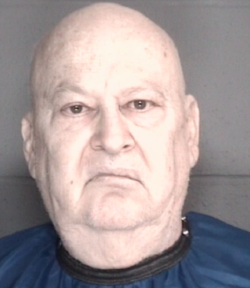
Soden -photo Leavenworth Co.
Since then, Leavenworth County Judge Michael Gibbens’ rulings have drawn more scrutiny and criticism, including his widely panned decision in December in a sex abuse case during which he eased a man’s sentence after saying the victims, ages 13 and 14, were “more an aggressor than a participant.”
It was not the first time Gibbens has substantially departed from Kansas sentencing guidelines in handing down lenient punishments, according to court documents reviewed by The Associated Press. In July, he sentenced a man to probation for battery of a law enforcement officer. In November, he gave another man probation for bringing contraband into a state prison.
Because Gibbens has not been handling adult cases for long, it’s unclear how he compares with his colleagues on the bench when it comes to following sentencing guidelines. An analysis by the Kansas Sentencing Commission found that state judges handed down sentences within the guideline range in 79 percent of cases in 2017, a number consistent with the prior two years.
Gibbens did not return a call at his court office seeking comment for this story.
Leavenworth Police Chief Pat Kitchens said his department was “sort of disappointed” with the probationary sentence Gibbens gave 19-year-old De’Aire McNeal in July for pushing Officer Sarah Moreno when she was attempting to arrest him, causing the officer to suffer a concussion after she was knocked down a flight of stairs.
“We always wish sentencing and punishment for assaulting police officers should be much more severe,” Kitchens said.
In a journal entry of judgment, the judge cited McNeal’s age, an expert’s psychological report, and the availability of treatment as “compelling reasons” for his departure from Kansas sentencing guidelines of 12 to 14 months.
Kitchens demurred when asked whether Gibbens has a history of giving lenient sentences to defendants: “I don’t think we have a full sense, a fair opportunity to make that evaluation.”
Democratic former Gov. Kathleen Sebelius appointed Gibbens to the bench in 2008. Like many of Kansas’ district court judges, he is periodically listed on the ballot for retention. Gibbens was up for retention last year and won’t be on the ballot again until 2022.
Kansas voters typically have little information to draw upon when deciding whether to retain a trial judge. A judicial evaluation program that once surveyed attorneys, non-attorneys and appellate judges to come up with individualized ratings for Kansas judges lost its funding in 2011 and was officially discontinued in 2013, Christy Molzen, staff attorney for the Kansas Judicial Council, said in an email. Its only report on Gibbens showed that 93 percent of attorneys and 90 percent of non-attorneys recommended that Gibbens be retained in 2010.
Gibbens also has not faced any disciplinary actions from the Commission on Judicial Qualifications, which reviews complaints against judges to determine whether they have violated the code of judicial conduct. Complaints are confidential, but disciplinary actions are posted on the commission’s website.
Another case where Gibbens diverged from sentencing guidelines involved Charles Newsome, who admitted to bringing marijuana, synthetic marijuana and tobacco into the Lansing Correctional Facility. Gibbens gave Newsome probation despite a plea agreement in which the prosecution and defense had agreed to what was already a below-guideline sentence of two years, according to court documents. The sentencing guidelines called for about four years in prison.
In explaining his decision, Gibbens wrote that the contraband was not weapons or hard drugs; the crime was nonviolent; and “community safety interests are better served” by placing Newsome on probation in conjunction with drug treatment. The judge also cited the increasing population of prisons.
Asked how local attorneys view Gibbens, defense attorney Joseph Osborn, who represented Newsome, said the judge “generally has a decent reputation in this county.” But Osborn said it would be inappropriate for him to offer his own opinion, noting he practices in front of Gibbens.
None of the judge’s cases have generated the scrutiny as that of Raymond Soden. Gibbens sentenced Soden in Decemberto five years, 10 months in prison for soliciting a 13-year-old on Facebook — eight years less than what’s called for in sentencing guidelines.
Gibbens said the teens had voluntarily gone to Soden’s house and taken money for sexual favors. He also questioned the level of harm the victims suffered because they didn’t appear at the sentencing hearing.
The Kansas City Star, which first reported the judge’s comments after obtaining a transcript, wrote in an editorialthat Gibbens “made a serious mistake” and should resign.
KANSAS CITY, Mo. (AP) — A long-awaited agreement among most of airlines that will fly out of a new Kansas City International Airport could result in a reduction of the project’s cost, according to developers and city officials.
images courtesy FlyKCI.com
The cost for developing the project will be about $1.5 billion rather than a previous estimate of $1.64 billion, developers said Thursday. The news came a day after six of the eight airlines, the Kansas City Aviation Department and developer Edgemoor Infrastructure and Real Estate reached a deal on their costs.
After years of debate, voters in November 2017 overwhelmingly approved replacing the three-terminal Kansas City International Airport with a single-terminal airport. The city has said no taxpayer money will be used on the project, and airlines will be responsible for cost overruns.
The project was delayed since November for negotiations when two smaller airlines, Allegiant and Spirit, balked at the $1.64 billion budget. The airlines also disagreed over how to share the cost of a baggage handling system valued at $20 million a year.
Kansas City Mayor Sly James said having the agreement was a big step after seven years working on the project.
“Folks should understand this is not a negotiation to get on a Lime scooter and ride from one part of town to the other — lots of moving parts, biggest project in the history of this city,” James said.
Aviation Director Pat Klein said he expected six of the eight airlines that serve KCI to sign the agreement by Feb. 25.
Edgemoor managing director Geoffrey Stricker told city council committee members Thursday between 10 and 15 percent of the design work is complete and can find cost savings of $140 million. Under questioning from committee members, Stricker said the design team would consider changes to flooring and lighting systems to reduce costs.
“We don’t view this as cuts to anything,” said Steve Sisneros, managing director of airport affairs for Southwest Airlines. “The savings are going to be in design.”
Some council members were hesitant about the agreement.
“I am not one to generally celebrate victory until I understand what the victory is,” said Councilman Scott Wagner.
He noted the $1.5 billion does not include the costs of financing the project and expressed concern that the council did not yet know what kind of contingency fund the project would have if it goes over the new budget.
LAWRENCE, Kan. (AP) — A Free State High School student who left a hunting gun in his car in the school parking lot will not face charges.
Free State High in Lawrence-Googe image
The Douglas County District Attorney’s Office said Friday no charges would be filed because the student didn’t intend to commit a crime. Trial assistant Dorothy Kliem said the investigation found the student forgot the weapon was in his vehicle after a hunting trip.
The unloaded gun was discovered under the seat of the student’s vehicle in September.
School district officials said the weapon never left the vehicle.
A student at Lawrence High School was arrested Wednesday after a handgun was allegedly discovered in his backpack. That was fourth time in the past year that a gun was reported in possession of a student at a Lawrence high school.
WICHITA, Kan. (AP) — The family of conservative billionaire Charles Koch isn’t pushing for property damage charges against a man who’s accused of driving through the private gate of a home last month and ramming an officer’s patrol car.
White -photo Sedgwick Co.
Aron James White, 40, faces charges that include aggravated battery of a law enforcement officer. But a police affidavit for White’s arrest, previously filed in Sedgwick County District Court and publicly released on Thursday, shows that the residents requested that no charges be filed for damage to their property.
Police at the crime scene said White hit a private security vehicle before driving through a $20,000 metal security gate and damaging about $10,000 worth of landscaping. He’s accused of them ramming the patrol vehicle, injuring an officer’s hand.
He’s also charged with the aggravated assault of a panhandler who was a passenger in his car. Court records say White paid the panhandler more than $100 before asking him to ride along.
Authorities hadn’t publicly identified the Kochs as victims in the case, but records show that Chase Koch, the son of Charles Koch, lives at the address listed in police reports.
Billionaire Charles Koch was among the backers of the First Step Act, a federal criminal justice reform law signed by President Donald Trump in December. He has been supportive of such reform for years, shaped in part by his libertarian politics.
Koch Industries spokesman Rob Carlton declined a request for comment.
Investigators aren’t sure why White drove through the gate but did say drugs may have influenced his actions. He has no known connection to the Koch property and doesn’t live in the area. A search of White’s backpack found “syringes and spoons commonly used for preparing and ingesting illegal drugs.”
The affidavit said that White “displayed signs of impairment” the first time investigators attempted to interview him. A second time, White said he “needed his psychological medication and did not feel comfortable giving a statement without it.”
White’s ex-wife contacted police the day after his arrest and said he has been “manic,” ”diagnosed with bipolar,” struggled with addiction and had threatened suicide. Court records show the ex-wife’s divorce from White was finalized Jan. 11, or four days before he was arrested.
___
WICHITA, Kan. (AP) — The family of conservative billionaire Charles Koch isn’t pushing for property damage charges against a man who’s accused of driving through the private gate of a home.
40-year-old Aron James White is charged with ramming an officer’s patrol car last month. The collision injured an officer and passenger. But court records show that the residents requested that no charges be filed for damage to their property.
Police at the crime scene said White also rammed a private security vehicle before driving through a security gate. Authorities hadn’t publicly identified the Kochs as victims in the case, but records show that Chase Koch, the son of Charles Koch, lives at the address listed in police reports.
Koch Industries spokesman Rob Carlton declined a request for comment.
LONDON — Albert Finney, one of the most respected and versatile actors of his generation and the star of films as diverse as “Tom Jones” and “Skyfall,” has died. He was 82.
From his early days as a strikingly handsome and magnetic screen presence to his closing acts as a brilliant character actor, Finney was a British treasure known for charismatic work on both stage and screen.
Finney’s family said Friday that he “passed away peacefully after a short illness with those closest to him by his side.” He died Thursday from a chest infection at the Royal Marsden Hospital in London, a cancer treatment center.
Finney burst to international fame in 1963 in the title role of “Tom Jones,” playing a lusty, humorous rogue who captivated audience with his charming, devil-may-care antics.
He excelled in many other roles, including “Saturday Night and Sunday Morning”, a 1960 drama that was part of the “angry young man” film trend.
Finney was a rare star who managed to avoid the Hollywood limelight despite more than five decades of worldwide fame. He was known for skipping awards ceremonies, even when he was nominated for an Oscar.
“Tom Jones” gained him the first of five Oscar nominations. Other nominations followed for “Murder on the Orient Express,” ”The Dresser,” ”Under the Volcano” and “Erin Brockovich.” Each time he fell short.
In later years he brought authority to bid-budget and high-grossing action movies, including the James Bond thriller “Skyfall” and two of the Bourne films. He also won hearts as Daddy Warbucks in “Annie.”
He played an array of roles, including Winston Churchill, Pope John Paul II, a southern American lawyer, and an Irish gangster. There was no “Albert Finney”-type character that he returned to again and again.
In one of his final roles, as the gruff Scotsman, Kincade, in “Skyfall,” he shared significant screen time with Daniel Craig as Bond and Judi Dench as M, turning the film’s final scenes into a master class of character acting.
“The world has lost a giant,” Craig said.
Although Finney rarely discussed his personal life, he said in 2012 that he had been treated for kidney cancer for five years.
He also explained why he had not attended the Academy Awards in Los Angeles even when he was nominated for the film world’s top prize.
“It seems silly to go over there and beg for an award,” he said.
The son of a bookmaker, Finney was born May 9, 1936, and grew up in northern England on the outskirts of Manchester. He took to the stage at an early age, doing a number of school plays and — despite his lack of connections and his working-class roots — earning a place at London’s prestigious Royal Academy of Dramatic Arts.
He credited the headmaster of his local school, Eric Simms, for recommending that he attend the renowned drama school.
“He’s the reason I am an actor,” Finney said in 2012.
Finney made his first professional turn at 19 and appeared in several TV movies.
Soon, some critics were hailing him as “the next Laurence Olivier” — a commanding presence who would light up the British stage. In London, Finney excelled both in Shakespeare’s plays and in more contemporary offerings.
Still, the young man seemed determined not to pursue conventional Hollywood stardom. After an extensive screen test, he turned down the chance to play the title role in director David Lean’s epic “Lawrence of Arabia,” clearing the way for fellow RADA graduate Peter O’Toole to take what became a career-defining role.
But stardom came to Finney anyway in “Tom Jones”.
That was the role that introduced Finney to American audiences, and few would forget the sensual, blue-eyed leading man who helped the film win a Best Picture Oscar. Finney also earned his first Best Actor nomination for his efforts and the smash hit turned him into a Hollywood leading man.
Finney had the good fortune to receive a healthy percentage of the profits from the surprise hit, giving him financial security while he was still in his 20s.
“This is a man from very humble origins who became rich when he was very young,” said Quentin Falk, author of an unauthorized biography of Finney. “It brought him a lot of side benefits. He’s a man who likes to live as well as to act. He enjoys his fine wine and cigars. He’s his own man. I find that rather admirable.”
The actor maintained a healthy skepticism about the British establishment and turned down a knighthood when it was offered, declining to become Sir Albert.
“Maybe people in America think being a ‘Sir’ is a big deal,” he said. “But I think we should all be misters together. I think the ‘Sir’ thing slightly perpetuates one of our diseases in England, which is snobbery.”
He told The Associated Press in 2000 that he would rather be a “mister” than a “Sir.”
Instead of cashing in by taking lucrative film roles after “Tom Jones,” Finney took a long sabbatical, traveling slowly through the United States, Mexico and the Pacific islands, then returned to the London stage to act in Shakespeare productions and other plays. He won wide acclaim before returning to film in 1967 to co-star with Audrey Hepburn in “Two for the Road.”
This was to be a familiar pattern, with Finney alternating between film work and stage productions in London and New York.
Finney tackled Charles Dickens in “Scrooge” in 1970, then played Agatha Christie’s sophisticated sleuth Hercule Poirot in “Murder on the Orient Express” — earning his second Best Actor nomination— and even played a werewolf hunter in the cult film “Wolfen” in 1981.
In 1983, he was reunited with his peer from the “angry young man” movement, Tom Courtenay, in “The Dresser,” a film that garnered both Academy Award nominations.
Finney was nominated again for his role as a self-destructive aloholic in director John Huston’s 1984 film “Under the Volcano.”
Even during this extraordinary run of great roles, Finney’s life was not chronicled in People or other magazines, although the British press was fascinated with his marriage to the sultry French film star Anouk Aimee.
He played in a series of smaller, independent films for a number of years before returning to prominence in 2000 as a southern lawyer in the film “Erin Brockovich,” which starred Julia Roberts. The film helped introduce Finney to a new generation of moviegoers, and the chemistry between the aging lawyer and his young, aggressive assistant earned him yet another Oscar nomination, this time for Best Supporting Actor.
His work also helped propel Roberts to her first Best Actress Oscar. Still, Finney declined to attend the Academy Awards ceremony — possibly damaging his chances at future wins by snubbing Hollywood’s elite.
Finney also tried his hand at directing and producing and played a vital role in sustaining British theater.
The Old Vic theater said his “performances in plays by Shakespeare, Chekhov and other iconic playwrights throughout the ’60s, ’70s and ’80s stand apart as some of the greatest in our 200-year history.”
Finney is survived by his third wife, Pene Delmage, son Simon and two grandchildren. Funeral arrangements weren’t immediately known.