The Kansas Highway Patrol reported a 2017 Ford E45 driven by Michael Weis, 62, Columbia, MT, was westbound on Interstate 70 just east of Tonganoxie.
The vehicle rear-ended a 2014 Chevy Cruz driven by Tristan Kuritz, 21, Lawrence. The collision pushed the Chevy into a 2017 Dodge Grand Caravan driven by Rachel Jones, 33, Beloit. The Dodge was pushed into a 2011 Star Bus driven by Roger Rodriguez, 64, Kansas City.
A 2017 Ford F150 driven by Robert Powell, 47, St. Robert, Mo., attempted to avoid the initial collision, swerved from the left lane to the right lane and struck the Dodge Grand Caravan.
Kuritz was pronounced dead at the scene. A passenger in the Chevy Samantha Duckett, 21, Lawrence, was transported to Overland Park Regional Medical Center. Jones was transported to KU Medical Center.
Weis and Rogriguez were not injured. Four passengers on the bus reported only minor injuries. They were not wearing seat belts.
The accident investigation closed the Kansas Turnpike for several hours Sunday.
WASHINGTON (AP) — The Pentagon said Sunday it will send 3,750 more troops to the U.S.-Mexico border to put up another 150 miles of concertina wire and provide other support for Customs and Border Protection.
photo courtesy U.S. Department of Homeland Security
The additions will bring the total number of active-duty troops on the border to 4,350.
The announcement is in line with what Acting Defense Secretary Pat Shanahan had said on Tuesday when he provided estimates for the next phase of a military mission that has grown in size and length. Critics have derided it as a political ploy by the White House as President Donald Trump seeks billions to build a border wall.
Shanahan said on Tuesday that several thousand more troops would be sent mainly to install additional wire barriers and provide a large new system of mobile surveillance and monitoring of the border area. Sunday’s announcement said the mobile surveillance mission would last through Sept. 30.
Members of Congress have question whether the border mission is distracting troops from their main work of fighting extremists abroad and training for combat. The first active-duty troops were sent to the border on about Oct. 30 for a mission that was to end Dec. 15. It has since been extended twice.
“What impact does it have to readiness to send several thousand troops down to the Southern border? It interrupts their training. It interrupts their dwell time,” Rep. Adam Smith, D-Wash., chairman of the House Armed Services Committee said at a hearing on Tuesday.
Vice Adm. Mike Gilday, the director of operations for the Joint Staff, told the panel that he does not believe military readiness has been significantly affected. He said some units have missed training opportunities because of the deployment and others have seen less time at home between deployments than the military likes to provide.
But he said there is an effort to rotate service members in and out of the mission every six to eight weeks in order to minimize any impact.
HUTCHINSON — A Kansas man has been found guilty in the September 2017 shooting death of a man who was sleeping.
Moore -photo Reno Co.
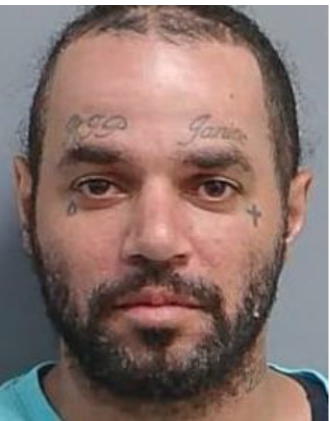
A Reno County jury on Thursday found 35-year-old Quinton Moore guilty of first degree murder.
Moore shot 42-year-old Clarence D. Allen multiple times in his head and neck while he slept in his bed at a residence at 1701 E. 30th in Hutchinson.
During an interview with a Hutchinson Police Detective, Moore at first denied shooting Allen, but later said he did but blacked out during the shooting.
The gun used in the shooting was found in a poly-cart at the home on East 6th. It was a Smith and Wesson .40 caliber semi-automatic handgun which police believe was the murder weapon. At the scene, police found six .40 caliber shell casings and 3 bullets.
Moore did not take the stand in his own defense. He is scheduled for sentencing March 15.
KANSAS CITY, Mo. (AP) — Police are investing a shooting in Kansas City’s historic Jazz District that left one man dead and another man seriously injured.
Police in Kansas City, Missouri, sat the shootings happened just before 2 a.m. Sunday in the city’s historic 18th and Vine district.
The Kansas City Star reports that when officers arrived several witnesses pointed them toward a dead man in a vehicle. A short time later, the second victim arrived at a hospital with gunshot wounds.
Police believe both men were shot in the Jazz District. The victims’ names were not immediately released.
MANHATTAN, Kan. (AP) — A software company owner in northeastern Kansas has decided to open an exhibit to showcase his car collection to the public.
CivicPlus owner Ward Morgan and his wife, Brenda, have spent the past 18 months purchasing some of the vehicles that will be featured in the Midwest Dream Car Collection museum in Manhattan. Morgan plans to open the exhibit this spring.
“We’ve got about 60 cars,” Morgan said. “They’re somewhere between automotive icons and dream cars.”
Some of the vehicles include a 2014 Lamborghini Aventador, a 1961 Morgan Plus 4 Drophead Coupe and a 2019 Chevrolet Corvette.
Morgan purchased a 54,000-square-foot space property to house the cars last year. The space will also have a self-service bar, a mechanic shop and event rooms. Visitors will be able to put money on a prepaid card to purchase beer and wine while relaxing in the recreation room, Morgan said.
Morgan hopes to tell the history of each car in his exhibit, he said.
“The proceeds are all going to the museum for preservation and display of the cars,” Morgan said. “To share automotive history and also the history of automotives with people, that’s our mission.”
KANSAS CITY– Two Kansas City brothers and a Sugar Creek, Missouri woman have been sentenced in federal court for their roles in a conspiracy to commit a series of armed robberies by luring their victims with online advertisements and ambushing them.
Dylan J. Houston, 22, his brother, Andrew J. Houston, 29, and Nicole Waguespack, also known as Nicole Covey, 36, were sentenced in separate appearances before U.S. District Judge Greg Kays on Thursday, Jan. 31, 2019.
Dylan Houston was sentenced to 12 years in federal prison without parole. Andrew Houston was sentenced to seven years and eight months in federal prison without parole. Waguespack was sentenced to four years and nine months in federal prison without parole. They are among 10 defendants who have been sentenced in this case. Two defendants have pleaded guilty and await sentencing.
Co-conspirators posted ads on several websites in order to entice customers to meet in person at area hotels, residences and apartments in Kansas City, Mo. When the customers arrived, co-conspirators were lying in wait, armed with firearms and weapons that appeared to be firearms. They ambushed and robbed the customers at gunpoint. They often committed more than one robbery in a night.
According to court documents, the proceeds of the robberies was divided up and usually used to pay for narcotics or to pay for a room where the co-conspirators could use narcotics. When confronting the victim, the co-conspirators used verbal threats, pointed real and fake guns at them, physically hit them, and intimidated them. Records obtained from social media services and hotels corroborate statements by participants that only a small percentage of the victims called the police to report their robbery.
Dylan Houston pleaded guilty on July 12, 2018, to his role in the armed robbery conspiracy as well as to three counts of armed robbery. According to court documents, Dylan Houston was one of the enforcers in this violent robbery scheme. Once a victim was led into a room, he surprised the victim and used firearms and threats of physical violence to intimidate him and take electronics and cash. Dylan Houston admitted that he participated in three armed robberies, including one robbery in which the victim, after being forced into his truck at gunpoint, later jumped out of the moving vehicle while driving at highway speeds, in fear for his life. In another robbery, Dylan Houston stole a firearm from a victim that was later used in subsequent robberies.
Andrew Houston pleaded guilty on July 11, 2018, to his role in the armed robbery conspiracy, as well as to three counts of armed robbery. Andrew Houston served as a look-out for multiple robberies, notifying co-defendants about the arrival of victims and watching for law enforcement response. He also shared in the proceeds from the robberies.
Waguespack pleaded guilty on May 3, 2017, to her role in the armed robbery conspiracy as well as to five counts of armed robbery. Waguespack created dozens of online ads designed to lure men to robberies. When victims arrived, she met the victims at the door. As part of the plan, she then excused herself to the restroom while the other co-conspirators surprised and robbed the victims with threats of violence and firearms.
Adult zebra mussels with a quarter for size reference.
KDWPT
EMPORIA – The Kansas Department of Wildlife, Parks and Tourism (KDWPT) reports good news about preventing the spread of aquatic nuisance species. According to Chris Steffen, KDWPT aquatic nuisance species coordinator, no zebra mussel larvae were detected in a 2018 sampling of 110 uninfested lakes in Kansas. Lakes are sampled annually and include city, county, state and federal lakes.
Aquatic nuisance species (ANS) are animals and plants not native to Kansas that can threaten lake and river ecology, harm native or desirable species and interfere with our economy. They often hitchhike in or on boats, flotation devices, and other gear used in the water. Adult zebra mussels can attach to boats or other equipment and their free-floating, microscopic larvae (called veligers) may be present in water from an infested lake or stream. Densities as high as 1,000 veligers per gallon have been recorded in some Kansas waters.
“These results are encouraging, and I hope this success means that lake users in Kansas are more aware of how to prevent the movement of zebra mussels by cleaning, draining, and drying their boats and equipment before recreating at another lake,” said Steffen. “I am particularly excited because remembering to clean, drain and dry prevent the spread of not only zebra mussels, but also other harmful aquatic species that threaten our waters now and in the future. We urge everyone who uses our lakes and rivers to keep up the good work.”
A zebra mussel-encrusted vehicle found submerged in Milford Reservoir.
Zebra mussels are known to occur in 30 lakes in Kansas. They are just one of the non-native aquatic species that threaten our waters and native wildlife. After using any body of water, people must remember to follow regulations and precautions that will prevent their spread:
Clean, drain and dry boats and equipment between uses
Use wild-caught bait only in the lake or pool where it was caught
Do not move live fish from waters infested with zebra mussels or other aquatic nuisance species
Drain livewells and bilges and remove drain plugs from all vessels prior to transport from any Kansas water on a public highway.
For more information about aquatic nuisance species in Kansas, report a possible ANS, or see a list of ANS-designated waters, visit ProtectKSWaters.org.
ABOUT ZEBRA MUSSELS
Zebra mussels are dime-sized mollusks with striped, sharp-edged, two-part shells. They can produce huge populations in a short time and do not require a host fish to reproduce. A large female zebra mussel can produce 1 million eggs, and then fertilized eggs develop into microscopic veligers that are invisible to the naked eye. Veligers drift in the water for at least two weeks before they settle out as young mussels which quickly grow to adult size and reproduce within a few months.
After settling, zebra mussels develop byssal threads that attach their shells to submerged hard surfaces such as rocks, piers, and flooded timber. They also attach to pipes, water intake structures, boat hulls, propellers, and submerged parts of outboard motors. As populations increase, they can clog intake pipes and prevent water treatment and electrical generating plants from drawing water.
In 2012, two Kansas communities, Council Grove and Osage City, experienced temporary water shortages from zebra mussel infestations before water intake structures could be cleaned up. Removing large numbers of zebra mussels to ensure adequate water flow can be labor-intensive and costly.
Zebra mussels are native to the Black and Caspian seas of western Asia and eastern Europe and were spread around the world in the ballast water of cargo ships. They were discovered in Lake St. Clair and the Detroit River in 1988 and quickly spread throughout the Great Lakes and other rivers including the Mississippi, Illinois, Ohio, Tennessee, Arkansas and Hudson.
They were first discovered in Kansas in 2003 at El Dorado Reservoir. Despite public education efforts to alert boaters about the dangers of zebra mussels and how to prevent spreading them, the species continues to show up in new lakes every year. Moving water in boats and bait buckets has been identified as a likely vector.
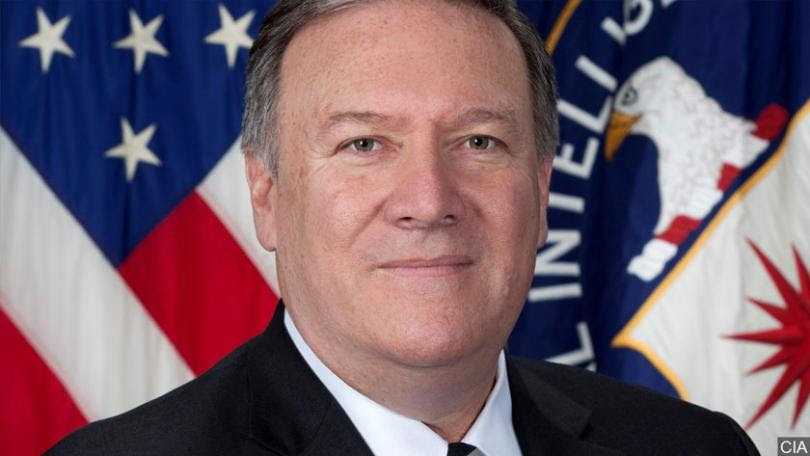
WASHINGTON (AP) — President Donald Trump says Secretary of State Mike Pompeo is “absolutely not leaving” the Cabinet even as top Republicans make a pitch for him to run for the Senate in Kansas.
Pompeo served four terms in the House and was Trump’s CIA director before moving to the State Department.
The decision by longtime Republican Sen. Pat Roberts to retire has prompted an effort by other GOP senators to recruit Pompeo for 2020. He’s said that push has included a call from Senate Majority Leader Mitch McConnell of Kentucky.
Trump tells CBS’ “Face the Nation” that McConnell may have spoken to Pompeo but “I asked him the question the other day. He says he’s absolutely not leaving. I don’t think he’d do that. And he doesn’t want to be lame duck.”
Nicole Nesmith’s voice shakes a little when she recalls the night her child, Phoenix, revealed a painful secret.
“Phoenix got really quiet and was like, ‘I have something to tell you and I’m really sorry I didn’t tell you sooner, but I’ve been cutting for about a month now.’”
Nicole Nesmith shows a picture of her child, Phoenix, from when the two went to see the musical “Rent” in Omaha, Nebraska. Earlier that school year, the Nesmiths had been denied psychiatric residential treatment for Phoenix. MADELINE FOX / KANSAS NEWS SERVICE
Nesmith was working on a social work degree, so she was familiar with self-harming — she just hadn’t expected to deal with it so close to home.
Phoenix’s confession started a cycle familiar to families who have kids with severe mental illness — therapy, crisis hospitalizations, medication, more therapy, new meds when the old ones stopped working well, more hospitalizations.
But in the fall of Phoenix’s freshman year of high school, even that exhausting pattern wasn’t enough.
“There was a two-week period when I really didn’t leave the house at all,” said Phoenix.
When kids are chronically in distress — suicidal, self-harming, harming others, running away repeatedly — there had been a place for them: psychiatric residential treatment facilities.
That’s where the community mental health center treating Phoenix sent the Nesmiths when the care it could offer no longer kept Phoenix stable.
Residential treatment centers take children for long periods of time — weeks, sometimes months — to do more than talk kids down from crisis. They work to get at the root causes of their distress and help patients develop coping mechanisms to better manage the stressful things that set off a crisis.
Cost-cutting measures
In 2011, the state decided Kansas was sending too many kids to residential facilities for too long. At $500 a day or more, it cost too much. The state pushed to divert kids from residential care and bring down the length of their stays.
That loss of business prompted many treatment facilities to close some or all of their beds, resulting in a sharp drop from nearly 800 spots for care to the current 282.
More changes swept through with Kansas’ privatization of Medicaid in 2013. Under KanCare, community mental health centers no longer decided whether kids needed residential treatment, as they had for Phoenix. Instead, that decision passed to the private companies managing Medicaid under KanCare.
In 2015, the Nesmiths sought a third residential stay for Phoenix. After years of struggling with depression, anxiety, and thoughts of suicide, the looming milestone of a 17th birthday, college and a future prompted the Nesmiths to seek another round of longer-term intensive care.
“I was trying to figure out a future I never thought I’d have,” Phoenix said. “And that was just another source of stress.”
But the Nesmiths say Phoenix’s insurance company denied residential treatment. Instead, it pointed Phoenix to group therapy. But the family had already tried that and was no longer eligible.
Two of the state’s Medicaid providers, Sunflower Health Plan and United HealthCare, declined to comment on how they authorize residential stays, deferring comment to the state.
Even as it got harder to access, the need for residential treatment didn’t go away.
In fact, with shorter lengths of stay, kids might get stable but didn’t have the time to develop good coping mechanisms and trauma management to stave off future crises. They’d often end up referred back to a treatment facility when suicidal, aggressive or self-harming tendencies returned. But now, there weren’t enough beds available.
In 2019, that means 150 kids in urgent need of treatment languish on a waitlist. That means foster kids who land at facilities with less intensive care, youth residential centers, show up with behavior more extreme than those residential centers are equipped to handle.
Headline-grabbing problems, but little change
The overflow of kids needing beds in residential treatment facilities has served as an underlying cause of what’s driven headlines over the past year.
Kids who are suicidal — an epidemic so troubling that the state has convened a task force to deal with it — land in a mental health system stretched beyond capacity. And substance abuse by parents or kids can push children into needing intensive inpatient care.
Recommendations this year from a child welfare tax force to fix the overload of the residential treatment system echoed similar results from previous years.
Whether their focus is mental health, children’s care or foster care, panels have found time and again that psychiatric residential treatment facilities don’t have enough space and aren’t given enough time to treat kids properly.
Kids are discharged, but problems persist
The people who run residential treatment facilities say that shortening kids’ length of stay pushes the facilities more into a stabilization role, which they say is supposed to fall to hospitals and crisis centers. Residential facilities often don’t see kids until they’ve had multiple hospital stays, when it becomes clear crisis behavior is becoming a chronic pattern.
“We are a part of changing that child’s trajectory in their life,” said Cheryl Rathbun, who oversees a residential treatment facility run by St. Francis Community Services. “It needs to be more about treatment, and not just about simple stabilization.”
But providers say they’re sometimes pushed to release kids who haven’t yet made progress on the deeper issues driving harmful behavior. That happens, providers say, because insurance companies haven’t seen enough improvement to justify paying for additional treatment.
Dana Schoffelman, who runs a residential facility in Topeka, said she sometimes hears from the insurance providers that kids are at their “baseline” and need to be moved out of her facility because residential care isn’t able to move them past what’s become the kids’ new normal.
“The youth is actually here because that’s their baseline,’’ she said. “You can’t use the definition of what got you into services as the reason to stop services.”
The Kansas Department for Aging and Disability Services doesn’t track how frequently kids cycle back through residential care, but providers and mental health advocates say it’s gotten more common since the lengths of stay got shorter.
A struggling mental health ecosystem
The direct hits to residential treatment facilities — shorter and fewer stays — came amid other changes to mental health services and treatment that weakened the continuum of mental health care.
Cuts to Medicaid reimbursements in 2016, though they were restored the next year, made it even harder for residential facilities to stay open.
And some have pointed to juvenile justice reforms passed in 2016 that divert kids out of the justice system as a driver of more high-needs kids into foster care, and particularly into residential treatment.
Some residential facilities were already taking kids in the juvenile justice system. But Schoffelman, who runs Florence Crittenton in Topeka, said the shortage of beds has made it harder for kids who are particularly aggressive or high-needs to get treatment.
With beds mostly full, the people caring for them are stretched to the limit. That makes it hard for those residential centers to take on kids who need even more supervision while making progress with less severe cases.
Providers also talk repeatedly about the continuum of care. They say residential treatment needs to be part of a system that includes therapeutic care in the community, options for short-term hospitalization, and other mental health services.
When Kansas took the decision-making about who needs residential care out of the hands of community mental health centers, officials at those facilities say, it made it harder for kids to stay on that continuum.
Now that community mental health centers aren’t calling the shots, the first time the centers hear a kid was in residential care might be when they’re expected to put therapy services in place immediately after the child’s discharge.
Then, it’s a scramble to get the right services in place to keep that child from needing to go right back in, said Jessie Kaye, president of Prairie View Inc. mental health center.
Providers’ wish list
The people who run community mental health centers and residential facilities want to see a return to the pre-2011 model: stays approved by the community centers, not insurance providers; and more days in care.
That means more money for residential providers. Cheryl Rathbun told lawmakers in 2017 that it can cost $500 to $700 per night for children to stay in St. Francis’ facility. But providers say that funds the kind of therapy, round-the-clock staffing, and time to work with the kids’ families that means long-term improvement for kids.
Tara Wallace, a social worker and therapist for foster kids who used to work in a residential treatment facility, said short stays put impossible pressure on therapists and social workers who are trying to get as much done as possible to help the kids in their care before their time is up.
And Kyle Kessler, who heads Kansas’ association of community mental health centers, said adding more beds isn’t the only solution. It needs to be balanced with more front-end services, as well, so kids who can be served closer to home, are.
“I don’t think it’s an ‘either-or,’ ” he said. “I think it’s an ‘and.’”
Some have been encouraged by Gov. Laura Kelly’s interest in residential treatment. Kelly was an outspoken critic of long waitlists and shorter stays while she was a state senator. As governor-elect, she sent members of her transition team to meet with the heads of residential facilities to talk solutions.
But Kaye said changes can also be disruptive.
“Established relationships now have been severed,” she said. “It’ll be another year lost because we’ll have to start over with so many things.”
TOPEKA – Applications are now being accepted for companies seeking investment through the Kansas Angel Investor Tax Credit (KAITC) program for 2019.
The program offers Kansas income tax credits to qualified individuals who provide seed-capital financing for emerging Kansas businesses engaged in development, implementation and commercialization of innovative technologies, products and services.
The KAITC Program is administered by the Kansas Department of Commerce and designed to bring together accredited angel investors with qualified Kansas companies seeking seed and early stage investment. The purpose of the Kansas Angel Investor Tax Credit act is to facilitate:
The availability of equity investment in businesses in the early stages of commercial development.
Assist in the creation and expansion of Kansas businesses, which are job and wealth creating enterprises.
Applications for certification will be accepted only for Kansas businesses in the seed and early stage rounds of financing.
Companies must meet the following criteria to be certified as a Qualified Kansas Business:
The business has a reasonable chance of success and potential to create measurable employment within Kansas.
In the most recent tax year of the business, annual gross revenue was less than $5,000,000.
Businesses that are not bioscience businesses must have been in operation for less than five years; bioscience businesses must have been in operation for less than 10 years.
The business has an innovative and proprietary technology, product, or service.
The existing owners of the business have made a substantial financial and time commitment to the business.
The securities to be issued and purchased are qualified securities.
The company agrees to adequate reporting of business information to the Kansas Department of Commerce.
The ability of investors in the business to receive tax credits for cash investments in qualified securities of the business is beneficial, because funding otherwise available for the business is not available on commercially reasonable terms.
Each applicant must sign a Qualified Company Agreement with the Kansas Department of Commerce.
Certification of companies must meet mandates established by Kansas statute to allow accredited Angel Investors to receive the Kansas Angel Investor Tax Credit. This year, the application fee has been reduced from $750 to $500.
Applications for companies seeking investment are accepted from February 1st, 2019 through August 31st, 2019.
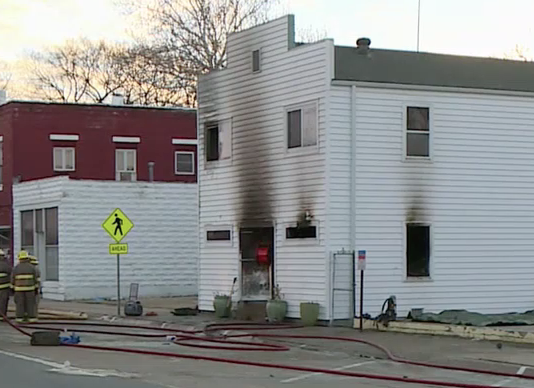
RILEY COUNTY — Authorities have confirmed the identity of those who died in Thursday’s fire in Riley County.
According to Riley County Police, the autopsy confirmed them as Rodger D. Harris Sr., 72; Rea E. Harris, 72; Roger D. Harris Jr., 50; and Rocky Newell, 55.
Scene of Thursday’s fatal fire in Ogden -photo courtesy WIBW TV
The autopsy revealed there was no foul play, and all had evidence of inhalation of toxic fire gasses as the probable cause of death.
Fire Chief Pat Collins reported that the origin of the fire remains on or around the end of a couch on the first floor. The Fire District report will show that the cause of the fire is unknown. Careless smoking is suspected but cannot be positively confirmed from the team that investigated the fire.
The Fire District officials thanked those paid and volunteer fire personnel who endured the elements on the morning of the fire as well as the dispatchers, police officers, EMS personnel and city workers who performed their tasks during the incident. The call came in at 3:43 a.m. Thursday for the fire at 208 Riley Avenue in Ogden.
SHAWNEE MISSION, Kan. (AP) — A Shawnee Mission School District principal has resigned after police say he hit a car and left the scene while driving under the influence.
Strathman -photo courtesy Rosehill Elementary
34-year-old Cory Strathman submitted his resignation after the crash last week. The Shawnee Mission school board approved the resignation at a meeting Thursday.
Police arrested Strathman after they say he hit another vehicle the afternoon of Jan. 25. Police say he had been drinking and taking medication at the time of the crash and was also driving with a suspended license and had no proof of insurance.
Strathman had been had been principal of Rosehill Elementary since 2014 and had worked in the school district since 2008.
MANHATTAN – The American Legion Boys State of Kansas Leadership Academy is now taking applications for its 2019 session. The event, which will be in its 82nd year, will be held Sunday, June 2, through Friday, June 7, at Kansas State University in Manhattan.
The ALBSKLA is for young men who will enter their senior year of high school in the fall of 2019. It provides a relevant, interactive, problem-solving experience in leadership and teamwork that develops self-identity, promotes mutual respect and instills civic responsibility. Boys State is a “learning by doing” political exercise that simulates elections, political parties and government at the state, county and local levels, providing opportunities to lead under pressure, showcasing character and working effectively within a team. It’s also an opportunity to gain pride and respect for government and the price paid by members of the military to preserve democracy.
At a minimum, applicants should be in the top half of their high school class and be involved in extracurricular activities in their school and community. Potential delegates can also be nominated to attend by their high school counselor or other influential people in their lives.
The cost to attend the Boys State of Kansas program is $325; however, in many instances, sponsors pay for the majority of the fees, with the delegate or his family paying a $50 applicant fee. Those wishing to apply to the program should visit https://kansasboysstate.com/ to fill out an application, which are due by Tuesday, April 30, along with the fees to guarantee a spot in the program.
Potential sponsors, such as American Legion posts, civic organizations, businesses, clubs and interested individuals, or those with questions, should contact Troy Fowler, ALBSKLA director of operations, at [email protected].
The American Legion Boys State of Kansas Leadership Academy is an interactive simulation that teaches high school seniors-to-be the value of democracy and civic duty. Participants form mock governments and campaign for positions at the city, county and state levels. After the elections, participants find out firsthand the difficult decisions made daily by those in government through a series of challenging simulations. Delegates, nominated to attend by their high school counselors and other influential people in their lives, are sponsored by American Legion posts and various civic organizations from across the state. All delegates demonstrate outstanding leadership qualities in student government, athletics and/or other activities.
The Boys State program was founded by Legionnaires Hayes Kennedy and Harold Card in Illinois in 1935, and was first held in Kansas two years later in Wichita. The Kansas program moved to the University of Kansas in Lawrence in 1963 and remained there until 1991. The following year, it moved to its current location at Kansas State University in Manhattan. For more information about the American Legion Boys State of Kansas Leadership Academy, visit https://kansasboysstate.com/ or https://ksbstate.org/.