Four people died in the blaze. Their bodies were transported to Topeka for an autopsy and to confirm their identities, according to Riley County Rural Fire District 1 Chief Pat Collins.
Investigators with the Kansas Fire Marshal’s office, ATF and local officials believe the fire started along the east wall near the end of a couch, according to Collins. “We may never know exactly what started the fire,” he said.
Several firefighters also suffered minor injuries while working in the extreme cold.
SEDGWICK COUNTY — Law enforcement authorities are investigating a suspect on numerous charges after a chase.
William -photo Sedgwick County
Just after 9 a.m. Thursday, police were at 1800 north Rock Road enforcing traffic laws as part of the Kansas Department of Transportation (KDOT) Operation Impact, according to officer Charley Davidson.
A 2002 Mercedes-Benz driven by 23-year-old Carlos William drove by officers at a high rate of speed.
An officer attempted to stop the vehicle and William pulled into a parking lot in the 1700 block of north Rock Road.
As the officer pulled into the lot, the Mercedes did a U-turn and fled southbound on Rock Road.
The officer was stuck in traffic approximately 500 yards behind the Mercedes when it struck a black Chevy Suburban and a sliver Volvo at Central and Rock Road.
William then fled on foot. Officers were able to locate and arrest him after a brief foot pursuit.
Those involved in the accident received on minor injuries, according to Davidson.
Investigators determined William was involved in a pursuit with Bel Aire Police Department prior to this incident. William was booked on requested charges of resist arrest, flee and elude police, hit and run, possession of marijuana with the intent to sell and other traffic charges.
PRATT – The Kansas Department of Wildlife, Parks and Tourism (KDWPT) reminds hunters not to discard their 2018-19 Kansas Hunting Atlases. Unlike past years, there will be no spring atlas printed in 2019. All fall and spring Walk-in Hunting Access (WIHA) tracts are included in the atlas printed and distributed last August.
Additional copies are available from KDWPT offices and will be distributed as needed to license outlets this spring in time for the spring turkey season. But hunters should also go to www.ksoutdoors.com, under “Where To Hunt,” to find maps that include tracts that were enrolled after the printed atlas was completed. Due to a late-summer push for new enrollments, more than 20,000 acres were added and are included on these electronic maps.
The atlas’ legend shows color codes that designate tracts open only in the fall, tracts open in both spring and fall and tracts open only during the spring turkey season. Again this year, more than 1 million acres are enrolled.
The WIHA program was initiated in 1996 when 36,000 acres were enrolled. The program was popular with hunters and landowners and quickly grew, reaching the million-acre mark by 2004. That level of access has been sustained ever since. The newest part of the program is called iWIHA and is designed to increase enrollment in urban counties and provide high quality experiences by limiting access to a certain number of hunters on an area on a given day. Hunters can check an area’s status the night before and check in, knowing that access will be limited. For details on the iWIHA program, go to https://ksoutdoors.com/Hunting/Hunting-Programs/iWIHA-Limited-Access-Hunts
Hunters looking for quality turkey hunting opportunities should also apply through the Special Hunts program, which provides limited accessed through a lottery drawing to designated tracts of land. The 2019 Spring Turkey Special Hunts should available Feb. 2 at www.ksoutdoors.comunder “Special Hunts.”
JUNCTION CITY, Kan. (AP) — About 100 people responded to public pleas to attend the funeral of a 63-year-old Junction City veteran.
Photo by Scott Oklesky
Army soldiers and members of the public braved frigid weather Wednesday to attend services for Servando “Kiko” Silva-Jimenez, who served as a medic in the U.S. Army. He died Jan. 15 at Geary Community Hospital in Junction City.
Officials with the Johnson Funeral Home tried for days to find Silva-Jimenez’s relatives. Social media posts began circulating asking that people attend Silva-Jimenez’s services at the Kansas Veterans Cemetery.
However, at the last minute, cemetery manager Cecelia Shellnute said officials found Silva-Jimenez’s brother in Puerto Rico and he was able to get to Manhattan for the funeral.
WICHITA – A Kansas man was sentenced to over 70-years in prison Wednesday for the rape of a 68-year-old woman in her home, according to a media release from the Sedgwick County Attorney.
Spencer -photo Sedgwick County
On December 17th, Garon Spencer, 33, Haysville, was found guilty of rape, aggravated criminal sodomy, and aggravated sexual battery.
Spencer attacked the woman in her home on November 10th, 2017. Detectives from the Sedgwick County Sheriff’s Office investigated the case.
During the sentencing Wednesday afternoon, Judge Brown noted Spencer’s criminal history which included a juvenile conviction of aggravated criminal sodomy, and adult charges of aggravated assault, criminal threat and misdemeanor sexual battery.
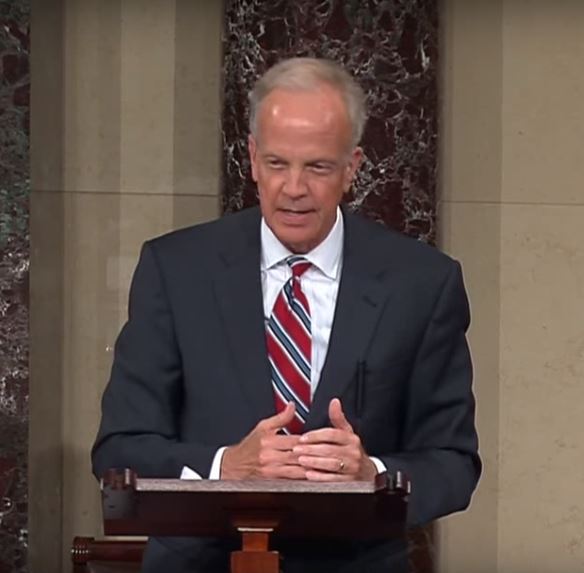
WASHINGTON – U.S. Senators Jerry Moran (R-Kan.), Mark Warner (D-Va.), Roy Blunt (R-Mo.) and Amy Klobuchar (D-Minn.) today reintroduced the Startup Act – bipartisan, cutting-edge legislation to encourage job creation, grow entrepreneurial activity, increase innovation and advance economic development.
The Startup Act would accelerate the commercialization of university research and creative inquiry that can lead to new ventures, review and improve the regulatory processes at the federal, state and local levels, and modernize a critical Economic Development Administration (EDA) program to spur economic growth and promote innovation. The widely-supported legislation also creates both entrepreneur and STEM visas for highly-educated individuals so they can remain in the United States legally to promote new ideas, fuel economic opportunity and create good-paying American jobs.
“America continues to fall behind in new business development and struggles to retain top talent that could grow our U.S. economy,” said Sen. Moran. “With a renewed sense of urgency, Congress must prioritize policies that will help recruit and retain highly-skilled students and innovators, bolster a pro-growth environment and enable entrepreneurs to transform ideas and research into companies and products – creating meaningful, good-paying jobs for Americans in the process. Thank you to Senators Mark Warner, Roy Blunt and Amy Klobuchar for continuing to prioritize this important legislation to help make certain America remains the best place in the world to bring an idea to market and grow a business.”
“I’ve spent most of my career in the private sector so I know the importance of advancing innovation,” said Sen. Warner. “By encouraging entrepreneurship and helping attract and retain talented individuals, this bipartisan bill will help Virginia promote capital investment while boosting our economy and promoting U.S. competitiveness.”
“To compete and succeed in a 21st Century global economy, we have to make our country the best place in the world for entrepreneurs to start and grow their businesses,” said Sen. Blunt. “This bill will help promote innovation and small business growth, which in turn will create more jobs and strengthen the economy. The legislation will also increase U.S. competitiveness by making sure we have the workforce we need for high-demand STEM fields.”
“Startups and small businesses are engines of job creation and economic growth,” said Sen. Klobuchar. “Our bipartisan bill would make it easier for students and innovators to get their ideas off the ground, encourage new ideas, and strengthen our workforce to keep the U.S. competitive in the 21st century economy.”
Many of the principles included in the Startup Act are based on the research and analysis by the Ewing Marion Kauffman Foundation, based in Kansas City, Mo. Kauffman research shows that immigrants to the United States are nearly twice as likely as native-born Americans to start businesses, and first-generation immigrants now make up nearly 30 percent of all new U.S. entrepreneurs.
Data shows that international students studying in the U.S. on temporary visas accounted for nearly two-fifths of all Ph.D.s in STEM fields – that number has doubled over the past three decades. Further, international doctoral students were significantly more likely than domestic students to major and earn degrees in STEM disciplines in the U.S.
The Startup Act is supported by Sprint, Garmin, the Enterprise Center of Johnson County, the Kansas City Startup Foundation, Engine, the UMKC Innovation Center, the KC Tech Council, the Internet Association, the Consumer Technology Association, CTIA, SSTI, CompTIA, the Angel Capital Association, the Computer and Communications Industry Association, National Venture Capital Association, the Center for American Enterprise and the Information Technology Industry Council.
TOPEKA, Kan. (AP) — Republican lawmakers in Kansas have advanced tax relief and pension proposals that would thwart Democratic Gov. Laura Kelly’s plans for boosting spending on public schools, quickly setting up a test of whether she can build bipartisan coalitions in the GOP-dominated Legislature.
A Senate committee Thursday endorsed a bill designed to prevent Kansas residents and businesses from paying more income taxes to the state because of changes in federal tax laws at the end of 2017. Republican leaders have made eliminating the revenue “windfall”a top priority.
The tax committee’s voice vote came a day after the Senate budget committee backed a bill to make a $115 million payment before July to the state’s pension system for teachers and government workers. It is money the state shorted the pension system in 2016 — with added interest, but the measure runs counter to Kelly’s budget plans.
The Senate expects to debate both bills next week. Meanwhile, Kelly has called on legislators to pass a bill in February to phase in a $364 million increase in aid to public schools funding over four years in hopes of ending an education funding lawsuit filed in 2010.
Projections this week from legislative researchers suggest that the state can’t enact the Republicans’ tax relief plan while also boosting education funding as much as Kelly wants without facing a small budget shortfall by 2022. Adding the pension payment to the mix would widen the gap.
“That will make it much more difficult to look at what we should be paying for,” said state Sen. Pat Pettey, a Kansas City Democrat.
Kelly has little choice but to work with moderate Republicans to get her initiatives passed. But moderates will have to break with their conservative GOP leaders on tax relief, an issue that has broad appeal with the party’s right-leaning base.
The federal tax changes championed by President Donald Trumpcut rates and are designed to stimulate the economy. But they included provisions that inadvertently raise extra revenue for Kansas because of how its income tax code is tied to the federal code.
Kansas doesn’t allow filers to claim itemized deductions on their state forms if they don’t itemize on their federal returns. Changes in federal law discourage itemized deductions.
Republican legislators also worry that the state will start taxing foreign income earned by individuals and corporations that it hasn’t touched previously. The tax committee heard testimony that the coming change will hurt the state’s business climate.
“We’re going to lose a bunch of jobs,” said Sen. Julia Lynn, a conservative Olathe Republican. “That’s my issue, pure and simple.”
The Kansas Department of Revenue estimatesthat the tax relief bill would cost the state — and save taxpayers — $192 million during the budget year beginning in July. Kelly spokeswoman Ashley All called the bill “irresponsible” and said the state should focus on stabilizing the budget while “reinvesting in schools and roads.”
“The state’s financial outlook continues to be very uncertain and we have very little room for error,” All said.
Department of Revenue officials acknowledge that it’s been difficult to pin down the size of any windfall and the GOP tax bill’s effects.
Sen. Vic Miller, a Topeka Democrat and former department official, said the state is “still guessing” and even Wagle called the projections “a shot in the dark.”
“We might as well shake our Magic 8-Ball,” said Sen. Tom Holland, a Baldwin City Democrat. “What if it’s a whole lot more?”
Democrats also argue that increased spending on public schools is a bigger priority because of the education funding lawsuit. The Kansas Supreme Court ruledthat a law enacted last year to boost funding wasn’t sufficient because it didn’t account for inflation.
Kelly’s plan represents education officials’ best guess for complying. A Senate committee will begin hearings on her plan next week.
But GOP leaders are resisting. They argue that the spending couldn’t be sustained without a tax hike — and they view failing to pass the GOP’s tax relief bill as raising taxes.
“We have a governor who has a big-spending agenda,” said Senate President Susan Wagle, a conservative Wichita Republican. “She’s in a corner.”
OLATHE, Kan. (AP) — A man arrested at a Kansas storage unit with two of his children and his dismembered wife’s remains has been convicted of three felony counts of sexual exploitation of a child.
Rey -photo Johnson Co.
Jurors deliberated until around 12:30 a.m. Thursday before finding 36-year-old Justin Rey guilty of the felonies, as well as misdemeanor counts of child endangerment and contributing to a child’s misconduct.
Rey said he cut up his wife, Jessica Monteiro Rey, after she died in October 2017 after giving birth at a Kansas City, Missouri, hotel. He was arrested with the couple’s newborn and 2-year-old at a storage unit in nearby Lenexa, Kansas. Authorities say they found child porn images after Rey asked them to look at his phone for evidence he thought would help him at trial.
Sentencing is set for March 27. Rey also is charged with abandonment of corpse in Missouri and with killing a California man. He isn’t charged with killing his wife.
SEDGWICK COUNTY — Law enforcement authorities are investigating a burglary and have a suspect in custody.
Just after 1:30 p.m. January 14, police responded to a burglary-in-progress call at a residence in the 1200 block of south Water in Wichita, according to a media release.
Goeser -photo Sedgwick Co.
A 56-year-old man witnessed a suspect later identified as 30-year-old Nathan Goeser enter a neighbors home and exit with property.
Officers arrived and began circulating the area. With the help of the witness, police located and arrested Goeser and booked into jail. The stolen items were recovered and returned to the owner.
The case has been presented to the Sedgwick County District Attorney’s Office.
Goeser has a previous drug conviction, according to the Kansas Department of Corrections.
Just after 7 p.m. Wednesday, police were dispatched to 1100 SE Gilmore Avenue in Topeka after report of an aggravated robbery to an individual car-jacking, according to Lt. Manuel Munoz.
Two black males approached the victim and pointed handgun at her forcing her out of and took her vehicle.
At approximately 7:21 pm, another individual called police to report that they were also the victim of an aggravated robbery at 6th and SE Golden. The victim advised that as she was leaving the Family Dollar store on SE 6th and was approached by a black male armed with a handgun. The subject demanded her vehicle keys. Victim dropped the keys on the ground and ran back into the store. The suspect was last seen driving off in her vehicle northbound on SE Golden.
Officers responding to the second aggravated robbery saw the second victim’s vehicle and tried to turn around to stop it. The driver took off at a high rate of speed and was able to elude the officers before they could turn around.
The officers eventually locate the vehicle abandoned in an alley in in the 400 block of NE Freeman.
Officers were able to set up a perimeter and apprehended two individuals fitting the suspect’s description. After questioning, police arrested 19-year-old Chauncey E. Lyles and 22-year-old Mathdaniel Squirrel both of Topeka.
Squirrel is being held on requested charges of Aggravated Robbery and Felony Fleeing and Eluding. Lyles is being held on requested charges of Aggravated Robbery, Felony Fleeing and Eluding, Possession Of stolen property and Felon in Possession of a Firearm.
This is the 11th case in 2019 with a charge involving a felon in possession of a firearm reported by the Topeka Police Department.
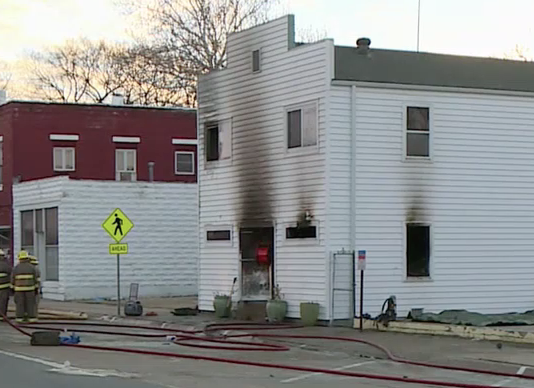
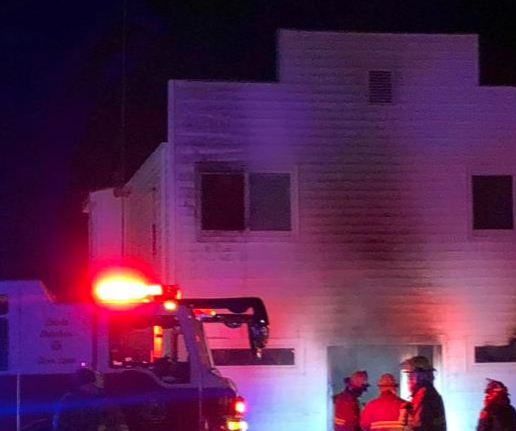
RILEY COUNTY—Authorities are investigating a fatal Thursday morning house fire. The fire in Ogden claimed four lives., according to Riley County Fire Chief Pat Collins.
Riley County Fire Chief Pat Collins confirmed that authorities investigating the fatal fire in Ogden early Thursday morning are working to positively identify the victims, notification of next of kin and the cause of the fire. Four people were pronounced dead at the scene.
Collins said multiple agencies are helping with the investigation. Work is being done to dig through the debris at 208 Riley Avenue to determine what caused the fire.
Collins noted several firefighters slipped on the ice. “It got really slick here, fell down, they’re all doing alright now but I think they’re going to be really sore come nightfall or tomorrow. Two of the firefighters were treated by EMS on scene but no one required transport to a hospital.
Cold weather early Thursday morning made it difficult to fight the fire. “The cold, it was really bad trying to get around, move around, and do things. I don’t know that it was a big factor on the initial attack but as the morning went on it made it hard to get around, get upstairs, move around the trucks.” The City of Ogden brought in salt and sand and helped spread it out, which helped improve the conditions.
The building that burned had a residence upstairs and business history in the past. Collins noted in the 1960s it was a bar and later became a location where first radios and then videos were sold. The downstairs business area was not in use at the time of the fire. “There was only one way to the upstairs, up a pretty steep set of stairs and we haven’t found any smoke detectors in the building.”
The first truck on the scene was from the Manhattan Fire Department. “They made entry to the front door and actually found one victim by the front door. They were in rescue mode so they were trying to get to other parts of the building upstairs where we knew the bedrooms were and couldn’t get up the stairs. So actually made entry through a front window and we found the other three victims in one of the bedrooms.” Riley County firefighters also responded and helped battle the blaze.
———
RILEY COUNTY — Authorities are investigating a fatal Thursday morning house fire. The fire in Ogden claimed four lives., according to Riley County Fire Chief Pat Collins.
At 3:43 a.m. the Ogden, Riley and Manhattan Fire Departments were dispatched to 208 Riley Avenue in Ogden for a report of a structure on fire with multiple people entrapped. Upon arrival, crews found a two-story structure with heavy smoke showing. Crews entered the building and performed search and rescue operation along with extinguishing the fire.
Crews quickly removed one person from the building and upon re-entry three more people were located. All of four of them were pronounced dead at the scene.
The identifies of the victims have not yet been released. The owner of the structure has been identified by authorities as Roger Harris. The cause of the fire is being investigated by the Riley County Fire Department, Riley County Police Department, Kansas State Fire Marshal’s Office and the Manhattan Fire Department.
—
OGDEN, Kan. (AP) — Authorities say four people are dead after a fire in a Kansas neighborhood.
The structure fire was first reported shortly before 5 a.m. Thursday in Ogden, about 10 miles southwest of Manhattan. Riley County Fire Chief Pat Collins says the state fire marshal is on scene.
The cause of the fire has not yet been determined. Traffic is being diverted around the area.
No other details were immediately released, including the names of the victims. State and county fire officials didn’t immediately return phone messages from The Associated Press.
———-
RILEY COUNTY — Authorities closed the 200 Block of Riley Avenue early Thursday, according to the Riley County Police.
First responders are on the scene of a structure fire in Ogden.
We will report additional details as they become available.
SEDGWICK COUNTY – A Kansas man has been sentenced for sexually assaulting three children.
Kramer -photo KBI Offender Registry
On Tuesday, a Sedgwick County District Judge sentenced Anthony Kramer, 35, Wichita, to 618 months to life in prison, according to a media release from the Sedgwick County Attorney.
In October, Kramer pled guilty to three counts of aggravated indecent liberties with a child and four counts of sexual exploitation of a child.
Two boys and a girl ranging in age from one to six years of age, were assaulted over two days in August of 2017. Detectives from the Exploited and Missing Child Unit also discovered sexually explicit images of other children on Kramer’s cellphone dating back to April of 2016.
Before sentencing on Tuesday, the judge noted that Kramer was a registered sex offender at the time of the assaults.
Everyone loved Ralphie. He seemed the perfect dog for my son’s family — just the right size and age. He was good-natured, house-trained and playful. He went home with the family the day they first saw him at the rescue center.
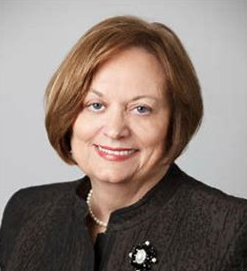
Dr. Sharon Hartin Iorio is Professor & Dean Emeritus at Wichita State University College of Education.
Out for a walk a week later, Ralphie pulled off his leash and bolted. After two hours of searching and chasing, it became clear why Ralphie had been turned back to the shelter not once, but twice.
Today, Ralphie continues to be a valued pet, but his interest in escaping is now curtailed by a strong chest-halter lead.
Learning about Ralphie made me think of my developing perspective on the charter school movement. Initially charter schools appear to be exactly what is needed to correct problems facing Kansas’ schools, and some school reformers advocate for the 2019 legislature to approve broadening the charter school statute.
Yet, examination of the effects of loosening charter regulations reveals genuine flaws that need restraint.
Charter schools are public schools but they select students who attend and have leeway to operate outside traditional public school policies according to each state’s laws.
Currently, Kansas charters must be approved by and receive oversight from the school district in which they are located, follow the same accreditation policies as the school district and must reasonably reflect the racial and ethnic make-up of the school district.
Kansas has one of the strongest charter school laws in the nation but in states with looser charter policies and less oversight than Kansas, major problems have developed.
As public schools, all charters must admit students regardless of race, ethnicity, gender or special needs; however, in some states there appears to be little enforcement of the mandate.
Texas law permits charter schools to cherry-pick students through admission requirements that include asking about students’ disciplinary histories. In California charters may require financial donations from families.
Dismissed charter students go back to their assigned school districts and this sets up opportunity for a disproportionate number of high-need students in public schools.
The siphoning of public school funding associated with charters is also troubling. In each state, including Kansas, school districts must pay the per-pupil state allocation, including additional funds for special education, to a charter located within the district (i.e., state per-pupil funds move with the student).
In a recent analysis Rutgers University professor Bruce Baker found that without careful planning, charters deplete the resources of public schools. Baker writes that when public school revenues decline, districts reduce overhead expenditures.
This situation transferred to Kansas could be especially problematic to small town and rural districts due to tight budgets and economies of scale. For example, a charter and a public school in a small district likely would have difficulty duplicating fixed expenses like the major cost of transportation. This could leave both schools with fewer dollars for music, athletics and other pursuits which most Kansans agree are needed for students.
In some states charters expand through multi-state conglomerates that often operate on for-profit models. Most charter corporations are found in large, urban areas not on the Kansas prairie, at least so far. Moreover, many Kansans fear the outside control that national charters exert.
Charters, despite possible drawbacks, offer opportunity for innovation and student advancement, if they arise from local involvement and follow the social, moral and funding restrictions set forth in current Kansas legislation. Kansas was wise in setting rigorous limits for charters. Let’s keep it that way.
Dr. Sharon Hartin Iorio is Professor & Dean Emeritus at Wichita State University College of Education.