WICHITA, Kan. (AP) — Two officers who fatally shot a Wichita man after he shot and killed a police dog will not face criminal charges.
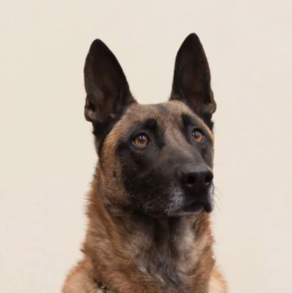
K9 Rooster -photo courtesy Wichita Police
Sedgwick County District Attorney Marc Bennett said Friday the officers shot 25-year-old Kevin Perry in March 2017 because they thought Perry was going to shoot them.
The officers and K-9 Rooster went to Perry’s home in south Wichita after a report that Perry was holding his girlfriend hostage.
Rooster’s handler sent the dog to stop Perry from going back into his home. Bennett says when Rooster grabbed Perry’s leg, Perry reached for a handgun and officers fired because they thought he was going to fire at them.
Instead, Perry shot Rooster, killing him almost instantly.
Bennett says Perry had mental health issues and drugs in his system when he was shot.
PRATT – At its Jan. 17 meeting in Lawrence, the Kansas Wildlife, Parks and Tourism Commission voted on just one item during the Public Hearing session. Commissioners passed a regulation setting the season for hunting on Controlled Shooting Areas to Sept. 1-April 30, extending the season one month, which was approved during last year’s legislative session.
The Commission heard a variety of briefings on proposed regulations during the Workshop Session, including:
Allowing e-bicycles (pedal assist) on trails and in parks
A change to the Public Lands regulations allowing portable blinds to be left out overnight
Allowing the use of calls for squirrel hunting
Changes to the furharvesting regulations, including increasing the season limit on otters to five
The adoption of U.S. Coast Guard navigation rules
A report on the use of unmanned aerial vehicles (drones)
A recommendation to eliminate the $10 duplicate license fee
Antelope season dates: Archery– September 21-29, 2019; Muzzleloader– Sept. 30-Oct. 7, 2019; and Firearm – Oct. 4-7, 2019
Elk season dates: on Fort Riley – Firearm Any-elk, Oct. 1- Dec. 31, 2019; Antlerless-only, Oct. 1-31, 2019, Nov. 1-30, 2019, and Dec. 1-31, 2019; outside of Fort Riley – Muzzleloader, Sep. 1-30, 2019; Archery, Sept. 16-Dec. 31, 2019; and Firearm – August 1-31, 2019, Dec. 4-15, 2019, and Jan. 1-March 15, 2020
Moving the application deadline for resident firearm either-species deer permits and Fort Riley elk permits to the second Friday in June, which coincides with the antelope firearm permit application deadline
Deer season dates: Youth and Hunters with Disabilities – Sept. 7-15, 2019; Muzzleloader – Sept. 16-29, 2019; Archery – Sept. 16-Dec. 31, 2019; Pre-rut Whitetail Antlerless-only – Oct. 12-14, 2019; and Firearm – Dec. 4-15, 2019.
Each of these items will be voted on during the Public Hearing portion of the March 28, 2019 Commission meeting in Topeka, which will be conducted at the Capitol Plaza Hotel. For more information on the Commission, as well as future and past meetings, visit www.ksoutdoors.com.
Let’s say you’re arrested. You’re booked into your local jail and the district attorney decides to press charges.
An approach to setting bail in Johnson County could spread across the state. NOMIN UJIYEDIIN / KANSAS NEWS SERVICE
The next day, you make your first court appearance in front of a judge, who then has to make a decision. Let you go home before trial — or keep you in jail? And under what conditions?
A pretrial stint in jail could last for weeks and keep you from your children, your car payments and your job. You could lose access to resources you need to win your case. You could spend sleepless nights in a crowded, dangerous, poorly maintained detention center — all without being convicted of a crime.
Unless, of course, the judge lets you bail out: pay a certain amount of cash, get released from jail, and get the money back if you show up for court.
But the amount might be too high for you to afford. So you might pay a bond company a nonrefundable percentage of your total bail. In return, that company bails you out — and hunts you down for the full amount if you skip your court date. Can’t rustle up the money for a bond company? Sit things out in jail.
Cash bail is supposed to ensure that you come back for trial. But the traditional bail system draws fire for discriminating against the poor and disproportionately affecting the livelihoods of racial minorities, who are already more likely to be arrested and charged with crimes.
Now Kansas courts want to rethink the concept. The Kansas Supreme Court has convened a task force of judges, attorneys and corrections officials to study pretrial reforms and submit recommendations in mid-2020. The state could eventually join California, New Jersey and others by overhauling its conditions for awarding bail in state courts.
“We need to find out what works best in our state,” said Judge Karen Arnold-Burger, chair of the Pretrial Justice Task Force and chief judge of the Kansas Court of Appeals. “Before we do something that’s going to completely disrupt someone’s life, and before they’ve been convicted of any crime, we want to make sure we know how we’re making the most educated decision.”
An ancient system
Bail originated in England centuries ago.
Both the U.S. and the Kansas Constitutions guarantee the right to bail in non-capital offenses — crimes not punishable by the death penalty.
Proponents of cash bail argue that it’s essential for keeping people out of jail and ensuring they still show up to their trial because bondsmen are inherently motivated to get their money back.
But tides have shifted in recent decades. Advocates who oppose bail say it discriminates against poor people by basing release decisions on a person’s ability to pay. Some say any form of pretrial detention violates the U.S. Constitution by imprisoning a person before they’re convicted.
The justice system and law enforcement also recognize that jail time can wreak havoc on the lives of people whose unproven charges are often low-level offenses that cause little or no harm to others. The effects are harder on the poor.
“There are lots of collateral consequences to periods of detention, even short periods of detention, from loss of jobs to loss of schooling, to loss of benefits, public assistance, veteran’s benefits,” said Arnold-Burger. “The list is long.”
A new way of assigning bail
One possible alternative is a statistics-based system already used by some of the most populous counties in Kansas. Data-based pretrial risk assessment takes information gathered from years of arrests and trials. It pinpoints which characteristics are related to two outcomes the corrections system wants to avoid: a defendant skipping their court date or committing another crime once they’re released on bail.
Depending on which factors they meet, defendants are assigned a risk level with a corresponding recommendation for a bail amount. In Johnson County, which has used a form of risk assessment since 2009 for minor crimes, that amount ranges from $0 to more than $50,000.
The county has had a custom risk assessment based on its own arrest data since 2014 and has revised it multiple times. County corrections director Robert Sullivan said the system is currently being used to assess people who have been charged with crimes that are likely to carry a sentence of probation, rather than prison. The county plans to expand the assessment to all detainees in February.
“What we’re trying to do is move away from basing release from jail on (a defendant’s) ability to make bond,” said Sullivan, “and base it more on a detainee’s risk of failing to appear for court.”
The county hired University of Missouri-Kansas City professor Alex Holsinger to develop the system. Holsinger analyzed data from 2011 and 2012 to find which characteristics were most related to a failure to appear in court or committing another crime.
Holsinger found that people who live outside of the state are more likely to skip court than people who live in Kansas. Prior arrests, substance abuse and being unemployed are other risk factors.
The nature of the charge also has an effect.
“If your charge is DUI related, that’s considered a risk factor. If it’s drug related, that’s considered to be even more of a risk factor,” Holsinger said. “Somebody who doesn’t have any (previous) jail time is considered less risky than somebody who does.”
The factors are tallied into a numerical score. That’s handed to judges, who decide whether to set cash bail or other conditions of release based on a defendant’s risk level and other factors.
The result is a system that recommends the highest cash bonds — of $50,000 or more — for people who are deemed to be “extreme” risk. That category includes those who are charged with felony crimes that are likely to carry a prison sentence if the defendant is found guilty.
Much lower amounts — between $0 and $2,500 — are recommended for people deemed “low,” “moderate” or “significant” risk. Those defendants are generally charged with misdemeanors, or felonies that carry a presumptive sentence of probation, rather than prison.
For example, a person who is charged with a misdemeanor DUI, who lives outside of Kansas but doesn’t have any other risk factors, would receive a score of 3. That means the person is considered “low risk,” and could be released, not on cash bail, but on a personal recognizance bond — a signature promising to come back.
But another person charged with the same crime might receive a higher score if they are unemployed, have been in jail before, have a history of substance abuse, live outside of Kansas, and were first charged with a crime below the age of 21 — all risk factors. That person would receive a risk score of 8 and would be considered “serious risk,” which carries a recommended bond amount of up to $2,500.
Holsinger said the scoring system helps judges make more objective decisions while still allowing them discretion.
“The risk assessment does not make the decision for anybody,” he said. “You still have professionals and human beings that are ultimately making and implementing the decisions.”
One of those professionals is Daniel Vokins, who has been a judge in Johnson County for more than 13 years. The score and the information provided by the risk assessment, he said, are a far cry from years past when defendants had to rely on defense attorneys to pass on information — that is, if they could even afford to hire one before their first court appearance.
“We didn’t have any information that zeroed in on what was going on in the defendant’s lives as far as work and home life,” Vokins said. “This tool gives us a lot more information, not only when they are in court for the first time, but even when I review cases to decide whether to issue arrest warrants or not.”
The results of the risk assessment help Vokins choose whether to assign a cash amount for bail or to let a defendant go on a personal recognizance bond — a signed promise to come back for trial. The facts provided also inform whether he’ll impose other pretrial conditions on a defendant, such as drug counseling, alcohol monitoring or house arrest.
Vokins said pretrial detention and high bail amounts are more appropriate for people who are charged with crimes like murder, sexual assault or repeated DUIs. People charged with low-level crimes pose a much smaller public safety risk if released.
“Let people out that need to be out,” he said. “Help them with any services that might be available to turn their lives around.”
‘Garbage in …’
But some critics of data-based pretrial risk assessments say the formulas don’t do enough to mitigate the negative effects of pretrial detention.
“We shouldn’t be judging people and making decisions about their freedom based on what other people have done in the past,” said John Raphling, a senior criminal justice researcher at Human Rights Watch.
Those critics say risk assessments can perpetuate racist and class-based biases built into the data. Because people of color and poor people are already more likely to be stopped by the police and arrested, Raphling argued, the data will reflect that they are more likely to re-offend or skip court if they’re let out on bail.
“The arrest history that’s used to estimate whether you’re going to commit a future crime or not is already biased out the gate,” Raphling said. “The theory is: ‘garbage in, garbage out.’”
He argues in favor of more individualized attention for each person who is arrested.
“There should be real due process,” Raphilng said, “not some hokey machine that the estimates the likelihood of them coming back to court.”
Holsinger, on the other hand, argues that degree of individual attention is impossible in a crowded court system.
“It’s not a therapy session,” he said. “Justice systems are typically very busy systems.”
He said he controlled for demographics in his statistical analysis, isolating variables affecting defendants’ likelihood of skipping court or committing another crime, regardless of characteristics such as race or sex.
Data provided by Johnson County show that between March 2016 and May 2017, 15 percent of white defendants were assigned a “low” risk level, 28 percent were assigned a “moderate” risk level and 57 percent were assigned a “high” risk level. Those proportions were almost exactly the same for black defendants, the only other racial group for which data was provided.
Next steps
Racial bias, public safety and reducing jail and prison populations will be on the minds of the members of Kansas’ Pretrial Justice Task Force as they develop their recommendations over the next year and a half. Data-based pretrial risk assessment is likely to be on the list of recommended reforms.
“There’s a wide range of approaches,” said Arnold-Burger, chair of the task force. “And we need to find out what works best in our state.”
Meanwhile, Holsinger has plans for another revision of Johnson County’s pretrial assessment.
After a few years, the data showed that a history of mental and behavioral health issues wasn’t as good a predictor of negative outcomes as Holsinger thought it would be. He plans to remove the mental health flag from the list of risk factors associated with skipping court and committing another crime.
“That’s a part of the ongoing evolutionary nature,” he said, “of this entire endeavor.”
MANHATTAN — Together, the Kansas Department of Agriculture and the Kansas Department of Commerce were recently awarded a $200,000 State Trade Expansion Program (STEP) Grant award for use in 2019. Since the grant’s inception in 2012, more than 100 Kansas small businesses have participated and achieved $23 million in actual export sales. To further broaden Kansas’ exporter base and to increase the export value and volume, the two departments have joined forces during the 2019 grant year to focus on three main areas: export training, foreign trade shows and trade missions, and market entry support.
The following KDA STEP Grant trade missions are planned for 2019. All dates are tentative.
• Thailand: livestock genetics/equipment and animal health sector, March 28-31, 2019
• Agritech Expo, Zambia: livestock genetics/equipment and animal health sector, April 11-13, 2019
• Foro Mascotas Pet Food International, Mexico: pet food and pet food manufacturing equipment, May 28-30, 2019
• AGRO 2019, Ukraine: agriculture equipment, June 4-7, 2019
Additionally, KDA has planned the following U.S. Livestock Genetics Export trade missions in 2019. The goal of these missions is to provide an opportunity for Kansas’ purebred cattle producers and allied industry to develop relationships with livestock producers to increase market opportunities for U.S. and Kansas beef and dairy genetics.
• La Exposición Rural and ranch visits, Argentina: late July 2019
• Expo Prado and ranch visits, Montevideo, Uruguay: mid-September 2019
Applications for trade missions are due approximately two months prior to tentative travel date. For additional information about the 2019 international travel opportunities, and to apply for any of the missions, please visit www.agriculture.ks.gov/international or contact Suzanne Ryan-Numrich, KDA international trade director, at 785-564-6704 or [email protected].
Total Kansas agriculture exports totaled $3.6 billion in 2017. KDA’s mission is to provide an environment that enhances and encourages economic growth of the agriculture industry domestically and internationally.
JOHNSON COUNTY—Law enforcement authorities are investigating the death of a a 75-year-old suburban Kansas City woman.
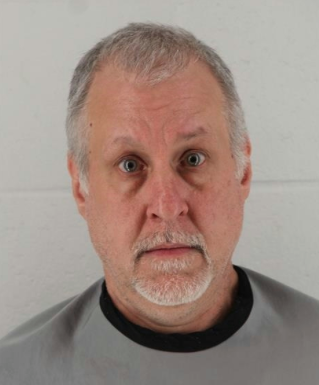
McMannes -photo Johnson County
Just after 3p.m. Wednesday, police responded to a home in the 300 Block of South Cardinal Drive in Olathe to investigate a medical call and a woman not breathing, according to a media release from police.
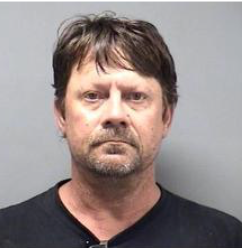
First responders determined that the woman had died. Her cause of death later was ruled a homicide. On Thursday, police arrested Raymond Thomas McMannes, 51, and booked him into the Johnson County jail, according to online booking records.
McMannes is being held on a $1,000,000.00 bond. His first court appearance is scheduled for 1:30p.m. Friday. Police have not released how the victim died or her name.
WASHINGTON (AP) — The Latest on the partial government shutdown (all times local):
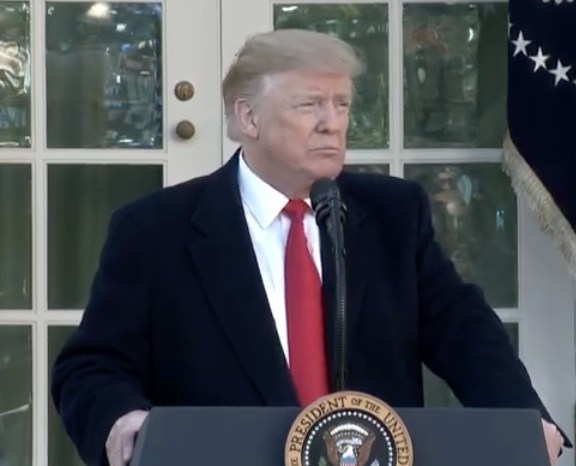
Trump makes comments from the Rose Garden Friday afternoon-courtesy White House
9:25 p.m.
President Donald Trump has signed a bill that temporarily opens the federal government for three weeks, ending the longest shutdown in U.S. history at 35 days.
The White House says Trump signed the measure after the Senate and House each passed it Friday.
Trump backed down from his demand that Congress provide more border wall money before federal agencies get back to work. But he warns that the government could shut down again “if we don’t get a fair deal from Congress.”
He is also holding out the possibility of taking executive action.
The agreement to open the government came as about 800,000 federal employees missed their second consecutive paycheck.
As part of the deal, a bipartisan committee of House and Senate lawmakers is being formed to review border security recommendations.
___
7:55 p.m.
President Donald Trump is pushing back against criticism of his agreement to reopen the federal government without winning a promise of new funding for a border wall.
With even some conservatives casting the agreement as a retreat by the president, Trump is tweeting that it “was in no way a concession” on his part.
Trump says the deal will take care of millions of people who were getting badly hurt by the shutdown.
And he’s emphasizing that it was only done “with the understanding that in 21 days, if no deal is done, it’s off to the races!”
The shutdown was ending as Democratic leaders had insisted it must — reopen the government first, then talk border security.
As part of the deal, a bipartisan committee of lawmakers will consider additional border spending in the weeks ahead.
___
7:50 p.m.
President Donald Trump will not be delivering his State of the Union Address next Tuesday, even though the federal government is expected to be reopened by then.
Trump had postponed the joint address to Congress amid the partial shutdown. House Speaker Nancy Pelosi had suggested he do so and — after some high-profile back-and-forth between the two — the president ultimately agreed.
With Trump and congressional leaders reaching a deal Friday to reopen the government, the speech is expected to be rescheduled.
But it will not be next week as once planned, according to a person familiar with the planning but unauthorized to discuss it.
___
2:25 p.m.
President Donald Trump says he’ll sign legislation shortly to reopen shuttered government departments for three weeks — until Feb. 15.
Trump’s action would end what has become a record, 35-day partial shutdown.
Some 800,000 federal workers have had to work without pay or have been kept from doing their jobs as Trump and congressional Democrats were locked in a stalemate over the billions of dollars that Trump has demanded to build a U.S.-Mexico border wall.
Trump spoke at the White House on Friday as intensifying delays at some of the nation’s busiest airports and widespread disruptions brought new urgency to efforts to break the impasse.
PAWNEE COUNTY —Law enforcement authorities are investigating two suspects on drug charges after a traffic stop.
Jessica Hupp
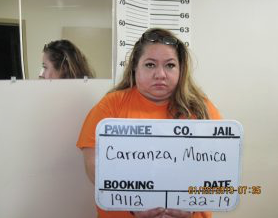
Jessica Hupp, 35 of Indio, California, and Monica Carranza, 48 of Coachella, California, were arrested without incident by the Pawnee County Sheriff’s Department January 22, 2019, following a traffic stop on a probable cause suspicion of possession of heroin and methamphetamine with intent to distribute. The K-9 unit was utilized in the search of the suspect vehicle, according to a media release from the Pawnee County Sheriff.
Following review of the probable cause affidavits, the Pawnee County Attorney’s Office charged Hupp with (1) Possession in excess of 100 grams of Heroin with intent to distribute; (2) Possession in excess of 100 grams of Methamphetamine with intent to distribute; (3) Possession of Methamphetamine; (4) Possession of Drug Paraphernalia, to wit: smoking device; and (5) Failure to Use Proper Turn Signal. Carranza was charged with (1) Possession in excess of 100 grams of Heroin with intent to distribute; (2) Possession in excess of 100 grams of Methamphetamine with intent to distribute; Possession of Methamphetamine; and (3) Possession of Drug Paraphernalia.
Under Kansas law, there is a rebuttable presumption of intent to distribute if any person possesses a quantity of at least 3.5 grams or more of heroin or methamphetamine. In addition to the two kilo of heroin and two and half kilos of methamphetamine being seized, the defendants’ rental vehicle and cellular telephones were also seized. The investigation remains open.
Monica Carranza photo Pawnee Co.
The defendant’s made their First Appearance in the Pawnee County District Court Friday morning (Jan. 25) and were advised by Magistrate Judge Dale Snyder that the distribution charges carry presumptive prison sentences of between 138 and 204 months on each count depending on their criminal history. Both defendants requested court appointed counsel.
Bond was set at $100,000 cash or surety. Judge Snyder also entered an order prohibiting the defendants from leaving the State of Kansas should they post bond.
Preliminary Hearings have been scheduled for February 8, 2019.
WICHITA, Kan. (AP) — Three militia members convicted of taking part in a foiled plot to massacre Muslims in southwest Kansas were sentenced Friday to decades in prison during an emotional court hearing in which one of the targeted victims pleaded: “Please don’t hate us.”
Patrick Stein-photo Butler Co.
U.S. District Judge Eric Melgren sentenced Patrick Stein, the alleged ringleader, to 30 years in prison and Curtis Allen, who drafted a manifesto for the group, to 25 years. Gavin Wright, who authorities said helped make and test explosives at his mobile home business, received 26 years. The plot was foiled after another militia member alerted authorities.
Melgren dismissed defense attorneys’ request that he take into the account the divisive political atmosphere in which the men formed their plot to blow up a mosque and apartments housing Somali immigrants in the meatpacking town Garden City, about 220 miles (355 kilometers) west of Wichita, on the day after the 2016 election.
“We have extremely divisive elections because our system is to resolve those through elections and not violence,” Melgren said.
Stein’s attorneys have argued that he believed then-President Barack Obama would declare martial law and not recognize the validity of the election if Donald Trump won, forcing militias to step in. Stein’s attorneys noted that during the 2016 campaign, all three men read and shared Russian propaganda on their Facebook feed designed to sow discord in the U.S. political system.
Curtis Allen-photo Sedgwick Co.
Attorney Jim Pratt told the judge that for years Stein had immersed himself in right-wing media and commentators, who normalized hate. But Melgren was openly skeptical, telling Pratt: “Millions of people listen to this stuff — whether it comes from the left or the right.”
Prosecutors presented video testimony from some Somali immigrants who were the targets of the bombing. In one clip, Ifrah Farah pleaded: “Please don’t kill us. Please don’t hate us. We can’t hurt you.”
Allen, 51, choked up as he addressed the judge, prompting his attorney to step in and finish reading a prepared statement in which Allen offered “my sincere apologies” to anyone who was frightened and asked for their forgiveness. But Stein, 49, apologized only to his family and friends, and the judge noted when sentencing him that, unlike Allen, he had shown no remorse.
Gavin Wright-photo Harvey Co.
Wright, 53, apologized to the court, saying the plot is “not who I am.” He also apologized to the immigrants who lived at the apartment complex. The judge later said Wright’s courtroom statement showed he was still in denial about what he did, adding and he did not buy that there was any remorse on Wright’s part.
Melgren sentenced Stein to 30 years for conspiracy to use a weapon of mass destruction and 10 years for conspiracy against civil rights. He sentenced Allen and Wright to 25 years for conspiracy to use a weapon of mass destruction and 10 years for conspiracy against civil rights. Those sentences will run concurrently. Wright also got an additional year to be served consecutively for lying to law enforcement, bringing his total sentence to 26 years.
The judge told all three men that the planned attack was worse than the Oklahoma City bombing because the Garden City plot was motivated by hatreds of race, religion and national origin.
The Kansas plot was thwarted when militia member Dan Day tipped off authorities to escalating threats of violence. He testified at the men’s trial last year that Stein started recruiting others to kill Muslim immigrants after the June 2016 mass shooting at the Pulse nightclub in Orlando, Florida, by a gunman who had pledged allegiance to the Islamic State group.
Recordings that prosecutors played for jurors last April portrayed a damning picture of a splinter group of the militia Kansas Security Force that came to be known as “the Crusaders.”
Acting Attorney General Matthew Whitaker in a news release called the sentences “a significant victory against hate crimes and domestic terrorism.”
“These defendants planned to ruthlessly bomb an apartment complex and kill innocent people, simply because of who they are and how they worship,” FBI Director Christopher Wray said.
The sentencing hearings for the men came a day after two members of an Illinois militia known as the White Rabbits pleaded guilty in the 2017 bombing of a Minnesota mosque , admitting they hoped the attack would scare Muslims into leaving the U.S. No one was injured in that attack.
———
5:20 p.m.
The alleged ringleader of a foiled plot to massacre Muslims in southwest Kansas has been sentenced to 30 years in prison.
Patrick Stein was sentenced Friday for his role in the plot to blow up a mosque and apartments housing Somali immigrants in Garden City. The attack was planned for the day after the 2016 election. Stein was one of three militia members convicted last year.
The plot was thwarted by another militia member who tipped off authorities to escalating threats of violence. He testified that Stein started recruiting others to kill Muslim immigrants after the June 2016 mass shooting at the Pulse nightclub in Orlando, Florida, by a gunman who had pledged allegiance to the Islamic State group.
Prosecutors had sought life in prison. Stein’s attorneys asked for 15 years.
A judge sentenced Stein to 30 years for conspiracy to use a weapon of mass destruction and 10 years for conspiracy against civil rights. The sentences will run concurrently.
Curtis Allen was sentenced to 25 years for conspiracy to use a weapon of mass destruction and 10 years for conspiracy against civil rights. The sentences will run concurrently.
Late Friday, the judge sentence Gavin Wright to 25-years in prison along with an additional 10- years supervised release. He also received a one 1-year sentence for lying to the FBI.
___
12:10 p.m.
A man who authorities say drafted a manifesto for militia members involved in a foiled plot to massacre Muslims in southwest Kansas has been sentenced to 25 years in prison.
A judge sentenced Curtis Allen on Friday for his role in the plot to blow up a mosque and apartments housing Somali immigrants in Garden City. The attack was planned for the day after the 2016 election. Allen was one of three militia members convicted last year.
Allen was sentenced to 25 years for conspiracy to use a weapon of mass destruction and 10 years for conspiracy against civil rights. The sentences will run concurrently.
Authorities say Allen drafted the group’s handwritten manifesto that outlined grievances against the government for — in the document’s words — “not enforcing our borders.” Authorities say the men planned to release the manifesto after the bombing.
Prosecutors had sought life in prison. Allen’s attorneys asked for 10 years.
___
10 a.m.
Somali immigrants targeted in a foiled plot to blow up their mosque and apartments in southwest Kansas told a judge through video testimony that they are still scared.
Prosecutors played five video clips of the Somalis at the sentencing Friday of Patrick Stein, Gavin Wright and Curtis Allen. The three militia members were convicted last year of plotting the attack in Garden City for the day after the 2016 presidential election.
In one video, Ifrah Farah pleaded: “Please don’t kill us. Please don’t hate us. We can’t hurt you.”
Garden City police Chief Michael Utz asked the judge to send a strong message that this type of behavior will not be condoned.
Prosecutors are seeking life terms. The men are asking for shorter terms of 15 years, 10 years and time served.
The plot was thwarted after another militia member tipped off authorities.
___
By ROXANA HEGEMAN ,
WICHITA, Kan. (AP) — Three militia members face the possibility of life in prison for a foiled plot to massacre Muslims in southwest Kansas by blowing up a mosque and apartments housing Somali immigrants.
At separate sentencing hearings for the men on Friday, the government plans to play video clips of the intended victims talking about the impact the case has had on their community.
Patrick Stein , Curtis Allen and Gavin Wright , all of whom are white, were convicted last year of plotting an attack in Garden City for the day after the 2016 presidential election. The meatpacking town is about 220 miles (354 kilometers) west of Wichita. Prosecutors are seeking life terms for the three men, while defense attorneys are variously pleading for shorter terms of 15, 10 or even time served. The men have been imprisoned since their October 2016 arrests.
In court filings, defense attorneys asked the judge to take into account rhetoric from President Donald Trump that they say has encouraged violence. Stein’s attorneys noted that during the 2016 campaign, all three men read and shared Russian propaganda on their Facebook feed designed to sow discord in the U.S. political system.
Attorneys for Stein, who prosecutors have alleged was the ringleader, are seeking 15 years. Allen, who allegedly drafted a handwritten manifesto for the group denouncing the government for “not enforcing our borders,” is asking for 10 years. Wright, who authorities said helped make and test explosives at his mobile home business, is asking that he be sentenced to “time served.”
Their sentencings come a day after two members of an Illinois militia known as the White Rabbits pleaded guilty in the 2017 bombing of a Minnesota mosque , admitting they hoped the attack would scare Muslims into leaving the U.S. No one was injured in that attack.
The Kansas attack was foiled when another member of the group tipped off authorities about escalating threats of violence. Dan Day, who was given the code name “Minuteman” by his FBI handlers, agreed to wear a wire as a paid informant .
The investigation captured months of profanity-laced recordings in which militia members discussed plans and referred to the Somalis as “cockroaches.” Recordings that prosecutors played for jurors at the April trial portrayed a damning picture of a splinter group of the militia Kansas Security Force that came to be known as “the Crusaders.”
Day testified that Stein started recruiting others to kill Muslim immigrants after the June 2016 mass shooting at the Pulse nightclub in Orlando, Florida, by a gunman who had pledged allegiance to the Islamic State group. In one recording, the three men talked about how they hoped the Kansas bombing would “wake people up” and inspire other attacks against Muslims around the U.S.
Stein, Wright and Allen were convicted of conspiracy to use a weapon of mass destruction and conspiracy against civil rights. Wright was also found guilty of lying to the FBI.
KANSAS CITY (AP) — A law firm that reviewed 75 years of clergy files in the Roman Catholic Archdiocese of Kansas City in Kansas found 22 substantiated claims of sexual abuse against priests or other clerics, the archdiocese announced Friday.
The archdiocese released the names of all 22 men in its publication, The Leaven . None of the 22 men are currently ministering in the archdiocese, according to list. Eleven have died; seven have been “laicized,” meaning they were removed from clerical service; one was “removed from ministry;” one was last known to be at a friary in Denver; and the status of two others are unknown.
Archbishop Joseph Naumann said in a column in The Leaven that it is difficult to “discern the truth” of an event from decades ago, especially when the accused is deceased and other people’s memories have faded.
“The list that we are providing today is accurate based on the information we possess at this moment,” Naumann wrote.
The Husch Blackwell law firm reviewed about 1,080 clergy files to compile the list. A report based on the investigation has been shared with the Kansas attorney general’s office and the list will be updated if more information becomes available, the archbishop said.
The archdiocese hired the law firm in August when the Catholic Church was shaken by a grand jury report that found abuse by up to 300 priests in six Pennsylvania dioceses over the last 70 years, and reports that Pope Francis and other church leaders knew about sexual misconduct allegations against the former archbishop of Washington, Theodore McCarrick, but rehabilitated him anyway.
“I thank the victims who have courageously come forward with allegations in order to prevent someone else from being victimized, as well as to assist with the progress of their own healing process,” Naumann wrote Friday.
Ten of the men were formerly priests in the diocese, and the others were either priests from another diocese or from a religious order ministering in the archdiocese.
The archdiocese also listed the names of four clerics with previously publicized allegations that investigators were not able to substantiate.
The review went back to the 1940s, with the most cases — nine— from the 1980s. No substantiated cases were found after 2000.
Attorney Rebecca Randles, who has represented several people who say they were abused by priests in Kansas and Missouri, applauded the release but said it’s important that the archdioceses figure out what it needs to do next.
“How do you make this better? How do you help the victims?” Randles asked. “Our experience has been the Kansas City, Kansas, diocese has not led the way with helping or dealing with these individuals.”
Naumann detailed steps the archdiocese has taken to 2003 to help prevent sexual abuse in the church, such as child safety program, criminal background checks for adults, annual safe environment audits by an independent firm and requiring all clergy, employees and volunteers to undergo safe environment training. He noted the archdiocese, which has more than 100 parishes across northeast Kansas, has passed every safe environment audit since they began in 2004.
But David Clohessy, a member of the Survivors Network of those Abused by Priests criticized the lack of details in the list, saying it should include photos, whereabouts and work histories of the clerics.
“This is a long-overdue move to mollify an outraged flock,” Clohessy said. “How does any church employee — from bookkeeper to bishop — justify hiding for years or decades the names of these credibly accused child molesters?”
———–
KANSAS CITY, Mo. (AP) — The Archdiocese of Kansas City in Kansas has released the names of 22 clergy with substantiated claims of sexual abuse involving minors.
None of the 22 men whose names were released Friday are currently ministering in the archdiocese. Eleven have died and seven have been laicized.
Ten were formerly priests in the diocese, and the others were either priests from another diocese or from a religious order ministering in the archdiocese.
In a statement in the archdiocese’s publication, The Leaven, Archbishop Joseph Naumann thanked victims who came forward to help with the investigation.
The Husch Blackwell law firm reviewed about 1,080 clergy files to compile the list. The archdiocese says the report has been shared with the Kansas Attorney General’s office.
The review found no substantiated cases after 2000.
COWLWEY COUNTY — One person died in an accident just after 10a.m. Friday in Cowley County.
The Kansas Highway Patrol reported a Dodge Grand Caravan driven by Maurice
Howe, 72, Burden, was southbound on U.S. 77 and crossed the center line striking a northbound Chrysler 200 driven by Darissa Ann Topper, 24, Winfield.Howe was transported to Southwest Medical Center where he died.
Topper was transported to a hospital in Wichita.
Both drivers were properly restrained at the time of the accident, according to the KHP.
DETROIT (AP) — Fiat Chrysler is recalling nearly 180,000 pickup trucks in North America to fix an electrical problem that can knock out the power steering.
The recall covers Ram 1500 pickups from the 2019 model year. Most are in the U.S. and one-third are still on dealer lots.
The company says a fastener that grounds the battery wasn’t secured properly in manufacturing. The connection can become loose, which disables the power steering. Drivers can still steer but the effort it takes wouldn’t be consistent.
FCA says it has no reports of crashes or injuries.
Dealers will secure the fastener at no cost to owners. Fiat Chrysler says it doesn’t have a date for the recall to begin, but it under U.S. law it has to start within 60 days.
SUMNER COUNTY — An earthquake shook portions of Kansas Friday afternoon.
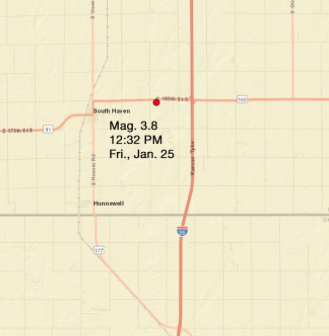
Image courtesy Kansas Geological Survey
The quake just after 12:30p.m. measured a magnitude 3.8 and was centered approximately 11 miles east of Caldwell in Sumner County, according to the U.S. Geological Survey.
The quake follows a 2.8 magnitude quake near the same area January 20 and a series of four quakes ranging from a magnitude 2.5 – 4.5 in Sumner County January 16 and 17, according to the USGS.
There are no reports of damage or injury, according to the Sumner County Sheriff’s Department.
RILEY COUNTY — One person was injured in an accident on Thursday afternoon in Riley County.
Google map
Just before 4p.m. Thursday, police responded to a report of a medical emergency near Linear Trail and E Poyntz Avenue in Manhattan, according to the Riley County Police department activity report.
First responders found a 29-year-old woman with major injuries and she had fallen off the railroad bridge just south of US-24 and into the Kansas River.
She was transported to Via Christi in Manhattan for her injuries. The incident remains under investigation and is not believed to be suspicious at this time.