We have a brand new updated website! Click here to check it out!

Abortion foes vow to pursue change in Kansas Constitution

TOPEKA, Kan. (AP) — Anti-abortion leaders are promising to pursue a change in the Kansas Constitution if the state’s highest court rules that the document protects abortion rights.

Tuesday’s Rally for Life inside the Statehouse-image courtesy Kansans for Life

Several hundred abortion opponents rallied Tuesday inside the Statehouse. They marked the 46th anniversary of the U.S. Supreme Court’s landmark Roe v. Wade decision in 1973 that legalized abortion across the nation.

But anti-abortion leaders also had another pending court case on their minds.

The Kansas Supreme Court heard arguments nearly two years ago from attorneys on whether the state constitution protects abortion rights.

The justices have not ruled. If they declare that the state constitution protects abortion rights, state courts might invalidate restrictions in Kansas that would be upheld by the federal courts.

Anti-abortion leaders said they would respond by pursuing a state constitutional amendment.

Kan. man accused of sending 13-year-old obscene text messages

SALINE COUNTY — Law enforcement authorities are investigating a Kansas man on  solicitation allegations.

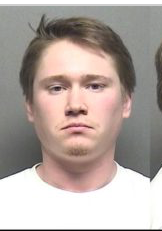
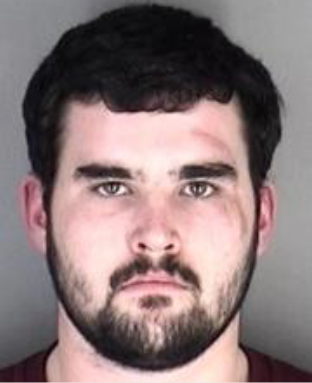
Becker -photo Saline Co.

A 13-year-old Salina girl told a friend she received sexually explicit text messages and  photos from a man via a social media app on December 23, according to Salina Police Captain Paul Forrester.

The friend contacted school officials.

Following an investigation, police arrested Tanner J. Becker, 23, Herrington, on suspicion of aggravated indecent solicitation of a child, electronic solicitation, and promoting obscenity, according to Forrester.

Becker remains in custody, according to the Saline County jail records.


Travel discouraged after I-70 shut down for miles in Geary Co.

JUNCTION CITY — One lane of Interstate 70 has reopened in both eastbound and westbound directions but law enforcement authorities were discouraging all travel as of mid-afternoon Tuesday.

Geary County Acting Sheriff Brad Clark advised residents to not travel anywhere unless you absolutely have to travel.

“Right now, we’ve got partial blockage on the interstate from the 305 eastbound to about 311 (mile markers). It’s extremely icy out there, and we have several slideoffs and a few accidents.”

Clark was able to confirm he did not know of any fatalities in any of the accidents.

—-

Authorities have closed Interstate 70 in both east and westbound directions from the Geary-Dickinson County line east to exit 295 on the southwest side of Junction City.

According to Geary County Emergency Management Director Garry Berges, law enforcement authorities are working a series of accidents including one that he described as serious on the interstate three miles west of Junction City.

“They do have traffic shut down in both directions,” he said. “They say it’s just a solid sheet of ice out there. ”

Berges said he has also been driving in Junction City. “We’ve got numerous roads, just a little bit of an incline and it’s just pure sheets of ice. So travel is very dangerous and treacherous right now ( about 12:30 p.m. Tuesday ).”

Berges also noted accidents have been reported on the K-18 bypass in Riley County. He discouraged travel and urged motorists to pull over and wait until KDOT can get the highways sanded. That process was under way.

Watch these things as governor tries to fix Kansas child welfare

 MADELINE FOX

Kansas’ new governor wants to fix the state’s foster care. Fast.

Laura Kelly isn’t the first governor to highlight a crisis in child welfare, or to inject cash into the Department for Children and Families.

Expectations run high for Kelly, who sat on a task force examining the child welfare system for more than a year. She’s made fixing foster care a high priority — it was one of just three topics she homed in on in her State of the State address last week.

But she’s hemmed in by some of the approaches she’s been handed, such as new grants to manage child welfare that she called “essentially no-bid contracts” and a lawsuit alleging Kansas rendered some of its foster children “effectively homeless.”

Here are five things to watch as Kelly works to make her mark in child welfare:

1) The high number of kids in the system

There were 7,300 kids in foster care in Kansas at the end of December. That’s an increase of more than 40 percent since 2012. The stress of so many kids in the system is straining mental health services, social worker caseloads and the state’s overall ability to adequately provide beds for the children in its custody.

Two main factors drive the increase: more kids in, and more time to get them out.

To help address the first, Kelly’s asked for money from the Legislature to fund more child abuse investigator positions and to draw down federal money for services that keep struggling families safely together.

Kelly wants money for about 26 new investigators.

Laura Howard, Kelly’s new head of the Department for Children and Families, said social workers field two or three times the recommended number of cases in some parts of the state. That makes it harder for investigators to catch problems or to take the time to connect families to community resources that could allow kids to stay in their home.

“Turnover is always an issue,” Howard said. “But it’s really been higher and more exacerbated in the last few years with those extensively high caseloads.”

Kelly also wants Kansas to put up more money for a federal matching program geared at keeping families out of the foster care system in the first place.

After DCF requested $4 million in state funds to go toward the Families First Prevention Services Act, child welfare advocates wrote an open letter asking for $30 million. Kelly isn’t going that far, but she has upped the Families First request to $7.4 million in this year’s budget and nearly $10 million next year.

Christie Appelhanz, who leads the organization that drafted the open letter, said that’s a start.

“We’re definitely headed in the right direction,” she said. “We’re not where we think we need to be just yet.”

Even if things improve on the front end, bringing down the number of overall kids in care will require getting kids out of the system and into permanent homes more quickly.

2) Whether DCF can recruit and retain enough social workers

Lawmakers are already skeptical DCF can find enough social workers to fill investigative jobs. Last year, DCF rolled back social work licensing requirements for some of its investigative positions. Officials said they had too many vacancies and not enough social workers to fill them.

Howard said she hasn’t looked yet at how the agency will fill 26 positions. But Becky Fast, head of the Kansas chapter of the National Association of Social Workers, said Kansas’ number of social work graduates and licensed social workers grows every year. It’s just a matter of convincing them to work for an agency experiencing a very public crisis.

“When I speak at colleges across the state, at least half the bachelor students raise their hands and want to work with children and families,” said Fast. “But they want to work in a system where they receive training, support and supervision.”

3) Who’s going to manage Kansas foster care moving forward

In November, then-DCF secretary Gina Meier-Hummel announced grants to five companies to manage foster care and family preservation.

The grants were awarded through a different process than the contract system that’s dictated Kansas child welfare since the state privatized foster care in the 1990s. State contracts go through the Department of Administration, but the new grants were scored and awarded directly through DCF.

When Kelly announced Howard as her pick to run DCF, Kelly also said she was putting those grants on hold.

Advocates have also raised concerns about one of the family preservation providers, Eckerd Connects It’s has drawn headlines over its foster care management in Florida that echo Kansas’ problems — kids sleeping in offices or moved night-to-night, kids skipping school, children harmed while in state custody.

With the current contracts set to run out at the end of June, Kelly and Howard don’t have much time to decide how to move forward with foster care. Howard said she doesn’t know yet what the agency will do about the grants, but she’s been carefully reviewing them.

4) What happens with the class-action lawsuit alleging Kansas violated its foster kids’ civil rights

In November, three organizations filed a class-action lawsuit contending Kansas violates foster children’s civil rights by moving them too often, adding to their trauma and restricting their access to necessary mental health treatment.

Some of the children described in the suit were moved more than 100 times during their stints in foster care, often from one one-night placement to the next.

The organizations sued then-governor Jeff Colyer and the then-heads of DCF, the Department for Aging and Disability Services and the Department of Health and Environment. With the governor’s office and the agencies turned over to new leadership, the lawsuit will soon transfer to Kelly, Howard and KDHE interim secretary Lee Norman.

The organizations suing aren’t asking for a payout. Their lawsuit calls for the agencies to fix gaps in mental health services and the churning of kids through short-term homes.

With the lawsuit landing in her lap, Kelly is under legal and political pressure to deliver the foster care fixes she’s called for.

5) What the numbers do — and don’t — tell us about whether foster care is improving

Although the number of kids sleeping in contractors’ offices has dropped substantially since its peak last spring — as of December, DCF officials said there had been no kids spending their nights in offices for months — advocates want to make sure improvements in one area aren’t leading to problems in another.

Appelhanz pointed to the lawsuit’s allegation of back-to-back single-night placements as one reason to be wary of better numbers.

“No one wants kids sleeping in offices,” said Appelhanz. “But moving them from sleeping in offices to repeated one-night placements? That’s not a win.”

Howard said she’ll also be measuring success based on the overall number of kids in care and whether they’re getting to permanent homes in a timely manner. She’s also trying to bring DCF up to federal standards for child welfare — standards by which the agency has previously fallen short.

Madeline Fox is a reporter for the Kansas News Service. You can reach her on Twitter @maddycfox.

Salina man arrested on suspicion of child abuse, aggravated battery


SALINA — Salina police were called to the 1400 block of East Beloit on Friday to assist the Kansas Department for Children and Families with a 6-year-old boy who had been injured.

Salina Police Captain Paul Forrester said Tuesday that the boy reported that his stepfather, Joseph Cubillas II, 36, Salina, had grabbed him around the neck and squeezed to the point that the boy couldn’t breathe, Forrester said. The boy had scratches on his neck and red marks on his forehead, Forrester said.

Cubillas was arrested on suspicion of aggravated battery and child abuse, Forrester said.

County Attorney releases details in fatal Kan. officer-involved shooting

PRATT COUNTY —Authorities have completed their review of the fatal November officer-involved shooting in Pratt.

Law enforcement authorities on the scene in Pratt -photo courtesy KWCH

Officers shot 38-year-old Rene Prieto during an incident in the 500 Block of North Main Street in Pratt. Prieto died later at a hospital in Wichita.

After an extensive review of all records and evidence presented and applying the facts to Kansas law,  the use of force by the officers of the Pratt Police Department was lawful, according to a media release from Pratt County Attorney Tracey T. Beverlin.

In this matter, the officers of the Pratt Police Department were justified in the use of deadly force against Rene Prieto. Upon arriving at the scene, acting Chief Ward knew the suspect had pointed a gun at two reporting witnesses.

Officer Slief was already engaging the suspect when Ward observed the suspect turn toward him with a pistol pointed at him. Officer Slief remembers seeing the suspect turn around with a gun and at least getting one round off toward Ward. Slief thought Ward had gotten shot because she observed Ward fall to the ground which resulted in her returning fire.

Slief stated she was scared for Jeff. Lt. Shelden observed Ward coming up the Alley and observed the suspect point a black semiautomatic pistol at Ward. Shelden felt he needed to stop the threat. The facts support a showing that the officers sincerely believed the use of force was necessary to defend against themselves and their fellow officers.

It was reasonable for the officers to believe the use of deadly force was necessary due to the actions of Prieto leading up to the officers arrival on scene, the actions of Prieto observed by the officers at the scene, and observance of the act of Prieto pointing the gun and firing at Ward. The completed investigation shows no indication that probable cause exists to support a determination that the officers acted criminally.

Beverlin’s released provided additional details

On November 13, 2018 at approximately 3:40 pm, Pratt Police Department (PPD) was dispatched to the area of the 500 block of North Main area in the City of Pratt, Pratt County, Kansas, in reference to a man with a gun. Reporting witnesses informed the man, later identified as Rene Prieto, was walking a dog, aiming a gun at residents, and hiding in the bushes in the 500 Block of North Jackson Street. Witnesses observed Prieto had a hold of a larger brown dog which he appeared to be having trouble controlling. At one point the dog made a lunge and it pulled at Prieto which made Prieto wave his hand that was not holding the dog and witnesses observed a smaller compact pistol in Prieto’s hand. Prieto began backing up and pointed his gun at witnesses. The witnesses called 911 and during the dispatch call commented that the man looked like he was under the influence of something and that he had pointed what looked like a 9 millimeter Glock at them.

Pratt Police Department Lieutenant (Lt.) James Shelden, Pratt Police Department Officer Rebecca Slief, and Pratt Police Department Acting Chief Jeffrey Ward responded to the area to look for thesuspect. Thesuspectwaslocatedbyofficersoutsideof512NorthMainStreet,Pratt,Kansas, which was Prieto’s residence. Slief and Shelden arrived in marked patrol vehicles and in Pratt Police Department issued uniforms identifying them as police officers. Both patrol vehicles were parked on Main Street in front and north slightly of 512 North Main Street.

Prieto was on the porch area of the residence and then moved to a black Nissan Altima parked in the driveway at 512 North Main Street. Slief observed Prieto slip or stumble while getting off the porch. Slief made the observation that Prieto acted like he was under the influence of alcohol or narcotics. Slief attempted to make contact with Prieto by verbally yelling at Prieto but, Prieto made no attempt to look or react to Slief’s communication. Prieto continued to move to the black Nissan.

Prieto was somewhat sitting on the driver’s front seat as Ward approached from the east alley. Slief and Shelden approached from the north side of the residence. Both Slief and Shelden were in lighted positions where an individual could see that Slief and Shelden were wearing uniforms. Prieto would not acknowledge the officers. Ward attempted to gain compliance through verbal commands. PPD Officers did not remember if anyone yelled “Police” but Ward did attempt to get Prieto to show his hands. Ward observed Prieto stand up with a black pistol in Prieto’s right hand. Prieto turned and extended the pistol toward Ward. Slief and Sheldon observed Prieto point the pistol at Ward. Prieto started firing at Ward while advancing from the driver’s door toward Ward. Ward, Shelden, and Slief returned fire striking and incapacitating Prieto. Slief observed Ward fall down, thinking Ward was shot by Prieto, when she returned fire. Prieto fell behind the black Nissan.

Ward sustained injuries to his face and reported he did not know if it was gravel or bullets hitting him. The Crime Scene Response Team documented bullet strikes on the ground in the location Ward was standing. Ward’s clothing exhibited defects consistent with the passage of a bullet.

Pratt County Emergency Medical Services (EMS) was notified and in route prior to officers approaching and securing Prieto. EMS provided medical treatment to Prieto and transported him to Pratt Regional Medical Center. Prieto was then transported in critical condition to Via Christi Hospital St. Francis.

A search warrant was obtained and a search was conducted on the residence at 512 North Main Street. Located inside the residence on the kitchen counter was a container holding alcohol that had been opened and was partially empty. Multiple cartridge casings were located outside of the residence where each PPD Officer was standing and where Prieto was standing. There was a Glock 9mm pistol located beside Prieto. All PPD Officer firearms’, recovered cartridge casings, Prieto’s pistol, and a bullet recovered from a shed east of the residence were collected and sent for testing and comparison to KBI Forensic Laboratory Firearm and Toolmark Section in Topeka, KS. A forensic scientist completed comparisons showing that cartridge casings were matched to each pistol (PPD Officers’ and Prieto’s) and the recovered bullet from a shed that was shot by Prieto toward Ward matched Prieto’s pistol. Three cartridge casings were recovered from Prieto’s location. Medical records indicated Prieto did not have narcotics located in a blood toxicology screen but Prieto did have a high and critical blood alcohol content of 274.2 MG/DL.

Prieto remained at Via Christi Hospital on life-support until family discontinued life-support. On November 21, 2018, Rene Prieto succumbed to injuries at approximately 11:54 am. The Pratt County Coroner (on-call) ordered a full autopsy on the body of Prieto. The provisional autopsy report indicated the following: Cause of death was a gunshot to the head. Injuries included entry wound to left frontotemporal scalp, exit wound to forehead with pathway left to right and back to front, resulting in perforation of skull and brain. There was healing graze wounds located on right forearm and right face. The complete and formal autopsy report is still pending.

—————


PRATT COUNTY The Kansas Bureau of Investigation (KBI) is investigating an officer involved shooting that occurred Tuesday evening outside a residence in Pratt, Kan.

Law enforcement authorities on the scene in Pratt –photo courtesy KWCH

According to a media release, just before 4 p.m., the Pratt Police Department received a call reporting a man on the street who was waving a gun. When responding officers arrived at 512 N. Main St. in Pratt, they encountered an armed man outside, north of the residence. The man was later identified as Rene Prieto, 38, of Pratt.

As officers approached Prieto, attempting to make contact with him, he fired at one of the officers. Three officers returned fire. Prieto was injured by gunfire. Officers secured Prieto and the scene, and called EMS.

Prieto was transported to a Wichita hospital in critical condition. No law enforcement officers were injured during the incident.

The KBI will complete a thorough and independent investigation into this incident. Once the investigation is completed, the findings will be turned over to the Pratt County Attorney for review.

HAWVER: A closer look at Kelly’s ‘terms and conditions’

Martin Hawver

Ever look at one of those new computer programs that sounds good? Like the ones to let you know whether the dog has jumped the fence? Or whether the cat is comfortable? Who doesn’t want that?

Well, after you hit the button and enter your credit card number, you get the chance to read a dozen pages of small type that are “terms and conditions.”

The Legislature doesn’t generally quickly hit the “agree” button, and this year, more than many years, there is a chance lawmakers aren’t going to hit that button on the governor’s budget.

Yes, the governor’s State of the State address sounded pretty good. More money for schools to finally get the state out of the lawsuit asserting that it isn’t “adequately” funding public schools, to protect the safety and security of children, and to swipe less money from the Kansas Department of Transportation so it can get back to building or at least improving the safety of roads and bridges.

That’s the program most of us want on our phones and computers, and generally in Kansas.

Those “terms and conditions” to get that program were explained in the budget that Gov. Laura Kelly presented on Thursday, and there are fingers on the “do not accept” button.

Key, of course, is her proposal to refinance the Kansas Public Employees Retirement System (KPERS), which those fun-loving actuaries say is “actuarially underfunded” by essentially stretching by 30 years the payments to make it “actuarially funded.”

That stretching of the state’s payments, as one does with a mortgage or car loan, will solve the problem, but at an interest cost that is large. That interest cost upsets conservatives, but the state doesn’t have the money to pay cash and stretching the payments by reamortizing the fund eventually gets it to the place actuaries say it should be.

That refinancing of KPERS? It frees up millions of dollars now that can be used to settle the K-12 school finance problem that the Kansas Supreme Court seems very serious about and may reduce by about $100 million the money that is swept from the Kansas Department of Transportation budget so it can improve our transportation system.

Oh, and it also frees up money for Kelly’s insistence (that got her elected governor rather than conservative Republican Secretary of State Kris Kobach?) that the state expand Medicaid (KanCare) health services to about 150,000 more poor Kansans and their children.

Republicans, who by numbers control the Legislature, don’t want that. They say it will cost the state too much money and it is a child of the “ObamaCare” Affordable Care Act that they oppose.

But, looking at Kelly’s one-year budget (rather than two-year, or biennial, budget that was thought up by former Republican Gov. Sam Brownback), it’s the KPERS refinancing that makes it work.

So, we’ll get conservatives who don’t want to refinance KPERS working to rile the 100,000 KPERS pension recipients and the 152,000 Kansans who are paying into the system to battle the governor and her supporters.

And, we’ll see whether parents of schoolchildren who want schools to stay open side with the governor since the KPERS savings will be used to meet Supreme Court orders on school finance. We’ll also maybe see roadbuilders who get more work by cutting the swiping of highway money decide that 30 years is about right for KPERS financing.

This might be interesting this year. Now, where’s the dog, and is the cat happy?

Syndicated by Hawver News Company LLC of Topeka; Martin Hawver is publisher of Hawver’s Capitol Report—to learn more about this nonpartisan statewide political news service, visit the website at www.hawvernews.com

Police: Kansas officer hospitalized after altercation with DUI suspect

DOUGLAS COUNTY — Law enforcement authorities are investigating a suspect on multiple charges after an altercation with an officer during an arrest.

Paslay -photo from a previous arrest in Shawnee County

Just before 1a.m. Tuesday, police responded to the intersection of West 6th Street and Wakarusa Drive regarding a single motor vehicle accident involving a Chevrolet Silverado that struck a pole, according to a media release.

While Officers were responding to the scene, they were advised the suspect had moved the vehicle to a nearby parking lot and entered the business.  The suspect, identified as 22-year-old Shane A. Paslay of Topeka was located and officer began investigating the accident and Mr. Paslay for suspicion of driving while intoxicated.

While an officer was attempting to place Paslay under arrest, he resisted and fled northbound on foot.

After a short foot pursuit, the officer caught Paslay who continued to resist and fight the officer.  The officer utilized his expandable baton on Paslay who continued to fight the officer.  During the struggle, the officer fell to the ground, landing on the officer’s expandable baton, which penetrated the officer’s body.

Paslay ran from the altercation but another officer located him and placed him under arrest.

Paslay is being held on requested charges of aggravated battery on a law enforcement officer, interference with the duties of a law enforcement officer, driving under the influence and operating a vehicle in violation of ignition interlock device.

The officer was transported to a local hospital for treatment of non-life threating injuries.


WAYMASTER: From the Dome to Home Jan. 22

Rep. Troy Waymaster, R-Bunker Hill, 109th Dist.

Governor Kelly Presents State of the State Address

On Tuesday evening, January 16, Governor Laura Kelly addressed both legislative bodies in the Kansas House Chamber to administer her state of the state address which included her vision for the state of Kansas. Governor Kelly implored the legislature to proceed with caution as she contends that the state of Kansas is continuing a “fragile recovery.”

Governor Kelly’s main points focused on addressing education funding, the expansion of KanCare, and foster care. She also stipulated that she would like the process of addressing education finance to be a separate bill from the budget to have that move more quickly through the process.

Another main focus of the governor is on our rural communities and rural economic development. She mentioned that her administration, the Department of Commerce, and the House committee on Rural Revitalization will address the economic needs of our rural areas of the state.

The governor’s state of the state address was Governor Kelly’s first address to the legislature on her approach and vision.

Governor Kelly’s Budget

Early Wednesday morning, January 18, both the House Appropriations and Senate Ways and Means committees met jointly to have the Division of Budget release the details of Governor Kelly’s budget. The governor has opted to revert back to a one-year budget as opposed to a two-year budget, which has been the practice for some years. Her budget is contingent on reamortizing the KPERS payments, not allowing the transfer $238 million to the Kansas Department of Transportation, adding $134 million for K-12 Education funding, funding for vacant positions at our correctional facilities, Kansas Armory upgrades, just to mention a few. There are many more details in her budget, which the budget committees and Appropriations committee will address during the session.

Transportation Taskforce

During the 2018 legislative session, the Joint Legislative Transportation Taskforce was created due to T-Works ending in 2020. This task force was created in order to conduct meetings across the state and identify transportation needs in all of the different regions. I was a member of this task force and attended the meetings in communities all-across the state in order to identify those projects that may be included in the state of Kansas’ next comprehensive transportation plan. We identified that the main focus for the new transportation plan should be: preservation of our existing infrastructure, completing T-Works and the 23 delayed projects, and, finally, new construction. The 2019 legislature will be drafting the new transportation plan. I will definitely keep all informed on the progress of the new plan.

As always, if you have any concerns, feel free to contact me (785) 296-7672, follow on twitter at #waymaster4house, visit
www.troywaymaster.com or email me at [email protected].

Also, if you happen to visit the statehouse, please let my office know.

It is a distinct honor to serve as your representative for the 109th Kansas House District and the state of Kansas. Please do not hesitate to contact me with your thoughts, concerns, and questions. I always appreciate hearing from the residents of the 109th House District and others from the state of Kansas, as well.

Troy Waymaster, (R-Bunker Hill), is the 109th Dist. state representative and chairman of the House Appropriations committee. The 109th District includes Osborne, Russell, and Smith counties and portions of  Barton, Jewell, Lincoln and Rush counties.


List of nominees for the 91st Academy Awards

By The Associated Press

The list of the nominees for the 91st Academy Awards:

Best picture: Black Panther,” ”BlacKkKlansman,” ”Bohemian Rhapsody,” ”The Favourite,” ”Green Book,” ”Roma,” ”A Star Is Born,” ”Vice.”

Best director: Alfonso Cuaron, “Roma”; Spike Lee, “BlacKkKlansman”; Pawel Pawlikowski, “Cold War”; Yorgos Lanthimos, “The Favourite”; Adam McKay, “Vice.”

Best actor: Christian Bale, “Vice”; Bradley Cooper, “A Star Is Born”; Rami Malek, “Bohemian Rhapsody”; Viggo Mortensen, “Green Book”; Willem Dafoe “At Eternity’s Gate.”

Best actress: Yalitza Aparicio, “Roma”; Glenn Close, “The Wife”; Olivia Colman, “The Favourite”; Lady Gaga, “A Star Is Born”; Melissa McCarthy, “Can You Ever Forgive Me?”

Best supporting actor: Mahershala Ali, “Green Book”; Sam Elliott, “A Star Is Born”; Adam Driver, “BlacKkKlansman”; Richard E. Grant, “Can You Ever Forgive Me?”; Sam Rockwell, “Vice.”

Best supporting actress: Amy Adams, “Vice”; Marina de Tavira, “Roma”; Regina King, “If Beale Street Could Talk”; Emma Stone, “The Favourite”; Rachel Weisz, “The Favourite.”

Original Song: “When A Cowboy Trades His Spurs For Wings” from “The Ballad of Buster Scruggs,” music and lyrics by David Rawlings and Gillian Welch; “All The Stars” from “Black Panther,” music by Mark Spears, Kendrick Lamar Duckworth, Anthony Tiffith and lyrics by Kendrick Lamar Duckworth, Anthony Tiffith and Solana Rowe; “I’ll Fight” from “RBG,” music and lyrics by Diane Warren; “The Place Where Lost Things Go” from “Mary Poppins Returns,” music by Marc Shaiman and lyrics by Scott Wittman and Marc Shaiman; “Shallow” from “A Star Is Born,” music and lyrics by Lady Gaga, Mark Ronson, Anthony Rossomando and Andrew Wyatt.

Original Score: “Black Panther,” Ludwig Goransson; “BlacKkKlansman,” Terence Blanchard; “If Beale Street Could Talk,” Nicholas Britell; “Isle of Dogs,” Alexandre Desplat; “Mary Poppins Returns,” Marc Shaiman.

Foreign language film: Germany’s “Never Look Away”; Japan’s “Shoplifters”; Lebanon’s “Capernaum”; Mexico’s “Roma”; Poland’s “Cold War.” Documentary feature: “Free Solo,” ”Hale County This Morning, This Evening,” ”Minding the Gap,” ”Of Fathers and Sons,” ”RBG”

Documentary feature: “Free Solo,” ”Hale County This Morning, This Evening,” ”Minding the Gap,” ”Of Fathers and Sons,” ”RBG”

Documentary short subject: “Black Sheep,” ”End Game,” ”Lifeboat,” ”A Night at The Garden,” ”Period. End of Sentence.”
Adapted screenplay: “The Ballad of Buster Scruggs,” Joel Coen and Ethan Coen; “BlacKkKlansman,” Charlie Wachtel, David Rabinowitz, Kevin Willmott and Spike Lee; “Can You Ever Forgive Me?,” Nicole Holofcener and Jeff Whitty; “If Beale Street Could Talk,” Barry Jenkins; “A Star Is Born,” Eric Roth, Bradley Cooper and Will Fetters

Original screenplay: “The Favourite,” Deborah Davis and Tony McNamara; “First Reformed,” Paul Schrader; “Green Book,” Nick Vallelonga, Brian Currie and Peter Farrelly ; “Roma,” Alfonso Cuaron; “Vice,” Adam McKay

Film Editing: “BlacKkKlansman,” Barry Alexander Brown; “Bohemian Rhapsody,” John Ottman; “The Favourite,” Yorgos Mavropsaridis; “Green Book,” Patrick J. Don Vito; “Vice,” Hank Corwin

Sound Editing: “Black Panther,” ”Bohemian Rhapsody,” ”First Man,” ”A Quiet Place,” ”Roma.”

Sound Mixing: “Black Panther,” ”Bohemian Rhapsody,” ”First Man,” ”Roma,” ”A Star Is Born.”

Visual effects: “Avengers: Infinity War”; “Christopher Robin”; “First Man”; “Ready Player One”; “Solo: A Star Wars Story”

Makeup and hairstyling: “Border”; “Mary Queen of Scots”; “Vice.”

Costume design: “The Ballad of Buster Scriggs,” Mary Zophres; “Black Panther,” Ruth Carter; “The Favourite,” Sandy Powell; “Mary Poppins Returns,” Sandy Pwoell; “Mary Queen of Scots,” Alexandra Byrne

Production design: “Black Panther,” ”The Favourite,” ”First Man,” ”Mary Poppins Returns,” ”Roma.”

Cinematography: Lukasz Zal, “Cold War”; Robbie Ryan, “The Favourite”; Caleb Deschanel, “Never Look Away”; Alfonso Cuaron, “Roma”; Matthew Libatique, “A Star Is Born.”

Best animated film: “Incredibles 2,” ”Isle of Dogs,” ”Mirai,” ”Ralph Breaks the Internet,” ”Spider-Man: Into the Spider-Verse.”
Animated short film: “Animal Behavior,” ”Bad,” ”Late Afternoon,” ”One Small Step,” ”Weekends.”

Live Action short film: “Detainment,” ”Fauve,” ”Marguerite,” ”Mother,” ”Skin.”

Senate panel unveils plan to reopen government, secure the border

WASHINGTON (AP) — President Donald Trump’s proposal to reopen the government, sweetened with immigration provisions that are aimed at mollifying Democrats but that have alienated some conservatives, is headed for Senate action, its prospects uncertain.

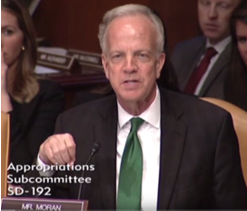
Senator Jerry Moran is a member of the Senate Appropriations Committee

Senate Majority Leader Mitch McConnell will try to muscle through the 1,300-page spending measure, which includes $5.7 billion to fund Trump’s proposed wall along the U.S.-Mexico border, the sticking point in the standoff between Trump and Democrats that has led to a partial government shutdown now in its 32nd day.

Meanwhile, another missed paycheck looms for hundreds of thousands of federal workers.

Senate Republicans late Monday unveiled the legislation, dubbed the “End The Shutdown And Secure The Border Act,” but its passage this week is by no means certain.

Republicans hold a 53-47 majority in the chamber but need Democrats to reach the usual 60-vote threshold for bills to advance. No Democrat has publicly expressed support for the proposal Trump announced over the weekend.

Senate Democratic leader Chuck Schumer’s office reiterated that Democrats are unwilling to negotiate any border security funding until Trump reopens the government.

“Nothing has changed with the latest Republican offer,” Schumer spokesman Justin Goodman said. “President Trump and Senate Republicans are still saying: ‘Support my plan or the government stays shut.’ That isn’t a compromise or a negotiation — it’s simply more hostage taking.”

The Republican plan is a trade-off: Trump’s border wall funding in exchange for temporary protection from deportation for some immigrants. To try to draw more bipartisan support, it adds $12.7 billion in supplemental funding for regions hit by hurricanes, wildfires and other natural disasters. All told, it would provide about $350 billion for nine Cabinet departments whose budgets are stalled. Other than the wall and immigration-related provisions, the core measure hews closely to a package of spending bills unveiled by House Democrats last week.

In exchange for $5.7 billion for Trump’s wall, the legislation would extend temporary protections against deportation to around 700,000 immigrants covered by the Deferred Action for Childhood Arrivals program, or DACA. Trump has tried dismantling the Obama-era program, which covers people who arrived in the U.S. illegally as children, but has been blocked by federal lawsuits.

That figure is substantially lower than the 1.8 million people Trump proposed protecting a year ago in a plan that also included other immigration changes and $25 billion to pay the full costs of building his wall. Trump’s proposal was among several the Senate rejected last February.

The new Senate bill would also provide three more years of temporary protections against deportation to around 325,000 immigrants in the U.S. who have fled countries racked by natural disasters or violent conflicts. Trump has ended that program, called Temporary Protected Status, for El Salvador, which has the most holders of the protected status, as well as for Honduras, Nicaragua and several other countries.

Democrats said that Trump’s proposal for a three-year DACA extension didn’t go far enough and that he was simply offering to restore elements of immigration provisions he’d taken away.

Some on the right, including conservative commentator Ann Coulter, accused Trump of offering “amnesty.”

“No, Amnesty is not a part of my offer,” Trump tweeted Sunday, in response. He added: “Amnesty will be used only on a much bigger deal, whether on immigration or something else.”

While the House and the Senate are scheduled to be back in session Tuesday, no votes have been scheduled on Trump’s plan. McConnell spokesman David Popp said the GOP leader “will move” to vote on consideration of the president’s proposal this week. The bill includes funding for most domestic agencies.

House Democrats, meanwhile, are pushing ahead this week with their legislation to reopen the government and add $1 billion for border security — including 75 more immigration judges and infrastructure improvements — but no funding for the wall.

On Tuesday, Trump tweeted that Democrats are playing “political games” and repeated his claims that the wall is a solution to drugs and crime — although the Drug Enforcement Administration says only a small percentage of drugs comes into the country between ports of entry.

“Without a Wall our Country can never have Border or National Security,” Trump tweeted. “With a powerful Wall or Steel Barrier, Crime Rates (and Drugs) will go substantially down all over the U.S. The Dems know this but want to play political games. Must finally be done correctly. No Cave!”

The impact of the government’s longest-ever shutdown continues to ripple across the nation. The longest previous shutdown was 21 days in 1995-96, when Bill Clinton was president.

The Transportation Security Administration said the percentage of its airport screeners missing work hit 10 percent on Sunday, up from 3.1 percent on the comparable Sunday a year ago.

The screeners, who have been working without pay, have been citing financial hardship as the reason they can’t report to work. Even so, the agency said it screened 1.78 million passengers Sunday with only 6.9 percent having to wait 15 minutes or longer to get through security.

Asked in an interview on “Fox News Sunday” whether Trump’s Saturday proposal represented a “final offer,” Vice President Mike Pence said the White House was willing to negotiate.

“Well, of course,” Pence said. “The legislative process is a negotiation.”

Political shifts, sales slump cast shadow over gun industry

By LISA MARIE PANE ,  Associated Press
When gunmakers and dealers gather this week in Las Vegas for the industry’s largest annual conference, they will be grappling with slumping sales and a shift in politics that many didn’t envision two years ago when gun-friendly Donald Trump and a GOP-controlled Congress took office.
Some of the top priorities for the industry — expanding the reach of concealed carry permits and easing restrictions on so-called “silencers” — remain in limbo, and prospects for expanding gun rights are nil for the foreseeable future.Instead, fueled by the deadliest mass shooting in modern U.S. history, the federal government banned bump stocks and newly in-charge U.S. House Democrats introduced legislation that would require background checks for virtually every firearm sale, regardless of whether it’s from a gun dealer or a private sale.

Even without Democrats’ gains in November’s midterm elections, the industry was facing a so-called “Trump slump,” a plummet in sales that happens amid gun rights-friendly administrations. Background checks were at an all-time high in 2016, President Barack Obama’s last full year in office, numbering more than 27.5 million; since then, background checks have been at about 25 million each year.

Gary Ramey, owner of Georgian gunmaker Honor Defense, says the mood at last year’s SHOT Show, which stands for Shooting, Hunting and Outdoor Trade, was subdued. He’s expecting the same this year.

“There was no one to beat up. You didn’t have President Obama to put up in PowerPoint and say ‘He’s the best gun salesman, look what he’s doing to our country,'” he said.

“Numbers are down,” he added. “You can’t deny it.”

Robert J. Spitzer, chairman of political science at the State University of New York at Cortland and a longtime watcher of gun issues, said that not only have shifting politics made it difficult for the gun industry to gain ground but high-profile mass shootings — like the Las Vegas shooting that happened just miles from where the SHOT Show will be held and the Parkland, Florida, high school shooting — also cast a pall.

“After the Parkland shooting, (gun rights’ initiatives) were kind of frozen in their tracks,” Spitzer said. “Now there’s no chance that it’s going anywhere.”

It’s easier to drive up gun sales when there’s the threat or risk of gun-rights being restricted, he said. “It’s harder to rally people when your target is one house of Congress. It just doesn’t have the same galvanizing effect.”

The National Shooting Sports Foundation’s SHOT Show has been held annually for more than four decades. This year more than 60,000 will attend the event that runs Tuesday through Friday — from gun dealers and manufacturers to companies that cater to law enforcement. There’s a wait list for exhibitors that is several hundred names long and it will have some 13 miles of aisles featuring products from more than 1,700 companies.

Last year’s show in Las Vegas was held just months after a gunman killed 58 people and injured hundreds at an outdoor music festival. The massacre was carried out by a gunman armed with bump stocks, which allow the long guns to mimic fully automatic weapons.

Organizers last year restricted media access to trade journalists. This year’s show will again allow reporters from mainstream media to attend.

Gun-control advocates are rejoicing in the gun industry’s misfortunes of late and chalking it up to not just shifting attitudes among Americans but a shift in elected political leaders.

“Without a fake menace in the White House to gin up fears, gun sales have been in a Trump slump and, as a result, the NRA is on the rocks,” said John Feinblatt, president of Everytown for Gun Safety, a group founded by former New York Mayor Michael Bloomberg.

Joe Bartozzi, the new president of the National Shooting Sports Foundation, said the industry isn’t disturbed by the drop in gun sales or the shift in federal politics. While Democrats who ran on gun-control platforms made huge gains in the House, he sees the Senate shifting to the other end of the spectrum.

“Having been in the industry for over 30 years and seeing the trends of gun sales ebb and flow over time, it’s very hard to put your finger on any one specific issue as to why this happens. It’s just the cyclical nature of the business,” he said.

Trump’s campaign was bolstered by about $30 million from the National Rifle Association and when he took office, the industry had hoped that a host of gun rights would be enacted. The Trump administration quickly nixed an Obama-imposed rule that made it more difficult for some disabled people to purchase and possess firearms.

But other industry priorities, such as reciprocity between states for carrying certain concealed firearms and a measure that would ease restrictions on purchasing suppressors that help muffle the sound when a gun is fired, failed to gain traction.

For now, Bartozzi said his organization is focused on a measure that would expand public gun ranges, funded by an existing tax on firearms and ammunition sales that supports conservation, safety programs and shooting ranges on public lands. The hope is that increasing the number of public ranges will encourage more people to become hunters.

Copyright Eagle Radio | FCC Public Files | EEO Public File