We have a brand new updated website! Click here to check it out!

New Kansas insurance chief names KDOT official top assistant

TOPEKA, Kan. (AP) — Insurance Commissioner-elect Vicki Schmidt has picked a high-ranking Kansas Department of Transportation official to serve as her top deputy.

Republican Vicki Schmidt is the new Insurance Commissioner

Schmidt announced Wednesday that upon taking office, she will appoint Barbara Rankin as assistant insurance commissioner. Schmidt is scheduled to be sworn in Jan. 14.

Rankin has been the Department of Transportation’s chief counsel since 2011. Schmidt said Rankin also has more than 20 years of legal experience in the banking, insurance and securities industries and built what Schmidt called “a wealth of knowledge and experience.”

Schmidt is a Republican who was elected insurance commissioner in November after serving 14 years in the Kansas Senate, including as chairwoman of its Public Health and Welfare Committee.

Departing Insurance Commissioner Ken Selzer unsuccessfully sought the Republican nomination for governor last year.

Prosecutors: Women plotted Kan. killing in text messages

LAWRENCE, Kan. (AP) — Prosecutors say text messages show that a woman plotted her ex-boyfriend’s death with a friend for more than a month before his body was found inside a burning home near Lawrence.

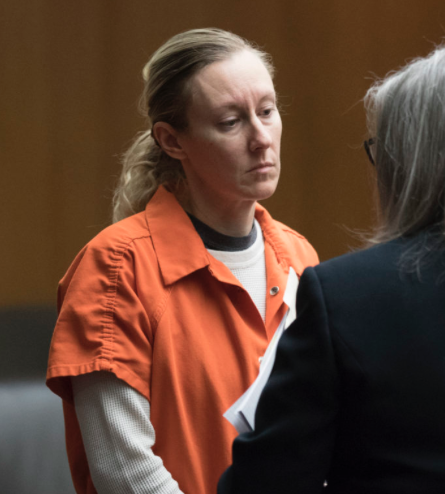
Tria Evans stands next to her attorney Carol Cline during an appearance before Judge Kay Huff on Tuesday, Feb. 6, 2018 in Douglas County District Court-photo by Nick Krug courtesy Lawrence Journal World

The Lawrence Journal-World reports that prosecutors want to present the texts at the upcoming trial of 39-year-old Tria Evans. But the defense says allowing them wouldn’t be fair.

Evans and 38-year-old Christina Towell are charged with first-degree murder in the November 2017 killing of 34-year-old Joel Wales. Evans and Wales had a child together and a history of domestic disputes. Towell is accused of driving Evans to the scene.

One text between the women reads: “This needs done this week.” Evans also called Wales a “psycho” in a text and said she hates being “scared all the time.”

Kansas Rep.-elect Davids to support Democratic shutdown plan

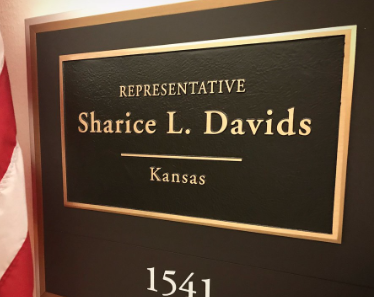
TOPEKA, Kan. (AP) — Kansas’ new Democratic congresswoman is preparing to vote for legislation drafted by her party’s leaders for reopening parts of the federal government, and she hopes President Donald Trump will accept the package.

Rep.-elect Sharice Davids said during an Associated Press interview Wednesday that the wall Trump wants to build on the U.S.-Mexico border is “not a good use of taxpayer resources.” Parts of the federal government have been shut down since Dec. 22 because the dispute over the wall has prevented passage of funding bills for several departments.

The legislation Davids supports would fund the Department of Homeland Security through Feb. 8, with $1.3 billion for border security. Trump wants $5.6 billion for the wall.

Democrats take control of the House when the new session begins Thursday, but it’s not clear whether the GOP-controlled Senate would consider the Democratic package. Davids said the proposals have had bipartisan support in the past.

“Hopefully, we’ll see the House and the Senate send over a bill to get the government back up and going and that the president will see that it is not good for our country for the government to continue to be shut down,” she said.

Davids, who will represent the 3rd Congressional District in the Kansas City area, will be the only Democrat in the state’s delegation and the first since 2010. She is to be sworn into office Thursday, along with Republican Rep.-elect Steve Watkins from the 2nd District in eastern Kansas.

Watkins’ office did not immediately reply to messages Wednesday seeking comment about the dispute over border security. But he said repeatedly during his campaign that he supports building the border wall.

___

Kan. December tax collections were down $24M from last year

TOPEKAFiscal year tax collections have exceeded previous year’s totals by $195.73 million according to data from the latest revenue report released Wednesday, according to a media release from the Kansas Department of Revenue.

Fiscal year 2019 tax collections so far total $3.39 billion, exceeding current estimates by $13.06 million.

December tax collections were down $24.24 million, or 3.41 percent below last December. December’s tax collections exceeded expectations for the month by $10.59 million.

Individual income tax collections in December totaled $291.52 million which is $43.85 million or 13.07 percent below the same time last year. Corporation income tax collections in December totaled $69.61 million which is $22.61 million above current expectations and $29.47 million above the same time last year. December sales tax collections fell short of last December’s collections by $1.97 million.

Kan. Gov.-elect says she’s aware of higher education issues

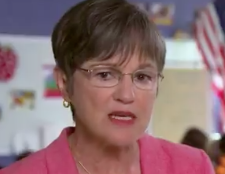
LAWRENCE, Kan. (AP) — Democratic Kansas Gov.-elect Laura Kelly says she’s aware the state may need to help higher education institutions but has more pressing issues she needs to focus on during her first legislative session.

“We’re going to have to deal with situations in the state in a sort of triage approach, where we go after the critical issues first,” Kelly said, listing K-12 education funding, Medicaid expansion, infrastructure and the state’s foster care program as the main issues. “I’m fully aware of the needs for higher education and we will be reviewing those and doing what we can.”

Under Republican former Gov. Sam Brownback, higher education saw its budget slashed by $30.7 million. Lawmakers restored $6 million of that in 2017 and another $15 million in May. But despite the partial restoration of funding, the University of Kansas announced it would need to make a $20 million cut from its own budget.

Kelly, who will be inaugurated on Jan. 14, said she’s aware morale seems to be low at the university because of the proposed budget cuts and ensuing layoffs.

“Higher education has not been immune to the damage that has been done over the past several years,” Kelly said, referring to the state’s budget crisis during Brownback’s tenure.

She said government can help by passing a balanced budget and reinstating an executive order that provides state workers with protections from job discrimination based on sexual orientation or identity, she said.

“I think that will send a message to other states that Kansas is open and we are friendly and this is a place you’ll want to consider,” she said of the LGBT protection order. “Those are the types of things that can help the university and its morale.”

She said that increasing enrollment also would help and noted that foreign student enrollment is down.

“I think that’s a lot because families in other countries see the United States as an unfriendly place at the moment, so they are sending their kids to Canada or London.”

Sports betting will be no home run for state budgets

By WAYNE PARRY and GEOFF MULVIHILL
Associated Press

ATLANTIC CITY, N.J. — The race to legalize sports betting is on now that the U.S. Supreme Court has allowed it in all 50 states, but will it provide enough extra tax revenue to make much of a difference for schools, roads or pension debt?

Don’t bet on it.

Just look to the states that capitalized immediately after the court’s ruling last spring and to Nevada, which previously had an effective monopoly on sports gambling. Even though the market is still developing, the returns to date have been modest.

In Nevada, revenue from sports betting has accounted for roughly one half of 1 percent of the entire state budget.

“Everything I’ve seen so far suggests that this would not be what one would consider to be a pot of gold,” said Ohio state Sen. John Eklund, a Republican who introduced legislation to legalize sports betting in his state.

Delaware, Mississippi, New Jersey, Pennsylvania, Rhode Island, and West Virginia legalized sports betting last year after the Supreme Court decision, as did the District of Columbia. Although New Mexico has not passed a sports betting law, the Santa Ana Star Casino & Hotel started taking bets in October through a tribal gambling compact.

Lawmakers in Kentucky, Missouri, Ohio, Tennessee and Virginia already have filed bills to allow sports betting, and those who track the industry expect a total of 30 states to consider similar ones this year.

The expected stampede of states seeking to legalize it has parallels to the growing trend toward legalizing recreational marijuana, which 10 states have done and others are considering.

As with marijuana, lawmakers say they are motivated in large part because sports betting has been a black market activity outside Nevada. Legalizing it would allow states to impose regulations and take in at least some money.

“I keep telling them this is not like a craps table or a slot machine,” said Mark Sickles, a Democratic state lawmaker in Virginia who has sponsored a bill that would place a 15 percent tax on sports betting in the state. “My main purpose is to take something that’s currently being done illegally and get some tax revenue from it.”

Revenue from legalized pot makes up just a small portion of state revenue, even in the states with the most mature markets — about 2 percent in Colorado and a little over 1 percent in Washington, according to a May report from Moody’s Investors Service. That’s still a far larger portion of revenue than even the most optimistic projections for sports betting.

New Jersey was the first state to legalize sports betting after the Supreme Court decision last May.
The state’s gambling industry took in $928 million worth of sports bets since the first one was taken on June 14 through the end of November. From that, the state received less than $8 million in tax revenue.

Even if the state meets its projection of $25 million in sports betting tax revenue for a full year, that would amount to well under one 10th of 1 percent of the state’s $37.4 billion budget.

Former New Jersey state Sen. Raymond Lesniak began the effort to legalize sports betting there 10 years ago with what at the time seemed like a quixotic lawsuit against the federal government. He said sports gambling was not supposed to be a big moneymaker for the state.

“It wasn’t intended to do that,” he said. “I was driven by the fact that the Atlantic City casino industry was dying and the horse racing industry was on life support. It needed an injection of new money and new people that would come, fill up rooms, eat in restaurants, spend money.”

Lesniak expects sports betting to eventually generate over $100 million in taxes for the state once all New Jersey’s casinos and racetracks have sports books up and running for a full year. That would be 10 times the level of tax revenue being generated right now, when many sports betting operations in New Jersey are in their infancy.

Yet experts say sports betting revenue in New Jersey and elsewhere is likely to be diluted as more and more states jump into the game.

New Jersey’s market is being squeezed on one side by Pennsylvania, which recently began offering sports betting, and on the other by New York, which is likely to pursue legalization this year.

For perspective, New Jersey’s casino revenue at the end of 2006, when Pennsylvania opened its first casino, was $5.2 billion. A decade later, that number had been cut in half and Pennsylvania had more casinos.

The states that have launched sports betting this year expect they will bring in tax revenue that ranges from about $5 million in Mississippi and West Virginia to $25 million in New Jersey. In each state, hitting those targets would account for just a fraction of 1 percent of state spending.

Even Rhode Island, which has the highest sports betting tax rate at 51 percent, estimates it will take in $23.5 million a year, or a quarter of 1 percent of the state’s budget.

Those revenue projections are in line with expectations from the municipal ratings firm Moody’s Investor Service. Baye Larsen, who analyzes state finances at Moody’s, expects sports betting to account for a “very, very small slice” of state revenue and will do little if anything to help cover their rising pension, Medicaid, education or infrastructure needs.

Instead, some lawmakers said they will try to direct the money to specific projects. A bill in Missouri, for example, would send some of the revenue to the capital improvement fund of the state Veterans Commission, while some of New Jersey’s online sports betting revenue is targeted to an Atlantic City promotion campaign.

“Legalized sports gambling is not a way to raise revenue for the government; it is not a mechanism to create jobs,” said Minnesota state Rep. Patrick Garofalo, a Republican. “It’s a high-volume, low-margin business.”
___
Associated Press writer Regina Garcia Cano in Las Vegas contributed to this report.
Kan. man jailed for alleged New Year’s Day assault

SHAWNEE COUNTY — Law enforcement authorities are investigating a suspect following an alleged aggravated assault.

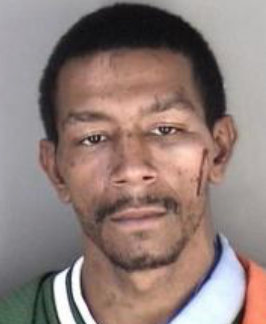
Barefield -photo Shawnee Co.

Just after 3:30p.m. Tuesday, police responded to a call for service, involving an assault in progress, in the area of the 3300 SW 29th in Topeka, according to Lt. Jerry Monasmith.

During the course of the investigation officers found the suspect to be in possession of a firearm as a felon, possession of methamphetamine and marijuana.

Officers arrested Boisy Barefield, 33, Topeka, and he is being held in the Shawnee County Department of Corrections on requested criminal charges of Felon in Possession of a Firearm, Possession of Methamphetamine, Possession of Marijuana, Aggravated Assault, Battery, and city warrants.

Barefield has two previous drug convictions, according to the Kansas Department of Corrections.

Fugitive on the run since April found hiding in Kan. basement

DICKINSON COUNTY — Law enforcement authorities are investigating a suspect wanted Florida since last spring.

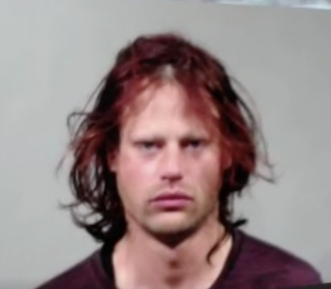
Sweeney -photo Dickinson Co.

Just after 1:00p.m. Monday, police received a tip from a concerned citizen regarding a possible fugitive hiding in the city of Herington, according to a media release.

After a brief investigation, the fugitive was identified as Nathaniel Lee Sweeney,24, of Titusville, Florida.

Using information received from the tip, the Herington Police Department responded to the 700 Block of East Arnold Street where Sweeney was located in the basement of a residence and took him into custody without incident.

Sweeney was wanted out of Brevard County, Florida for violating conditions of probation. His original charges in Florida were Possession of Methamphetamine and Possession of Drug Paraphernalia.

Sweeney had been on the run since April 2018. Sweeney was also named the Brevard County Sheriff’s Office “Fugitive of the Week” by Sheriff Wayne Ivey in May 2018.

Sweeney was transported to the Dickinson County Jail where he is being held without bond pending extradition to the State of Florida. 

Voting rights case costs Kansas county about $70K so far

DODGE CITY, Kan. (AP) — Ford County has paid more than $70,000 in legal fees so far to a firm that represented its county clerk in a lawsuit filed after Dodge City’s only polling place was moved outside city limits for November’s general election.

The Dodge City Civic Center was the previous polling location. The Expo Center was the only location for voters during the November general election -google map

A document received through an open records request shows the county paid the Hinkle Law Firm $71,481 in October and November to defend County Clerk Debbie Cox.

The American Civil Liberties Union sued Cox in late October because the location inside the city was scheduled to undergo construction. The ACLU argued moving the site made it more difficult for voters — particularly the city’s large Hispanic population — to vote.

Image
CREDIT STEPHEN KORANDA /Kansas News Service

Days before the election, a federal judge denied the ACLU’s request to keep the original site open.

Kan. authorities contact FBI about reports of white man kicking black child

WICHITA, Kan. (AP) — Wichita police have contacted the FBI about a report that a white man kicked a 1-year-old black child in the back at a Wichita grocery store and yelled racial slurs.

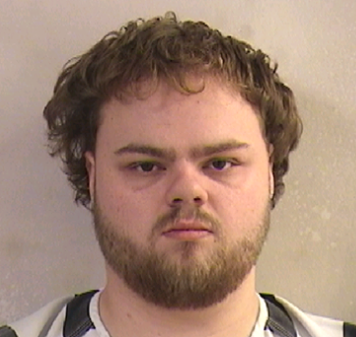
Riff -photo Sedgwick Co.

The boy’s mother, 29-year-old Lashantai Whitaker, says she talked to an FBI agent Monday. Her son wasn’t seriously hurt. Wichita police confirmed that officers have been in contact with the agency.

Thirty-one-year-old Trace Riff was let out of jail shortly after his Dec. 23 arrest. So far, the case has been referred to municipal court and is being treated as a relatively minor crime. But the Sedgwick County District Attorney’s Office has said it expects to review the case for possible charges this week.

The NAACP says the case should be prosecuted to the fullest.

Kan. school district to settle with student who broke his leg

WICHITA, Kan. (AP) — The Wichita school district plans to pay up to $25,000 to settle a lawsuit with a student who fell on a wet floor at a middle school on a rainy day and broke his leg.

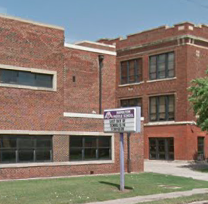
Hamilton Middle School -Google image

A court hearing is set for Monday. The district’s board has voted to settle the lawsuit with the student who fell three years ago as he approached a stair landing at Hamilton Middle School. Court documents say the student “suffered personal injury and incurred medical expenses.”

Neither the district nor an attorney for the boy’s family responded to a requests for comment.

Kan. man preparing to fire celebratory round shoots, wounds himself

KANSAS CITY, Kan. (AP) — Authorities say a New Year’s Eve reveler accidentally shot himself while preparing to fire a celebratory round in Kansas City, Kansas.

Police Chief Terry Zeigler tweeted that the shooting happened as the victim was getting ready to go out at midnight and fire his .22-caliber handgun. Zeigler says that when he sat the gun down on the couch, he accidentally shot himself in the stomach.

Zeigler says the man is expected to recover. Celebratory gunfire is illegal because of the risk of stray bullets hurting or killing someone.

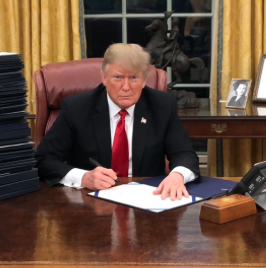
Let’s make a deal: Trump to host briefing on border security

WASHINGTON (AP) — Democratic and Republican congressional leaders are expected to attend a briefing on border security at the White House as the government remains partially shut down and President Donald Trump asks in a tweet, “Let’s make a deal?”

The partial government shutdown began on Dec. 22. Funding for Trump’s pet project, a wall along the U.S.-Mexico border, has been the sticking point in passing budgets for several government departments.

The briefing is scheduled for 3 p.m. EST Wednesday, the day before Democrats are to assume control of the House and end the Republican monopoly on government.

The exact agenda, however, was not immediately clear, according to a person with knowledge of the briefing who was not authorized to speak publicly about the issue and spoke to The Associated Press on condition of anonymity.

Senate Majority Leader Mitch McConnell and the top incoming House Republicans — Kevin McCarthy of California and Steve Scalise of Louisiana — planned to attend, according to aides. The departing House speaker, Paul Ryan, was not expected.

House Democratic leader Nancy Pelosi, who is expected to become speaker on Thursday, and Senate Minority Leader Chuck Schumer planned to attend. Pelosi said Tuesday that Democrats would take action to “end the Trump Shutdown” by passing legislation Thursday to reopen government.

“We are giving the Republicans the opportunity to take yes for an answer,” she wrote in a letter to colleagues. “Senate Republicans have already supported this legislation, and if they reject it now, they will be fully complicit in chaos and destruction of the President’s third shutdown of his term.”

The White House invitation came Tuesday after House Democrats released their plan to re-open the government without approving money for a border wall — unveiling two bills to fund shuttered government agencies and put hundreds of thousands of federal workers back on the job. They planned to pass them as soon as the new Congress convenes Thursday.

Responding to the Democratic plan, White House press secretary Sarah Huckabee Sanders late Tuesday night called it a “non-starter” and said it won’t re-open the government “because it fails to secure the border and puts the needs of other countries above the needs of our own citizens.”

Trump spent the weekend saying Democrats should return to Washington to negotiate, firing off Twitter taunts. After aides suggested there would not necessarily be a traditional wall as Trump had described since his presidential campaign, Trump stated that he really still wanted to build a border wall.

On Tuesday morning, after tweeting a New Year’s message to “EVERYONE INCLUDING THE HATERS AND THE FAKE NEWS MEDIA,” Trump tweeted: “The Democrats, much as I suspected, have allocated no money for a new Wall. So imaginative! The problem is, without a Wall there can be no real Border Security.”

But he seemed to shift tactics later in the day, appealing to Pelosi. “Border Security and the Wall ‘thing’ and Shutdown is not where Nancy Pelosi wanted to start her tenure as Speaker! Let’s make a deal?” he tweeted.

Whether the Republican-led Senate would consider the Democratic bills — or if Trump would sign either into law — was unclear. McConnell spokesman Donald Stewart said Senate Republicans would not take action without Trump’s backing.

“It’s simple: The Senate is not going to send something to the president that he won’t sign,” Stewart said.

Even if only symbolic, the passage of the bills in the House would put fresh pressure on the president. At the same time, administration officials said Trump was in no rush for a resolution to the impasse.

Trump believes he has public opinion on his side and, at very least, his base of supporters behind him, the officials said, speaking on the condition of anonymity because they were not authorized to speak publicly.

The Democratic package to end the shutdown would include one bill to temporarily fund the Department of Homeland Security at current levels — with $1.3 billion for border security, far less than the $5 billion Trump has said he wants for the wall — through Feb. 8 as talks continued.

It would also include another measure to fund the departments of Agriculture, Interior, Housing and Urban Development and others closed by the partial shutdown. It would provide money through the remainder of the fiscal year, to Sept. 30.

___

Copyright Eagle Radio | FCC Public Files | EEO Public File