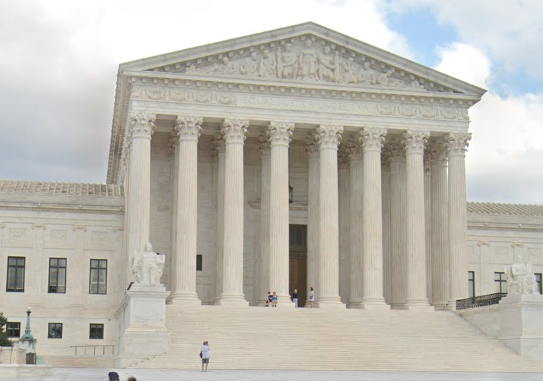
WASHINGTON (AP) — The Supreme Court is trying to sort out whether states can prosecute immigrants who use fake Social Security numbers to get a job.
The justices heard arguments Wednesday in Kansas’ appeal of a state court ruling that threw out three convictions after concluding the state was seeking to punish immigrants who used fake IDs to obtain jobs.
The Kansas Supreme Court ruled that the federal government has exclusive authority to determine whether an immigrant may work in the United States.
The justices seemed concerned that states shouldn’t be hampered in other identity-theft prosecutions when someone might use a stolen Social Security number to get a driver’s license or arrange for direct deposit of a paycheck.
The case arose from three prosecutions in Johnson County, a largely suburban area outside Kansas City where the district attorney has aggressively pursued immigrants under the Kansas identity theft and false-information statutes.
The convictions under state law could alter immigration status and lead to deportation.
The issue is whether Kansas is blocked from prosecuting those crimes because it is relying on information that is on a required federal work authorization form, the I-9. Kansas, backed by the Trump administration and 12 states, argues it can prosecute because the same information also appears on state work forms.
In 2012, the court ruled that portions of an Arizona law targeting immigrants without proper legal documents could not be enforced because federal law trumps state measures in the area of immigration. The three immigrants in the Kansas case say the high court’s Arizona decision should determine the outcome in their situation.
Kansas’ argument would render the Arizona decision meaningless, Justice Elena Kagan said in an exchange with Kansas Attorney General Derek Schmidt.
Schmidt disagreed. “We aren’t targeting folks because of their status. We are enforcing our identity theft laws,” he said.
Justice Samuel Alito made clear that he thought that Kansas did nothing wrong in prosecuting the three men who all were caught using fake IDs to get hired.
“This is not a situation like Arizona, where a state has criminalized something that is not criminal under federal law. It’s a case where the same conduct is criminal under federal law and, Kansas says, under Kansas law,” Alito said. Alito dissented from the relevant portions of the Arizona decision.
Several justices elicited answers from Paul Hughes, representing the immigrants, that indicated they could issue a narrow ruling in this case in favor of the immigrants without stepping on states’ ability to pursue traditional identity theft cases.
Such an outcome might please Chief Justice John Roberts, who was part of the majority in the Arizona case along with the four liberal justices. Justice Anthony Kennedy, who retired last year, wrote the 2012 opinion.
The court could end up deciding very little, Justice Neil Gorsuch said, because Kansas and other states would be sure to use documents other than work authorization forms in identity theft cases against immigrants.
“So we are deciding how many angels are dancing on the head of this pin? Is that what this case is about?” Gorsuch said.
A decision in Kansas v. Garcia, 17-834, is expected by late June.
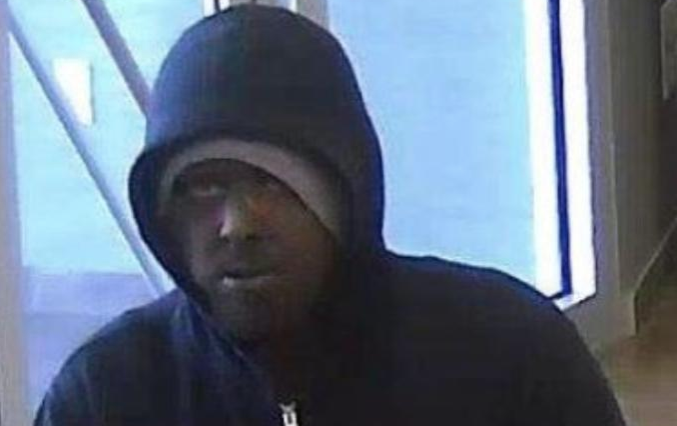
SEDGWICK COUNTY — Law enforcement authorities are investigating a bank robbery and have released security camera images of the suspect.
Security camera image -FBI
Just before 3:30p.m. Wednesday, police responded to the Fidelity Bank in the 2100 block of North Bradley Fair in Wichita, according to a media release.
The suspect walked into the bank, handed the teller a note, threatened a weapon but did not show one.
The suspect ran from the bank with an undisclosed amount of cash. There were no injuries.
The suspect is described as white man in his mid-30s and wearing brown face paint. He wore all black including black gloves. Anyone with information is asked to contact police.
photo of suspect in the Sept. 16 robbery courtesy Wichita Police
On September 16, a woman robbed the bank, according to police. Authorities have no reported an arrest in that case.
LAWRENCE, Kan. (AP) — A 45-year-old Lawrence man has been sentenced to 11 years and four months in a case in which the reasons for the charges remain unclear.
BJ Lauri was sentenced Wednesday for kidnapping and sexual battery. An affidavit detailing the allegations against Lauri were sealed after a judge determined the victim’s mental or emotional well-being could be jeopardized by its release.
Police previously said that in January, a woman told a Hy-Vee employee she had been held against her will and several “criminal events” occurred during that time. Lauri was originally charged with human trafficking and other more severe charges but pleaded no contest to the two charges.
Lauri’s co-defendant, 51-year-old John Brown, is cooperating with prosecutors. He is charged with kidnapping and two misdemeanors.
SEDGWICK COUNTY — Law enforcement authorities are investigating an aggravated assault and have made an arrest.
Just after midnight Monday, police responded to a vandalism call at a home in the 1600 Block of North Robin in Wichita, according to officer Charley Davidson.
An 80-year-old woman at the residence told police she heard a loud noise outside the home and found damage to a door of the attached garage, to a car parked inside the garage from a what appeared to be a shotgun.
An 18-year-old girl was also inside the home at the time of the incident, according to Davidson. There were no injuries.
Investigators learned that two 17-year-old boys were involved. Police located and arrested them Tuesday without incident. Officers also recovered the shotgun. The 18-year-old girl at the home and the boys arrested are acquainted, according to Davidson.
One of the boys is being held on requested charges that include discharge of a firearm at an occupied dwelling and criminal threat, according to Davidson. The other boy is being held on a requested charge of discharge of a firearm at an occupied dwelling.
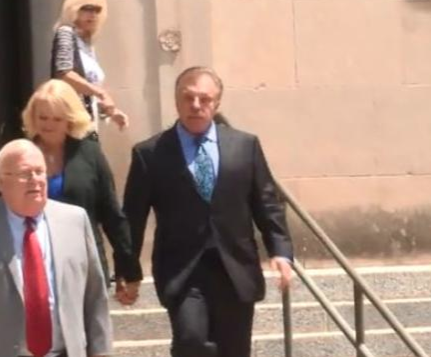
WICHITA—Well known Wichita lawyer Brad Pistotnick was sentenced Tuesday after pleading guilty to his role in a cyberattack against online sites that were critical of his work.
Wichita Attorney Brad Pistotnik leaves the courthouse -photo courtesy KWCH
On Wednesday, Pistotnick’s attorney Mark Schoenhofer released a statement on his client’s change of plea in Federal Court.
“The U.S. Government dismissed all ten felonies listed in the original indictment against lawyer Brad Pistotnik in exchange for pleas to three misdemeanor “accessory after the fact” charges.
Mr. Pistotnik entered into a plea agreement whereby the government sought no prison time, no probation and Mr. Pistotnik would pay fines of $375,000.00 plus court costs and restitution.
The U.S. District Court accepted the plea deal. Mr. Pistotnik has paid his fines and restitution, and he is now done with this chapter of his life. He looks forward to continuing to assist Kansans who have been injured in serious accidents.”
—————–
WICHITA, KAN. – A well known Wichita lawyer was sentenced Tuesday after pleading guilty to being involved in a cyberattack, according to U.S. Attorney Stephen McAllister said. He was ordered to pay a $375,000 fine and restitution of $55,200.
Bradley A. Pistotnik, 63, pleaded guilty to three counts of being an accessory after the fact to making an extortionate threat over the internet. In his plea, Pistotnik admitted he was contacted by attorneys from the legal firm Jaburg Wilk and Ripoff Report regarding cyberattacks launched against Ripoff Report, Jaburg Wilk and Leagle. He falsely denied knowing anything about the attacks.
In fact, Pistotnik knew co-defendant David Dorsett had initiated a flood of emails against the servers used by Leagle, RipoffReport and Jaburg Wilk. Dorsett had met previously with Pistonik offering web design and reputation management services. Dorsett sent emails demanding the removal of information that reflected badly on Pistotnik from their web sites. In one of the threatening emails, Dorsett said, “… if you don’t remove it we will begin targeting your advertisers…”
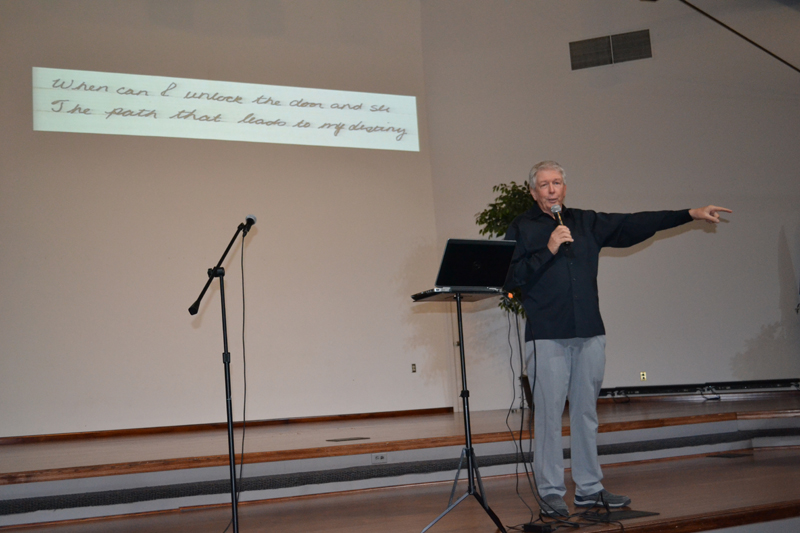
Darrell Scott speaks to those assembled at Webster Conference Center Monday. Photo courtesy Smoky Hill Education Service Center
SALINA – It is not an easy message. It is not supposed to be.
Darrell Scott, co-founder of Rachel’s Challenge, clearly shared his daughter’s message of courageous compassion to a group of about 70 on Monday in Salina.
“We don’t call it ‘Rachel’s Suggestion,’” he said. “A challenge requires something of you.”
Rachel Joy Scott was the first person killed in the Columbine tragedy 20 years ago, and her school essays, personal poetry, journals and real-life examples were the inspiration for Rachel’s Challenge.
“I’m thrilled that my daughter didn’t die when her physical body died, but that her influence has lived on – now 20 years after her death – and is still reaching and impacting millions of people,” he said. “As a parent, I couldn’t be more proud of her as an example of kindness and compassion that goes all over the world.”
Out of tragedy and grief, Scott took inspiration from his daughter and helped to create and run the Rachel’s Challenge organization. He related stories of a time that Rachel made a new student feel included when others rejected her and a moment when she bravely inserted herself between bullies and their intended victim.
Since its inception, Rachel’s Challenge has reached more than 25 million people, prevented at least eight planned school shootings and averted more than 500 potential suicide deaths.
Scott said it is an organization defined by advocating for compassion, rather than focusing on being against negativity.
“We are not an anti-bullying program,” he said. “We are a pro-kindness program.”
As he spoke to the conference of educators, mental health professionals and other community leaders, Scott said that more security is not sufficient to prevent school violence.
“We’ve worked so hard on hardening the target,” he said. “Now finally the pendulum has started swinging back toward softening the heart.”
Changing the culture to emphasize kindness and understanding is a lesson everyone needs to learn today, Scott said.
“We need to return to civility,” he said. “We need to return to kindness and compassion.”
Smoky Hill Education Service Center, the Dane G. Hansen Foundation and STOPit Solutions co-sponsored the event at the Webster Conference Center.
Lisa Gehring, Superintendent of Schools for USD 270 Plainville, brought her entire faculty to the event to hear Scott.
“Darrell has such a powerful message about connecting with students and building relationships with them,” she said. “I’m just so thankful to have this opportunity. I appreciate working with Smoky Hill Education Service Center to be able to bring this to our faculty today.”
The event on Monday was one more link in a chain that started with a sentence Rachel Scott wrote in a school essay, not long before her death.
“If one person will go out of their way to show compassion,” she wrote, “It will start a chain reaction of kindness.”
WASHINGTON —The Federal Communications Commission Wednesday approved the $26.5 billion combination of Sprint and T-Mobile on a 3-2 party-line vote.
The wireless merger still faces opposition from a coalition of state attorneys general, who argue the deal is bad for competition. The companies won’t merge while litigation persists.
The antitrust trial is scheduled to start in New York in December, an unusual situation given that the Trump administration’s Justice Department approved the deal.
The FCC chairman, Ajit Pai, a Republican, backed it months ago citing the companies’ promise to build out a next-generation 5G network to many rural areas, improving internet access.
The Democratic commissioners say going from four to three major wireless companies will mean higher prices for consumers. They say it will be difficult to enforce promises made by T-Mobile and Sprint.
The Eagle Radio Auction kicks off Thursday morning at 8 a.m. on radio stations 101.9 KKQY and 94.3 FM and 1400 AM KAYS.
There are thousands of items to bid on and buy, including a Gun Safe from Radke Implement.
Retail Price $1400
The Case Liberty 30 is a 1-hour fire rated safe that combines form and function to make a lasting addition to your home. Comes in Black with a E-Lock. The 1-hour fire rated safes can withstand blazes of up to 1200 degrees Fahrenheit with their layers of sturdy fireboard and certified 83,000 BTU fire rating. These safes also have military-style locking bars and a tough body that can withstand drills and burglary attempts. They’re the smart choice for protecting the items you value. Choose a case Liberty 30 for a safe you can rely on. PICK UP IN HAYS. Exterior Height: 60.5, Exterior Width: 36, FOOTPRINT (Width x Depth): 36″ x 22″, Exterior Cubic Feet (safe body only): 27.7, Interior Height: 57.5
$1500 Certificate from Roy’s Custom Cabinets
Retail Price $1500
$1,500 Gift Certificate good for Mid Continent Kitchen or Bathroom cabinets. Mid Continent Cabinetry has over 2,500 combinations of design options, including decorative accessories and quality finishing options. Get the look you want for your home with Mid Continent Cabinetry from Roy’s Custom Cabinets in Hays. Gift Certificate value is $1,500. See more at www. royscustomcabinets.com. Roy’s Custom Cabinets 821 East 11th Hays KS 785-625-6724
Ritchie Omni 3 Cattle Water Fountain from Karst Water Well
Retail Price $995
Ritchie Omni 3 Cattle water fountain. Designed with animal safety in mind, the Omni 3 features smooth rounded edges and a fully insulated casing for energy efficiency. The stainless steel trough features thermostatically controlled heat elements that are attached to the underside for frost free service even under the most severe winter conditions. Herd capacity is 100 head. And Ritchie fountains have the best warranty in the industry. See all the details at www.ritchiefount.com.
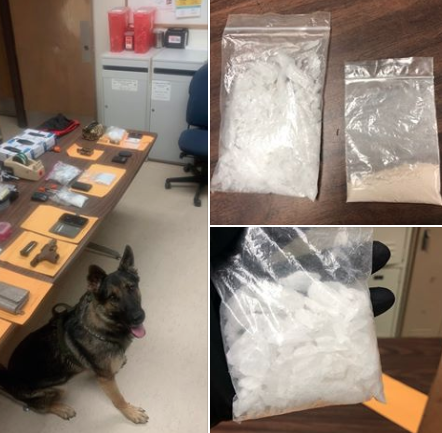
RENO COUNTY — Law enforcement authorities are investigating two suspects on drug charges after an arrest in Hutchinson.
Photo courtesy Hutchinson Police
Just after 8:30a.m. Tuesday, police were dispatched to the 400 Block of East 1st Avenue in Hutchinson for suspicious activity, according to a social media report.
While officers were investigating, K9 Tank was deployed and alerted to the suspect vehicle. A search was conducted on the vehicle and the officers seized the following items, 2.6 ounces of Methamphetamine., 7.5 grams of Heroin, 43.6 grams of Marijuana Dabs and a Firearm. Police also arrested two individuals for numerous drug charges.
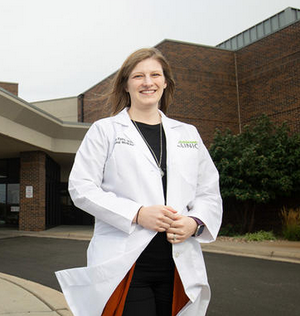
Sara Ritterlings Patry, one of University of Kansas School of Medicine-Salina’s first graduates, practices internal medicine in Hutchinson. Aaron Patton / for Kaiser Health News
SALINA — The University of Kansas School of Medicine-Salina opened in 2011 — a one-building campus in the heart of wheat country dedicated to producing the rural doctors the country needs.
Now, eight years later, the school’s first graduates are settling into their chosen practices — and locales. And those choices are cause for both hope and despair.
Of the eight graduates, just three chose to go where the shortages are most evident. Two went to small cities with populations of fewer than 50,000. And three chose the big cities of Topeka (estimated 2018 population: 125,904) and Wichita (389,255) instead.
Their decisions illustrate the challenges facing rural recruitment: the lack of small-town residencies, the preferences of spouses and the isolation that comes with practicing medicine on one’s own.
But the mission is critical: About two-thirds of the primary care health professional shortage areas designated by the federal Health Resources and Services Administration in June were in rural or partially rural areas. And it’s only getting worse.
So Salina’s creation of a few rural physicians a year is a start, and, surprisingly, one of the country’s most promising.
Only 40 out of the nation’s more than 180 medical schools offer a rural track. The Association of American Medical Colleges ranked KU School of Medicine, which includes Salina, Wichita and Kansas City campuses, in the 96th percentile last year for producing doctors working in rural settings 10 to 15 years after graduation.
“The addition of one physician is huge,” said William Cathcart-Rake, the founding dean of the Salina campus. “One physician choosing to come may be the difference of communities surviving or dissolving.”
The Draw Of Rural Life
By placing the new campus in Salina (population: 46,716), surrounded by small towns for at least 50 miles in every direction, the university hoped to attract and foster students who had — and would deepen — a bond to rural communities.
And, for some, it worked out pretty much as planned.
One of the school’s first graduates, Sara Ritterling Patry, lives in Hutchinson (population: 40,623). Less than an hour from Wichita, it isn’t the most rural community, but it’s small enough that she still runs into her patients at Dillons, the local grocery store.
“Just being in a smaller community like this feels like to me that I can actually get to know my patients and spend a little extra time with them,” she said.
With a population under 41,000, Hutchinson isn’t the most rural community, but it’s small enough that Ritterling Patry still runs into her patients at the grocery store. Credit Aaron Patton / for Kaiser Health News
After all, part of the allure of a rural practice is providing care womb to tomb. The doctor learns how to deliver the town’s babies, while serving as the county coroner and the public health expert all at once, said Robert Moser, the head of the University of Kansas School of Medicine-Salina and former head of the state health department.
He would know — he worked for 22 years in Tribune, Kansas (population: 742).
For another of the original Salina eight, Tyson Wisinger, that calling brought him back to his hometown of Phillipsburg (population: 2,486) after his residency. His kids will go to his old high school, where his graduating class was all of 13 people, and he’ll take care of their baseball teammates. Plus, they’ll grow up living minutes away from generations of extended family.
“I can’t have imagined a situation that could have been more rewarding,” Wisinger said.
The Rural Challenge
But the road to rural family medicine also includes a thing called “windshield time” — the amount of time needed to travel between clinics or head to the closest Walmart.
Then there’s figuring out just how far their patients will need to drive to get to the nearest hospital — which for Drs. Daniel Linville and Jill Corpstein Linville is a solid four hours for more advanced care from their new practice in Lakin, Kansas (population: 2,195).
Their outpost in southwestern Kansas can feel a little bit like a fishbowl. “We do life with some of our patients,” Corpstein Linville said.
Already, the Linvilles have delivered babies and handled a variety of ailments there.
The pair met and married during their four years in Salina — they jokingly call it a “full-service med school.” They completed a family medicine residency in Muncie, Indiana. Then they were recruited by a rural practice that helped them avoid what Moser calls the most dreaded words in rural medicine: “solo practice.”
New doctors don’t want to practice alone, especially as they develop their sea legs, due to the strains of constantly being on call and having singular responsibility for a town. Telemedicine, where doctors can easily consult with other physicians around the country via web video or phone, is helping, as are physician assistants.
Diverging From The Path
Claire Hinrichsen Groskurth, another member of the first graduating class, always intended to return to a small town similar to where she grew up.
“The first thing that threw me off was I fell in love with surgery and OB-GYN,” she said. “Then the second thing that threw me off was marrying another doctor,” whose life goals headed in a different direction.
She’d been a member of the Scholars in Rural Health program at Kansas University that seeks out rural college students who are interested in medicine. She also had committed to the Kansas Medical Student Loan program, which promises to forgive physicians’ tuition and gives a monthly stipend if they agree to work in counties that need physicians, or in other critical capacities.
But when she realized she might specialize, she decided to take out federal loans for her final years. She had to pay back the first year of the special loan with 15% interest.
Plus, her now-husband, who went to Kansas University’s Wichita campus, needed to be in a large enough city to accommodate further training to become a surgeon. So Hinrichsen Groskurth delivers babies as she thought she would — but in Wichita.
The spousal coin can flip both ways: Ritterling Patry needed to find a place that worked for her husband’s farming of corn, sorghum, soybeans and wheat. So the smaller city of Hutchinson it was.
Flaws In The Pipeline
Most medical school students come from urban areas and are destined to stay there, said Alan Morgan, the head of the National Rural Health Association. Producing doctors for the vast swaths of rural America needs to be more of a priority at every step in the education pipeline, experts said.
Many academic centers sell students on the party line that they’ll be overworked, underappreciated and underpaid, according to Mark Deutchman, director of the University of Colorado School of Medicine’s rural program. “They take people who are interested in primary care or rural and beat it out of them throughout their training,” he said.
And that kind of rhetoric often influences the opinion of their medical school peers, which those in rural health might resent.
“Small does not mean stupid,” Moser said.
Medical students everywhere should be exposed to rural options, according to Randall Longenecker, who runs Ohio University Heritage College of Osteopathic Medicine’s rural programs.
“If a medical student never ever goes to a rural place, they never find out,” he said. “That’s why students need to meet rural doctors who love what they do.”
The federal government recently allocated $20 million in grants to help create 27 rural residency programs — programs where newly minted doctors go for practical training before they can be fully licensed. That’s a big jump from the 92 programs now active.
For Jill Corpstein Linville, the pipeline also needs to start at more schools like Salina that are promoting rural medicine from Day One.
“So when you hear rural medicine, you know that it’s a thing and don’t kind of cringe,” she said. “You don’t think it’s someone taking care of a cow.”
KANSAS CITY (AP) — Authorities say a kindergartner brought an unloaded gun to a Kansas City elementary school in a backpack, apparently without knowing it was there.
Kansas City Public Schools said in a news release that a teacher was notified after the Faxon Elementary School student found the weapon Tuesday. Police said that the school’s security then secured the gun. The student’s parents and state welfare officials were notified.
The district statement said, “There is every reason to think that the child was unaware that a firearm had been placed in the backpack.” The district said it was unable to comment further because of the ongoing investigation and student confidentially requirements.
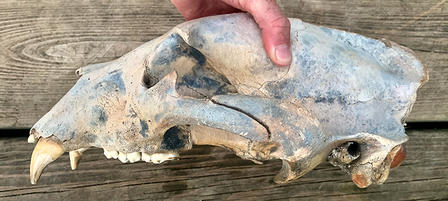
Large skull has been donated to Sternberg Museum in Hays
KDWPT
EMPORIA – A mid-August kayak trip down the Arkansas River in south-central Kansas took a fascinating turn for sisters Ashley and Erin Watt when they happened upon a massive skull protruding from a sandbar. It was partially buried nose down, but they immediately knew the shape was unique. When they pulled it from the sand and saw the large teeth of a carnivore, they knew they had something special.
With a little research, Ashley and Erin determined they had likely found a bear skull. They shared their exciting discovery in a Facebook post, which caught the eyes of local Kansas Department of Wildlife, Parks and Tourism (KDWPT) game warden Chris Stout. Stout shared the photos with colleagues, and they eventually reached Sternberg Museum of Natural History paleontologists Dr. Reese Barrick and Mike Everhart who provided insight into the significance of the finding.
While Barrick and Everhart quickly verified the sisters’ suspicions that this was a bear skull, the large size – approximately 16 inches long by 8.5 inches wide – and fossilized appearance left them questioning whether this was a modern grizzly or a more primitive species from the past. The skull is believed to have been deposited into the Ark River sands – an excellent substrate for preservation – and maintained there until it was displaced by this year’s historic floods.
“The bear skull was washed out of the same river sediments that routinely produce the skulls and bones of the American bison, some of which could date back as far as the last Ice Age,” said Everhart, who serves as the Adjunct Curator of Paleontology at the Sternberg Museum. “Whether it is hundreds or thousands of years old, the skull gives us a better insight into the richness of life on the plains before Western man.”
Grizzly bears are native to Kansas and are thought to have occurred throughout most of the state, but history suggests the species was likely extirpated by the middle 1800s. Perhaps the most likely scenario is that this skull did belong to the modern species. Though old enough to have partially fossilized, the skull is in excellent condition; except for the loss of a few minor teeth, it is largely intact and minimally worn.
Though there are several historical accounts of grizzly bears in Kansas, this could be the first physical evidence of their former presence, pending species verification, of course.
“It’s been pretty amazing not only discovering the skull but also the crowdsourcing used to determine how truly exceptional this find is,” said Ashley. “We can’t wait to see what further information can be uncovered about this incredible animal.”
Ashley, a former agriculture teacher at Oxford Jr/Sr High School, and Erin, an Animal Science student at West Texas A&M University, have graciously donated the specimen to the Sternberg Museum in Hays.
DETROIT (AP) — Bargainers for General Motors and the United Auto Workers reached a tentative contract deal on Wednesday that could end a monthlong strike that brought the company’s U.S. factories to a standstill.
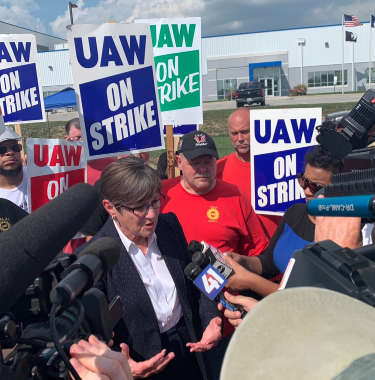
Governor Laura Kelly met with striking workers in Kansas last month-photo courtesy office of Kansas Governor
The deal, which the union says offers “major gains” for workers, was hammered out after months of bargaining but won’t bring an immediate end to the strike by 49,000 hourly workers. They will likely stay on the picket lines for at least two more days as two union committees vote on the deal, after which the members will have to approve.
Terms of the tentative four-year contract were not released, but it’s likely to include some pay raises, lump sum payments to workers, and requirements that GM build new vehicles in U.S. factories. Early on, GM offered new products in Detroit and Lordstown, Ohio, two of the four U.S. cities where it planned to close factories.
The company offered to build a new electric pickup truck to keep the Detroit-Hamtramck plant open and to build an electric vehicle battery factory in or near Lordstown, Ohio, where GM is closing an assembly plant. The battery factory would employ far fewer workers and pay less money than the assembly plant.
GM and the union have been negotiating at a time of troubling uncertainty for the U.S. auto industry. Driven up by the longest economic expansion in American history, auto sales appear to have peaked and are now heading in the other direction. GM and other carmakers are also struggling to make the transition to electric and autonomous vehicles.
Meanwhile, President Donald Trump’s trade war with China and his tariffs on imported steel and aluminum have raised costs for auto companies. A revamped North American free trade deal is stalled in Congress, raising doubts about the future of America’s trade in autos and auto parts with Canada and Mexico, which last year came to $257 billion.
Amid that uncertainty, GM workers have wanted to lock in as much as they can before things get ugly. They argue that they had given up pay raises and made other concessions to keep GM afloat during its 2009 trip through bankruptcy protection. Now that GM has been nursed back to health — earning $2.42 billion in its latest quarter — they want a bigger share.
If approved, the contract agreement will set the pattern for negotiations at Fiat Chrysler and Ford. It wasn’t clear which company the union would bargain with next, or whether there would be another strike.
The union’s bargainers have voted to recommend the deal to the UAW International Executive Board, which will vote on the agreement. Union leaders from factories nationwide will travel to Detroit for a vote on Thursday. The earliest workers could return would be after that.
In past years, it’s taken a minimum of three or four days and as long as several weeks for the national ratification vote. Workers took almost two weeks to finish voting on their last GM agreement, in October of 2015. Then skilled trades workers rejected it, causing further delays.
“The No. 1 priority of the national negotiation team has been to secure a strong and fair contract that our members deserve,” union Vice President Terry Dittes, the chief bargainer with GM, said in a statement Wednesday. The agreement, he said, has “major gains” for UAW workers.
This time around — with a federal corruption investigation that has implicated the past two UAW presidents and brought convictions of five union officials — many union members don’t trust the leadership and likely won’t want to return to work until they’ve gotten a chance to vote on the deal themselves.
In August, the FBI raided the suburban Detroit home of UAW President Gary Jones. He has not been charged and has not commented on the raid. Earlier this month, Jones’ successor as union regional director in Missouri was charged in a $600,000 embezzlement scheme, and another UAW official pleaded guilty to taking kickbacks from union vendors. Eight other people — including five UAW officials — have been convicted over the past two years of looting a jointly run Fiat Chrysler-UAW training center for blue-collar workers. Another official was charged in September.
There’s also no guarantee that the first contract deal with GM will pass. Some workers on the picket lines have said they may not vote for the first offer.
“We’re not just going to take the first thing that they give us,” worker Tina Black said last month from the picket line at an engine and transmission plant in Romulus, Michigan, near Detroit’s main airport.
But Louis Rocha, president of a UAW local in Orion Township, Michigan, said recently that union bargainers have taken strong positions against the company. “I think we’re going to be OK,” he said of the ratification vote.
The strike had shut down 33 GM manufacturing plants in nine states across the U.S. It was the first national strike by the union since a two-day walkout in 2007 that had little impact on the company.