We have a brand new updated website! Click here to check it out!

Pope to priestly sex abusers: Turn yourselves in

During his annual Christmas speech to the Vatican bureaucracy, Pope Francis vowed the Catholic Church will “never again” cover up clergy sex abuse and demanded that priests who have raped and molested children turn themselves in. / Shutterstock.com

By NICOLE WINFIELD
Associated Press

VATICAN CITY — Pope Francis demanded Friday that priests who have raped and molested children turn themselves in and vowed that the Catholic Church will “never again” cover up clergy sex abuse.

Francis dedicated his annual Christmas speech to Vatican bureaucrats to abuse, evidence that a year of devastating revelations of sexual misconduct and cover-up around the globe has shaken his papacy and caused a crisis of confidence in the Catholic hierarchy.

Francis acknowledged that the church in the past had failed to treat the problem seriously, blaming leaders who out of inexperience or short-sightedness acted “irresponsibly” by refusing to believe victims. But he vowed that going forward the church would “never again” cover up or dismiss cases.

“Let it be clear that before these abominations the church will spare no effort to do all that is necessary to bring to justice whosoever has committed such crimes,” he said.

Francis urged victims to come forward, thanked the media for giving them a voice and issued a stark warning to abusers: “Convert and hand yourself over to human justice, and prepare for divine justice.”

Francis’ remarks capped a dreadful year for the Catholic Church, one that began with his own botched handling of a sprawling sex abuse scandal in Chile and ended with the U.S. hierarchy in a free-fall of credibility as state prosecutors have begun uncovering decades of cover-up.

Francis has summoned church leaders from around the globe for a February abuse prevention summit, in an indication that he has come to realize that the problem is far greater and far more global than he had understood at the start of his pontificate five years ago.

Francis’ demand that abusers turn themselves in to face “human justice” was significant, and echoed his previous demands for mafia bosses and corrupt politicians to convert.

Vatican guidelines currently only call for bishops to report priestly abusers to police in those countries where civil law requires it — a technicality that survivors and their advocates have long blasted as a convenient dodge to the church’s moral obligation to protect children regardless of what the law requires.

Survivors and their advocates, however, found Francis’ words hollow, noting that just this week the chief prosecutor in the U.S. state of Illinois accused church officials there of hiding the names of around 500 priests accused of abuse.

“While refusing to reveal the name of one cleric who committed or concealed child sex crimes, Francis gives yet another promise about ending cover ups,” said David Clohessy, former director of the U.S.-based survivor group SNAP. “If he’s serious, Francis could show it by suspending all Illinois bishops until they ‘come clean’ or the attorney general’s investigation clears them of wrongdoing.”

Francis warned the Vatican bureaucrats who run the 1.2 billion strong church that the scandal now undermines the credibility of the entire Catholic enterprise and that from now on the church and all its pastors must embark on a continuous path of purification.

He prayed for help so that the Church can discern true cases from false ones, and accusations from slander.
“This is no easy task, since the guilty are capable of skillfully covering their tracks,” and choosing victims who will keep silent.

It was perhaps a veiled reference to ex-Cardinal Theodore McCarrick, the disgraced retired archbishop of Washington who is now facing a canonical trial on allegations he groped a teenage altar boy in the 1970s.

The McCarrick revelations have fueled the crisis in confidence in the U.S. and Vatican hierarchy since it was apparently an open secret that he slept with seminarians but nevertheless was allowed to rise to the heights of church power.

Francis’ reference to the difficulty in distinguishing allegation from slander was also perhaps a reference to his own failure to believe Chilean victims of a notorious predator priest.

During Francis’ disastrous trip to Chile in January, he dismissed survivors’ allegations of cover-up as “slander,” sparking outrage in Chile and beyond. Francis eventually did an about-face, apologized to the victims and acknowledged he had made “grave errors in judgment” about the case.

Going forward, he urged those who have been victims of sexual abuse, abuse of power and abuse of conscience to speak out.

“The church asks that people not be silent, but bring it objectively to light, since the greater scandal in this matter is that of cloaking the truth,” he said. He thanked the media, in particular, for helping shed that light.

“I myself would like to give heartfelt thanks to those media professionals who were honest and objective and sought to unmask these predators and to make their victims’ voices heard,” he said.

The cardinals and bishops of the Curia listened attentively, including the dean of the College of Cardinals, Cardinal Angelo Sodano, who has long been blamed for the Vatican’s refusal to acknowledge the depth of the problem during the quarter-century pontificate of St. John Paul II.

Sodano, who once dismissed media reports of abuse as “petty gossip,” made no mention of the scandal that has convulsed the church this year. In his introductory remarks Friday to the pope, he instead thanked Francis for his pastoral visits in Rome, Italy and around the world, for having canonized Pope Paul VI and for having issued a new teaching document.

In previous years, Francis has used his Christmas greetings to issue blistering criticisms of the failings of the Curia, accusing Vatican bureaucrats of suffering from “spiritual Alzheimer’s” and taking part in the “terrorism of gossip.”

His remarks this year had a more global outlook, noting that all around there are priests who “without batting an eye” are ready to betray all that the church stands for and enter into a “web of corruption” by abusing those in their care.

“Often behind their boundless amiability, impeccable activity and angelic faces, they shamelessly conceal a vicious wolf ready to devour innocent souls,” he said.


Holiday car rental? AAA warns syncing your phone to vehicle can breach privacy

AAA
TOPEKA – If your holiday travels include car rental, AAA Kansas urges you to think twice before syncing your phone to the vehicle’s infotainment system. While syncing allows you to make hands-free calls and texts, stream music, and even browse the web, the personal information stored on your phone may be shared in order to do this.
“Drivers need to be prudent about their personal info; this goes beyond identity theft into the realm of personal safety,” said Shawn Steward, AAA Kansas spokesman. “Every car system is different, and prior to syncing a device to a vehicle, motorists need to be aware of the risks.”
The stored information is vulnerable to theft. If you sync your phone to a rental car, hand your keys to a valet or trade in your car, you open yourself up to having personal information stolen. It is possible for an unauthorized person to gain access to your home address and access your garage door opener.

“Treat the information stored in your car—or rental car—with the same discretion you give to your checkbook, cell phone, and birth certificate,” AAA Kansas’ Steward said.  Currently there are no industry or government standards for vehicle infotainment systems, so here are some general guidelines:

Know the type of information that your infotainment system may be storing:
  • Home address, work address, and other saved or frequently used GPS locations
  • Your home phone number
  • Your call and message logs
  • Personal contacts
  • Text messages
  • Garage opener programming
Know what you need to do to protect your information:
  • Check your phone’s permissions to learn what information your car can access. When syncing your phone, if your infotainment system allows you to choose which types of information you share, restrict it to only what’s necessary. For instance, if you’re only syncing your phone to play music, the car only needs to access your music library, not your personal contacts.
  • Before handing your keys over to a valet, check to see if your car has a Valet Mode you can set the infotainment system to that will protect your sensitive data.
  • When renting a car, if you’re plugging your phone in to charge it, use the cigarette lighter adapter port (if you have the cable for it) instead of the USB, because that port doesn’t access your information. Use your phone’s GPS without syncing up with the rental car.
  • Before trading in your car or returning a rental car, go to the settings menu on the car’s infotainment system to find a list of synced devices. When you find your devices, follow the prompts to delete them. If you can’t figure out how to do this, check the owner’s manual or an online tutorial.

Gang member sentenced to 55 years in Wichita killing

WICHITA (AP) — A Wichita gang member has been sentenced to more than 55 years in prison for killing another man.

The Wichita Eagle reports that 31-year-old Emmanuel Reed was sentenced Wednesday for second-degree murder and criminal possession of a firearm by a convicted felon in the death of 30-year-old Bretodd Williams.

Prosecutors say an eyewitness told police that he saw the men talking before hearing “what sounded like fireworks exploding.” An autopsy report says Williams was shot several times, including in the left cheek, chest and back. Authorities arrested Reed near a Payless shoe store in the area after police say he was seen going into a nearby QuikTrip in one set of clothes and leaving in another.

Police said previously that both men were documented gang members and knew one another.

Advocates: Black kids are more likely to land in foster care

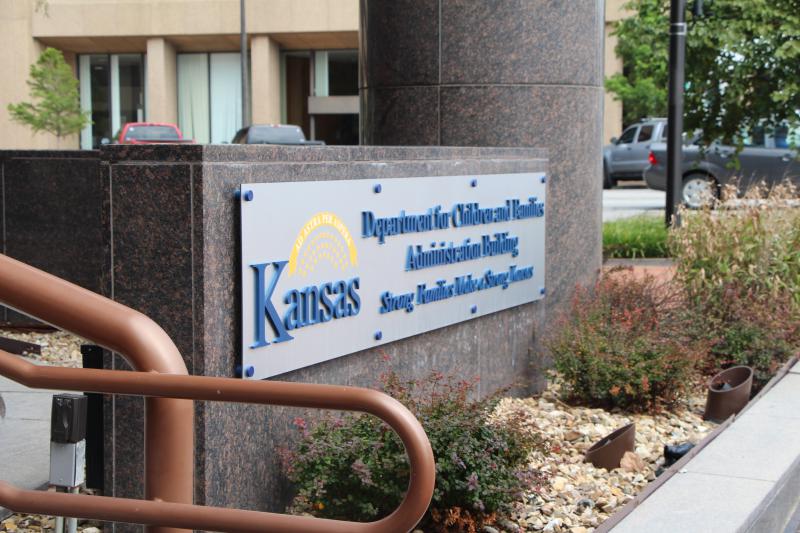
The state’s child welfare agency is overwhelmed with foster cases. / Kansas News Service

By MADELINE FOX
Kansas News Service

African-American children are much more likely to land in the Kansas foster care system than white children.

A report from Strengthen Families Rebuild Hope, a coalition of organizations and people who have experience with the foster care system, concluded that Kansas falls in line with national trends.

But the disparity in Kansas, with black children 75 percent more likely than white children to be pulled from their homes, has gotten worse in the past two years. Coalition member Tara Wallace said that reflects the strain of having a record number of kids in foster care in Kansas.

“At the rate we’re going,” she said, “this situation is only perpetuating itself.”

Wallace is the president of the Topeka chapter of the Kansas African American Foster Care/Adoption Coalition. She joined five former foster youth, representatives of social workers and the ACLU, the foster parent organization FosterAdopt Connect, the Kansas Association of Community Action Programs, Kansas Appleseed and other individuals with past or current experience working in child welfare to form the coalition’s steering committee.

The report released Thursday morning echoes concerns brought up by a task force examining Kansas foster care and a recently filed federal lawsuit that alleges Kansas has rendered children in its care effectively homeless with frequent moves.

Strengthen Families Rebuild Hope recommended Kansas better support struggling families with improvements to safety net programs such as food stamps and cash welfare.

“Families are on this tightrope,” said Becky Fast, a coalition member who heads the National Association of Social Workers’ Kansas chapter. “When you don’t have food assistance, cash assistance, that our state used to provide, that often knocks them off.”

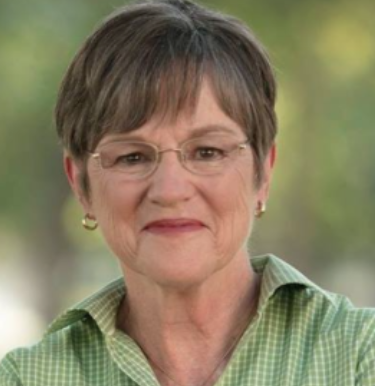
Preliminary results from a study at the University of Kansas have suggested a connection between restrictions on welfare eligibility and the climbing number of kids in foster care. Gov.-elect Laura Kelly has said reexamining those restrictive policies will be a top priority when she takes office.

The coalition also recommended more investment in foster care prevention services. They range from home-visit programs of at-risk families to drug and alcohol abuse treatment. The group highlighted the Families First Prevention Act, a federal law that can match funds for many of these programs.

The Kansas Department for Children and Families has asked for $3.9 million from the state budget to put toward Families First-eligible programs, but child welfare advocates say DCF should seek $30 million from the Legislature.

Finally, the coalition says the Kansas foster care system needs to do better by the kids who end up in state care. The report highlights foster children’s lack of stability in foster care placements — the focus of the November lawsuit — and encourages more and better placements for kids with a variety of needs.

As of last month, there were 7,505 children in foster care in Kansas. Kansas’ ratio of kids in foster care to total kids in the state is nearly double the national average.

On average, they’re spending close to two years in the system. Those who leave care are also coming back in at a higher rate than a federal performance standard.

As of 2017, Kansas had more licensed foster care beds than children in the foster care system, according to a report from the Chronicle for Social Change. That doesn’t include placements with relatives, who can take in family members in the foster system without having to be licensed.

Kansas had 7,367 beds in 2017. DCF says they have recruited additional foster families and set up additional beds in group homes in the past year.

But having more beds than kids doesn’t mean there are enough beds. Some foster homes and group homes are only licensed to take younger kids, or kids of one gender. And some children, such as those with disabilities or records of assaults, have more needs than many foster families are able to meet.

The coalition also recommends lowering social workers’ foster care caseloads. DCF recommends social workers handle 25-30 cases. A Legislative Post Audit report from last year found that from 2014 to 2016, both foster care contractors often had caseloads higher than that.

Fast, of the social workers’ organization, said that puts a nearly impossible strain on social workers that makes them more likely to leave those jobs.

“Those that are hurt, in the end, are children,” she said. “The people who knew them best often leave, and they have to start over again.”

The Strengthen Families Rebuild Hope report joins a number of similar reports and requests advocating for drastic changes to foster care released in recent months. They fall into the lap of Kelly when she takes office in January.

Kelly has listed foster care as one of her top priorities as she comes into office.

Ried said the coalition put together the report with policymakers in mind.

“It was really crafted strategically to give data points to legislators,” he said.

Madeline Fox is a reporter for the Kansas News Service, a collaboration of KCUR, Kansas Public Radio, KMUW and High Plains Public Radio covering health, education and politics. You can reach her on Twitter @maddycfox.

Kelly, Koch Industries agree on Kansas prison reform need

TOPEKA (AP) — Incoming Kansas Gov. Laura Kelly and Wichita-based Koch Industries agree that the state’s prison system needs to be reformed.

The Wichita Eagle reports Kelly’s call for criminal justice reform comes as the state’s prison system experienced its largest increasing inmates in a decade. Official estimates indicate the inmate population could exceed capacity in the next couple of years.

Kelly says she wants to find a way to divert first-time drug offenders from the correctional system.

Koch Industries was a proponent of federal legislation that expands rehabilitation programs, which could bring shorter sentences for non-violent offenders in the federal system. The legislation in awaiting President Donald Trump’s signature.

Koch Industries spokesman David Dziok said the company looks forward to working with Kelly’s administration on prison reform in Kansas.

Woman sentenced for role in killing of pregnant Kansas woman

Wyandotte County Sheriff’s Office
KANSAS CITY, Kan. (AP) — A 26-year-old Kansas City, Kansas, woman has been sentenced to nearly 11 years in prison for her role in the robbery and killing of a pregnant woman and her unborn child.

The Kansas City Star reports Alora Mendoza was sentenced to 10 years and 11 months for reckless second-degree murder in the deaths of 23-year-old Joselyn Ybarra. She pleaded guilty in November.

Ybarra was killed on June 2. Relatives say Ybarra was 12 weeks pregnant when she was killed.

Mendoza admitted that she set up Ybarra to be robbed by a co-defendant. Ybarra was shot by the co-defendant during the robbery attempt.

Kansas man who set boss on fire loses appeal of conviction

LEAVENWORTH (AP) — A former hospital worker at Fort Leavenworth who tried to kill his boss by setting her on fire has lost an appeal of his conviction.

The Kansas City Star reports Clifford Currie was convicted of assault with intent to commit murder for the September 2016 attack on First Lt. Katie Blanchard.

She was seriously burned during an attack at the Munson Army Health Center at Fort Leavenworth. Currie, now 56, was a civilian employee there.

Currie was sentenced last year to 20 years in federal prison.

Currie argued in his appeal that the prosecutor made several improper statements during his trial.

The 10th U.S. Circuit Court of Appeals ruled Friday that some of the prosecutor’s statements were improper but they didn’t violate Currie’s right to a fair trial.

INSIGHT KANSAS: When it comes to marijuana, calendar in Kansas still says 1927

Kansas needs a rational adult conversation about marijuana. State marijuana laws are changing nationally, even in solidly conservative states. Public opinion on marijuana is changing, even in Kansas. But the mindset of Kansas policymakers is stuck in 1927 when the state outlawed cannabis.

Some small policies are changing. Kansas has legalized CBD containing no THC. CBD is a marijuana derivative that may help with various medical problems, whereas THC is the component that gets users high. Kansas farmers may also soon be growing hemp.

Patrick R. Miller is an Assistant Professor of Political Science at the University of Kansas.

However, all marijuana products containing THC remain illegal in Kansas. That includes medical marijuana, which is legal in over 30 states and which voters in neighboring Oklahoma and Missouri approved in 2018. Governor-Elect Laura Kelly supports medical marijuana, so that policy may change if the legislature agrees. Of course, recreational marijuana is illegal.

Average Kansans are not super conservative on marijuana. In the 2018 Fox News voter analysis survey, 62 percent of Kansas voters believed that marijuana use should “be legal nationwide” (including nearly one-third of Kris Kobach voters), with only 36 percent opposed. The fall 2018 Kansas Speaks survey from Fort Hays State University showed that 52 percent of Kansans supported “legalizing recreational marijuana for individuals 21 and older to allow taxation by the State of Kansas,” with just 39 percent opposed.

Yes, you read that correctly. Two polls—including FOX—show that most Kansans support legalized weed. Maybe they are enticed by the huge revenue rewards that Colorado reaps from taxing recreational marijuana? You may know Kansans who visit Colorado just for weed, happily pumping money into their economy and state tax coffers. Or maybe marijuana is just not an unthinkable taboo to most Kansans?

Our lawmakers, though, are not in sync. When the legislature last debated medical marijuana, Rep. John Wheeler opined that it “could open the door to absolute chaos on the streets of Kansas,” notwithstanding that his Garden City district is near Colorado and probably flourishing with weed already. And then there is Rep. Steve Alford, who publicly implied that black people and their supposed “character makeup” and “genetics” are why marijuana is illegal (he later apologized).

Of course, the other extreme on marijuana—largely absent in Topeka—is also problematic. Much like alcohol or tobacco, marijuana has risks that should not be ignored and that merit regulation, even if recreational marijuana is legal.

Now I respect that some people are uncomfortable with legalized marijuana in any form. But the age gap in opinions on marijuana is huge. Lawmakers today may not legalize recreational weed, but their children or grandchildren will. And they will wonder why today’s politicians waited so long to reap the financial benefits.

Meanwhile, Kansas is being left behind, especially on medical marijuana. That has huge implications for the many Kansans with conditions like chronic pain or seizures who might benefit from it. And bluntly, Kansas is increasingly surrounded by states with legalized weed in some form. No system is foolproof, and that marijuana has been and will continue to make its way into Kansas. Is policing that flow where Kansans want their tax dollars spent, especially given how the majority of them feel about marijuana?

Kansas deserves an informed and smart debate about marijuana. One with less hyperbole and fewer character attacks. But also one that recognizes the public opinion and policy realities around marijuana. We will not go from zero to full legalization overnight, but right now our engine is stalled while our neighbors zoom by.

Patrick. R. Miller is an Assistant Professor of Political Science at the University of Kansas

Saline Co. woman arrested for attempting to hit man with minivan

Salina Post

SALINA — A Saline County woman was arrested on suspicion of aggravated assault Wednesday evening after she allegedly tried to hit a male family member with her vehicle.

Saline County Undersheriff Brent Melander said Friday that deputies were called to the 5100 block of Thompson Road in northwest Saline County at approximately 11:20 a.m. Wednesday after an ongoing verbal dispute between Laura Derowitsch, 40, and a 43-year-old Saline County man turned potentially more dangerous.

Melander said that Derowitsch is accused of trying to strike the man with her Chrysler Town and Country minivan. He said Derowitsch missed the man and then drove away.

Deputies were later able to reach Derowitsch by phone and she agreed to go to the sheriff’s office, Melander said. She was interviewed and arrested at approximately 8 p.m. Wednesday, he said.

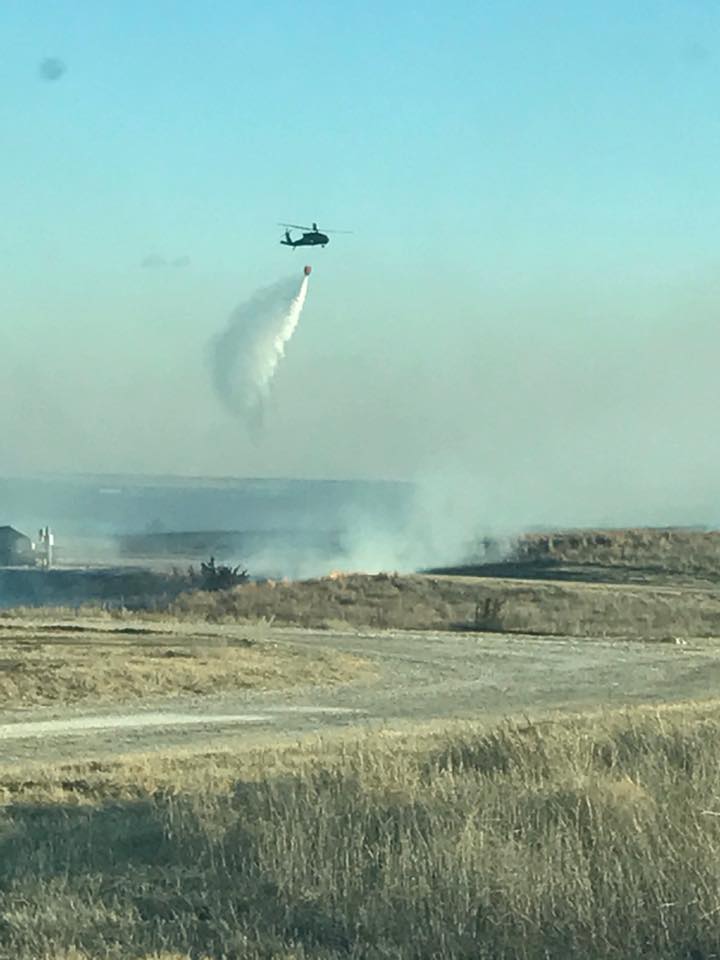
Wildfire season in Kansas projected to start earlier in 2019

Slight increase in fire weather events predicted

WICHITA — Southwest and central Kansas face an elevated threat of wildfire in the 2019 season, according to projections by the Kansas Mesonet and National Weather Service. The news came as Kansas Forest Service, Kansas Division of Emergency Management and the Office of the State Fire Marshall officials gathered in Wichita for the Kansas 2019 Wildfire Outlook Seminar on Dec. 12. The seminar was designed to update firefighters and emergency managers on the predicted wildfire season.

Understanding weather conditions and climate trends is a key aspect of fighting and preparing for wildfires in Kansas.

“We are seeing increased fuel loads in this region because of the late summer rains we received,” said Chip Redmond, mesonet manager and assistant scientist in the Weather Data Library at Kansas State University.

Redmond said that despite above-normal moisture across most of the state this winter, a slightly earlier start to the spring fire season is expected accompanied by an earlier-than-usual spring green up that could add fuel if freeze damage occurs. The combination of factors has heightened fire concerns for any fire weather event in the southwest and central part of the state.

The seminar is one way Kansas fire agencies prepare for potential wildfires.
In addition to the climatology and weather outlook, speakers reviewed reporting requirements, discussed the building of intrastate and interstate capacity, requesting state resources, aerial firefighting suppression and other topics relevant to local and rural fire departments.
While there was a decrease in acres burned and total number of fires in 2018, the fires of 2016 and 2017 burned over 800,000 acres with a cost of more than $80 million. Aggressive initial attack, improved coordination and access to mutual aid kept the impact of wildfires in 2018 to a minimum.

By the end of March 2018, KFS had already conducted more training with fire departments across Kansas than in any other year.

“Local fire authorities are building their capacity and coordination to fight wildfires in the state through the training we offer,” said Eric Ward, assistant fire management officer for KFS. “Their initial response and pre-coordination of resources is essential in minimizing the impact of wildfires in Kansas. We are proud to partner with KDEM and OSFM to support their efforts.”

— K-State Research and Extension

Ex-boyfriend of slain Wichita State student gets life term

WICHITA (AP) — A Kansas State University student has been sentenced to life in prison plus 43 months for killing his ex-girlfriend who was studying psychology at Wichita State University.

The Wichita Eagle reports that 29-year-old Dane Owens was sentenced Thursday for first-degree felony murder and aggravated burglary in the 2016 death of 22-year-old Rowena Irani.

Prosecutors say Owens parked his truck several houses away from her Wichita home and shot her in the head when she walked around a corner. He then threw her cellphone in one pond and his gun in another.

Her mother found her several hours later, and she died the next day. The defense said the shooting wasn’t intentional.

Irani was a native of Pakistan who moved to Wichita at age 10 and later became a U.S. citizen.

Ag aircraft manufacturer to locate headquarters in Newton

KDC

NEWTON – Through regional efforts, Harvey County Economic Development and the Greater Wichita Partnership worked with the Kansas Department of Commerce to assist Weatherly Aircraft Company in locating their headquarters and assembly operations to a 26,000 sq. ft. facility at the Newton City-County airport.

Weatherly Aircraft Company is an American agricultural aircraft manufacturer of planes designed for small grain farming. The company plans to add about 109 jobs in the next five years and invest over $1 million in capital investment.

Gary Beck, General Manager for Weatherly said, “As a first move to make Weatherly Aircraft Company’s new home in Kansas, we have selected hangar space at the Newton City-County Airport as an assembly facility for our model 620-B plane.  We appreciate the support we have been provided and will begin production within the first quarter of 2019.”

The city of Newton Commission and the Harvey County Commission voted to approve a five-year lease at a special joint meeting on Dec. 20. Weatherly Aircraft will take possession in February, 2019 and be operational beginning March, 2019.

“Weatherly Aircraft will be a great addition to a growing list of dynamic manufacturers in Newton and Harvey County who are doing business all over the world,” said Bob Myers, Newton City Manager.

Harvey County Economic Development Executive Director, Beth Shelton said, “We are delighted to welcome Weatherly Aircraft to the Newton City-County Airport. This project is a wonderful example of collaboration between our city, county, region, and state working together to facilitate growth and create valuable jobs in Harvey County.”

“This is another terrific development for the city of Newton, for our aviation industry, and for Kansas as a whole,” said Robert North, interim Secretary of the Kansas Department of Commerce. “Weatherly Aircraft Company’s decision to move their manufacturing operations to Kansas is the right move for them. The amount of new employment opportunities coming to Newton is really extraordinary.”

“We were honored to support Weatherly Aircraft Company’s search for new facilities outside of California by demonstrating opportunities available throughout our region,” said Andrew Nave, Executive Vice President of Economic Development for the Greater Wichita Partnership.

“The Newton City-County airport provided an ideal site for this exciting aviation business and the city of Newton, Harvey County Economic Development and the Kansas Department of Commerce worked very collaboratively to make the business case to win this company to our region.”


Copyright Eagle Radio | FCC Public Files | EEO Public File