We have a brand new updated website! Click here to check it out!

KU given $6.9 million gift to research early human life

LAWRENCE, Kan. (AP) — A $6.9 million gift from a late geologist and his wife will be used to help University of Kansas researchers better understand early human life in the Americas.

Photo Courtesy KU Endowment

Joseph and Maude Ruth Cramer established the Odyssey Archaeological Research Fund at the university in 2002 with a $1 million gift. The additional $6.9 million was recently received after their deaths.

The KU Endowment said in a news release that the gift will benefit research by the Kansas Geological Survey and the university’s archaeology program.

Cramer grew up in Wichita and graduated from the University of New Mexico. His was a petroleum geologist, but he had a lifetime interest in archaeology and a passion for searching for the earliest people in the Americas.

___

Arrests made for widespread deer poaching in Kansas, 2 other states

OZARKS, Mo. (AP) — Members of a southwest Missouri family have been caught after a lengthy investigation into the illegal killing of hundreds of deer, in what state conservation agents called one of the largest poaching cases in state history.

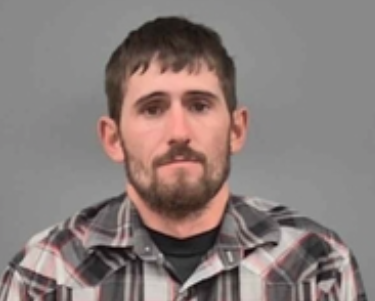
David Berry remains in custody after his December 3 arrest-photo Lawrence Co. Sheriff

David Berry Sr. of Springfield and two of his adult sons, David Berry Jr. of Brookline and Kyle Berry of Everton, were arrested in August after an 8½- month investigation by state, federal and international agencies that also involved cases in Kansas, Nebraska and Canada.

The Missouri Department of Conservation said in a news release Thursday that information gained from the investigation led to 14 Missouri residents facing more than 230 charges in 11 counties.

“The deer were trophy bucks taken illegally, mostly at night, for their heads, leaving the bodies of the deer to waste,” said Lawrence County Prosecuting Attorney Don Trotter. He said investigators believe some of the heads were stuffed and mounted for sale.

David Berry Jr. was sentenced Thursday to 120 days in jail in Barton County for a felony firearms probation violation. On Dec. 6, he was given a one-year jail sentence in Lawrence County after pleading guilty to taking wildlife illegally in that county.

In 2016, David Berry Sr. and another son, Eric Berry of Everton, were convicted of taking gamefish by hand in Dade County. While awaiting his court appearance in that case, Eric Berry and another person were caught in 2017 spotlighting deer in Lawrence County. David Berry Sr. is awaiting a probation revocation hearing for the poaching violations in Lawrence County.

David Berry Sr. and David Berry Jr. have had their hunting, fishing and trapping privileges revoked for life. Eric Berry and Kyle Berry had hunting and fishing privileges revoked for 18 years and eight years, respectively. Jerimiah Cline of Republic, who took wildlife illegally and assisted the Berrys, had hunting privileges revoked for five years, the conservation department said.

The investigation into the Berrys began in late 2015 when the conservation agency received an anonymous tip about deer poaching in Lawrence County through Operation Game Thief, a toll-free enforcement hotline.

Moran introduces bipartisan bill to make oral cancer meds more affordable

Chronic myelogenous leukemia oral treatment

OFFICE OF SEN. MORAN

WASHINGTON – U.S. Senators Jerry Moran (R-Kan.) and Tina Smith (D-Minn.) Wednesday introduced the Cancer Drug Parity Act to make certain oral cancer drugs are covered in the same way as traditional (IV) chemotherapy to bring down costs for Americans battling cancer. The Cancer Drug Parity Act, which is co-sponsored by Senators Roger Wicker (R-Miss.) and Chris Murphy (D-Conn.), is needed to make certain the way health care covers cancer treatment catches up to the advances in oral cancer medications.

Currently, over 40 states – including Kansas – have passed “oral parity” laws that stop insurers from charging more for prescribed oral cancer medicine than IV chemotherapy. The Cancer Drug Parity Act would build on this work by expanding these protections at the federal level.

“Individuals suffering from cancer deserve the best treatment options available through their insurance,” said Sen. Moran. “As the number of oral cancer drugs increase each year, patients ought to be able to immediately benefit from these medical advancements. This sensible legislation would keep health insurance on pace with the latest cancer treatments, build on laws already implemented in 43 states and expand cancer coverage for oral drugs for 100 million individuals covered through group and individual health plans. I am a strong supporter of medical research to find new treatments, therapies and cures, and I am working to make certain these exciting new treatments can reach cancer patients and ultimately save lives.”

The Cancer Drug Parity Act is supported by more than 30 organizations, including The Leukemia & Lymphoma Society.

“Many patients face obstacles when accessing oral chemotherapy drugs,” said Director of The University of Kansas Cancer Center and President of the Association of American Cancer Institutes Dr. Roy Jensen, which represents 98 academic cancer centers across North America. “At a time when developments in cancer care are advancing rapidly, it is essential for cancer centers like ours to provide patients with access to the best treatment. For some patients, there are no viable alternatives to oral chemotherapy drugs, which often come with high out-of-pocket costs. Oral chemotherapy is a priority for KU Cancer Center and for AACI, and we are delighted that Senators Moran and Smith are introducing this much-needed legislation.”

“Science is dramatically changing the way cancer is treated. Even with these breakthroughs, too many cancer patients can’t access their treatments because insurance rules have not kept pace with innovation,” said President and CEO of The Leukemia & Lymphoma Society Louis J. DeGennaro, Ph.D. “The Cancer Drug Parity Act will eliminate the financial barriers that stand between many cancer patients and the breakthrough treatments that could save their lives. The Leukemia & Lymphoma Society applauds Senator Smith and Senator Moran for their leadership on behalf of cancer patients and stands ready to work with Congress to move this important bill forward.”

The Cancer Drug Parity Act would:
• Prevent insurers from covering oral and self-administered medicines at different cost-sharing rates than IV chemotherapy;
• Not mandate that healthcare plans provide chemotherapy coverage, but rather only apply to plans already covering chemotherapy.

Read a summary of the bill here and full bill text here.

Report: Kansas election officials reject voter fraud claims

WICHITA, Kan. (AP) — Election officials in Kansas counties don’t believe voter fraud is a problem in the state, according to a survey of local election officials released Friday that counters Kansas Secretary of State Kris Kobach’s unsupported claims that voter fraud is widespread.

The finding came in a wide-ranging survey conducted by the American Civil Liberties Union that examined whether county election policies reduced voter turnout and hurt democracy in Kansas. The survey was at least partially completed by election officials in 85 of the state’s 105 counties.

Of the 77 counties whose officials addressed the survey’s question about voter fraud, 66 who responded it was “not a problem at all.” None deemed voter fraud a “significant problem.”

Sherman County Clerk Ashley Mannis, the sole official who said voter fraud was “somewhat of a problem,” noted that Kobach’s office prosecuted two people in her county for duplicate voting. She conceded it was not a widespread problem, adding: “It’s not like we had tons of cases, but it’s not like we had tons of voters, either.”

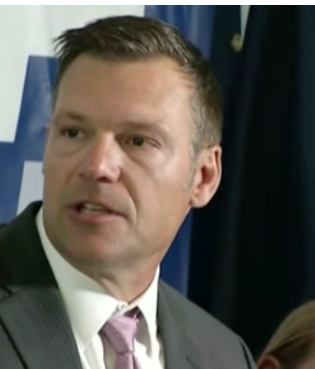
Kobach’s office, which oversees Kansas elections, did not immediately respond to an email from The Associated Press seeking comment on the report. Kobach, who unsuccessfully ran for governor in November, has repeatedly claimed without evidence that voter fraud is a problem in Kansas.

The ACLU survey also found that voter turnout was higher in counties offering more days of early voting, and that in general, the higher the average number of voters assigned to a polling place, the lower the voter turnout.

Overall, Kansas doesn’t fare well when it comes to voter participation. In the 2016 election, voter turnout was 59.2 percent in Kansas, putting the state in 34th place among U.S. states. The 2018 midterm election turnout was slightly more than 50 percent, which still left Kansas in the bottom half of voter turnout nationwide, according to the United States Election Project at the University of Florida.

The ACLU suggested that Kansas election officials could expand early in-person voting, including later and weekend hours; increase the number of polling places to reduce wait times; and advocate for expanding outreach efforts to young voters and minorities.

In its report, the ACLU also examined what it called the “wildly divergent policies and practices” used by local election officials. In Kansas, such officials are the decision makers when it comes to polling sites, in-person voting days and other details that can affect voter turnout.

For example, state guidelines for determining the validity of provisional ballots are vague, so local election officials use their own discretion about which ballots are counted. That became an issue in the state’s close Republican primary for governor, in which Kobach cinched the GOP nomination by just 343 votes. Kobach lost in the general election to Democrat Laura Kelly.

Sedgwick County, the state’s second most populous county, counted provisional ballots even though voters incorrectly filled out forms to switch from no-party affiliation to a party affiliation so they could vote in that party’s primary. But election officials in Johnson County, the state’s most populous, decided not to count provisional ballots with the same issue. Johnson County was much stricter than the other counties with its “signature match” policy.

The ACLU noted that “the job of county elections officials is much more than just counting votes — it is to foster a culture where democracy thrives.”

December 15 declared Bill of Rights Day

LPKS

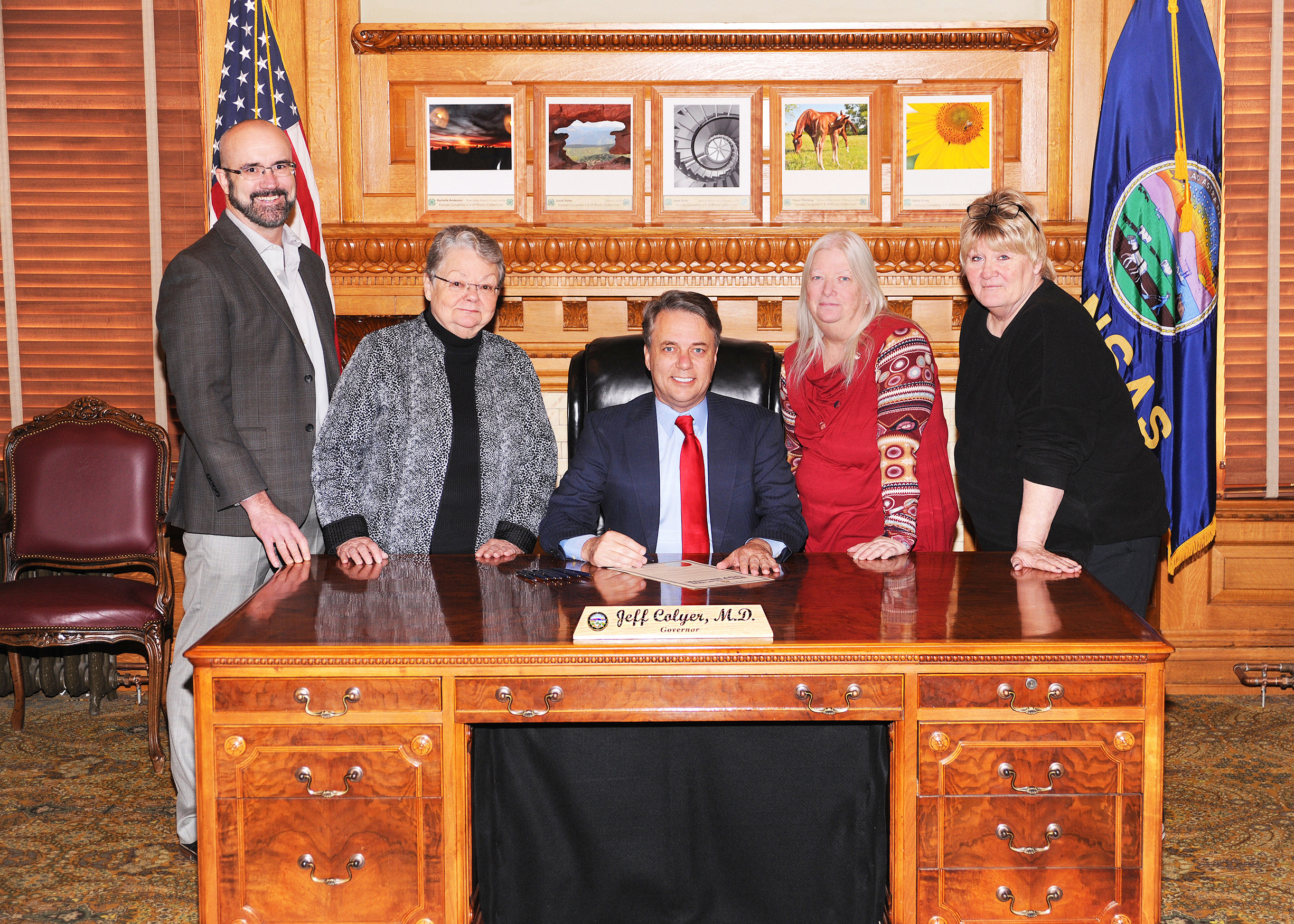
Stacey Davis; Sharon DuBois, LPKS Vice Chair; Gov. Jeff Colyer; Patricia Rowand Szini; and Lois Covey

TOPEKA – On Tuesday, November 20, Kansas Governor Jeff Colyer signed a proclamation declaring December 15 Bill of Rights Day in Kansas. The proclamation asks all Kansans to learn about the first ten amendments to the United States Constitution, which are the foundation of American freedoms. The Libertarian Party of Kansas (LPKS) requested the Governor to make the proclamation.

The Bill of Rights was ratified on December 15, 1791, and protects the rights of U.S. citizens to religious freedom, freedom of speech, freedom of the press, freedom of assembly, freedom from unreasonable search and seizure, among many others.

“There are few documents in the history of the world with as much impact on protecting people from tyranny,” said Kris Logan, Chair of the LPKS. “It’s important that we celebrate not only the ideas contained in the Bill of Rights, but that we remember and honor all those who have suffered and died to keep our freedoms alive.”

The Libertarian Party was founded in 1971, and is the third largest political party in the United States. Fiscally responsible and socially accepting, the LP promotes the ideals of individual liberty and personal responsibility.

The LPKS has had full ballot access in Kansas since 1992.

Federal Judge: Obama’s healthcare overhaul unconstitutional

WASHINGTON (AP) — A conservative federal judge in Texas has ruled the Affordable Care Act “invalid” on the eve of the sign-up deadline for next year. But with appeals certain, even the Trump White House said the law will remain in place for now.

In a 55-page opinion, U.S. District Judge Reed O’Connor ruled Friday that last year’s tax cut bill knocked the constitutional foundation from under “Obamacare” by eliminating a penalty for not having coverage. The rest of the law cannot be separated from that provision and is therefore invalid, he wrote.

Supporters of the law immediately said they would appeal. “Today’s misguided ruling will not deter us: our coalition will continue to fight in court for the health and wellbeing of all Americans,” said California Attorney General Xavier Becerra, who is leading a coalition of states defending the ACA.

The White House applauded O’Connor’s ruling, but said the law remains in place while appeals proceed. President Donald Trump tweeted that Congress should pass a new law.

“As I predicted all along, Obamacare has been struck down as an UNCONSTITUTIONAL disaster!” Trump tweeted. “Now Congress must pass a STRONG law that provides GREAT healthcare and protects pre-existing conditions.”

However, Congress is unlikely to act while the case remains in the courts. Numerous high-ranking Republican lawmakers have said they did not intend to also strike down popular provisions such as protection for people with pre-existing medical conditions when they repealed the ACA’s fines for people who can afford coverage but remain uninsured.

Still, Democratic Rep. Nancy Pelosi, who is expected to become House speaker in January, vowed to fight what she called an “absurd ruling.” She said the House “will move swiftly to formally intervene in the appeals process to uphold the life-saving protections for people with pre-existing conditions and reject Republicans’ effort to destroy the Affordable Care Act.”

White House press secretary Sarah Huckabee Sanders said: “We expect this ruling will be appealed to the Supreme Court. Pending the appeal process, the law remains in place.”

Legal expert Timothy Jost, a supporter of the health law, said O’Connor’s ruling would have repercussions for nearly all Americans if it stands. If the entire health law is invalidated, popular provisions that benefit Medicare beneficiaries and people with employer coverage would also be scrapped. That could include the section that allows parents to keep young adult children on their coverage until age 26.

About 20 million people have gained health insurance coverage since the ACA passed in 2010 without a single Republican vote. Currently, about 10 million have subsidized private insurance through the health law’s insurance markets, while an estimated 12 million low-income people are covered through its Medicaid expansion.

Saturday is the sign-up deadline for 2019 private plans through HealthCare.gov. Meanwhile, a number of states are expected to move forward with Medicaid expansion after Democratic victories in the midterm elections.

If the case were to reach the Supreme Court it would mark the third time the justices consider a challenge to fundamental provisions of the law. “Obamacare” opponents lost both the first two cases.

The five justices who upheld the health law in 2012 in the first major case — Chief Justice John Roberts and the court’s four liberals — are all still serving.

Since then public opinion on the ACA has shifted from mostly negative to generally favorable.

Preserving the law’s protections for people with pre-existing medical conditions proved to be a strong argument for Democrats in the midterm elections. Republicans who tried to undermine those safeguards during their failed effort to repeal the health law last year were forced on the defensive and went on record saying they, too, want to make sure people with health problems can get coverage.

Democrats set to take control of the House in January are talking about passing legislation that enshrines protections for pre-existing conditions. It’s unclear what form that would take, or if the Republican-majority Senate would go along and Trump would sign it.

The GOP-led states who brought the lawsuit asked O’Connor to toss out the entire law after Congress repealed the “individual mandate” penalty for going without coverage. The conservative judge had previously ruled against other Obama-era policies.

The Trump administration weighed in, saying the government would no longer defend some core components of the ACA, but that others could remain, including Medicaid expansion, subsidies for private insurance and health insurance markets.

Along with the requirement to have health insurance, the administration said the parts of the law that should go included:

— The requirement that insurers must take all applicants for comprehensive coverage regardless of prior health history, including pre-existing conditions. That includes a prohibition on insurers writing policies that exclude a particular condition — for example, a recurrence of breast cancer.

— The prohibition on insurers charging higher premiums to people with health problems.

The health insurance industry says doing away with consumer protections will destabilize a market that seems to be finding its footing, with modest premium increases and more plan choices next year.

The American Medical Association called O’Connor’s ruling an “unfortunate step backward for our health system that is contrary to overwhelming public sentiment to preserve pre-existing condition protections.”

4th Kansas suspect guilty in New Year’s Day double-murder

WICHITA, KAN. – A Kansas man has been found guilty of first degree murder for a 2015 shooting death of two in Wichita.

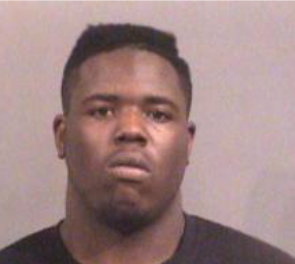
Wimbley -photo Sedgwick Co.

On Thursday, a jury returned a guilty verdict in the trial of Jamion Wimbley, 22 of Wichita, according to a media release from the Sedgwick County District Attorney.

Wimbley was found guilty of two counts of first degree murder and two counts of criminal discharge of a firearm. On January 1st, 2015, Wimbley shot Brenton Oliver and Betty Ann Holloman in the front yard of a home in the 2500 block of E. Mossman.

Wimbley is scheduled to be sentenced January 25th. He is the last of four men tried and convicted in the double homicide. Quincy Carter and Brent Carter are serving life sentences. Johnathan Carter is awaiting sentencing on January 2nd.


v>

Kansas City woman indicted for stealing $116K from employer

KANSAS CITY – A North Kansas City woman has been indicted for embezzling $116,367 from her employer.

Tonya Topel, 41, was charged in an 11-count indictment returned by a federal grand jury in Kansas City.

According to the indictment, Topel worked at SunSource Homes, Inc., from October 2016 to April 2018 as the officer manager and accountant.

The federal indictment alleges that Topel began embezzling from SunSource a month after she was hired, using several different methods.

Topel allegedly made $47,665 in unauthorized purchases on SunSource business credit cards, including purchasing an airline ticket for her boyfriend. Topel allegedly also issued $40,955 in unauthorized checks to herself. Topel allegedly claimed $19,713 in unauthorized or fraudulent expense reimbursements and allegedly created extra paychecks for herself totaling $5,283. In December 2017, Topel allegedly cashed an unauthorized $2,745 check from SunSource.

The indictment alleges Topel embezzled at least $116,367 from SunSource. According to the indictment, she used the embezzlement proceeds to travel, including to the Bahamas, Arizona, Boston, and Florida. She also used the embezzlement proceeds for retail purchases, restaurants, pets, vehicles, overdraft fees, and to pay her attorney.

The federal indictment charges Topel with two counts of money laundering, related to the payments to her attorney made with stolen funds, and nine counts of wire fraud. The indictment also contains a forfeiture allegation, which would require Topel to forfeit to the government any property derived from the proceeds of the alleged offenses, including a money judgment of $116,367.

The charges contained in this indictment are simply accusations, and not evidence of guilt. Evidence supporting the charges must be presented to a federal trial jury, whose duty is to determine guilt or innocence.

Kan. farmers buoyed but cautious as China resumes buying soybeans

BISMARCK, N.D. (AP) — The resumption of soybean sales to China this week is encouraging to American farmers who have seen the value of their crop plummet amid a trade war with the world’s second-largest economy, but producers see it only as a small step and say they need more federal aid.

Private exporters reported sales of 1.13 million metric tons of soybeans to China on Thursday and another 300,000 metric tons on Friday, the U.S. Department of Agriculture said. The Thursday report was the ninth-largest daily sale since 1977, according to the agency’s Foreign Agriculture Service, and it comes less than two weeks after the Trump administration reached a three-month truce in its trade war with China during which the two sides will try to work out their differences.

Davie Stephens, a Kentucky farmer who serves as president of the American Soybean Association, said the resumption of sales is “positive news” but that “it is vital that this 90-day process result in lifting the current 25 percent tariff that China continues to impose on U.S. soybean imports.”

“Without removal of this tariff, it is improbable that sales of U.S. soybeans to China can be sustained,” he said.

China had suspended U.S. soybean purchases earlier this year but under the truce agreed to buy more U.S. farm products. The country typically buys between 30 million and 35 million metric tons of U.S. beans in a normal year.

News of the U.S. sale might prompt some farmers to sell some of the soybeans they have stored on their farms, in part because South American crops will be hitting the world market within a couple of months, said Huron, South Dakota, farmer Brandon Wipf, who serves on the American Soybean Association board.

“We have a narrow window out of which to operate,” he said. “I think you’ll see some farmers selling, some holding on for a little better prices.”

No beans are moving yet out of North Dakota, which typically sends most of its annual crop to Pacific Northwest ports from which the beans go overseas to southeast Asia.

“It may take some time to get the shuttle trains in place and get ocean-going vessels stationed at the PNW,” said North Dakota Soybean Growers Association Executive Director Nancy Johnson. The sale announced this week is for delivery after the new year, she said, and it did not significantly boost prices.

January soybean futures in early Friday trading on the Chicago Board of Trade gained 40 cents to about $9.06 a bushel. That’s down from almost $15 a bushel four years ago and nearly $10 a bushel 18 months ago.

Soybean farmers are getting the largest share of a federal program created to compensate producers up to $12 billion for trade-related losses, though this year’s payment of 82 cents a bushel doesn’t match a market price drop of about $2 per bushel since May.

The Trump administration has said another 82 cents might be approved next year if a trade deal isn’t reached. Both the American Soybean Association and the National Farmers Union this week pushed for a second payment while the administration works on a long-term trade solution.

“The farm sector has already lost far more value to this trade war than the (compensation) payments will provide, and damages due to lost markets will persist long into the future,” Farmers Union President Roger Johnson said. “The administration should be doing everything it can to protect the men and women who feed, fuel and clothe this nation.”

North Dakota U.S. Sen. John Hoeven, chairman of the Senate Agriculture Appropriations Committee, said Friday that he stressed the importance of the second payment to Office of Management and Budget Director Mick Mulvaney.

Not getting a second payment could be a “deal-breaker” for some farmers in terms of their support for the Trump administration, according to Wipf.

“They would see that as a broken promise by the administration,” he said. “We’re of course encouraging the administration not to make the miscalculation that this little bit of detente we have with China has suddenly fixed all the problems we have.”

Kansas duo held on $50K bond on 10 drug allegations

Simonsen has a previous drug conviction, according to the Kansas Department of Corrections

RILEY COUNTY — Law enforcement authorities are investigating two suspects on numerous drug charges.

Just after 11 a.m. Thursday police arrested Dane Simonsen, 32, and Christina Reyes, 31, both of Manhattan, in the 700 block of Fremont Street in Manhattan, according to the Riley County Police Department activity report.

Simonsen is being held on a $50,000 bond on requested charges of distribute methadone, distribute amphetamine, distribute tramadol, distribute alprazolam, distribute lisdexamfetamine, distribute amphetamine, distribute tapentadol, distribute methylphenidate, distribute codeine and distribute or possess with the intent to distribute drug paraphernalia for illegal use.

Reyes has previous convictions for theft, obstruction and five drug related charges, according to the Kansas Department of Corrections

Reyes is being held on a $50,000 Bond on requested charges of distribute methadone, distribute amphetamine, distribute tramadol, distribute alprazolam, distribute lisdexamfetamine, distribute amphetamine, distribute tapentadol, distribute methylphenidate, distribute codeine, distribute or possess with the intent to distribute drug paraphernalia for illegal use.

2 jailed, 300 lbs. of pot seized after I-70 traffic stop

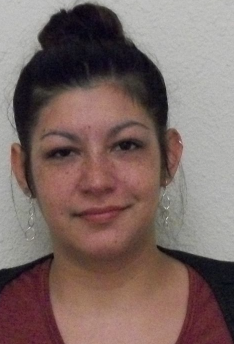
Lopez-Gutierrez -photo Cooper Co.
Padilla -photo Cooper County

COOPER COUNTY — Law enforcement  authorities are investigating two suspects on drug charges after a Thursday traffic stop on Interstate 70.

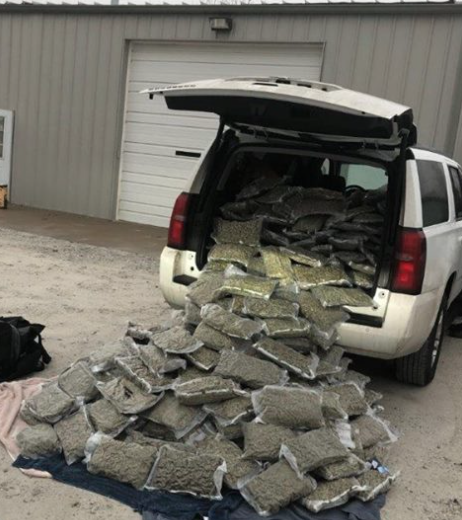
During the stop near Boonville, Missouri, in Cooper County, state troopers found and seized over 300 pounds of marijuana in vacuum sealed bags.

photo courtesy Missouri State Highway Patrol

The occupants of the van 19-year-old Jonathan Padilla of Fresno, CA. and 34-year-old Felix Lopez-Gutierrez of Little Falls, MN. are being held on a $200,000 Bond in the Cooper County jail for trafficking drugs and delivery of a controlled substance, according to the sheriff’s department.

Lopez-Gutierrez is also being held on an ICE detainer, according to the sheriff’s department.

Porn star, Trump accuser will perform in Salina in February

SALINA — The Shady Lady Gentleman’s Club announced recently that Stormy Daniels — the porn star who claimed to have an affair with President Donald Trump — reportedly will perform in Salina next year.

In a social media post, The Shady Lady said Stormy Daniels will perform Feb. 13 and 14 at the establishment, located at 1540 West Old Highway 40 in Salina.

“We will be releasing all the details on the Stormy Daniels shows in the next couple weeks, but yes it’s really happening, February 13th and 14th. As soon as we finalize details we will announce everything,” the Shady Lady said on its Facebook page this week.

—————-

Earlier this week, Daniels was ordered to pay President Donald Trump nearly $293,000 for his attorneys’ fees and another $1,000 in sanctions after her defamation suit against him was dismissed, a federal judge in Los Angeles ordered Tuesday.

Trump’s attorney, Charles Harder, had requested nearly $390,000 in fees and equal amount in sanctions as a deterrent against a “repeat filer of frivolous defamation cases.”

Judge S. James Otero cut the requested legal fees by 25 percent and awarded just $1,000 in sanctions.

Otero previously noted that fees by Harder’s firm — as high as $840 an hour — were reasonable but the 580 hours spent on the case appeared excessive.

Daniels alleges she had an affair with Trump in 2006 and was paid $130,000 as part of a nondisclosure agreement days before the 2016 presidential election. She sued him for defamation after he dismissed her claims of being threatened to keep quiet about the tryst as a “total con job.” The judge threw out the case in October.

Daniels’ attorney, Michael Avenatti, tweeted Tuesday’s order “will never hold up on appeal.”

In a statement he predicted Daniels “will never have to pay a dime” because she will receive far more — $1 million — from Trump for attorneys’ fees and other costs related to a separate lawsuit Daniels brought in Los Angeles over the non-disclosure agreement.

Daniels, whose real name is Stephanie Clifford, is challenging the agreement she signed with Trump’s then-lawyer Michael Cohen to prevent her from discussing the alleged affair. The agreement was signed days before the 2016 election as part of a $130,000 hush-money settlement.

Daniels also has alleged that her former lawyer, Keith Davidson, colluded with Cohen to have her publicly deny the affair with Trump.

Cohen has pleaded guilty to several felonies and admitted funneling money to Daniels to keep her quiet about the affair. Trump has denied the affair, but essentially acknowledged the payment to Daniels.

Despite the deal to stay quiet, Daniels spoke out publicly and alleged that five years after the affair she was threatened to keep quiet by a man she did not recognize in a Las Vegas parking lot. She also released a composite sketch of the mystery man.

She sued Trump for defamation after he responded to her allegation by tweeting: “A sketch years later about a nonexistent man. A total con job, playing the Fake News Media for Fools (but they know it)!”

Otero ruled in October that Trump’s statement was “rhetorical hyperbole” against a political adversary and was protected speech under the First Amendment.

Trump’s lead attorney previously said the fees and unspecified monetary sanctions were earned because of the extraordinary nature of the defamation case and because of Avenatti’s gamesmanship.

“This action is virtually unprecedented in American legal history,” Harder wrote in court papers. Daniels “not only brought a meritless claim for defamation against the sitting president of the United States, but she also has engaged, along with her attorney, in massive national publicity.”

The Cohen and Davidson lawsuit in Los Angeles County Superior Court is on hold until May.

— The Associated Press contributed to this story.

Copyright Eagle Radio | FCC Public Files | EEO Public File