We have a brand new updated website! Click here to check it out!

Kansas company admits feed truck caused Amtrak derailment

2016 Amtrak train derailment west of Dodge City-photo courtesy Daniel Szczerba

WICHITA, Kan. (AP) — The upcoming trial over the Kansas derailment of an Amtrak passenger train has been cancelled after Cimarron Crossing Feeders admitted its runaway feed truck damaged the railroad track.

Trial had been scheduled to start next week to determine who is responsible for the March 2016 derailment of Amtrak’s Southwest Chief City near Cimarron, about 20 miles west of Dodge. More than two dozen people were injured.

Feed truck involved in the accident photo courtesy NTSB

A federal judge summarily found earlier this month that there was no legal fault on the part of Amtrak or BNSF, which owns the track. That left only Cimarron as potentially liable for damages at trial.

Cimarron stipulated in a filing Wednesday its employee was negligent in not setting the brake on an unattended truck, allowing it to roll downhill and strike the track.

The Latest: NASA spacecraft successfully lands on Mars

Image from Mars-courtesy NASA

CAPE CANAVERAL, Fla. (AP) — The Latest on the landing by NASA’s InSight spacecraft at Mars (all times local):

2:53 p.m.

A NASA spacecraft has landed on Mars to explore the planet’s interior.

Flight controllers announced that the spacecraft InSight touched down Monday, after a perilous supersonic descent through the red Martian skies. Confirmation came via radio signals that took more than eight minutes to cross the nearly 100 million miles (160 million kilometers) between Mars and Earth.

There was no immediate word on whether the lander was in good working order. NASA satellites around Mars will provide updates.

It is NASA’s eighth successful Mars landing since the 1976 Vikings. The thee-legged, one-armed InSight will operate from the same spot for the next two years. It landed less than 400 miles (600 kilometers) from NASA’s Curiosity rover, which until Monday was the youngest working robot in town.

———-

By MARCIA DUNN ,  AP Aerospace Writer
CAPE CANAVERAL, Fla. (AP) — A NASA spacecraft’s six-month journey to Mars neared its dramatic grand finale Monday in what scientists and engineers hoped would be a soft precision landing on flat red plains.
Watch the landing LIVE here 1p.m. CST
This illustration shows a simulated view of NASA’s Interior Exploration using Seismic Investigations, Geodesy and Heat Transport (InSight) lander firing retrorockets to slow down as it descends toward the surface of Mars.
Credits: NASA/JPL-Caltech

The InSight lander aimed for an afternoon touchdown, as anxiety built among those involved in the $1 billion international effort.

InSight’s perilous descent through the Martian atmosphere, after a trip of 300 million miles (482 million kilometers), had stomachs churning and nerves stretched to the max. Although an old pro at this, NASA last attempted a landing at Mars six years ago.

The robotic geologist — designed to explore Mars’ mysterious insides — must go from 12,300 mph (19,800 kph) to zero in six minutes flat as it pierces the Martian atmosphere, pops out a parachute, fires its descent engines and, hopefully, lands on three legs.

“Landing on Mars is one of the hardest single jobs that people have to do in planetary exploration,” noted InSight’s lead scientist, Bruce Banerdt. “It’s such a difficult thing, it’s such a dangerous thing that there’s always a fairly uncomfortably large chance that something could go wrong.”

Earth’s success rate at Mars is 40 percent, counting every attempted flyby, orbital flight and landing by the U.S., Russia and other countries dating all the way back to 1960.

But the U.S. has pulled off seven successful Mars landings in the past four decades. With only one failed touchdown, it’s an enviable record. No other country has managed to set and operate a spacecraft on the dusty red surface.

InSight could hand NASA its eighth win.

It’s shooting for Elysium Planitia, a plain near the Martian equator that the InSight team hopes is as flat as a parking lot in Kansas with few, if any, rocks. This is no rock-collecting expedition. Instead, the stationary 800-pound (360-kilogram) lander will use its 6-foot (1.8-meter) robotic arm to place a mechanical mole and seismometer on the ground.

The self-hammering mole will burrow 16 feet (5 meters) down to measure the planet’s internal heat, while the ultra-high-tech seismometer listens for possible marsquakes. Nothing like this has been attempted before at our smaller next-door neighbor, nearly 100 million miles (160 million kilometers) away.

No experiments have ever been moved robotically from the spacecraft to the actual Martian surface. No lander has dug deeper than several inches, and no seismometer has ever worked on Mars.

By examining the deepest, darkest interior of Mars — still preserved from its earliest days — scientists hope to create 3D images that could reveal how our solar system’s rocky planets formed 4.5 billion years ago and why they turned out so different. One of the big questions is what made Earth so hospitable to life.

Mars once had flowing rivers and lakes; the deltas and lakebeds are now dry, and the planet cold. Venus is a furnace because of its thick, heat-trapping atmosphere. Mercury, closest to the sun, has a surface that’s positively baked.

The planetary know-how gained from InSight’s two-year operation could even spill over to rocky worlds beyond our solar system, according to Banerdt. The findings on Mars could help explain the type of conditions at these so-called exoplanets “and how they fit into the story that we’re trying to figure out for how planets form,” he said.

Concentrating on planetary building blocks, InSight has no life-detecting capability. That will be left for future rovers. NASA’s Mars 2020 mission, for instance, will collect rocks for eventual return that could hold evidence of ancient life.

Because it’s been so long since NASA’s last Martian landfall — the Curiosity rover in 2012 — Mars mania is gripping not only the space and science communities, but everyday folks.

Viewing parties are planned coast to coast at museums, planetariums and libraries, as well as in France, where InSight’s seismometer was designed and built. The giant NASDAQ screen in New York’s Times Square will start broadcasting NASA Television an hour before InSight’s scheduled 3 p.m. EST touchdown; so will the National Air and Space Museum’s Udvar-Hazy Center in Chantilly, Virginia, and the Denver Museum of Nature and Science. The InSight spacecraft was built near Denver by Lockheed Martin.

But the real action, at least on Earth, will unfold at NASA’s Jet Propulsion Laboratory in Pasadena, California, home to InSight’s flight control team. NASA is providing a special 360-degree online broadcast from inside the control center.

Confirmation of touchdown could take minutes — or hours. At the minimum, there’s an eight-minute communication lag between Mars and Earth.

A pair of briefcase-size satellites trailing InSight since liftoff in May will try to relay its radio signals to Earth, with a potential lag time of under nine minutes. These experimental CubeSats will fly right past the red planet without stopping. Signals also could travel straight from InSight to radio telescopes in West Virginia and Germany. It will take longer to hear from NASA’s Mars orbiters.

Project manager Tom Hoffman said Sunday he’s trying his best to stay outwardly calm as the hours tick down. Once InSight phones home from the Martian surface, though, he expects to behave much like his three young grandsons did at Thanksgiving dinner, running around like crazy and screaming.

“Just to warn anybody who’s sitting near me … I’m going to unleash my inner 4-year-old on you, so be careful,” he said.

___

General Motors to slash up to 14,000 jobs in North America

By TOM KRISHER
AP Auto Writer

DETROIT — General Motors will cut up to 14,000 workers in North America and put five plants up for possible closure as it abandons many of its car models and restructures to cut costs and focus more on autonomous and electric vehicles.

The reduction includes about 8,000 white-collar employees, or 15 percent of GM’s North American white-collar workforce. Some will take buyouts while others will be laid off.

At the factories, around 3,300 blue-collar workers could lose jobs in Canada and another 2,600 in the U.S., but some U.S. workers could transfer to truck or SUV factories that are increasing production.

The company also said it will stop operating two additional factories outside North America by the end of next year, in addition to a previously announced plant closure in Gunsan, Korea.

The restructuring reflects the changing U.S. and North American auto markets as a dramatic shift away from cars toward SUVs and trucks continues. In October, almost 65 percent of new vehicles sold in the U.S. were trucks or SUVs. It was about 50 percent cars just five years ago.

GM is shedding cars largely because it doesn’t make money on them, Citi analyst Itay Michaeli wrote in a note to investors.

“We estimate sedans operate at a significant loss, hence the need for classic restructuring,” he wrote.

General Motors Co.’s pre-emptive strike to get leaner before the next downturn likely will be followed by Ford Motor Co., which has said it is restructuring and will lay off an unspecified number of white-collar workers. Toyota Motor Corp. also has discussed cutting costs, even though it’s building a new assembly plant in Alabama.

GM isn’t the first to abandon much of its car market. Fiat Chrysler Automobiles got out of small and midsize cars two years ago, while Ford announced plans to shed all cars but the Mustang sports car in the U.S. in the coming years.

Shares of GM, the largest automaker in the U.S. which sells the Chevrolet, Buick, Cadillac and GMC brands, rose nearly 6 percent on the news to $37.93 in midday trading Monday.

GM said the moves will save $6 billion in cash by the end of next year, including $4.5 billion in recurring annual cost reductions and a $1.5 billion reduction in capital spending.

Those cuts are in addition to $6.5 billion that the company has announced by the end of this year.

GM doesn’t foresee an economic downturn and is making the cuts “to get in front of it while the company is strong and while the economy is strong,” CEO Mary Barra told reporters.

She also noted that tariffs on imported aluminum and steel have hit the company, but she stopped short of saying they had anything to do with the restructuring.

If all the factory workers are laid off, the reductions announced Monday would be about would be about 8 percent of GM’s global workforce of 180,000 employees.

The reductions could ripple through auto parts suppliers such as Aptiv and Magna International, Michaeli said.

Many of those who will lose jobs are now working on conventional cars with internal combustion engines. Barra said the industry is changing rapidly and moving toward electric propulsion, autonomous vehicles and ride-sharing, and GM must adjust.

She said GM is still hiring people with expertise in software and electric and autonomous vehicles. The company has invested in newer architectures for trucks and SUVs so it can cut capital spending while still raising investment in autonomous and electric vehicles.

GM has offered buyouts to 18,000 retirement-eligible workers with a dozen or more years of service. It would not say how many have accepted the buyouts, but it was short of the company’s target because GM said there will be white-collar layoffs.

The company expects to take a pretax charge of $3 billion to $3.8 billion due to the actions, including up to $1.8 billion of asset write downs and pension charges. The charges will take place in the fourth quarter of 2018 and the first quarter of next year.

Most of the factories to be affected by GM’s restructuring build cars that won’t be sold in the U.S. after next year. They could close or they could get different vehicles to build. Their futures will be part of contract talks with the United Auto Workers union next year.

The Detroit-based union has already condemned GM’s actions and threatened to fight them “through every legal, contractual and collective bargaining avenue open to our membership.”

Among the possibilities on the chopping block are the Detroit/Hamtramck assembly plant, which makes the Buick LaCrosse, the Chevrolet Impala and Volt, and the Cadillac CT6, all slow-selling cars. LaCrosse and Volt production will end March 1, while CT6 and Impala production would stop June 1.

The plant in Lordstown, Ohio, which makes the Chevrolet Cruze compact car also is on the list, and Barra said the Cruze would no longer be sold in the U.S. Production would stop March 1.

Work on six-speed transmissions made at the Warren, Michigan, transmission plant would stop Aug. 1, while the Baltimore transmission plant would stop production April 1, GM said.

Meanwhile, GM’s plant in Oshawa, Ontario, will stop making the Impala, Cadillac XTS and 2018 full-size pickups in the fourth quarter of next year. The Canadian plant appeared to be most in danger of closing.

Ontario Premier Doug Ford said he talked to the head of GM on Sunday and was told “the ship has already left the dock” when he asked if there was anything Ontario could do.

Canadian Prime Minister Justin Trudeau said he spoke to Barra on Sunday to express his “deep disappointment” with the closure.
___
Associated Press Writer Rob Gillies in Toronto contributed to this report.

Kansas Democrat backs Pelosi bid for House speaker

KANSAS CITY, Kan. (AP) — Kansas Democrat Sharice Davids says she plans to cast one of her first votes for Nancy Pelosi as House speaker.

In an announcement posted on her campaign website, the newly elected congresswoman also said she planned to vote for “several younger and newer members” for other leadership roles in the Democratic Caucus.

Davids says no one else has stood up to challenge Pelosi. She adds Kansans didn’t elect her to go to Washington to play political games and take symbolic protest votes.

Her announcement says the best way to move forward is to unite behind the speaker who will stand up to threats to health care access and to democracy.

She says she appreciates that Pelosi has embraced proposed new rules that will begin to make Congress work better.

Major donation for new pet health, nutrition center at K-State

K-State News and Communications

MANHATTAN — Primary care for pets has a bright future at Kansas State University’s College of Veterinary Medicine thanks to a record sponsorship by Hill’s Pet Nutrition.

With Hill’s sponsorship — the largest corporate gift in the college’s history — three strategic areas in the college’s Mosier Hall will be renovated to provide approximately 16,000 square feet of new space dedicated to clinical training, classroom teaching and research. The Pet Health & Nutrition Center will be named in honor of Hill’s Pet Nutrition.

“This public-private partnership will enhance our educational capacity in small animal nutrition and client communication, strengthening the preparation of our graduates for success in private practice,” said Bonnie Rush, interim dean of the college. “We are grateful to Hill’s for its tremendous generosity and investment in our students. This integrative partnership enhances the educational experience for K-State veterinary students through shared resources and expertise. The new experiential learning environment will strengthen our training program in nutrition and primary care, and will attract student externs from colleges of veterinary medicine across North America.”

“Kansas State is an important partner for Hill’s Pet Nutrition as it harbors one of the most important veterinary schools in the Midwest of the U.S., said Jesper Nordengaard, vice president and general manager, Hill’s US. “We are proud to support the Pet Health & Nutrition Center as we believe that it fits seamlessly in our vision to help enrich and lengthen the special relationship between people and their pets.”

By renovating the space and expanding resources, students will have the opportunity to care for their clients in a private practice environment. While pet health faculty will have the capability to operate with more autonomy, specialty services remain available when clients’ needs arise, Rush said.

The renovation includes the deconstruction of Frick Auditorium to create 3,400 square feet of space on the first floor of Mosier Hall for the new Hill’s Pet Health & Nutrition Center. This project also will allow the addition of a 5,000-square-foot research suite on the second floor.

“We are truly excited and grateful to Hill’s for partnering with us to provide this opportunity to teach primary care skills in a facility more representative of a true companion animal practice,” said Susan Nelson, clinical professor in the College of Veterinary Medicine. “The new facility will allow us to be more feline friendly and enhance student training in all areas of primary care, especially in the areas of nutrition, communication, business management, diagnostics and routine surgical procedures.”

“We are honored to support this great initiative, which will put K-State’s College of Veterinary Medicine at the forefront of primary care and nutrition education,” said Jolle Kirpensteijn, chief professional veterinary officer, Hill’s US. “We look forward to a continued partnership to create a future generation of veterinarians, fully knowledgeable and confident in making nutritional recommendations, every pet, every time.”

A 270-seat contemporary auditorium will be constructed in a new area of the veterinary medicine complex. Rush said additional benefits from the renovations include provision of a comprehensive educational experience in small animal nutrition and communication with pet owners; expansion of wellness training opportunities for students; additional space for routine procedures; better capabilities to serve the wellness needs of small animal clients; dedicated space for communication training and rounds; and dedicated space for nutritional displays and nutrition consultation.

Founded more than 75 years ago with an unwavering commitment to pet nutrition, Hill’s mission is to help enrich and lengthen the special relationships between people and their pets. For more information about Hill’s, its products and our nutritional philosophy, visit HillsPet.com or HillsVet.com, or find Hill’s on Facebook using the keywords “Hill’s Pet Nutrition.”

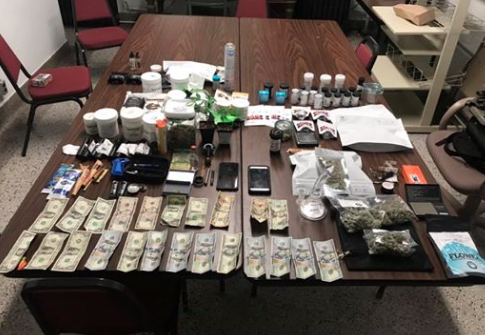
Kansas deputies discover drugs, cash during traffic stop

HODGEMAN COUNTY — Law enforcement authorities are investigating two suspects on drug charges after a weekend traffic stop.

photo courtesy Hodgeman County Sheriff

Just after 7p.m. Friday, a deputy conducted a traffic stop south of Jetmore, according to a social media report from the Hodgeman County Sheriff.

“The occupants in the vehicle were acting nervous while the deputy was speaking with them.”

After Sheriff Jared Walker arrived on scene to assist, both subjects were removed from the vehicle. During a search, deputies found a large amount of illegal drugs and cash in the vehicle.

Both subjects in the vehicle were arrested for possession with the intent to distribute drugs and held on a $75,000.00 dollar bond.

Holiday Express Train begins journey to Kansas

KANSAS CITY (AP) — A festive holiday train has started its journey through Louisiana, Mississippi, Texas, Arkansas, Oklahoma, Kansas, Illinois and Missouri.

photo courtesy Kansas City Southern

The Kansas City Southern Holiday Express Train started its journey last week in Shreveport, Louisiana. After stops in more than 20 cities, the trip will end Dec. 14 at Union Station in Kansas City, where the six-car train will remain on display through Dec. 18.

It features a smiling tank car dubbed “Rudy,” a gingerbread boxcar, a flatcar carrying Santa’s sleigh, plus a reindeer stable and a miniature village. There’s also an elves’ workshop and even a little red caboose.

Guests get to visit Santa and tour the train.

Teen dies after Jeep slides, collides with semi on Kan. highway

SCOTT COUNTY — One person died in an accident just after 4p.m. Sunday in Scott County.

The Kansas Highway Patrol reported a 2004 Jeep Liberty driven by Kieran McGill, 18, Thornton, CO., was southbound on U.S. 83 just north of the Kansas 95 Junction.

The driver lost control of the vehicle and went into a side skid into northbound lane of U.S. 83, and collided with a 1995 5 Peterbilt semi driven by Gary Bowman, 62, Smithville, Missouri.

McGill was pronounced dead at the scene and transported to Price and Sons Mortuary in Scott City.

Bowman was transported to the Scott County Hospital. Both drivers were properly restrained at the time of the accident, according to the KHP.

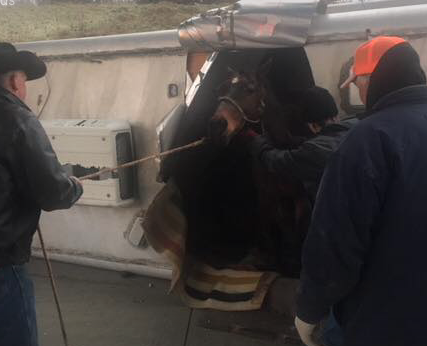
Horse injured after trailer flips on Kansas highway

FRANKLIN COUNTY — A horse was injured in an accident just before 7a.m. Sunday in Franklin County.

photos courtesy Franklin Co. Sheriff

A truck pulling a horse trailer carrying two horses was northbound on Interstate 35 just south of Ottawa, according to the Franklin County Sheriff’s Department. The trailer became detached, flipped and blocked both lanes of traffic after the driver struck a guardrail.

One horse was able to escape and the second one was trapped. With the assistance of LOH Fire, Cottonwood Animal Hospital, a wrecker service and citizens, the horse was cut out of the trailer. The horse was injured, but is expected to make a full recovery, according to the sheriff’s department.

Claim: First gene-edited babies born in China

HONG KONG (AP) — A Chinese researcher claims that he helped make the world’s first genetically edited babies — twin girls born this month whose DNA he said he altered with a powerful new tool capable of rewriting the very blueprint of life.

If true, it would be a profound leap of science and ethics.

A U.S. scientist said he took part in the work in China, but this kind of gene editing is banned in the United States because the DNA changes can pass to future generations and it risks harming other genes.

Many mainstream scientists think it’s too unsafe to try, and some denounced the Chinese report as human experimentation.

The researcher, He Jiankui of Shenzhen, said he altered embryos for seven couples during fertility treatments, with one pregnancy resulting thus far. He said his goal was not to cure or prevent an inherited disease, but to try to bestow a trait that few people naturally have — an ability to resist possible future infection with HIV, the AIDS virus.

He said the parents involved declined to be identified or interviewed, and he would not say where they live or where the work was done.

There is no independent confirmation of He’s claim, and it has not been published in a journal, where it would be vetted by other experts. He revealed it Monday in Hong Kong to one of the organizers of an international conference on gene editing that is set to begin Tuesday, and earlier in exclusive interviews with The Associated Press.

“I feel a strong responsibility that it’s not just to make a first, but also make it an example,” He told the AP. “Society will decide what to do next” in terms of allowing or forbidding such science.

Some scientists were astounded to hear of the claim and strongly condemned it.

It’s “unconscionable … an experiment on human beings that is not morally or ethically defensible,” said Dr. Kiran Musunuru, a University of Pennsylvania gene editing expert and editor of a genetics journal.

“This is far too premature,” said Dr. Eric Topol, who heads the Scripps Research Translational Institute in California. “We’re dealing with the operating instructions of a human being. It’s a big deal.”

However, one famed geneticist, Harvard University’s George Church, defended attempting gene editing for HIV, which he called “a major and growing public health threat.”

“I think this is justifiable,” Church said of that goal.

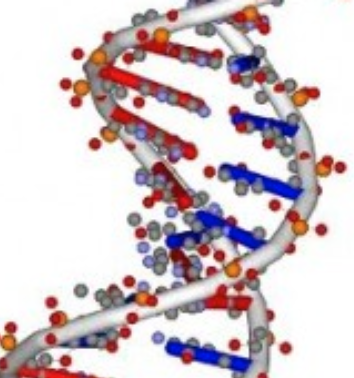
In recent years scientists have discovered a relatively easy way to edit genes, the strands of DNA that govern the body. The tool, called CRISPR-cas9, makes it possible to operate on DNA to supply a needed gene or disable one that’s causing problems.

It’s only recently been tried in adults to treat deadly diseases, and the changes are confined to that person. Editing sperm, eggs or embryos is different — the changes can be inherited. In the U.S., it’s not allowed except for lab research. China outlaws human cloning but not specifically gene editing.

He Jiankui (HEH JEE’-an-qway), who goes by “JK,” studied at Rice and Stanford universities in the U.S. before returning to his homeland to open a lab at Southern University of Science and Technology of China in Shenzhen, where he also has two genetics companies.

The U.S. scientist who worked with him on this project after He returned to China was physics and bioengineering professor Michael Deem, who was his adviser at Rice in Houston. Deem also holds what he called “a small stake” in — and is on the scientific advisory boards of — He’s two companies.

The Chinese researcher said he practiced editing mice, monkey and human embryos in the lab for several years and has applied for patents on his methods.

He said he chose embryo gene editing for HIV because these infections are a big problem in China. He sought to disable a gene called CCR5 that forms a protein doorway that allows HIV, the virus that causes AIDS, to enter a cell.

All of the men in the project had HIV and all of the women did not, but the gene editing was not aimed at preventing the small risk of transmission, He said. The fathers had their infections deeply suppressed by standard HIV medicines and there are simple ways to keep them from infecting offspring that do not involve altering genes.

Instead, the appeal was to offer couples affected by HIV a chance to have a child that might be protected from a similar fate.

He recruited couples through a Beijing-based AIDS advocacy group called Baihualin. Its leader, known by the pseudonym “Bai Hua,” told the AP that it’s not uncommon for people with HIV to lose jobs or have trouble getting medical care if their infections are revealed.

Here is how He described the work:

The gene editing occurred during IVF, or lab dish fertilization. First, sperm was “washed” to separate it from semen, the fluid where HIV can lurk. A single sperm was placed into a single egg to create an embryo. Then the gene editing tool was added.

When the embryos were 3 to 5 days old, a few cells were removed and checked for editing. Couples could choose whether to use edited or unedited embryos for pregnancy attempts. In all, 16 of 22 embryos were edited, and 11 embryos were used in six implant attempts before the twin pregnancy was achieved, He said.

Tests suggest that one twin had both copies of the intended gene altered and the other twin had just one altered, with no evidence of harm to other genes, He said. People with one copy of the gene can still get HIV, although some very limited research suggests their health might decline more slowly once they do.

Several scientists reviewed materials that He provided to the AP and said tests so far are insufficient to say the editing worked or to rule out harm.

They also noted evidence that the editing was incomplete and that at least one twin appears to be a patchwork of cells with various changes.

“It’s almost like not editing at all” if only some of certain cells were altered, because HIV infection can still occur, Church said.

Church and Musunuru questioned the decision to allow one of the embryos to be used in a pregnancy attempt, because the Chinese researchers said they knew in advance that both copies of the intended gene had not been altered.

“In that child, there really was almost nothing to be gained in terms of protection against HIV and yet you’re exposing that child to all the unknown safety risks,” Musunuru said.

The use of that embryo suggests that the researchers’ “main emphasis was on testing editing rather than avoiding this disease,” Church said.

Even if editing worked perfectly, people without normal CCR5 genes face higher risks of getting certain other viruses, such as West Nile, and of dying from the flu. Since there are many ways to prevent HIV infection and it’s very treatable if it occurs, those other medical risks are a concern, Musunuru said.

There also are questions about the way He said he proceeded. He gave official notice of his work long after he said he started it — on Nov. 8, on a Chinese registry of clinical trials.

It’s unclear whether participants fully understood the purpose and potential risks and benefits. For example, consent forms called the project an “AIDS vaccine development” program.

The Rice scientist, Deem, said he was present in China when potential participants gave their consent and that he “absolutely” thinks they were able to understand the risks.

Deem said he worked with He on vaccine research at Rice and considers the gene editing similar to a vaccine.

“That might be a layman’s way of describing it,” he said.

Both men are physics experts with no experience running human clinical trials.

The Chinese scientist, He, said he personally made the goals clear and told participants that embryo gene editing has never been tried before and carries risks. He said he also would provide insurance coverage for any children conceived through the project and plans medical follow-up until the children are 18 and longer if they agree once they’re adults.

Further pregnancy attempts are on hold until the safety of this one is analyzed and experts in the field weigh in, but participants were not told in advance that they might not have a chance to try what they signed up for once a “first” was achieved, He acknowledged. Free fertility treatment was part of the deal they were offered.

He sought and received approval for his project from Shenzhen Harmonicare Women’s and Children’s Hospital, which is not one of the four hospitals that He said provided embryos for his research or the pregnancy attempts.

Some staff at some of the other hospitals were kept in the dark about the nature of the research, which He and Deem said was done to keep some participants’ HIV infection from being disclosed.

“We think this is ethical,” said Lin Zhitong, a Harmonicare administrator who heads the ethics panel.

Any medical staff who handled samples that might contain HIV were aware, He said. An embryologist in He’s lab, Qin Jinzhou, confirmed to the AP that he did sperm washing and injected the gene editing tool in some of the pregnancy attempts.

The study participants are not ethicists, He said, but “are as much authorities on what is correct and what is wrong because it’s their life on the line.”

“I believe this is going to help the families and their children,” He said. If it causes unwanted side effects or harm, “I would feel the same pain as they do and it’s going to be my own responsibility.”

___

Kansas Agrees To Cover Potentially Life-Saving Drugs For Patients With Chronic Hepatitis C

Kansas has agreed to cover the cost of drugs to treat Medicaid patients with chronic hepatitis C without subjecting them to a lengthy list of requirements.

It’s believed that thousands of KanCare’s 360,000 enrollees have chronic hepatitis C, which can be fatal.
BIGSTOCK

A legal settlement, which awaits final court approval, resolves a class action lawsuit alleging the state made it too difficult for hepatitis C patients to receive the potentially life-saving treatments.

The parties first notified the court in July that they had resolved the case after mediation. On Tuesday, the court set deadlines for approval of a final settlement.

“Essentially, the agreement is that all hep C patients who use Medicaid to get their drugs will be entitled to Mavyret or Harvoni, the two curative drugs, regardless of their fibrosis score,” said Lauren Bonds, legal director of the ACLU of Kansas, which along with the Shook Hardy & Bacon law firm, sued Kansas officials over the state’s hep C treatment guidelines in February.

Fibrosis scores measure the health of the liver. Scores range from F0, referring to mild or no scarring of the liver, to F4, referring to significant liver damage or cirrhosis. Kansas’ privatized Medicaid program, known as KanCare, had limited coverage to patients with a fibrosis score of F3 or F4.

Theresa Freed, a spokeswoman for the Kansas Department of Health and Environment, confirmed that Kansas has stopped limiting coverage to patients with F3 or F4 scores.

The state had imposed other conditions for treatment as well, including denying direct-acting antiviral drugs, the current standard of care, to patients who tested positive for alcohol or illicit drug use. In addition, patients had to undergo six months of “abstinence” testing before KanCare would consider covering the drugs.

Bonds said the settlement resolves all the claims laid out in the lawsuit.

KanCare has about 360,000 enrollees. The U.S. Census Bureau in 2014 estimated that about 35,000 Kansans had hepatitis C, but it’s not known how many of them are enrolled in KanCare. The lawsuit estimates the number to be in the thousands.

“I think the law is very clear on this front,” Bonds said. “We’re one of probably 15 cases on this issue that have been filed and there’s been a very clear trend of how they’re being resolved — and that’s in favor of the plaintiffs.”

Many states balked at paying for the high-priced drugs and limited treatment for Medicaid patients and prison inmates. But recent court decisions have ruled that states cannot deny treatment because of the drugs’ costs.

Most recently, a federal judge in Indiana found that withholding hepatitis C treatment from prison inmates violated the Eighth Amendment’s “cruel and unusual punishments” clause. Similar rulings have been handed down or settlements reached in other states, including Florida, Massachusetts, Michigan, Washington and Colorado.

A lawsuit against Missouri was dropped in November 2017 after the state agreed to cover the cost of direct-acting antiviral drugs.  

Hepatitis C is a contagious infection that can cause severe damage to the liver and even death. The Centers for Disease Control and Prevention estimates that between 2.7 million and 3.9 million people in the United States have chronic hepatitis C. Most people become infected by sharing needles, syringes or other equipment to inject drugs.

Until recently, there was no effective treatment for chronic hepatitis C infections. But in 2013, the U.S. Food and Drug Administration approved a new class of highly effective direct-acting antiviral drugs that have few side effects and boast a cure rate of more than 90 percent.

The drugs are extremely expensive. Mavyret runs about $26,400 per treatment course, before discounts. And Harvoni runs about $94,500 per treatment course, also before discounts.

Bonds said her understanding is that the state has funding in place to cover the drugs.

“We were assured about that, but don’t know a ton of the specifics,” Bonds said. 

U.S. District Judge Daniel D. Crabtree must approve the settlement, final details of which are being hammered out.

Jennifer Montgomery, a spokeswoman for the Kansas Attorney General’s office, which defended the lawsuit, said work on the settlement was proceeding and the office was “optimistic about getting it resolved.”

Dan Margolies is a senior reporter and editor in conjunction with the Kansas News Service. You can reach him on Twitter @DanMargolies.

McPherson man dies after hit by Jeep on Kan. highway

KIOWA COUNTY — One person died in an accident just after 9a.m. Sunday in Kiowa County.

The Kansas Highway Patrol reported a 2018 Jeep Wrangler driven by Junior Treto, 39, Minneapolis, MN., was eastbound on U.S. 54 at the U 400 Junction.  The Jeep struck a pedestrian identified as Larry Embers, 71, McPherson, and then proceeded to the closest town to report the accident.

Embers was transported to the hospital in Dodge City where he died.  Treto was not injured. Authorities released no additional details.

Congressman helps victims after fatal Kansas City crash

KANSAS CITY (AP) – A congressman from Missouri was among those who came to the aid of victims after a fatal head-on collision in Kansas City, Missouri.

First responders on the scene of the fatal accident-photo courtesy KCTV

Democratic U.S. Rep. Emanuel Cleaver helped pull a man from the wreckage on Friday after a Corvette and pickup truck collided. Cleaver was not involved in the accident.

Cleaver’s office says in a statement that he was on his way to a meeting when he drove upon the wreck. One of the motorists was unconscious behind the steering wheel, and Cleaver and three other bystanders helped pull the man to safety as fire spread across the engine block.

The driver of the Corvette died. The pickup truck driver is expected to survive. It wasn’t immediately clear which driver Cleaver helped.

Copyright Eagle Radio | FCC Public Files | EEO Public File