We have a brand new updated website! Click here to check it out!

Those Pushing A Higher Vaping Age In Kansas Worry Big Tobacco Will Water Down Rules

Vape shops often have scores, or even hundreds of e-liquid flavors. This shop in Topeka doesn’t sell to people under age 21.
CELIA LLOPIS-JEPSEN / KANSAS NEWS SERVICE

TOPEKA, Kansas —Cigarettes are so yesterday.

Or yesteryear.

That’s why that old-fashioned, combustible path to a nicotine buzz wasn’t the top concern for a small group of high schoolers in Sabetha — a 2,500-person town about an hour north of Topeka near the Nebraska border — when they got city council to hike the minimum age for buying tobacco products to 21.

“I don’t really know anyone that smokes cigarettes around here because they’re really gross,” Sabetha High senior Kinsey Menold said. “Then, like, Juuls came in.”

The slender, chic vaping devices took off among teens in recent years. Notoriously easy to hide from parents and teachers, Menold says her classmates took hits of nicotine in the hallways, in the bathrooms — sometimes even in class.

“It was like our new thing instead of cigarettes,” she said. “Our new challenge, for our generation.”

Statewide, more than two dozen cities and counties have raised the age for buying tobacco and vaping products by three years, part of a national “Tobacco 21” movement that includes more than 500 city and county ordinances.

Yet enforcing those rules has proven tricky because of the gap between state and local law. That could change. This winter, health advocacy groups will press state legislators to make 21 the law of the land.
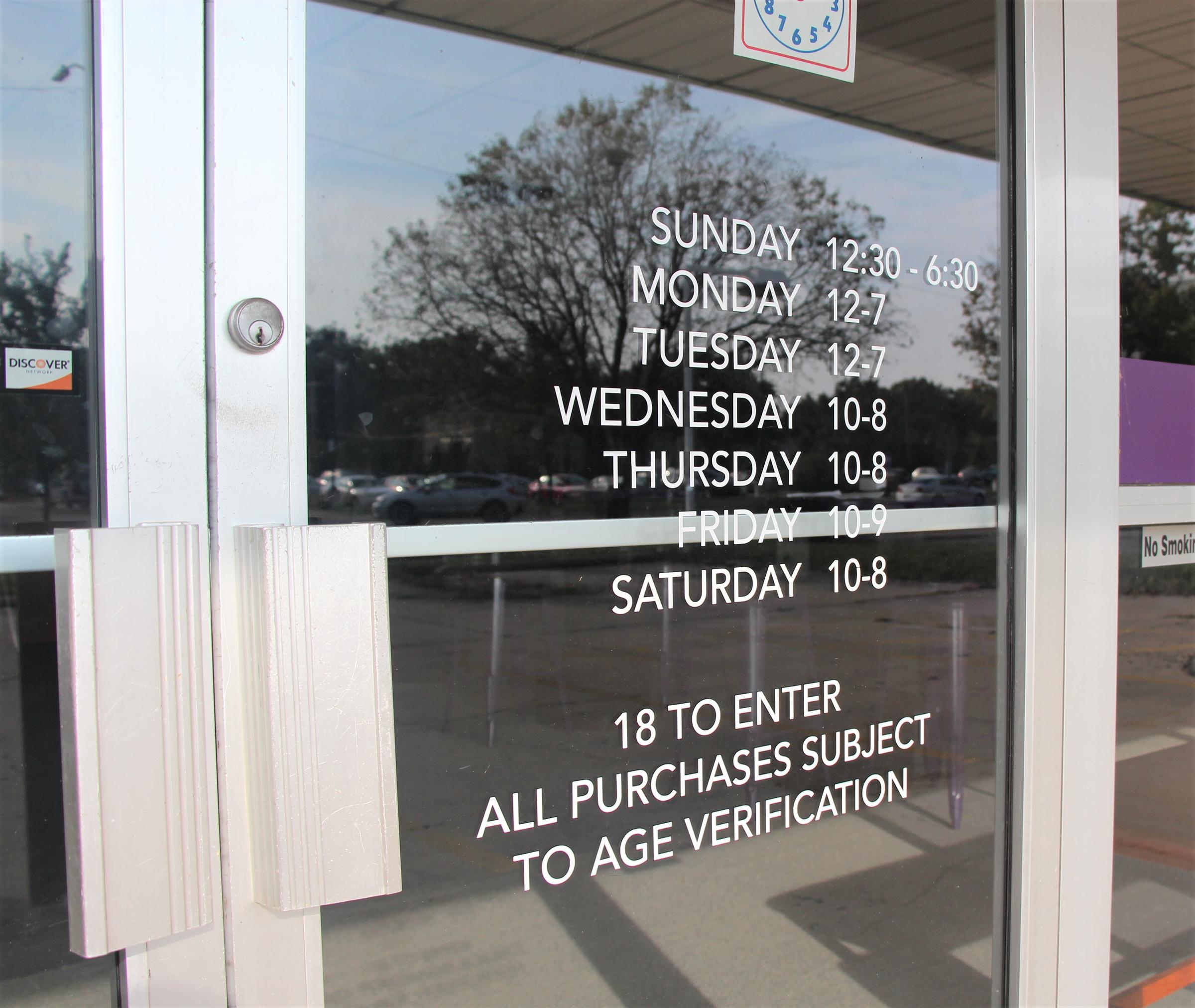
The city of Lawrence hasn’t raised the minimum age for buying tobacco, meaning 18-year-olds are allowed into vape shops like this one.
CREDIT CELIA LLOPIS-JEPSEN / KANSAS NEWS SERVICE

They’re bracing themselves for pushback from tobacco lobbyists. Major industry players support Tobacco 21, but their critics accuse them of co-opting the effort, leading in some places to watered-down laws that lack teeth or pre-empt other anti-tobacco efforts.

“Absolutely,” said Jordan Feuerborn, a lobbyist for the American Cancer Society Cancer Action Network. “We’ve seen this play out in other states.”

The law that her group will seek together with the American Lung Association, American Heart Association and others would target shop owners who flout the minimum age, rather than blaming the cashiers or teens who get caught.

“The profit-gaining entity should be the party responsible,” she said. “We don’t want to punish minimum wage workers, and we really don’t want to punish children.”

Easier said than done

No one has tried to enforce Tobacco 21 in Kansas longer than Wyandotte County and Kansas City, Kansas — an area with one of the state’s highest smoking rates and where most high schools sit within short walking distance of convenience stores that sell cigarettes and vape pens.

In late 2015, the combined city-county government kicked off the cascade of local ordinances that today cover a third of the state’s population, largely in northeast Kansas.

The change looked better in print than in practice. Two years into the new regime, Wyandotte-KCK put 130 shops to the test to see if they’d sell to someone under age. A quarter did.

The city-county government will ramp up compliance checks on cigarette and vape sellers, thank those that pass and urge the rest to do better.

“We don’t have any clear way of enforcement,” said Bianca Garcia, who is in charge of the city and county’s anti-tobacco efforts. “That’s why we’re looking into this reward and reminder program.”

It’s a soft-glove approach, but going after the cashiers who screw up doesn’t appeal to city-county officials. Nor can they suspend the licenses of the shop owners, they say, because the state licensing system only requires those shops not sell to minors.

A recent Kansas Health Institute* study found none of the state’s local ordinances have the necessary teeth to clamp down on problem shops. Health experts who applauded their passage now see them as only partial victories.

“We learned, we learned,” said Edward Ellerbeck, a University of Kansas School of Medicine professor who researches tobacco cessation. “I was at the beginning of this. I thought we were doing the right thing.”
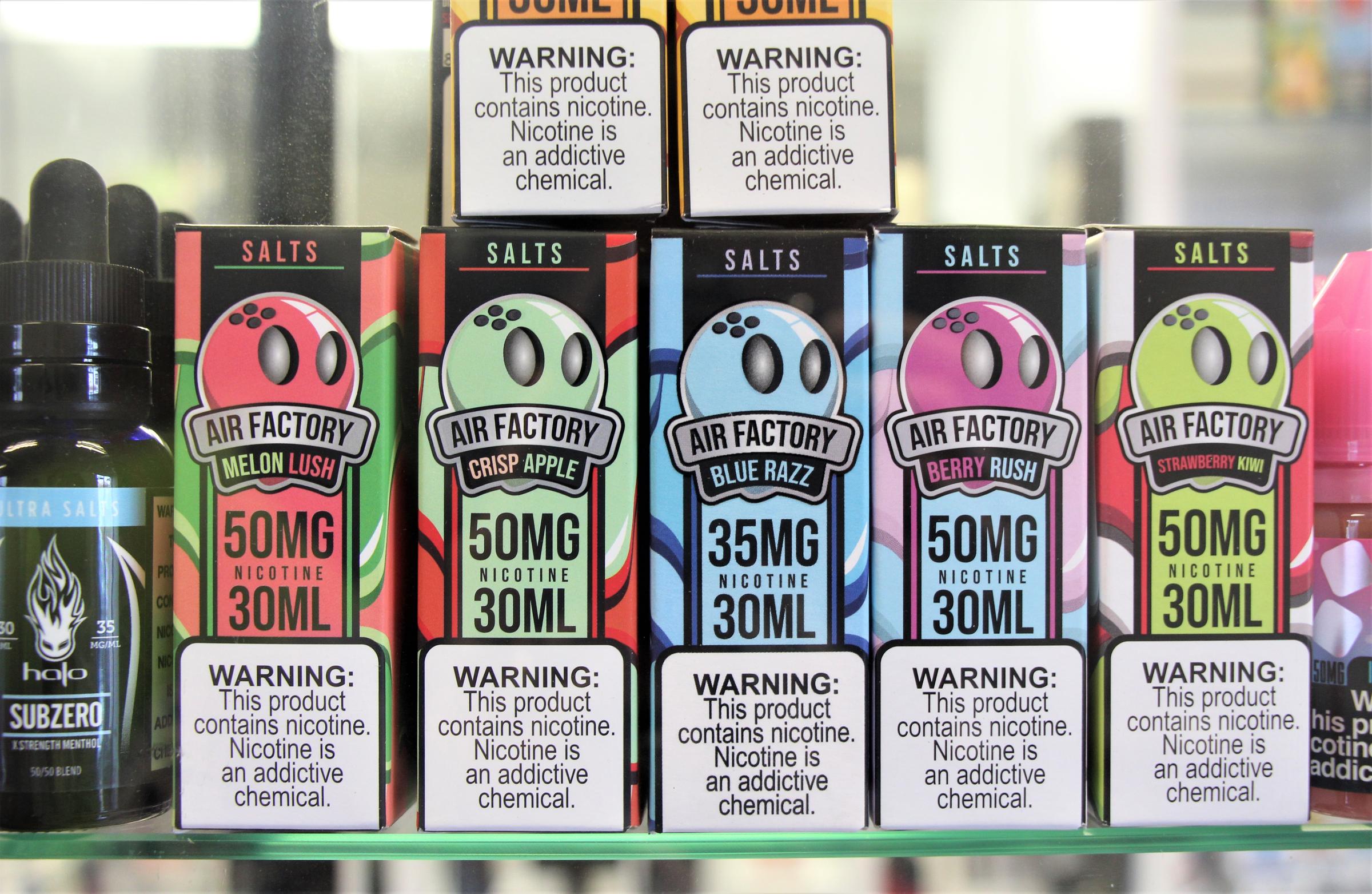
E-liquids for sale at Top Shelf Vapors in Topeka.
CREDIT CELIA LLOPIS-JEPSEN / KANSAS NEWS SERVICE

Anti-tobacco groups such as the American Cancer Society will hammer home that lesson while pushing legislators in the 2020 session for an air-tight Tobacco 21 law — with ample funding for compliance checks and solid penalties for businesses that don’t toe the line.

Addiction and the brain

Smoking remains the country’s top preventable cause of death, killing about half a million people per year. For every one of those, another 30 are seriously sick.

In Kansas, the Centers for Disease Control and Prevention estimated, health problems stemming from tobacco cost the state and its residents about $1 billion in a single year.

But cigarettes have enticed fewer and fewer new smokers as their death toll and massive anti-tobacco campaigns transformed public opinion.

In 2005, half of Kansas high schoolers reported ever trying a cigarette. In 2017, that was down to one-quarter. By then, though, vaping had arrived on the scene. A third had tried it.

High school journalists in Johnson County surveyed their peers and found a third said they owned Juuls, often puffing their way through more than one cartridge a week (roughly a pack of cigarettes).

Read Shawnee Mission East’s “Juul: From Craze To Epidemic”

Nicotine poses the greatest risk for these still developing brains, scientists say, because they’re most likely to end up wired for a lifelong habit.

Cities and counties saw a chance in Tobacco 21 to cut off a key nicotine pipeline to their minors: the many 18-year-olds still in school. Topeka battled to do so all the way to the Kansas Supreme Court.

“Tobacco use stopped at an early age can extend the life,” Mayor Michelle De La Isla said this June, when her city finally defeated a legal challenge that could have overridden local ordinances across the state. “Municipalities should be able to have (that) ability.”

A 2014 survey found most American adults support the higher age. Most smokers, too.

Cope’s bestsellers are Smok models. He stocks Juul pods, but doesn’t sell many and says they don’t appeal much to older customers.
CREDIT CELIA LLOPIS-JEPSEN / KANSAS NEWS SERVICE

Vaping versus smoking

Eric Cope estimates his small specialty vape shop, Top Shelf Vapors, near a busy intersection in west Topeka offers more than 300 e-liquids.

Fruits and sweets sell best, and Cope bristles at the narrative that options like strawberry-lemonade target kids. Adults of all ages want to escape the taste of cigarettes, he says. Few people ask for tobacco flavor.

“A cigarette tastes terrible,” Cope said. “If you want to know, go lick an ashtray.”

Though cigarette giant Altria now has a hefty stake in Juul Labs, vape shop owners harbor no love for Big Tobacco, which they see as peddling poor health and quashing fledgling competitors.

Topeka’s Tobacco 21 ordinance means Cope can’t sell to 18-, 19- and 20-year-olds, but that hasn’t cost him much business, he says. Most of his customers were older — smokers who’ve ditched cigarettes or want to.

But Cope, himself a former long-time smoker who refuses to stock combustible tobacco, worries the non-vaping public has whipped itself into a frenzy of fear that blows the risk of e-cigarettes vastly out of proportion.

“Vapor is pretty safe,” he said. “At least 95% safer than smoking. And it should get a lot of credit for that.”

“I work at this every day and I see the transformation of people,” he said. “They all say, I can taste better. I can breathe better, I can sleep better. I have more energy.”

That “95%” comes from Great Britain, where an English public health agency argues vaping is that much safer, and that smokers should urgently switch.

The Royal College of Physicians agrees, calling vaping’s risks nothing compared to the potential “to prevent death and disability” by quitting cigarettes.

Many scientists disagree.

KU pulmonologist Matthias Salathe tests vaping on human respiratory cells. That British 95% ballpark isn’t based on trial results, he said, but rather assumptions about chemical content and carcinogens.

“I have a hard time (with) that logic,” he said. “We don’t have the data.”

Salathe’s own findings in pre-clinical and animal trials have him worried that vaping could cause chronic bronchitis.

More than 1,000 people nationwide have sustained lung injuries from vaping in recent months. Most have so far reported using fluids laced with cannabis compounds. Public health officials in Kansas, where two people are dead, have urged people to stop vaping immediately.

The CDC’s latest update on the outbreak of vaping injuries

Physicians in England and the U.S. alike agree on one thing: Whether vaping is safer than smoking or not, that doesn’t make it safe.

“The vast majority of youth that take up vaping,” Ellerbeck at KU said, “are not doing it to quit smoking.”

Juul in the crosshairs

Nationwide, litigation against Juul is piling up.

In Kansas, the Goddard and Olathe school boards announced lawsuits last month, accusing the company of marketing to minors and making schools divert precious resources to deal with the fallout.

Juul Labs has drawn criticism for ads that tobacco researchers say target teens in the same way cigarette ads did decades ago.

A Johnson County man sued, too, arguing he got hooked in high school and paid a steep personal price in just a few short years.

Juul Labs has said its products were only ever meant to help adult smokers give up cigarettes.

Call tobacco researcher Stanton Glantz a skeptic.

“If your campaign is nominally trying to reach middle-age smokers,” the University of California San Francisco professor said, “you don’t run it on Instagram promoting parties with hip 20-somethings.”

In decades past, tobacco companies brazenly marketed to teens, and Glantz says Juul’s tactics follow that tradition.

Explore Stanford’s gallery of historical and modern tobacco ads

The company pounded social media feeds with chic short videos of ultra fashionable young people dancing to hip beats and sparse messages — “Get #vaporized” — that didn’t mention kicking any habits.

Juul has suspended its U.S. advertising as state and federal lawmakers and regulators ratchet up scrutiny. It’s thrown its weight behind Tobacco 21 efforts, too, at both state and federal levels.

One of the many cigarette ads from the 1950s targeting teens, archived by Stanford Research Into the Impact of Tobacco Advertising.

Eighteen states have now passed Tobacco 21 as state laws.

In several cases, though, health advocates argue tobacco interests watered down the bills and the ability to enforce them through shrewd lobbying. They want Kansas to adopt clear enforcement funding and procedures.

Public policy and investment analysts at DC-based Beacon Policy Advisors say Tobacco companies glomming onto Tobacco 21 see it as “the lesser of two evils.” They’ve lobbied to at least include provisions that undercut other anti-tobacco efforts, such as flavor bans.

“There’s a general sense that tobacco companies are willing to make a compromise,” senior analyst Ben Koltun wrote in an email, “if it heads off potentially more negative developments.”

*Editor’s note: The Kansas Health Institute receives funding from the Kansas Health Foundation, a financial supporter of the Kansas News Service.

Celia Llopis-Jepsen reports on consumer health and education for the Kansas News Service. You can follow her on Twitter @Celia_LJ or email her at celia (at) kcur (dot) org. 

2 adults, 8-month-old die after 2-vehicle Kansas crash

DOUGLAS COUNTY — Three people died in an accident just before 6p.m. Friday in Douglas County.

The Kansas Highway Patrol reported a 2004 Chevy Classic driven by Tiffany Cox, 20, Ottawa, was southbound on U.S. 59 Two miles south of Lawrence.

The driver lost control of the vehicle and crossed over the grassy median in to the northbound lanes of traffic. A northbound 2019 Nissan Sentra driven by Craig Russell McKinney, 62, Topeka struck the Chevy broad side.

Cox, and passengers in the Chevy Kiffany Mietchen, 19; Azreal Ubelaker, 8-months, both of Baldwin City were pronounced dead at the scene.

EMS transported McKinney to KU Medical Center. Mietchen was not wearing a seat belt, according to the KHP.

‘100% renewable’ energy policies and how they interact with state laws

(Photo credit Pexels.com)

KU NEWS SERVICE

LAWRENCE — After Donald Trump was elected president and put a renewed focus on fossil fuels, several large corporations made headlines by setting goals to increase the renewable energy they buy. Many are making progress on those pledges, while varying state energy laws have made it easier in some parts of the country than others.

A University of Kansas law professor has written an article analyzing corporate renewable pledges, outlining how policies have played a part and cautioning it is important to realize what 100% renewable goals mean in context.

Uma Outka

Uma Outka, William R. Scott Research Professor at the KU School of Law, said corporations are driving new development of renewable energy. Her article, published in the Utah Law Review, examines that growth and takes an early look at how state policies are influencing the development.

“The trend of large corporations pledging to boost their renewable energy consumption seemed so counter to the direction the Trump administration wanted to turn in terms of energy policy. So, I wanted to understand the legal environment for corporate buyers specifically,” Outka said. “It’s a little too early to compare the success or efficacy of the newest state policies. But when traditionally regulated states took note of the fact that the vast majority of deals were made in the most ‘deregulated’ states, some have taken notice and tried to adapt. That’s the most recent development.”

State laws regarding energy development vary widely from state to state. And while deregulated states have seen large amounts of corporate deals, they are not the only states that have seen significant renewable energy growth.

Kansas, for example, is what Outka calls a hybrid state, with traditional utility regulation while also being part of the Southwest Power Pool.

Because of exceptional wind resources in Kansas, the state is first in the nation for electricity generated from wind and may well become the first state to generate most of its electricity from wind power.

States have also increasingly begun to change their policies in response to the growing corporate demand for renewable energy, and states that are more traditional in their regulatory approach have found new ways to be part of renewable energy development. While renewable energy is growing in some places in the current political climate, it’s not surprising given who is driving the demand. Large corporations are large customers that spend a lot of money on energy and utility companies have a clear economic incentive to provide them options they desire.

“Companies are influencing the energy industry with their demand for clean power, without a doubt,” Outka said. “It’s part of a larger trend of consumers playing a more significant role on the electric grid.”

While companies such as Google have touted their status as the “largest corporate renewable energy buyer on the planet,” others such as Facebook, Amazon, Microsoft, IKEA and Nike have made public statements about their intent to increase the amount of renewable energy they buy. It is important, however, to understand what it means when corporations or others claim they will derive 100% of their energy from renewable sources, Outka said. First of all, corporations have several reasons to buy renewable energy, not the least of which is promotion of their public image. A positive boost among shareholders and consumers can be viewed as almost as valuable as saving money or reducing a company’s carbon footprint. And while such goals are laudable, unless a company is generating all of its own renewable energy, it is not 100% green.

“It is important to understand what it means when a company says ‘100 percent renewable energy.’ If Google or another corporation says they’re powered by 100% renewable energy, it’s not completely accurate,” Outka said. “If they’re connected to the grid, they’re still using the energy mix, though they may be offsetting that usage (through purchases of certificates and other methods). The problem isn’t solved, though these are very important steps.”

Corporate demand for renewable energy is not just leading to purchase of more green energy but also to large amounts of new renewable energy development, Outka said. Companies such as Walmart have made corporate policies that all new green energy it buys will come from new energy development. That demand is having both economic and policy results as states work to enact policies friendly to such development. While such development is largely positive, Outka cautions it should be viewed with a critical eye as well.

Public utility commissions have made progress in developing renewable energy, while state legislatures have not been as actively involved. With more active legislative leadership, the trend could foster a broader and more inclusive policy dialogue. So long as corporate deals occur largely outside state planning, there is potential for development exceeding transmission capacity and other problems. Outka said such development discussions should focus on what the goal of new energy projects is, whether it be economic development, environmental impact reduction or others. Expanding who gets to take part in the decision making is as vital issue as well.

“This is a useful trend that can accomplish only so much,” Outka said.

Large corporations have had an undeniable influence on the trend of increased development of renewable energy in recent years, but it is not clear how existing and new policies enacted in light of the demand will influence other energy buyers. In future research, Outka plans to study energy law and the low-income household. The research will be part of a larger look at how customers interact with the energy grid, in addition to the examination of corporate customers and previously published work on how cities interact with the low carbon grid.


Kan. woman arrested for alleged attempted kidnapping of 4-year-old

Patterson photo Sedgwick County

SEDGWICK COUNTY — Law enforcement authorities are investigating a suspect for attempted kidnapping.

Just after 1 p.m. Thursday, police responded to a kidnapping call at the Burlington Coat Factory in the 8100 block of East Kellogg in Wichita, according to officer Charley Davidson. A 28-year-old woman at the store told police a suspect identified as 30-year-old Jasmine Patterson approached her and asked if she would call police if she took her daughter.

Patterson then allegedly grabbed the woman’s 4-year-old daughter and began to walk away, according to Davidson. The woman quickly grabbed her daughter away from Patterson, left the store and called 911.

When police arrived, they located Patterson leaving the store and arrested her without further incident. The child was not injured. Investigators determined that Patterson might have a mental disability that contributed to the incident, according to Davidson.

Patterson remains jailed on requested charges of Attempted Kidnapping, according to Davidson. Police will present the case to the Sedgwick County District Attorney.

Drug bust: Driver told trooper gift-wrapped packages were for new baby

HALL COUNTY, Neb. — Law enforcement authorities are investigating a suspect on drug charges after a Thursday traffic stop.

photo courtesy Nebraska State Patrol

At approximately 3:00 p.m., a trooper with the Nebraska State Patrol observed an eastbound Toyota 4Runner following another vehicle too closely on Interstate 80 near Wood River (three hours north of Salina), according to a media release.

During the traffic stop, the trooper discovered a meth pipe and a gram of methamphetamine on the driver’s person.

Troopers then searched the vehicle and found 68 pounds of marijuana hidden inside several large, gift-wrapped boxes. The driver stated the boxes were gifts for a new baby.

The driver, Joseph Hullinger, 56, of Santa Rosa, California, was arrested for possession of marijuana – more than one pound, possession of a controlled substance, possession with intent to deliver, possession of drug paraphernalia, and no drug tax stamp. Hullinger was lodged in Hall County Jail.

Police: Teen arrested for alleged threat at SW Kan. middle school

FORD COUNTY — Law enforcement authorities and USD 443 officials are investigating an alleged school threat and have made an arrest.

Just after 4:10 p.m. Thursday, the police were given information about a possible bomb threat to the Dodge City Middle School, according to a media release.

Officers learned that a 13-year-old female Middle School student received a phone call from a blocked number while present in a classroom at the end of the school day.

The male caller started using profanity, and the student hung up the phone. The blocked caller immediately called back, and the female student put the phone on speaker for the teacher to listen. During that second call, the unknown male caller stated that he was going to blow up the school.

At approximately 8:06 pm, officers located the caller, a 15-year-old male, at his Dodge City residence and completed the arrest without incident. Charges for the alleged felony crime of aggravated criminal threat will be filed with the Ford County Attorney’s Office, according to the release.

2 hospitalized after semi overturns on Kansas highway

SEDGWICK COUNTY — Two people injured in an accident just after 9a.m. Friday in Sedgwick County.

Friday crash scene photo courtesy KHP

The Kansas Highway Patrol reported a 2017 International semi driven by Gabriel Arreola-Flores, 34, was westbound on Kansas 96 on the ramp to southbound Interstate 135. The vehicle left the roadway and overturned.

EMS transported Arreola-Flores and a passenger Tomas Reyes, 44, to St. Francis in Wichita for treatment. First responders had to cut through parts of the crushed semi to reach one of the men.

The crash closed the westbound K-96 ramp to I-135 south for several hours. Both were properly restrained at the time of the accident, according to the KHP.

China agrees to buy up to $50 billion in U.S. farm products

WASHINGTON (AP) — The Latest on U.S.-China trade talks (all times local):

Treasury Secretary Steven Mnuchin met with Chinese Vice Premier Liu Thursday photo courtesy White House

The United States is suspending a tariff hike on $250 billion in Chinese imports that was set to take effect Tuesday, and China agreed to buy $40 billion to $50 billion in U.S. farm products as the world’s two biggest economies reached a cease-fire in their 15-month trade war.

The two countries are leaving the thornier issues — including U.S. allegations that China forces foreign countries to hand over trade secrets in return for access to the Chinese market — until later negotiations.

The tariffs on $250 billion in Chinese imports was set to rise Tuesday from 25% to 30%.

The Latest: Crews respond to fire at Evergy demo site in Hutchinson

photos courtesy Hutchinson Fire Department

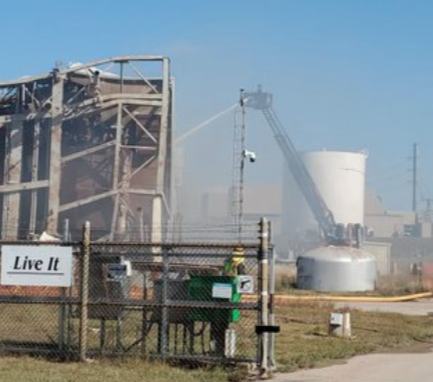
HUTCHINSON— Crews responded to 3200 East 30th for a fire at the Evergy Energy plant just before 11a.m. Friday.

A large column of black smoke could be seen while units were responding. On arrival, fire was found inside the old power generating tower that was being demolished. A demolition recycling crew was working with a cutting torch when insulation and roofing material caught on fire, with the strong north wind, the fire spread quickly.

Fire crews utilized two aerial streams and quickly brought the fire under control. Fire crews with the help of the demolition crew were able to move items to finish extinguishing the fire. There were no injuries.

———–

HUTCHINSON —Crews were on the scene of a fire a the former Westar now Evergy demolition site on East 30th in Hutchinson Friday morning.

They responded to the scene just before 11a.m. and were able to bring the fire under control with no threat of it spreading any further and continued to put out various hot spots late Friday morning.

Authorities have not reported a cause and have not reported any injuries.


Prosecutor to re-examine case of man killed by KC-area deputy

KANSAS CITY (AP) — A Missouri prosecutor said her office will re-examine the 2017 fatal shooting of a suspected shoplifter by a Kansas City-area sheriff’s deputy after the same deputy was charged with shooting a scooter rider in the back while trying to arrest her.

Lauren Michael photo Jackson Co.

Jackson County Prosecutor Jean Peters Bake’s decision on Thursday — a reversal from a statement her office released a day earlier — comes amid public demands by the dead man’s family. In both shootings, Jackson County Sheriff’s Deputy Lauren Michael said she fired during struggles over her stun gun.

Donald Sneed Jr. said 29-year-old Michael is “trigger happy” after she was charged Wednesday with first-degree assault and armed criminal action in the August shooting that wounded Brittany Simeck. Sneed’s son, Donald Sneed III, was fatally shot by Michael two years ago outside a Walmart in Raytown, reports The Kansas City Star.

Michael’s bond is set at $30,000. No attorney is listed for her in online court records. The Sneed family already filed a wrongful death lawsuit.

“Because there are similarities to the 2017 shooting, we thought it would be best to look at it again,” said Michael Mansur, a spokesman for Baker.

In Simeck’s case, Michael was conducting traffic enforcement patrols in a bar and entertainment area with other deputies when they noticed two people allegedly riding a scooter on the wrong side of the street. A deputy followed them in a patrol car and moments later collided with the scooter. The male driver of the scooter was immediately arrested, but Simeck ran away.

Michael caught up with Simeck and a struggle ensued. Michael pulled out her service handgun and shot Simeck in the back and buttocks.

In the charging documents, prosecutors allege that Michael was not truthful when she told investigators that Simeck tried to grab her stun gun. Simeck told investigators that Michael shot her in the back as she tried to run away, according to court records. Simeck, who is retired from the U. S. Coast Guard, wasn’t charged in the incident.

“We respect the hard job law enforcement does, however law enforcement is not above the law and when excessive force is used it is imperative that they are held accountable,” said Mike Yonke, a civil attorney who is representing Simeck.

The other shooting happened in May 2017 when employees at the Walmart where Michael was working off-duty security stopped Sneed III because they suspected him of shoplifting. He allegedly became violent, and Michael tried to help the employees. Michael later said Sneed grabbed her stun gun and shocked her in the neck with it before she shot and killed him.

The father, Sneed Jr., said he doesn’t believe that. He said Michael shot his son multiple times and that his son wasn’t attacking her when she fired the shots, but rather was being held down. The sheriff’s office said he had been wanted on felony warrants for robbery and tampering with a motor vehicle. Michael was given the medal of valor for her actions during the incident, which the family’s attorney, Jermaine Wooten, described as “almost insulting.”

Michael referenced that shooting in the moments immediately following the August incident involving Simeck, telling her supervisor: “I am not as comfortable with this one as the last one,” according to court documents.

Jackson County Sheriff Daryl Forté Michael said in a tweet that Michael has been placed on unpaid leave pending the outcome of the criminal case stemming from Simeck’s shooting, which is a standard practice when criminal charges are filed. He declined further comment.

Police: Students used flavored nicotine at Kan. elementary school

Photo Marysville PD

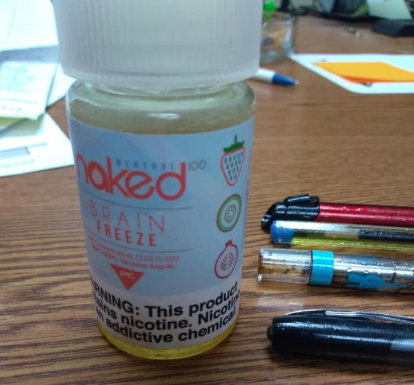
MARSHALL COUNTY —Law enforcement authorities are alerting parents after finding vaping and liquid flavored nicotine in pens taken from students at Marysville Elementary School, according to the Marysville Police Department.

The students involved were 5th and 6th graders. They were putting the flavored nicotine in pens and using them to dab it on their tongues during recess.

Police reminded parents to have a discussion with your children about vaping and the harmful effects of nicotine.  


Police: Teen allegedly brought gun to school in Salina

SALINA — Law enforcement authorities are investigating a teen who allegedly brought a gun to school in Salina.

On Thursday, Salina Central High School administrators received information of a student in possession of a firearm at the school, 650 E. Crawford in Salina, according to a media release.

The school administration confronted the student who then fled the school on foot. The Salina Police Department School Resource Officer pursued the subject on foot, and the student Samuel Cheney, 16, Salina, was apprehended a few blocks away by a Saline County Sheriff’s Deputy.

Upon searching the immediate area where Cheney was apprehended, a 9mm pistol was recovered. The gun was reported stolen by a family member after being contacted by the Salina Police Department.

There is no indication at this point that Cheney had threatened anyone with the firearm.

Cheney was transported to the North Central Kansas Regional Detention Center Facility in Junction City on requested charges of  Criminal Use of a Weapon, Criminal Carrying of a Weapon, Interference with Law Enforcement, Battery, Theft of a Firearm and Probation Violation,

NOTE: Kansas state law allows law enforcement to release the names of juveniles age 14 and older involved in criminal cases

Copyright Eagle Radio | FCC Public Files | EEO Public File