GREENWOOD COUNTY— Law enforcement authorities are investigating a theft and asking the public for help to locate suspects.
Photo courtesy Greenwood Co. Sheriff
Deputies have received a report of theft of 18 Holstein steers from a property near Lamont, according to a social media report from Greenwood County Sheriff’s Office.
The theft occurred between Oct. 5 and 25. All 18 head have a brand on the right hip with “VF”.
Anyone with information on the case is encouraged to contact the sheriff’s office at (620)583-5568.
LONDON — Britain’s Treasury chief unveiled Monday a new tax on big internet companies’ revenues, insisting it is time that the global tech giants with profitable business in the U.K. pay their fair share for public services.
Philip Hammond made the announcement as he outlined his budget, explaining that while he preferred trying to find a global solution to address the borderless nature of the wealth of the likes of Google and Facebook, negotiations with other countries had been too slow.
He said the tax will be “narrowly-targeted” on the U.K.-generated revenues of specific digital platform business models.
“The rules have simply not kept pace with changing business models,” Hammond said. “And it’s clearly not sustainable, or fair, that digital platform businesses can generate substantial value in the U.K. without paying tax here in respect of that business.”
Companies typically pay their taxes where they are based. But while local governments can impose a sales tax on physical goods in shops and restaurants, that has not been the case with online service providers.
And in the European Union, foreign companies like Amazon, Google and Facebook pay what tax they owe in the country where they have their regional base — usually a low tax haven like Ireland. So their business generates little to no tax revenue in countries, like the U.K., where they have significant operations.
Hammond said the digital sales tax will be structured to apply to “established tech giants” rather than tech startups and was at pains to emphasize that it was “not a online-sales tax on goods ordered over the internet.” It will only apply to firms making 500 million pounds ($640 million) a year in global revenues. The text will come into effect in April 2020 and is forecast to bring in 400 million pounds a year.
Dan Neidle, a partner at law firm Clifford Chance, said the tax could chill innovation and, given the dominance of the tech giants in the United States, would likely be met with a hostile reception by the Trump administration.
“For 100 years, businesses have been taxed based on where they are, not where their customers are,” he said. “The digital tax represents a revolutionary change – it taxes digital companies, regardless of their legal structure, if they have users in the U.K. There are many – particularly in the U.S. – who will regard limiting that revolution to one particular sector as opportunistic, particularly when it’s a sector where the U.K. (and Europe as a whole) have conspicuously failed to create world-beating businesses.”
The announcement came as Hammond splashed out on health services in a spending plan signaling the easing of eight years of austerity with a modest uplift in public spending and few major tax increases.
Hammond declared the end is in sight for the budget cuts implemented by a series of Conservative-led governments after the global financial crisis, reiterating a commitment made by Prime Minister Theresa May this month. But he cautioned that the government’s plans to end austerity could be thrown off track if Britain fails to secure a deal that protects trade with the EU.
Hammond said improving public finances after years of belt-tightening meant he could give government departments a real-terms spending boost next year. Beneficiaries include the Ministry of Defense, which will get an extra 1 billion pounds.
There was also more money for mental-health services and social care, and 1 billion pounds to ease the transition to a simplified benefits system known as Universal Credit. Small businesses got a cut in property tax rates, and workers will see an increase in the amount they can earn before paying income tax.
“Austerity is coming to an end – but discipline will remain,” Hammond said.
The pressure has been on for May’s administration. Government workers and the public have been agitating to end years of austerity that have slashed funding for everything from law and order to schools as May and her predecessor sought to close the budget deficit.
Police are warning they don’t have the resources to fight crime; school principals are marching with demands to help children; and the military is concerned about its eroding ability to defend the nation. Further complicating the picture, the government is pushing ahead with plans to roll out a new comprehensive welfare program that critics say will leave the most vulnerable worse off.
Hammond got some help in meeting the demands from an unexpected increase in tax revenue. The independent Office of Budget Responsibility upgraded its forecast for economic growth in 2019 from 1.3 percent to 1.6 percent, then expects 1.4 percent in 2020 and 2021, 1.5 percent in 2022, and 1.6 percent in 2023.
But Hammond said further specifics on which programs would get more money would have to wait until next year — after Brexit talks are completed. If the negotiations collapse, a no-deal scenario would represent a “very big transition” in the way the economy operates.
MANHATTAN, Kan. – Kansas State student-athlete Samantha Scott, a member of the Wildcat rowing team, passed away from a sudden illness on Saturday.
Samantha Scott, 23, was from Fort Morgan, Colorado.
Scott, 23, was a four-year member of the rowing team and the squad’s top coxswain this season. An architectural engineering major and a native of Fort Morgan, Colo., she was also an Academic All-Big 12 selection last season while leading the team’s 1v8 and 1v4 boats.
“Samantha was a great leader for our program and more importantly a great person,” head coach Patrick Sweeney said. “She was so well-liked by all of her teammates and had such a big impact on our program both on and off the water. We are all still in a state of shock, and we will continue to keep her family in our thoughts and prayers.”
“We are all deeply saddened by the sudden passing of Samantha,” added Athletics Director Gene Taylor. “The Scott family will remain in our prayers during this time, and we will provide all of the necessary support we can for their entire family and also the members of our rowing program as they cope with this devastating loss.”
LEAVENWORTH, Kan. (AP) — A hearing has been delayed for a 73-year-old man who’s challenging his sentence in a 1990 murder in Leavenworth County.
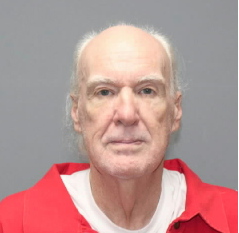
Brinkley -photo KDOC
Sherrill Brinkley was scheduled to have a status hearing Thursday in Leavenworth County, but the hearing was continued until December.
Brinkley is arguing that his life sentence for first-degree murder was illegal and he should be released.
Bishop was convicted in 1993 of killing Everett Bishop in rural Linwood. The Kansas Supreme Court upheld the conviction in 1994, but found that a district judge erred in the sentencing.
Brinkley was not resentenced at the time because he was serving a federal prison sentence for unrelated charges.
He was resentenced for the murder charge last year, but has filed a petition arguing the sentence is illegal.
DICKINSON COUNTY — Law enforcement authorities are investigating two suspect for alleged drug distribution.
Henderson -photo Dickinson County
According to the Sheriff’s Department, authorities conducted a search warrant at 301 Opal Road, Lot 19 on Thursday and arrested Keenen Henderson, 21, and Brianna Lake, 22, both of Abilene.
Henderson was arrested on suspicion of Aggravated Child Endangerment, two counts of Possession with the Intent to Distribute a Controlled Substance, three counts of Possession of a Controlled Substance, Felony Possession of Drug Paraphernalia, misdemeanor Possession of Drug Paraphernalia, and No Drug Tax Stamp.
Lake was arrested on suspicion of Aggravated Child Endangerment, misdemeanor Possession of Marijuana and misdemeanor Possession of Drug Paraphernalia.
TOPEKA—The hours of operation for most driver’s license office in Kansas will change starting Monday.
The new hours are 8 a.m. to 5 p.m. Monday through Friday beginning this Monday, October 29. Under the previous schedule, offices statewide were closed Mondays.
“This is just one of the changes to driver’s license operations we are rolling out in addition to mobile renewals and faster service in the offices,” Director of Vehicles David Harper said.
The last day for Saturday hours for offices in Topeka, Overland Park, Mission, Olathe, Wichita, Derby, and Andover is tomorrow, October 27. Those offices will be open 7:30 a.m. to 11:15 a.m.
Driver’s and ID holder who want a Real ID should use the document checklist to make sure they have everything they need before visiting the office.
OLATHE, Kan. (AP) — A Johnson County nurse has pleaded guilty to stealing opioid drugs while working at a residential care facility in Gardner, Kansas.
41-year-old Jeremy Keith Bailey pleaded guilty Thursday to possession of a controlled substance, theft and Medicaid fraud.
The Kansas Attorney General’s Office said that Bailey surrendered his nursing license as part of the plea agreement.
Bailey was charged earlier this year with stealing the Percocet while working as a registered nurse at the Meadowbrook Rehabilitation Hospital.
WICHITA, Kan. (AP) — Kansas and Wichita-area leaders say that growing methamphetamine addiction is driving up the state’s crime rates and filling jails with individuals who would be better served in treatment centers.
State and local officials met with community members at the Wichita Crime Commission’s Sedgwick County Drug Summit on Thursday.
Sedgwick County Sheriff Jeff Easter says seven out of 10 inmates at the county jail are struggling with drug addiction. Easter says law enforcement can’t use arrests to solve the problem.
The county sheriff’s deputy Robert Kunze says 11 percent of all charged felony cases his office handles have at least one count of meth possession.
After the panel, Easter said an oversight board and a strategic plan could help slow the growth of meth addiction.
TOPEKA – The Kansas National Guard will be adding three new names to its roster of distinguished Guardsmen during an induction ceremony for the Kansas National Guard Hall of Fame Nov. 4.
The ceremony will take place at Ramada Hotel and Convention Center, 420 E 6th St., Topeka, beginning at 2 p.m.
This year’s inductees are retired Col. Wayne L. Cline, Topeka, the late retired Col. James E. Trafton, Kansas City, Kansas, and retired Chief Master Sgt. Danny M. Roush, Lyndon.
“These nominees are stellar examples of what it means to be a member of the Kansas National Guard,” said Maj. Gen. Lee Tafanelli, the adjutant general. “Throughout their careers, they exemplified the kind of dedication and leadership that makes the Kansas National Guard the proud and honorable organization it is.”
Col. Wayne L. Cline
Retired Col. Wayne L. Cline’s career covered more than 36 years of service that included branch qualification in field artillery, engineering, transportation and aviation. Cline enlisted in the Kansas National Guard in 1953 and completed Officer Candidate School in 1959, commissioning as a second lieutenant. Over the course of his career, he served in numerous leadership positions. As an aviator, he was instrumental in implementing a phase maintenance program for the CH54A helicopter that was adopted worldwide. He was the first KSARNG aviator to fly helicopters in instrument weather conditions and developed a comprehensive instrument training program for all of the other aviators.
Col. James Trafton
Retired Col. James Trafton began his military career in 1971 as a private and served in a reconnaissance platoon with the 1st Cavalry Division in Vietnam, where he was awarded the Combat Infantryman’s Badge. Trafton graduated from Officer Candidate School in 1982 and was commissioned as an engineer officer in 1984. He branch transferred to infantry in 1991 and served in several leadership positions, including command of the 2nd Battalion, 137th Infantry. He led the battalion during its deployment for Operation Iraqi Freedom in 2005, overseeing more than 1,300 combat patrols with units dispersed throughout Baghdad, Kirkuk, Mosul, Ramadi, Irbil and Basra, Iraq. At the time of his retirement in 2008, he was Kanas Army National Guard Strength Management Officer. He was inducted into the Kansas National Guard Officer Candidate School Hall of Fame in August 2009. Trafton died in April 2010 from injuries sustained in a traffic accident.
Chief Master Sgt. Danny Roush
Retired Chief Master Sgt. Danny Roush joined the Kansas Air National Guard in 1973, enlisting into the 190th Civil Engineer Squadron. During a career that spanned almost 40 years, Roush served the Kansas National Guard in many capacities, including journeyman electrician, interior electric shop noncommissioned officer in charge, exterior electric shop supervisor, squadron first sergeant, electrical superintendent, facility manager and civil engineer manager. Roush deployed twice in his career, first to Jeddah, Saudi Arabia, in 1990 and to Kirkuk, Iraq, in 2005.
Ron Wilson is director of the Huck Boyd National Institute for Rural Development at Kansas State University.By RON WILSON Huck Boyd National Institute for Rural Development
How can beef be better? How can producers be compensated for improved quality? Those vexing questions were facing the cattle industry in the 1990s when an innovative group of producers tackled those issues head on. Their work became a success story in building demand by responding to customer needs.
Last week we learned about Mark Gardiner of Gardiner Angus Ranch. He told us about changes in beef marketing through the years.
As mentioned, the 1990s were a challenging time for the beef industry. Beef demand had fallen, compared to other proteins. Industry leaders commissioned a national beef quality audit, and the results were not good. “The audit said that one in four beef eaters was not getting a good steak,” Mark Gardiner said. “We were losing beef demand left and right.” The cattlemen felt they were being taken advantage of in the marketplace by the beef packers and wanted to capture more of the processing value.
With the encouragement of a new farmer-owned cooperative, the 21st Century Alliance, a group of innovative cattle producers got together to see if they could market their beef more effectively. In 1995, 21 cow-calf producers first met to discuss the concept of forming a marketing cooperative that would vertically integrate the beef industry for its members. These producers came from around Kansas, including rural communities such as Maple Hill, population 371; and Long Island, population 174 people. Now, that’s rural.
The cattlemen agreed to form a new organization called U.S. Premium Beef. Among the founding board members was Mark Gardiner.
The board selected Steve Hunt as CEO of the company and began exploring options for business. They concluded that, in order to have their own packing plant, they had to build it or buy it.
In 1997, U.S. Premium Beef agreed with Farmland Industries to purchase up to 50 percent of what is now known as National Beef Packing Company – the nation’s fourth largest beef processing company and an international leader in the value-added arena.
Another challenge was to find a way to reward higher beef quality. “We went all over the U.S.,” Mark said. He asked one beef packer, “What kind of cattle make the most money for you?” The answer was: High quality cattle. In other words, the cattle which produced prime and choice steaks generated more revenue for the meat processor than the poorer cattle.
U.S. Premium Beef then designed a grid system which offered producers a financial premium for cattle which met certain quality standards that would produce better beef. “The goal was value-based marketing,” Mark said. “We need to get paid what the cattle are worth.” The incentives in the grid system rewarded higher quality.
In order to finance the purchase of an interest in the packing plant, U.S. Premium Beef successfully conducted a stock offering in fall 1997. The ownership interest conveyed to producers the right and obligation to deliver cattle meeting certain standards. The system also conveyed carcass quality information back to the producer to help them make continuous improvement.
U.S. Premium Beef has evolved since that time. Mark Gardiner became board chair. In 2004, U.S. Premium Beef transitioned into a limited liability company. In 2011, a majority interest in National Beef Packing was purchased by Leucadia National Corporation.
U.S. Premium Beef’s performance through the years has been outstanding. According to Mark, from 1997 to 2018, U.S. Premium Beef had 15 million head of cattle delivered and generated grid premiums of $500 million, patronage payments of $84 million, and distributions of $993 million. That represents a benefit of $1.58 billion dollars to its members.
How can beef be better? These cattlemen found a way to do it. We commend Mark Gardiner, Steve Hunt, and the visionary cattlemen of U.S. Premium Beef for making a difference by finding better ways to market beef, improve beef quality, and respond to consumer demand. They found that bonus bucks provided incentive to build better beef.
And there’s more. For the Gardiner family, everything changed on one windy day in March 2017. We’ll learn about that next week.
Brooklynne Mosley doesn’t like the term “blue wave.”
The Air Force veteran walked into the Kansas Democrats’ Wyandotte County field office wearing a T-shirt bearing the face of U.S. Senate candidate and liberal darling from Texas, Beto O’Rourke, and passing out buttons that read “throw shade, then vote.”
Democrats are trying to take control of the Third U.S. Congressional District by increasing turnout and persuading Republican voters. Canvassing is a big part of their strategy NOMIN UJIYEDIIN / KANSAS NEWS SERVICE
Mosley talks optimistically about Democrats’ chances to flip U.S. House seats and governors’ mansions nationwide, and particularly in Kansas.
But she says “blue wave” makes Democratic wins sound inevitable, like the next full moon.
It’ll take effort. She points to the pivotal 2016 election, when Democrats and moderate Republicans swept into the Kansas Legislature to roll back then-Gov.Sam Brownback’s tax cuts and press for Medicaid expansion.
“What’s happening right now, on the ground, is not an accident,” she said. “We are in the process of building off that (2016) momentum.”
Still, a blue wave is hard to escape in discussions about the 2018 midterms — especially in conversations about the Kansas 3rd Congressional District.
Republican Kevin Yoder is trying to hang onto that seat in the face of a challenge from Democrat Sharice Davids. Flipping the 3rd will come down to how effectively Democrats can employ two different strategies — getting voters to the polls who usually don’t bother in non-presidential years, and convincing Republican voters to cross party lines.
Consisting mostly of Wyandotte and Johnson counties, with a chunk of Miami County filling in its southern edge, the district went for Hillary Clinton in the 2016 election by a single point — while re-electing a Republican to Congress.
Congressman Yoder meeting with voters in Shawnee earlier this month
So Yoder has been reluctant to tie himself to President Donald Trump the way some fellow Kansas Republicans have. Secretary of State Kris Kobach and 2nd District candidate Steve Watkins eagerly embrace the polarizing president.
The National Republican Congressional Committee has pulled funding from Yoder’s race. That could be a sign that GOP brass thinks Yoder is doomed.
Mosley and other Democratic organizers are working on two fronts to help Davids.
Getting out the Wyandotte County vote
In Wyandotte County, it’s a turnout game.
The county is a reliable Democratic stronghold in a Republican state. It has lots of Democrats registered to vote, but few who bother to cast ballots. Only 35 percent showed up the last time Yoder was on the ballot in a midterm year.
If Democrats can get more people to Wyandotte County polls, those voters could decide turn congressional race — and maybe some statewide contests.
They could get a prod from turnout projects such as the left-leaning MainStream Coalition’s Voter to Voter program. It aims to rally 1,000 Kansas voters to each get 10 of their friends to the polls.
Lindsay Behgam, who’s been traveling around talking to potential voters in Wyandotte and Johnson counties, calls it a “Ponzi scheme with a happy ending, you know, we all get better democracy at the end.”
Some numbers look promising for Democrats — 2,300 more voters have registered in the county since the August primary. That primary also saw an uptick in turnout over 2016. That’s significant because voters are more apt to cast a ballot in presidential election years.
Crossing party lines in Johnson County
Neighboring Johnson County, the other half of the 3rd District, has seen a greater explosion in voter registration. Johnson County Elections Commissioner Ronnie Metsker said the county has been setting all-time voter registration records every day since early August.
It’s also seen an increase in people updating their registration — changing addresses, switching party affiliations, and requesting advance mail-in ballots.
Higher registration and turnout in Johnson County isn’t automatically good for Democrats like it is in Wyandotte County. Johnson County voters make a good showing in non-presidential election years, and tend to vote more Republican.
But this year, its voters are bucking the trend, or seem to be. Registration is up by 7,000 voters since August. But the county has nearly 10,000 more Democrats.
That reflects the goal of Democrats’ Johnson County strategy, which hinges less on turning out voters and more on turning them Democratic.
Dave Myres, head of the Johnson County Republicans, said his party has always worked a two-pronged approach of persuasion and turnout. In an email, he described 3rd District voters as highly educated and tuned in to the political process. He said the party is focusing attention on gains made under Republican control — economic successes, more military spending, a harder line on immigration.
“We treat every election like it is neck-and-neck, so our efforts haven’t materially changed,” he said in the email.
He did say Republican efforts are more robust in Johnson County than in Wyandotte, because Johnson has more registered voters.
Kansas GOP director Jim Joice declined to go into detail about the party’s 3rd District strategy until after Election Day.
Door-to-door, voter to voter
On a Saturday in early October when Trump stumped for Republicans in Topeka, Daniel Hodes and his son Beckett went door-knocking in Overland Park.
The father and son made their canvassing debut by going to the homes of voters the Kansas Democrats had identified as persuadable — maybe unaffiliated, or only intermittently Republican, or newly registered voters.
“That was a registered Republican, but she told me she’s voting Democrat,” Hodes said, gesturing back at a house where he’d spoken to an elderly woman with a dog. “I hope she does.”
It helps that the 3rd District’s Democratic candidate checks a lot of progressive boxes. Davids is a female candidate in a year that’s been deemed a possible second “Year of the Woman,” echoing the 1992 election that swept 28 women into Congress for the first time. She’s a liberal candidate following the 2016 presidential election that saw surprising energy behind socialist candidate Bernie Sanders. And, if elected, she’d be one of the first Native American congresswomen.
But Yoder is well-known across the district that’s handily elected a Republican to Congress the past four cycles.
Vote-by-numbers
Sharice Davids-courtesy photo
It’s hard to measure enthusiasm for a candidate, and even harder to tell if that will translate into actual votes on Election Day. But polls have Davids leading Yoder by as many as 9 percentage points.
Turnout in the primaries was also higher than the most recent presidential primary, which is far more likely to attract voters than a midterm. Twenty-five percent of registered voters in Wyandotte County and 30 percent in Johnson County cast a primary ballot this August, pushing up turnout in both counties some 10 percentage points over the 2014 primary.
For a group of volunteers preparing canvassing materials at the Johnson County Democrats headquarters, Davids’ candidacy was reason for optimism.
“Sharice is generating huge buzz — huge,” said Scott Roby as he put 3rd District campaign flyers and brochures into plastic bags for canvassers to take out. “Even Republicans and independents you talk to, she’s the one they single out on the ballot and say, ‘I like her.’”
Mary-Louise Poquette, a Davids organizer who was highlighting the name of Kansas House candidate Laura Smith-Everett on a stack of brochures for Roby, agreed.
“We have had an astounding number of Republicans who have said ‘we’re going your way this year,’” she said.
But organizers also have to contend with people who are interested in the issues, but don’t see much point in voting.
Ariadne Varela, a student at Donnelly College on the Wyandotte side of the district, went to one of Lindsay Behgam’s MainStream voter talks, but didn’t plan to cast a ballot this year.
She said she wants to see better outcomes for Wyandotte County in a couple ways — “health and wealth” — but didn’t think her vote would matter.
“I honestly have never thought about voting,” she said. “I’m really not into political [sic] and Democrats and stuff like that.”
Madeline Fox is a reporter for the Kansas News Service, a collaboration of KCUR, Kansas Public Radio, KMUW and High Plains Public Radio covering health, education and politics. You can reach her on Twitter @maddycfox.
TOPEKA – On Halloween, ghosts and ghouls may give you a fright, but real dangers, like pedestrian accidents, falls, burns and poisonings are a scary reality. Safe Kids Kansas, the Kansas Department of Health and Environment, the Office of the State Fire Marshal and the Kansas Traffic Safety Resource Office (KTSRO) remind families to keep safety in mind during fall festivities to ensure your trick-or-treaters enjoy a safe holiday.
On average, children are more than twice as likely to be hit by a vehicle and killed on Halloween than on any other day of the year. Drivers need to slow down and be extra alert, especially in neighborhoods, as there will be more children on the streets and sidewalks—and those kids may be focused on gathering candy and the excitement of the holiday rather than being careful while crossing streets.
“Review safety rules with your kids before they leave the house,” said Cherie Sage, Safe Kids Kansas. “Trick-or-treaters are often out when it’s dark, and it’s more difficult for drivers to see them. Children younger than 12 should not cross streets alone on Halloween without an adult or older responsible teenager. While it’s a good idea for children to have a cell phone with them in case of an emergency, remind them to pay attention to their surroundings, and not be distracted from hazards because they are texting or talking on the phone.”
Parents and kids should also be careful with candy. It’s hard to resist the temptation to dive right into treats, but it is best to check sweets for signs of tampering before children are allowed to eat them. Only eat treats in original and unopened wrappers.
According to the National Fire Protection Association, during the five-year period from 2009-2013, decorations were the item that first ignited in an estimated 860 reported home structure fires per year. Nearly half of those fires in homes happened because decorations were too close to a heat source. Forty-one percent of these incidents were started by candles. These fires caused an estimated average of one civilian death, 41 civilian injuries and $13 million in direct property damage per year.
With Halloween just a few days away, follow these tips to ensure your trick-or-treaters have a fun and safe holiday.
Decorating Safely
Choose costumes and decorations that are flame-resistance or flame-retardant, and avoid placing flammable materials such as hay bales, corn stalks and paper decorations near a heat source, including light bulbs and heaters.
Keep exits clear of decorations and props so nothing blocks escape routes.
Use battery-operated candles in jack-o-lanterns and when decorating pathways and yards.
Set a reminder to blow out any candles and unplug lights.
Use a single extension cord that is the right length for your outdoor lights and decorations. Do not connect multiple cords.
Teach your children who are going to parties and haunted houses to look for the exits and have a way out in case of an emergency.
Walk Safely
Cross the street at corners, using traffic signals and crosswalks.
Look left, right and left again when crossing and keep looking as you cross.
Put electronic devices down and keep heads up and walk, don’t run, across the street.
Teach children to make eye contact with drivers before crossing in front of them.
Always walk on sidewalks or paths. If there are no sidewalks, walk facing traffic as far to
the left as possible. Children should walk on direct routes with the fewest street crossings.
Watch for cars that are turning or backing up. Teach children to never dart out into the street or cross between parked cars.
Trick or Treat with an Adult
Children under the age of 12 should not be alone at night without adult supervision. If kids are mature enough to be out without supervision, they should stick to familiar areas that are well lit and trick-or-treat in groups.
Keep Costumes Both Creative and Safe
When choosing a costume, stay away from long trailing fabric. Purchase only ones that are labeled flame-resistant or flame-retardant.
Decorate costumes and bags with reflective tape or stickers and, if possible, choose light colors.
Choose face paint and makeup whenever possible instead of masks, which can obstruct a child’s vision.
Have kids carry glow sticks or flashlights to help them see and be seen by drivers.
When selecting a costume, make sure it is the right size to prevent trips and falls.
Drive Extra Safely on Halloween
Slow down and be especially alert in residential neighborhoods. Children are excited on Halloween and may move in unpredictable ways.
Take extra time to look for kids at intersections, on medians and on curbs.
Enter and exit driveways and alleys slowly and carefully.
Eliminate any distractions inside your car so you can concentrate on the road and your surroundings.
Drive slowly, anticipate heavy pedestrian traffic and turn your headlights on earlier in the day to spot children from greater distances.
Popular trick-or-treating hours are 5:30 p.m. to 9:30 p.m., so be especially alert for kids during those hours.
For more tips on how to keep kids safe on Halloween and throughout the year, visit www.safekids.org.
WICHITA, KAN. – A convicted Kansas felon was sentenced this week to 84 months in federal prison for stealing a firearm from a vehicle, according to U.S. Attorney Stephen McAllister.
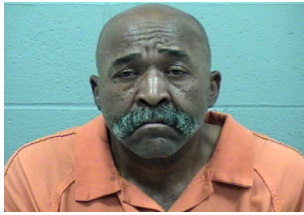
Fisher is currently being held in Harvey County
Alfonso J. Fisher, 66, Wichita, Kan., pleaded guilty to one count of unlawful possession of a firearm following a felony conviction.
During a sentencing hearing, a prosecutor said law enforcement officers encountered Fisher after they were called to Cessna Activity Center on the report of a theft.
An employee of the activity center saw Fisher getting out of a truck belonging to another person. The owner of the truck and another man confronted Fisher and found a .40 caliber handgun that Fisher had taken from the truck. Fisher told the owner of the truck, “You got our gun back. Can I go now?” The owner said no and called police.
At sentencing, the prosecutor noted that Fisher has a long criminal history and has spent more than 30 years behind bars. According to the Kansas Department of Corrections Fisher has more than two dozen convictions on charges including forgery, theft, fraud, burglary and drugs.