We have a brand new updated website! Click here to check it out!

Woman charged in triple-fatal crash extradited to Kansas

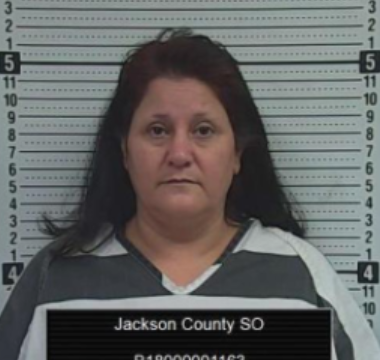
JACKSON COUNTY — A woman facing charges for a triple-fatal crash is back in a Kansas jail. Maria De Jesus Perez-Marquez, 49, Omaha, skipped a court appearance and was captured by U.S. Marshals October 23 in Nebraska, according to Jackson County Sheriff Tim Morse.

Perez-Marquez -photo Jackson County

On October 11, Maria Perez-Marquez, 49, Omaha,  was charged in Kansas with three counts of involuntary manslaughter, aggravated battery and reckless driving for the November 2017 crash near Holton that killed the mother, sister and uncle of two Kansas high school football players shortly after the family watched the boys’ Sabetha team win a state football championship. Two other people were injured.

Perez-Marquez failed to appear at the hearing. The Jackson County Sheriff’s Office requested the assistance from the U.S. Marshals to locate her. Jackson County deputies extradited Perez-Marquez back to the Jackson County Jail Friday, according to Morse.

Kan. hospital now offers reward for information on stolen inflatable colon

KANSAS CITY, Kan. (AP) — There is now a $1,000 award being offered for anyone who comes forward with information that leads to the return of the University of Kansas Cancer Center’s giant inflatable colon.

The American Society of Gastroenterology donated the reward money in hopes of returning the stolen colon.

photo courtesy KU Cancer Center

The 10-foot long, 150 pound inflatable was stolen earlier this month from the back of a pickup truck in Brookside. It’s valued at $4,000 and is owned by the Cancer Coalition, which hosts walking and running events under a campaign called “Get Your Rear In Gear.”

The Cancer Coalition ships the inflatable colon across the country to help see in a unique way the progression of colon cancer.

Multiple fatalities, 4 police officers wounded in Pittsburg synagogue shooting

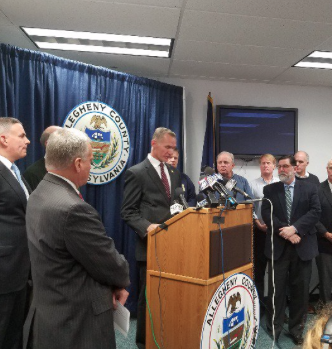
PITTSBURGH (AP) — A shooter opened fire during a baby naming ceremony at a Pittsburgh synagogue on Saturday, killing 11 people.

At least six other people were wounded, including four police officers who dashed to the scene, authorities said.

Police said a suspect was in custody after the attack at the Tree of Life Congregation in Pittsburgh’s Squirrel Hill neighborhood. A law enforcement official identified the suspect as Robert Bowers and said he is in his 40s. The official wasn’t authorized to discuss an ongoing investigation and spoke to The Associated Press on condition of anonymity.

Bob Jones, the special agent in charge of the FBI’s office in Pittsburgh, said investigators Bowers was not known to law enforcement and that they believe he was acting alone. He said Bowers’ full motive still isn’t known.

The social media site Gab.com said the alleged shooter had a profile on its website, which is popular with far-right extremists. The company said the account was verified after the shooting and matched the name of the gunman.

A man with the same name posted on Gab before the shooting that “HIAS likes to bring invaders in that kill our people. I can’t sit by and watch my people get slaughtered. Screw your optics, I’m going in.”

HIAS is a nonprofit group that helps refugees around the world find safety and freedom. The organization says it is guided by Jewish values and history.

Bowers also recently posted a photo of a collection of three semi-automatic handguns he titled “my glock family,” a reference to the firearms manufacturer. He also posted photos of bullet holes in person-sized targets at a firing range, touting the “amazing trigger” on a handgun he was offering for sale.

City officials said the shooting was being investigated as a federal hate crime. It comes amid a rash of high-profile attacks in an increasingly divided country, including the series of pipe bombs mailed over the past week to prominent Democrats and former officials.

The shooting also immediately reignited the longstanding national debate about guns: President Donald Trump said the outcome might have been different if the synagogue “had some kind of protection” from an armed guard, while Pennsylvania’s Democratic Gov. Tom Wolf noted that once again “dangerous weapons are putting our citizens in harm’s way.”

The people who provided the death toll spoke to The Associated Press anonymously because they were not authorized to speak publicly about the shooting.

The attack took place during a baby naming ceremony, according to Pennsylvania Attorney General Josh Shapiro. It was unknown whether the baby was harmed.

“It is a very horrific crime scene. It’s one of the worst that I’ve seen and I’ve been on some plane crashes,” said a visibly moved Wendell Hissrich, the Pittsburgh public safety director.

The synagogue is located in the tree-lined residential neighborhood of Squirrel Hill, about 10 minutes from downtown Pittsburgh and the hub of Pittsburgh’s Jewish community.

Jonathan Greenblatt, chief executive officer of the Anti-Defamation League, said the group believes it is the deadliest attack on the Jewish community in U.S. history.

“Our hearts break for the families of those killed and injured at the Tree of Life Synagogue, and for the entire Jewish community of Pittsburgh,” Greenblatt said.

Israeli Prime Minister Benjamin Netanyahu said he was “heartbroken and appalled” by the attack.

“The entire people of Israel grieve with the families of the dead,” Netanyahu said. “We stand together with the Jewish community of Pittsburgh. We stand together with the American people in the face of this horrendous anti-Semitic brutality. And we all pray for the speedy recovery of the wounded.”

World Jewish Congress President Ronald S. Lauder called the shooting “an attack not just on the Jewish community, but on America as a whole.”

Trump called the shooting a “wicked act of mass murder” that “is pure evil, hard to believe and frankly something that is unimaginable.”

Trump has at times been accused by critics of failing to adequately condemn hate, such as when he blamed “both sides” for the violence at a Charlottesville white supremacist rally.

On Saturday, he said that anti-Semitism “must be confronted anywhere and everywhere it appears.”

In 2010, Tree of Life Congregation — founded more than 150 years ago — merged with Or L’Simcha to form Tree of Life (asterisk) Or L’Simcha.

The synagogue is a fortress-like concrete building, its facade punctuated by rows of swirling, modernistic stained-glass windows illustrating the story of creation, the acceptance of God’s law, the “life cycle” and “how human-beings should care for the earth and one another,” according to its website. Among its treasures is a “Holocaust Torah,” rescued from Czechoslovakia.

Its sanctuary can hold up to 1,250 guests.

Michael Eisenberg, the immediate past president of the Tree of Life Synagogue, lives about a block from the building.

He was getting ready for services when he received a phone call from a member who works with Pittsburgh’s Emergency Services, saying he had been notified through scanner and other communications that there was an active shooter at their synagogue.

“I ran out of the house without changing and I saw the street blocked with police cars. It was a surreal scene. And someone yelled, ‘Get out of here.’ I realized it was a police officer along the side of the house. … I am sure I know all of the people, all of the fatalities. I am just waiting to see,” Eisenberg said.

He said officials at the synagogue had not gotten any threats that he knew of prior to the shooting. The synagogue maintenance employees had recently checked all of the emergency exits and doors to make sure they were cleared and working.

“I spoke to a maintenance person who was in the building and heard the shots. He was able to escape through one of the side exit doors we had made sure was functioning,” Eisenberg said.

Jeff Finkelstein of the Jewish Federation of Greater Pittsburgh said local synagogues have done “lots of training on things like active shooters, and we’ve looked at hardening facilities as much as possible.”

“This should not be happening, period,” he told reporters at the scene. “This should not be happening in a synagogue.”

Just three days before the shooting, Rabbi Jeffrey Myers posted a column on the congregation’s website, noting that people make time to attend funerals, but not for life’s happy occasions.

“There is a story told in the Talmud of a wedding procession and a funeral procession heading along parallel roads, with the roads intersecting,” Myers wrote on Wednesday. “The question asked is: when they meet at the fork, which procession goes first, funeral or wedding? The correct answer is wedding, as the joy of the couple takes precedence. In fact, the funeral procession is to move out of sight so that their joy is not lessened.”

Myers ended his column with words that now seem all too prescient.

“We value joy so much in Judaism that upon taking our leave from a funeral or a shiva house, the customary statement one makes (in Yiddish) is ‘nor oyf simches’ – only for s’machot,” Myers wrote. “While death is inevitable and a part of life, we still take our leave with the best possible blessing, to meet at joyous events. And so I say to you: nor oyf simches!”

___

Police: 3 hospitalized after Kansas shooting

SHAWNEE COUNTY — Law enforcement authorities are investigating a shooting and asking for help to locate suspects.

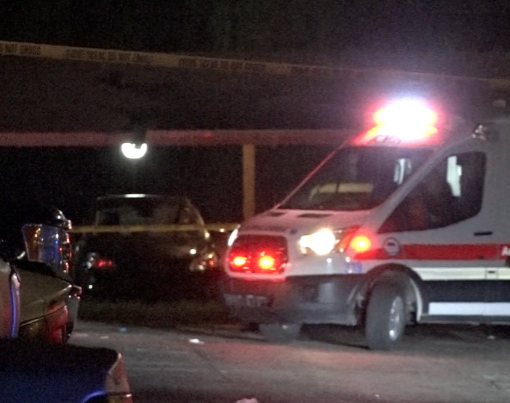
First responders on the scene of Saturday morning shooting –photo courtesy WIBW TV

Just after 2:15a.m. Saturday, the Shawnee County dispatch center began receiving calls of shots fired in the area of 5222 SW 10th Street in Topeka, according to Lt. Manuel Munoz.

Officers who were working another call nearby reported hearing the shots. They responded and located three victims who appeared to be suffering from non-life threating gunshot wounds. All three individuals were transported to a local hospital, according to Munoz.

Detectives and officers have interviewed witness and are gathering information.

Anyone with information regarding this crime is encouraged to contact the Topeka Police Criminal Investigation Bureau at (785) 368-9400 or Crime Stoppers at (785) 234-0007.

MARSHALL: Doctor’s Note Oct. 27

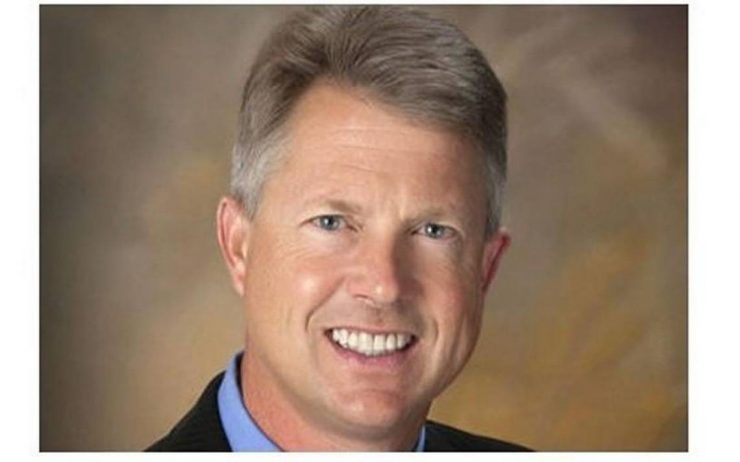
Dr. Roger Marshall, R-Great Bend, is the First District Kansas Congressman.

Friends,

This week we have much to be thankful for. I, for one, am thankful for the hardworking men and women of our law enforcement institutions and their efforts to catch the perpetrator who sought to harm our nation’s public servants. This behavior will not be tolerated, and I am confident that law enforcement officials will bring them to justice. Moving forward, we must maintain order and respect for one another regardless of political affiliation. We cannot let fear and anger overcome our humanity.

I am also thankful for the recent rise in real wages for low-income workers. This week’s economic reports show that wages for the bottom 10% of full-time wage and salary workers have averaged 4.9% annual growth over the past four quarters. The number of applications for unemployment benefits dropped last week, especially amongst women. For the last two decades, the share of prime-aged women participating in our labor force has been in decline, but we have begun to see a reversal of this trend over the past three years. Our strong economy has brought labor-force participation among women aged 25 to 54 up to 75.2%.

Current-dollar personal income increased $180.4 billion in the third quarter, with personal savings resting at $999.6 billion. Deregulation and tax reform are bringing millions of jobs and opportunities back to those who need them most!

Disaster Relief
Last Friday, President Trump announced a Federal Disaster Declaration for counties in Kansas impacted by the major weather events over Labor Day weekend. The severe storms consisting of straight-line winds, and flooding which hit Riley, Clay and Marshall Counties, damaged people’s homes, buildings and businesses, and the local infrastructure. The President’s disaster declaration allocates federal funds, on a cost-sharing basis, to aid in the recovery and reconstruction of these communities. This will certainly help in the rebuilding process, but it is critical that we also recognize our state and local emergency response teams who assisted during the storms and floods, and have continued to help residents and property owners during this challenging time of clean up and repair.

Bringing Order to the Border

On Thursday, President Trump firmly stated that the Honduran migrant caravan will not be allowed to enter the country illegally. Secretary of Defense, James Mattis, is expected to order 800 American troops to reinforce vulnerable areas along the border. Regardless of political affiliation, it is clear that our current immigration laws are broken. As elected officials, we must set aside partisan bickering and develop a solution to this urgent crisis. I have sympathy for those working to enter the U.S., but we are a country of laws that must be upheld. Without national security and clearly defined borders, our country would cease to exist.

A Prescription for Hope
This week, President Trump signed the most significant measure against a single drug crisis in history! Having been classified as a national Public Health Emergency earlier this month, I am thrilled to see we are tackling the Opioid Crisis head-on. H.R. 6, known as The Substance Use-Disorder Prevention that Promotes Opioid Recovery and Treatment (SUPPORT) for Patients and Communities Act, fights drug trafficking on our borders, improves access to treatment centers, and educates prescribers, as well as veterans, on the addictive properties of certain drugs. Of course, there is still much work to be done on the state level, but this is a major leap towards creating healthier American communities.

World Polio Day
October 25th was World Polio Day: a fantastic opportunity to renew our promise to every child who suffers from this debilitating disease. This year’s theme, Bold Steps to End Polio, focused on the tremendous progress that has been made in creating a polio-free world. Developing countries such as Nigeria have gone two years without new diagnoses, while others such as Afghanistan and Pakistan only encountered 22 cases in the past year. The World Health Organization, in conjunction with its partners in the United Nations Children’s Fund, Rotary International, the Bill & Melinda Gates Foundation, and U.S. Centers for Disease Control, will continue working alongside governments and frontline health care workers to annihilate polio for good.

Kobach Claims He Can Save $2 Billion For Medicaid, Experts Disagree

 NOMIN UJIYEDIIN

Kris Kobach says his proposal to reform Kansas Medicaid could save the state $2 billion.

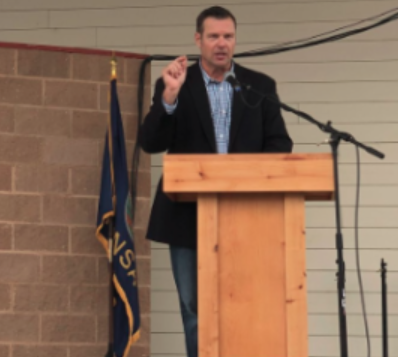
Kobach during the debate at the Kansas State Fair-photo courtesy Kobach for Governor

At campaign events, the Republican nominee for governor touts the benefits of combining Medicaid with direct primary care, an unconventional payment system that avoids the bureaucracy of health insurance.

But the people who gave Kobach the idea say they haven’t calculated that direct primary care would save $2 billion for Kansas Medicaid.  And Kobach’s campaign hasn’t provided an alternative source for that number.

On top of that, health experts say the idea oversimplifies one of the state’s largest and most complex expenditures. While direct primary care is a familiar idea in Kansas in private practice, no one knows whether it could work with Medicaid’s complex structure and recipients’ specialized needs.

Direct primary care, sometimes called “concierge medicine,” allows patients to pay doctors a monthly or yearly fee for unlimited primary care. That often includes office visits, phone calls and texts.

Direct primary care clinics offer patients discounts on procedures, medications and lab tests. They typically don’t take insurance, which saves doctors the hassle and overhead costs of dealing with insurance companies. The Kansas Department of Health and Environment says about 30 doctors use the system in Kansas.

For years, lawmakers have considered bringing direct primary care to KanCare, the Medicaid program that serves 425,000 of the state’s most vulnerable residents. Now, Kobach and his independent opponent, Greg Orman, have included the proposal in their campaign platforms.

“If we had successful direct primary care for our KanCare system, the $3.2 billion that we’re spending for 400,000 people would go down to $1.3 billion for the same 400,000 people,” Kobach said at a July candidate forum in Garden City. “There is an opportunity to realize  great savings in our KanCare system.”

Kobach’s other statements on the subject are frequent, but lack detail. His campaign website doesn’t include a section on his proposals for health policy. At an October press conference, Kobach told the Kansas News Service he would introduce a direct primary care pilot program to one county or region before expanding it to Medicaid across the state and, he promised, reaping $1.9 billion dollars in savings.

“If it works well in that setting, then we would hopefully expand it, “ Kobach said. “You’d have to go statewide with it to save that kind of money.”

Despite repeated requests from the Kansas News Service, the Kobach campaign hasn’t provided a source for that number. A spokeswoman said Kobach based the idea off of work by Steve Anderson, a former state budget director under former Gov. Sam Brownback, and Josh Umbehr, a direct primary care physician. But neither Anderson nor Umbehr say they calculated anywhere near $2 billion in potential savings.

The back of an envelope

Umbehr has long been an advocate for direct primary care, speaking about the subject across the country and making appearances on local and national media.

He’s run a direct primary care clinic in Wichita since 2010 and says the payment system saves his business time and money.

Wichita direct primary care doctor Josh Umbehr.
CREDIT FILE PHOTO / KANSAS NEWS SERVICE

“We cut out a lot of middlemen,” Umbehr said. “We can lower that price and offer that directly to our patients.”

When his father, lawyer Keen Umbehr, ran for Kansas governor as a Libertarian in 2014, Josh Umbehr was his running mate. Their platformpromised to save the state $1 billion by combining direct primary care with Medicaid.

In 2015, Josh Umbehr testified about the idea in front of a Kansas House of Representatives committee, attracting interest from lawmakers. A month later, the committee introduced a bill creating a direct primary care pilot program as part of broader Medicaid reforms. But that legislation stalled.

Now, Umbehr is advising the Kobach campaign on the issue. He also practices medicine in the Hartman Oil Building — the same place where Wink Hartman, Kobach’s running mate, headquarters his oil company.

Umbehr and Anderson remember calculating the potential Medicaid savings of direct primary care over a meal at a Wichita restaurant in 2013 or 2014.

Anderson said they took the discounted prices that Umbehr charged at his clinic and applied those discounts to KanCare procedures and expenses  — minus the cost of nursing home care.

“Three hundred knee replacements, for example,” Anderson said. “And then there would be a calculation, what that costs us, and then what it would have cost under Josh’s system.”

He remembers getting the data from a state spreadsheet and doing the math on the back of an envelope.

“It’s a really big, nine-by-nine envelope,” Anderson said.

Anderson said he hasn’t spoken to Umbehr in years, and admits his memory of that day, and even which year it happened, is spotty. But Anderson remembers coming to the conclusion that direct primary care could save not $1 billion in Medicaid costs, like Umbehr claims, but more like $450 million to $600 million.

“It’s a rough estimate,” Anderson said.

Umbehr told the Kansas News Service that KanCare could save $1 billion by combining direct primary care with a wraparound insurance program to handle other medical expenses. He said cheaper primary care would also decrease non-primary care expenses, such as hospitalizations and emergency room visits.

“We’re pulling all of those things in-house and decreasing the cost of them by 95 percent.” Umbehr said.

‘It’s just inaccurate’

Former Kansas Medicaid director Robert Day says both Anderson and Umbehr did the math wrong.

“These people are idiots. They know nothing about health care financing or costs,” Day said. “To make the statements they make, it’s just blatantly  — it’s so untrue and unfactual that it staggers the mind they would even say something publicly like that.”

Day, who worked for Republican and Democratic governors from 1999 to 2008, said the savings from a private direct primary care clinic can’t be applied to Medicaid. It’s a complicated program, he said, that doesn’t work like regular health insurance.

The elderly and disabled comprise only 25 percent of people receiving Medicaid or the related Children’s Health Insurance Program in Kansas. But they account for 70 percent of KanCare’s spending.

Any savings from direct primary care would most likely not apply to the elderly and disabled, Day said, because their needs are so different from those of the general population.

“Most of the costs of that population is in long-term and nursing home care,” he said. “So they’re not physician-driven costs.”

In 2016, the state spent $1.1 billion on two categories of service primarily for the elderly and disabled: adult care homes and home and community-based services. In the same year, it spent $315 million on two categories of service that include primary care procedures: physician services and outpatient care.

Day said KanCare couldn’t save anywhere near what Anderson, Umbehr and Kobach are claiming, because it doesn’t spend $450 million, $1 billion or $1.9 billion on primary care in the first place. 

“It’s just inaccurate,” Day said. “It shows a complete lack of understanding of the Medicaid program.”

Uncertain benefits

Other health policy experts were skeptical about whether direct primary care could adequately serve the specialized needs of Medicaid recipients when so many are elderly and disabled.

“There’s been no program to even test or look at, at this point,” said Cindy Samuelson, a vice president of the Kansas Hospital Association. “So it’s really hard to answer those questions of what the true impact might be.”

While direct primary care might save time and money by reducing paperwork, Samuelson said interacting with the bureaucracy of Medicaid, especially KanCare’s three managed care organizations, might negate any of those benefits for doctors.

Given those complications, she says it’s unclear whether there are enough doctors who are willing to try both direct primary care and Medicaid.

“Would the program even be something that providers are interested in?” Samuelson said.

That uncertainty highlights the need to run a pilot program before drawing any conclusions, said Kari Bruffett, vice president for policy at of the Kansas Health Institute.

“A pilot could help assess how direct primary care might work for various populations in KanCare,” Bruffett said in an email. “It could also be used to assess beneficiary interest, provider interest and capacity, and whether direct primary care could work either as an alternative to or an option within a managed care model.”

The Kansas Department of Health and Environment, which manages Medicaid, told the Kansas News Service it hasn’t yet done a cost analysis of using direct primary care for Medicaid.  But it’s open to a pilot program if it’s supported by a future governor and legislature.

“Anything innovative like that, we would like to think it warrants exploration,” said Secretary Jeff Andersen.

Andersen agreed that physician availability, negotiations with managed care organizations and other details were uncertain. “Those are things that have to be worked out, but it’s all doable.”

So far, the Kobach campaign hasn’t answered questions about those details, nor has it provided another source for Kobach’s claim of $1.9 billion in savings, despite repeated inquiries.  In an email, a spokeswoman forwarded this statement, attributable to Kobach:

“Direct Primary Care would result in significant savings. We will be looking at all kinds of measures to increase the efficiency of our Medicaid delivery and to improve the satisfaction of Medicaid patients. Direct Primary Care accomplishes both. The patients love it, and the doctors love it, too.”

Nomin Ujiyediin is a reporter for the Kansas News Service. You can reach her on Twitter @NominUJ.

Kansas woman dies after SUV rolls on I-70

GEARY COUNTY — One person died in an accident just after 7p.m. Friday in Geary County.

The Kansas Highway Patrol reported a 2000 Ford Explorer driven by Heather A. Hurley, 30, Salina, was eastbound on Interstate 70 one mile east of Grandview Plaza.

The driver lost control of the SUV overcorrected and overturned.

A 2017 Peterbilt semi driven by Bryan G. Hedrick, 40, Eudora, was behind the SUV and struck debris from the accident.

Hurley was pronounced dead at the scene and transported to Penwell Gable Funeral Home.

Hedrick was not injured. Hurley was not wearing a seat belt, according to the KHP.

EPA school bus rebate program to reduce diesel emissions

EPA

LENEXA – Earlier this month, the U.S. Environmental Protection Agency (EPA) announced over $9 million available nationwide in rebates to replace older diesel school buses through EPA’s Diesel Emissions Reduction Act (DERA) funding. The new and retrofitted buses will reduce pollutants that are linked to health problems such as asthma and lung damage.
School buses travel over 4 billion miles each year, providing the safest transportation to and from school for more than 25 million American children every day. However, diesel exhaust from these buses has a negative impact on human health, especially for children, who have a faster breathing rate than adults and whose lungs are not yet fully developed.
The 2018 School Bus Rebate Program will offer over $9 million to public and private fleet owners for the replacement of old diesel school buses with new buses certified to EPA’s cleanest emission standards. EPA will award selected applicants up to $20,000 per bus for scrapping and replacing old buses.
Applicants can apply for rebates between $15,000 and $20,000 per bus to replace buses with engine model years of 2006 and older with new buses powered by 2017 or newer model year engines. Eligible replacement school buses may operate on diesel, gasoline, battery, or alternative fuels such as natural gas or propane.
Eligible entities include:
  • Regional, state, or tribal agencies that have jurisdiction over transportation and air quality, including school districts and municipalities
  • Private entities that operate school buses under a contract with an entity listed above
  • Fleets with up to 100 school buses may submit one rebate application listing up to 10 buses for scrappage and replacement
  • Fleets with more than 100 school buses may submit up to two rebate applications, each listing up to 10 different buses for scrappage and replacement
Selections are made through a lottery process, with at least one selectee from each state/territory represented in the applicant pool. The deadline to apply is Nov. 6, 2018. For more information, visit: https://www.epa.gov/cleandiesel/clean-diesel-rebates.
This is the sixth rebate program to fund cleaner school buses offered under DERA appropriations, which has supported nearly 25,000 cleaner buses across the country for America’s schoolchildren. For more information about the DERA program, visit: www.epa.gov/cleandiesel.

Kansas police officer sentenced for not reporting illegal gambling

WICHITA, KAN. – A former Wichita police officer was sentenced Friday to a year on supervised probation for failing to report what he knew about illegal poker games, according to U.S. Attorney Stephen McAllister.

Bruce Mackey -photo Sedgwick County

Bruce Mackey, 46, Goddard, Kan., pleaded guilty to one felony count of misprision of a felony.

Mackey admitted that while he was a police officer he knew and did not report individuals who were conducting a gambling business.

During an illegal poker game in February 2014, Mackey confirmed for organizers of the game that one of the gamblers was a Wichita police officer, after organizers of the game attempted to identify that person.

Huge crane in place to dismantle water slide where Kan. boy died

KANSAS CITY, Kan. (AP) — A crane as tall as the Verruckt water slide in Kansas City, Kansas, is now in position to dismantle the attraction where a 10-year-old boy was killed more than two years ago.

The 17-story water slide at the Schlitterbahn waterpark
FILE PHOTO- Kansas News Service

A spokeswoman for the Schlitterbahn water park said that demolition work is expected to begin Thursday.

The 17-story Verruckt slide was billed as the tallest water slide in the world. In August 2016, Caleb Schwab was killed when the raft he was in went airborne and he struck a metal rod that held a safety net in place.

The demolition has been delayed because of disagreements over which parts of the slide should be preserved as possible evidence in criminal cases.

Caleb’s family received nearly $20 million in settlements.

Watch: Florida man charged after weeklong bomb-package scare

WASHINGTON (AP) — A Florida man with a long criminal history was charged Friday in the nationwide mail-bomb scare targeting prominent Democrats who traded criticism with President Donald Trump, a significant break in a case that seized the national conversation and spread fear of election-season violence with little precedent in the U.S.

WASHINGTON (AP) — A Florida man with a long criminal history was charged Friday in the nationwide mail-bomb scare targeting prominent Democrats who traded criticism with President Donald Trump, a significant break in a case that seized the national conversation and spread fear of election-season violence with little precedent in the U.S.

Justice Department officials announced five federal charges against Cesar Sayoc, 56, of Aventura, Florida, and revealed that DNA and a fingerprint found on a package helped them identify the suspect after a five-day investigation that heightened unease with each additional explosive discovery.

None of the bombs exploded, but FBI Director Chris Wray said Friday, “These are not hoax devices.”

Sayoc, an amateur body builder who 16 years earlier was on probation for a bomb threat charge, has social media accounts that vilify Democrats and praise the president. Misspellings from his online posts matched mistakes found on the packages, according to an 11-page criminal complaint.

He registered as a Republican in Florida in March 2016, before the election that sent Trump to the White House, and voted early in subsequent elections, according to officials.

Friday’s arrest capped a nationwide manhunt for the sender of at least 13 explosive devices addressed to prominent Democrats including former President Barack Obama, former Vice President Joe Biden and Hillary Clinton. The case continued widening Friday with new packages addressed to New Jersey Sen. Cory Booker and former National Intelligence Director James Clapper — both similar to those containing pipe bombs sent to other Trump critics. Even as Sayoc was detained, investigators in California scrutinized a package sent to Democratic Sen. Kamala Harris, her office said.

Trump, after Sayoc was apprehended, declared that “we must never allow political violence take root in America” and that Americans “must unify.”

That marked a change in tone from his Twitter post earlier Friday complaining that “this ‘bomb’ stuff” was taking attention away from the upcoming election and that critics were wrongly blaming him and his heated rhetoric for stoking violence.

In his remarks after the arrest, as in his comments throughout the week, Trump did not mention that the package recipients were all Democrats or officials in Obama’s administration, in addition to CNN, a news network he criticizes almost daily.

Sayoc was arrested near an auto parts store in Plantation, Florida, north of Miami. Across the street, Thomas Fiori, a former federal law enforcement officer, said he heard a small explosion — possibly a “flash-bang” device police use as a distraction — and saw about 50 armed officers swarm a man standing outside a white van. They ordered Sayoc to the ground, Fiori said, and he did not resist.

“He had that look of, ‘I’m done, I surrender,'” Fiori said.

Officers were later seen examining the van, its windows covered with stickers. The stickers included images of Trump, American flags and what appeared to be logos of the Republican National Committee and CNN, though the writing surrounding those images was unclear.

Law enforcement officials told the AP that the devices, containing timers and batteries, were not rigged to explode upon opening. But they were uncertain whether the devices were poorly designed or never intended to cause physical harm.

Authorities noted that they included “energetic material.” FBI Special Agent David Brown said in a footnote to the charging document that such explosive material “gives off heat and energy through a rapid exothermic reaction when initiated by heat, shock or friction.”

Investigators believe the mailings were staggered rather than sent all at once. Officials were working to make sure they hadn’t overlooked others.

Attorney General Jeff Sessions cautioned that Sayoc had only been charged, not convicted. But he said, “Let this be a lesson to anyone regardless of their political beliefs that we will bring the full force of law against anyone who attempts to use threats, intimidation and outright violence to further an agenda. We will find you; we will prosecute you to the fullest extent of the law.”

Court records showed convictions of Sayoc for grand theft and misdemeanor theft and a 2002 arrest on a felony charge of threatening to throw or place a bomb. His lawyer in that case told the AP it involved a heated conversation with a Florida utility representative.

Sayoc filed for chapter 7 bankruptcy in 2012, informing the court he had $4,175 in personal property and more than $21,000 in debts. His name is also listed on business records tied to dry cleaning and catering businesses. Records show he was born in New York and according to an online resume he attended college in North Carolina.

“Debtor lives with mother, owns no furniture,” Sayoc’s lawyer indicated in a property list.

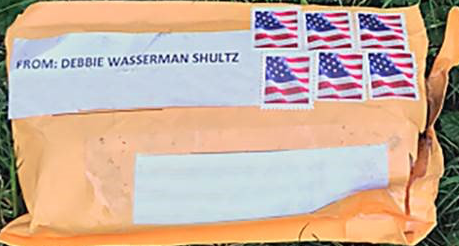
Most of those targeted this week were past or present U.S. officials, but packages also were sent to actor Robert De Niro and billionaire George Soros. The bombs have been sent across the country — from New York, Delaware and Washington, D.C., to Florida and California, where Rep. Maxine Waters was targeted. They bore the return address of Florida Rep. Debbie Wasserman Schultz, the former chairwoman of the Democratic National Committee.

The common thread among the bomb targets was obvious: officeholders and others who have criticized Trump and have been harshly criticized in return.The package to Clapper was addressed to him at CNN’s Midtown Manhattan address. Clapper, a frequent Trump critic, told CNN that he was not surprised he was targeted and that he considered the actions “definitely domestic terrorism.”

The first bomb discovered was delivered Monday to the suburban New York compound of Soros, a major contributor to Democratic causes. Soros has called Trump’s presidency “dangerous.”

___

WASHINGTON (AP) — Federal authorities took a man into custody Friday in Florida in connection with the mail-bomb scare that earlier widened to 12 suspicious packages, the FBI and Justice Department said.

The man was identified by law enforcement officials as Cesar Sayoc, 56, of Aventura, Florida. He was arrested at an auto parts store in the nearby city of Plantation.

Court records show Sayoc has a history of arrests.

Law enforcement officers were seen on television examining a white van, its windows covered with an assortment of stickers, in the city of Plantation in the Miami area. Authorities covered the vehicle with a blue tarp and took it away on the back of a flatbed truck.

The stickers included images of American flags and what appeared to be logos of the Republican National Committee and CNN, though the writing surrounding those images was unclear.

President Donald Trump said he expected to speak about the investigation at a youth summit on Friday.

The development came amid a coast-to-coast manhunt for the person responsible for a series of explosive devices addressed to Democrats including former President Barack Obama, former Vice President Joe Biden and Hillary Clinton.

Law enforcement officials said they had intercepted a dozen packages in states across the country. None had exploded, and it wasn’t immediately clear if they were intended to cause physical harm or simply sow fear and anxiety.

Earlier Friday, authorities said suspicious packages addressed to New Jersey Sen. Cory Booker and former National Intelligence Director James Clapper — both similar to those containing pipe bombs sent to other prominent critics of President Donald Trump— had been intercepted.

Investigators believe the mailings were staggered. The U.S. Postal Service searched their facilities 48 hours ago and the most recent packages didn’t turn up. Officials don’t think they were sitting in the system without being spotted. They were working to determine for sure. The officials spoke to The Associated Press on condition of anonymity to discuss an ongoing investigation.

The FBI said the package to Booker was intercepted in Florida. The one discovered at a Manhattan postal facility was addressed to Clapper at CNN’s address. An earlier package had been sent to former Obama CIA Director John Brennan via CNN in New York.

Attorney General Jeff Sessions said Friday the Justice Department was dedicating every available resource to the investigation “and I can tell you this: We will find the person or persons responsible. We will bring them to justice.”

Trump, on the other hand, complained that “this ‘bomb’ stuff” was taking attention away from the upcoming election and said critics were wrongly blaming him and his heated rhetoric.

Investigators were analyzing the innards of the crude devices to reveal whether they were intended to detonate or simply sow fear just before Election Day.

Law enforcement officials told The Associated Press that the devices, containing timers and batteries, were not rigged to explode upon opening. But they were uncertain whether the devices were poorly designed or never intended to cause physical harm.

Most of those targeted were past or present U.S. officials, but one was sent to actor Robert De Niro and billionaire George Soros. The bombs have been sent across the country – from New York, Delaware and Washington, D.C., to Florida and California, where Rep. Maxine Waters was targeted. They bore the return address of Florida Rep. Debbie Wasserman Schultz, the former chairwoman of the Democratic National Committee.

The common thread among the bomb targets was obvious: their critical words for Trump and his frequent, harsher criticism in return.

Trump claimed Friday he was being blamed for the mail bombs, complaining in a tweet sent before dawn: “Funny how lowly rated CNN, and others, can criticize me at will, even blaming me for the current spate of Bombs and ridiculously comparing this to September 11th and the Oklahoma City bombing, yet when I criticize them they go wild and scream, ‘it’s just not Presidential!'”

The package to Clapper was addressed to him at CNN’s Midtown Manhattan address. Clapper, a frequent Trump critic, told CNN that he was not surprised he was targeted and that he considered the actions “definitely domestic terrorism.”

Jeff Zucker, the president of CNN Worldwide, said in a note to staff that all mail to CNN domestic offices was being screened at off-site facilities. He said there was no imminent danger to the Time Warner Center, where CNN’s New York office is located.

At a press conference Thursday, officials in New York would not discuss possible motives or details on how the packages found their way into the postal system. Nor would they say why the packages hadn’t detonated, but they stressed they were still treating them as “live devices.”

The devices were packaged in manila envelopes and carried U.S. postage stamps. They were being examined by technicians at the FBI’s forensic lab in Quantico, Virginia.

The packages stoked nationwide tensions ahead of the Nov. 6 election to determine control of Congress — a campaign both major political parties have described in near-apocalyptic terms. Politicians from both parties used the threats to decry a toxic political climate and lay blame.

Trump, in a tweet Thursday, blamed the “Mainstream Media” for the anger in society. Brennan responded, tweeting that Trump should “Stop blaming others. Look in the mirror.”

The bombs are about 6 inches (15 centimeters) long and packed with powder and broken glass, according to a law enforcement official who viewed X-ray images. The official said the devices were made from PVC pipe and covered with black tape.

The first bomb discovered was delivered Monday to the suburban New York compound of Soros, a major contributor to Democratic causes. Soros has called Trump’s presidency “dangerous.”

___


WASHINGTON (AP) — Federal authorities have detained a person in connection with the mail-bomb scare that widened to 12 suspicious packages, a Justice Department official said Friday.

Department spokeswoman Sarah Isgur Flores said authorities planned to announce more information at a press conference.

Earlier Friday, authorities said suspicious packages addressed to New Jersey Sen. Cory Booker and former National Intelligence Director James Clapper — both similar to those containing pipe bombs sent to other prominent critics of President Donald Trump— had been intercepted.

The discoveries — making 12 so far — further spurred a coast-to-coast investigation, as officials scrambled to locate a culprit and possible motive amid questions about whether new packages were being sent or simply surfacing after a period in mail system.

The devices have targeted well-known Democrats including former President Barack Obama, former Vice President Joe Biden, Hillary Clinton and former Attorney General Eric Holder.

The FBI said the package to Booker was intercepted in Florida. The one discovered at a Manhattan postal facility was addressed to Clapper at CNN’s address. An earlier package had been sent to former Obama CIA Director John Brennan via CNN in New York.

Attorney General Jeff Sessions said Friday the Justice Department was dedicating every available resource to the investigation “and I can tell you this: We will find the person or persons responsible. We will bring them to justice.”

Trump, on the other hand, complained that “this ‘bomb’ stuff” was taking attention away from the upcoming election and said critics were wrongly blaming him and his heated rhetoric.

Investigators were analyzing the innards of the crude devices to reveal whether they were intended to detonate or simply sow fear just before Election Day.

Law enforcement officials told The Associated Press that the devices, containing timers and batteries, were not rigged to explode upon opening. But they were uncertain whether the devices were poorly designed or never intended to cause physical harm.

Homeland Security Secretary Kirstjen Nielsen, in an interview Thursday with Fox News Channel, acknowledged that some of packages originated in Florida. One official told AP that investigators are homing in on a postal facility in Opa-locka, Florida, where they believe some packages originated.

The package addressed to Booker was found during an oversight search of that facility, according to a law enforcement official.

The officials spoke on condition of anonymity because they were not authorized to discuss the ongoing investigation by name

Most of those targeted were past or present U.S. officials, but one was sent to actor Robert De Niro and billionaire George Soros. The bombs have been sent across the country – from New York, Delaware and Washington, D.C., to Florida and California, where Rep. Maxine Waters was targeted. They bore the return address of Florida Rep. Debbie Wasserman Schultz, the former chairwoman of the Democratic National Committee.

The common thread among the bomb targets was obvious: their critical words for Trump and his frequent, harsher criticism in return.

Trump claimed Friday he was being blamed for the mail bombs, complaining in a tweet sent before dawn: “Funny how lowly rated CNN, and others, can criticize me at will, even blaming me for the current spate of Bombs and ridiculously comparing this to September 11th and the Oklahoma City bombing, yet when I criticize them they go wild and scream, ‘it’s just not Presidential!'”

The package to Clapper was addressed to him at CNN’s Midtown Manhattan address. Clapper, a frequent Trump critic, told CNN that he was not surprised he was targeted and that he considered the actions “definitely domestic terrorism.”

Jeff Zucker, the president of CNN Worldwide, said in a note to staff that all mail to CNN domestic offices was being screened at off-site facilities. He said there was no imminent danger to the Time Warner Center, where CNN’s New York office is located.

At a press conference Thursday, officials in New York would not discuss possible motives or details on how the packages found their way into the postal system. Nor would they say why the packages hadn’t detonated, but they stressed they were still treating them as “live devices.”

The devices were packaged in manila envelopes and carried U.S. postage stamps. They were being examined by technicians at the FBI’s forensic lab in Quantico, Virginia.

The packages stoked nationwide tensions ahead of the Nov. 6 election to determine control of Congress — a campaign both major political parties have described in near-apocalyptic terms. Politicians from both parties used the threats to decry a toxic political climate and lay blame.

Trump, in a tweet Thursday, blamed the “Mainstream Media” for the anger in society. Brennan responded, tweeting that Trump should “Stop blaming others. Look in the mirror.”

The bombs are about 6 inches (15 centimeters) long and packed with powder and broken glass, according to a law enforcement official who viewed X-ray images. The official said the devices were made from PVC pipe and covered with black tape.

The first bomb discovered was delivered Monday to the suburban New York compound of Soros, a major contributor to Democratic causes. Soros has called Trump’s presidency “dangerous.”

___

NEW YORK (AP) — No one has been hurt or killed — at least, not yet. But the wave of mail bombs targeting prominent Democrats this week has angered and dismayed some of the people affected personally by past acts of political violence in the United States.

In the past 60 years alone, there have been scores of deadly incidents motivated by ideology. The perpetrators range from Ku Klux Klan racists to members of the far-left Weather Underground to anti-abortion extremists who killed abortion-providing doctors.

The mail-bomb scare has reopened old wounds for Lisa McNair, whose life was shaped by a deadly blast that occurred a year before she was born: the Klan bombing that killed four black girls at 16th Street Baptist Church in Birmingham, Alabama, on Sept. 15, 1963. Her sister, Denise, just 11 years old, was the youngest victim.

“It’s like, ‘Ugh, again.’ When are we going to get this right?” McNair said. “It’s been 55 years since Denise was killed. Why do we keep going there in America? Why do we keep going there as a world and human beings?”

The United States, founded in a war that began as a political rebellion, likes to pride itself on a political system that discourages violence and emphasizes dialogue — no matter how loud and contentious. But in times of deep division throughout American history, angry words have occasionally turned to angry acts and left devastated citizens in their wakes.

Some of those directly impacted by political violence say they struggle to remain optimistic in this contentious era. Others say their perspectives have evolved over time, and they believe they have insights to share.

The Rev. Rob Schenck was a fiery leader in the anti-abortion movement 20 years ago when an extremist’s bullet killed abortion provider Dr. Barnett Slepian as he heated soup in the kitchen of his home outside Buffalo, New York.

The killing changed Schenck. He concluded that the language of his cause — “innocent, deliberately hyperbolic rhetoric meant to drive home a point”— produced deadly consequences.

Schenck said he’d thought in recent weeks about sending a memo to President Donald Trump, to convey the lesson he’d learned firsthand and recommend a toning down of vitriolic oratory.

“The president may honestly believe that no one who supports him is capable of acting with lethal violence, but the sad fact is he can never know that,” Schenck said.

Hearing about the pipe bombs “sickened” him.

“My first thought was, ‘Here we go again.’ In the worst possible way,” he said.

Another abortion provider, Dr. George Tiller, was shot dead by an abortion opponent in Wichita, Kansas, in 2009.

One of Tiller’s colleagues, Julie Burkhart, currently operates abortion clinics in Wichita, Oklahoma City and Seattle. She says the mail-bomb scare has prompted her to doublecheck security measures.

“I’m scared to death for this country,” Burkhart said in a telephone interview.

“The gulf between Republicans and Democrats, pro-choice and anti-choice — it’s a huge canyon now,” she said. “There’s all this pent-up anger and frustration, and we’re going to be taking it out on each other even more.”

Similar concerns came from U.S. Rep. Steve Scalise, a Louisiana Republican wounded last year by a gunman who attacked a GOP baseball practice. He lamented “the disturbing frequency of politically motivated threats and violence.”

“Too many Americans are becoming isolated and obsessed by what divides us,” Scalise wrote in an opinion piece for Fox News. “If we are to stem the tide of violence and violent rhetoric, then it is crucial we all do our part to break down the divisions in our country and reach out to those with different beliefs than our own.”

Optimism is elusive for Andrea Chamblee, the widow of sports writer John McNamara. He was one of five employees of The Capital newspaper in Annapolis, Maryland, who were killed in June by a gunman with a history of harassing the paper’s journalists.

“We allow ourselves to be misrepresented by politicians who are too divided and blinded by hatred, greed and self-interest to work together,” she said. “We’re making it harder for people in the middle to be heard, not easier, and I don’t see how it can get any better.”

The mail-bomb scare felt unnervingly familiar to Mohamed Omar. He is executive director of the Dar Al-Farooq Islamic Center, a mosque in the Minneapolis suburb of Bloomington that was attacked by a pipe bomb in August 2017.

The center was bombed just before morning prayers when the attackers broke a window to the imam’s office and threw a pipe bomb containing black powder inside, sparking a fire that caused extensive damage. Three men from Illinois were charged in the attack; according to charges, one of them said the purpose was to “scare” Muslims out of the United States.

Omar said the new mail-bomb case and the attack on his mosque were both intended to “create fear and terrorize people.”

“It’s very difficult for us to go through what we went through — and now it’s more difficult. It’s becoming the norm,” he said. “Nobody died. But the hope died and the sense of security died.”

Cleve Jones’s close encounter with political violence came in 1978. Working as a student intern, he returned from lunch to find the bloody body of his boss, San Francisco Supervisor Harvey Milk, on the floor, shot several times by former Supervisor Dan White in a double assassination that also killed Mayor George Moscone. Milk was a prominent gay-rights activist, and Jones saw him as a father figure.

“I had never seen a dead person before,” Jones, 64, said in a phone interview Thursday. “The sheer horror of seeing up close what bullets do to flesh and bone and brain… I think I was in shock for months.”

Jones says news of the pipe bombs— coming after the murder of journalist Jamal Khashoggi, the constant calls by Trump to discredit the media, and deadly clashes last year at a white nationalists’ rally in Charlottesville, Virginia— serves as another reminder of the violence he experienced.

“It’s just very real to me, and it just makes me want to take people by the shoulders and shake them and scream at them, ‘Don’t you see where this is going?'” Jones said.

Pam Simon also experienced traumatic violence firsthand . She’s a survivor of the 2011 rampage outside an Arizona grocery store where a gunman killed six people and wounded then-U.S. Rep. Gabby Giffords and 12 others.

Simon, a Giffords staffer who was shot in the wrist and chest, remembers the political atmosphere growing sour in the years preceding the shooting. She recalled Giffords getting booed at public meetings, and her office being vandalized after she voted for Barack Obama’s health care overhaul.

“I remember a sinking feeling in my stomach, thinking, ‘What’s happening in this country?'” Simon said.

There was a brief call for more political civility immediately after the Arizona attack.

“After that moment of self-reflection, it seems to have gotten worse,” Simon said.

While some incidents of political violence quickly fade from public awareness, others have been memorialized.

In Oklahoma City, for example, there’s an outdoor memorial and a museum commemorating the 1995 bombing of the Alfred P. Murrah Federal Building, which killed 168 people.

In Birmingham, the 16th Street Baptist Church is a somber tourist attraction now, and just one of the convicted bombers remains alive in prison. But echoes of the crime still follow the McNair family.

“That will be something we will always carry, and it will be in our family,” said Lisa McNair “It will never leave us.”

___
Escaped Oklahoma inmate recaptured in Kansas

OKLAHOMA CITY (AP) — An escape from an Oklahoma prison has been recaptured in Kansas City, Kansas.

Alvaro Rodriguez – after his capture in Wynadotte Co.
Alvaro Rodriguez -Photo Oklahoma Dept. of Corrections

The Oklahoma Department of Corrections says in a Friday news release that 35-year-old Alvaro Rodriguez was found by authorities in Kansas City on Wednesday.

The department says Rodriguez had walked away from the minimum security Mack Alford Correctional Center in Stringtown on Oct. 15.

He was serving sentences for possession of a stolen vehicle, drug possession, possessing a sawed off shotgun or rifle and committing a felony with a defaced weapon.

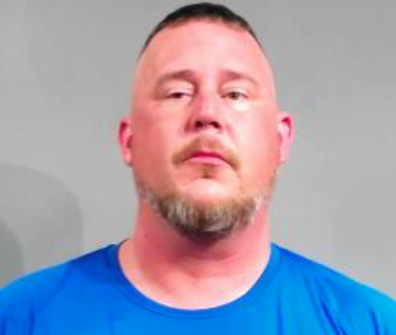
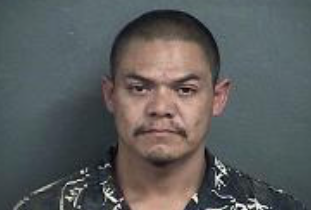
Police: 2 more arrested for Kan. home invasion robbery, kidnapping

RENO COUNTY — Two more people have been arrested in connection with the Monday kidnapping case involving a Hutchinson man.

Thompson -photo Reno Co.
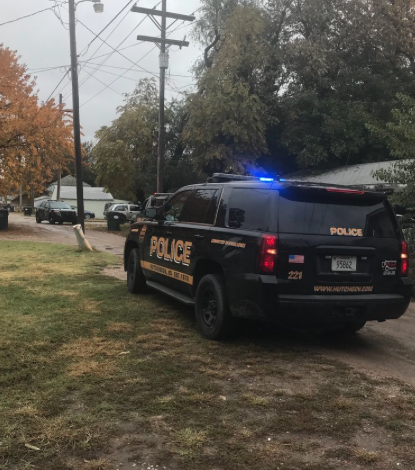
Officers on the scene of the arrests Thursday -photo Reno Co. sheriff

On Monday, 38-year-old Titus Thompson and an unknown white male forced their way into a home in the 400 block of East B in Hutchinson, according to police. They demanded prescription drugs from the homeowner believed to be in his 50s.

The homeowner tried to fight back, but was kicked repeatedly. The suspects took a knife the victim used to try to defend himself and put it to his neck and threatened him with his life.

Thompson then forced the man to search the home looking for prescription drugs. The suspects took some prescription medications as well as the victim’s wallet, cell phone, a big screen TV and clothing from the home.

They then blindfolded the victim and loaded him and the stolen items into the victim’s car.

The suspects left and at some point stopped a Kwik Shop, a liquor store in Burrton and traveled to a farmhouse in eastern Reno County.

This is where Thompson allegedly tried to sell some items to two individuals. The victim was still in the back seat and saw an opportunity to escape. He jumped into the front seat of the car and took off. During that time a TV fell off the top of the car where it had been placed.

The victim’s call 911 started the investigation.

Thompson was later found walking in the 1800 block of Landon in Hutchinson. Based on the description from the victims and surveillance video from Monday’s incident, police arrested Thompson.

The victim in the kidnapping suffered bruises and cuts according to police.

Thompson is jailed on a $167,000 bond and during a first court appearance was denied a bond reduction.

He has prior convictions for obstruction, domestic battery, and driving while suspended for a case in Reno County in 2008. He also has priors for convictions of aggravated burglary and criminal possession of a firearm for a case in Sedgwick County in 2001.

On Thursday Hutchinson police reported that 32-year-old Amanda Gresham and 30-year-old John Sullivan were taken into custody in connection with the crime.

Gresham is charged with conspiracy to commit aggravated kidnapping, aggravated robbery, aggravated burglary and aggravated battery. Sullivan is charged with aggravated kidnapping, aggravated battery, aggravated burglary and aggravated robbery.

Gresham and Sullivan, along with 38-year-old Titus Thompson, are the believed suspects behind the abduction of 50-year-old Leon Levasseur, who was taken by knifepoint from his residence, then placed in his car and driven to an area near Burrton, where he was finally able to escape and call 911.

Police say the recovery of multiple items taken from Levasseur’s residence led them to the additional arrests. Detectives determined Thompson and a second suspect were dropped off in the area of Avenue B and Elm in the morning hours of Oct. 22, by a woman, with the intent to commit robbery.

Gresham is being held on a $135,000 bond. She has previous convictions for Aggravated battery, Aggravated burglary and drugs. Sullivan’s bond is set at $160,000.


Copyright Eagle Radio | FCC Public Files | EEO Public File