GEARY COUNTY —Law enforcement authorities are investigating alleged vehicle theft and asking the public for help to locate a suspect.
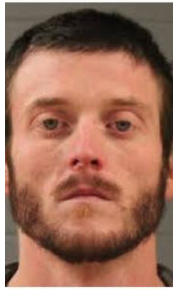
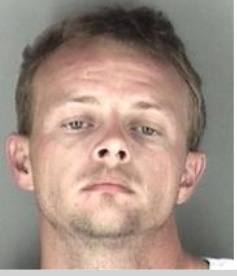
Ryan Lee Squires, 29, is wanted for questioning in reference to the alleged theft of two motor vehicles and is also wanted for an alleged parole violation, according to a social media report from the Geary County Sheriff.
Squires is described a white male, 5-foot-11, 180 pounds with red hair and a goatee. He was last seen in the area south of Grandview Plaza in Geary County, according to the sheriff’s department. Squires was wearing a white t-shirt, red pants and has full sleeve tattoos on both arms. He is possibly armed, the sheriff advised not to approach him, but contact law enforcement immediately.
KANSAS CITY – A Kansas City man was sentenced in federal court for a nearly $500,000 investment fraud scheme, according to the U.S. Attorney’s office.
Ryan Scott Luscombe, 45, was sentenced by U.S. District Judge Roseann Ketchmark to 15 years in federal prison without parole. The court also ordered Luscombe to pay $483,482 in restitution to his victims.
Luscombe was found guilty at trial on Feb. 12, 2018, of three counts of wire fraud, two counts of mail fraud and one count of money laundering.
Luscombe solicited investments for his business, Five Star Trading Group, Inc., claiming to investors that he would utilize his expertise in stock trading to produce exorbitant returns. Instead, evidence introduced during the trial indicated that nearly all the investor funds, which totaled $483,482, was used by Luscombe on personal expenditures in 2013, 2014 and 2015, including the purchase of a 2010 BMW 750I and a trip to Bermuda.
Several victim investors used money from their retirement accounts to invest with Luscombe. None of Luscombe’s investors have received funds from returns or the return of their original investment.
During the course of the scheme to defraud victims of their investment money, Luscombe represented himself as a wealthy individual and a successful day trader capable of producing tremendous returns on investments. Luscombe lied to investors about his past success in order to obtain their money for his own personal use and financial gain.
Luscombe told investors he was creating a new business to manage over $50 million from three investors in Arizona. Luscombe claimed he would be the primary investment trader, but because the dollar amount to be invested would be too large for one person to handle, he was recruiting additional individuals to assist in his trading endeavor. In exchange for a fee or investment in the business, Luscombe offered to train the additional individuals in his trading strategy. Eventually, Luscombe told investors he would allow a small number of friends and family to take advantage or “piggyback” off the investment strategy of the larger investors.
Luscombe’s stated investment strategy was to trade securities in the stock market based on the identification of trends in the upward or downward direction of the stock price. Luscombe told investors the risk was very low and minimal because he constantly monitored the stock price. Luscombe told investors he had been in the trading business for many years and had previously made millions of dollars.
Luscombe regularly provided positive projected investment return updates to the victims regarding their investments, and claimed investor money would be utilized for trading and generating profits for investors. As a direct result of these conversations, investors entrusted their money to him.
Investors never authorized Luscombe to spend investment money on personal expenditures. Luscombe never told investors their investment money would be spent on his personal expenditures. A salary for Luscombe was not authorized by investors. At the time of investment, Luscombe never informed investors that investment funds would be utilized to pay his salary. An analysis of financial activity revealed Luscombe’s spending of investor funds included the following:
(a) $83,088 in cash and cash equivalents;
(b) $78,542 in retail expenses;
(c) $67,990 in restaurants and entertainment;
(d) $52,925 in vehicle expenses;
(e) $45,940 in travel expenses;
(f) $41,058 in rent and utilities;
(g) $39,673 in investment firm losses, fees, and interest1; and
(h) $21,144 in nutrition, fitness and beauty expenses.
Luscombe was not registered with the Financial Industry Regulatory Authority as a broker dealer or as an investment advisor representative. Luscombe and Five Star Trading Group were not registered with the Missouri Secretary of State – Securities Division.
In 2016, Luscombe notified the victims that all of their investor funds had been lost in trading and that Five Star was forced to close down.
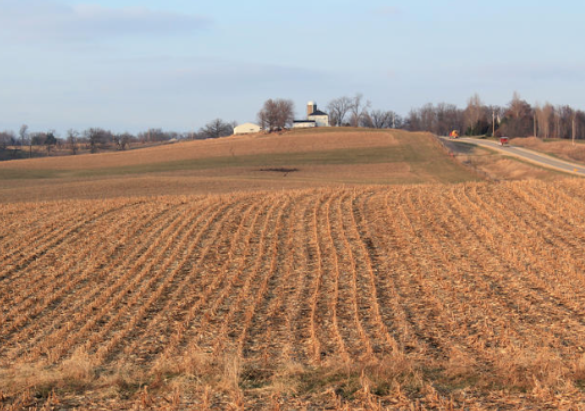
OMAHA, Neb. (AP) – A new survey says farmland prices are expected to continue their decline in parts of 10 Plains and Western states.
Google image
The latest Rural Mainstreet survey shows that on average, bank CEOs in the region estimated farmland prices declined by 4 percent over the past 12 months. They expect farmland prices to fall by another 3.2 percent over the next 12 months.
Creighton University economist Ernie Goss says the survey also shows the farm sector is being weakened by negative impacts of tariffs and low agriculture commodity prices.
The overall economic index for the region increased slightly to 54.3 from 51.5 in September. That score still suggests growth because it is above 50, while any score below 50 indicates a shrinking economy.
Bankers from Colorado, Illinois, Iowa, Kansas, Minnesota, Missouri, Nebraska, North Dakota, South Dakota and Wyoming were surveyed.
LAWRENCE, Kan. (AP) — Lawrence city leaders want bar staff to be prepared to respond to predatory behavior, harassment and sexual assault.
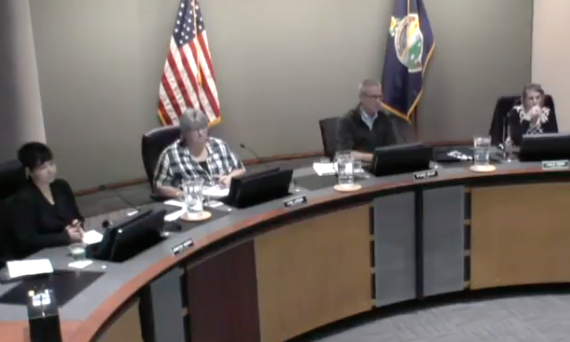
Commissioners during Monday Oct. 16 meeting in Lawrence
Commissioners asked city staff last week to work with drinking establishments and other stakeholders in developing a training requirement.
Commissioner Jennifer Ananda says many alcohol-facilitated sexual assaults start at bars, and she proposed the change as a means to prevent sex crimes.
Assistant City Attorney Maria Garcia told the commission it would be possible to require the training as part of a local license that the city issues to drinking establishments, which is in addition to the state liquor license.
Details are being worked out over who should be required to receive the training and how often it would be required.
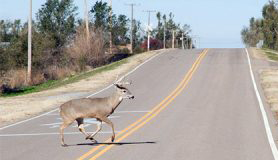
TOPEKA — The reality of driving on Kansas roads and highways from now through spring is the possible encounter with a deer, according to Ken Selzer, CPA, Kansas Commissioner of Insurance.
“The national statistics concerning deer-vehicle crashes are sobering,” Commissioner Selzer said. “Kansas is one of the top 20 states in frequency of deer-vehicle mishaps, even though the chances have decreased over the past two years.”
According to State Farm Insurance, which tracks national deer crash information:
The chance of a driver having a vehicle collision with a deer in Kansas is approximately 1 in 130.
Nationwide, from July 1, 2017 to June 30, 2018, there were 1.33 million deer-related vehicle accidents.
The national average cost per vehicle claim from a deer-vehicle collision hovers around $4,300, a number that grows each year.
Iowa, Missouri and Arkansas have higher frequencies of deer mishaps than Kansas, with Oklahoma, Nebraska and Colorado showing a lower frequency than the Sunflower State.
“To be proactive, Kansas motorists should check with their insurance agents to find out the type of vehicle accident coverage their policies have,” Commissioner Selzer said. “Deer accidents are usually covered under a person’s comprehensive coverage, not collision coverage. You will have to pay your deductible amount in order to receive your company’s coverage. However, if you have liability only for your vehicle coverage, you will probably have to cover the damage repairs out of your own pocket.”
When a vehicle-deer crash occurs, Commissioner Selzer urges Kansas drivers to consider the following:
Contact your insurance agent or company quickly to begin the claims process.
If you do hit a deer and are uncertain whether the animal is dead, keep your distance. You might be dealing with an injured, wild animal with sharp hooves.
If the deer is blocking the roadway and poses a danger to other motorists, you should immediately report the incident to the local law enforcement agency.
Stay alert, always wear your seat belt and drive at a safe, sensible speed for conditions.
Watch for the reflection of deer eyes and for deer silhouettes on the shoulder of the road.
Do not rely exclusively on devices such as deer whistles, deer fences and reflectors to deter deer.
When driving at night, use high-beam headlights when there is no opposing traffic. The high beams will illuminate the eyes of deer on or near a roadway.
Brake firmly when you notice a deer in or near your path, but stay in your lane. Many serious accidents occur when drivers swerve to avoid a deer and hit other vehicles or lose control of their cars. Potentially, you will risk less injury by hitting the deer.
If you see one deer, it is likely there are more nearby.
If the deer stays on the road, stop on the shoulder, put on your hazard lights and wait for the deer to leave the roadway; do not try to go around the deer while it is on the road.
“If you do have a deer encounter and need some assistance with your vehicle claim, our Consumer Assistance Representatives at the Kansas Insurance Department can help,” said Commissioner Selzer. “Call us at 800-432-2484, or use the online chat feature at our website, www.ksinsurance.org.”
Few issues split Kansas politics like the Obama-era expansion of Medicaid.
Unlike 33 other states, Kansas still hasn’t expanded its Medicaid program under the Affordable Care Act. The decision would pay for the health care of thousands of people who don’t currently meet the program’s stringent eligibility requirements.
The state’s program, KanCare, pays for the health care of 400,000 low-income Kansans — mostly children, pregnant women, and elderly or disabled citizens. It costs the state more than $3 billion a year.
Currently, KanCare doesn’t cover people who fall into the so-called “coverage gap.” Their incomes are too high to pass the state’s stringent Medicaid eligibility guidelines, but they make too little money to qualify for the Affordable Care Act’s subsidized insurance premiums.
Those benefits are only available to households that make over 138 percent of the federal poverty level — $25,100 for a family of four. Some do meet income requirements, but they don’t meet another eligibility guideline, like being disabled, under 19, elderly or pregnant.
In Kansas, 150,000 people fall into that gap.
They’re not eligible for Medicaid, and if they apply for health insurance through the federal marketplace, they’re on their own with no government financial assistance.
Expansion would allow them to apply for coverage through KanCare, as long as their household incomes are below 138 percent of the poverty line, and regardless of whether they meet other eligibility requirements.
Supporters say that could be a lifeline for the state’s most vulnerable residents and helps them avoid emergency room visits by giving them access to more suitable care.
“This gives them access to not just health care, but the right care,” said Cindy Samuelson, a vice president of the Kansas Hospital Association.
The issue has long been under debate.
Democrats and some moderate Republicans have argued for years that expansion would bring more health care dollars into the state economy, creating medical jobs and filling a coverage void that could keep the doors open at small, rural hospitals.
Conservatives continue to resist. They argue expansion squanders federal tax dollars and saddles Kansas taxpayers with an obligation to pay for an increasingly large share of that government health insurance.
“As much as we all want to try to provide a solid safety net for people, we have to weigh that against other priorities in state government,” said James Franko, vice president and policy director of the Kansas Policy Institute.
A bipartisan majority in the Legislature voted in 2017 for expanding Medicaid, but then-Gov. Sam Brownback vetoed it. Brownback, a Republican, said in a statementthat he opposed the bill in part because of its cost and because it didn’t require recipients to work.
Gov. Jeff Colyer, also a Republican, served as lieutenant governor in Brownback’s administration and has followed his lead in supporting Medicaid work requirements and opposing the Affordable Care Act — including expansion.
The 2018 governor’s race will decide the issue in Kansas for years to come.
Medicaid certainly won’t expand if Republican Secretary of State Kris Kobach wins the race. Democratic state Sen. Laura Kelly has promised to sign a bill approving expansion in her first year. Independent Greg Orman also says he supports expansion.
“The governor is extremely important,” said April Holman, executive director of the Alliance for a Healthy Kansas, who advocates for expansion. “If we don’t have a governor who supports expansion, we probably would have a similar result to what we have had in the past.”
Here’s what you need to know about each candidate’s stance.
Senator Laura Kelly
Laura Kelly
Kelly voted in favor of the Medicaid expansion bill that went through the state legislature in 2017. Her position hasn’t changed.
On her campaign website, Kelly promises to “advocate for and sign legislation to expand Medicaid in her first year.”
Kelly cites rural hospital closures as a major reason to expand Medicaid.
Rural facilities, such as the recently shuttered Mercy Hospital in Fort Scott, often struggle to cover operating costs while treating areas with higher-than-average proportions of elderly, poor and disabled residents.
In a statement, Mercy Hospital cited “declining reimbursement, especially from government payers which make up the largest source of revenue” as a major reason for closing.
Medicaid expansion isn’t a perfect solution for the problems faced by rural hospitals, said Diane Rowland, executive vice president of the Kaiser Family Foundation.
“Most of them are small, most of them have some economic challenges in terms of being able to even recruit adequate staff and physicians there, because of the medical shortages that plague rural areas,” she said.
Rowland says funds from Medicaid expansion could, however, greatly improve the financial stability of vulnerable hospitals, increasing treatment options for people in rural areas.
“We’ve seen far fewer rural hospitals close and expansion states than in the non-expansion states like Kansas,” Rowland said.
Kelly also argues that Medicaid expansion would create new jobs in the state’s health care industry.
Samuelson said hiring new doctors, nurses, administrative staff and other workers can have a ripple effect on the rest of the economy.
“That nurse is going to also shop at the grocery store, and get gas, and utilize the bank, and have a home, and all these other things that stimulate other jobs in the economy,” she said. “Maybe they’ll have kids in school and there’s another teacher.”
Greg Orman
Photo courtesy Orman -Doll for Kansas
Orman also supports expanding Medicaid for economic reasons.
The independent candidate told the Kansas News Service he wants to encourage recipients to work by ensuring they’ll still get Medicaid at higher income levels.
“We send a terrible message to people in Kansas who are working and not making a lot of money, which is, ‘If you get sick, quit your job,’” he said. “Ultimately, we need to be building pathways to allow people to improve their lives, not creating these very perverse incentives.”
A platform paper published on Orman’s campaign website argues that expanded Medicaid could attract workers from out of state.
“Someone making $13 per hour in a family of three in Colorado gets healthcare coverage as part of their decision to work in Colorado,” Orman’s paper reads. “That same person in Kansas gets no health care coverage unless an employer provides it. Given the shortage of workers in Kansas, this puts us at a significant disadvantage.”
Holman said more medical coverage could also attract employers to the state, and not just in the health care industry.
“Employers want to be in communities where there is a hospital and where there is care that would be available to their employees,” she said.
Orman’s platform describes a way to pay for the state’s share of the cost of expansion. The federal government has promised to pay 93 percent of expansion costs in 2019, and will pay 90 percent of costs in 2020 and beyond.
Orman proposes covering the remaining 10 percent through taxes on the health care industry, which he expects will bring in larger profits due to expansion.
Kris Kobach
Kris Kobach during a September visit to Salina Tech.
Kobach joins his Republican colleagues in opposing Medicaid expansion, calling the policy too expensive and unrealistic.
His campaign website does not have a section for health policy, but Kobach has mentioned his opposition to the Affordable Care Act in numerous speeches. He’s promised to ask President Trump for waivers to exempt Kansas from Obamacare requirements.
“The better approach is to do something smart, and look at whether we can spend that money effectively,” Kobach said at a debate at the Kansas State Fair in September.
Kobach says he wants to integrate KanCare with a payment system called direct primary care, sometimes called “concierge medicine.”
Direct primary care patients pay a monthly or yearly fee for unlimited primary care visits and reduced prices on medications and lab testing. Orman also supports the idea of allowing KanCare recipients to choose the option of direct primary care.
Kobach, however, has not addressed how KanCare would cover needs like nursing home payments and home care, which comprised 39 percent of KanCare expenditures in 2016. Direct primary care doesn’t cover emergencies, hospitalizations or specialized care, which don’t fall under the umbrella of “primary care.”
The Kobach campaign has not responded to repeated requests for further information on the plan, although Kobach told the Kansas News Service that he plans on testing the idea with a pilot program in one county or region before expanding it statewide.
“I anticipate it would create a significant amount of savings and it would be very favorably received by the KanCare patients who use it,” Kobach said. “Where direct primary care has been used in the private sector, the doctors love it and patients love it.”
SHAWNEE COUNTY — One person died in an accident just after 10:30p.m. Saturday in Shawnee County.
The Kansas Highway Patrol reported a 1993 Jeep Wrangler driven by Donald Ray Heckman, 73, Park City, Montana, was eastbound on Interstate 70 at Valencia Road.
The Jeep changed lanes in front of a 2015 Kenworth Semi and then reduced speed. The semi driven by Norman Vincent Leach, 43, Colorado Springs, Colorado, rear ended the Jeep.
Heckman was pronounced dead at the scene. Leach was not injured. Both drivers were properly restrained at the time of the accident, according to the KHP.
TOPEKA – The week of November 12-16 has been named Apprenticeship Week in the State of Kansas. This is being done to recognize the value and importance of the statewide Registered Apprenticeship Program in meeting the workforce needs of Kansas employers. The Registered Apprenticeship is an industry-driven model that combines on-the-job learning with job-related instruction leading to increasing levels of measurable skill attainment and wages.
There are presently 1928 registered apprentices in Kansas receiving both on-the-job training and paid employment from 257 employers, with the numbers growing weekly. Through this program, apprentices receive on-the-job training from an experienced mentor for at least a full year, providing a living wage while training for a career position. They also earn credentials which can be carried forward throughout their careers. At the same time, employers benefit by meeting their growing need for a trained workforce, experience lower turnover costs and higher productivity, and reduce their costs for recruiting personnel.
Apprenticeship Week will begin with a ceremony in Wichita, featuring a speech from the Mayor, on November 13. In early November, Governor Jeff Colyer, M.D., will be on-hand to present the Governor’s proclamation and speak about the benefits of Registered Apprenticeships toward meeting the workforce needs of Kansas employers.
SHAWNEE COUNTY— Law enforcement authorities are investigating a suspect in connection with a weapons charge.
McCulley -photo Shawnee Co.
Just before 11:30p.m. Friday, police were dispatched to the area of the 700 block of NE Kellam in Topeka on an unknown trouble call, according to Lt. Manuel Munoz. Dispatch advised that they could hear someone yelling, “Give me back my gun.”
Upon arrival, officers determined that the call was regarding a domestic disturbance. Further investigation determined that Jeremy McCulley, 34 years of age, was in possession of a firearm by a convicted felon.
Police transported McClulley to Shawnee County Department of Corrections under suspicion of crimes related to this incident.
Anyone with information regarding this crime is encouraged to contact the Topeka Police.
KANSAS CITY, Kan. (AP) — Authorities and rescue personnel spent part of Friday night searching for a male victim who drove a vehicle into the Kansas River.
Police said that the incident happened around 6:50 p.m. Friday at the Kaw Point Park boat ramp in Kansas City, Kansas, at the confluence of the Kansas and Missouri rivers.
Wyandotte County Sheriff’s officials say someone reported seeing a vehicle go into the river. Kansas City, Kansas, Police Chief Terry Zeigler tweeted that a witness saw a man treading water before he went under and didn’t resurface.
Rescue boats were sent out Friday night, but crews did not report finding anyone in the water.
Officials had not released any more information on the incident by midday Saturday.
TOPEKA, Kan. (AP) — Topeka Zoo officials have revealed that of the four rare Sumatran tiger cubs born there earlier this week, three are male and one is female.
Photo courtesy Topeka Zoo
The tiger cubs will soon be named. Zoo director Brendan Wiley says the female’s name will be decided by zoo staff, docents, interns and volunteers, and one of the males will named by a family that has long supported the zoo. Another will be named by Blind Tiger Brewery, a zoo business partner. The last cub’s name will be selected through a public voting contest. The public has until Oct. 27 to choose from the names Badar, Eka or Lestari.
Hundreds of people watched as streaming webcams captured Sumatran tiger Jingga giving birth to the four cubs on Monday.
SEDGWICK COUNTY —Law enforcement authorities are investigating a shooting and searching for suspect.
Just after 2:30 a.m. Saturday, police responded to a walk-in shooting call at St. Joseph Hospital, 3600 E. Harry, according to officer Charley Davidson. Upon arrival, police located the a 35-year-old male victim who had sustained multiple gunshot wounds and was in critical condition.
The investigation revealed the victim and a group of unknown individuals got into a verbal argument outside the Lion’s Den Club, 6305 E. Harry. Multiple gunshots were then fired by an unknown suspect which struck the victim. A patron at the club transported him to the hospital, according to Davidson.
Anyone with any additional information on this case, please call Crime Stoppers at 316-267-2111 or WPD Detectives at 316-268-4407.
SHAWNEE COUNTY —After a stop in Wichita late Thursday to support Kansas Secretary of State and Gubernatorial candidate Kris Kobach, Vice President Mike Pence spent a portion of Friday visiting with members of the Kansas Air National Guard 190th Air Refueling Wing Base in Topeka.
Honored to talk with members of the Kansas Air National Guard 190th Air Refueling Wing Base in Topeka, Kansas! They’re patriots, and I’m thankful for their service to the Nation as they protect our freedom, our families, and our very way of life. pic.twitter.com/wEhi8Ad093
Great to see courageous members of our Armed Forces at @22ARW this morning in Kansas. Honored to meet them and grateful for everything they do to keep our Nation safe. 🇺🇸 pic.twitter.com/vnPyXY7LoP
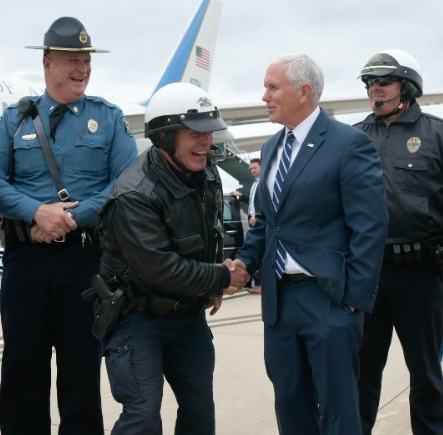
The Vice President also took time to meet with members of law enforcement community in Topeka before attending a reception for Kansas 2nddistrict congressional candidate Steve Watkins.
Honored to meet with members of law enforcement in Topeka. They’re working every day to protect our safety & we’re grateful for their extraordinary service to Kansas families. pic.twitter.com/xHH1LhhzBN













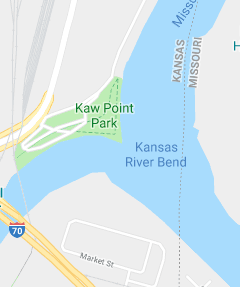
 Police said that the incident happened around 6:50 p.m. Friday at the Kaw Point Park boat ramp in Kansas City, Kansas, at the confluence of the Kansas and Missouri rivers.