TOPEKA — The Kansas Insurance Department has released more 2019 health insurance open enrollment information, including a department overview of the health plans for Kansas consumers.
The open enrollment period for the 2019 plan year begins November 1 and ends December 15, 2018, according to Ken Selzer, CPA, Commissioner of Insurance. The time period applies to plans sold on and off the federal marketplace.
Insurance companies who are offering plans in 2019 are Blue Cross and Blue Shield of Kansas, Medica and Ambetter from Sunflower State Health Plan. The companies signed their final issuer agreements for participation in 2019. There are at least two companies selling plans in each Kansas county.
“Those choosing a new health plan for coverage beginning January 1, 2019, also have several other factors to consider,” Commissioner Selzer said. “Making sure your providers — doctors, hospitals and other health care providers — are within the plan’s network is important. Secondly, you should note that networks can vary within the same company, depending on where you live. Finally, you should understand that companies may change the type of policy they sell from one year to the next.”
For 2019, companies selling in Kansas will offer policies with the following types of network arrangements: Exclusive provider organizations (EPO) or health maintenance organization (HMO) plans. Definitions of each network are in the department’s issue brief, “2019: Overview of the Health Insurance Market in Kansas,” which can be accessed at https://www.ksinsurance.org/documents/healthlife/health/KID-Issue-Brief.pdf.
“If you purchase a health insurance policy through the federal marketplace, your cost may be reduced if you are eligible for an advance premium tax credit (APTC). Those credits are available only if you buy insurance on the marketplace. They are not available for off-marketplace individual purchase, or if you purchase insurance through your employer,” explained Selzer.
Kansans who have questions regarding association health plans (AHPS) or short-term limited-duration insurance should contact an insurance agent for more information.
“If you need more assistance, contact our Consumer Assistance Division at the insurance department (800-432-2484) for answers to general health insurance questions, or use our online chat feature at www.ksinsurance.org ,” Selzer said.
The leading candidates for governor offer various notions about how best to build strong schools in the state — how much to spend and where best to put those tax dollars.
Laura Kelly, the state senator and Democratic nominee, says there’s little getting around a need to spend more.
Kris Kobach, the Republican candidate and secretary of state, contends the state could spend money better if districts would just trim their administrative fat.
Greg Orman, a Kansas City-area businessman and independent candidate, thinks he can fix schools by revving up the state’s economy.
“They’re very different in how they talk about the issue,” University of Kansas political scientist Patrick Miller said in an interview. “There’s at least one very stark division, and that’s between Kobach and the alternatives.”
Cash is king
Kelly said during a debate in September that strong schools drew her family to Kansas. Yet she says schools suffered and didn’t see enough investment after the 2012 tax cuts pushed by then-Gov. Sam Brownback.
“I want to make sure that every child, no matter who they are or where they live, has the same opportunities to succeed that my daughters did,” Kelly said.
Laura Kelly, Kris Kobach and Greg Orman. CREDIT STEPHEN KORANDA / KANSAS NEWS SERVICE
Some estimates show Kansas might be facing tight finances again in the coming years, but Kelly said reversing the tax cuts means Kansas can afford to spend on schools and invest in early childhood programs.
Bruce Baker is a professor in the Department of Educational Theory, Policy and Administration at Rutgers University and has been involved in the Kansas lawsuits over school funding. He agrees with Kelly that tax cuts hurt.
“Because of those tax cuts,” he said, “Kansas school funding took a bigger hit than many, if not most, other states.”
Yet Kansas schools were performing relatively well compared to other states, so Baker said the state didn’t suffer as much as some other states might have in the same situation.
“But if they want to be better than that, if you want to shoot for even more,” he said, “on average, it’s going to cost more.”
Eric Hanushek analyzes education issues as a fellow at the Hoover Institution at Stanford University, and he has also been involved in Kansas school spending lawsuits. After studying the data, he reaches a different conclusion.
“How you spend money is more important than how much you spend in almost every instance,” Hanushek said in an interview, “because Kansas is already spending a lot of money.”
Baker suggests spending at struggling districts. Hanushek urges focusing more on teacher quality.
Spending money on early childhood programs can offer benefits if it’s targeted at kids who need it most, Hanushek said.
“Disadvantaged kids could be helped by having earlier childhood education,” he said.
Kobach focuses on how, not how much
Kobach wants to focus on how money is spent. He has criticized what he calls “Taj Mahal” buildings in school districts and bloated administration.
At the raucous Kansas State Fair debate, Kobach said state officials should stop looking at the bottom line — how much money is spent — and focus on where it’s going.
“We have got to stop spending so much money on administration and spend it instead in the classroom, on the teachers’ salaries, on the computers and on the books,” Kobach said. “That is where the money belongs.”
Kobach is not advocating for districts to consolidate, but he wants districts to merge administrative functions. That’s an idea some conservative lawmakers and a right-leaning Kansas think tank have also pushed.
“We need to share administrative costs, have efficiencies, so the money stays in the classroom,” Kobach said.
He pegs classroom spending at 50 percent, and he wants it to be 75 percent of all education spending.
Schools that perform well should be rewarded for that financially, Kobach said, with raises for all teachers and staff.
Tom DeLuca, a former teacher and school administrator now teaching educational leadership and policy studies at the University of Kansas, said it all comes down to what you count.
“You have to look outside the four walls of a classroom,” he said. “Learning takes place, or learning is supported, at multiple levels and multiple places by multiple resources.”
Not counting things such as counselors, library staff and school psychologists leads to some measures putting Kansas classroom spending at around 53 or 60 percent of spending.
“That sounds quite shocking until you look at what that actually means,” said Mark Tallman, associate executive director of the Kansas Association of School Boards.
Add in those other services that help students, plus the costs of transporting students and feeding them, and Tallman calculates the total reaches up to 70 percent of spending. That’s before counting the cost of building and maintaining the classroom.
Tallman puts administrative costs at the school building and district level at under 10 percent of spending.
It’s the economy to Orman
Orman would focus on ways to juice up the state economy with good-paying jobs.
“The best education policy is a growing economy,” Orman said during a debate in Overland Park.
Growing state revenues will allow the state to invest in schools without a tax increase, he said.
Orman’s also touting an indirect benefit from economic growth. Parents will have more time to be parents, instead of working second jobs, with a healthy state economy.
“Create the jobs and opportunities to allow their parents to have the time to invest in their kids’ educations,” he said at the Kansas State Fair.
Studies have reliably shown that parental involvement does make a difference in student outcomes, said Rick Ginsberg, the dean of the School of Education at KU.
But barriers to parental involvement are complex and can include cultural or language differences that schools must overcome.
“It’s a lot of work for schools to do that, and I think our schools do work really hard on that,” Ginsberg said. “But that’s a never-ending process for schools.”
It’s not easy to quantify Orman’s belief that growing the economy growing will lead people to switch from working multiple jobs to a single job.
Jeremy Hill, director of the Center for Economic Development and Business Research at Wichita State University, said some people may assume fewer workers will have multiple jobs when the economy is growing, but that’s not the case.
“Conventional wisdom about what goes on in the economy,” Hill said, “is different from what the actual data shows.”
While the number of people working full-time does increase when the economy is growing, numbers from the U.S. Bureau of Labor Statistics also show the number of people working multiple jobs increases.
There are more jobs to work during economic booms and employers may offer additional pay or other perks that entice people to pick up a second job, Hill said.
There’s also no button a governor can push to spur quick and lasting economic growth, said Ken Kriz, a professor of public administration at the University of Illinois at Springfield.
“If there was, then everybody would be doing it,” Kriz said in an interview. “Any type of magic bullet would immediately be recognized and mimicked by other states.”
PRATT — The Kansas Department of Wildlife, Parks, and Tourism (KDWPT) is accepting proposals for the Chickadee Checkoff Small Grants Program through November 15, 2018.
Grant recipients may use the funds to carry out projects focused on wildlife diversity and native non-game wildlife species, while addressing the issues and strategies within the Kansas State Wildlife Action Plan.
Through the small grants program, KDWPT is able utilize the talents and expertise of people outside of the department to complete a wide variety of educational, research-based, and habitat projects, as well as the monitoring of nongame wildlife and critical habitats. Past projects include the creation of interactive exhibits at nature centers, and assessing the occupancy, abundance, and species richness of marsh birds at state- and federally-managed wetlands.
The diverse projects completed as a result of Chickadee Checkoff funding have led to numerous publications in scientific journals, educational products, and new information on native non-game wildlife species and their habitats.
Interested parties have until November 15, 2018 to turn in a completed grant proposal.
WICHITA, KAN. – A Kansas man was charged in federal court Friday with robbing a local bank earlier this week, according to U.S. Attorney Stephen McAllister.
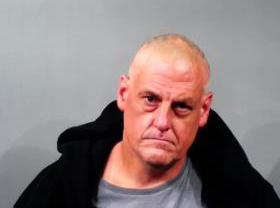
Drees -photo Sedgwick Countysecurity camera images courtesy Wichita Police
Brent Allen Drees, 50, Wichita, is charged with one count of bank robbery. A criminal complaint and affidavit alleges that on Oct. 9 Drees robbed the Conway Bank at 121 E. Kellogg. Drees was wearing a baseball cap and jeans when he entered the bank and gave a teller a note saying, “Give me $3,000 and you won’t get hurt.”
On Thursday, investigators identified Drees as a suspect and arrested him.
Photo courtesy Wichita PD
Drees was released from Bureau of Prisons custody in July 2017 after serving a 46-month sentence for bank robbery.
The FBI Safe Streets Task Force investigated. Assistant U.S. Attorney Lanny Welch is prosecuting.
SEDGWICK COUNTY — Law enforcement authorities and USD 250 officials are investigating a teen student after an attack on a school resource officer.
On Wednesday, police arrested a 17-year-old female student who had returned to Heights High School, 5301 North Hillside in Wichita, despite having been suspended or expelled, according to officer Paul Cruz.
When the Heights’ school resource officer made contact with her, she attacked the officer.
According to Cruz the student bit the officer several times and he received cuts to his face. The officer was hospitalized “code yellow,” according to Cruz. Has since been released from the hospital
This student has had similar incidents with the SRO and other staff members. The faces charges of battery of a law enforcement officer and resisting arrest. She was taken to the Juvenile Detention center, according to Cruz.
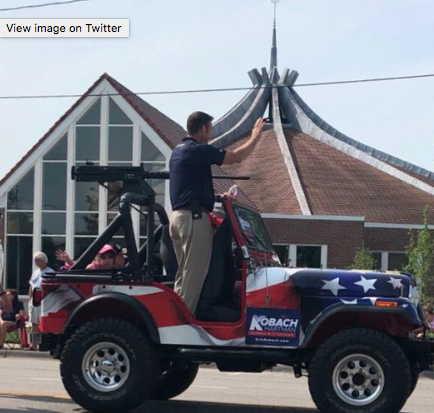
TOPEKA, Kan. (AP) — Organizers of a small-town Kansas parade have told Republican Kris Kobach that he must remove a replica machine gun from the back of a Jeep that’s become a key part of his campaign for governor and emblematic of his support for gun rights.
An attorney for the organizing committee for Iola’s Farm City Days said it was in talks Friday with Kobach’s campaign to find a compromise. But Kobach said that he believes the organizers can’t prevent him from using the Jeep with the gun in the parade scheduled for Saturday without violating his free speech rights.
Kobach, the Kansas secretary of state, has been riding in the Jeep with the replica gun at least since June. Its appearance then in a suburban Kansas City parade prompted criticism, an apology from the sponsoring city and what Kobach derided as a “snowflake meltdown.” He quickly made it a symbol of his defiance of liberal criticism and his support for gun-ownership rights protected by the Second Amendment to the U.S. Constitution.
But Daniel Schowengerdt, attorney for the Iola parade’s organizing committee, said its members felt the replica gun’s “wartime message” clashed with the event’s message of bringing farms and cities together. Iola, with about 5,700 residents, is about 100 miles (161 kilometers) southwest of Kansas City.
Schowengerdt said the organizers had no problem with the Jeep, which is decorated with U.S. flag designs and has a bobble-head of President Donald Trump on its hood — only with the replica machine gun. He said that under past U.S. Supreme Court decisions, private parade organizers have a right to choose the content of their events.
“They are pro-Second Amendment,” he said of the organizers. “This is not a leftist organization. In fact, the vast majority of the people on the committee are gun-owning Republicans.”
The entry form for the parade does not mention firearms or mounted guns but says parade organizers “reserve the right to refuse entry to any person, group or entity. It also bans semi-trucks and tells participants that they cannot throw candy or other items from a float or vehicle.
“They felt and feel that a mounted, replica, .50-caliber machine gun does not fit with their message,” Schowengerdt said. “The Jeep is free to be there.”
Virginia Crossland Macha, a local GOP activist who backs Kobach, said she was upset enough by the organizing committee’s decision that she resigned as its president; she was not present for its vote. She said Farm City Days is non-partisan and staffed by volunteers and has now been drawn into “a mess” that could hurt the event.
“I just find it kind of crazy,” she said.
Iola is the seat of Allen County, where registered Republicans outnumber Democrats by more than 2-to-1 and President Donald Trump received 67 percent of the vote in 2016. Kobach carried it in a crowded Republican primary in August with nearly 43 percent of the vote.
Schowengerdt said the decision was made in mid-September. Kobach said he learned of the decision about a week ago, some days after parade organizers told his staff of their decision. He said Iola is the first community to express any reluctance about the replica machine gun.
“In contrast, we’ve had mayors from other cities asking us to bring the gun,” Kobach said. “The Second Amendment applies as well in the city as it does in the country, and there is no conflict whatsoever between the joining of city and country and the Second Amendment.”
SALINE COUNTY —Two people were injured during an incident at a manufacturing plant Friday morning in Salina.
Just after 7a.m., fire crews responded to report of a fire in the mixing building at McShares,1835 E. North Street, according to Fire Marshal Troy Long.
When firefighters arrived, they found no fire, but the sprinkler system had been activated, Long said.
Two employees in the building were transported to Salina Regional Medical Center. One had minor injuries and the other had second-degree chemical burns on his neck and hands, according to Long.
Fire crews put water on the chemical to change the pH level so it would cause no further injuries.
The accident was blamed on equipment failure, Long said. McShares had not released a statement Friday afternoon.
The plant makes food additives and mixes vitamins and minerals that are added to wheat, rice and corn flours and cereals, according to their web site.
In June of 2017, homes and businesses within a half mile of the plant were evacuated as a precaution following a reported chemical leak. There were no injuries reported.
MONTGOMERY COUNTY — One person died in an accident just before 7:30a.m. Friday in Montgomery County.
The Kansas Highway Patrol reported a 1993 Ford pickup driven by Jalen Kristopher Bush, 17, Coffeyville, was westbound on U.S. 166 one mile east of Caney. The pickup traveled left of center and struck a 2008 Toyota Camry driven by Linda M. Coots, 76, Caney, head-on.
An eastbound 2014 Chevy Malibu driven by Geraldine Wilson Jay, 81, Copan, OK., then struck the Ford pickup that was still in the roadway.
A 2006 Cadillac SRX driven by Gaige Ethan Beam, 17, Caney, made an evasive maneuver to avoid hitting the Chevy and collided with the Ford pickup and then struck a 2011 Honda Odyssey driven by Amanda Clair Wade, 37, Caney, that was stopped on the westbound shoulder.
A passenger in the Toyota Edgar E. Coots, 79, Caney, was pronounced dead at the scene and transported to the mortuary in Coffeyville. His wife Linda Coots was transported to the hospital in Coffeyville. Bush was airlifted to a hospital in Tulsa. Jay was transported to the hospital in Bartlesville.
Beam, Wade and two children in the Honda were not injured. All were properly restrained at the time of the accident, according to the KHP.
NEW YORK (AP) — Facebook says hackers accessed data from 29 million accounts as part of the security breach disclosed two weeks ago, fewer than the 50 million it initially believed were affected.
The hackers accessed name, email addresses or phone numbers from these accounts, according to Facebook. For 14 million of them, hackers got even more data, such as hometown, birthdate, the last 10 places they checked into or the 15 most recent searches.
An additional 1 million accounts were affected, but hackers didn’t get any information from them.
Facebook isn’t giving a breakdown of where these users are, but says the breach was “fairly broad.” It plans to send messages to people whose accounts were hacked.
Facebook said third-party apps and Facebook apps like WhatsApp and Instagram were unaffected by the breach.
Facebook said the FBI is investigating, but asked the company not to discuss who may be behind the attack. The company said it hasn’t ruled out the possibility of smaller-scale attacks that used the same vulnerability.
Facebook has said the attackers gained the ability to “seize control” of those user accounts by stealing digital keys the company uses to keep users logged in. They could do so by exploiting three distinct bugs in Facebook’s code. The company said it has fixed the bugs and logged out affected users to reset those digital keys.
At the time, CEO Mark Zuckerberg — whose own account was compromised — said attackers would have had the ability to view private messages or post on someone’s account, but there’s no sign that they did.
JACKSON COUNTY — Law enforcement authorities and USD 335 officials are investigating a teen for alleged criminal threat against other students.
On Thursday morning, deputies arrested a 14-year-old student at the Jackson Heights High School north of Holton, according to Jackson County Sheriff Tim Morse.
The student is alleged to have communicated threats towards specific students and was arrested on three counts of criminal threat.
Deputies and Investigators have been interviewing witnesses, according to Morse.
Anyone who may have further information regarding the incident is encouraged to call the Jackson County Sheriff’s Office.
MIAMI COUNTY — —On Friday, first responders were dispatched to Hospital Drive south of 327th Street for a vehicle in the water, according to the Miami County Sheriff. The floodwaters had receded showing the roof of a silver passenger car.
The vehicle was a 2006 Chevy Malibu owned by Rachel Phillips. Authorities removed the car from the water and found her deceased inside. Her cause of death has not been determined, according to the sheriff’s department.
———
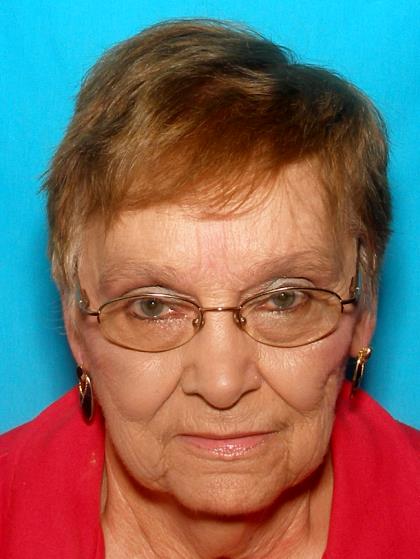
At 7:30 p.m. Wednesday, the Miami County Sheriff’s Office took a report for a missing person, Hazel L. Phillips, age 78.
Hazel was last contacted on Tuesday in the evening hours by her family. Hazel told her family that she would be going to Drexel, Missouri, in the morning hours of Wednesday. Hazel did not make it to her destination in Drexel, Missouri.
She is known to drive a silver 2008 Chevrolet Malibu with Kansas tag 450HLB, which is missing also. It is unknown what Hazel is wearing. Hazel is 5’06” 120 pounds, brown hair and green eyes. Hazel may be suffering from medical conditions, which could be a safety concern for her. Hazel may be in the Paola or Osawatomie location.
If you make contact with Hazel or see her, call the Investigations Division at the Miami County Sheriff’s Office at 913-294-3232.
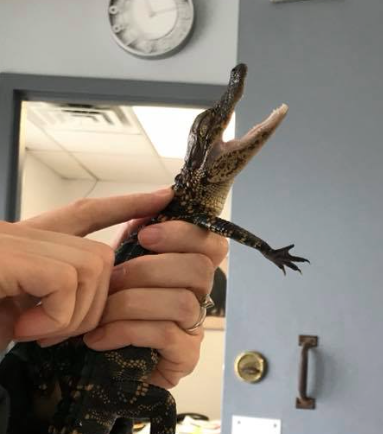
OLATHE, Kan. (AP) — Authorities say a small alligator has been found under a vehicle in suburban Kansas City.
Police in Olathe, Kansas reported that an animal control officer captured the gator earlier this week. The post says it’s “Something you don’t expect to see in Kansas.” The gator is spending the week in a shelter before heading to a reptile rescue in Manhattan next week. Alligators aren’t allowed to live in the city.
The alligator appears be about 1 foot long. Photos posted online show it soaking in a tub of water and someone holding up the animal.
ALIAGA, Turkey (AP) — The Latest on trial of American pastor Andrew Brunson, who is accused of espionage and terror related charges(all times local):
A Turkish court has convicted an American pastor at the center of a Turkish-American diplomatic dispute of terror charges, but has released him from house arrest and allowed him to leave Turkey.
The court near the western city of Izmir on Friday sentenced Andrew Brunson to 3 years and 1 month in prison for the conviction, but since the evangelical pastor has already spent two years in detention he won’t serve more time.
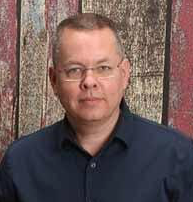
Andrew Brunson photo courtesy U.S. Commission on International Religious Freedom
Brunson, 50, had rejected the espionage and terror-related charges and strongly maintained his innocence.
Lawyer Ismail Cem Halavurt said Brunson was expected to leave Turkey for the United States
___
4:05 p.m.
A Turkish prosecutor has requested that an American pastor at the center of a diplomatic dispute between Turkey and the United States be released from house arrest pending the outcome of his trial.
In the fourth hearing in the case against Andrew Brunson, the prosecutor however also recommended that he be convicted on terror-related charges.
A panel of judges is expected to reach an interim ruling later Friday.
Brunson, 50, is accused of terror-related charges and espionage. He rejects the charges and strongly maintains his innocence.
The pastor told the court he is “an innocent man. I love Jesus, I love Turkey.”
The United States has repeatedly called for his release.

 KID
KID








 Just after 7a.m., fire crews responded to report of a fire in the mixing building at McShares,1835 E. North Street, according to Fire Marshal Troy Long.