We have a brand new updated website! Click here to check it out!

Kan. Supreme Court upholds conviction in bride’s murder

TOPEKA, Kan. (AP) — The Kansas Supreme Court has upheld a man’s conviction in the drive-by shooting of a woman who had just been married.

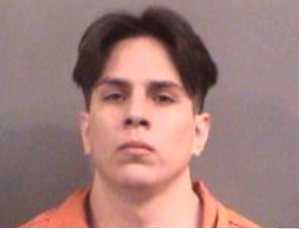
Lowery-photo KDOC

The court said Friday that the Shawnee County District Attorney’s office made three errors in the case against 34-year-old Awnterio Dwan Lowery, but concluded they did not deprive Lowery of a fair trial.

Lowery was sentenced to consecutive life terms plus nearly 52 years for the death of 42-year-old Tiffany Davenport-Ray, of Wichita.

Davenport-Ray was fatally shot during the early hours of May 25, 2014.

41-year-old Thomas Earl Brown Jr., also was convicted of Davenport-Ray’s murder and sentenced to life in prison.

A third suspect, 26-year-old Jermel Ramond Robbins Sr., was shot to death in southeast Topeka about three weeks after Davenport-Ray was killed.

Watch Replay: Trump MAGA Rally in Topeka

TOPEKA — President Donald Trump brought his MAGA Rally to Topeka Saturday.  Huge crowds arrived early Saturday to get a seat inside the Landon Arena at the Kansas Expocenter.

During the rally, Trump celebrated the confirmation of Brett Kavanaugh to the Supreme Court. GOP candidate for Governor Kris Kobach told the crowd, “Now we want to make Kansas great again.”


&nbsp

Debate in Kansas’ 4th House District race turns heated

WICHITA, Kan. (AP) — The Republican incumbent and his Democratic challenger for Kansas’ 4th Congressional District exchanged barbs and attacked the character of the other in their first debate of the general election.

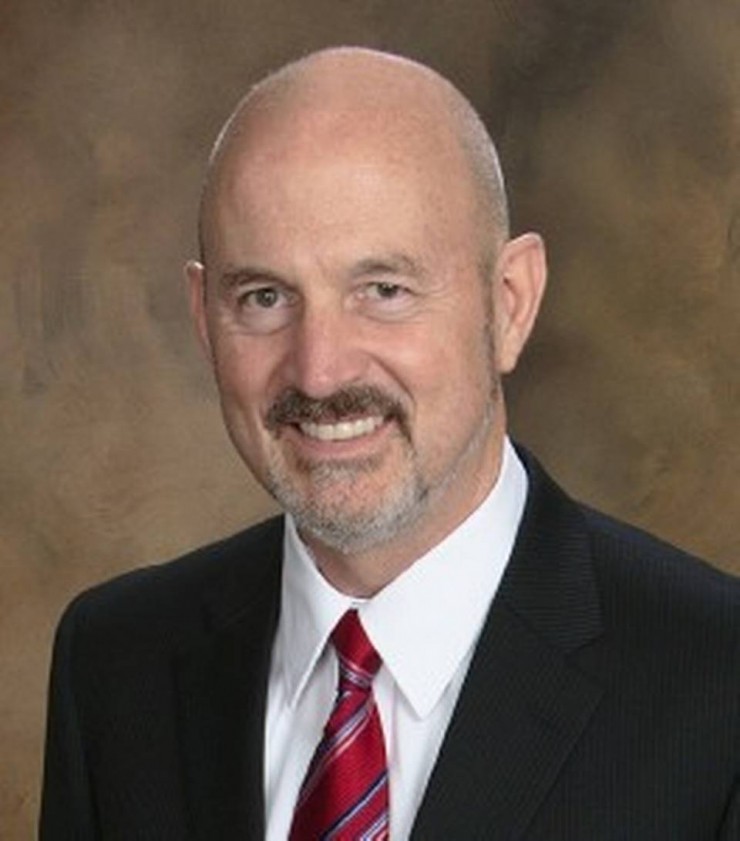
photo courtesy James Thompson for congress campaign

Rep. Ron Estes started Friday by pointing to a 2001 incident in which challenger James Thompson pleaded no contest to disorderly conduct for punching a bar patron while Thompson was working as a bouncer. Thompson said the man hit him first.

Estes also brought up a 2000 report that claimed Thompson hit a woman. That case was dismissed after the man who actually hit the woman falsely identified himself to police as Thompson, the Democrat said.

“What’s sad about this, though, is Mr. Estes has used this as an example of something to put out into the public even though he knows the truth of the matter,” Thompson said. “He’s weaponized violence against women as a way to score political points.”

Thompson revisited the subject later in the debate when Estes bemoaned the partisan divide in the confirmation process of federal Judge Brett Kavanaugh, who was narrowly confirmed to the U.S. Supreme Court on Saturday following claims that Kavanaugh had sexually assaulted women decades ago.

“I don’t want my daughters to ever be a victim of sexual assault, but I also don’t want my son to ever be a victim of being accused of something he didn’t do and just take it for granted because they’re not doing due process,” Estes said.

Thompson declared Estes’ stance on Kavanaugh “rich,” adding that Estes was “willing to cast aspersions on me with things that are untrue.”

Thompson also criticized Estes for accepting donations from political action committees. Thompson said he doesn’t accept PAC money. The two also clashed over abortion, with Estes saying he would support bills that make sure “we protect life.” Thompson said he would support abortion rights and accused Republicans of not caring about children after they’re born.

Thompson painted Estes as part of a “do-nothing Congress.” Estes said Thompson wants a “big government with higher taxes.”

Estes and Thompson are scheduled to debate again on Oct. 17. The election is Nov. 6.

Kavanaugh confirmed, immediately sworn in Saturday evening

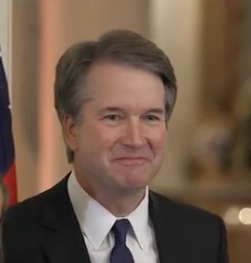
Brett Kavanaugh -photo White House

WASHINGTON (AP) — Brett Kavanaugh was sworn in as a Supreme Court justice Saturday night after the bitterly polarized U.S. Senate narrowly confirmed him. The Senate vote delivered an election-season triumph to President Donald Trump that could swing the court rightward for a generation after a battle that rubbed raw the country’s cultural, gender and political divides.

Kavanaugh was quickly sworn in at the court building, across the street from the Capitol, even as protesters chanted outside.

The near party-line Senate vote was 50-48, capping a fight that seized the national conversation after claims emerged that Kavanaugh had sexually assaulted women three decades ago — which he emphatically denied. Those allegations magnified the clash from a routine Supreme Court struggle over judicial ideology into an angrier, more complex jumble of questions about victims’ rights, the presumption of innocence and personal attacks on nominees.

Acrimonious to the end, the battle featured a climactic roll call that was interrupted several times by protesters in the Senate galleries before Capitol Police removed them. Vice President Mike Pence presided over the roll call, his potential tie-breaking vote unnecessary.

Trump, flying to Kansas for a political rally, flashed a thumbs-up gesture when the tally was announced and praised Kavanaugh for being “able to withstand this horrible, horrible attack by the Democrats.”

The vote gave Trump his second appointee to the court, pleasing conservative voters who might have revolted against GOP leaders had Kavanaugh’s nomination flopped. Instead, “It’s turned our base on fire,” Senate Majority Leader Mitch McConnell, R-Ky., told reporters.

Democrats hope that the roll call, exactly a month from elections in which House and Senate control are in play, will do the opposite, prompting infuriated women and liberals to oust Republicans.

“Change must come from where change in America always begins: the ballot box,” said Democratic leader Chuck Schumer of New York, looking ahead to November.

Sen. Joe Manchin of West Virginia, confronting a tough re-election race next month in a state that Trump won in 2016 by a landslide, was the sole Democrat to vote for Kavanaugh. Every voting Republican backed the 53-year-old conservative judge.

Alaska’s Lisa Murkowski, the only Republican to oppose the nominee, voted “present,” offsetting the absence of Kavanaugh supporter Steve Daines of Montana, who was attending his daughter’s wedding. That rare procedural maneuver left Kavanaugh with the same two-vote margin he’d have had if Murkowski and Daines had both voted.

Republicans hold only a 51-49 Senate majority and therefore had little support to spare.

It was the closest roll call to confirm a justice since 1881, when Stanley Matthews was approved by 24-23, according to Senate records.

Within minutes, dozens of political and advocacy groups blasted out emailed reactions.

Stephanie Schriock, president of EMILY’s List, which contributes to female Democratic candidates, assailed the confirmation of “an alleged sexual assailant and anti-choice radical to a lifetime appointment on the Supreme Court. But we will carry that anger into the election. Women will not forget this.”

Kay Coles James, president of the conservative Heritage Foundation, called the vote “a victory for liberty in America” and called Kavanaugh “a good man and good jurist.”

The outcome, telegraphed Friday when the final undeclared senators revealed their views, was devoid of the shocks that had come almost daily since Christine Blasey Ford said last month that an inebriated Kavanaugh tried to rape her at a 1982 high school get-together.

Since then, the country watched agape as one electric moment after another gushed forth. These included the emergence of two other accusers; an unforgettable Senate Judiciary Committee hearing at which a composed Ford and a seething Kavanaugh told their diametrically opposed stories, and a truncated FBI investigation that the agency said showed no corroborating evidence and Democrats lambasted as a White House-shackled farce.

All the while, crowds of demonstrators — mostly Kavanaugh opponents — ricocheted around the Capitol’s grounds and hallways, raising tensions, chanting slogans, interrupting lawmakers’ debates, confronting senators and often getting arrested. Capitol Police said 164 were arrested, raising that count in recent days well into the hundreds.

Inside the Senate, resentments fanned by the battle showed no signs of receding.

Schumer called the GOP’s push for Kavanaugh “one of the least transparent, least fair, most biased processes in Senate history.” McConnell said a vote for Kavanaugh showed that the Senate was “a chamber in which the politics of intimidation and personal destruction do not win the day.”

Democrats said Kavanaugh would push the court too far, including possible sympathetic rulings for Trump should the president encounter legal problems from the special counsel’s investigations into Russian connections with his 2016 presidential campaign. And they said Kavanaugh’s record and fuming testimony at a now-famous Senate Judiciary Committee hearing showed he lacked the fairness, temperament and even honesty to become a justice.

But the fight was defined by the sexual assault accusations. And it was fought against the backdrop of the #MeToo movement and Trump’s unyielding support of his nominee and occasional mocking of Kavanaugh’s accusers.

About 100 anti-Kavanaugh protesters climbed the Capitol’s East Steps as the vote approached, pumping fists and waving signs. U.S. Capitol Police began arresting some of them. Hundreds of other demonstrators watched from behind barricades. Protesters have roamed Capitol Hill corridors and grounds daily, chanting, “November is coming,” ”Vote them out” and “We believe survivors.”

On Friday, in the moment that made clear Kavanaugh would prevail, Collins delivered a speech saying that Ford’s Judiciary Committee telling of the alleged 1982 assault was “sincere, painful and compelling.” But she also said the FBI had found no corroborating evidence from witnesses whose names Ford had provided.

Sen. Jeff Flake, R-Ariz., who has repeatedly battled with Trump and will retire in January, wavered but also backed Kavanaugh.

When Trump nominated Kavanaugh in July, Democrats leapt to oppose him, saying that past statements and opinions showed he’d be a threat to the Roe v. Wade case that assured the right to abortion. They said he also seemed too ready to rule for Trump in a possible federal court case against the president.

Yet Kavanaugh’s path to confirmation seemed unfettered until Ford and two other women emerged with sexual misconduct allegations from the 1980s.

Kavanaugh replaces the retired Justice Anthony Kennedy, who was a swing vote on issues such as abortion, campaign finance and same-sex marriage.

Police identify body found in basement of Hutchinson home

HUTCHINSON— Police say a decomposing body found in the basement of a Hutchinson home at 29 West 16th on Thursday has been identified as 30-year-old Michael Pederson.

The body was found Thursday evening after a tenant complained about a bad smell.

Police Capt. Troy Hoover says investigators found no signs of a break-in or a struggle. Police say an autopsy of the body did not reveal any type of injuries and a results of toxicology report won’t be available for several weeks.


14 arrested in special Kansas law enforcement operation

SEDGWICK COUNTY — Authorities are investigating fourteen more suspects in connection with a special law enforcement operation.

Michael Brizendine was arrested on weapons and marijuana charges, according to the Sedgwick County Booking report

On Wednesday, approximately 30 police officers and officials with a number of outside agencies including the Kansas Department of Corrections worked together to address criminal activity in the North Broadway Corridor in Wichita, according to officer Charley Davidson.

The collaboration resulted in 14 arrests on 10 felony charges and 25 misdemeanor charges.

The investigation also allowed officers to seize an illegal weapon, meth, marijuana and drug paraphernalia, according to Davidson.

Those arrested include Matthew Johnson-Rudis, Christy Stumblingbear, Levi Outhouse, Seth Harden, Nicholas Pope, Terry Keeler, Kelley Walker, Ronnie Wallace, Pacrecia Curtis, Sammy Langford, Elliot Norton, Mary Bishop  Michael Brizendine and Ronnie Goodrun.

Poll: Half of young Americans see better financial future

By SARAH SKIDMORE SELL
AP Personal Finance Writer

About half of young Americans expect to be financially better off than their parents, according to a new poll, a sign that the dream of upward mobility is alive but somewhat tempered.

The poll, by The Associated Press-NORC Center for Public Affairs Research and MTV, found that half of 15- to 26-year-olds think they eventually will be better off than their parents in terms of household finances. About 29 percent expect to do as well as their parents, and 20 percent expect to be worse off.

Parents were slightly more optimistic: 60 percent think their children will do better than they did, a view that held true for parents across all income groups. Overall, only 12 percent of parents said that they felt their children might do worse.

It’s no longer a guarantee that children will achieve upward income mobility. About half of the Americans born in 1984 earned more at age 30 than their parents, down from 92 percent in 1940, according to the study by famed economist Raj Chetty and others that was released in 2016.

Jennifer Narvaez, 23, is among those who anticipates her financial future will be a bit brighter than that of her parents. Narvaez said she expects to have more opportunities as a college graduate to get a job and own a home than her parents, who grew up in Nicaragua and immigrated to the United States. The Miami resident holds an undergraduate degree in biology and is planning on attending medical school to become a cardiologist.

Narvaez is less certain about the prospects of the U.S. economy, particularly as the nation appears to be marching into a trade war with China.

“It’s a weird time,” she said. “I feel like it’s hard to predict what will happen because of the kind of administration we have.”

Alex Barner, 20, also felt optimistic that he might fare better than his mother, who had him at age 18 and raised him as a single mother. He is attending college in New Mexico and is considering a future career in business management.

While Barner is hopeful he will do well in life, he also has some concerns about the trajectory of the nation and its economy. Like Narvaez, he’s concerned by the trade policy of President Donald Trump’s administration.

Barner also said he feels politicians need to focus more on matters that affect people in the here and now, such as health care and student loan relief.

Respondents were divided about how they expect the nation’s economy will fare in the year ahead. About 29 percent of young people expect the economy to improve, 30 percent expect it will get worse and 41 anticipate it will stay the same. Similarly, 35 percent of parents expect improvement, 27 percent expect conditions to get worse and 38 percent expect the economy to stay as is.
___
The Youth Political Pulse poll was conducted Aug. 23 to Sept. 10 by the AP-NORC Center and MTV. The poll was conducted using NORC’s probability-based AmeriSpeak panel, which is designed to be representative of the U.S. population. It includes 580 young people ages 15-26 and 591 parents of children in the same age group. The margin of sampling error for all young people is plus or minus 6.6 percentage points and for parents plus or minus 7.5 percentage points.

Zero Tolerance? Not Exactly: Kan. School Districts Have Leeway When Dealing With Weapons

About two decades ago the Wichita School Board, disturbed by an increasing number of guns, knives and other weapons being brought to schools, decided to take a hard-line approach:

Zero tolerance.

The board, prompted by the Gun-Free Schools Act of 1994, passed a policy mandating that any student caught with a gun — or a realistic-looking replica — on school property or at a school-sponsored event would be expelled for a full year.

No weapons — no questions, no excuses.

In 1996, a Northwest High School honor student was expelled for his entire senior year after a paintball gun, partially hidden by a duffel bag, was found in the trunk of his car in the school parking lot. So tough was the policy, in fact, that school board members had to amend it to allow the ceremonial rifles used by JROTC drill teams.

Students and parents are required to sign a document during enrollment to acknowledge that they understand the policy.

Recently, though, in an effort to divert the so-called “school-to-prison” pipeline, districts have begun rethinking policies that lead to expulsions for non-violent offenses. That has meant more leeway in dealing with students accused of certain infractions, including weapons — and a dramatic decline in zero-tolerance expulsions.

In 2012, the state’s largest school district reported about 80 expulsions for zero-tolerance offenses, according to data from the U.S. Department of Education’s Office for Civil Rights. In 2016, that number dropped to zero.

“I don’t just say, ‘Oh, it’s zero tolerance. Out the door you go,’” said Klaus Kollmai, hearing officer for the Wichita district. He oversees nearly 800 hearings a year for students whose principals have recommended extensive suspensions or reassignment.

“I look at my kids from the standpoint that they’re students. . . . What are we going to do, put them out on the street — with no education, with no services, with no supervision?” he said. “I will do anything and everything I can as a hearing officer to keep a student in our schools with some sort of services.”

Superintendent’s discretion

To understand the Wichita district’s policy on weapons, you first have to be sure to read the whole thing.

It begins: “Any pupil who is found to have brought, handled, transmitted or to have been in possession of a weapon . . . including any firearm or replica firearm at school, on school property, or at a school supervised activity shall receive a mandatory expulsion from the school district for 186 school days.” Hence, the “zero tolerance” moniker.

But read a little further into the policy, and you’ll see this: “The Superintendent has the discretion to modify the expulsion requirement in a manner that is consistent with requirements of federal law.” That gives district officials extensive latitude in dealing with accused students and to consider each case individually.

Donna Whiteman, executive director of legal services for the Kansas Association of School Boards, says weapons infractions could include a shotgun accidentally left in a student’s trunk after a hunting trip or a kindergartner bringing a toy gun for show-and-tell.

“If there is no intent to harm anyone — no one was hurt, no one was threatened — that might be a situation where the hearing officer would look at: What has the history of this student been?” Whiteman said.

“School safety is certainly the number one concern. . . . But each case is different. No two children are alike.”

Getting creative

Kollmai, the Wichita hearing officer, said even in cases where a long-term suspension or expulsion is merited, he looks for alternatives to allow the student to continue earning credits toward graduation.

“I get creative in here at times — more creative than I used to be in terms of: What can I do with this kid and still make everybody feel that, quote-unquote, justice was served,” he said. “I look at that as a compromise.”

The Gateway alternative program, housed in the former Emerson Elementary at 2330 W. 15th St., was established to serve Wichita students who are removed from their base school. Youth for Christ’s McAdams Academy, a not-for-profit school funded by grants and private donations, also serves middle or high school students who have been expelled or received a long-term suspension.

And just this year, the district launched Bryant Opportunity Academy, a K-6 school for young students struggling with behavior problems.

Some students facing expulsion end up transferring to a different school or finishing their classes online.

“In the ‘90s when these board policies were put in place, there were some real bad things happening within the schools,” Kollmai said. “We used to have 35 or 40 guns (a year), and they were real. . . We had gang issues — major ones — which led to violence and potential violence in our high schools.”

During the 1994-95 school year, the Wichita district reported 35 cases of finding guns or gun replicas. Two years later, after the zero tolerance weapons policy was implemented, there were 13.

Firearm incidents are even rarer now. Last school year, Kollmai said, one Wichita student was caught with a gun at school, “and it wasn’t a working one.” In the most recent case in the Wichita area, a Derby High School student was arrested after bringing a gun to school.

“Zero tolerance, when it was implemented, I think it was good for a while because, ‘Boom! This is it. This is what we’re going to do,’” Kollmai said. “It was a message to everyone that schools are sacred.”

“But what you have to understand about these zero-tolerance policies: It would be easy for me to rubber-stamp everything, and I would have 200 kids out on the street,” he said. “I mean, is that what we want? Is that what society wants? In my opinion, no.”

Changing the culture

Sheril Logan, president of the Wichita School Board, said the district’s zero-tolerance policy on weapons “changed the culture” in schools.

“I very much believe that it’s had a deterrent effect,” said Logan, a retired school administrator. “You ask any kid in our schools now, and they very quickly will say, ‘You get expelled if you bring a gun to school.’ I mean, they know the rule.”

On the other hand, she said, hearing officers should have some leeway in interpreting and enforcing the policy.

“Now, some things absolutely we cannot accept: If a kid brings a gun to school and threatens somebody, they’re gone. That is not acceptable in school and never will be,” she said.

“But we want to figure out how we keep kids in school, if at all possible,” she said. “We absolutely follow our policy. . . . But it’s to no one’s advantage to throw a kid out in the street, because then their odds of graduating go down greatly.”

Stephan Bisaha is an education reporter for the Kansas News Service. Follow him on Twitter @SteveBisaha.

SELZER: Insurance Matters Oct. 2018

Ken Selzer, Kansas Insurance Commissioner

As we enter the last quarter of 2018, Kansans have been fortunate to have the statewide estimated non-flood storm damages for the year be at the lowest level in the past 10 years. With low storm damage estimates come the correspondingly low number of claims filed.

We always appreciate the calm that comes with a less-than-normal severe weather year. But it is unwise to think that this year begins a new normal for severe weather activity. The statistics say that we will once again, at some future point, be faced with storm damage losses more typical of those caused by Kansas weather events. It is still wise to make sure that you know how to maneuver the claims process successfully when the need arises.

With a little preparation, resolving a claim with your insurance company does not have to be a frustrating, time-consuming process. Being prepared with and keeping track of the information your insurance company needs to process the claim is critical. What you do before making the claim will help in reducing the time between the insurance incident and the resolution of your problem.

Kansans should consider the following ideas to assist with the claims process.

Know your policy. Understand what your policy says. Because it is a contract between you and your insurance company, you need to know what is covered, what is not and what your out-of-pocket costs are.

File claims as soon as possible. Call your agent or your company’s claims hotline as soon as possible. Your policy might require that you make the notification within a certain time frame.

Provide complete, correct information. Be certain to give your insurance company all the necessary information. If your information is incorrect or incomplete, your claim could be delayed.

Keep copies of all communications. Whenever you communicate with your insurance company, be sure to document the communications. With phone calls, include the date, name and title of the person you spoke with and what was said. 

Ask questions. If there is a disagreement about the claim settlement, ask the company for the specific language in your policy that is in question. Find out if the disagreement is because you interpret the policy differently. If your claim is denied, make sure you have a letter from the company explaining the reason for the denial — including the specific policy language that caused the denial.

Don’t rush into a settlement. If the first offer your insurance company makes does not meet your expectations, talk with your local insurance agent or seek other professional advice.

Document auto/homeowners temporary repairs. Auto and homeowners policies might require you to make temporary repairs to protect your property from further damage. Document any damaged personal property for an adjuster to inspect. If possible, take photographs or videotape the damage before making the repairs. Your policy should cover the cost of these temporary repairs, so keep all receipts.

Don’t make permanent repairs. A company might deny a claim if you make permanent repairs before the damage is inspected. If possible, determine what it will cost to repair your property before you meet with an adjuster. Provide the adjuster any records of improvements you made to the property, and ask him/her for an itemized explanation of the claim settlement offer.

Seek accident and health claims details. Ask your medical provider to give your insurance company details about your treatment, condition and prognosis. If you suspect your provider is overcharging, ask the insurance company to audit the bill, and verify whether the provider used the proper billing procedure.

Contact the Kansas Insurance Department (KID).  If you continue to have a dispute with your insurance company about the terms of the claims settlement, contact the KID Consumer Assistance Hotline at 1-800-432-2484, or go to the website, www.ksinsurance.org, to use the Chat feature to make contact with one of our Consumer Assistance Representatives.

Remember, you can get a claim resolved quicker if you have the consumer know-how to fast track the process.

Ken Selzer, CPA, is the Insurance Commissioner of Kansas.

Jury: Kan. man guilty of getting child porn from now defunct website

TOPEKA, KAN. – A federal jury Thursday found a Morris County man guilty of downloading child pornography from the internet, according to U.S. Attorney Stephen McAllister.

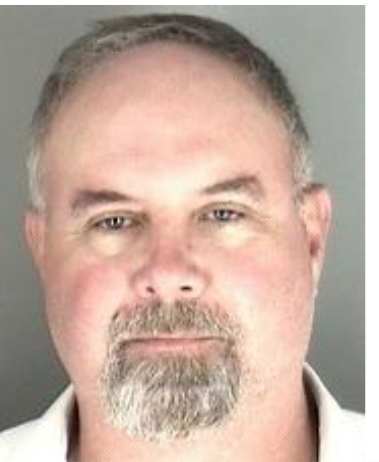
Wagner -photo Shawnee Co.

Wesley Wagner, 54, White City, Kan., was convicted of one count of receiving child pornography and one count of possessing child pornography. During trial, the prosecutor presented evidence that the FBI seized a server belonging to a now-defunct website called Playpen that provided users access to child pornography.

The FBI used computer forensics to identify the site’s users, including Wagner. Based on that information, the FBI obtained a warrant to search the defendant’s home.

Sentencing is set for Jan. 7. Wagner faces a penalty of not less than five years and not more than 20 years in federal prison on the charge of receiving child pornography, and up to 10 years on possession charge.


Kan. man convicted of child endangerment for driving into oncoming traffic

BARTON COUNTY — A Kansas man was convicted Friday on a charge of aggravated endangerment of a child.

Bitter -photo Barton County

According to Barton County Attorney the case began when 31-year-old Jason Bitter was observed driving a vehicle on U.S. 56 into oncoming traffic at a high rate of speed. At the time, Bitter’s daughter was in the vehicle with him as the result of an argument between Bitter and the child’s mother.

Barton County deputies tracked Bitter to a location in Pawnee Rock, where he was arrested.

The child was not harmed. Sentencing on the charge, a felony, is also for December, according to Mellor.

Police ask for help to locate SW Kan. aggravated assault suspect

SEWARD COUNTY—Law enforcement authorities are investigating an aggravated assault and asking the public to help locate a suspect.

photo courtesy Liberal Police

Paulino Castro-Pablo, 31, is wanted for aggravated assault, according to the police department in Liberal. He is described a 5-foot-6, 170 pounds, brown eyes and black hair. Police say if you see him to use caution because he may be armed.

If you have any information on Castro-Pablo, contact police.

Jury: Kan. man guilty of shooting death of twin brother, wife

SEDGWICK COUNTY – A jury Friday has found Luis Alvarado-Meraz, 28 of Wichita, guilty of capital murder in the shooting deaths of his twin brother Manuel and Manuel’s wife Lucero Rodriquez, according to a media release from the Sedgwick County Attorney.

Alvarado-Meraz -photo Sedgwick County

The victim’s bodies were found in their apartment on the night of January 14, 2015, in the 2800 block of S. Emporia in Wichita.

Manuel Alvarado-Meraz was shot 12 times while his wife Lucero was shot 8 times.

The jury deliberated just over 90 minutes before reaching their verdict. Under Kansas law, Alvarado- Meraz is facing life in prison with no chance of parole. A sentencing date has not been set.

Copyright Eagle Radio | FCC Public Files | EEO Public File