We have a brand new updated website! Click here to check it out!

Kobach aims to drive out migrants living in Kansas illegally

TOPEKA, Kan. (AP) — Kris Kobach highlights his national reputation as an immigration crusader in running for Kansas governor by promising voters that if he’s elected he’ll work to drive out illegal immigrants to halt what he says is the $377 million in benefits provided to them by the state each year.

Photo courtesy Kris Kobach campaign

The conservative Republican’s plans echo President Donald Trump’s crackdown on immigration — an agenda Kobach has helped to shape. The president has endorsed Kobach , the Kansas secretary of state, who won a narrow primary victory over the state’s GOP governor.

Plenty of immigration policy analysts suggest Kobach’s push could harm the state’s economy, but they start by questioning the dollar figure he is citing repeatedly as the annual cost of illegal immigration to Kansas. Kobach is undeterred.

“My election would send a signal that the public-benefits gravy train is going to end,” Kobach said during a recent interview.

While states such as California and Illinois have offered immigrants sanctuary, Kobach wants Kansas to catch up to others including Missouri, Alabama and Arizona in setting policies designed to prevent immigrants living in the U.S. from getting jobs or obtaining benefits. Kobach has falsely described Kansas as the “sanctuary state of the Midwest.”

His figure for what Kansas could save annually comes from a September 2017 report by the Federation for American Immigration Reform.

The group backs Trump’s call to build a wall on the border with Mexico and opposes “amnesty,” for immigrants living in the U.S. illegally, including a pathway to citizenship for those willing to serve in the military. Its website argues for cutting legal immigration 70 percent and says “immigration levels must fall” for U.S. wages to rise.

The group calculated figures for each state by tabulating a 50-state total for various costs and working from an estimate of how many immigrants living illegally in the U.S. reside in each state. FAIR estimated more than 84,000 immigrants live illegally in Kansas; other sources have lower figures. The total is between 2.2 percent and 2.9 percent of Kansas’ population.

Almost half of the total costs the study cites are for public schooling for immigrant children. But a 1982 decision by the U.S. Supreme Court prohibits states from denying those children an education.

Roughly a third is a combination of policing, court expenses and even general services, such as garbage collection.

In short, much of the spending is for services a state can’t avoid unless immigrants are deported or leave voluntarily.

Kobach acknowledged that he couldn’t cut off much spending immediately and might not be able to completely eliminate his $377 million a year entirely over time but maintains reducing it sharply is worth doing. He’s outlined multiple proposals for combatting illegal immigration.

FAIR research director Matt O’Brien, one of the report’s authors, said the burden to federal and state governments from providing services “offsets any measurable gain” from money “illegal aliens are alleged to inject into the economy.”

“In fact, illegal immigration simply amounts to a massive wealth redistribution scheme,” O’Brien said in an email.

Critics contend the report that Kobach is citing overestimates how many immigrants live in the U.S. illegally and fails to adequately consider immigrant contributions to the economy. A senior policy analyst for the libertarian Cato Institute called it “fatally flawed” — and said it might overestimate net government costs by as much as 97 percent.

“It’s disappointing that a candidate for such an important office is relying on such shoddy research to make his point,” said Alex Nowrasteh, the Cato analyst. He argues for allowing “peaceful” immigrants to stay in the U.S. even if they arrived illegally.

The Democratic nominee for governor, state Sen. Laura Kelly, described the FAIR report as “widely discredited,” adding in an email, “Kris Kobach is deceiving Kansans to further his personal political agenda.”

And independent candidate Greg Orman, a Kansas City-area businessman, said: “We’re not going to grow the Kansas economy by driving workers out of the state.”

Federal law generally prohibits government health coverage and food assistance for illegal immigrants, though Kobach says Kansas is not aggressive enough in policing fraud in those programs.

But FAIR argues that costs for states are bigger and include general services that legal residents also receive, as well as the costs of prosecuting and incarcerating illegal-immigrant criminals and medical care that poor immigrant families can’t afford but are entitled to by law.

In 2016, a study from the National Academies of Sciences, Engineering and Medicine concluded that first-generation immigrants are more costly in the short-term to states and local governments than native U.S. citizens, largely because of education costs. Kim Rueben, a senior fellow at the Urban Institute, which participated in the academies’ study, said immigrant parents have more children on average.

But, she added, “Those kids are also going to be the future labor force.”

Studies by the University of Missouri-Kansas City in 2013and the University of Kansas in 2014 concluded that immigrants benefit the Kansas economy and pay for government services they use. Both also concluded that immigrants expand the Kansas economy.

SELZER: Know your life insurance basics

Ken Selzer, Kansas Insurance Commissioner

September is Life Insurance Awareness Month, and I urge Kansans to consider some important points about life insurance coverage.

Most of us know that life insurance is not about us, but about our families and loved ones. Having a life insurance policy can be of great significance for others over the course of a lifetime. I urge you to think about what a policy can do for your family, and how to protect it for them.

Answers to questions about life insurance are in the Kansas Insurance Department (KID) publication “Life Insurance and Annuity Basics,” which can be printed or ordered from the KID website, www.ksinsurance.org.  Some of the more common considerations are listed below.

  • Your beneficiary will receive the insurance benefits tax free, and life insurance benefits do not have to go through probate or other legal delays involved in the settlement of an estate. If you die without naming a beneficiary, the benefits will be paid into your estate and then paid out according to your will or through state laws. This delays the payment and could create a financial hardship for your beneficiary.
  • Keep your policy in a safe place.  However, do not use any place where the policy might not be readily available.  Record the basic information — such as company, policy type, policy number, insured’s and beneficiaries’ names — in a separate place.  Let your beneficiary know the kind of insurance policy you have, any changes you make, and where you keep the policy.
  • A change in beneficiary is possible after the policy is taken out, unless you have named an irrevocable beneficiary. An irrevocable beneficiary arrangement can only be changed with the beneficiary’s consent. Your insurance agent can arrange for a change in beneficiaries, or you can do it by writing directly to your life insurance company and asking for the appropriate form.
  • You can specify as many beneficiaries as you want to receive the benefits. You may also specify how the benefits are to be divided.  It is a good idea to name a second (contingent) beneficiary to receive the money in case your primary beneficiary dies before you do or at the same time as you.
  • Your beneficiary will need to notify the life insurance company of your death. Again, that is why it is important for your beneficiary to be able to locate your policy.  Companies require a certified death certificate or other legal proof of death, and they may ask for the policy. The life insurance company will pay the proceeds of the policy to your beneficiary after receiving proper notification of death.

Knowing your life insurance basics makes for peace of mind for you as well as your loved ones.

For those who have more questions about life insurance, the KID Consumer Assistance Hotline representatives can help.  Call 1-800-432-2484 or chat online with a representative at www.ksinsurance.org.

Ken Selzer is the Kansas Insurance Commissioner.

Kan. officer charged after high-speed crash injures man

WICHITA, Kan. (AP) — A Wichita police officer is facing charges after a 71-year-old man was thrown through a windshield after his pickup truck was hit by the officer’s car.

First responders on the scene of the March 16 crash-photo courtesy KAKE

An arrest affidavit released Wednesday says officer Samuel Dugo was speeding to a burglary call without his emergency lights and sirens on a Wichita street before his car hit a pickup truck.

Dugo has been charged with felony aggravated battery after the March 16 crash injured Donald Clark of Bel Aire. The arrest affidavit says Dugo’s car was going 79 mph when he hit Clark’s truck.

Prosecutors allege Dugo was driving recklessly that night.

Dugo’s attorney says the officer’s driving was not reckless and consistent with police practices. He also says Dugo tried to take evasive action after Clark’s truck drove into its path.

Kansas man dies, teen hospitalized after Jeep rolls

PAWNEE COUNTY — One person died in an accident just before 5:30p.m. Friday in Pawnee County.

The Kansas Highway Patrol reported a 2018 Jeep Wrangler driven by Evan William Hopkins, 16, Garden City, was eastbound on K156 one mile east of Rozel.

The Jeep traveled left of center, entered the north ditch, hit a field entrance, went airborne, rolled end over end and came to rest on the driver’s side.

Hopkins and a passenger in the vehicle Todd A. Hopkins, 53, Garden City, were transported to Pawnee Valley Community Hospital in Larned. Todd Hopkis died of his injuries.  Both were wearing seat belts, according to the KHP.


Attorney General Sessions makes presentation in Hutchinson

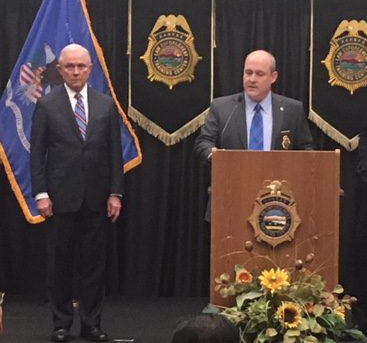
Attorney General Sessions during Friday afternoon’s event at the Law Enforcement Training Center

RENO COUNTY — United States Attorney General Jeff Sessions was in Reno County Friday afternoon to speak to law enforcement and cadets of the Kansas Law Enforcement Training Center.

Sessions was the guest of Kansas Senator Jerry Moran, who praised Sessions for his work:


Sessions says the uptick in the crime rate is something that needs to be addressed. He spoke on the vigilance of the U.S. Attorney’s office and the support law enforcement has from the president:

Sessions also announced a $100,000 grant to the Wichita Police Department that will allow the department to purchase better technology, including 67 body cameras.


Sheriff: Aggravated arson case against Kan. inmate dismissed

BARTON COUNTY — Law enforcement authorities have been investigating alleged arson at the Barton County County Detention Facility.

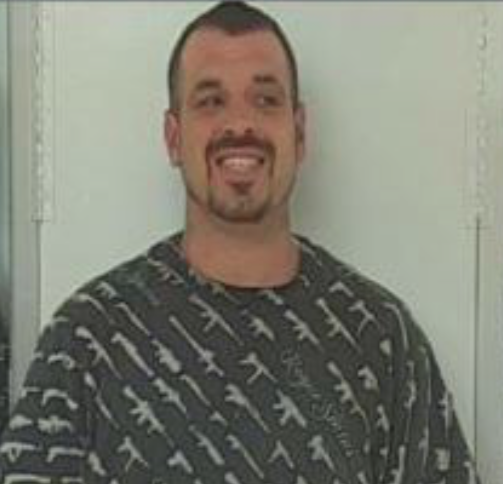
Zachariah Dittrick -photo Barton Co.

According to Sheriff Brian Bellendir, on August 20, two inmates in the Barton County Detention Facility damaged a light fixture to gain access to the wiring.

They then intentionally caused a direct short and managed to ignite small pieces of paper. They then took larger pieces of paper and started a larger fire adding plastic food trays and other items from their cell. The detention staff quickly noticed the fire and gained entry to the cell.

The Great Bend Fire Department responded, and the fire was quickly brought under control. The actions of these inmates placed sheriff’s office personnel as well as the general jail population at risk.

Because the fire had intentionally been set in an occupied building, Sheriff’s Office personnel contacted the Kansas State Fire Marshal’s Office to assist in the investigation. After conducting interviews of the inmates, the Fire Marshall determined aggravated arson charges should be sought.

The two inmates including 35-year-old Zachariah Dittrich were placed under arrest immediately and booked on charges of aggravated arson-a level three felony. The case was sent to the County Attorney’s Office for prosecution.

Criminal charges were filed by the Barton County Attorney’s Office and the incident was placed on the court docket for a preliminary hearing scheduled for Thursday, September 13, 2018.

The Sheriff’s Office delivered Zachariah Dittrick to the district court for the proceeding. An assistant county attorney advised the court he had only recently been assigned the case. The case had been under review by County Atty. Amy Mellor.

According to the sheriff, Mellor was not in her office this week and no subpoenas had been issued in the case and the State could not proceed.

The State’s Attorney requested a continuance. Defense Attorney Don Anderson moved the case be dismissed. The Hon. Richard Burgess granted the motion to dismiss without prejudice. Judge Burgess further stated if the State wished to refile the case they must do so by summons only.

Dittrick was returned to the jail where he is being held on an aggravated battery charge only.

The Sheriff’s Office has received no documents as of this time, recharging Dittrick with the arson.

Trump’s Supreme Court nominee denies allegation of sexual misconduct

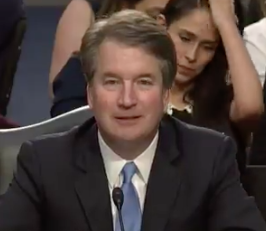
WASHINGTON (AP) — Supreme Court nominee Brett Kavanaugh on Friday denied an allegation of sexual misconduct from when he was in high school, seeking to defuse a potential threat to his confirmation as a handful of key senators remained silent on whether they would vote for him.

Supreme Court nominee Brett Kavanaugh photo courtesy Senate Judiciary Committee

In a statement released by the White House, Kavanaugh said: “I categorically and unequivocally deny this allegation. I did not do this back in high school or at any time.”

Senate Republicans insist Kavanaugh’s confirmation remains on track. But the allegation has inflamed an already intense political battle over President Donald Trump’s nominee. It also pushes the #MeToo movement into the court fight, less than two months before congressional elections that have seen a surge of female Democratic candidates.

The New Yorker magazine reported that the alleged incident took place at a party when Kavanaugh, now 53, was attending Georgetown Preparatory School. The woman making the allegation attended a nearby school.

The magazine says the woman sent a letter about the allegation to Democrats. A Democratic aide and another person familiar with the letter confirmed Friday to The Associated Press that the allegation is sexual in nature. Two other people familiar with the matter confirmed it concerned an incident alleged to have occurred in high school. They were not authorized to speak publicly and spoke on condition of anonymity.

The AP has not confirmed the details of the incident alleged in The New Yorker’s account.

Rallying to Kavanaugh’s defense, 65 women who knew him in high school issued a letter saying Kavanaugh has “always treated women with decency and respect.” The letter was circulated by Republicans on the Senate Judiciary Committee.

“We are women who have known Brett Kavanaugh for more than 35 years and knew him while he attended high school between 1979 and 1983,” wrote the women, who said most of them had attended all-girl high schools in the area. “For the entire time we have known Brett Kavanaugh, he has behaved honorably and treated women with respect.”

The show of support for Kavanaugh was organized by his former law clerks. Three women reached by AP said they were first asked to sign the letter on Thursday.

The swift pushback comes after the Senate Judiciary Committee’s top Democrat, Dianne Feinstein of California, notified federal investigators about information she received about the nominee.

Feinstein won’t disclose the information publicly, but the FBI confirmed it has included it in Kavanaugh’s background file at the committee, now available confidentially to all senators.

Kavanaugh’s nomination has divided the Senate and the new information complicates the process, especially as key Republican senators, including Susan Collins of Maine and Lisa Murkowski of Alaska, are under enormous pressure from outside groups seeking to sway their votes on grounds that a Justice Kavanaugh might vote to undercut the Roe v. Wade ruling. One activist group favoring abortion choice, NARAL, called on Kavanaugh to withdraw from consideration.

The Judiciary Committee, which has finished confirmation hearings for Kavanagh, still plans to vote next Thursday on whether to recommend that he be confirmed by the full Senate, a spokesman said.

The White House called Feinstein’s move an “11th hour attempt to delay his confirmation.”

Collins held an hour-long phone call with Kavanaugh on Friday, her spokeswoman confirmed. It had been a previously scheduled follow-up to an initial visit that Kavanaugh made to her office in August. It was not immediately clear if they discussed the new information.

If Collins or Murkowski should vote for Kavanaugh, he is likely to be confirmed. Every other Republican in the Senate is expected to vote yes — and some Democrats from Trump-won states may join them — though it remains to be seen if the misconduct allegation will cost him any support.

Feinstein said in a statement Thursday that she “received information from an individual concerning the nomination.” She said the person “strongly requested confidentiality, declined to come forward or press the matter further, and I have honored that decision.”

The FBI confirmed that it received the information Wednesday evening and included it in Kavanaugh’s background file, which is maintained as part of his nomination. The agency said that is its standard process.

Feinstein’s statement that she had “referred the matter to federal investigative authorities” jolted Capitol Hill and threatened to disrupt what had been a steady path toward confirmation for Kavanaugh by Republicans eager to see the conservative judge on the court.

Feinstein, who is up for re-election this year, has held the letter close. Democratic senators on the panel met privately Wednesday evening and discussed the information, according to Senate aides who were not authorized to discuss the situation publicly and spoke on condition of anonymity.

Some senators, including the No. 2 Democrat, Dick Durbin of Illinois, learned about the information for the first time at the meeting, according to one of the aides.

A spokeswoman for Rep. Anna Eshoo, D-Calif., declined to confirm reports that the congresswoman had forwarded a letter containing the allegations to Feinstein. The spokeswoman said the office has a confidentiality policy regarding casework for constituents.

A White House spokeswoman, Kerri Kupec, said the FBI has vetted Kavanaugh “thoroughly and repeatedly” during his career in government and the judiciary.

She said Kavanaugh has had 65 meetings with senators — including with Feinstein — has sat through over 30 hours of testimony and publicly addressed more than 2,000 questions. “Not until the eve of his confirmation has Sen. Feinstein or anyone raised the specter of new ‘information’ about him,” she said.

Sen. John Cornyn of Texas, the second-ranking Republican and a member of the committee, was also skeptical.

“Let me get this straight: this is statement about secret letter regarding a secret matter and an unidentified person. Right,” he tweeted.

Chairman Chuck Grassley, R-Iowa, was unaware of the information until it was made public, according to a GOP committee aide. Kavanaugh has undergone six federal background checks over his time in government, including one for the nomination, the aide said.

___

Officer sues Wichita police chief over comments after arrest

WICHITA, Kan. (AP) — A Wichita police officer who says he was wrongly accused of raping a woman last year is suing the city’s police chief for defamation.

Wichita Police Chief Ramsay-courtesy Wichita PD

Marlon Woolcock contends in a lawsuit filed Sept. 5 that Chief Gordon Ramsay damaged his reputation and hurt his chances of becoming an FBI agent by saying after Woolcock was arrested that his actions weren’t in line with department’s conduct standards.

Prosecutors declined to file charges against Woolcock in the case.

City attorney Jennifer Magana said Thursday neither the city nor the chief would comment on the lawsuit.

Woolcock is currently a patrol officer for the Wichita department. He is seeking more than $75,000 in damages.

Woolcock is suing the woman who accused him of rape, and she has filed counterclaims against him.

UPDATE: Kansas man accused of abuse, murder of 4-month-old

SEDGWICK COUNTY—Law enforcement authorities are investigating a suspect in connection with the death of a 4-month old child.

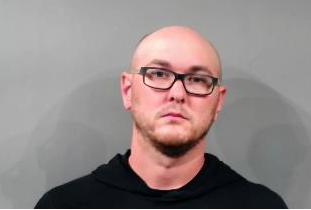
Franklin -photo Sedgwick Co.

On Saturday, police in Haysville responded to report of a child having a seizure in the 400 block of Sarah Lane in Haysville, according to a media release.

Sedgwick County EMS transported the 4-month old child to a local hospital in critical condition.

Doctors discovered the child had internal injuries. The child died on Thursday according to the release.

On Thursday, Haysville Police arrested 32-year-old Andrew W. Franklin, according to the Sedgwick County arrest report.

Just before 7:30p.m. deputies booked Franklin into jail on requested charges of First Degree Murder and Child abuse, according to the jail booking report.

Police will present the case to the district attorney on Monday.   Police did not release any additional details.

Franklin has previous convictions for theft and burglary, according to the Kansas Department of Corrections.

———–

SEDGWICK COUNTY—Law enforcement authorities are investigating a suspect in connection with the death of a child.

On Thursday, Haysville Police arrested 32-year-old Andrew W. Franklin, according to the Sedgwick County arrest report.

Just before 7:30p.m. deputies booked Franklin into jail on requested charges of First Degree Murder and Child abuse, according to the jail booking report.

Police are expected to release additional details Friday.

Franklin has previous convictions for theft and burglary, according to the Kansas Department of Corrections.

GM recalls pickups, SUVs for power steering problem

DETROIT (AP) — General Motors is recalling 1.2 million big pickup trucks and SUVs mainly in North America because of power-assisted steering problems that have been cited in a number of accidents.

GM says the power steering can fail momentarily during a voltage drop and suddenly return, mainly during low-speed turns. Such a failure increases the risk of a crash. The company says it has 30 reports of crashes with two injuries, but no deaths.

The recall covers certain 2015 Chevrolet Silverado and GMC Sierra 1500 pickups as well as Chevy Tahoe and Suburban SUVs. Also affected are 2015 Cadillac Escalade and GMC Yukon SUVs.

Dealers will update the power steering software at no cost to owners. No date has been set to notify customers, but GM says the software is available now, so owners can contact dealers to schedule repairs.

More than 1 million of the trucks are in the U.S., and most of the rest are in Canada and Mexico. There’s a small number in other countries.

GM recalled 2014 model year trucks last year for the same problem.

Police: Teens stole vehicles worth $158K from Kan. dealer

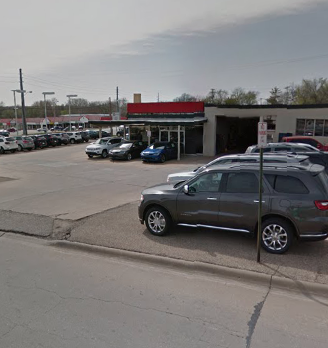
RILEY COUNTY — Law enforcement authorities are investigating 3 Kansas teens in connection with car theft.

On Thursday, police filed a report for burglary, theft and criminal damage to property at Robbins Motors, 3100 Anderson Ave. in Manhattan, according to the Riley County Police Department activity report.

Three juvenile suspects identified as Cody G. Whitmore, 16, Manhattan, Dominick M. Deese, 14, and Stephen W. Blair, 14 both of Ogden, made entry into the business, causing damage, and took a 2019 Dodge Ram, a 2018 Jeep Rubicon, and a Jeep.

The estimated total loss associated with the case is $158,000. Police did recover the vehicles.

In addition, police also reported criminal damage to property at Susan B. Anthony School in the 2500 block of Browning Avenue in Manhattan after the three suspected juvenile damaged the lawn of the school with a vehicle. The estimated total loss associated with this case is approximately $500.00.

Authorities have not confirmed if all three are still being held in juvenile detention prior to making an initial court appearance.

NOTE: Kansas state law allows law enforcement to release the names of juveniles age 14 and older involved in criminal cases

Webcams: Watch hurricane Florence make landfall

Myrtle Beach South Carolina just after 7a.m. EDT Friday

WILMINGTON, N.C. (AP) — The National Hurricane Center said early Friday that Florence was about to make landfall in North Carolina bringing with it life-threatening storm surge and hurricane strength winds.

Coral Beach: Web cam

Myrtle Beach: web cam 

Ocean Isle Beach: web cam

Corolla Light Beach North Carolina: web cam

The powerful storm already has inundated coastal streets with ocean water and left tens of thousands without power, and forecasters say that “catastrophic” freshwater flooding is expected over portions of the Carolinas as Hurricane Florence inches closer to the U.S. East Coast.

The National Hurricane Center said early Friday that Florence’s eyewall is beginning to approach the North Carolina coast bringing with it life-threatening storm surge.

The center said that a gauge in Emerald Isle, North Carolina, recently reported 6.3 feet (1.92 meters) of inundation. Emerald Isle is about 84 miles (135 kilometers) north of Wilmington.

And about 46 miles north of Emerald Isle in New Bern about 150 people were waiting to be rescued from rising flood waters, WXII-TV reported. The city said early Friday that two out-of-state FEMA teams were working on swift-water rescues and more teams were on the way.

Screaming winds bent trees toward the ground and raindrops flew sideways as Florence’s leading edge whipped the Carolina coast Thursday to begin an onslaught that could last for days, leaving a wide area under water from both heavy downpours and rising seas.

The storm’s intensity diminished as it neared land, with winds dropping to around 90 mph (144 kph) by nightfall. But that, combined with the storm’s slowing forward movement and heavy rains, had Gov. Roy Cooper warning of an impending disaster.

“The worst of the storm is not yet here but these are early warnings of the days to come,” he said. “Surviving this storm will be a test of endurance, teamwork, common sense and patience.”

Cooper requested additional federal disaster assistance in anticipation of what his office called “historic major damage” across the state.

More than 80,000 people were already without power as the storm began buffeting the coast, and more than 12,000 were in shelters. Another 400 people were in shelters in Virginia, where forecasts were less dire.

Prisoners were affected, too. North Carolina corrections officials said more than 3,000 people were relocated from adult prisons and juvenile centers in the path of Florence, and more than 300 county prisoners were transferred to state facilities.

Officials said some 1.7 million people in the Carolinas and Virginia were warned to evacuate, but it’s unclear how many did. The homes of about 10 million were under watches or warnings for the hurricane or tropical storm conditions.

Spanish moss waved in the trees as the winds picked up in Wilmington, and floating docks bounced atop swells at Morehead City. Ocean water flowed between homes and on to streets on the Outer Banks; waves crashed against wooden fishing piers.

Coastal towns in the Carolinas were largely empty, and schools and businesses closed as far south as Georgia.

As of 5 a.m., Florence was centered about 25 miles (35 kilometers) east of Wilmington, North Carolina. Its forward movement increased slightly to 6 mph (9 kph). Hurricane-force winds extended 90 miles (150 kilometers) from its center, and tropical-storm-force winds up to 195 miles (315 kilometers).

A buoy off the North Carolina coast recorded waves nearly 30 feet (9 meters) high as Florence churned toward shore.

Forecasters said conditions will deteriorate as the storm pushes ashore early Friday near the North Carolina-South Carolina line and makes its way slowly inland. Its surge could cover all but a sliver of the Carolina coast under as much as 11 feet (3.4 meters) of ocean water, and days of downpours could unload more than 3 feet (0.9 meters) of rain, touching off severe flooding.

Once a Category 4 hurricane with winds of 140 mph (225 kph), the hurricane was downgraded to a Category 1 on Thursday night.

Forecasters said that given the storm’s size and sluggish track, it could cause epic damage akin to what the Houston area saw during Hurricane Harvey just over a year ago, with floodwaters swamping homes and businesses and washing over industrial waste sites and hog-manure ponds.

The hurricane was seen as a major test for the Federal Emergency Management Agency, which was heavily criticized as slow and unprepared for Hurricane Maria in Puerto Rico last year.

As Florence drew near, President Donald Trump tweeted that FEMA and first responders are “supplied and ready,” and he disputed the official conclusion that nearly 3,000 people died in Puerto Rico, claiming the figure was a Democratic plot to make him look bad.

Not everyone was taking Florence too seriously: About two dozen locals gathered Thursday night behind the boarded-up windows of The Barbary Coast bar as Florence blew into Wilmington.

“We’ll operate without power; we have candles. And you don’t need power to sling booze,” said owner Eli Ellsworth.

Others were at home hoping for the best.

“This is our only home. We have two boats and all our worldly possessions,” said Susan Patchkofsky, who refused her family’s pleas to evacuate and stayed at Emerald Isle with her husband. “We have a safe basement and generator that comes on automatically. We chose to hunker down.”

___

University of Kansas Health System given $66 million gift

KANSAS CITY, Kan. (AP) — The University of Kansas Health System has received a $66 million donation to be used for an inpatient care unit.

Health System officials said Thursday the donation from the Sunderland Foundation is the largest gift ever received by the system. The gift completes a $100 million fundraising campaign for the new unit, which will allow its Blood and Marrow Transplant Program and its Divison of Hematologic Malignancies and Cellular Therapy to come together for patient care and research.

The Sutherland Foundation helped start the campaign in 2014 with a $2 million gift.

Charlie Sunderland has served on the Hospital Authority Board for many years and also chairs the Quality and Safety Committee.

Copyright Eagle Radio | FCC Public Files | EEO Public File