SHAWNEE COUNTY— A Kansas man who admitted his role in a moped accident that killed an 8-year-old boy is going to prison.
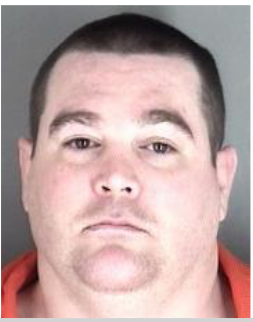
Tibbs-photo Shawnee County
Marvin Tibbs III, 36, Topeka, was sentenced this week to 48 months in prison, according to Shawnee County District Attorney Michael Kagay.
Authorities say Tibbs was giving Trenton Feliciano a ride on his motorized scooter in October 2014 when it crashed, fatally injuring the boy.
Tibbs was also originally charged with aggravated child endangerment, reckless driving, failure to stop at a stop sign and failure to wear protective gear.
Tibbs will also be subject to 36 months post release supervision and is required to register as a violent offender for 15 years, according to the county attorney.
HARPER COUNTY —A series of earthquakes shook portions of Kansas late Friday and early Saturday.
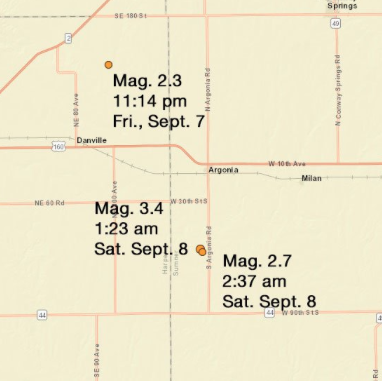
Image courtesy Kansas Geological Survey
At 11:14p.m. Friday, the Kansas Geological Survey reported a 2.3 magnitude quake approximately 4 miles east of Runnymeade in Harper County.
At 1:23 a.m. Saturday, a magnitude 3.4 quake was centered 12 miles northeast of Anthony, according to the U.S. Geological Survey. A 2.7 quake hit the same area at 2:37 a.m.
Less than one hour later, a 3.7 magnitude quake was recorded approximately 90 miles south near Fairview Oklahoma, according to the USGS.
There are no reports of damage or injury, according to the Harper County Sheriff’s Department.
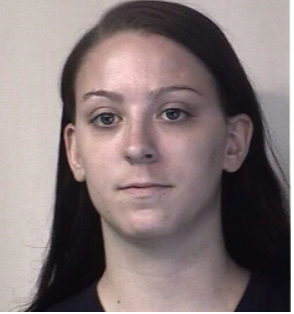
In 2015, a woman donned a clown mask and slipped into a Dollar General Store in Wichita just before closing time.
In the final moments of the robbery that eventually got her three years in prison, she did something that could complicate her life for many more years to come.
She flashed a stun gun, stuffed the $3,400 in her coveralls and fled.
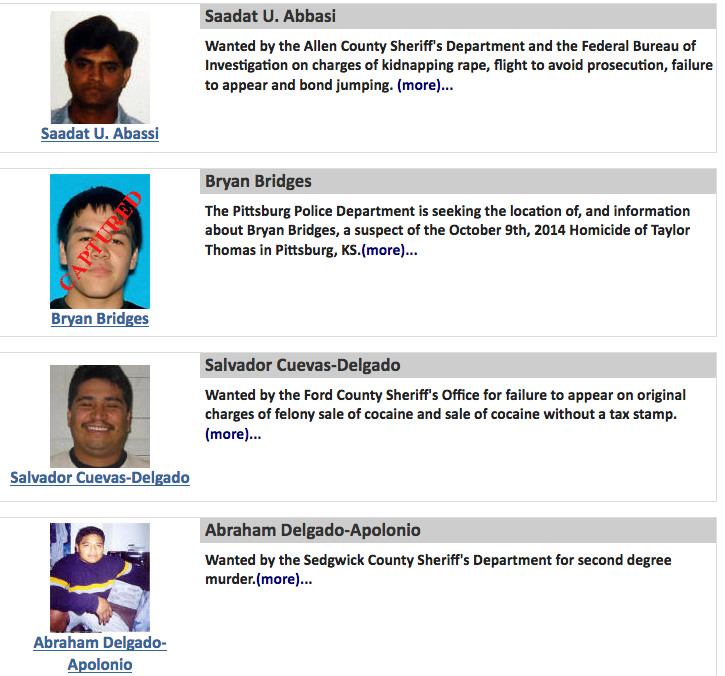
A screenshot of the Kansas offender registry’s mapping tool shows the addresses of people in Wichita who are currently required to check in at least four times a year with law enforcement.
Now the state is fighting to list Tabitha Carter online as a violent offender. That case hangs on her use of a “deadly weapon” — the Taser that her lawyer argues doesn’t fit the bill.
Because of that stun gun, the state says she must check in with her local sheriff’s office at least four times a year for another 15 years.
That court battle is just one in a barrage of legal challenges aimed in recent years at the Kansas public offender registry, an expansive system that publicly tracks convicted criminals long after they’ve served their time.
A Kansas News Service analysis found no other state imposes such demanding rules on such a wide range of people.
Critics say the Kansas system ballooned over decades without justification. They say it piled expenses on taxpayers and worsened prison crowding — all without evidence it improved public safety.
“If there was data that showed this was actually cutting down on new crime, that would be something else,” said Scott Schultz, executive director of a state agency that wants Kansas to pare the registry back — the Kansas Sentencing Commission. “But we don’t have any of that.”
The Kansas criminal registry has withstood a slew of legal challenges over the years. The Kansas News Service found at least 17 that made their way to the Kansas Supreme Court in the past five years alone, many unsuccessful.
Some registrants claim that it’s unconstitutional. That it violates the right to a jury. That the state shouldn’t make changes to the registry rules and apply them to people convicted years earlier.
The registry once looked vulnerable to such arguments.
In 2016, the narrowly divided Kansas Supreme Court concluded the registries were punitive in four separate rulings. The state couldn’t, for example, tighten registry rules on people retroactively.
Its new stance? That the registry system isn’t subject to the same constitutional limits as, say, a prison sentence, because it’s not punishment. It aims to boost public safety.
The jaw-dropping timing came because the justices took up the fifth case later than the others — after Caleb Stegall joined the bench and tipped its narrow split.
One justice said the new majority held back the initial rulings for nine months until the reversal was ready to go.
Justice Lee Johnson called that “a denial of justice.” Not because the registrants ultimately lost their cases — they won. But because they had to wait so long, Johnson contended that delay aimed to prevent their victories from benefiting any more registrants who hadn’t yet brought suit.
This screen shot shows some of the search results for people in Topeka required to check in four times a year with the Shawnee County Sheriff.
Carter’s challenge to the registry is different than past ones that failed. So far, she’s winning.
At its heart is a legal question about whether Kansas is bending state law to pull more people into its registry.
Using a weapon to commit certain felonies is a registerable offense — but only if the weapon is “deadly.”
Public defenders complain prosecutors consider non-deadly things “deadly.” BB guns, stun guns — even a stiletto shoe.
A fight over money at a club near Wichita ended with a stripper who goes by “Sugar” giving her coworker “Gypsy” a head wound and concussion with a high heel.
In another example, a shoplifter fleeing a security guard in Topeka pointed — but didn’t spray — a can of mace.
“Some things are dangerous and some things are deadly,” said Jennifer Roth, a public defender handling Carter’s appeal. “There is a distinction there, and I like to think that people would recognize that.”
“Deadly,” the panel of judges argued, means “likely to cause death.” Tasers are literally designed to avoid that.
Their decision could have wider implications, but the attorney general’s office is appealing to the Kansas Supreme Court — citing conflicting rulings on what’s worth putting someone on the registry.
Over the past quarter-century, Kansas lawmakers expanded it time and again.
Today, Kansas adds more than 1,000 names a year. Less than a third are sex offenders. The rest? People convicted of drug or violent crimes.
The Kansas News Service reviewed statutes from the 19 states that, according to the National Conference of State Legislatures, have expanded beyond the traditional role of offender registries.
Their registries are often narrower. Kansas logs people for a wider array of violent crimes than Illinois, for example, which only includes first-degree murder and violence against youth. Louisiana focuses on violence against law enforcement.
Other states often reveal less information publicly. Minnesota doesn’t post the names of many registrants online — as long as they follow a regimen of check-ins at a sheriff’s office. Alabama’s list of drug offenders isn’t online at all — the state uses it to block those people from buying meth ingredients.
Other states often let people with less serious crimes off the registry sooner than Kansas’ 15-year minimum. They often tier their monitoring, too, so that only sex offenses or other crimes seen as particularly serious demand frequent check-ins with law enforcement.
In Kansas, a registrant checks in with law enforcement at least four times a year, regardless of the severity of the crime.
It can easily be more visits than that. Dye your hair, try online dating, leave town for a week, get a Facebook account — each requires checking in another time.
The Carter case and others highlight debates about whether it’s fair to encroach on the lives of convicted criminals beyond prison, parole and probation.
“When a person is being reintegrated into communities,” says Ed Klumpp, a retired Topeka chief of police who lobbies the Kansas Legislature on behalf of law enforcement agencies, “it’s very important that that person feels that they are being monitored to be in compliance with the law.”
Klumpp and Roth, the public defender, spar over the issue when lobbying lawmakers.
“These are people who had to satisfy a probationary period and successfully complete (it),” Roth said. “Or these are people who had to go to prison and then be on supervision. These are not people who walked away with no consequence.”
J.J. Prescott, a law professor at the University of Michigan, suggests settling the matter with data analysis.
“At first blush, it seems obviously likely to do at least something,” Prescott said. “Worst case scenario — it just does nothing.”
Yet, he says, the numbers suggest something else. The registries may even be backfiring — at least based on studies that focus on sex offenders.
Listing sex offenders on a public registry can make it hard for them to find jobs, homes and other basic opportunities. The more miserable people are, experts say, the less they fear doing something that would toss them into prison.
“There’s lots of psychological reasons why we want to know,” Prescott says. “It can’t hurt me to know, can it? And that’s actually where people make a mistake.”
WASHINGTON, D.C. – Adrienne Vallejo Foster has been appointed to serve as the Region 7 Advocate for the Office of Advocacy at the U.S. Small Business Administration. In this role, Foster will advocate on behalf of small businesses in Kansas, Missouri, Iowa and Nebraska. She will work with small business owners, state and local government agencies, state legislators, and trade associations, to be their voice in Washington, D.C., regarding burdensome regulations and other small business roadblocks.
“Small businesses in the Great Plains have a strong advocate in Ms. Foster,” said Acting Chief Counsel Major L. Clark, III. “Her strong background in local government and private sector advancing small business interests has well prepared her for her new role as Region 7 Advocate.”
Foster stated, “It is an honor and a privilege to serve the small businesses in Region 7 and under the leadership of President Trump. The economy is stronger than it has been in decades, and opportunities abound for small businesses to flourish. I look forward to assisting the small businesses in our region, helping them to grow and prosper by working to reduce the number of regulations that are imposing excessive burdens and strengthening their voice in Washington, D.C.”
Foster has worked with small businesses for the last 15 years as a city council member and Mayor of Roeland Park, Kansas, and as executive director of the Governor’s Hispanic & Latino American Affairs Commission under Governors Brownback and Colyer. She facilitated the transfer of best business practices to over 500 small business owners and entrepreneurs, primarily assisting small women-owned and minority businesses, thereby dramatically increasing the contribution of small businesses to the Kansas economy. She won Latina of the Year award in 2017 from the National Latino Peace Officer Association.
The Office of Advocacy has regional advocates in each of the 10 federal regions, plus a national rural affairs advocate, and a manufacturing and technology advocate. This team identifies new issues and concerns of small business owners. They work closely with local government officials, state officials and legislators, and the Chief Counsel for Advocacy to develop programs and policies that support small business growth.
SALINE COUNTY —An animal cruelty case involving a large number of animals is headed to trial.
Matthew Fullen
Saline County District Judge Rene Young dismissed all motions filed on behalf of Beverly Fullen, 66, and Matthew Fullen, 40, both of Salina.
In April, after a report from a concerned citizen, sheriff’s deputies executed a search warrant for a pasture near Woodward Road and Lapsley Road and an adjacent home in the 5000 Block of Country Club Drive southeast of Salina, according to Sheriff Roger Soldan.
Deputies found neglected cattle and horses on the property. There were 30 horses and 96 cows reported in poor health, according to Soldan. Some had died.
In addition to the animals in the pasture, deputies seized 24 dogs, cats and rabbits and 39 additional animals from the residential property, according to Soldan.
Beverly Fullen-photo Saline Co.
They also arrested the mother and her son on requested felony charges of cruelty to animals and 165 counts of misdemeanor cruelty to animals.
The Salina Animal Shelter and the Saline County Sheriffs Mounted Patrol and Rescue Squad helped round up and place the animals with ranchers in the area who could help, according to Soldan.
Matthew Fullen’s trial is scheduled to begin at 9 a.m. on October 15, 2018, and Beverly Fullen’s trial is scheduled to begin at 9 a.m. on November 14, 2018, Young said.
LAWRENCE, Kan. (AP) — A 33-year-old man who left a loaded semi-automatic handgun within reach of toddlers pleaded no contest to charge resulting from his daughter’s death.
In exchange for the plea to two counts of aggravated child endangerment, prosecutors dropped an involuntary manslaughter charge Friday against Chance Smith, of Lawrence. He will be sentenced Nov. 7.
Smith’s 1-year-old daughter, Autumn Grace Smith, was hit by a bullet and died in September 2017 at the family’s home.
Smith told police that he was outside for five or 10 minutes and didn’t hear a gunshot. When he came back in he found a 2-year-old boy crying and Autumn upstairs, shot.
Smith’s attorney said he’s expected to be placed on probation and ordered not to own any guns.
LENEXA, Kan. (AP) — Lenexa police say a call to a crisis line reporting that someone had shot one of his parents apparently was a swatting call.
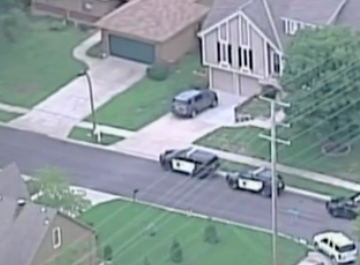
Police on the scene of the investigation-photo courtesy KCTV
Police spokesman Danny Chavez says police were notified Thursday by a suicide crisis line from New York that someone was sending texts saying he had shot one of his parents, was suicidal and would kill anyone who came in.
Chavez said that police had contact only with the crisis line and never contacted the supposed shooter.
Police say investigators who went to the home found no evidence of a crime. Chavez says the two people inside the home were cooperating with the investigation and are not believed to be involved with the false report.
TANEY COUNTY, MO— Four women including one from Kansas were hurt after a passenger tram hit a tree at an entertainment venue just after 9:30p.m. Thursday at the Shepard of the Hills outdoor theater in the tourist community of Branson.
Shepherd of the Hills entrance -google image
The Missouri State Highway Patrol reported the tram was traveling downhill on a private path when the brakes locked up. The tram started skidding and ran off the roadway, struck a wooden fence and a tree.
Four woman including Sallie K. Redd, 72, Lenexa, were transported to a local hospital.
The patrol says the tram can carry up to 24 passengers.
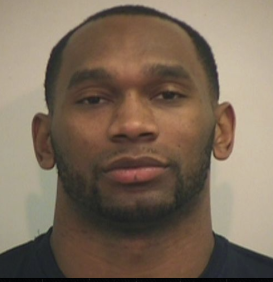
SEDGWICK COUNTY —Former Dallas Cowboy and Wichita native is back in jail accused of rape. Joseph Randle is being held on a $500.000.00 Bond, according to Sedgwick County jail records.
Randle
Just after 3:30 a.m. Friday, Randle was booked into Sedgwick County Jail.
In February 2015, Randle was involved in domestic disturbance that included the mother of his child at a hotel in Wichita. The Sedgwick County District Attorney said there was not sufficient evidence to bring felony charges against him in the case.
In July 2015, Randle was put on six months of probation for stealing $123 worth of cologne and underwear from a Texas mall.
Randle was arrested in November of 2015 after an altercation at a Kansas casino. In June of 2016 he was charged with threatening a jail deputy.
Randle was sentenced in June to probation for charges involving burglary, battery, criminal threat and marijuana possession, according to a media release from the Sedgwick County Attorney’s office.
He was waiting for sentencing on charges involving the altercation at the jail.
WICHITA, Kan. (AP) — Troubled former Dallas Cowboys running back Joseph Randle has been arrested in Kansas on a suspicion of rape charge.
Records show that Randle was booked into Sedgwick County Jail at around 3:40 a.m. Friday. Spokesmen for the police and prosecutor’s office and Randle’s attorney in previous cases didn’t immediately reply to phone messages seeking details about his latest arrest.
Randle was released on probation in June under a plea deal that allows prosecutors to seek to have him put in prison if he gets into trouble again. He spent most of the past two years in jail, with occasional stints in a state mental hospital, on an array of charges. Several of them were related to Randle hitting three people with a car after an argument at a housewarming party.
Top-level minor league baseball likely will return to Wichita in 2020.
A rendering of what the new 7,000-seat multi-sport complex and “baseball village” could look like. The project is expected to cost between $60 million and $73 million and will be paid for with state and local tax incentives. CITY OF WICHITA
Mayor Jeff Longwell said Thursday that the New Orleans Baby Cakes of the Pacific Coast League have filed an application to relocate to Wichita. The application must be approved by Minor League Baseball and the Pacific Coast League. It also must be reviewed by Major League Baseball.
City officials expect a decision later this year. The Baby Cakes are the Triple-A affiliate of the Miami Marlins.
Wichita has been without an affiliated baseball team since 2007 when the Wichita Wranglers — the Double-A affiliate of the Kansas City Royals at the time — left for a new stadium built for them in Springdale, Arkansas.
It has not had a Triple-A team since 1984, when the Wichita Aeros left for Buffalo, New York. Triple-A is the highest level of minor league baseball.
“Triple-A baseball is coming to Wichita because of who we are today and because of who we aspire to be tomorrow,” Longwell said Thursday during a news conference at Lawrence-Dumont Stadium. Gov. Jeff Colyer was among those attending the event.
“We’ve worked tirelessly on this deal,” Longwell said. “It’s not just about another great quality of life amenity, or baseball. This is about investing in our city and continuing to make Wichita a regional destination.”
Lawrence-Dumont Stadium, built in 1934, will be torn down later this year. The new stadium complex is expected to cost between $60 million and $73 million. It will have 7,000 fixed seats and a total capacity of about 10,000.
City officials have said they hope it can be used for concerts, festivals and other events.
Mayor Jeff Longwell, wearing a Miami Marlins cap, takes a question at Thursday’s event announcing the New Orleans Baby Cakes’ application to relocate to Wichita. The team is the Triple-A affiliate of the Marlins. CREDIT NADYA FAULX -Kansas News Service
Longwell said the stadium will be paid for through state-approved STAR bonds and a local Tax Increment Finance district; both funding sources will capture added tax revenue brought in by development in the area. City officials hope it will revitalize the Arkansas River corridor and connect the stadium to the Delano neighborhood.
Longwell identified affiliated baseball as a critical component to improve the quality of life in Wichita. It is part of the city’s effort to retain existing employees and attract new ones, he said.
The Pacific Coast League has 16 teams. Other teams in the region include Oklahoma City, Omaha and Des Moines. New Orleans currently plays in a division with Memphis, Nashville and Round Rock, Texas.
Lawrence-Dumont Stadium, built in 1934, will be torn down as early as this fall to make way for a new stadium for Wichita’s new affiliated team. CREDIT NADYA FAULX photo Kansas News Service
City officials said they expect the Baby Cakes to get a new nickname when the team arrives in Wichita.
The NBC World Series, played in Wichita since 1935, will move to Wichita State University’s Eck Stadium next summer.
The Wichita Wingnuts, an unaffiliated team that began play in 2008 at Lawrence-Dumont, has not announced its future plans.
Tom Shine is director of news and public affairs at KMUW in conjunction with the Kansas News Service. Follow him in Twitter@thomaspshine.
LAWRENCE, Kan. (AP) — Authorities are investigating a report that a University of Kansas student sexually assaulted four female dormmates during the first few weeks of classes.
Oliver Hall at KU- google image
The 18-year-old man was arrested Wednesday on suspicion of aggravated criminal sodomy and sexual battery, but was released from jail later that day without being charged. The Douglas County District Attorney’s Office sent the case back to police with a request for additional investigation. Police say the women reported being touched inappropriately from Aug. 23 to Aug. 30.
University spokeswoman Erinn Barcomb-Peterson says the man is enrolled as a student but isn’t currently a resident of Oliver Hall, which houses both male and female students. She didn’t say whether he had been disciplined, citing federal privacy law.
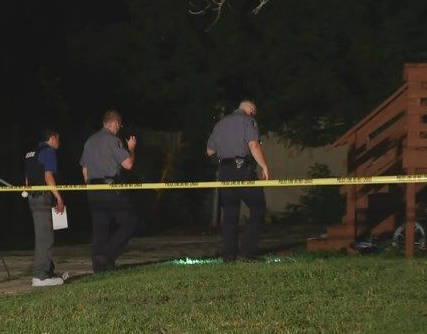
LAWRENCE, Kan. (AP) — A Lawrence police officer who shot at the car of a man suspected in a double shooting will not face criminal charges.
Police on the scene of the shooting investigation-photo courtesy KCTV
Douglas County District Attorney Charles Branson announced Thursday that Sgt. Robert Neff would not be charged in the July 2 shooting in Lawrence.
Neff followed at a vehicle that police believe was associated with a double shooting earlier in the day. The suspect in the car, Tommy May, drove away and eventually crashed into a yard. Police say Neff got out of his patrol car and ordered May to get out of his vehicle.
May has previous convictions for robbery and aggravated robbery, according to the Kansas Dept. of Corrections
Instead May ran into Neff’s patrol car and eventually hit the officer.