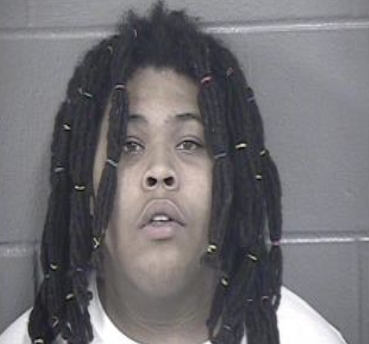
SEDGWICK COUNTY— Law enforcement authorities are investigating a fatal shooting that left a Kansas man dead and have made another arrest.
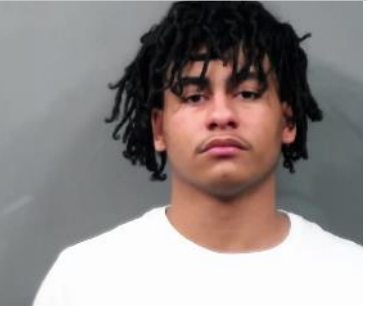
Pierce Jackson photo Sedgwick County
At approximately 6 p.m. Monday, Aug. 19, officers responded to a shooting call in the 4600 block of east Boston in Wichita, according to office Charley Davidson.
Upon arrival, first responders found 33-year-old Jerome Armbeck in an open field with multiple gunshot wounds to his body. A WPD officer began rendering life-saving aid until Sedgwick County Emergency Medical Services (EMS) arrived. Armbeck was pronounced dead at the scene.
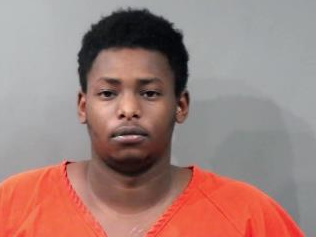
Investigatigators learned a disturbance occurred between Armbeck, 18-year-old Pierce Jackson, 20-year-old Marcus Lamar and a 17-year-old boy in the 4600 block of east Boston when a suspect fired multiple times from a firearm, striking Armbeck.
On Tuesday, the Wichita Police Department arrested Jackson in Dallas, Texas, on charges of first-degree murder, aggravated robbery and an outstanding warrant, stemming from the shooting. He is being held on a $500,000 bond, according to online jail records.
This is the third arrest in this case. Wichita police previously arrested Lamar and the 17-year-old boy.
This was not a random incident, and is drug related, according to Davidson.
The case has been presented to the Sedgwick County District Attorney’s Office.
RILEY COUNTY — Law enforcement authorities are investigating a Kansas felon on new charges after a Tuesday arrest.
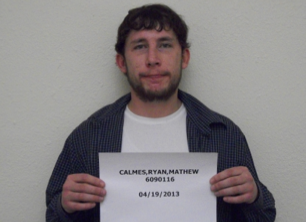
Calmes photo KDOC
Just after 1p.m. Tuesday, police filed a report for burglary, aggravated assault and criminal damage to property in the 1400 block of Normandy Place in Manhattan, according to the Riley County Police Department Activity report. A 31-year-old man reported a known male suspect stole copper pipe and gained access to storage units in the area, causing damage.
Police arrested Ryan Calmes, 30, of Manhattan in the 700 block of North Juliette on requested charges of aggravated assault, aggravated burglary and criminal damage to property.
Calmes has previous convictions that include DUI, flee and or attempt to elude law enforcement, driving while suspended and for drugs, according to the Kansas Dept. of Corrections. In March, the RCPD arrested Calmes on drug allegation. They arrested him in September for alleged shoplifting and drugs.
Andrew Lyon with the Kansas Department of Health and Environment shows how roots create space for water to infiltrate into the ground. Brian Grimmett / Kansas News Service
HARTFORD — Some of Kansas’ major reservoirs are filling up with sediment, and if something isn’t done to address the issue, parts of eastern Kansas could see water shortages and insufficient flood control as soon as 30 years from now.
To help slow down the slow, but consistent, reduction of usable water storage in Kansas’ reservoirs, the Kansas Water Office is trying to help farmers in critical areas upstream of the lakes to reduce the water running off from their fields.
But if that isn’t widely accepted, state officials say taxpayers may have to pay millions more just to keep the water flowing.
Sediment collecting in reservoirs is a part of the natural lifespan of a water system. But in several Kansas reservoirs, it’s already drastically reduced their originally designed capacity and lifespan — more than 40% in the Kanapolis, Tuttle Creek, John Redmond and Toronto reservoirs.
“That means when we get into a drought, that’s 40% less water that we have available to make it through that drought,” said Earl Lewis, acting director of the Kansas Water Office. “So, that’s a significant problem.”
The program works with farmers in key areas upstream of Fall River, Kanopolis, John Redmond and Tuttle Creek to help pay for land management practices such as terracing, putting in grass between fields and creeks and planting cover crops.
These practices are meant to help the soil in these areas better soak up water from heavy rains — water that otherwise runs off fields into nearby creeks and streams. The runoff carries excessive amounts of nutrients and sediment, which ends up at the reservoirs.
Rex Truelove used the program to get help paying for cover crops on his farm near Hartford. In his case, it’s a mix of rye, radish and turnips.
Truelove planted the crops between the times he plants his traditional corn and soybean rotation.
“The more time you can have something green on the ground that’s what Mamma Nature wants,” said Truelove, whose land is north of John Redmond reservoir.
During a demonstration at Truelove’s field, Andrew Lyon from the Kansas Department of Health and Environment’s watershed restoration and protection strategy program pulled out a shovel, dug up a radish and explained how cover crops reduce sediment problems downstream.
“It’s the root channels that grow that really allow water to then infiltrate into the soil,” he said. “It’s just huge for getting the water into the ground and not running off over the top of the ground.”
This is particularly important during heavy rains — 3 to 4 inches in an hour — that are increasingly more likely in eastern Kansas due to climate change.
Cattle graze on Kevin Mautz’s farm where he’s implemented cover crops. Credit Brian Grimmett / Kansas News Service
Cover crops are also possibly beneficial for farmers. Up the road, Kevin Mautz showed how he’s used the program to save money.
He uses some of his fields to graze cattle, and planting cover crops has provided extra food beyond the leftover corn stalks — which means he can purchase less hay.
“I don’t have to feed ’em,” Mautz said. “They’re just content out here.”
The Kansas Water Office’s Earl Lewis said the program’s current level of funding isn’t nearly enough to solve the problem from a watershed scale.
But he hopes by finding early adopters, he can prove to reluctant farmers it can be mutually beneficial. If not, the consequences could be huge.
Satellite imagery showing sedimentation of Tuttle Creek Reservoir. Credit U.S. Army Corps of Engineers Kansas City District
Saving Tuttle Creek
The state has already spent $20 million dollars to dredge (that is, physically remove sediment) from John Redmond reservoir, southeast of Emporia.
Tuttle Creek, which is a major part of the Kansas River basin system, could be the next candidate. Sediment has reduced its original storage capacity by 47.9%.
Not only does it provide important flood storage, but Tuttle Creek also is a source of northeastern Kansas’ agriculture and public drinking water systems.
“We want them to be fully functional for 400, 500 years,” Lewis said. “We need to figure out how to get us to a much more sustainable situation where we have those reservoirs for the long-term.”
In the meantime, researchers are studying the best way to mitigate the problem. While reducing sediment entering the reservoir in the first place is a start, at some point, sediment will have to be removed.
Rather than use traditional dredging, which could cost an estimated $39 million a year at Tuttle Creek, engineers are looking at a new method called water injection dredging.
It shoots high-pressure jets of water into the sediment, which stirs the sediment up and allows it to naturally flow through the dam’s outlet and through the Kansas River as it would have before the dam.
While early tests show this technique would work with the kind of sediment in Tuttle Creek, researchers are less certain they can get it to flow downstream.
For now, the state is going to keep doing what it can with its limited resources. Fixing a problem that’s 40 years down the road is a hard sell, Lewis said, but it will only be worse in the future.
“The amount of money we spent at John Redmond,” Lewis said, “would pale compared to what we’d end up doing at Tuttle Creek.”
Brian Grimmett reports on the environment, energy and natural resources for KMUW in Wichita and the Kansas News Service. You can follow him on Twitter @briangrimmett or email him at [email protected]. The Kansas News Service is a collaboration of KCUR, Kansas Public Radio, KMUW and High Plains Public Radio focused on the health and well-being of Kansans, their communities and civic life.
SEDGWICK COUNTY — An 18-year-old Kansas man accused in a fatal shooting of a 15-year-old due to a social media dispute will make a first appearance in court Wednesday.
Malick Garrett is scheduled to appear before Judge Rodger Woods, according to to the Sedgwick County Attorney.
Garrett photo Sedgwick County
Just after 6p.m. November 6, police responded to report of a shooting in the 1400 Block of North Ohio Street in Wichita, according to Captain Brent Allred.
At the scene, police located a 15-year-old later identified as Marion Wheaton who had been shot in his upper body. EMS transported him to a local hospital where he died.
On November 7, police reported the arrest of 18-year-old Malick Garrett of Wichita on a requested charge of 2nd degree murder and outstanding warrants in connection with Wheaton’s death.
Investigators have learned that Wheaton and two teenage friends walked to the area to meet with a 15-year-old boy and other unknown individuals to fight over an ongoing dispute that involved social media, according to Allred.
As Wheaton and his friends walked in the area, they were approached by a vehicle. A 15-year-old male and Garrett exited the vehicle. Garrett fired multiple shots from a handgun, striking Wheaton.
This was not a random incident, according to Allred. Multiple handguns were recovered during the investigation.
It is the 24th criminal homicide in Wichita in 2019.
RENO COUNTY —Law enforcement authorities are investigating a Reno County woman on child sex allegations.
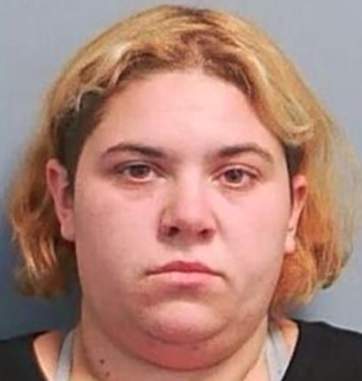
Leticia Carrillo photo Reno Co.
Just after 1:30p.m. Tuesday, deputies arrested Leticia M. Carrillo, 27, Sylvia on requested charges of two counts of Aggravated Indecent Liberties with a Child, according to a media release from the Reno County Sheriff. The victim in this case is a 15-year-old boy.
The investigation stemmed from a sexting case that occurred in Reno County. Through the investigation it was determined Carrillo had sexual intercourse with this victim on two separate occasions, both of them occurring in Reno County.
Carrillo is being held in the Reno County Correctional Facility on a $50,000 bond, and awaits her court appearance.
WICHITA, Kan. (AP) — The Wichita City Council has approved a public financing package worth about a $35.5 million to subsidize the creation of a medical school.
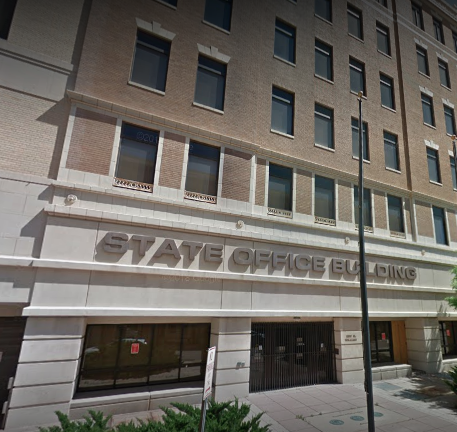
Google image
The package approved Tuesday will help create a campus for training osteopathic physicians. Called the Kansas Health Science Center, the new school will be built in the former Finney State Office Building. Once the center of state government in Wichita, the building was abandoned in favor of leasing privately owned office space across Wichita.
Plans also call for three other buildings to be transformed — one into student housing, another into a dining hall and culinary center and the third into a boutique hotel.
The bulk of the money for the development will come from tax abatements.
TOPEKA— Law enforcement authorities are investigating a fatal shooting and have identified the two victims.
Police on the scene of the investigation Tuesday photo courtesy WIBW TV
Just after 3 p.m. Tuesday the Shawnee County Emergency Communications Center began receiving reports of a possible shooting in the 2400 block of SE Maryland Avenue in Topeka, according to Lt. Andrew Beightel.
Upon Officers arrival they located two individuals identified as 21-year-old Reginald L. McKinney Jr., and 15-year-old Owen M. Hughes suffering from life-threating injuries.
Both were pronounced deceased by medical personnel on scene. Investigators continue working to develop suspect information.
————-
TOPEKA— Law enforcement authorities are investigating a fatal shooting that left two dead in Topeka.
Just after 3 p.m. Tuesday the Shawnee County Emergency Communications Center began receiving reports of a possible shooting in the 2400 block of SE Maryland Avenue in Topeka, according to Lt. Andrew Beightel.
Upon Officers arrival they located two individuals suffering from life-threating injuries. Both were pronounced deceased by medical personnel on scene. The identities of the deceased individuals are being withheld pending proper next of kin notifications. Investigators continue working to develop suspect information.
JEFFERSON COUNTY— Law enforcement authorities are investigating a Kansas man for alleged child abuse.
Odom photo Jefferson Co.
Just before noon Sunday, deputies responded to report of a child in cardiac arrest in the 100 Block of South Cedar Street in Perry, according to Jefferson County Sheriff Jeff Herrig. First responders located a 3-year-old girl and transported her to Children’s Mercy in Kansas City.
Deputies arrested 23-year-old Zachary Odom and booked him into the Jefferson County jail on a requested charge of child abuse.
Odom is expected to make his first court appearance Wednesday. He remains jailed without bond. The child is expected to make a full recovery, according to Herrig.
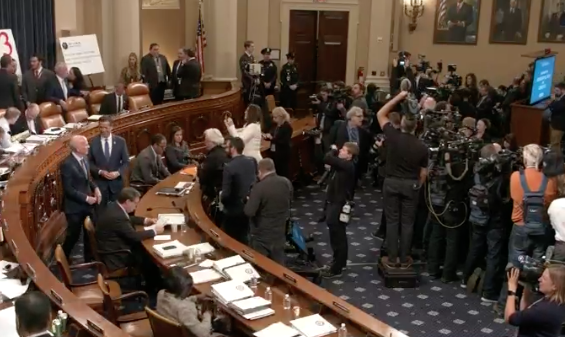
The House Intelligence Committee meeting room moments before the impeachment hearing started Wednesday -photo courtesy CSPAN
America and the rest of the world will have the chance to see and hear for themselves for the first time about President Donald Trump’s actions toward Ukraine and consider whether they are, in fact, impeachable offenses.
It’s a remarkable moment, even for a White House full of them.
All on TV, committee leaders will set the stage, then comes the main feature: Two seasoned diplomats, William Taylor, the graying former infantry officer now charge d’affaires in Ukraine, and George Kent, the deputy assistant secretary in Washington, telling the striking, if sometimes complicated story of a president allegedly using foreign policy for personal and political gain ahead of the 2020 election.
So far, the narrative is splitting Americans, mostly along the same lines as Trump’s unusual presidency. The Constitution sets a dramatic, but vague, bar for impeachment, and there’s no consensus yet that Trump’s actions at the heart of the inquiry meet the threshold of “high crimes and misdemeanors.”
Whether Wednesday’s proceedings begin to end a presidency or help secure Trump’s position, it’s certain that his chaotic term has finally arrived at a place he cannot control and a force, the constitutional system of checks and balances, that he cannot ignore.
The country has been here just three times before, and never against the backdrop of social media and real-time commentary, including from the Republican president himself.
“These hearings will address subjects of profound consequence for the Nation and the functioning of our government under the Constitution,” said Democratic Rep. Adam Schiff of California, the chairman of the Intelligence Committee leading the inquiry, in a memo to lawmakers.
Schiff called it a “solemn undertaking,” and counseled colleagues to “approach these proceedings with the seriousness of purpose and love of country that they demand.”
“Total impeachment scam,” tweeted the president, as he does virtually every day.
Impeachments are rare, historians say, because they amount to nothing short of the nullification of an election. Starting down this road poses risks for both Democrats and Republicans as proceedings push into the 2020 campaign.
Unlike the Watergate hearings and Richard Nixon, there is not yet a “cancer on the presidency” moment galvanizing public opinion. Nor is there the national shrug, as happened when Bill Clinton’s impeachment ultimately didn’t result in his removal from office. It’s perhaps most like the partisanship-infused impeachment of Andrew Johnson after the Civil War.
Trump calls the whole thing a “witch hunt,” a retort that echoes Nixon’s own defense. Republicans say Democrats have been trying to get rid of this president since he took office, starting with former special counsel Robert Mueller’s investigation into Russian interference to help Trump in the 2016 election.
Democratic House Speaker Nancy Pelosi was initially reluctant to launch a formal impeachment inquiry. As Democrats took control of the House in January, Pelosi said impeachment would be “too divisive” for the country. Trump, she said, was simply “not worth it.”
After Mueller’s appearance on Capitol Hill in July for the end of the Russia probe, the door to impeachment proceedings seemed closed.
But the next day Trump got on the phone.
For the past month, witness after witness has testified under oath about his July 25 phone call with Ukraine’s newly elected president, Volodymyr Zelenskiy, and the alarms it set off in U.S. diplomatic and national security circles.
In a secure room in the Capitol basement, current and former officials have been telling lawmakers what they know. They’ve said an earlier Trump call in April congratulating Zelenskiy on his election victory seemed fine. The former U.S. reality TV host and the young Ukrainian comedian hit it off.
But in the July call, things turned.
An anonymous whistleblower first alerted officials to the phone call. “I have received information from multiple U.S. Government officials that the President of the United States is using the power of his office to solicit interference from a foreign country in the 2020 election,” the person wrote in August to the House and Senate Intelligence committees. Democrats fought for the letter to be released to them as required.
“I am deeply concerned,” the whistleblower wrote.
Trump insisted the call was “perfect.” The White House released a rough transcript. Pelosi, given the nod from her most centrist freshman lawmakers, opened the inquiry.
“The president has his opportunity to prove his innocence,” she told Noticias Telemundo on Tuesday.
Defying White House orders not to appear, witnesses have testified that Trump’s acting chief of staff, Mick Mulvaney, was withholding U.S. military aid to the budding democracy until the new Ukraine government conducted investigations Trump wanted into Democrats in the 2016 election and his potential 2020 rival, Joe Biden, and his son, Hunter.
It was all part of what Taylor, the long-serving top diplomat in Ukraine, called the “irregular” foreign policy being led by Trump’s personal attorney, Rudy Giuliani, outside of traditional channels.
Taylor said it was “crazy” that the Trump administration was withholding U.S. military assistance to the East European ally over the political investigations, with Russian forces on Ukraine’s border on watch for a moment of weakness.
Kent, the bowtie-wearing State Department official, told investigators there were three things Trump wanted of Ukraine: “Investigations, Biden, Clinton.”
On Friday, the public is scheduled to hear from Marie Yovanovitch, the former U.S. ambassador to Ukraine, who told investigators she was warned to “watch my back” as Trump undercut and then recalled her.
Eight more witnesses will testify in public hearings next week.
“What this affords is the opportunity for the cream of our diplomatic corps to tell the American people a clear and consistent story of what the president did,” said Rep. Mike Quigley, D-Ill., a member of the Intelligence panel.
“It takes a lot of courage to do what they are doing,” he said, “and they are probably just going to be abused for it.”
Republicans, led on the panel by Rep. Devin Nunes, a longtime Trump ally from California, will argue that none of those witnesses has first-hand knowledge of the president’s actions. They will say Ukraine never felt pressured and the aid money eventually flowed, in September.
Yet Republicans are struggling to form a unified defense of Trump. Instead they often fall back on criticism of the process.
Some Republicans align with Trump’s view, which is outside of mainstream intelligence findings, that Ukraine was involved in 2016 U.S. election interference. They want to hear from Hunter Biden, who served on the board of a gas company in Ukraine, Burisma, while his father was the vice president. And they are trying to bring forward the still-anonymous whistleblower, whose identity Democrats have vowed to protect.
The framers of the Constitution provided few details about how the impeachment proceedings should be run, leaving much for Congress to decide. Democrats say the White House’s refusal to provide witnesses or produce documents is obstruction and itself impeachable.
Hearings are expected to continue and will shift, likely by Thanksgiving, to the Judiciary Committee to consider actual articles of impeachment.
The House, which is controlled by Democrats, is expected to vote by Christmas.
That would launch a trial in the Senate, where Republicans have the majority, in the new year.
RILEY COUNTY— Law enforcement authorities were on the scene of a reported hostage situation in Manhattan early Wednesday.
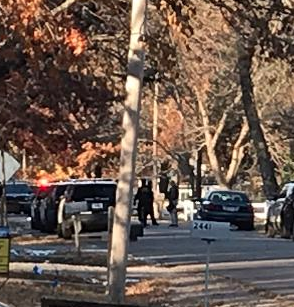
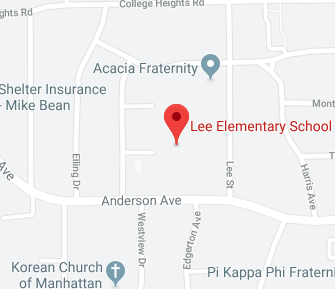
Officers set up a perimeter in the 700 Block of Lee Street in Manhattan around Lee Elementary School, according to a social media report.
Just before 1a.m, a call came into the Riley County Police Department from a man who said he was inside the school with a hostage.
Just before 7a.m. police entered and began clearing the building. The man who made the original call continued to contact RCPD and an area news station stating he had committed several felony crimes and was holding hostage at gunpoint, according to police.
After an investigation by the RCPD, authorities do not believe any of this occurred. Police believe the suspect making the claims was not local and “fabricating the story to gain notoriety and receive air time on news stations.”
The RCPD believes the school and residents in the area are safe.
————-
RILEY COUNTY— Law enforcement authorities are on the scene of a reported hostage situation in Manhattan.
Officers have set up a perimeter in the 700 Block of Lee Street in Manhattan around Lee Elementary School, according to a social media report.
Just before 1a.m, a call came into the Riley County Police Department from a man who said he was inside the school with a hostage. Officers responded to the scene and continue to work to verify if there is someone in the building and a hostage situation. Police are asking the public to avoid the area.
The RCPD is working with USD 383 administration as the situation develops.
WASHINGTON (AP) — Sharply at odds with liberal justices, the Supreme Court’s conservative majority seemed ready Tuesday to allow the Trump administration to abolish protections that permit 660,000 immigrants to work in the U.S., free from the threat of deportation.
That outcome would “destroy lives,” declared Justice Sonia Sotomayor, one the court’s liberals who repeatedly suggested the administration has not adequately justified its decision to end the seven-year-old Deferred Action for Childhood Arrivals program. Nor has it taken sufficient account of the personal, economic and social disruption that might result, they said.
But there did not appear to be any support among the five conservatives for blocking the administration. The nine-member court’s decision is expected by June, at the height of the 2020 presidential campaign.
President Donald Trump said on Twitter that DACA recipients shouldn’t despair if the justices side with him, pledging that “a deal will be made with the Dems for them to stay!” But Trump’s past promises to work with Democrats on a legislative solution for these immigrants have led nowhere.
The president also said in his tweet that many program participants, brought to the U.S. as children and now here illegally, are “far from ‘angels,'” and he claimed that “some are very tough, hardened criminals.” The program bars anyone with a felony conviction from participating, and serious misdemeanors may also bar eligibility.
Some DACA recipients, commonly known as “Dreamers,” were in the courtroom for the arguments, and many people camped out in front of the court for days for a chance at some of the few seats available. The term comes from never-passed proposals in Congress called the DREAM Act.
The high court arguments did not involve any discussion of individual DACA recipients or Trump’s claims.
Instead the focus was on whether either of two administration rationales for ending DACA, begun under President Barack Obama, was enough.
Trump’s anti-immigrant rhetoric was a key part of his presidential campaign in 2016, and his administration has pointed to a court ruling striking down the expansion of DACA and creation of similar protections, known as DAPA, for undocumented immigrants whose children are U.S. citizens as reasons to bring the program to a halt.
After lower courts stepped in to keep the program alive, the administration produced a new explanation memo from Homeland Security Secretary Kirstjen Nielsen.
Chief Justice John Roberts and Justice Brett Kavanaugh were among the justices who indicated on Tuesday that the administration has provided sufficient reason for doing away with the program. Kavanaugh referred to Nielsen’s memo at one point as “a very considered decision.” Roberts suggested that worries that DACA is not legal might be enough to support ending it.
Roberts, who could hold the pivotal vote on the court, aimed his few questions at lawyers representing DACA recipients and their supporters. He did not seriously question the administration’s argument.
However, justices’ questions don’t always foretell their votes. In June the chief justice surprised many when he cast the deciding vote to prevent the administration from adding a citizenship question to the 2020 census, despite not voicing much skepticism during arguments in the case.
Justices Neil Gorsuch and Samuel Alito raised questions on Tuesday about whether courts should even be reviewing the executive branch’s discretionary decisions.
Sotomayor made the only direct reference to Trump, saying he told DACA recipients “that they were safe under him and that he would find a way to keep them here. And so he hasn’t.”
She also complained that the administration’s rationale has shifted over time and has mainly relied on the view that DACA is illegal, leaving no choice but to end it.
In her most barbed comment, Sotomayor said the administration has failed to plainly say “that this is not about the law. This is about our choice to destroy lives.”
Solicitor General Noel Francisco, representing the administration, did not directly respond to Sotomayor. But near the end of the 80-minute arguments, he asserted that the administration has taken responsibility for its decision and is relying on more than merely its belief that DACA is illegal. The administration has the authority to end DACA, even if it’s legal, because it’s bad policy, he said. “We own this,” Francisco said.
If the court agrees with the administration in the DACA case, Congress could follow up by voting to put the program on surer legal footing. But the absence of comprehensive immigration reform by Congress is what prompted Obama to create DACA in the first place, in 2012, giving people two-year renewable reprieves from the threat of deportation while also allowing them to work.
Young immigrants, civil rights groups, universities and Democratic-led cities and states sued to block the administration. They persuaded courts in New York, San Francisco and Washington, D.C., that the administration had been “arbitrary and capricious” in its actions, in violation of a federal law that requires policy changes to be done in an orderly way.
If the justices sustain the challenges, the administration could try again to end the program. A lawsuit in Texas claiming that DACA is illegal also would be likely to go forward.
ALLEN COUNTY — One person died in an accident just before 2p.m. Tuesday in Allen County.
The Kansas Highway Patrol reported a 2002 Subaru Outback driven by Ernest Palangi, Jr., 81, Colorado Springs, CO., was westbound on U.S. 54 two miles east of the U.S. 59 Junction.
The vehicle traveled off onto the shoulder and the driver lost control. The vehicle traveled across the highway and struck a tree in the south ditch of the highway.
Palangi was pronounced dead at the scene. He was not wearing a seat belt, according to the KHP.
KANSAS CITY (AP) — Two have been charged in a shooting that left one man dead and another wounded in Kansas City.
Prosecutors announced Monday that 19-year-old Armani Elder and 18-year-old Larry Baker are each charged with second-degree murder, first-degree assault and armed criminal action in the Oct. 8 shooting that killed 20-year-old Cortez Nash. No attorney is listed for Elder in online court records, and Baker’s attorney didn’t immediately return a phone message.
Police say officers were tending to a 19-year-old with a leg wound when a woman found Nash and started screaming. Both victims were rushed to a hospital, where Nash later died.
Court records say Baker had messaged Nash beforehand, warning him to stay away from the neighborhood. A witness also told investigators that Elder, Baker and a juvenile shot at the victims.